Author Archives: DoggyMom.com

The gift of man’s best friend endures

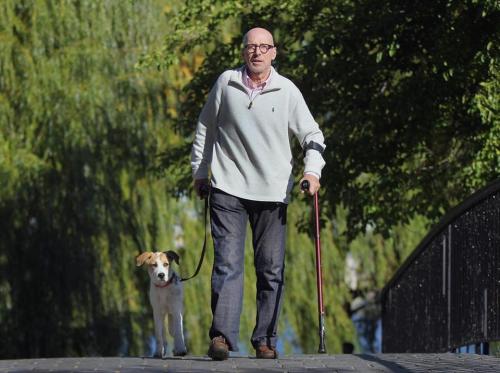
After a devastating accident that killed his dog and left him in critical condition, Jeff Schwartz found his way back to walk and love again.

Jeff Schwartz and Mandy on an outing. After his devastating accident, Schwartz rescued a dog and his own way of living. (Photo credit: Wendy Maeda/Globe Staff)

Jeff Schwartz and Mandy on an outing. After his devastating accident, Schwartz rescued a dog and his own way of living. (Photo credit: Wendy Maeda/Globe Staff)

This story, by Eric Moskowitz of The Boston Globe, will make you cry – but at least it is a dog story with a bittersweet ending.

In a blissful life upended, the gift of man’s best friend endures

Kathleen Crisley, specialist in dog massage, rehabilitation and nutrition/food therapy, The Balanced Dog Ltd, Christchurch, New Zealand

A luxury dog house from down under

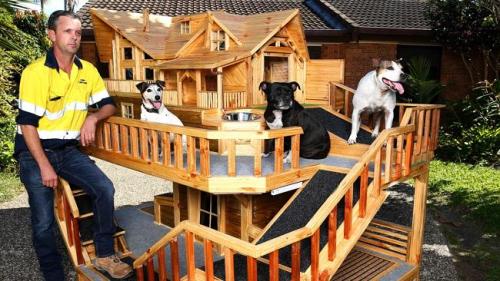
Australian man, Sean Longhurst, put in hundreds of hours over two months to build his dogs a dog house.

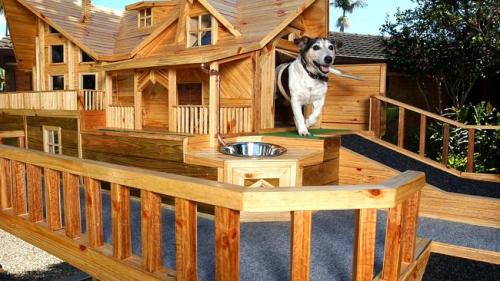
It is very much luxury accommodation with multiple stories, ramps, insulation, sensors lights and automatic-fill water bowls.

Luxury dog house

Photo by the Gold Coast Bulletin

Dog Assa shows off the house (photo by Gold Coast Bulletin)

Dog Assa shows off the house (photo by Gold Coast Bulletin)

When interviewed earlier this year, Mr Longhurst said the project has given him a new appreciation for dog house construction and he intends to go into business making dog houses that are replicas of their owner’s homes.

Kathleen Crisley, specialist in dog massage, rehabilitation and nutrition/food therapy, Canine Catering Ltd, Christchurch, New Zealand

New twist in tale of dogs’ origins

The origin of dogs has inspired a lingering controversy in academia. Where and when did dogs first split off from wolves? One of the top dogs in this dispute, population genetics expert Peter Savolainen of Sweden’s KTH Royal Institute of Technology, isn’t about to roll over. He hopes his latest research will finally settle the matter.

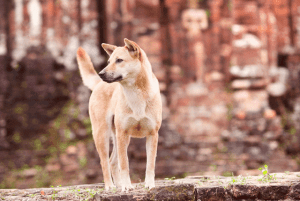
Some researchers say canines first split off from wolves in the Middle East; others say it happened in Europe. But Savolainen has long held that dogs originated in South East Asia alone, and he says his team has compiled new evidence that confirms his earlier findings.

The study concludes that the split with wolves occurred about 33,000 years ago.

Savolainen’s earlier studies were based on analysis of mitochondrial DNA. But recently other researchers have used data from nuclear DNA to refute those findings, arguing that dogs originated in the Middle East, Central Asia or Europe.

But apparently, those researchers were thrown off the scent, according to Savolainen. The data they relied on did not include samples from South East Asia, he says. So if, as Savolainen says, dogs did indeed come from South East Asia, these studies would not have been able to detect it.

Photo by IStock

Photo by IStock

“Which is why we analysed the entire nuclear genome of a global sample collection from 46 dogs, which includes samples from southern China and South East Asia,” he says. “We then found out that dogs from South East Asia stand out from all other dog populations, because they have the highest genetic diversity and are genetically closest to the wolf.”

Savolainen says this provides strong evidence that the dog originated in South East Asia, which confirms his earlier studies of Mitochondrial DNA.

“We also found that the global dog population is based on two important events: the dog and wolf populations first began to split off about 33,000 years ago in South East Asia. The global spread of dogs followed about 18,000 years later.

He says one explanation for the split between dogs and wolves 33,000 years ago could be that the wolf population became divided and the south Chinese wolf developed into dogs. In that case, it is possible the global spread of dogs out of South East Asia is associated with domestication.

“The dog’s story thus appears to have begun 33,000 years ago, but the exact path to the fully-domesticated dogs that spread throughout the world 15,000 years ago is not yet clear,”

Savolainen, along with 14 other scientists, recently published the scientific article “Out of Southern East Asia: The Natural History of domestic dogs across the world.

Source:  AlphaGalileo media release

Dogs give friends food (prosocial behavior in dogs)

A readiness to help and a positive attitude toward others are considered foundations of human relationships and human cooperation. But not only humans cooperate and support each other, animals do so, too. A group of ethologists from the Messerli Research Institute at the Vetmeduni Vienna have shown for the first time that dogs also behave prosocially toward others – provided that they know the other dog. The results were published in Nature’s Scientific Reports.

Compared to the rest of the animal kingdom, the human capacity for cooperation is something quite special. Cooperating with one another requires a certain amount of prosocial behaviour. This means helping others without any direct personal benefit.

“Dogs and their nearest relatives, the wolves, exhibit social and cooperative behaviour, so there are grounds to assume that these animals also behave prosocially toward conspecifics. Additionally, over thousands of years of domestication, dogs were selected for special social skills,” explains study director Range. For this reason, Range and her colleagues Mylene Quervel-Chaumette, Rachel Dale and Sarah Marshall-Pescini studied 16 dogs to test their readiness to benefit familiar versus unfamiliar partners.

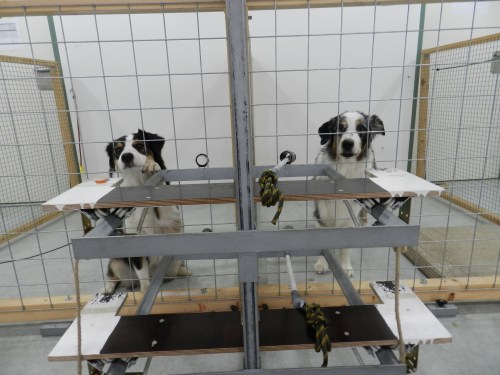
The researchers studied the prosocial behaviour of the animals using a bar-pulling task in which the dogs had to pull trays and decide whether a second dog would receive a treat or not. In the test, the donor dogs used their mouths to pull a string to bring a tray toward a second dog. They could choose either an empty tray or a tray containing a treat on the partner’s side.

The donor dog (right) can pull a tray and donate food to the receiver-dog (left). (Photo: Mylène Quervel-Chaumette/Vetmeduni Vienna)

The donor dog (right) can pull a tray and donate food to the receiver-dog (left). (Photo: Mylène Quervel-Chaumette/Vetmeduni Vienna)

Dogs donate to familiar partners more often than to unfamiliar ones

Whether the donor dogs knew the recipient made a difference. Donor dogs pulled the giving tray more often for familiar dogs than for unfamiliar ones. “Dogs truly behave prosocially toward other dogs. That had never been experimentally demonstrated before. What we also found was that the degree of familiarity among the dogs further influenced this behaviour. Prosocial behaviour was exhibited less frequently toward unfamiliar dogs than toward familiar ones.

Prosocial behaviour put to the test

In the bar-pulling task, the donor dogs decided whether another dog would receive a treat or not. The donor dog itself did not get the treat. The only purpose of the task was to benefit the other dog. By conducting several control tests, the researchers excluded the possibility that the dogs were simply pulling the trays for the fun of it. Donor dogs were reserved in pulling the tray when an unfamiliar dog was in the next enclosure.

At the end of each test run, the researchers conducted another test to show that the donor dogs knew what pulling the tray meant. They allowed the donor dogs to pull on a tray to give themselves a treat, and all dogs did just that. “This control excludes the possibility that the dogs did not pull on the tray out of fear of the unfamiliar dogs. Given the same situation, the dogs gladly gave themselves a treat,” says Range.

“We were also able to disprove the argument that the dogs pulled the string less frequently because they were distracted by the unfamiliar partner during the test. Only rarely did a donor dog interact with the unfamiliar dog,” Range explains.

Source:   Vetmeduni Vienna media release

Christmas house guest

It’s been a busy week and so the blog has been quieter than normal.  Then yesterday, on Christmas Eve, I got a text from another greyhound owner.  His kennel plans had fallen through and he wondered if I could take his dog, Sala, for a couple of days.

No worries!

Bed switching

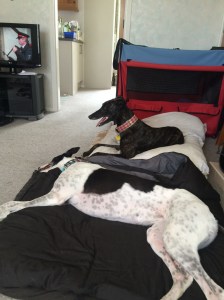
To make a house guest feel welcome, you let them sleep in your bed. You sleep in theirs.

Izzy has enjoyed having a playmate today (Christmas Day).  We went for an off-leash run at the Groynes dog park.

Izzy at Groynes

And after a breakfast, it was time for a big rest.

Greyhound on sofa

Izzy never goes on the sofa (she prefers the queen-sized bed). Sala found it quite comfortable, however.

Then it was time to tuck into the pigs ears that Sala’s Dad brought:

Followed later by an afternoon walk, and some cooked liver over dog food.  We are once again settling in for the night and more play time tomorrow.

Kathleen Crisley, specialist in dog massage, rehabilitation and nutrition/food therapy, Canine Catering Ltd, Christchurch, New Zealand


Mr Quiggly outruns the greyhounds

This video is a few years old – but worth resurrecting.  Great advertising!

Kathleen Crisley, specialist in dog massage, rehabilitation and nutrition/food therapy, Canine Catering Ltd, Christchurch, New Zealand

Dogs may be sloppy drinkers…but they get the job done

Researchers at the Virginia Tech College of Engineering can tell the story of dog lapping.

Using photography and laboratory simulations, researchers studied how dogs raise fluids into their mouths to drink. They discovered that sloppy-looking actions at the dog bowl are in fact high-speed, precisely timed movements that optimize a dogs’ ability to acquire fluids.

Old dog drinking

They have published their research in the Proceedings of the National Academy of Sciences.

Researchers also compared what they learned about how dogs drink with what they knew from previous studies of cats. The scientists discovered that even though feline and canine mouths structurally are similar, their approaches to drinking are as different as — cats and dogs.

“We know cats and dogs are quite different in terms of behavior and character,” said Sunghwan “Sunny” Jung, an associate professor of biomedical engineering and mechanics. “But before we did fundamental studies of how these animals drink fluids, our guess was dogs and cats drink about the same way. Instead we found out that dogs drink quite differently than cats.”

Dogs and cats are biting animals and neither have full cheeks. But without cheeks, they can’t create suction to drink — as people, horses, and elephants do. Instead they use their tongues to quickly raise water upward through a process involving inertia.

Both animals move their tongues too quickly to completely observe by the naked eye. But dogs accelerate their tongues at a much faster rate than cats, plunging them into the water and curling them downward toward their lower jaws, not their noses.

They quickly retract their tongues and a column of water forms and rises into their mouths, but they also curl the underside of their tongues to bring a tiny ladle of water upward.

Dogs precisely bite down to capture the water. In an instant they reopen their mouths and immerse their tongues back into the water.

Cats, on the other hand, lightly touch the surface of the water with their tongues, usually never fully immersing them, according to previous imaging by Jung and other researchers. When their tongues rise into their mouths, liquid adheres to the upper side, forming an elegant water column.

When dogs accelerate their tongues upwards, the latest research reveals a water column rising, but some water remains in the ladle of the tongue and is tossed to either side of the dog’s mouth or it falls downwards.

Although dogs do not use their tongues to actively scoop water into their mouths, it is possible that the scooped liquid has some positive effect on the water column dynamics below the tongue, the researchers said.

“Dog drinking is more acceleration driven using unsteady inertia to draw water upward in a column, whereas cats employ steady inertia,” Jung said.

In all, 19 dogs of various sizes and breeds were volunteered for filming by their owners. Thirteen of the dogs were filmed outdoors at their owners’ residences in the Blacksburg, Virginia, area. The remaining six were filmed at the Virginia Tech campus.

“This was a basic science study to answer a question very little was known about — what are the fundamental mechanics of how dogs drink?” said Sean Gart, a graduate student in biomedical engineering and mechanics who filmed the dogs. “Cats tend be viewed as neater, dogs are messier, but dogs really have to accelerate their tongues to exploit the fluid dynamics of the water column.”

The researchers measured tongue motion, recorded water volumes, and generally measured lapping in the dogs. They used the results to generate a physical model in the laboratory of the tongue’s interaction with the air-fluid interface, according to Jake Socha, an associate professor of biomedical engineering and mechanics at Virginia Tech.

Source:  Newswise media statement

Can your dog boost your sex appeal?

Yes, according to a new study published in Anthrozoös,  a multidisciplinary journal of the interactions of people and animals.

Dogs and dating

Photo courtesy of http://www.DogChannel.com

In collaboration with the pet store chain PetSmart, the researchers recruited 1,210 single pet owners through the online dating service Match.com. In the pool of participants, 60% were women and 40% were men; 72% were dog owners and 42% cat owners.

The subjects took a 21-question online survey about how pets entered into their dating lives and 35% percent of women and 26% of men said they had been more attracted to someone because they owned a pet.

Dogs won 500 of the 600 votes for the sexiest pet a guy could own.

Author of the recently published article entitled ‘The Roles of Pet Dogs and Cats in Human Courtship and Dating’ Peter Gray, said: “The direction of these patterns in results was toward cats being exploited less often than dogs as “social tools” in the dating world”.

So if you want to increase your dating chances, get a dog.

Source:  Taylor & Francis media release

The Roles of Pet Dogs and Cats in Human Courtship and Dating, Peter B. Gray et al, Volume 28, Issue 4, 2015, Anthrozoös: A multidisciplinary journal of the interactions of people and animals.

Read the full article online:http://www.tandfonline.com/doi/pdf/10.1080/08927936.2015.1064216

Is this really a bargain?

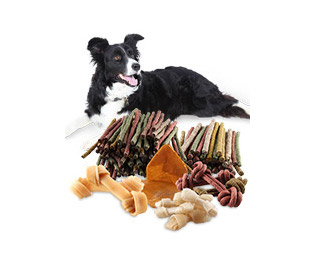
Bargain dog treatsNew Zealanders love a bargain and a current special on one of the ‘limited day deal’ sites lists “100% Natural” dog treats, 184 of them in total, for $19.99.

Take a look at that photo.  I see artificial colours in the munchy sticks and raw hides that are known to cause choking problems and intestinal blockages.  And, there is no country of origin labeling, either.  So who knows where they have come from and what methods have gone into preparing them.

But, if they can afford to sell so many treats for this price, a savvy dog parent should be asking where they have come from.

Readers who follow my column in NZ Dog World know that I have a problem with linking responsible dog owners with anything ‘cheap.’  A bargain is only a bargain when you get quality and integrity for a good price and you should know where your dog’s food is coming from.

Kathleen Crisley, specialist in dog massage, rehabilitation and nutrition/food therapy, Canine Catering Ltd, Christchurch, New Zealand


Are pets in the bedroom a problem?

If you listen to most dog trainers, they will tell you never to let your dog sleep with you. In my experience, this isn’t a problem with a large number of dogs and their owners (myself included).

Now, new sleep research shows that many people who sleep with their pets report they feel safer and more secure knowing their pet is there with them.  Contrary to traditional advice, they sleep better because of it.

Dog and man sleeping together

The researchers, based at the Center of Sleep Medicine at the Mayo Clinic, asked 150 people lots of questions about their sleep habits. 49% of the group owned pets and more than half of them slept with their pets.

In the discussion section of their published paper, the research team states:

Many pet owners view companion animals as family members that they wish to incorporate into as many aspects of their life as possible.  Because humans spend considerable time sleeping, a pet owner’s desire to have animals close at night is understandable. As more households include multiple pets, the challenge of securing appropriate sleeping arrangements is increased.

and

Some participants in this study identified advantages to having a companion animal in the bedroom or even on the bed. Some respondents described feeling secure, content, and relaxed when their pet slept nearby. This appears to be especially true for single sleepers. The value of these experiences, although poorly understood, cannot be dismissed because sleep is dependent on a state of physical and mental relaxation.

This study is a small one, but the significance of the figures shouldn’t be dismissed.  The research team concludes:

More respondents perceived their pets to not affect or even benefit rather than hinder their sleep. A smaller percentage of patients acknowledged that their pets had undesirable effects on their sleep. Health care professionals working with patients with sleep concerns should inquire about the home sleep environment, and companion animals specifically, to help them find solutions and optimize their sleep.

Source:  Mayo Clinic Proceedings – read the full research paper here