Category Archives: dog ownership

Responsible dog ownership – what does it mean in your town?

The 1st of July will mark the start of a new financial year for many towns and here in Christchurch it means that dog registrations must be paid for another year.

Christchurch encourages responsible dog ownership by offering certified responsible dog owners a dramatically reduced registration fee.  For a spayed or neutered dog, the fee drops from $76.00 to $53.00.  Second and subsequent dogs at the same residence can be registered for only $37.00 each.

What does it mean to be a responsible dog owner? 

Dog owners must apply to the council to be granted responsible dog owner status.

Applicants for Responsible Dog Ownership status sign an application form stating that they have and will continue to meet all the following conditions and requirements listed below:

(a) No dog owned by the applicant in the last two years has:

(i) Been impounded, chased or returned home by Council Dog Control staff.

(ii) Been the subject of any bona-fide complaint.

(iii) Been issued with an infringement notice for any dog related offence.

(b) All dog registration fees have been paid for the past two years by the due date.

(c) The applicant has not been prosecuted, nor issued with an infringement notice, for any dog related offences.

(d) Any information regarding the purchase of, death, sale or transfer of dogs to and from the applicant’s property, including movement of any pups born on the premises, shall continue to be promptly notified in writing to the Council.

(e) The applicant’s property is suitably fenced and gated to ensure it is dog-proof.

Dog free access to a door of the dwelling is provided for authorised callers.

(The Council reserves the right to carry out random property inspections to ensure compliance.)

(f) All dog(s) owned or kept by the applicant will be controlled in accordance with the Dog Control Act 1996 and with current Council Dog Control Bylaws.

(g) The applicant has been a recorded dog owner and resided within the Christchurch City Council area for at least 12 months. If an owner has not been a recorded dog owner and resided in Christchurch City for at least one year but can produce written evidence that they have had a classification with criteria similar in most respects to those included here in another territorial authority they may be considered to have fulfilled this condition.

(h) Any faecal matter (droppings) deposited by the applicant’s dog(s) in any public place or on any land other than that occupied by the applicant will be removed forthwith and deposited in a suitable receptacle.

(i) Any change of residential address within the city shall be notified in writing to the Council within 14 days.

(j) The applicant understands that any breach of the above conditions will lead to the immediate cancellation of privileges under this policy.

(k) The applicant is aware that the granting of this application does not relieve the applicant from payment of the full dog control fee.

If the dog owner breaches the rules in any way, they can lose their Responsible Dog Owner status for a period of two years.

What does your town do to encourage responsible dog ownership?

Kathleen Crisley, Fear-Free certified professional and specialist in dog massage, rehabilitation and nutrition/food therapy, The Balanced Dog, Christchurch, New Zealand

Southern Cross Healthcare endorses dog ownership

Well done to Southern Cross Healthcare, New Zealand’s leading private healthcare insurance company.

The company is celebrating its 50th year in business and as part of the celebrations they’ve published their 50 tips for living life well (Alive magazine, Issue 7).    As part of these tips, the firm recognises the health value of dog ownership.

Tip #13  Dog owners lead a healthier lifestyle.  Dogs help buffer stress and also assist in facilitating more physical activity

Kathleen Crisley, specialist in dog massage, rehabilitation and nutrition/food therapy, The Balanced Dog, Christchurch, New Zealand

Routine is very important

Like children, I believe that dogs thrive when they have a routine and daily/weekly schedule that they can count on.  This routine gives them confidence and comfort and caters to their necessities of life.

So what things should you include in your dog’s routine?

Sleep time :  Although sleep requirements differ over the lifetime of your dog and there are also breed differences as far as sleep requirements, the general rule of thumb is that dogs require 16 to 18 hours of sleep per day.  Like you, dogs will benefit from periods where they are left quietly to sleep without disturbance.  In most homes, the dog will have a sleep period that coincides with its family.  However, they will also need time during the day to sleep.  If you work outside of the home, your dog will sleep for a good period of time when you are away.  If you are at home during the day, either by yourself or with children and others in the house, I recommend that you either crate train your dog to give them quiet time or allow your dog the chance to define their special quiet place.  Make an effort during the day to leave your dog undisturbed so they can sleep.

Water:  Your dog should have clean water available at all times during the day.  Keep the water bowl clean and change the water daily.

Food:  “You are what you eat” applies to dogs as well as humans.  Ensure your dog has a good quality diet (some owners choose a raw diet while others prefer a ready-made commercial food).   I prefer a twice daily feeding schedule and larger breeds will need this to help manage against bloat.  Some owners only feed once per day.  Don’t forget to include treats in calculating your dog’s daily ration.

Toilet time:  Most dogs need to urinate or defecate at least every 6-8 hours.  If you leave your dog inside when you are at work, you will need to consider their toileting needs.   When I am going out for the day, for example, Daisy gets a walk before I got out.  I am then more confident that she will be comfortable for when I am away.

Play:  Just like us and our children, dogs need a time to play.  This gives them mental and physical stimulation.  Choose toys appropriate for your dog’s temperament, set up play times with other dogs, go to the dog park to meet other dogs or consider doggie daycare.   Arrange for a pet sitter to walk your dog during the day.  There are many options for creating healthy and happy playtime for your dog.

A safe place:   The den instinct is still there in our domesticated dogs.  Make your home the safe place your dog deserves.    Ensure food, drugs, and household chemicals are kept out of reach of your dog.  Make sure your dog has its own place within the home (bed/crate or both!).

If circumstances change (such as what has occurred in Christchurch with changes to routine because of the earthquake and different work requirements), make a new routine for your dog.  Dogs are able to accommodate short-term changes or interruptions to their schedule, but their behaviour and stress levels will change if you don’t find a new routine for them to follow.

Kathleen Crisley, specialist in dog massage, rehabilitation and nutrition/food therapy, The Balanced Dog, Christchurch, New Zealand
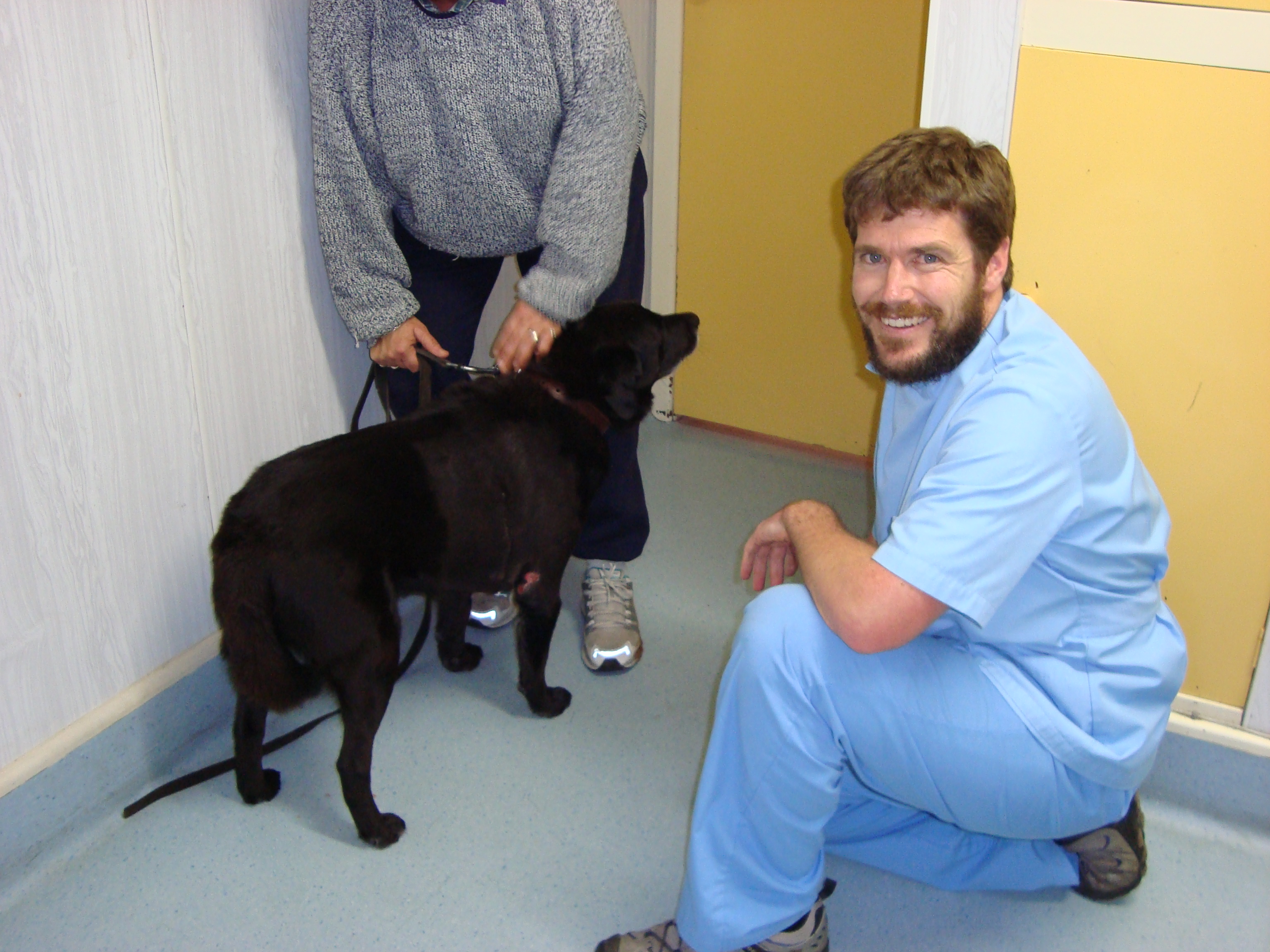
The role of the dog in the family unit

A recently-published New York times article explains the role of the pet in the family unit and various research projects that are attempting to define the human-pet bond.  This article goes onto explain why personal orientation about the role of the pet in the family can lead to disagreements and conflict.

My personal favourite is the 2007 research that categorises pet owners into one of three categories.

Humanists treat their dogs as a member of the family or primary companion.  They will do things such as allowing the dog into bed or onto the furniture, cook it special meals, and mourn it when it passes.  Humanists tend to look down on dominionists.

Protectionists consider themselves the animal’s advocate with strong personal views on how an animal should be treated.  Protectionists are critical of humanists.

Dominionists view their dog as a useful helper, below that in status of the humans.  Dogs, in their opinion, are replaceable.    Rural people often fall into this category, according to the research.

I’m a proud humanist, by the way!

Kathleen Crisley, specialist in dog massage, rehabilitation and nutrition/food therapy, The Balanced Dog, Christchurch, New Zealand

A dog named Beau by Jimmy Stewart

In 1981, actor Jimmy Stewart (1908 – 1997)  read a poem he wrote about his dog, Beau, on The Tonight Show hosted by Johnny Carson.  For anyone who has loved a dog, you will understand.

Thanks to You Tube, here’s Mr Stewart reading his poem:

Kathleen Crisley, specialist in dog massage, rehabilitation and nutrition/food therapy, The Balanced Dog, Christchurch, New Zealand

Archie returns after almost two years

Heartwarming news out of the UK for anyone who has lost a dog.

Archie is a toy poodle who went missing in Essex and turned up 160 km away in Oxford – after 549 days!  Dog wardens were able to trace his owner thanks to his microchip.  Although scruffy and dirty when found, he was not malnourished and so it is thought that Archie was looked after by someone during the time he was away.

Owner Julia Moran was reunited with Archie on her 47th birthday and said “It is the best birthday present I could ever have.”

Archie with his owner, Julia Moran. (Source: INS)

Kathleen Crisley, specialist in dog massage, rehabilitation and nutrition/food therapy, The Balanced Dog, Christchurch, New Zealand

Man’s best friend keeps children on the move

It’s that time of year again, when we start reflecting on all the food we’ve indulged in over the holidays and thinking about how we need to burn off some calories.

Well, I’ve just come across this article about the health benefits for children when the family owns a dog.  Researchers have found that children from families who own a dog are more active, a possible solution to fighting childhood obesity…

Man’s best friend keeps children on the move.

Kathleen Crisley, specialist in dog massage, rehabilitation and nutrition/food therapy, The Balanced Dog, Christchurch, New Zealand

