
We (New Zealand) has been in the news this week for all of the wrong reasons. A 7.8 magnitude quake in the South Island with rural communities like Waiau and Kaikoura hit the hardest. Being only 2 1/2 hours south of the epicenter of the quake, those of us in Christchurch felt it strongly – shaking and rolling for almost a full 2 minutes. We’ve been through this in 2010 and again in 2011 – and our city is still rebuilding.
I decided that the item on my TO DO list to refresh my emergency supplies had better go to the top. We know that we have many fault lines in the country and shaking on one can trigger activity in another. Basically all New Zealanders should be ready for quake activity at all times.
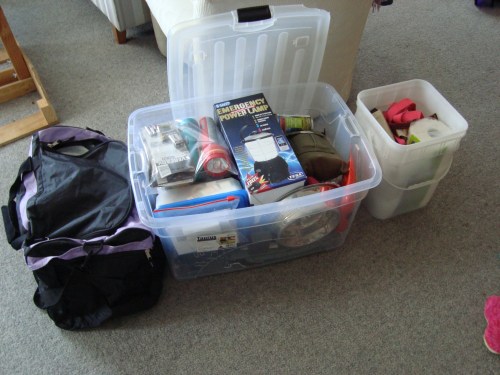
I have refilled my drinking water supplies (40 litres), for example. I aim to do this every 6 months and so I have marked my calendar for when 6 months is up. I bought new resealable containers this weekend and filled them with Izzy’s dry food., and I’ve taken the time to put more of my supplies in one place – the large plastic container is also new.
First aid kits for humans and dogs are in there. Also a dog bowl, extra leash and collar. Copies of Izzy’s vaccination record, microchip number and pet insurance are inside a zipped plastic bag and saved electronically in the cloud. We forget sometimes how much we rely on electronic records. If the Big One hits, our power supplies will be down for some time. Good old hard copies are worth keeping and updating.
I even realised that my email address on the NZ Companion Animal Register for Izzy’s microchip is outdated and so I’ll be phoning them in the morning to change it.
My water purification tablets have expired. So a trip to the pharmacy this week is planned.
Izzy has a spare dog coat packed, along with a towel and temporary bed. A new tennis ball for fun is also packed. I’ve also ordered some more dehydrated dog food.
And one of the things that many emergency lists forget is a stake and chain – which I have had for years. In a severe earthquake, fences will come down. Your dog will need to be restrained safely wherever you are and you cannot rely on rope to tie them up. A stressed dog can chew through that in minutes and be gone.
I also have an old dog tag that I’ve covered with a label. A pen and paper are also in my kit. I can leave notes if I need to but also write our temporary address on the dog tag because who knows where we may end up as temporary shelter…
From personal experience, I can tell you that during the first earthquake of 2010, I was much more calm knowing that I had supplies and was prepared. I set about checking the safety of my house and setting up things like an emergency toilet…I was ready!
If you don’t prepare for yourself, then do it for your dog. They rely on us for the care and safety.
Kathleen Crisley, specialist in dog massage, rehabilitation and nutrition/food therapy, The Balanced Dog, Christchurch, New Zealand








 DoggyMom.com