
The In Situ Foundation based in Chico, California, has spent the last 12 years developing scientific protocols that are needed to train cancer detection dogs and their handlers. In collaboration with top research universities including Duke and UC Davis, they rescue dogs and train them to sniff out specific cancers. All training is reward based.
What I particularly like about this registered charitable foundation is their mission to use rescue dogs “Our mission is to use shelter/rescue dogs whenever possible. We adopt dogs and give them loving homes, so what could have been a dog on death row, is now being trained to save human lives. All dogs are “super sniffers”, so we do not believe in breeding them, or creating a “super sniffer” breed.”
The dogs of In Situ live in residential homes with their adoptive families. Their day jobs are to go to work at the Foundation.
Here are the current dogs in the In Situ team:

Stewie is a 5 year-old, female, Australian Shepherd. She has been one of In Situ’s best dogs, and has been trained to detect early stage lung, ovarian, and breast cancer. She was one of our star dogs in a 2012 ovarian cancer study, and she is also on Duke University’s canine team for breast cancer. Stewie has also competed in agility, obedience, and is a certified therapy dog with Pet Partners and LA Children’s Hospital, where she visits sick children. Stewie was nominated for the 2015 American Hero Dog Award, given by the American Humane Association. Stewie is a beautiful, loving, smart and talented dog, who loves her work more than anything, except the frisbee.


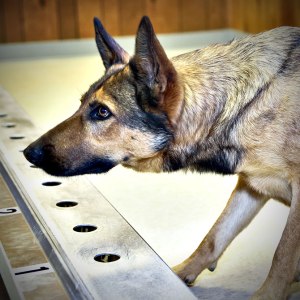
Charlie is the newest addition to the team. She is a six week-old German Shepherd from champion lines (from Nadulhaus German Shepherds) and will be one of the first dogs in the world trained on upper thoracic (head, neck and throat) cancer, using saliva samples. After 12 to 18 months of training with In Situ Foundation, she will be owned and loved by Dr. Peter Belafsky (University of California, Davis) and will work with him to sniff samples in clinical trails, which will help advance protocols to detect cancer at its earliest stages through olfaction.





 DoggyMom.com