
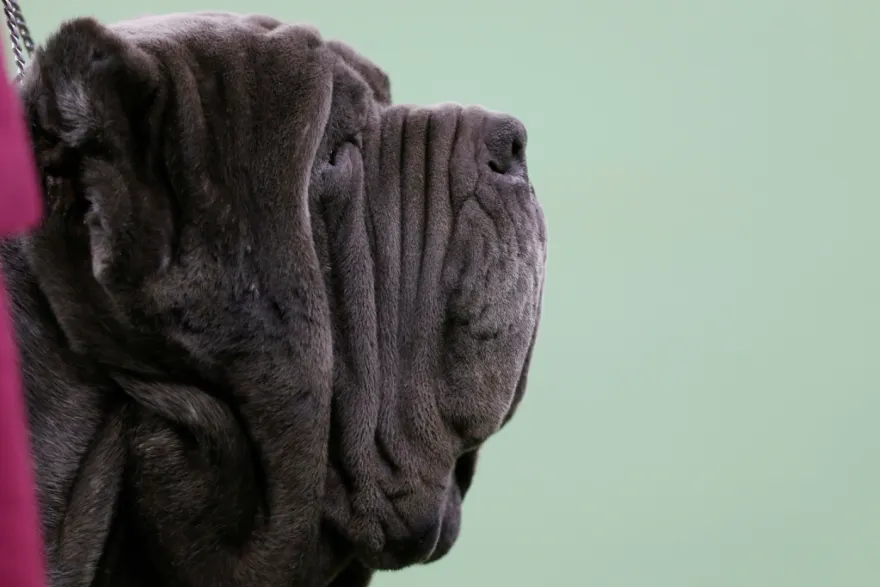
Dogs influence the air quality in homes. A study from Lausanne has measured for the first time the gases, particles and microbes that four-legged friends bring indoors.
The researchers see the results as a basis for more realistic models of indoor air, the Swiss Federal Institute of Technology Lausanne (EPFL) said on Monday, 23 February 2026. The influence of humans on the air has been well researched. However, the researchers say that the impact of pets has hardly been considered to date.
According to the study, a large dog at rest emits about the same amount of CO2 as an adult human. The amount of ammonia emitted is also comparable. This gas is produced when proteins are broken down and is released via the skin and the air we breathe.
According to the data, however, dogs had the greatest influence on particles in the air. By shaking, scratching or stroking, they stir up large quantities of dust, pollen, plant residues and microbes. Large dogs release two to four times more microorganisms than a human in the same room.
The animals act as mobile “carriers”, transporting biological material from the outside to the inside and distributing it throughout the room through their activities. However, this increased variety of particles in the interior is not necessarily negative, according to the researchers. Some studies suggest that contact with various microbes can promote the development of the immune system, especially in children.
Chemical reactions with ozone
Another aspect concerns chemical reactions indoors. Ozone that enters homes from outside reacts with skin lipids and forms new substances such as aldehydes or ketones. In humans, squalene, a component of skin sebum, plays a role here.
Dogs do not produce squalene themselves. However, humans transfer skin residues to the animals’ fur when stroking them. These residues then also react with ozone. On average, however, dogs produced around 40% less ozone reaction products than humans.
The team used a controlled environmental chamber at the EPFL in Fribourg for the measurements. Two groups of dogs were analysed: one with three large dogs (a Mastiff, a Tibetan Mastiff and a Newfoundland) and one with four small dogs (Chihuahuas). The study was published in the journal Environmental Science & Technology.
Source: Swissinfo.ch







 DoggyMom.com