Doctoral research by evolutionary biologist Kathryn Lord at the University of Massachusetts Amherst suggests that different behaviors between puppies and wolves are related to their critical period of socialization, when they have their first sensory experiences.
Lord studied responses of seven wolf pups and 43 dogs to both familiar and new smells, sounds and visual stimuli, tested them weekly, and found they did develop their senses at the same time. Whilst puppies and wolves have a critical four-week period for socialization, the difference is in the timing.
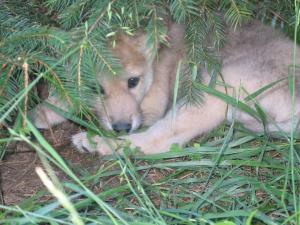
Wolf and dog pups begin walking and exploring without fear when the socialization window is open and they will retain familiarity throughout their lives with those things they contact. After the window closes, new sights, sounds and smells will elicit a fear response.
By making observations, Ms Lord confirmed that both wolf pups and dogs develop the sense of smell at age two weeks, hearing at four weeks and vision by age six weeks on average.
The difference in timing of the socialization period is stunning. Dogs begin the socialization period at four weeks, while wolves begin at two weeks. This, says Lord, is the reason for different paths of development.
When wolf pups start to discover their world, they are still blind and deaf at age two weeks. “No one knew this about wolves, that when they begin exploring they’re blind and deaf and rely primarily on smell at this stage, so this is very exciting,” says Lord.
Dog pups only begin to explore and walk after all three senses, smell, hearing and sight, are functioning. Overall, “It’s quite startling how different dogs and wolves are from each other at that early age, given how close they are genetically. A litter of dog puppies at two weeks are just basically little puddles, unable to get up or walk around. But wolf pups are exploring actively, walking strongly with good coordination and starting to be able to climb up little steps and hills.”
Details of this research are published in the journal Ethology.








 DoggyMom.com