Author Archives: DoggyMom.com

Treating enlarged prostate (BPH) in dogs

Benign prostatic hyperplasia, or BPH, is the medical term for an enlarged prostate.   The condition affects older, entire dogs and humans.

The most common clinical sign of BPH in dogs is bloody fluid dripping from the penis not associated with urination. In severe cases it can obstruct the colon and result in constipation.

A new method to treat dogs with BPH is pulsed electromagnetic field therapy (PEMF).  PEMF is a noninvasive method that generates both an electrical and magnetic field and is used in orthopedics, neurology, and urology.  Because PEMF has been reported to have an anti-inflammatory effect with increased healing and blood circulation, a research team decided to apply the technology to improve blood flow to the prostate and reduce the size of the gland.
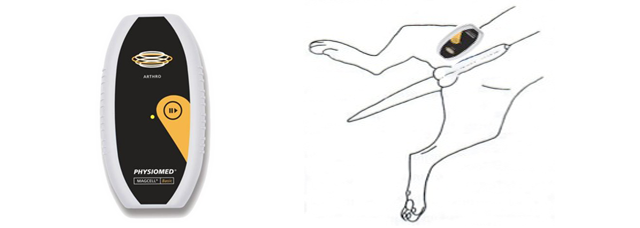
The study used a Magcell® Vetri device from Physiomed Elektromedizin AG, Germany.

The study used a Magcell® Vetri device from Physiomed Elektromedizin AG, Germany

The research study involved 20 dogs with BPH. They received treatment with PEMF for 5 minutes, twice a day for three weeks. The device was simply held over the skin where the prostate is located.

The results were pretty amazing.   After 3 weeks, the average reduction of the prostate was 57%.   There was no interference with semen quality, testosterone levels or libido.   There was also a progressive reduction in resistance of blood flow in the dorsal branch of the prostatic artery, as seen with Doppler scanning.

Source:  Raffaella Leoci, Giulio Aiudi, Fabio Silvestre, Elaine Lissner, Giovanni Michele Lacalandra (2014). “Effect of pulsed electromagnetic field therapy on prostate volume and vascularity in the treatment of benign prostatic hyperplasia: A pilot study in a canine model.” The Prostate. June 9, 2014. (Available online)
 

Domestication of dogs and the culling of mammoths

Adjunct Professor at Penn State, Pat Shipman, believes that the abrupt appearance of large numbers of dead mammoths may have been caused by early humans hunting with the first domesticated dogs.

Spectacular archaeological sites yielding stone tools and extraordinary numbers of dead mammoths — some containing the remains of hundreds of individuals — suddenly became common in central and eastern Eurasia between about 45,000 and 15,000 years ago, although mammoths previously had been hunted by humans and their extinct relatives and ancestors for at least a million years.

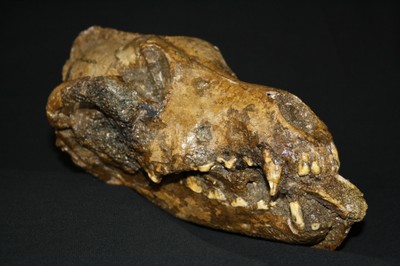
A fragment of a large bone, probably from a mammoth, Pat Shipman reports, was placed in this dog's mouth shortly after death. This finding suggests the animal was according special mortuary treatment, perhaps acknowledging its role in mammoth hunting. The fossil comes from the site of Predmosti, in the Czech republic, and is about 27,000 years B.P. old. This object is one of three canid skulls from Predmosti that were identified as dogs based on analysis of their morphology. Photo credit: Anthropos Museum, Brno, the Czech Republic, courtesy of Mietje Germonpre.

A fragment of a large bone, probably from a mammoth, Pat Shipman reports, was placed in this dog’s mouth shortly after death. This finding suggests the animal was according special mortuary treatment, perhaps acknowledging its role in mammoth hunting. The fossil comes from the site of Predmosti, in the Czech republic, and is about 27,000 years B.P. old. This object is one of three canid skulls from Predmosti that were identified as dogs based on analysis of their morphology. Photo credit: Anthropos Museum, Brno, the Czech Republic, courtesy of Mietje Germonpre.

“One of the greatest puzzles about these sites is how such large numbers of mammoths could have been killed with the weapons available during that time,” Shipman said.

Surprisingly, Shipman said, she found that “few of the mortality patterns from these mammoth deaths matched either those from natural deaths among modern elephants killed by droughts or by culling operations with modern weapons that kill entire family herds of modern elephants at once.” This discovery suggested to Shipman that a successful new technique for killing such large animals had been developed and its repeated use over time could explain the mysterious, massive collections of mammoth bones in Europe.

The key to Shipman’s new hypothesis is recent work by a team led by Mietje Germonpré of the Royal Belgian Institute of Natural Sciences, which has uncovered evidence that some of the large carnivores at these sites were early domesticated dogs, not wolves as generally had been assumed. Then, with this evidence as a clue, Shipman used information about how humans hunt with dogs to formulate a series of testable predictions about these mammoth sites.

Shipman’s research has been published in the journal Quaternary International and is entitled “How do you kill 86 mammoths?”

For more information about this research and related studies, read the full Penn State media statement.

Your dog’s behaviour – what does it say about your relationship?

Research by Christy L Hoffman of Canisius College in New York indicates that the bond between you and your dog may be the key to their behaviour.

Photo courtesy of Canisius College

Photo courtesy of Canisius College

Methodology

The study looked at human-animal attachment among 60 dog-owning families, including parents and children.  Participants completed questionnaires that asked about their attachment to their pet dogs, their levels of responsibility for the animals, such as feeding and walking them, and their general attitudes toward pets. Participants were also asked to rate their dogs on behavioral characteristics, including excitability, trainability, stranger fear and aggression, separation problems and attention-seeking behavior.

Findings

  • Those individuals who had more positive feelings about pets, in general, and who took more responsibility for the care of their dogs, compared to others in their families, had higher attachments to their dogs. (Probably not a huge surprise to most of us).
  • Owners, regardless of gender, age or race, had a greater attachment to their dogs when the animals scored high on trainability and separation-related problems. In other words, if the dog is well-behaved and likes to socialize with humans, then the bond between the dog and its owner is greater.
  • The more dogs demonstrate attention-seeking behavior with their adult owners, the more attached these owners are likely to be with their dogs. Interestingly, however, this made no difference to the children in the study.

Hoffman thinks that the last finding is indicative of adults having busy lives with parental and work responsibilities – so they are most likely to bond with dogs that seek out their attention.

This research was a collaboration with researchers from the University of Chicago and the University of Pennsylvania and has been published in the  the journal  Human-Animal Interaction Bulletin.

Source:  Canisius College media release

New team on duty at Christchurch Airport

There’s a new biosecurity dog team on duty at Christchurch Airport.  Meet Helga and handler Kimberly Sell in this article:

Helga on duty, photo by Kirk Hargreaves

Helga on duty, photo by Kirk Hargreaves

New team on airport duty – news – the-press | Stuff.co.nz.

Wordless Wednesday, part 39

Photo courtesy of Trisha Baird

Photo courtesy of Trisha Baird

Blog Hop


Doggy quote of the month for July

“Well, I for one am unable to imagine how anybody who lives with an intelligent and devoted dog can every be lonely.”

– Elizabeth von Arnim, novelist

Thereby Hangs a Tail

Chet and Bernie are at it again in this second installment of the Chet and Bernie series by Spencer Quinn, entitled Thereby Hangs a Tail.

Thereby hangs a tailLike the first book, Dog On It, the narrator is Chet – the canine partner of Bernie Little of the Little Detective Agency.  Bernie’s romance with reporter Susie Sanchez isn’t a smooth ride and she goes missing at a time when Bernie is hired to investigate threats made against a show dog, Princess.

When Princess and her owner are kidnapped, the mystery deepens.  Once again, Chet finds himself in the middle of the action – and along the way his nose helps him to identify tasty treats to inhale.

Will Chet and Bernie find Susie alive?  You’ll have to read the book!

I didn’t enjoy this story as much as the first book – but well worth a read for summer.

What is a senior dog?

This graphic, provided by The Senior Dogs Project, shows how a dog’s age is determined in part by its size.  Smaller dogs have a longer lifespan and so are classified as senior (or geriatric) at a higher age.

A Dog’s Age in Human Years
Age Up to 20 lbs 21-50 lbs 51-90 lbs Over 90 lbs
5 36 37 40 42
6 40 42 45 49
7 44 47 50 56
8 48 51 55 64
9 52 56 61 71
10 56 60 66 78
11 60 65 72 86
12 64 69 77 93
13 68 74 82 101
14 72 78 88 108
15 76 83 93 115
16 80 87 99 123
17 84 92 104 Red numbers =
senior

Blue numbers =
geriatric
18 88 96 109
19 92 101 115
20 96 105 120
Chart developed by Dr. Fred L. Metzger, DVM, State College, PA. Courtesy of Pfizer Animal Health.


Image

Wordless Wednesday, part 38

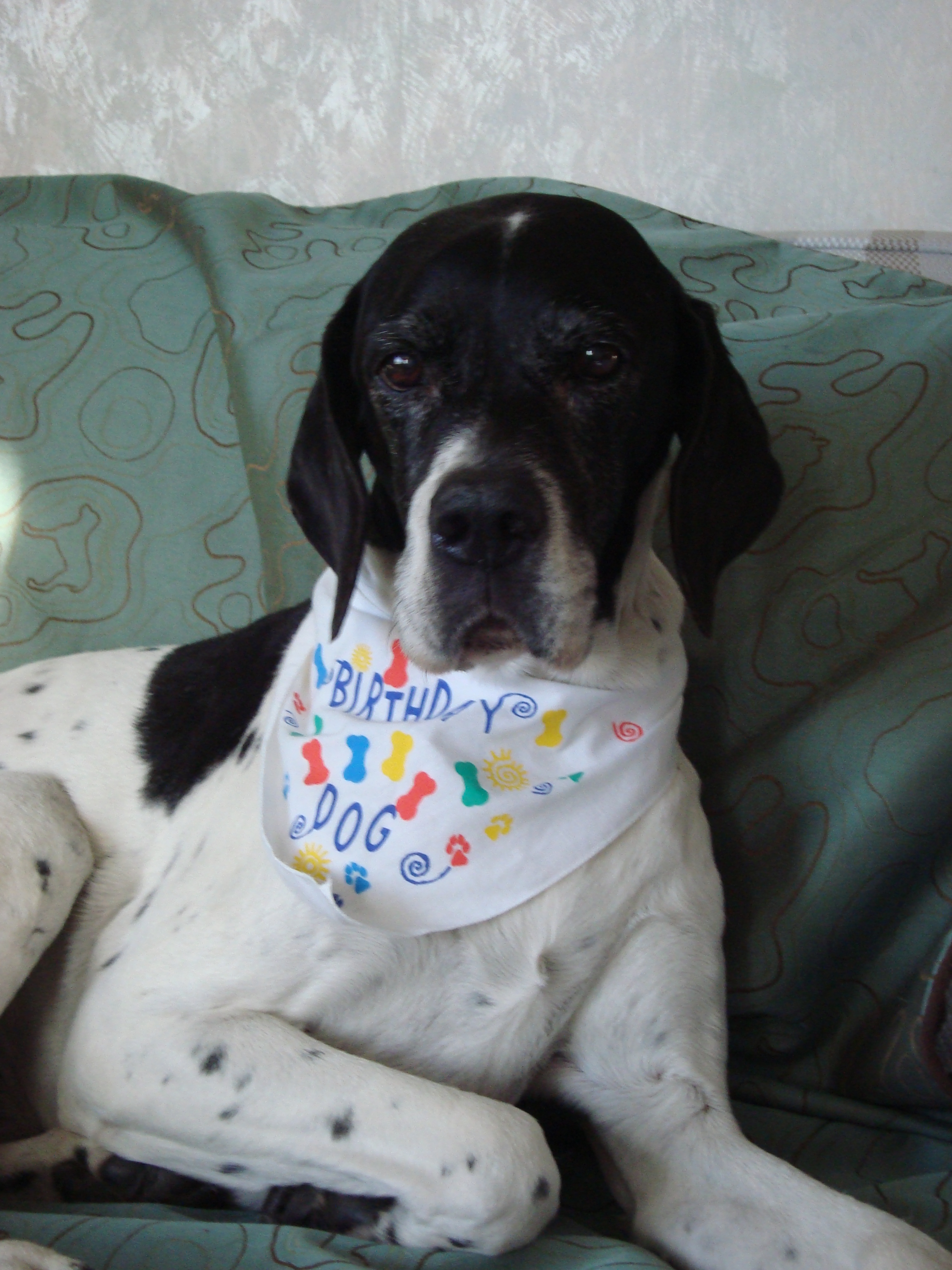
Daisy birthday portraitBlog Hop

Urine may be the saviour of wild dog populations

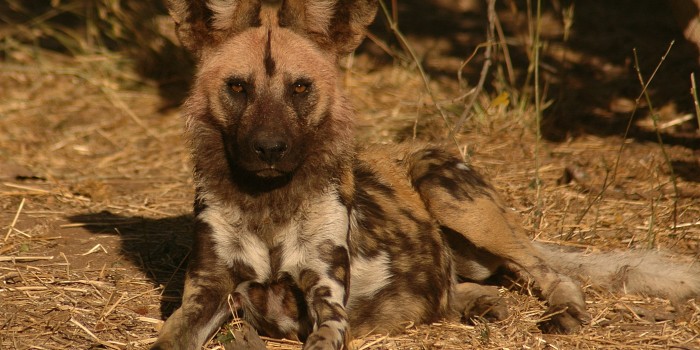
Africa’s endangered wild dogs are very clever:  no traditional fence can keep them out.  A doctoral researcher at the Norwegian University of Science and Technology (NTNU), Craig R. Jackson, has explored ways to save the species.

Photo by Craig R. Jackson

Photo by Craig R. Jackson

African wild dogs are a distinct species that cannot inter-breed with other dogs.   The populations of these dogs were in good shape until a few decades ago. In the middle of the last century, there were 500,000 of them in 39 countries. But the species is in decline across nearly its entire range south of the Sahara. Today there are somewhere between 3000 and 5500 left, in fewer than 25 countries. That’s roughly one per cent remaining – and that’s the best case scenario.

Wild dog packs are loath to intrude into the territories of other packs. These territories are defined by urine scent trails. So the researchers and their colleagues collected sand that had been sprayed with urine by wild dogs and moved it near to other packs to keep them inside a certain area – with success.

The use of the scent markings helps to keep wild dogs out of areas where they think there are other dog packs.  But, collection of the urine needed for the scent trails is a problem.  So the next step is re-creating the urine artificially.

The conclusion of the thesis:  urine may be the best bet for saving the African wild dog population; that urine may have to be artificially produced.

Source:  NTNU media release