Author Archives: DoggyMom.com

K9 Chemistry: A Safer Way to Train Detection Dogs

Trained dogs are incredible chemical sensors, far better at detecting explosives, narcotics and other substances than even the most advanced technological device. But one challenge is that dogs have to be trained, and training them with real hazardous substances can be inconvenient and dangerous.

NIST scientists have been working to solve this problem using a jello-like material called polydimethylsiloxane, or PDMS for short. PDMS absorbs odors and releases them slowly over time. Enclose it in a container with an explosive or narcotic for a few weeks until it absorbs the odors, and you can then use it to safely train dogs to detect the real thing. 

A detection dog in training.
Credit: Courtesy of Auburn University College of Veterinary Medicine

But a few weeks is a long time, and now, NIST researchers have developed a faster way to infuse PDMS with vapors. In the journal Forensic Chemistry, they describe warming compounds found in explosives, causing them to release vapors more quickly, then capturing those vapors with PDMS that is maintained at a cooler temperature, which allows it to absorb vapors more readily. This two-temperature method cut the time it took to “charge” PDMS training aids from a few weeks to a few days. 

“That time savings can be critical,” said NIST research chemist Bill MacCrehan. “If terrorists are using a new type of explosive, you don’t want to wait a month for the training aids to be ready.”

For this experiment, MacCrehan infused PDMS with vapors from dinitrotoluene (DNT), which is a low-level contaminant present in TNT explosives but the main odorant that dogs respond to when detecting TNT. He also infused PDMS with vapors from a small quantity of TNT. Co-authors at the Auburn University College of Veterinary Medicine then demonstrated that trained detection dogs responded to the DNT-infused PDMS training aids as if they were real TNT. 

While this study focused on DNT as a proof of concept, MacCrehan says he believes the two-temperature method will also work with other explosives and with narcotics such as fentanyl. Some forms of fentanyl are so potent that inhaling a small amount can be harmful or fatal to humans and dogs. But by controlling how much vapor the PDMS absorbs, MacCrehan says, it should be possible to create safe training aids for fentanyl.

Other safe training aids already exist. Some are prepared by dissolving explosives and applying the solution to glass beads, for example. “But most have not been widely accepted in the canine detection community because their effectiveness has not been proven,” said Paul Waggoner, a co-author and co-director of Auburn’s Canine Performance Sciences Program. “If you put an explosive in a solvent, the dogs might actually be detecting the solvent, not the explosive.”

To test the two-temperature method, MacCrehan devised a PDMS “charging station” with a hot plate on one side and a cooling plate on the other (so the “hot stays hot and the cool stays cool,” as a 1980s commercial jingle put it). He prepared various samples by placing the DNT on the hot side, where the chemical was warmed to temperatures ranging from 30 to 35 degrees Celsius (86 to 95 degrees Fahrenheit) — well below the temperature that would cause TNT to detonate. The PDMS was kept a relatively cool 20 degrees Celsius, or about room temperature, on the other side of the charging station. 

MacCrehan loaded the DNT-infused PDMS samples, which hold their charge for up to a few months, into perforated metal cans. He also loaded several cans with blanks — PDMS samples to which no vapors were added. He labeled the cans with codes and shipped them to Auburn University. 

The researchers at Auburn had trained a team of six Labrador retrievers to detect TNT using real TNT explosives. They then conducted a study to determine if the dogs would alert to the PDMS from NIST samples as if it were real TNT.

This study was “double blind”: Neither the dog handlers nor the note-takers who scored the dogs’ responses knew which containers underwent which preparation. This is important because dogs are keenly attuned to the body language of their handlers. If the handlers knew which samples were prepared with DNT, they might inadvertently cue the dogs with the direction of their gaze, a subtle shift in body position or some other subconscious gesture. And if the note-takers knew which samples were which, they might over-interpret the dogs’ responses.

The dogs alerted to all the DNT-infused PDMS samples. They did not alert to the blanks, meaning that they were responding to the DNT, not to the PDMS itself. “They responded to the samples as if they were the real thing,” Waggoner said. 

The dogs did not respond as consistently to PDMS that was infused with limited quantities of TNT. However, MacCrehan explains that the very small amounts of TNT he used for this purpose may not have contained sufficient amounts of DNT to fully infuse the samples.

Looking forward, MacCrehan will be experimenting with ways to safely prepare PDMS training aids for the improvised explosives TATP and HMTD. These compounds are extremely unstable and detonate easily, so having safe training aids for them will be especially useful.

MacCrehan is a laboratory chemist, not an animal behavior expert. But despite his technological orientation, he is amazed by dogs. He estimates that they are 10,000 to 100,000 times more sensitive than the most sophisticated analytical instruments. “We are nowhere near having a hand-held gizmo that can do what they do,” he said.  


Paper: W. MacCrehan, M. Young, M. Schantz, T.C. Angle, P. Waggoner and T. Fischer. Two-temperature preparation method and visualization of PDMS-based canine training aids for explosives. Forensic Chemistry. Published online Oct. 15, 2020. DOI: 10.1016/j.forc.2020.100290
Source: National Institute of Standards and Technology

Showered with love

Christchurch is known as The Garden City because so many residents, including me, like to have flower and vegetable gardens.

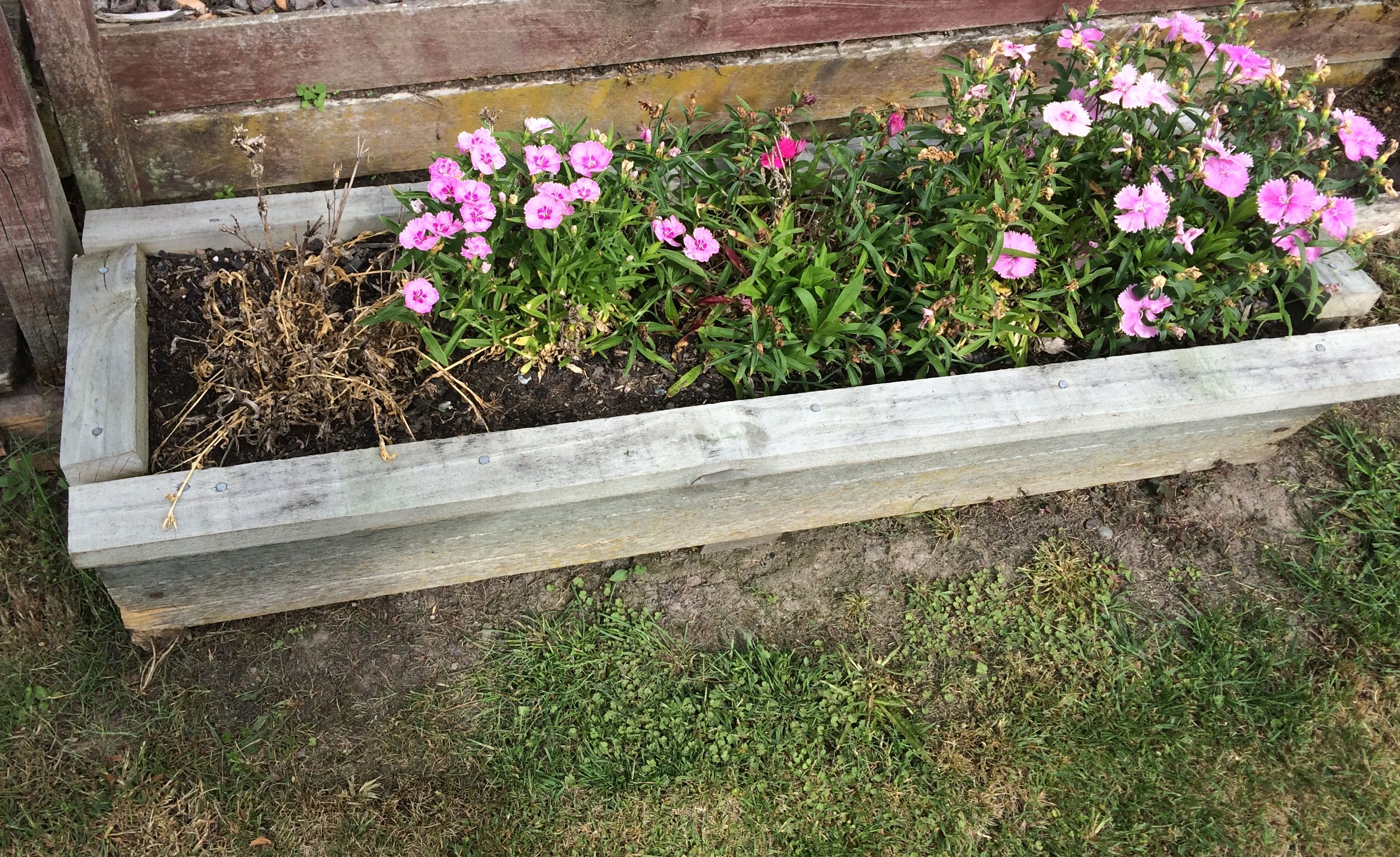
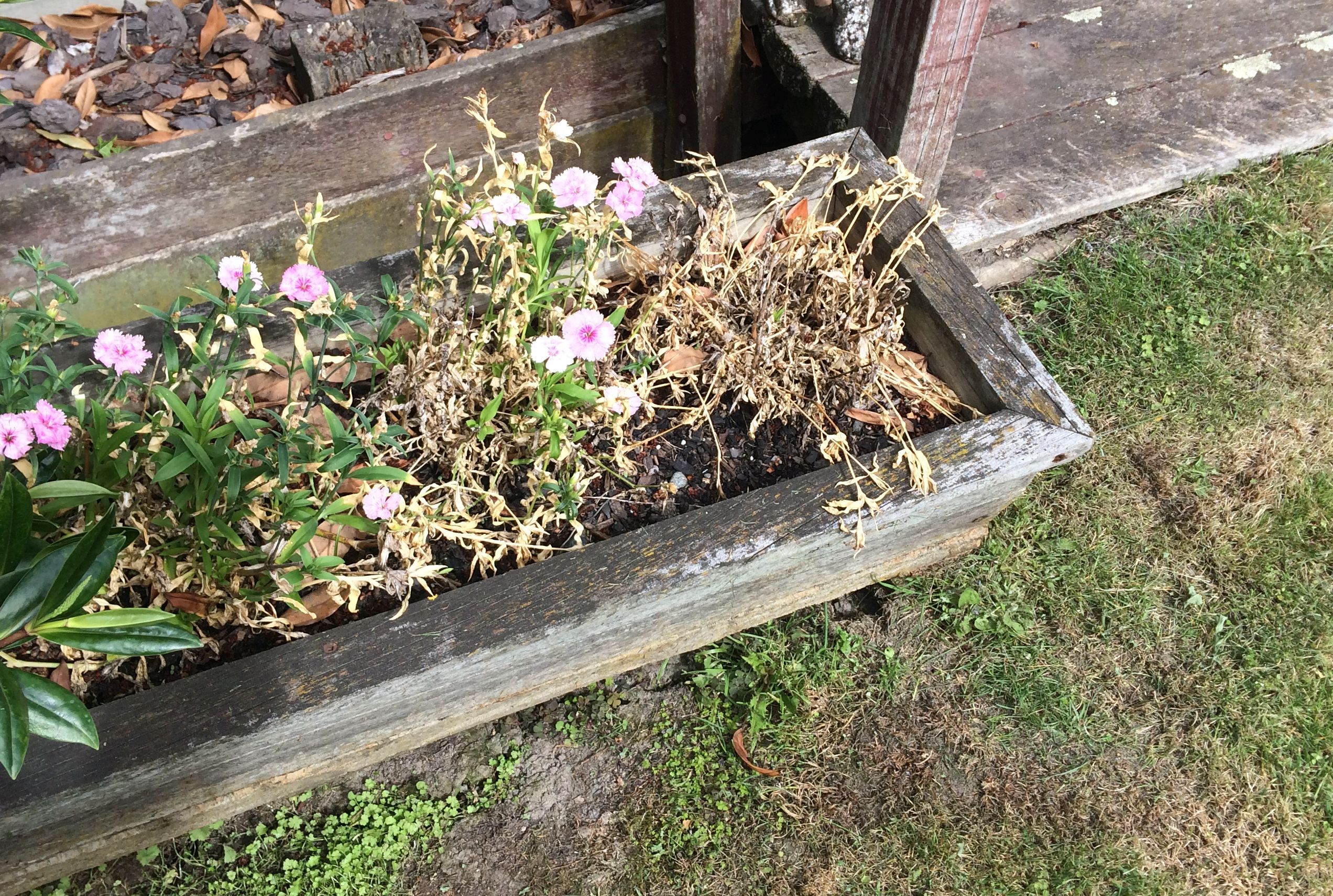
When I was gardening a few weeks ago, I noticed that the flowers on the left and right ends of my planter boxes had died. The others were coming away again with the spring rains and warmth.

And then I remembered. Spot has been coming to stay with us for daycare dates over the winter and spring. A boy, Spot likes to mark and my planter boxes are the perfect height for him.

Spot

Dog urine has a high concentration of nitrogen which will kill lawns and other plants when applied in a concentrated way. This is the same reason why gardeners who don’t follow the instructions on the label of nitrogen fertilizers find that instead of feeding their lawns and plants, they kill them off.

“Showered with love,” says Spot’s Mum… It’s okay. I like Spot and so does Izzy. A couple of dead plants are a small price to pay when we can enjoy the company of this beautiful boy.

Kathleen Crisley, Fear-Free certified professional and specialist in dog massage, rehabilitation and nutrition/food therapy, The Balanced Dog, Christchurch, New Zealand

Pets, touch and Covid-19: why our furry friends are lifesavers

Lockdowns, job losses and social isolation have been the hallmarks of 2020 as COVID-19 tightens its grip on the world, not only infecting millions and leaving a mounting death toll, but also denying humans the most basic sense – touch.

In the absence of human-to-human contact, in millions of households worldwide, animals have stepped into the breach for many people, providing much-needed comfort via cuddles, pats and a constant physical presence.

A new study published by University of South Australia researchers points to the lifesaving role that pets have played in 2020 and why governments need to sit up and take notice.

The Journal of Behavioural Economics for Policy (JBEP) paper outlines how pets have a crucial role to play in an era where human-human contact can be life endangering.

Lead author Dr Janette Young says physical touch is a sense that has been taken for granted – even overlooked – until COVID-19 visited our door earlier this year.

“In a year when human contact has been so limited and people have been deprived of touch, the health impacts on our quality of life have been enormous,” Dr Young says.

“To fill the void of loneliness and provide a buffer against stress, there has been a global upsurge in people adopting dogs and cats from animal shelters during lockdowns. Breeders have also been inundated, with demands for puppies quadrupling some waiting lists.”

Spending on pets was already hitting record levels, topping $13 billion in Australia and in the region of US$260 billion globally in 2020, but this is bound to be surpassed.

It is estimated that more than half the global population share their lives with one or more pets. The health benefits have been widely reported, but little data exists regarding the specific benefits that pets bring to humans in terms of touch.

“Pets seem to be particularly important when people are socially isolated or excluded, providing comfort, companionship and a sense of self-worth,” Dr Young says.

“Touch is an understudied sense, but existing evidence indicates it is crucial for growth, development and health, as well as reducing the levels of the stress hormone cortisol in the body. It is also thought that touch may be particularly important for older people as other senses decline.”

In interviews with 32 people, more than 90 per cent said touching their pets both comforted and relaxed them – and the pets seemed to need it as well.

Examples of dogs and cats touching their owners when the latter were distressed, sad, or traumatised were cited. Many people referenced pets’ innate ability to just “know” when their human counterparts weren’t feeling well and to want to get physically close to them.

“The feedback we received was that pets themselves seem to get just as much pleasure from the tactile interaction as humans,” Dr Young says.

Not just dogs and cats either. Interviewees mentioned birds, sheep, horses and even reptiles who reciprocate touch.

“Animals, like people, are living, breathing others, with individual interests, styles and preferences. While culturally, animals are not seen as ‘human’, they are still seen as individuals with likes and dislikes.

“In the era of COVID-19, social distancing, sudden lockdowns and societal upheaval, our pets may be the only living beings that many people are able to touch and draw comfort from.

“Humans have an innate need to connect with others but in the absence of human touch, pets are helping to fill this void. They need to be considered from a policy angle, therefore, to help mitigate some of the mental and physical stressors that people are experiencing during this time.”

Dr Young says hospitals, hospices and aged care facilities should be encouraging pet connections with residents.

“Residential aged care is yet to recognise the value of human-animal relationships. Had more pets being living with their owners in aged care when COVID-19 restrictions were applied, it could have helped people immeasurably,” she says.

Source: University of South Australia

Perspectives on budgeting

In the 11+ years I have been in professional practice, I’ve met a lot of great dogs with equally loving families. Yet, when it comes down to discussions with their veterinarian, often the only ‘budget’ that is mentioned is that of the financial budget.

In this post, I’d like to discuss budgeting because I think there are a total of four (4) budgets. These are the financial budget, the time budget, the physical budget and the emotional budget. Dog owners may, at any time, face a crisis in one or more of these budgets.

The Financial Budget – how much money can you spend to keep your dog healthy and happy? This typically becomes the budget of concern when a major procedure like surgery is required and that’s why veterinarians discuss it the most. Whether by an accident or illness, some owners are caught without enough money in the bank or pet insurance to cover the necessary treatment.

In other cases, a dog may be diagnosed with a medical condition which requires regular medication. Since medications for dogs are not subsidised by the Government (as they are in human health in New Zealand), some medications can be quite expensive. As our dogs age, it’s very common to develop mobility problems associated with arthritis, for example. Not only does this condition require medication, but also changes to the home environment, equipment ranging from harnesses to ramps to mobility carts, and professional help with canine fitness and physical therapy.

Veterinarians are often asked to euthanise a pet when the family cannot afford the cost of their dog’s care. This is referred to in the profession as ‘economic euthanasia.’

The Time Budget usually becomes an issue when a dog requires care at home. Dogs that require crating post-surgery have to be taken out to the toilet on lead on a regular basis, for example. Many pet parents can’t work from home because of the nature of their jobs; some employers may not be supportive of the need for regular breaks to return home to care for a dog or to allow the dog in the office…

I see the time budget become an issue in my practice because of the exercises needed to improve a dog’s strength, balance and flexibility. I specialise in in-home care and, while I always aim to make these exercises easy to do with items in the home, some owners struggle to have the time to undertake them on a consistent basis. Just this week I had a regular client ask, “do I have to do these every day, because they take another half-hour on top of our walk…?”

An owner’s physical abilities is also a budget of sorts. Let’s call this the Physical Budget. A large-sized dog that needs lifting because of an injury or longer-term mobility problem is going to be a challenge to an older owner or one who is slight of frame themselves.

Finally, there’s the Emotional Budget. The bond with our pets is quite strong and caring for a dog with major mobility or other health issues results in caregiver stress, just as it does with human caregivers. Unfortunately, without extended family or close friends who can provide some relief, I’ve seen owners who are totally depleted in energy and enthusiasm for life because of the toll of taking care of a geriatric or unwell pet.

Owners of dogs with severe behavioural problems often find that caring for them takes an emotional toll, as well.

Let’s remember that a pet owner in crisis may not have finances at the top of their list – and so a deeper conversation about pressures of care is required. I find that my in-home service, with clients in their own home and more relaxed and willing to talk, is of huge benefit to getting the best results for their dog, working as a team.

Kathleen Crisley, Fear-Free certified professional and specialist in dog massage, rehabilitation and nutrition/food therapy, The Balanced Dog, Christchurch, New Zealand

Doggy quote of the month for December

Kathleen Crisley, Fear-Free certified professional and specialist in dog massage, rehabilitation and nutrition/food therapy, The Balanced Dog, Christchurch, New Zealand

A Christmas song for dogs

It doesn’t sound very ‘Christmas-y’ to me, but Raise the Woof! is reported to be the first Christmas single written specifically for dogs.

It was made using scientific research into how dogs interact with sound, both noises and the spoken word (like ‘walkkies’).

How does your dog react when you play it for them?

Kathleen Crisley, Fear-Free certified professional and specialist in dog massage, rehabilitation and nutrition/food therapy, The Balanced Dog, Christchurch, New Zealand

Raised dog beds

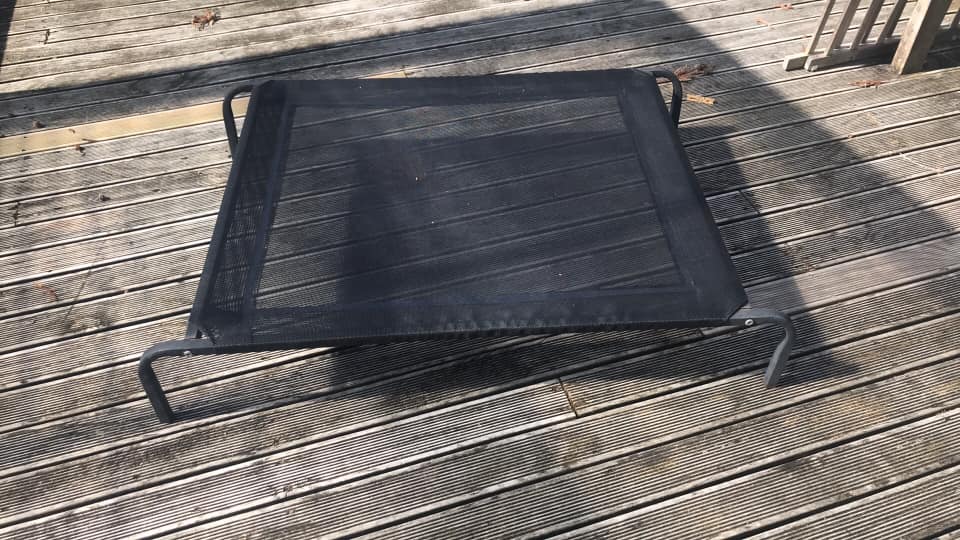
This photo popped up in my Facebook news feed today with the dog bed listed as ‘free to a good home.’

I’m not a fan of these beds. The heavy metal frame is an accident waiting to happen, particularly for older dogs who are slow to rise, often needing a stretch before they start moving after a good sleep. A number of years ago, I worked on a young dog who tripped getting out of a bed like this and broke his leg on the metal frame!

The theory behind these beds is that they keep your dog off of cold floors and out of drafts (draughts) and it may be easier to clean underneath with the vacuum or a mop.

In my opinion, a soft sided bed with lots of padding underneath is a better and safer option. I know many dogs who end up sleeping on double mattresses, too.

This free to a good home dog bed should be sent to the nearest scrap metal yard so that no dog is put in danger.

Kathleen Crisley, Fear-Free certified professional and specialist in dog massage, rehabilitation and nutrition/food therapy, The Balanced Dog, Christchurch, New Zealand

New research reveals widespread contamination of English rivers with pesticides commonly used as flea treatments

Researchers at the University of Sussex have found widespread contamination of English rivers with two neurotoxic pesticides commonly used in veterinary flea products: fipronil and the neonicotinoid imidacloprid. The concentrations found often far exceeded accepted safe limits.  

These chemicals are banned for agricultural use due to the adverse environmental effects, but there is minimal environmental risk assessment for pesticides used on domestic cats and dogs. This is due to the assumption that there are likely to be fewer environmental impacts due to the amount of product used.  

River Nene, near Nassington taken by Iain Simpson – Wiki Commons (licensed under the Creative Commons Attribution-Share Alike 2.0 Generic license)

But there is growing concern that this assumption may be incorrect. To investigate this, Professor Dave Goulson and Rosemary Perkins from the University of Sussex analysed data gathered by the Environment Agency in English waterways between 2016-18. They found that fipronil was detected in 98% of freshwater samples, and imidacloprid in 66%.  

Rosemary Perkins, a PhD student at Sussex and a qualified vet, said: “The use of pet parasite products has increased over the years, with millions of dogs and cats now being routinely treated multiple times per year. 

“Fipronil is one of the most commonly used flea products, and recent studies have shown that it degrades to compounds that are more persistent in the environment, and more toxic to most insects, than fipronil itself. Our results, showing that fipronil and its toxic breakdown products are present in nearly all of the freshwater samples tested, are extremely concerning.”   

According to the Veterinary Medicines Directorate (VMD), who funded the research, there are 66 licensed veterinary products containing fipronil in the UK, and 21 containing imidacloprid, either alone or in combination with other parasiticides. These include spot-on solutions, topical sprays and collars impregnated with the active ingredient. 

While some of these products can be purchased only with a veterinary prescription, others can be bought without a prescription from pet shops, supermarkets, pharmacies and online. Many pet owners receive year-round preventative flea and/or tick treatment from their vet practice via healthcare plans. 

Fipronil has a history of very limited agricultural use prior to its ban in 2017. It is also licensed for use in ant and cockroach baits, however only one product is licensed for use by non pest-control professionals. Use on pets seems to be the most plausible source of the widespread contamination of rivers.

The paper, co-authored with Martin Whitehead from the Chipping Norton Veterinary Hospital and Wayne Civil at the Environment Agency, examines the occurrence of fipronil and imidacloprid in English rivers as indicators of the potential contamination of waterways from the use of pet flea treatments. 

They found that the average fipronil concentration across the rivers sampled by the Environment Agency exceeded chronic safety thresholds five-fold. The overall pollution levels in English rivers indicate that fipronil and its toxic breakdown products pose a high risk to aquatic ecosystems.

While, in most rivers, imidacloprid was found to pose a moderate risk, in seven out of the 20 rivers sampled there was a high environmental risk. 

Co-author Professor Dave Goulson said: “Fipronil and imidacloprid are both highly toxic to all insects and other aquatic invertebrates. Studies have shown both pesticides to be associated with declines in the abundance of aquatic invertebrate communities. The finding that our rivers are routinely and chronically contaminated with both of these chemicals and mixtures of their toxic breakdown products is deeply troubling.”

The paper, published in Science of the Total Environment, notes that the highest levels of pollution were found immediately downstream of wastewater treatment works, supporting the hypothesis that significant quantities of pesticide may be passing from treated pets to the environment via household drains. 

Bathing of pets treated with spot-on fipronil flea products has been confirmed as a potentially important route to waterways for fipronil via sewers, and the washing of hands, pet bedding or other surfaces that have come into contact with treated pets are potential additional pathways for entry to sewers. Other pathways for contamination of waterways includes swimming and rainfall wash-off from treated pets. The strong correlation between fipronil and imidacloprid levels across the river sites tested suggest that they may be coming from a common source. 

Rosemary Perkins added: “We’ve identified a number of steps that can be taken to minimise or avoid environmental harm from pet flea and/or tick treatments. These range from introducing stricter prescription-only regulations, to considering a more judicious and risk-based approach to the control of parasites in pets, for example by moving away from blanket year-round prophylactic use.  

“We’d recommend a re-evaluation of the environmental risks posed by pet parasite products, and a reappraisal of the risk assessments that these products undergo prior to regulatory approval.” 

Source: University of Sussex

Early-life diet and can­ine atopy can have a con­nec­tion

Meat-based maternal diet during pregnancy and as the puppies’ first solid diet during the early postnatal period (at 1–2 months of age), both showed a significant “protective” effect from atopy in adult age.

Researchers from the international multidisciplinary research group “DogRisk” at the University of Helsinki have found novel early-life risk factors that impact the prevalence of atopic dermatitis in adult dogs. The results are also interesting for human medicine as the disease, atopy, is very similar in young dogs and in children.

The identified risk factors include non-modifiable and modifiable variables in the pre- and postnatal age, being just before or after birth. This new knowledge empowers dog owners, opens up research on processed foods, and advances primary atopy preventive strategies. 

So far over 12,000 dog owners have answered the Finnish internet-based DogRisk food frequency questionnaire. The data allows for associating many non-modifiable and modifiable risk factors with owner-reported canine atopic dermatitis (CAD) prevalence.

As partly reported previously, an increased prevalence of atopy in adult age significantly associated with the dog being from an allergy prone breed, its mother having a history of atopy, and more than 50 % of the dog’s hair coat being white. But the most interesting for the owners are the things that they can have an impact on: early life diet had the strongest association with the disease.

Novel diet-re­lated risk factors for atopy in dogs

A non-heat-processed, meat-based maternal diet during pregnancy and as the puppies’ first solid diet during the early postnatal period (at 1–2 months of age), both showed a significant “protective” effect from atopy in adult age. The same diet also indicated protection at a later puppy stage (at 2–6 months of age), but this finding did not reach significance.

On the contrary, an ultra-processed carbohydrate based maternal diet (commercial dry kibble) during pregnancy and as the puppies’ first solid diet during the early postnatal period, increased atopy incidence in adult age.

“As the differently processed diets also have a very different macro-nutrient profile it is, at this stage, impossible to say whether it is the lack of “cooking”, the minimal amount of carbohydrates, preservatives and coloring agents, the different quality and quantity of animal proteins and fats, the non-sterility of the food, or something else, that made raw foods come out as superior for atopy health in our data”, says the study’s main researcher Dr. Manal Hemida from the Helsinki One Health network.

Additionally, de-worming the dam during pregnancy, exposing the young puppies to sun light for at least one hour per day, spending time on a dirt floor or lawn before six months of age, keeping the young puppies at normal body weight, and continuing to live in the same family where they were born, were all associated with a significant decrease of CAD risk at adult age.

“These results, however, only suggest causality, but do not prove it. A prospective diet intervention during pregnancy and at young age is needed to confirm our findings”, says Adjunct Professor Anna Hielm-Björkman, leader of the DogRisk research group.

Original article in PLOS ONE: Identification of modifiable pre- and postnatal dietary and environmental exposures associated with owner-reported canine atopic dermatitis in Finland using a web-based questionnaire. Manal Hemida, Kristiina A. Vuori, Siru Salin, Robin Moore, Johanna Anturaniemi, Anna Hielm-Björkman. Published: May 29, 2020, https://doi.org/10.1371/journal.pone.0225675

Source: University of Helsinki

Eddie

I said goodbye to Eddie on Saturday. With his Mum’s permission, I am writing this post.

Eddie and I first met in June 2016 when he was the tender age of 11 weeks. He was the newest addition to a family that already included his French Bulldog sister, Jorgie – also a regular massage customer.

As he rapidly grew, he developed his rugby player neck which earned him my nickname “My Little Boofhead.” It didn’t take him long to understand that the table meant massage – leaping up to get started:

I would set up for massage downstairs and then brace myself for Eddie and Jorgie to arrive

In the intervening 4+ years, Eddie proved to be an enthusiastic Lover and not a Fighter (contrary to what so many people believe about Bull Breed dogs). Always eager to please, he learned strengthening and rehab exercises quickly.

He was also an Over-Sharer – I lovingly called him this because he would often howl in my ear for part of his massage session. I am convinced he wanted me to know everything he had been doing since I last saw him. (I just wish he had come with subtitles and a volume control).

Eddie was one of those dogs that seemed to go from crisis to crisis. He needed soft palate surgery after suffering from enlarged tonsils, he developed digestive problems that did not respond to various therapies and, after biopsy, was diagnosed with IBD. He then ingested rat poison when visiting a neighbour and had to go to the emergency vet for what was – thankfully – a quick intervention. He then ruptured one cruciate and had surgery followed by 12 weeks of rehab- only to become a statistic and rupturing the other in good measure.

And then in September, just as it looked like we had fully rehabbed him from his second cruciate surgery and he was ready to strengthen and return to normal activity, out of the blue he developed pancreatitis that wasn’t linked to a food indiscretion.

As it turned out, his ultrasound revealed that Eddie was likely suffering from stomach cancer and our focus turned to his quality of life. Eddie’s mum asked that we continue laser therapy for pain relief, knowing that laser therapy is contraindicated in cases of cancer – this was about keeping him happy and comfortable as a cure was not possible.

Eddie’s time has come. A follow-up scan has shown that his tumour has grown significantly and, tomorrow morning, he will be helped across the Rainbow Bridge.

In Eddie’s case, I see him mounting the Bridge in his custom-built stairlift (this video made him something of a Facebook star with some loyal followers on my page).

Eddie has taught me a lot about living in the moment; no matter what the health challenge of the time, he seemed to roll with it. But cancer is a wasting disease and only in the last few weeks did we notice how flat he had become – definitely not his normal self.

Goodbye, My Little Boofhead. It’s been quite a ride – one that I wish would have lasted for much longer.

Kathleen Crisley, Fear-Free certified professional and specialist in dog massage, rehabilitation and nutrition/food therapy, The Balanced Dog, Christchurch, New Zealand