Author Archives: DoggyMom.com

Before and after

Our friend Ben, a greyhound, had an accident on Saturday, 15th September 2018.

From what we can tell, he was chasing a cat who must have taken a hard right turn.  When Ben tried to follow (he was under cover of a line of bushes and trees at the time of the incident), his momentum carried him sideways into a tree.  He emitted a huge cry of pain but was luckily able to walk home slowly before being taken to the vet within 15 minutes of the crash.

His bruising wasn’t immediately apparent because bruising takes time to come up; the vet suggested that he might also have cracked a rib during the impact.

Ben's bruising after photo

Ben the greyhound shortly after the incident

But within a few hours, here’s what he looked like:

Ben's bruising before photo

Ben the greyhound on 15 September 2018

I visited with him on Saturday afternoon and again on Monday (17th September) to laser him thoroughly with specific acupressure and trigger points addressed.  To some extent, the laser helped to bring out the bruising and speed healing.  His mum was also giving him regular rubdowns with Sore No More lotion (which I use and sell in my practice) and also dosing him Traumeel drops which I also recommend to my clients as a ‘must have’ for their First Aid kits.

And today (Wednesday, 19th September 2018), I got these lovely photos of Ben who is happily out running again in the sunshine:


It is very rewarding to be able to help dogs using my scope of practice of massage, acupressure, and laser therapies.  It’s even more rewarding when the dog is also a close friend.

Kathleen Crisley, Fear-Free certified professional and specialist in dog massage, rehabilitation and nutrition/food therapy, The Balanced Dog, Christchurch, New Zealand

Sniffing out error in detection dog data

A new study in the journal Scientific Reports gets to the bottom of it: Why do dogs that are trained to locate poop sometimes find the wrong kind of poop?
Sniffer dog reseawrcgh

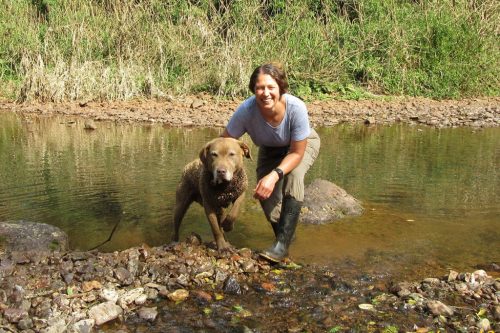
Washington University researcher Karen DeMatteo and her scat-sniffing dog Train are on a mission to preserve jaguars, pumas, bush dogs and other carnivores in the forests of Northeastern Argentina. (Photo: courtesy of Karen DeMatteo/Washington University)

It happens anywhere from 4 percent to 45 percent of the time, said Karen DeMatteo, a biologist in Arts & Sciences at Washington University in St. Louis. Her new research confirms that there are three viable, alternative explanations beyond errors in handler or dog training that can explain the collection of non-target scats with detection dogs in some ecosystems.

Detection dogs are trained to use scent, not their eyes, to locate specific kinds of scat. They’re useful partners in conservation projects as an alternative to camera photo traps or other more invasive means of identifying which individual animals are present in an area.

And while finding the wrong kind of poop doesn’t ultimately muck up research results — researchers who use scat to track animals usually use DNA tests to confirm the identity of target and non-target evacuators — collecting and testing false positives costs a project time and resources.

“To date, when non-target samples are found in detection dog studies, it is assumed it may be due to errors in detection dog or handler training; however, our study determined that this is not always the case,” DeMatteo said. “Instead, the complexity of ecosystems where a study is conducted can affect the perceived accuracy of detection dog studies because the natural behaviors of non-target species, like coyotes in our study, can alter the genetic profile of target scat, like that from a puma.”

In her own work, DeMatteo has successfully used scat-detection dogs to identify the routes traveled by endangered pumas and other reclusive carnivores along a biologically important corridor in Argentina.

Detection dogs are great at determining the presence of specific animals because they can find droppings hidden in grass, droppings that have been rained on and disintegrated into the mud — or even droppings that have been eaten and then recycled.

Yes, that’s right, and it’s a normal part of life for many animals, DeMatteo said.

“Humans have a natural aversion to coprophagy, which is reflected in the visual horror on an owner’s face when they see their dog gobble down their own scat or the scat of another dog or cat,” DeMatteo said. “Once this shock subsides, the owner typically worries that the scat will cause health problems or there is something psychologically wrong with their four-legged friend.”

“While the reasons underlying coprophagy in domestic dogs are still fuzzy, it is known in wild canids that coprophagy is natural and is often associated with territoriality or nutritional benefits,” she said. “So while the finding that coyotes will consume puma scat is novel and has various ecological implications, coprophagy occurs naturally under a variety of circumstances.”

The tendency of one animal to eat another’s scat is one of three behaviors that might alter the type of scat, or the state of the scat, that a detector dog might encounter, and thus affect the perceived accuracy of the technique.

Researchers also considered how urine-marking by non-target species might affect a detector dog’s ability to locate scat from a species of interest, and also what happens if one animal picks up another’s scat and moves it using its mouth, potentially bringing it into contact with saliva. Field trials were conducted in the St. Louis area and in northwest Nebraska.

The researchers found that each of the proposed behaviors alters the genetic profile of the scat in question, and all were confirmed to play a role in the detection dog indicating on non-target scats.

The pool of conservation-trained detection dogs is constantly growing in number, as are the types of target species and the areas where they are being used, DeMatteo said. One of the continuing questions surrounding their use for these types of projects is how to maintain a high quality standard for training detection dogs and their handlers.

“In reality, the dog is easier to train than the handler, with the latter having a higher chance of introducing error,” DeMatteo said. “Even with these variables, these results are extendable to other dog-handler teams with less experience, as long as consistency is used.”

While this study, “How behavior of nontarget species affects perceived accuracy of scat detection dog surveys,” demonstrates that there are alternative explanations for why dogs sometimes collect non-target samples, it also shines a light on behaviors that humans may not understand — but that could play a role in ecosystem functioning.

“Genetic testing can eliminate these samples and maintain accuracy in the [detection dog-assisted] studies,” DeMatteo said. “However, this non-target interaction with target scat potentially has important implications for other ecological questions, including parasite/disease transmission, zoonotic diseases and general health of wild populations.”


Source:  Washington University in St Louis media statement


Raw chicken linked to paralysis in dogs

Chicken necks are a common treat for dogs, but pet owners are being warned they have been linked with a potentially fatal form of paralysis


As pet ownership increases across the world, our furry (as well as feathered and scaly) friends have become firmly established members of the family.

Wanting the best for our pets, we often offer special treats, and chicken necks are a favourite in many families – often considered a ‘healthy’ option.

Raw chicken photo

Vets are warning raw chicken could be dangerous and owners should stick with regular dog food. Picture: iStock

But vets are warning raw chicken, particularly chicken necks, can lead to a debilitating and potentially fatal form of paralysis in dogs.

A new study, led by the University of Melbourne’s U-Vet Werribee Animal Hospital, found the consumption of raw chicken meat increases the risk of dogs developing a paralysing condition called acute polyradiculoneuritis (APN) by more than 70 times.

Dr Matthias le Chevoir, chief investigator on the project, says the cause of APN in dogs has baffled the veterinary community for a long time.

“It is a rare but very debilitating condition where the dog’s hind legs first become weak. It can then progress to affect the front legs, neck, head and face. Some dogs may die from the disease if their chest becomes paralysed,” he says.

“Most dogs eventually recover without treatment but it may take up to six months or more in some cases.

“In our clinic alone we see around 30 cases per year and around three in ten cases would not recover. Watching your pet suffer is obviously very distressing and it can be difficult for owners to nurse their pet if the condition can gradually improve.”

Paralysis results from the dog’s immune system becoming unregulated and attacking its own nerve roots, progressively worsening over several days.

APN is the canine counterpart of Guillain-Barré syndrome (GBS) in humans, a condition that also causes muscle weakness and may require ventilation if chest muscles are affected.

Dr le Chevoir says the bacteria Campylobacter is now considered a triggering agent in up to 40 per cent of GBS patients. It may be present in undercooked chicken, unpasteurised milk products and contaminated water.

“Our team at U-Vet Animal Hospital wanted to understand if consuming raw chicken could also be triggering APN in dogs. Many of us have previously worked overseas and know that a raw meat diet is less common there, so we were intrigued by this potential connection,” Dr le Chevoir says.

The team studied 27 dogs with symptoms of APN and 47 dogs without, examining physical symptoms and interviewing the owners about recent behaviours and diet; focusing on the consumption of raw chicken meat.

Faecal samples collected within seven days of the presentation of clinical signs (such as changes in voice, hind limb weakness or a choppy gait) showed the dogs with APN were 9.4 times more likely to have had a Campylobacter infection than the control group without the disease.

“The microbe Campylobacter is likely to be the reason for the dysregulation of the dogs’ immunity and the symptoms of paralysis,” lead author Dr Lorena Martinez-Antòn says.

“These bacteriological results were consistent with the hypothesis that the uncooked chicken meat was the source of the Campylobacter and as a result, triggered APN.”

In humans, scientists think Campylobacter, which is most commonly found in commercial poultry products, contains molecules similar in structure to part of the nerve cell. This similarity confuses the immune system, which attacks the body’s own nerves, resulting in paralysis.

Dr Martinez-Antòn and Dr le Chevoir say there appears to be a growing trend for feeding dogs raw meat diets, which is concerning given the risks.

“A significant association is also found between APN and smaller dog breeds. Based on our clinical experience this seems to be because smaller dogs are more likely to be fed smaller bones like chicken necks,” the doctors say in the research paper.

“We recommend owners choose regular dog food rather than chicken necks until we know more about this debilitating condition.”

Source:  University of Melbourne press release

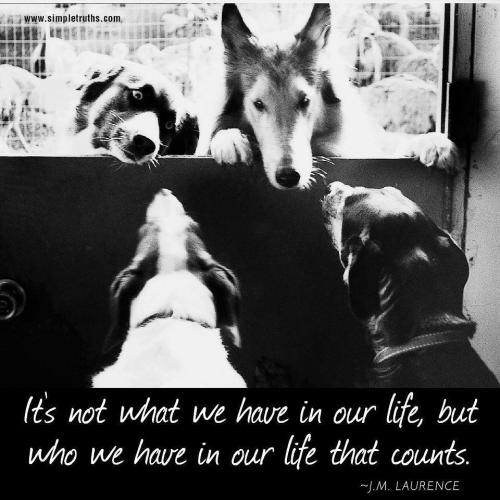
It’s not what, but who

It's not what but who

Kathleen Crisley, Fear-Free certified professional and specialist in dog massage, rehabilitation and nutrition/food therapy, The Balanced Dog, Christchurch, New Zealand

The Dog’s Bed?

How many of you feel this way about your dog’s bed preferences?

colinandray's avatarA New Direction Perhaps?

When Ray invited himself to become part of our lives, I had no problems with him sharing our home. I had no problems if he chose to sleep on my bed but …

… when he lays there basically waiting for his breakfast ,,,

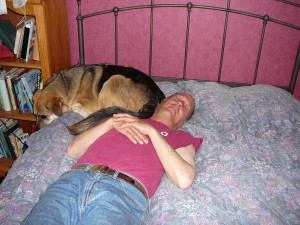
… or when he clearly expects the pillows-end of the bed, regardless of how accessible it is …

… or when he sees an opportunity to take over more than half the bed …

… I really have to question whether I have been perhaps a little too generous with my hospitality?

View original post

Crayons have gone to the dogs

Remember being a kid?  Then you probably played with Crayons.

Today, I found Herb Williams Art, and his collection called Call of Couture.  All of these pieces have been made from Crayons.

Very creative!

Kathleen Crisley, Fear-Free certified professional and specialist in dog massage, rehabilitation and nutrition/food therapy, The Balanced Dog, Christchurch, New Zealand

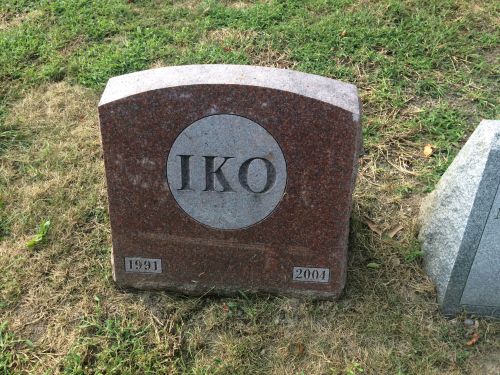
Iko’s marker

Earlier today, I paid a visit to the Pine Ridge Pet Cemetery to visit the grave of my dog Porky.  It’s something I do every time I’m in the area.

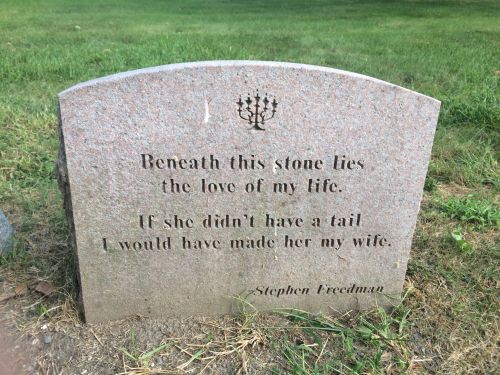
Because it was a warm evening, I decided to walk around taking in the various names and memorials made to beloved pets.  I walked up a hill of raised markers and on the way down, I noticed that one had an inscription on the reverse.

This was Iko’s stone.

Iko's stone

The front of Iko’s gravestone

Gravestone reverse

The inscription on the reverse of the stone

Kathleen Crisley, Fear-Free certified professional and specialist in dog massage, rehabilitation and nutrition/food therapy, The Balanced Dog, Christchurch, New Zealand

The virtual pooch that could help prevent dog bites

A virtual dog could soon be used as an educational tool to help prevent dog bites, thanks to an innovative project led by the University of Liverpool’s Virtual Engineering Centre (VEC).

In collaboration with Dogs Trust and University of Liverpool animal behaviour researchers, the VEC has created a proof of concept virtual reality (VR) experience in which people can approach and interact with a dog displaying signs of aggression in a safe and controlled way.

Virtual reality dog

Virtual reality dog in its environment. Credit: Virtual Engineering Centre (VEC)

The experience aims to help adults and children recognise specific behaviours displayed by dogs, which could potentially lead to an attack or incident if not correctly identified.

6,740 hospital admissions for dog bites and strikes were recorded in the UK in 2013 and University of Liverpool research suggests that the burden of dog bites is considerably larger than those estimated from hospital records.

As part of a desire to better educate children and adults about dog bite prevention, Dogs Trust wanted to explore whether a digital tool could help people identify a range of stress and threat behaviours typically exhibited by dogs, which have the potential to lead to a bite.

In response to this challenge, a team animal behavioural specialists and psychologists from the University worked closely with the VEC to make certain that the body language and detail shown in the virtual environment was both realistic and a truthful reflection of real-world canine behaviour.

As the user approaches the dog, the behaviour and body language of the dog gradually changes, the dog’s behaviour begins to display signs of aggression including licking its lips, lowering of the head and body, front paw lifting, growling, and showing of teeth. These behaviours are referenced from the ‘Canine Ladder of Aggression’ which shows how a dog may behave when it does not want to be approached.

Iain Cant, VEC Visualisation Team Leader said: “This was a really interesting project to work on with a lot of exciting potential for the future.

“The next steps will look to enhance the detail within the immersive environment to ensure the simulation is as realistic as possible. Future developments will also show a wider range of dog behaviours and the dog’s reactions to user behaviour.”

“More broadly the project highlights how immersive experiences can be used by organisations such as Dogs Trust as a valuable educational tool.”

Source:  Science Daily

Doggy quote of the month for September

“In his grief over the loss of a dog, a little boy stands for the first time on tiptoe, peering into the rueful morrow of manhood.  After this most inconsolable of sorrows there is nothing life can do to him that he will not be able somehow to bear.”

– James Thurber, cartoonist, (1894 – 1961)

At Kindness Ranch

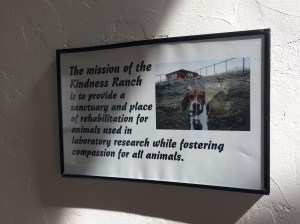
Kindness Ranch Animal Sanctuary is a unique place, the only sanctuary in the United States that cares for animals used in research and laboratory facilities.  At this property, you’ll find horses, cows, sheep, pigs, cats and dogs.

The small team at Kindness, which is a fairly new sanctuary at only 12 years old (founded in 2006), work hard to care for the animals and maintain their large Wyoming property to the highest of standards.  Animals that can be rehabilitated are put up for adoption; the others will simply remain at the property with a secure and safe home for life.

IMG_2624

I have just finished a week of work with the dog care team at Kindness, discussing things like behavioral adjustment programs, enrichment, gait analysis, physical rehabilitation and senior dog care.    I also introduced them to the range of flower essences I use to support emotional health whilst working on training and rehab.

I chose to travel to Kindness Ranch because, for anyone who follows my blog, I often include items about research.  I’m a self-confessed science geek.  But I am not naive.  I know that much of the research which is published involves dogs as study subjects.  The life of a lab animal, in most cases, isn’t pretty.

The ranch is in remote Wyoming – Hartville to be exact with a permanent population of 69 people.  For this reason, if you’d like to visit Kindness (there are 4 guest yurts on the property which can be hired for your stay – and these are well-appointed and very comfortable), you need to book ahead.  The ranch is also a good place for a digital detox, too,  because the guest yurts do not have television and cell phone reception is patchy at best.  WiFi is available but is slower than most are used to and not suitable for streaming.

Dogs coming from a laboratory situation often have unique needs.  Most have never experienced grass under the feet, the sights and sounds of the home environment, and some will have healthcare issues that require attention before adoption is possible.  Many have never been house trained.  Their ages vary depending on how long they were used for study.

And while Beagles are the dogs most often associated with laboratory research, expect to see other breeds of dogs, too.  Larger breed dogs are often used by veterinary schools, for example, so students can learn blood draws, how to vaccinate, etc.  These dogs become living pin cushions and are not surprisingly fearful whenever a needle is presented.

I deliberately chose Kindness as a destination because of the special niche it holds in the animal rescue world.  It takes special people to liaise with laboratories and encourage them to release their animals rather than choosing to simply euthanize them (described as the ‘cost effective’ option).  Kindness walks a tightrope of sorts to ensure that the animals are given safe passage out of the lab and onto the sanctuary whilst maintaining the confidentiality of the labs.

And it also takes special people to live remotely and care for these  animals.

I hope you enjoy these photos of my time at Kindness and, if you believe in their mission, please consider making a donation.  Every bit helps.

Kathleen Crisley, Fear-Free certified professional and specialist in dog massage, rehabilitation and nutrition/food therapy, The Balanced Dog, Christchurch, New Zealand


Hank

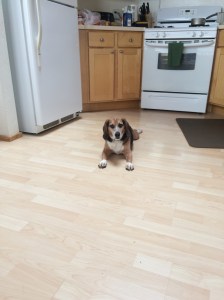
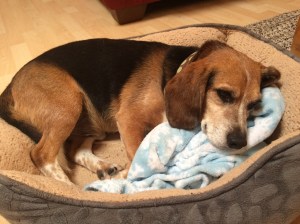
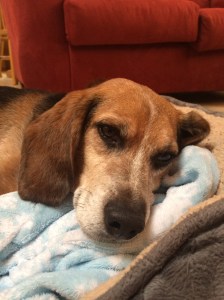
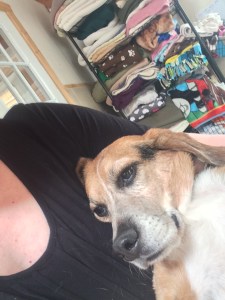
Hank was the first dog to stay with me overnight in my yurt. Hank is an older boy who spent the first 7 or 8 years of his life in a laboratory. He’s a bit stiff, and has trouble with stairs (as many of the Beagles do).

IMG_2626IMG_2627

Hank in for a cuddle

One of Hank’s favourite pastimes is being held like a baby on your lap. He makes himself totally relaxed and floppy and will stay for as long as you like. It’s amazing how trusting these dogs can be given their treatment at the hands of others.


Rocky

Rocky is a big boy who doesn’t know his own strength (he needs more training about walking nicely on leash) and he’s afraid of men.  We suspect his life as a veterinary school practice animal meant that he didn’t have a positive relationship with a male lab assistant and/or vet students.  So we worked on setting up a system where the men on the ranch will visit and quietly enter and feed him high value treats. Handlers will praise Rocky when he is quiet and doesn’t bark and will start using a ‘click for quiet’ approach to clicker training.

Frieda

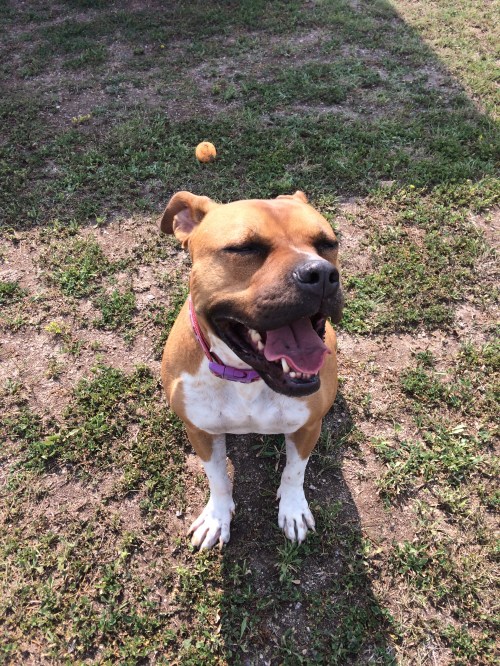
Frieda is a pit bull who loves to go to the dog park on the ranch, appropriately called the K9 Corral. She has good recall and knows most of her basic cues including sit and down. She’s very intelligent!

Gus

Gus is another senior Beagle used in pharmacokinetic studies for at least 7 years. (These studies introduce drugs and watch their effects on other organs in the body.) He’s a bit achy in the joints, too. Gabapentin and muscle relaxants prescribed by the vet have helped him a lot and his caregiver says that he is a different dog with the support of his meds.