Author Archives: DoggyMom.com

Audience dogs

There seems to be no end to the list of jobs that can be given to a good dog.

Next up:  Audience dogs

You’ve probably heard of Toastmasters, which are groups that meet where participants practice their public speaking and presentation skills.   But did you know that the Kogod School of Business at American University in Washington, DC has introduced Audience Dogs into their program?

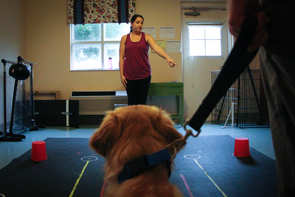
Students practice their speeches in front of a dog, who has been selected to be secure, calm and confident to make eye contact.  The service is provided free-of-charge.

A non-judgmental, cute, and attentive audience!

Kathleen Crisley, specialist in dog massage, rehabilitation and nutrition/food therapy, The Balanced Dog, Christchurch, New Zealand

Trained dogs most efficient in monitoring hermit beetle larvae

Hermit beetles (Osmoderma eremita) are considered at risk, but in order to be effectively protected, they first need to be identified and consistently monitored.

However, this turns out to be a tough task, given that the species is only present for a short time as an adult while it is also extremely elusive. On the other hand, although it remains as a larva for up to three years, once again, it is difficult to spot as it hides inside hollow trees living in the wood mould.

The standard method for detecting hermit beetles involves wood mould sampling which is not only arguable in its overall efficiency, but is also unreasonably time-consuming and quite damaging to both the species communities and their habitat.

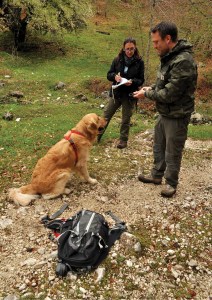
Searching for an alternative, Italian scientists, led by Dr. Fabio Mosconi of the Italian Agricultural Research Council and Sapienza University of Rome, suggested that trained dogs might be more successful. Such conservation detection dogs are currently being widely deployed when searching for mammals, reptiles and birds and have already been tested for locating a number of invertebrates.

In their paper, published in the open access journal Nature Conservation, the team tested a training programme before comparing it with the traditional method. The study has been conducted as part of the MIPP Project aimed at the development of non-invasive methods for monitoring selected saproxylic beetles.

Starting from the choice of a dog, the scientists carefully made their choice from a number of individuals as well as breeds. They settled on a Golden Retriever – a breed widely used in searches for biological targets. As for the particular dog, they chose Teseo – a six-month pup coming from a line with a strong background in locating illegally imported animals and animal parts.

Conservation dog

The training of Teseo began with the assignment of a trainer/handler and some basic obedience training, involving teaching simple commands, search games and agility activities.

The next step was introducing the dog to various types of odours, since the hermit beetles might give off a different odour dependent on their habitats, such as the presence of fungi, sawdust and other organic materials. Immediately after detecting the target smell, the animal would be given a reward such as food or play, so that its behaviour could be positively reinforced.

Then, the dog was taught to differentiate between different odours. The researchers presented a number of targets to the animal where it needed to select the right one. At this stage, the dog was only rewarded for correct signalling. Should the dog be distant from the trainer, a special clicker was used to ‘announce’ the treat in advance. The researchers noted that it was at this stage when the relationship between the dog and the handler needed to be really strong, so that the training was as efficient as possible.

In conclusion, the scientists reported a significantly higher probability (73%) of Teseo successfully detecting a tree colonised by the larvae, as opposed to two people conducting the traditional wood mould sampling (34-50%). Moreover, the dog would cover a particular area in a very short time when compared to the traditional method – on average it would take it 6 minutes and 50 seconds to examine the whole tree, while the operators using wood mould sampling would need about 80 minutes. Additionally, searching for larvae with dogs poses no risk to either the insects or other organisms that might be living in the trees.

Furthermore, the researchers provided a list of precautions in order to increase the efficiency when searching for beetle larvae with the help of trained dogs. The list included familiarising the dog with the survey site beforehand, opting for the part of the day with the most favourable atmospheric conditions and carefully monitoring the dog for signs of fatigue.

“A conservation detection dog is a powerful tool for locating O. eremita and these results can be useful for other related European species of Osmoderma“, commented the scientists.

“In fact, the use of a trained dog is a fast, accurate and non-invasive method that allows the detection of a target species in an area and to identify the colonised trees; this means that a conservation detection dog can locate new populations, can confirm the presence of the target species and can assist in the mapping of colonised trees in an area, accurately and efficiently.”

Source:  Pensoft Blog

Doggy quote of the month for September

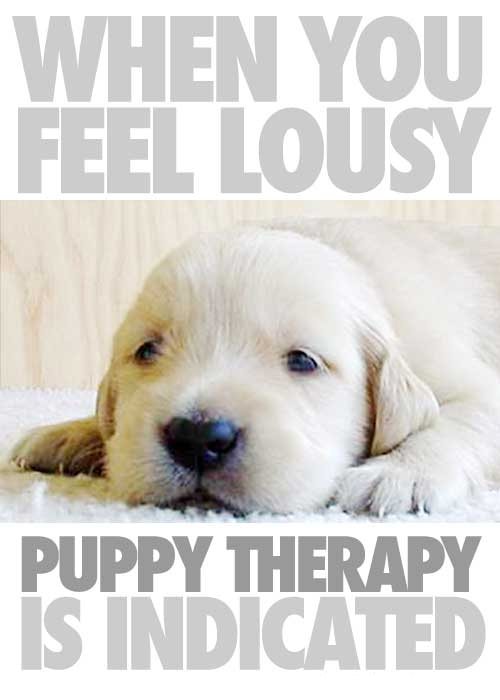
Puppy therapy

– Sara Paretsky, author

My Dog is My Home

One of the best parts of the day is when I return to my home after a long day’s work and Izzy is there to greet me.  I think most dog owners/parents feel that way.

Now imagine that you are homeless and you have a dog (or two).  Access to a homeless shelter and other social services is out of reach because you refuse to give up your dogs.

That’s the plight of many homeless Americans and the charity My Dog is My Home is working to help them by facilitating co-sheltering projects that allow both humans and pets to be supported.

The project did a series of YouTube videos to highlight the experience of human-animal homelessness.  Here’s one of the videos:  Spirit’s story alongside his dogs, Kyya and Miniaga, in Los Angeles.

Kathleen Crisley, specialist in dog massage, rehabilitation and nutrition/food therapy, The Balanced Dog, Christchurch, New Zealand

Cena’s story

Last month, a Marine veteran said goodbye to his canine companion, Cena, who was suffering from bone cancer.

Giving Cena one last ride became a community event that Lance Corporal Jeff DeYoung hopes will help raise the profile of the dogs that serve the military, and why they deserve care.

This is their story.

Kathleen Crisley, specialist in dog massage, rehabilitation and nutrition/food therapy, The Balanced Dog, Christchurch, New Zealand

Your dog and a 2-year old have similar social intelligence

Most dog owners will tell you they consider their beloved pets to be members of their families. Now research suggests that dogs may be even more like us than previously thought.

Evan MacLean, director of the Arizona Canine Cognition Center at the University of Arizona, found that dogs and 2-year-old children show similar patterns in social intelligence, much more so than human children and one of their closest relatives: chimpanzees. The findings, published in the journal Animal Behaviour, could help scientists better understand how humans evolved socially.

Researchers point for treats

Researchers hid treats and toys and communicated their location to dogs with cues such as pointing or looking in the direction of the concealed item. (Photo courtesy of Evan MacLean)

testing dogs with game based tests

Evan MacLean and his colleagues assessed more than 500 dogs using a battery of game-based tests designed to measure various types of cognition. (Photo courtesy of Evan MacLean)

MacLean and his colleagues looked at how 2-year-olds, dogs and chimpanzees performed on comparable batteries of tests designed to measure various types of cognition. While chimps performed well on tests involving their physical environment and spatial reasoning, they did not do as well when it came to tests of cooperative communication skills, such as the ability to follow a pointing finger or human gaze.

Dogs and children similarly outperformed chimps on cooperative communication tasks, and researchers observed similar patterns of variation in performance between individual dogs and between individual children.

A growing body of research in the last decade has looked at what makes human psychology special, and scientists have said that the basic social communication skills that begin to develop around 9 months are what first seem to set humans apart from other species, said MacLean, assistant professor in the School of Anthropology in the UA College of Social and Behavioral Sciences.

“There’s been a lot of research showing that you don’t really find those same social skills in chimpanzees, but you do find them in dogs, so that suggested something superficially similar between dogs and kids,” MacLean said. “The bigger, deeper question we wanted to explore is if that really is a superficial similarity or if there is a distinct kind of social intelligence that we see in both species.

“What we found is that there’s this pattern, where dogs who are good at one of these social things tend to be good at lots of the related social things, and that’s the same thing you find in kids, but you don’t find it in chimpanzees,” he said.

One explanation for the similarities between dogs and humans is that the two species may have evolved under similar pressures that favored “survival of the friendliest,” with benefits and rewards for more cooperative social behavior.

“Our working hypothesis is that dogs and humans probably evolved some of these skills as a result of similar evolutionary processes, so probably some things that happened in human evolution were very similar to processes that happened in dog domestication,” MacLean said. “So, potentially, by studying dogs and domestication we can learn something about human evolution.”

The research could even have the potential to help researchers better understand human disabilities, such as autism, that may involve deficits in social skills, MacLean said.

Looking to dogs for help in understanding human evolution is a relatively new idea, since scientists most often turn to close human relatives such as chimpanzees, bonobos and gorillas for answers to evolutionary questions. Yet, it seems man’s best friend may offer an important, if limited, piece of the puzzle.

“There are different kinds of intelligence, and the kind of intelligence that we think is very important to humans is social in nature, and that’s the kind of intelligence that dogs have to an incredible extent,” MacLean said. “But there are other aspects of cognition, like the way we reason about physical problems, where dogs are totally dissimilar to us. So we would never make the argument that dogs in general are a better model for the human mind — it’s really just this special set of social skills.”

MacLean and his collaborators studied 552 dogs, including pet dogs, assistance-dogs-in-training and military explosive detection dogs, representing a variety of different breeds. The researchers assessed social cognition through game-based tests, in which they hid treats and toys and then communicated the hiding places through nonverbal cues such as pointing or looking in a certain direction. They compared the dogs’ results to data on 105 2-year-old children who previously completed a similar cognitive test battery and 106 chimpanzees assessed at wildlife sanctuaries in Africa.

Source:  University of Arizona news


Busy Dog = Happy Dog

Dogs need enrichment and variety in their day; this is an excellent example of how a simple trip to post a few letters became a fun day out for Abby the Beagle.

Marcela's avatarAllMyCanineCompanions

mail1

This morning I told Abby, “We have to go to drop off some mail at the post office.  But, this time you, meaning Abby, will be carrying all 30 envelopes”.  She looked at me with a surprised look.  Yes, like the one above.

mail2

Since Abby “agreed” to carry all 30 envelopes, I decided that as a reward she could smell the flowers – I know there are no flowers in the picture – which she loves to do.  Let’s remember she is part Beagle.

mail3

Abby was so good that she even posed for this picture.  I do my best to give Abby a job.  Why?  Because as a pet parent, I need and have to make sure that her needs are met.  Going to the post office took us almost an hour.  Once we got home, she drank some water and fell asleep.  Like I said, “Busy Dog = Happy…

View original post 1 more word

Health benefits of owning a dog (video version)

Throughout this blog, you’ll find articles about research involving dogs.  Some of these articles can be quite lengthy, so I was pleased when Time published this short video – all of the key points about the health benefits of owning a dog in one place.

If you’re really busy, or simply not interested in reading the full research, this video is for you!

Kathleen Crisley, specialist in dog massage, rehabilitation and nutrition/food therapy, The Balanced Dog, Christchurch, New Zealand

Successful guide dogs have ‘tough love’ moms

Much has been written on the pitfalls of being a “helicopter parent,” one who insulates children from adversity rather than encouraging their independence.

A new study seems to back up this finding — in dogs. Researchers showed that doting mothers seem to handicap their puppies, in this case reducing their likelihood of successfully completing a training program to become guide dogs.

Mother dogs nursing style

Mother dogs’ nursing style is one factor that seems to predict their offspring’s success in guide dog training. (Photo courtesy of The Seeing Eye)

The study, published in Proceedings of the National Academy of Sciences, was conducted at The Seeing Eye, an organization in Morristown, New Jersey, that breeds, raises and trains dogs to guide visually impaired people.

“You need your mom, but moms that are too attentive don’t give their puppies a chance to respond to small challenges on their own,” said lead study author Emily Bray, a postdoctoral researcher in the Arizona Canine Cognition Center at the University of Arizona’s School of Anthropology. “Puppies need opportunities to deal with obstacles without their mom always being there.”

Early interactions between puppies and their mothers seem to have lasting effects.

“These puppies were with their mom for only five weeks, and it’s having an effect on their success two years later,” Bray said. “It seems that puppies need to learn how to deal with small challenges at this early age, and if they don’t, it hurts them later.”

Bray’s results contribute to an understanding of the long-term effects of maternal style and suggest ways that guide-dog-training organizations might better identify dogs who are more likely to succeed.

Observing Mother-Pup Interactions

Scientists have long been interested in the impact of early-life experiences on adult behavior, studying the phenomenon in rodents, primates and people. But hardly any studies had been done in dogs.

Guide dogs presented a useful group to study for several reasons. First, at The Seeing Eye, many puppies are raised in a single location under fairly controlled conditions. Second, the dogs have a clear measure of success: Either they graduate from the program to become a working guide dog or they are released. And third, success as a guide dog isn’t easy; the dog must be willing and able to navigate a complex and often-unpredictable environment while remaining obedient and attentive to its owner.

To gather information about the puppies’ early-life experiences, Bray and a team of undergraduate research assistants essentially embedded themselves at The Seeing Eye’s breeding facility, taking video and closely observing 23 mothers and their 98 puppies for their first five weeks of life.

“We wanted to know if we could differentiate the moms based on how they interacted with their puppies,” Bray said. “We documented things like her nursing position, how much time she spent looking away from the puppies and how much time she spent in close proximity to her puppies or licking and grooming them.”

Analysis of the data revealed differences across the mothers, with some being particularly attentive and others less so.

When the researchers tracked the puppies a couple of years down the line, they found that those with mothers that were more attentive were less likely to graduate from The Seeing Eye’s training program to become guide dogs. In particular, those dogs whose mothers nursed more often lying down, as opposed to sitting or standing up, were less likely to succeed.

“If a mother is lying on her stomach, the puppies basically have free access to milk, but if the mother is standing up, then the puppies have to work to get it,” said study co-author Robert Seyfarth, a psychology professor at the University of Pennsylvania. “A hypothesis might be that you have to provide your offspring with minor obstacles that they can overcome for them to succeed later in life because, as we know, life as an adult involves obstacles.”

Cognition, Temperament Also Predict Success

The study also found that dogs’ cognition and temperament were associated with program success or failure.

The researchers conducted a second part of the study after the puppies had gone to live with foster families and then returned to The Seeing Eye for specific guide-dog training. The dogs — at this point young adults at 14 to 17 months old — were given tests to measure their cognition and temperament. A test of cognitive problem-solving skills, for example, involved a game in which the dog has to perform a multistep task to reach a treat. Tests of temperament included observing the dogs’ reactions, such as how long they took to bark at an umbrella being opened or how they reacted when they entered a room with a mechanical cat they had never seen before.

“We saw that some dogs were calm and collected and solved problems quickly, while others were more reactive and perseverated at the problem-solving tasks,” Bray said.

Perhaps unsurprisingly, dogs that did well at the problem-solving tasks and took longer to bark at novel objects were more likely to succeed in the guide-dog-training program.

Although Bray’s work underscores the connection between maternal behavior and offspring’s behavior later in life, further research is needed to tease out exactly why the attentive mothers were more likely to have puppies that were released from the program, and whether or not genetics could be a factor.

“With mothering, it seems like it’s a delicate balance,” Bray said. “It’s easy to be like, ‘Oh, smothering moms are the worst,’ but we aren’t exactly sure of the mechanisms yet and we don’t want to tip too far in the other direction, either.”

Source  University of Arizona media release


Housing affordability is a dog issue

I’ve been wanting to write this post for some time.  There’s been trouble brewing for a while now when it comes to housing availability and affordability in New Zealand.  But if you’re a dog owner, the problem is usually magnified.

Take this case from the Waikato; a gainfully employed immigrant to New Zealand struggles to find a rental home that will allow both his children and his beloved dog, Blue, to live there.

Welcome dog

In the months and years following the 2011 earthquake in Christchurch, the rate of surrenders of dogs increased as people were displaced from their damaged homes.  Most rentals prohibited dogs. (Only now – in 2017 – is the housing market adjusting again with something of a rental surplus.  Creative rental owners are starting to open their minds about dogs.)

Last week, I shared this article on my Facebook page about Millennials, a generation of men and women who are buying homes to secure their futures as dog owners.  It created the highest readership of the page in almost two years, with many of my clients and other readers agreeing that they bought a home because they wanted a secure place to live with their dog(s).

I moved from Auckland to Christchurch in large part because of better housing affordability and the goal of having my own dog.  (In Auckland, the best I could achieve was a regular dose of ‘dog therapy’ by volunteering at the SPCA as part of a regular roster.)

But housing affordability is a barrier to many owning their first home.  Loan-to-value ratios require a minimum of 20% deposit.  If you are already paying a high rent, savings to reach that 20% can be very difficult.  In the Auckland region, I’ve read that many employed people are paying up to one-half of their income in rent.  So much for saving a 20% deposit!

If people can’t find homes that allow pets, what happens to all the dogs needing loving homes?  They face a bleak future.

So in this – an election year in New Zealand – think about housing affordability as a key issue particularly if you are a dog lover or prospective dog owner. If you’ve made it into your own home with a dog, think of those who are still trying.

And if you are an owner of one or more rental properties, you can be part of the solution.  Do you allow your tenants to have dogs?

Kathleen Crisley, specialist in dog massage, rehabilitation and nutrition/food therapy, The Balanced Dog, Christchurch, New Zealand