Category Archives: dog care

New year, new car?

With a new year on its way, many people will be setting goals for the upcoming year.  Is it time for you to buy a new car, for example?

Auto Trader has published information on features to look for that are useful and they’ve also made recommendations for the best cars for dog owners.

The features to look for are:

  • A rear lift gate allows your dog to jump in and out of the car easily; it also makes for more convenient loading in/loading out of pet carriers, crates and kennels
  • Fold-flat seats create a spacious area for your dog to sit while keeping the actual surface of the seats clean from hair or scratches
  • An airy cabin is especially beneficial for large dogs to stretch out
  • Rear cargo-attachment ringlets help keep carriers and crates from sliding around
  • A containment barrier/divider keeps your dog from jumping up to the front seat while the car is in motion
  • A low ride height helps dogs — especially older ones — get in and out with ease
  • Rear climate control keeps your dog cool and comfortable in transit no matter what the weather is like
  • A sunroof brings fresh air and sunlight so you can keep your dog from hanging its head out of the window
  • Underfloor storage gets your things out of the way so your dog can ride more comfortably

And the top dog cars are:
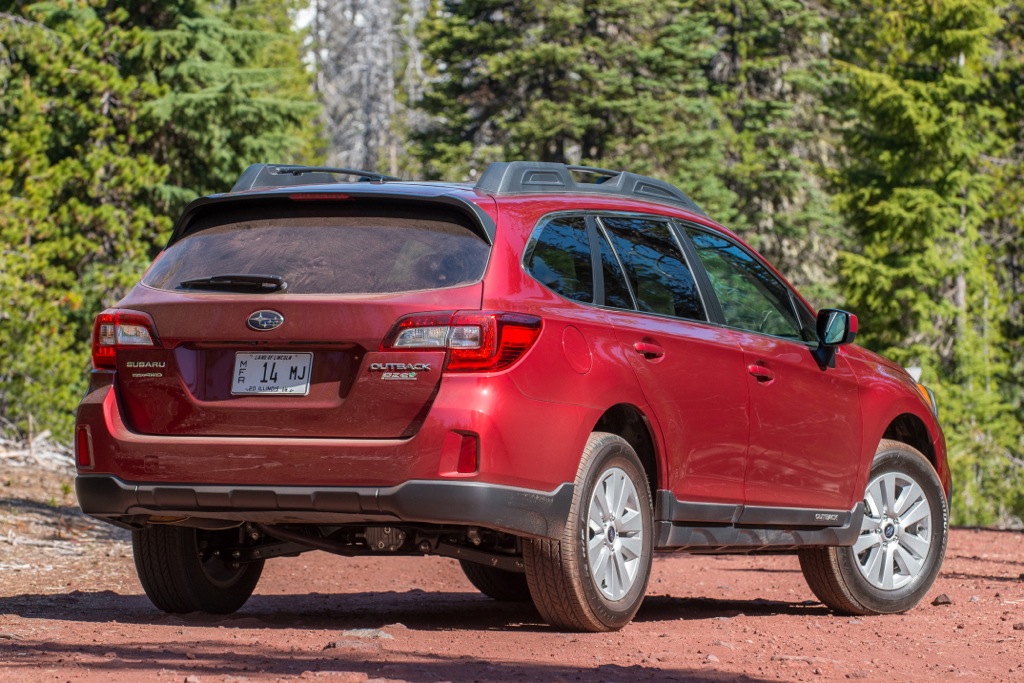
The Subaru Outback - "If you live in a cold climate and have an outdoorsy dog that likes being in wintry conditions, the Outback's superior traction and surefootedness will keep you and Fido safe and secure as you tread over snowy terrain. Additionally, the Outback's wagon configuration makes for plenty of room in the cargo area. A wide, low load floor and an optional pet barrier round out the amenities. Subaru also has many pet-friendly accessories."

The Subaru Outback – “If you live in a cold climate and have an outdoorsy dog that likes being in wintry conditions, the Outback’s superior traction and surefootedness will keep you and Fido safe and secure as you tread over snowy terrain. Additionally, the Outback’s wagon configuration makes for plenty of room in the cargo area. A wide, low load floor and an optional pet barrier round out the amenities. Subaru also has many pet-friendly accessories.”

Nissan Juke - "This little urban runabout offers a low, carlike ride height for easy in and out, especially via the large rear hatch. A combination of coupe, crossover and hatchback, the Juke offers just the right amount of size and utility for small-to-medium dogs that ride in carriers. Tether down the crate, and get out of the city for the weekend!"

The Nissan Juke – “This little urban runabout offers a low, car-like ride height for easy in and out, especially via the large rear hatch. A combination of coupe, crossover and hatchback, the Juke offers just the right amount of size and utility for small-to-medium dogs that ride in carriers. Tether down the crate, and get out of the city for the weekend!”
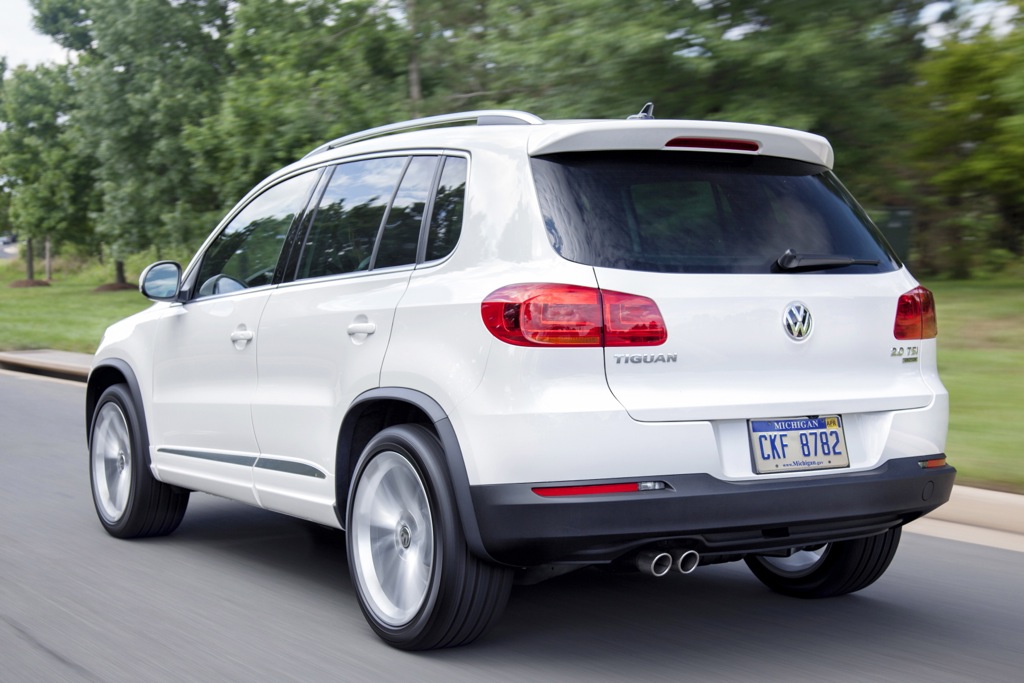
The Volkswagen Tiguan - "got its name by combining the words tiger and iguana, so the car's sure to be pet-friendly. The Tiguan is a lot like the Nissan Juke: compact on the outside but deceivingly spacious within. The rear seats fold flat, making room for pets of almost any size, and an optional dog barrier keeps your pet safely contained where it can't distract you.'

The Volkswagen Tiguan – “got its name by combining the words tiger and iguana, so the car’s sure to be pet-friendly. The Tiguan is a lot like the Nissan Juke: compact on the outside but deceivingly spacious within. The rear seats fold flat, making room for pets of almost any size, and an optional dog barrier keeps your pet safely contained where it can’t distract you.’

The BMW X3 - "Well proportioned, upscale and athletic, the BMW X3 maximizes canine comfort with soft, heated leather seats, a sunroof and rear climate control. The cargo area is the right size for small- to medium-sized dogs, and for dogs that like to play in the snow, the X3's AWD system makes winter driving virtually worry-free."

The BMW X3 – “Well proportioned, upscale and athletic, the BMW X3 maximizes canine comfort with soft, heated leather seats, a sunroof and rear climate control. The cargo area is the right size for small- to medium-sized dogs, and for dogs that like to play in the snow, the X3’s AWD system makes winter driving virtually worry-free.”

The Volvo V60 - "offers a spacious cargo area, lots of utility, rear climate control and one of the safest passenger compartments available. If crash safety is your top concern, the V60 is your best choice here. Rear tie-downs make harnessing your pet carrier easy. If you don't use a carrier, then go with the optional dog barrier."

The Volvo V60 – “offers a spacious cargo area, lots of utility, rear climate control and one of the safest passenger compartments available. If crash safety is your top concern, the V60 is your best choice here. Rear tie-downs make harnessing your pet carrier easy. If you don’t use a carrier, then go with the optional dog barrier.”

The Kia Soul - "This stylish urban cruiser offers rear-seat heat and an extra-large panoramic roof for lots of sunlight. Its boxy and efficient shape also allows for plenty of headroom, so even though the Soul is compact, it comfortably accommodates big and tall dogs. The large rear hatch is also a plus for quick entry and exit."

The Kia Soul – “This stylish urban cruiser offers rear-seat heat and an extra-large panoramic roof for lots of sunlight. Its boxy and efficient shape also allows for plenty of headroom, so even though the Soul is compact, it comfortably accommodates big and tall dogs. The large rear hatch is also a plus for quick entry and exit.”
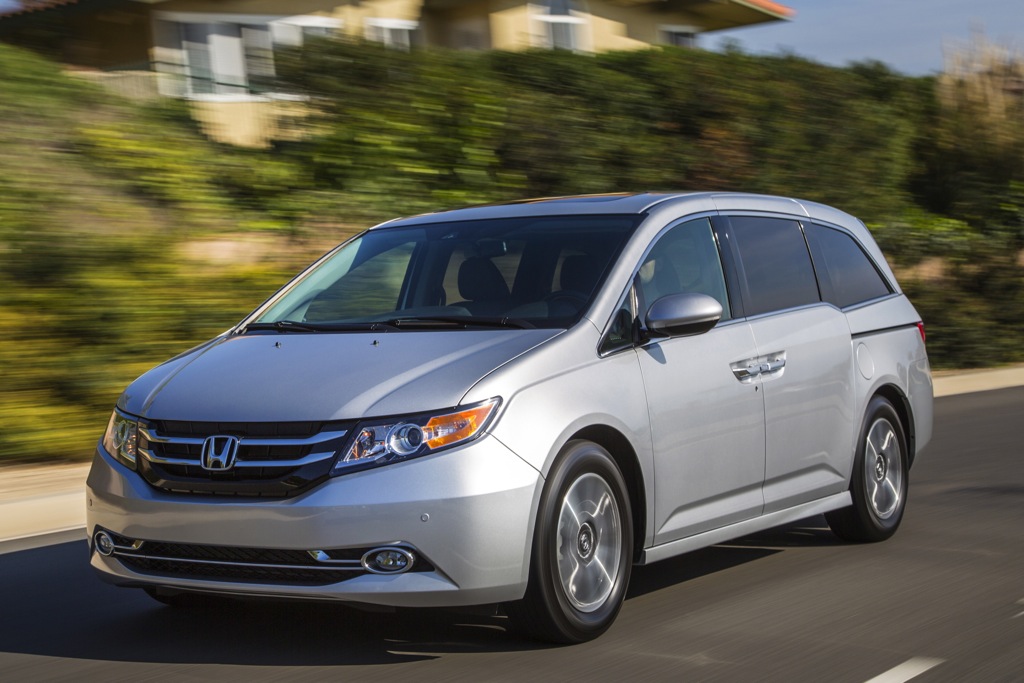
The Honda Odyssey - "has it all when it comes to driving with your dog. There's a wealth of room, comfortable seats, rear ventilation, underfloor compartments and even a built-in vacuum. For dogs that shed excessively, this innovative vac system lets you clean up quickly and effectively. The Honda Odyssey also has side window shades that can help keep your dog from getting too hot while traveling."

The Honda Odyssey – “has it all when it comes to driving with your dog. There’s a wealth of room, comfortable seats, rear ventilation, underfloor compartments and even a built-in vacuum. For dogs that shed excessively, this innovative vac system lets you clean up quickly and effectively. The Honda Odyssey also has side window shades that can help keep your dog from getting too hot while traveling.”


A new dog park for Christmas

The dogs and residents of Prescott, Arizona got an early Christmas present this month:  the opening of the Willow Creek Dog Park after $500,000 in expert renovations.

The Willow Creek Dog Park has a firefighting theme to honor 19 Granite Mountain Hot Shot firefighters that died last year

The Willow Creek Dog Park has a firefighting theme to honor 19 Granite Mountain Hot Shot firefighters that died last year fighting a wild fire

Linda Nichols, a Prescott resident, entered the park idea in Beneful’s Dream Dog Park contest and won.

This canine play equipment has a fire engine theme (Photo by 12 News)

This canine play equipment has a fire engine theme (Photo by 12 News)

Prescott dog park

What a wonderful Christmas present for all of the dogs in Prescott.  Enjoy!

Kathleen Crisley, specialist in dog massage, rehabilitation and nutrition/food therapy, Canine Catering Ltd, Christchurch, New Zealand

Willow’s surgery for cleft palate

Willow is a beautiful Beagle who was born earlier this year with a cleft lip and palate.  As part of the defect, she has a bottom jaw that is slightly forward and bucked top front teeth – so her top teeth sink into the soft tissue of her lower jaw.

Cleft lip and palate are birth defects that have been traced to genetic factors.  (see my earlier articles on Cleft Palate in Dogs and The Genetics of Cleft Lip and Palate in Dogs)

Willow, before her surgery, showing the cleft lip

Willow, before her surgery, showing the cleft lip

The inside of Willow's mouth, showing the palate deformation more clearly

The inside of Willow’s mouth, showing the palate deformation more clearly

Last week, Willow had surgery to correct her birth defect.  She’s now home but taking strong pain relief medication and sucking on ice cubes for fluids.

Willow's mouth, post-surgery

Willow’s mouth, post-surgery

Willow in her Elizabethan collar (which brother Freddie believes makes her into a scary monster)

Willow in her Elizabethan collar (which brother Freddie believes makes her into a scary monster)

We are all hoping that the surgery was successful; her Elizabeth collar comes off later this week and she’ll be re-examined.  Then her owner will discuss what can be done to help with the mis-alignment of Willow’s jaws and teeth.

Cleft lip and palate are serious defects (Willow had to be hand-fed from birth because she couldn’t nurse like normal pups; many people will ‘look the other way’ when a pup is born with these defects and let it die from malnutrition.  Thankfully, Willow’s owner Gwen Hindmarsh wasn’t willing to do that).

Surgery is expensive and painful for the dog involved.  Dogs with cleft lip and palate in their lines should not be allowed to breed, as the defects don’t always appear in every litter.

Good luck Willow!

Kathleen Crisley, specialist in dog massage, rehabilitation and nutrition/food therapy, Canine Catering Ltd, Christchurch, New Zealand


Yes. I tend to go a little overboard for my dogs. Am I alone?

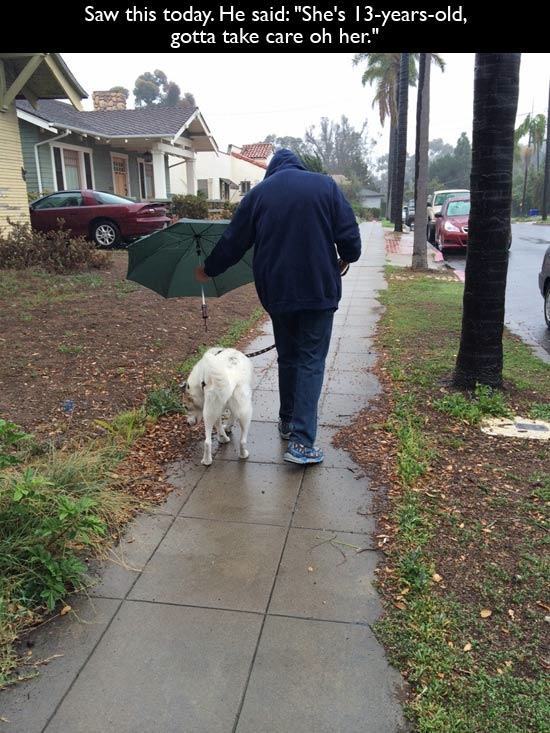
I often recommend activity toys, supportive dog beds, and mobility aids like ramps and stairs…is this going over the top? I don’t think so. This lady does some wonderful things for her dogs – it’s about giving them the best life you can afford.
What have you done for your dog lately?

Kathleen Crisley, specialist in dog massage, rehabilitation and nutrition/food therapy, Canine Catering Ltd, Christchurch, New Zealand


Mel's avatarNo Dog About It Blog

If you ask, I am sure many people would tell you that I tend to go a little overboard where my pets are concerned. (I know for sure my family would!) I tend to buy them things that I think will enrich their lives and make them happy.

I think in the case of my dogs, I wanted to make up for the bad lives they had early on. I also want them to have lives that is enriched by a wide variety of fun experiences. (What’s the fun in having a dog if you can’t enjoy the fun they have with you?)

So while I do have a logic behind what I do for my pets, I also know that I am not the norm.

After all, I …

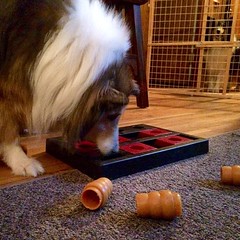
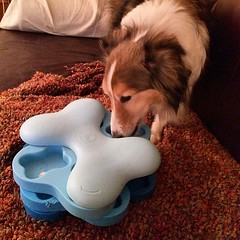
Buy dog games for my dogs, just so they can work their brains on a cold winter’s night.

Waiting his turn

Can you help me mom? This one is hard! #doggames

Game night!

Have at least 20…

View original post 225 more words

How to Choose a Boarding Kennel for Your Pet

Just in time for the pre-Christmas madness, the Humane Society of the United States has published this very useful list of things to consider when choosing a boarding kennel for your pet.

How to Choose a Boarding Kennel for Your Pet : The Humane Society of the United States

Is your dog joining you for holiday celebrations this year, or are they going to a kennel?  In our area, most kennels are fully booked for the Christmas holiday period.

Kathleen Crisley, specialist in dog massage, rehabilitation and nutrition/food therapy, Canine Catering Ltd, Christchurch, New Zealand

Researchers treat canine cancer

A research team at Mississippi State’s College of Veterinary Medicine is working to better understand cancer in dogs, and the work also could advance knowledge of human cancer.

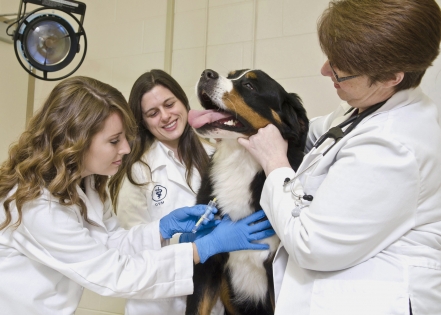
MSU veterinary medicine doctoral student Shauna Trichler (l) takes a blood sample from a patient with assistance from research resident Sandra Bulla (c) and Dr. Kari Lunsford. They are part of a College of Veterinary Medicine team studying the role of platelets in diagnosing canine cancer. Photo by: Tom Thompson

MSU veterinary medicine doctoral student Shauna Trichler (l) takes a blood sample from a patient with assistance from research resident Sandra Bulla (c) and Dr. Kari Lunsford. They are part of a College of Veterinary Medicine team studying the role of platelets in diagnosing canine cancer. Photo by: Tom Thompson

Their investigation began with only a tiny blood platelet, but quickly they discovered opportunities for growth and expanding the breadth of the research.

“We have a lot to gain by looking at platelets and how they influence cancer and healing,” said Dr. Camillo Bulla. “A part of our research is looking at the platelet. The platelet is very small, but it gives us a large picture. We hope to be able to find a tumor much sooner by taking a series of blood samples to look at platelet contents.”

Bulla is an associate professor in the college’s pathobiology and population medicine department. He and Dr. Kari Lunsford, a colleague at the college, have formed the Comparative Angiogenesis Laboratory at the university to better understand this process and treat canine patients.

As he explained, cancers need the creation of new blood vessels, called angiogenesis, to survive and grow, and tumors are able to create new blood vessels as pathways to travel and spread. They also are looking at the way platelets interact with tumor cells as they attempt to spread to the area surrounding the tumor or metastasize to distant sites in the body.

Lunsford, an associate professor in the clinical sciences department, said, “We know that metastasizing tumor cells need platelets but it is not yet known what the platelets do for the migrating (metastasizing) tumor. This is one of the questions we hope to help answer.”

“If treatments are successful and the cancer goes into remission, we would monitor the patient for a relapse of the disease by looking at its platelets,” Lunsford said. “This type of monitoring would be less invasive than taking biopsies and might also be an earlier indicator that the cancer is returning.”

According to Lunsford, platelets also carry information about tumors and metastasizing cancer cells, and the team hopes that by looking at specific proteins expressed in platelets (from a simple blood sample), they can identify new cancer earlier. Even more importantly, they want to identify when tumors are about to metastasize.

“Our lab has developed a new way to separate platelets from blood samples with far less contamination by other blood cells,” she said. “This new technique was developed by doctoral student Shauna Trichler, and is superior to any isolation technique previously used by researchers in human or veterinary medicine.”

For more information, read the entire Mississippi State University press release here.

DogDaz Zoo: Pet Owners Who Are Doing It Right

E-cigarettes are a hazard to dogs

With smoking becoming banned in most public places, smokers are turning to e-cigarettes to help them get their nicotine fix.

Nicotine is poisonous to dogs and so owners need to take special care when using e-cigarettes.    There has been a reported worldwide increase in the cases of nicotine poisoning attributed to these devices.

ecigaretteFor example, the Veterinary Poisons Information Service, which offers vets specialist advice about poisoned pets in the UK, and has seen a 300 per cent increase in dogs swallowing e-cigarettes this year.

Electronic cigarettes are battery-operated devices that deliver nicotine to the user through a vapour that looks like cigarette smoke. An atomiser in the device heats liquid containing nicotine to release the vapour, which is then inhaled.

Symptoms of nicotine poisoning may include heavy panting, drooling, vomiting, diarrhoea, agitation and nervousness often combined with an increase in heart and respiration rates.  The symptoms can escalate to tremors, seizures, comas, cardiac arrest and even death.

In the UK this year, a dog died after eating the nicotine capsule from an e-cigarette when it was dropped on the floor.

The ASPCA (USA) has also published warnings about e-cigarettes and pets.  They say:

These are factors that make e-cigs and the liquid nicotine within them different than that found in cigarettes, patches or chewing gum:

  • Potentially a high nicotine concentration of 1 to 10 percent
  • The product may often be poorly labeled
  • Liquid formation that means absorption more quickly for faster onset of signs, leaving less time for decontamination efforts
  • While carriers in the e-cig liquid may be propylene glycol and glycerin, there have been reports of them containing diethylene glycol, which can cause acidosis and kidney injury
  • Products may be flavored, such as milkshake or chocolate, making them more attractive to pets

Hopefully, the above facts make you want to throw away any e-cigarettes you may have in your house.   And today is a great day to start your stop smoking plan (since cigarette smoke, cigarettes, nicotine patches and gum all are hazards too).

Kathleen Crisley, specialist in dog massage, rehabilitation and nutrition/food therapy, Canine Catering Ltd, Christchurch, New Zealand


The ultimate in pet-friendly homes

  • Building a new house?
  • Does your family include at least one pet?

Well then, Standard Pacific Homes in Irvine, California has the answer for you.  For an additional $35,000, your new home can include a pet suite.

Pet suites are all about convenience and include dual purpose cabinets for owner/dog and dedicated laundry facilities so the dog hair stays with your dog’s bedding and coats.  There’s even a camera to keep an eye on your dog when you are not at home.

More in this news item:

If I were building in Christchurch right now, I’d be seriously thinking of adding a pet suite to my new home.  It would be another way of including dogs in the rebuild!

Kathleen Crisley, specialist in dog massage, rehabilitation and nutrition/food therapy, Canine Catering Ltd, Christchurch, New Zealand

US FDA issues warning about raw pet foods

Feeding raw (or not) has to be one of the most controversial topics in dog ownership today.  Consequently, the US Food & Drug Administration’s (FDA’s) recent warning to owners feeding raw is likely to generate some controversy.

The FDA’s Center for Veterinary Medicine (CVM) screened over 1,000 samples of pet food for bacteria that can cause foodborne illnesses. (The illnesses are called “foodborne” because the bacteria are carried, or “borne,” in or on contaminated food.) The study showed that, compared to other types of pet food tested, raw pet food was more likely to be contaminated with disease-causing bacteria.

Raw pet foods were included in the second year of a two-year study and the samples were from commercially available raw pet foods which were purchased online and sent to six different testing laboratories.

The participating laboratories analyzed the raw pet food for harmful bacteria, including Salmonella and Listeria monocytogenes.

Of the 196 raw pet food samples analyzed, 15 were positive for Salmonella and 32 were positive for L. monocytogenes (see Table 1).

Table 1: Number and type of pet food samples that tested positive for Salmonella and Listeria monocytogenes (Years 1 & 2)
Type of Pet Food Sample No. samples tested No. positive for Salmonella No. positive for L. monocytogenes
 Raw pet food  196  15  32
 Dry exotic pet fooda  190  0  0
 Jerky-type treatsb  190  0  0
 Semi-moist dog foodc  120  0  0
 Semi-moist cat foodc  120  0  0
 Dry dog foodd  120  0  0
 Dry cat foodd  120  1  0
a Non-cat and non-dog food, such as dry pellets for hamsters, gerbils, rabbits, amphibians, and birds.
b Included chicken jerky and pig ear-type products.
c Typically packaged in pouches for retail sale, such as (1) pouched dog and cat food; and
(2) food treats shaped like bacon, fish, pork chops, and burgers.
d Included pellet- or kibble-type food typically packaged in bags for retail sale.Note: CVM did not collect or test canned and wet pet food samples in this study.

The FDA has gone as far as warning owners against raw feeding, but in an acknowledgement that this type of diet is the preference for many owners, they also provided these tips to prevent Salmonella and Listeria infections:

  • Thoroughly wash your hands with soap and water (for at least 20 seconds) after handling raw pet food, and after touching surfaces or objects that have come in contact with the raw food. Potential contaminated surfaces include countertops and the inside of refrigerators and microwaves. Potential contaminated objects include kitchen utensils, feeding bowls, and cutting boards.
  • Thoroughly clean and disinfect all surfaces and objects that come in contact with raw pet food. First wash with hot soapy water and then follow with a disinfectant. A solution of 1 tablespoon bleach to 1 quart (4 cups) water is an effective disinfectant. For a larger supply of the disinfectant solution, add ¼ cup bleach to 1 gallon (16 cups) water. You can also run items through the dishwasher after each use to clean and disinfect them.
  • Freeze raw meat and poultry products until you are ready to use them, and thaw them in your refrigerator or microwave, not on your countertop or in your sink.
  • Carefully handle raw and frozen meat and poultry products. Don’t rinse raw meat, poultry, fish, and seafood. Bacteria in the raw juices can splash and spread to other food and surfaces.
  • Keep raw food separate from other food.
  • Immediately cover and refrigerate what your pet doesn’t eat, or throw the leftovers out safely.
  • If you’re using raw ingredients to make your own cooked pet food, be sure to cook all food to a proper internal temperature as measured by a food thermometer. Thorough cooking kills Salmonella, L. monocytogenes, and other harmful foodborne bacteria.
  • Don’t kiss your pet around its mouth, and don’t let your pet lick your face. This is especially important after your pet has just finished eating raw food.
  • Thoroughly wash your hands after touching or being licked by your pet. If your pet gives you a “kiss,” be sure to also wash your face.

In my practice, I have clients that feed all types of diet (commercial, raw, homemade).  I have seen raw food diets implemented successfully with some dogs, and others who fail to thrive on them for a variety of reasons.  That’s why I am a proponent of the food therapy approach, which can successfully be implemented with all types of diet.

For my clients here in New Zealand, I’d like to emphasize that the food hygiene suggestions by the FDA do make sense.  According to our Ministry of Primary Industries, Salmonella is the second most common bacterial cause of foodborne disease in this country (campylobacter is the first).  Incidents of Listeria are rare, but some people like pregnant woman are particularly vulnerable to the disease.

Kathleen Crisley, specialist in dog massage, rehabilitation and nutrition/food therapy, Canine Catering Ltd, Christchurch, New Zealand

Source:  US Food & Drug Administration