Category Archives: Dogs

Wanna go for a ride? – Ford’s great dog ad

I love when dogs are used in creative advertising.  Since so many of us take our dogs for a ride in the car (and they love it), how appropriate that Ford Motor Company has used dogs in its latest ad?

Kathleen Crisley, specialist in dog massage, rehabilitation and nutrition/food therapy, Canine Catering Ltd, Christchurch, New Zealand

Wet wipe management in dog care

Hitting the news this week has been an announcement from a number of local authorities in New Zealand warning about the disposal of wet wipes.  I and many other dog owners use these wipes; I’ve particularly found them useful for senior dog care when little accidents and dribbles happen on a regular basis.

I admit that I have dutifully bought wipes labelled ‘flushable’ like these thinking they were safe to flush.

wet wipes

And now I find out that wet wipes are clogging the public sewer system, increasing the costs to maintain the system and potentially raising the costs which will ultimately come back to us as ratepayers.

The problem is that, once flushed, these wipes aggregate together and clog around pumping systems and piping.

Clogged sewer pipes - thanks to wet wipes

Clogged sewer pipes – thanks to wet wipes (photo by Marlborough District Council)

Wet wipes clogging the pumping system (photo by Marlborough District Council)

Wet wipes clogging the pumping system (photo by Marlborough District Council)


So I’m putting up this blog post as part of the educational process.  All wet wipes -for babies, dogs and cleaning – shouldn’t be flushed no matter what the label says!

If you are buying ‘flushable’ wipes, maybe you can write to the company and ask that they stop marketing their wipes as ‘flushable’ since this description is misleading.

Kathleen Crisley, specialist in dog massage, rehabilitation and nutrition/food therapy, Canine Catering Ltd, Christchurch, New Zealand

Throwaway pups…

This article from the Guardian, Throwaway pup trend makes Britons dogs’ worst enemies is sobering.  It talks about disposable pups, bought with little or no knowledge of how to care for them, and fueling a demand for irresponsible breeding with the subsequent flow-on effects for animal welfare and adoptions.

But what I found really interesting is a quote from the People’s Dispensary for Sick Animals spokeswoman, Vicki Larkham.  “Millions of dogs aren’t getting off-the-lead exercise outside their home or garden for 10 minutes or more on a daily basis.  Close to a quarter of a million never go for walks on their lead for 10 minutes or more at all.  ”

A minimum of 10 minutes?  Are you kidding?

I support a minimum of 30 minutes, and twice a day.  Most sources I read suggest a minimum of 30 minutes once a day…but 10 minutes?  Where did that come from?

If you think walking a dog for 10 minutes a day will result in a happy, healthy and well-adjusted dog, you are kidding yourself.  Do everyone a favour and don’t get a dog…

Kathleen Crisley, specialist in dog massage, rehabilitation and nutrition/food therapy, Canine Catering Ltd, Christchurch, New Zealand


Safe Steps for Australian pets

The Victorian Government has announced a new program to help victims of domestic violence.

“Pets are an integral part of families and we know that women and children are making decisions not to flee violence because they are concerned about the future and welfare of their pet,” said Families and Children Minister Jenny Mikakos, at the launch.

It is difficult for [family violence] refuges to accept pets.”

Support group Safe Steps said threats against pets were often used as weapons by perpetrators of family violence

Support group Safe Steps said threats against pets were often used as weapons by perpetrators of family violence

“We want to be able to provide them with the support to be able to place the pet with an animal welfare shelter.”

The Government said it would provide $100,000 over the next four years and Safe Steps would work with animal welfare agencies like the RSPCA to implement the program.

The additional funding will lift capacity to house pets at risk while their family members go to shelters to escape abuse.  Until now, there has been a smaller volunteer network to take in pets in foster homes.

The connection between family violence and violence against animals is well documented.  Pets in abusive homes are often targeted and threatened and so women living in abusive situations often do not escape for fear that their animals will be harmed.

Source:  ABC News

Related post:  Sheltering people and pets from domestic violence

Spending eternity together

In 1991, when my beloved Husky/Lab cross Porky passed away at the age of 14, we decided the best tribute to him was a burial in the Pine Ridge Pet Cemetery.  Whenever I visit the area, I stop to give him flowers.

Porky's grave

And for the dogs I have had since then, I have made plans in my will which say that their ashes should be cremated with me.  I often talk with my clients about making their plans for when they and their dogs pass away.

Now I hear that the State of Massachusetts is debating House Bill 3272, which would allow the state’s 5,000 municipal, private and religious cemeteries to designate land for the “co-internment … of the bodies of humans and their pets.”

It’s not a law yet – but it’s a start of a welcomed, larger debate.  There will be sensitivities around the internment of animals alongside people already buried in regulated cemeteries, with some having objections on religious grounds.

Kathleen Crisley, specialist in dog massage, rehabilitation and nutrition/food therapy, Canine Catering Ltd, Christchurch, New Zealand

Moving house with a dog

Shifting homes is rated amongst the top 10 stressful life events.  And it is well documented that dogs are also affected by this stress.

Tips to help your dog settle in include:

  • Remove them from the house on moving day to a familiar place (at a friend’s or relative’s)
  • Keep to routine as much as possible (morning/afternoon walks, meal times)
  • Bring your dog’s toys, blankets and crate with you and set them up early in the new residence
  • Reinforce fences and gates to ensure your dog isn’t tempted to return home

…but I have another suggestion, based on our recent house move with Izzy…

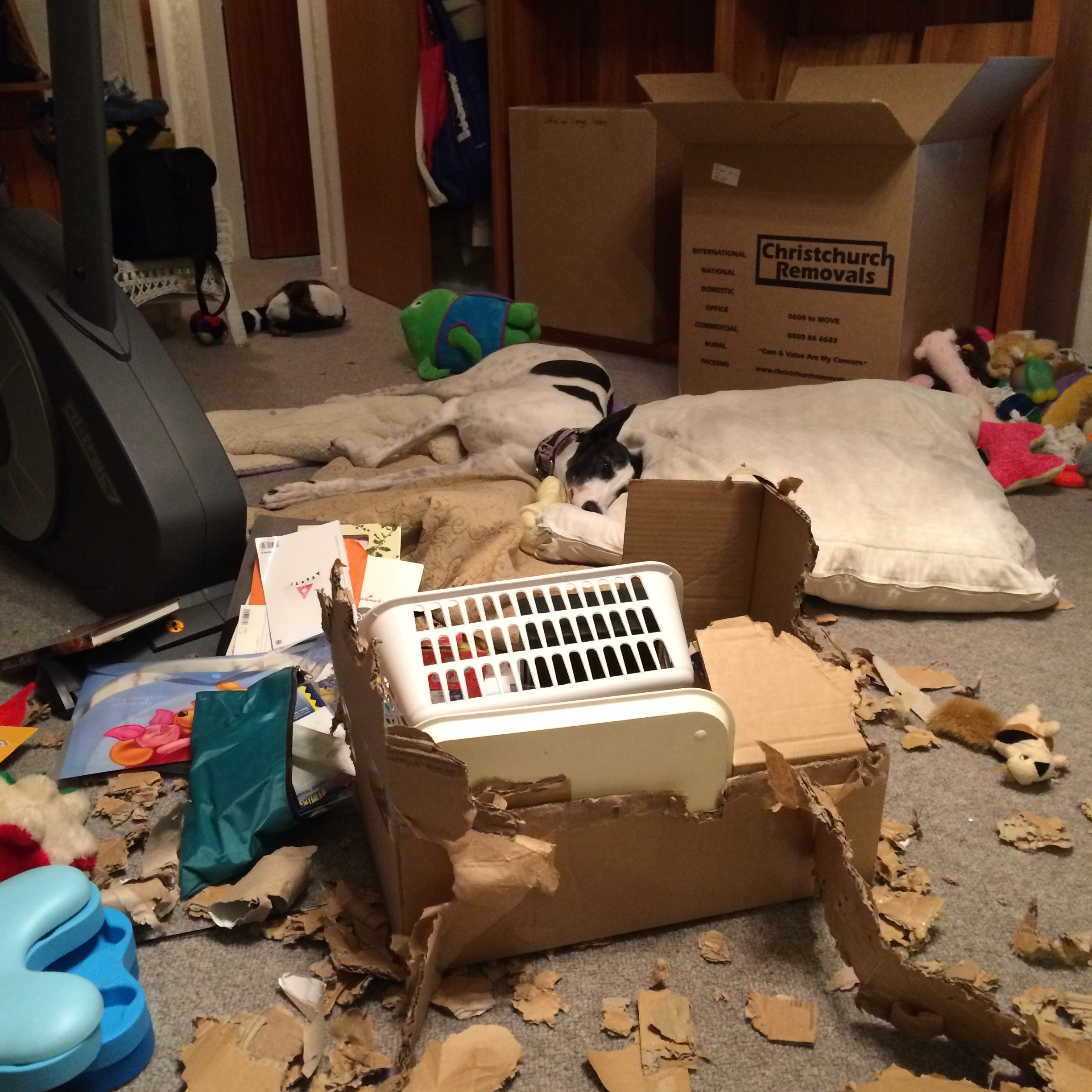
Let your dog unpack boxes!

Izzy's unpacking job 29 June 2015


Kathleen Crisley, specialist in dog massage, rehabilitation and nutrition/food therapy, Canine Catering Ltd, Christchurch, New Zealand

Image

Doggy quote of the month for July

Bill Murray quotation

Kess’ story – Part 2

When dealing with dogs with special needs, one of the key principles is ‘management.’  Management can take a range of forms, but it always involves adapting and changing lifestyle to suit the dog.

In Kess’ case, Ian and Jan accepted that her on-lead behaviour was going to be almost impossible to eradicate.  They adapted their walking routines to suit.

Kess would have a short daytime walk in a quiet area and then a longer evening walk either in a park or very often through the central city of Christchurch. This worked well as there were plenty of people about her but very few other animals.  Ian and Jan felt that they were making some progress with the reactivity and could happily take her into quite busy areas.

Unfortunately, the Canterbury earthquakes which started in September 2010 with another large jolt in February 2011 halted that progress.  Since the earthquakes, Kess’ anxiety levels have remained at very high levels.  She has become much more anxious of strangers which has meant adapting the walking routine.   For the first 18 months, the family continued to walk through the central city at night, following the Avon River around the outside of the Red Zone cordons (for those that don’t know, the central city area was heavily damaged and evacuated).  Jan and Ian quickly learned that hi-vis wear and army cordons were a cause of stress for Kess so avoided them.  Despite these concerns, Jan and Ian found these walks peaceful and reflective.

Post-quakes, Kess’ health issues have also been more of a problem for her.  In my opinion, Kess was already a very sensitive dog and the earthquakes simply added to her load – further weakening her stressed immune system.

She contracted toxoplasmosis, a parasitic disease, probably from drinking from a puddle or other contaminated water source in 2012 (cats are regular carriers of toxoplasmosis). She suffered seizures and general ill health for several months.  “We almost lost her.” Treatment was a mixture of veterinary care and natural animal health care and remedies.

Then, in 2013 when the couple were staying in temporary accommodation while their earthquake-damaged house was repaired, Kess had a major episode with pain in her spine which left her immobilised and howling in pain. An emergency trip to the vet and medication followed. In a bid to reduce the medication she had several acupuncture sessions but became resistant to this.  “She has an amazing ability to turn into a solid, resistant brick when she doesn’t want to do something,” says Jan.

This led the couple to look to yet more alternatives. This is when Jan contacted me and we entered a whole new realm of support for Kess’ health.   I used massage, manual acupressure and laser therapies with Kess and she started swimming at the Dog Swim Spa.   Kess was unable to benefit from swimming because she developed a stress reaction to the shower which was a necessity after each swim  in a chlorinated pool.  So , we agreed that swimming be dropped from Kess’ therapy.  But an osteopath was added in 2014 to help release Kess’ back tension.

Osteopathy and massage therapy work very well in conjunction with one another and so the current plan is to keep up with both.
20150528_15241520150610_162539

More recently, Ian and Jan have noticed that Kess’ anxiety levels have been on the rise and she has been out of sorts which included frequently shaking her head and looking distressed.   She also developed an aversion to the laser and its ‘beeping’ noise and so we’ve dropped that from her regime. After ruling out any ear or tooth problems a specialist vet has recommended Kess undergo an MRI examination to rule out any possible deeper issues with her brain, inner ears or throat area.

Because Kess has been anxious, Jan has also been anxious about their daytime walks.  We discussed cutting back on walks in favor of playing in the family’s yard.  And what we talked about was the fact that Kess was never truly ‘free’ because her anxiety condition prevented Jan and Ian from taking her to a dog park or similar off-leash area.  We needed to re-group about Kess’ mental health.

Luckily, the owner at Top Notch Kennels agreed to allow Kess a weekly visit to their large exercise yard.  At last, Kess is able to blow off some steam and be a ‘real’ dog.  At first tentative and keeping close to Jan, within a few visits Kess found her feet and is now running free without harness or lead. Her smile says it all. Jan has noticed an improvement in her personality. “This has been fantastic for Kess – what a joy to see her joy at being free to just be herself and she still runs in mad, crazy circles but so far no more forward-rolls. I do though have to keep an eye on the sheep over the back hedge – I’m not convinced she couldn’t jump the fence with enough speed on!”
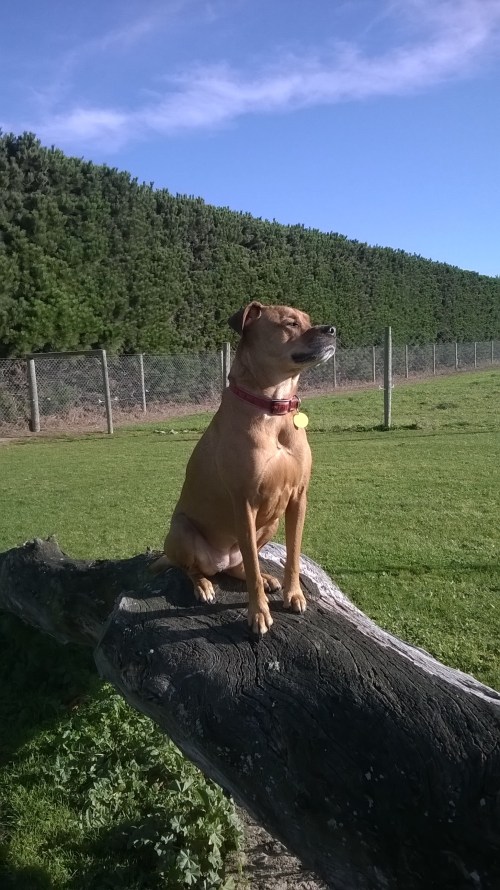
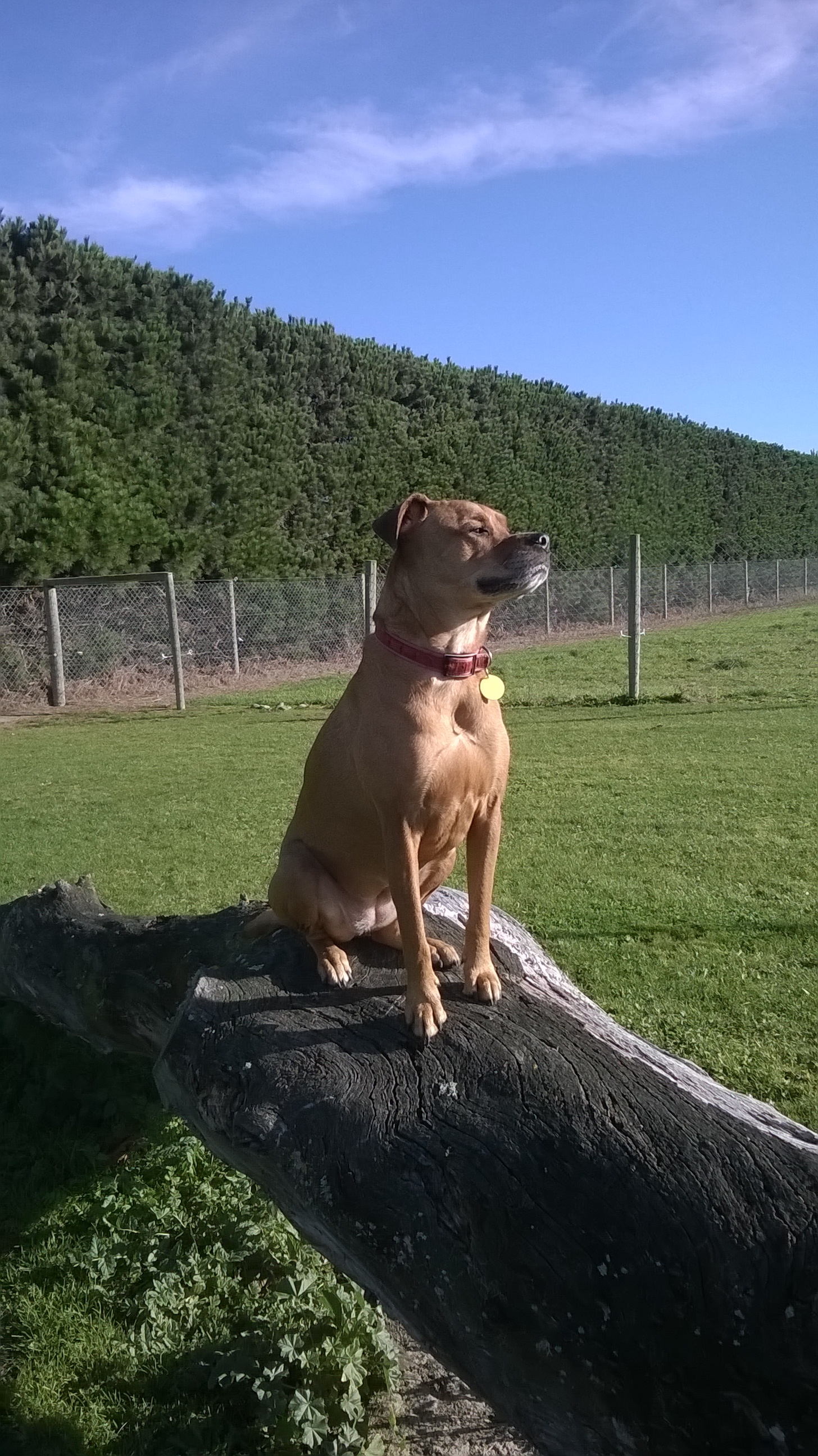
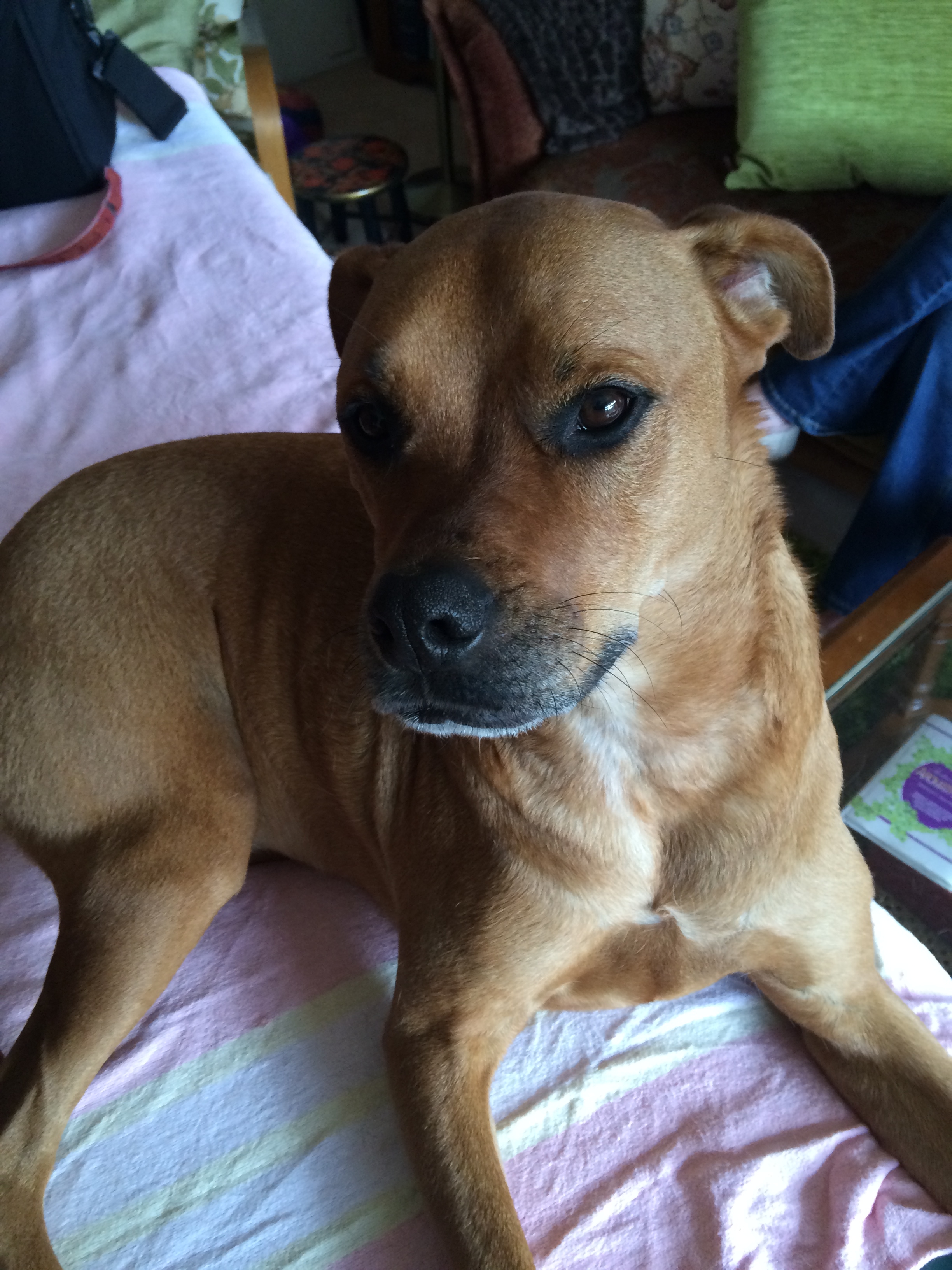
Kess looking free and regal, clearly enjoying her off-lead time

Kess looking free and regal, clearly enjoying her off-lead time

Ian and Jan love Kess and are devoted to her, acknowledging that she has been hard work and a significant investment of their time.

“Although our experiences with Kess have been very challenging on many levels she has also taught us many things and caused us to go places and experience things we most definitely would not have without her. We have discovered interesting places and explored corners of the city we had never known. The most special times were our walks through the dark and silent city following the February 2011 quake. We would never have had that unique experience without our very special girl.”

“Most of the time, 99 per cent, she is the most obedient, quiet and well behaved dog we have ever shared our home with. She is just as happy to spend the whole day snoozing on her couch in the sun as she is excited to be going out somewhere in the car. She is very smart, loves to play find and seek with her toys and has a very effective way of communicating to us just what she needs. Someone commented recently that we should have had her put to sleep as there are plenty of ‘good’ dogs out there who need homes but in our opinion every dog deserves a chance to live a good, happy life. When we see love and trust returned in her eyes it makes everything worth it.”

I think what Kess’ story proves is that ‘difficult’ dogs can still be loveable pets (one trainer suggested she be euthanized when their attempts at training Kess ‘by the book’ failed).  These dogs just need more time and effort invested in them; we need more people willing to stick with the tough times – a loving companion and lifelong relationship awaits.
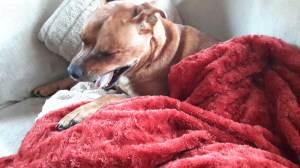
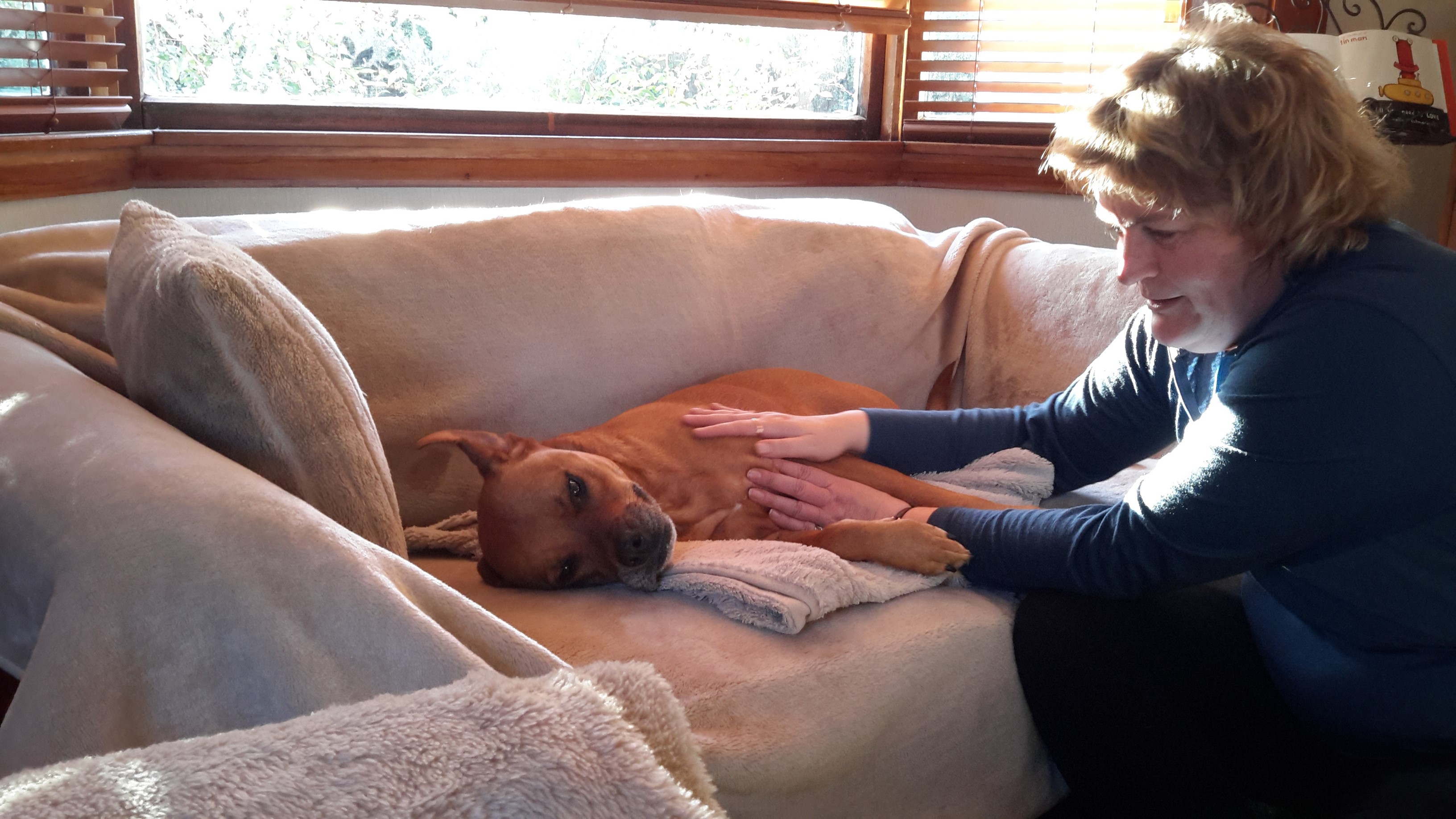
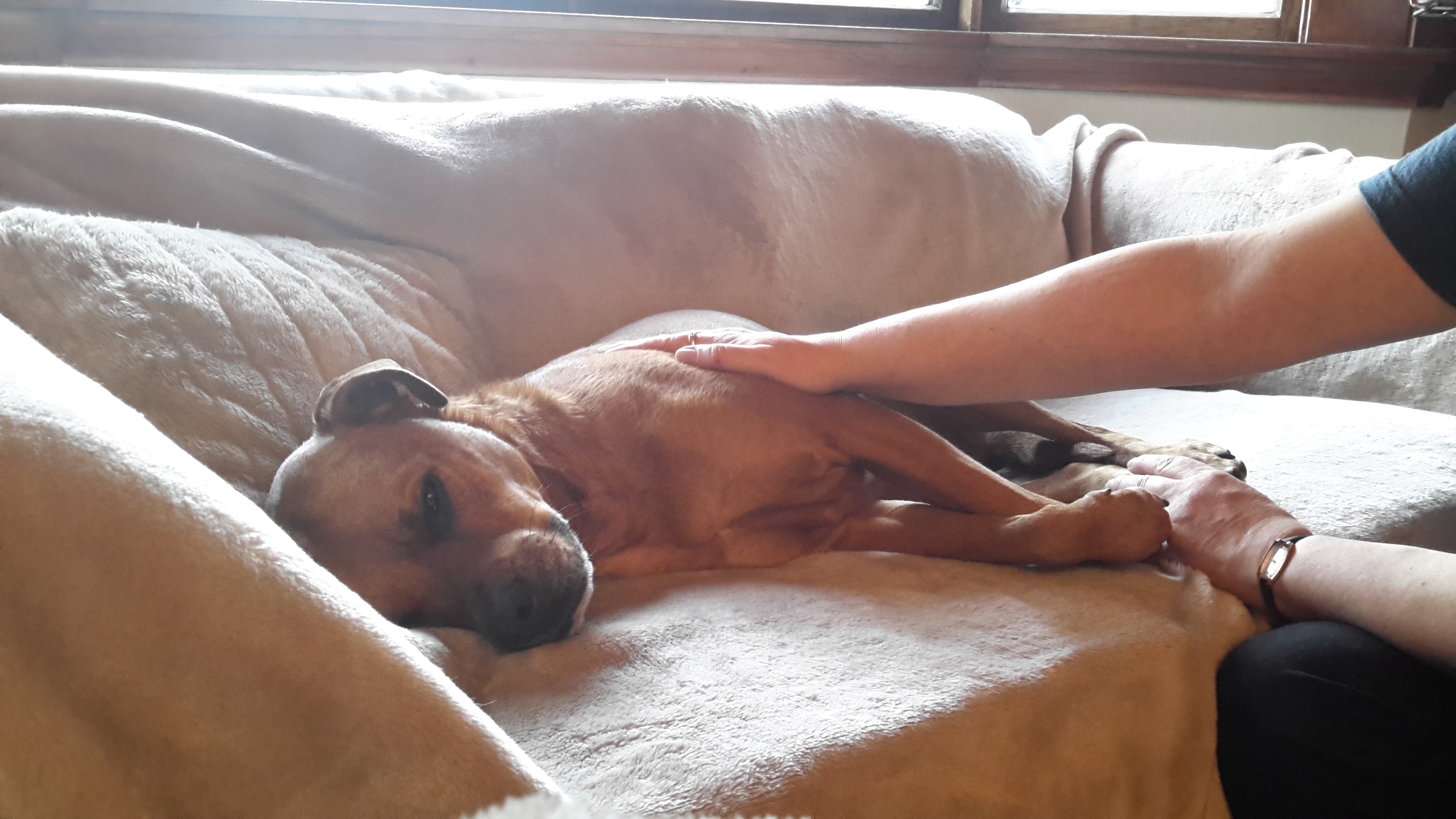
20150531_084116

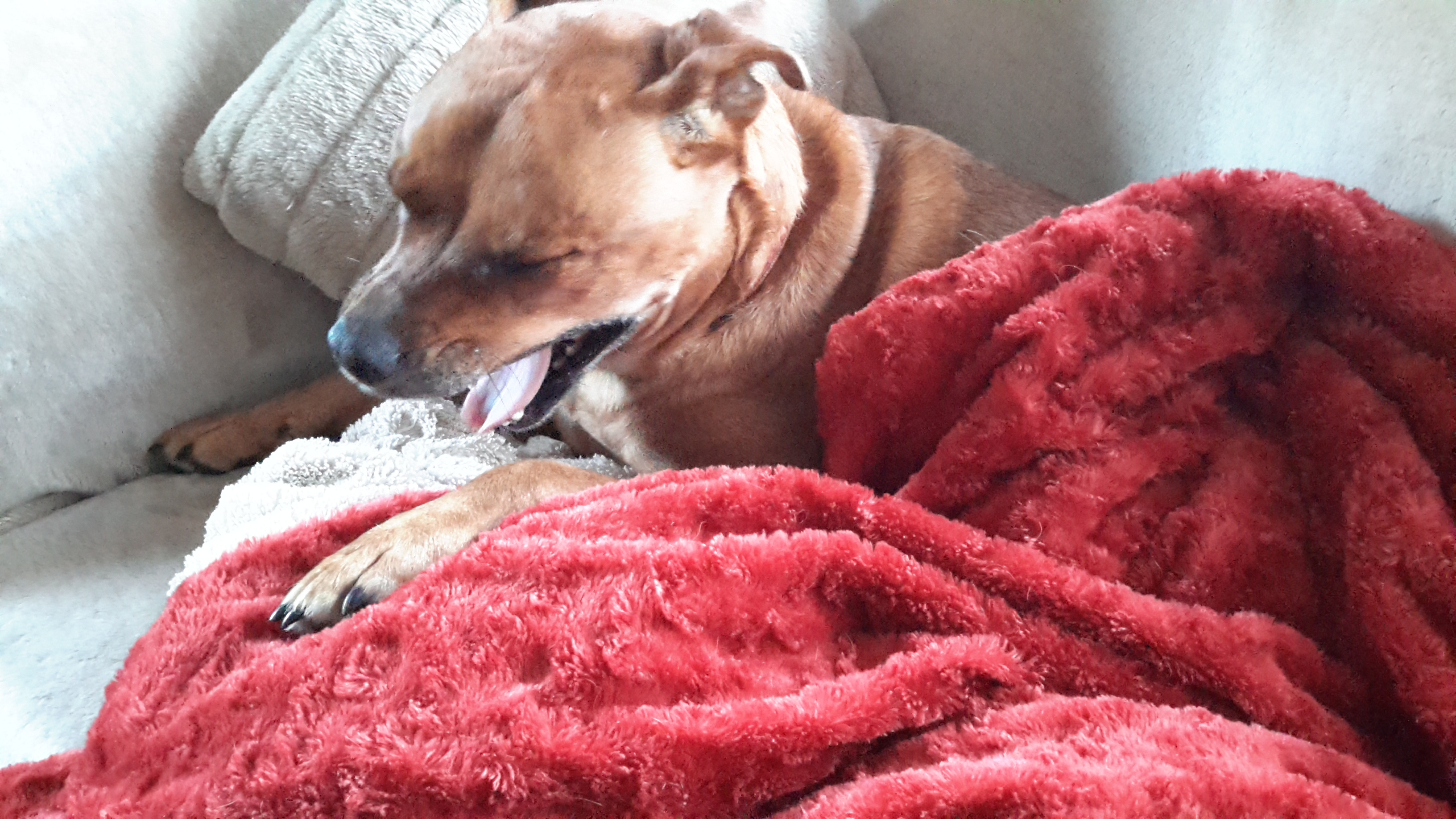
A sleepy Kess after a recent massage session

Kathleen Crisley, specialist in dog massage, rehabilitation and nutrition/food therapy, The Balanced Dog Ltd, Christchurch, New Zealand

Kess’ story – Part 1

Kess is a special massage client – they are all specially, really, but Kess is special because it seems to me that some dogs are just set up in life to have it rough.  Kess is definitely one of those dogs.

Kess’ owner, Jan, has helped write this story because Kess’ story is long and complicated and it’s important to get the facts right.

So here goes…

Kess was adopted from Dogwatch, an adoption agency, in September 2007.  Jan and husband Ian had ruled her out prior to visiting the kennels because they’d seen her on the website and thought she was a bit odd looking as well as having been returned once by an adoptive family. However, as they were leaving the kennels after not seeing the ‘right’ dog, they had to step over one lying in the reception entrance snoozing.

The dog suddenly rolled onto its back and indicated a tummy rub would be needed. “This was the dog we were not going to even consider and this was the beginning of our life with Kess.”

Kess
Although dogs had been members of their family before, Jan admits that everything they thought they knew about dogs had to go out the window.  Living with Kess was very challenging time right from the word ‘go.’ Ian and Jan tried  to return her to Dogwatch but, thankfully, they were full and couldn’t take her back.

This was a dog who had experienced a terrible and hard puppyhood.

For the next year, the family lived under siege until Kess settled in and developed more trust.  They hired Els from Trainimals because she had already met Kess when she was in the kennels.  She brought in another trainer for a second opinion.  His assessment was that she was definitely not aggressive but anxious and only time and love was going to help.

This has proven very true.

Kess is a very curious dog and has a very high prey-drive.  Like Superman, she can bounce over 6 foot fences with ease.   Ian and Jan thought they had big fences before Kess arrived, but since then they have been heightened, strengthened and mostly double fenced.

Yet despite her hunting instincts, Kess proves that she is soft-hearted.  On the odd occasion where her ‘hunting’ has been successful – a duckling and a mouse – she spat them out and watched as they ran off.  Recently Jan had to pick her up and carry her past a wild rat who was sadly dying on the property and lay in the path Kess needed to take to enter the house.

Ian and Jan celebrated when Kess finally relaxed enough during a walk to pee outside her home ground – it took a year.

She is very reactive to other animals but she can socialise successfully in a controlled setting. Now and again a friend will visit with her dog and it is great fun watching the two dogs playing and then collapsing in an exhausted, happy heap afterwards.

One of the biggest challenges has been Kess’ strength when pulling on lead. She walks beside the couple beautifully until she sees something which makes her anxious. When I visit for massage sessions with Kess, there is a lovely framed photo of Kess on her first day home. Attached to the photo frame are two straightened pieces of thick steel. These were the metal pieces on collars where you clip on a lead or rope. Both of these were straightened at times when Kess had been temporarily tied up and seen something she wanted to investigate.  Like Superman, Kess was no match for steel!

Healthwise, Kess came with a set of digestive problems.  She wasn’t food motivated and was a nervous and picky eater.  She developed severe colitis before Ian and Jan were finally able to work with their vet to find the right diet for her. which is turkey-based.  Kess’ stomach is very sensitive and occasionally she still suffers reflux and diarrhoea.

She also had problems with her spine right from the start and a propensity to doing forward-rolls amongst the sand dunes at the beach did cause some issues early on.  A naturopath prescribed remedies for digestion, joint health and anxiety.

In terms of reviewing her health history, I think Kess had a weakened immune system from her hard months as a neglected puppy which probably made her more vulnerable to disease and dysfunction.

Those early, developmental months, matter to a dog’s health and well-being and if a puppy is not well-cared for early, I believe in Traditional Chinese Medicine (TCM ) terms that a lot of life energy, or qi, is lost. These dogs are not balanced and this leaves their bodies vulnerable in terms of disease.

In Part 2, we hear that Kess’ health problems were far from over… and how Jan and Ian remain dedicated to her care.

Kathleen Crisley, specialist in dog massage, rehabilitation and nutrition/food therapy, Canine Catering Ltd, Christchurch, New Zealand

Animal Stars – book review

Animal Stars

This book was a gift and covers more than just dogs.  Horses, birds, cats, monkeys and other animals also feature.  (The book opens with a section on horses, moves to other animals, and then sections devoted to dogs and cats, follow.)

Published in support of the American Humane Association (co-author Robin Ganzert is the President and CEO of the AHA) , which provides representatives on film sets to ensure animals are treated well, I had high hopes for the book.

Perhaps I was looking to hear more about the animal’s background before they started training to be animal actors, or perhaps I was expecting more detail about the training methods used,  or perhaps I needed to see the stories set out in chronological order so we could build a history of animals in film… For whatever reason, this was one of those books which I simply couldn’t get into.

It has a nice format, with small vignettes in the margins featuring quotations from actors and directors.  But somehow, the book felt like a marketing exercise for the AHA (most vignettes espouse the value of having the AHA on set).  It lacked a consistent ‘voice’ since it is really a compilation of stories written by those involved in films and training; a better job at editing the content may have resulted in a book that was more consistently entertaining and an easier read.

Recommended as ‘borrow from the library’ rather than ‘buy’.

Kathleen Crisley, specialist in dog massage, rehabilitation and nutrition/food therapy, Canine Catering Ltd, Christchurch, New Zealand