Category Archives: Dogs

Gene discoveries in canine ataxia

What do the Gordon Setter and Old English Sheepdog have in common?

Both breeds suffer from a type of hereditary ataxia where neurons in the cerebellum that control movement begin to die, causing a gradual loss of coordination.   In humans, ataxia is also the 3rd most common neurodegenerative movement disorder (after Parkinson’s and Huntington’s diseases).

Old English Sheepdog

Researchers at the National Institute on Aging and the Broad Institute of MIT and Harvard looked at 630 Old English sheepdogs and mapped ataxia genetically in the families of affected animals. Eventually they mapped the disease to a gene, RAB 24, located on chromosome 4. A mutation in RAB 24 was closely associated with development of the disease, and on screening of affected dogs of other breeds, the identical mutation was found in Gordon setters, providing additional evidence that this mutation is important.

Gordon Setter

“Rab 24 is a protein that is believed to be important to the process of autophagy – which is how cells cleanse themselves of waste,” says North Carolina State neurologist Natasha Olby who collaborated on the research.

“We know that autophagy and neurodegeneration are connected, so pinpointing this protein is important to our understanding of the disease process.”

“We have not yet proven that this mutation causes neurodegeneration; it could simply be a very good marker for the disease,” Olby says. “Our next step will be to determine exactly how the mutation affects the protein Rab 24 and its function and to determine whether this results in neuron death. This gene will also be investigated in humans with hereditary ataxia.”

The findings appear in the journal PLOS Genetics. The research was funded by the American Kennel Club Canine Health Foundation with additional support from the Old English Sheepdog Club of America.

Source:  North Carolina State University media release

Doggy quote of the month for March

“Lots of people talk to animals, not very many listen, though…”

– The Tao of Pooh

Moving Animals Places

MAP map

Moving Animals Places, or MAP,  is an interactive, web-based application to help address oversupply and demand challenges for animal shelters across the U.S.

Hosted by the ASPCA, the system allows shelters to contact each other and work out how to move animals places where they are more likely to find homes.

Membership is free and the data stream is in real-time so shelters are guaranteed to receive the latest information.

This is just one initiative to help relocate animals from overcrowded shelters and those with a higher euthanasia rate to those with space and capacity for adoption.

Does your shelter belong to the MAP system?  If not, it may be worth a look!

Image

Wordless Wednesday, part 23

German Shepherd in Snow

Dogs give exercise new meaning for seniors

Photo courtesy of Florida State University

Bogey and his dumb bell.  Photo courtesy of Florida State University

Dogs are adding a new twist to exercise classes at the Westminster Oaks Retirement Community in Florida.  Three times each week, they accompany two doctoral students to an exercise class that is part of a study to look at whether exercising with dogs can lead to better health outcomes.

“Between each exercise, we try to leave a little bit of time so people can pet the dogs and talk to the handlers,” says Ashley Artese, a first-year doctoral student in exercise science.

Volunteers for the study at Westminster Oaks were split into two groups of seven. One exercises with dogs trained by Tallahassee Memorial Hospital’s pet therapy program. The other group exercises without them.

Walking around the room, biceps curls with light dumb bells and resistance band stretching are all a part of the routine.  When the group working with dogs lift their dumb bells,  dog Bogey picks up a plastic one. And when the seniors walk around the room, Lola, Stryker and Bogey walk in circles too.

“Exercise classes are not something I call fun, but with the dogs, it is fun,” said Mary Stevenson, a Westminster Oaks resident.  When she heard the exercise class would involve dogs, it caught her interest.

In addition to Lola, Stryker and Bogey, there are four other dogs — Cosmo, Casey, Kayla and Zachy.

For now, all of the work is on a volunteer basis, but all of the parties involved hope it will turn into a funded research study in the future.  At the end of this program, the professors and doctoral students will review the data to see how it might translate into a large-scale study.

Source:  Florida State University media release

Taking the dog for a stroll

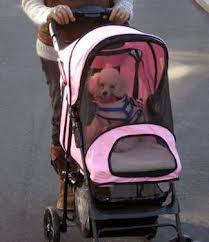
dog in stroller

Many people think that a dog in a stroller is a step too far.  But if you have a dog with mobility issues, including old age, they can work wonders for your dog’s mental health and save you a lot of stress and strain.

Imagine not being able to walk a few blocks to the local park…  Driving is one way, but then you don’t get as much exercise and your dog enjoys less time in the outdoors.

This is where a stroller can come in.  You can still enjoy a walk and your dog gets out without having to rev up the car.  In addition, you will probably find that a dog in a stroller is an attention-getter – so be prepared for people to interact with you and your dog on a regular basis.

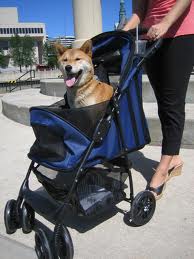
The Happy Trails Pet Stroller

The Happy Trails Pet Stroller

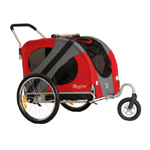
The Dutch Dog Designs DoggyRide stroller

The Dutch Dog Designs DoggyRide stroller

There are many stroller designs to choose from and most can easily be ordered online for convenience.

When should you consider adding a stroller to your dog’s regime?

  • Does your dog pull up lame after only a few short blocks on a regular basis?
  • Is the condition chronic – such as arthritis – meaning it isn’t curable?
  • Are you managing an older injury, such as a cruciate repair or strain and surgery is not an option?

If you answered ‘yes’ to any of the above questions, a stroller should be considered.

Kathleen Crisley, specialist in dog massage, rehabilitation and nutrition, Canine Catering Ltd, Christchurch, New Zealand

Sochi dogged by canine issues; Olympic athletes try to help

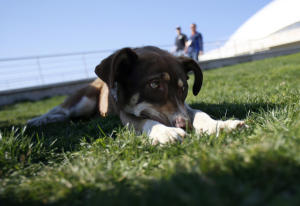
A dog rests outside of the Bolshoy Ice Dome before the USA versus Russia hockey game for the 2014 Winter Olympics in Sochi, Russia on Saturday, Feb. 15, 2014. (Nhat V. Meyer/Bay Area News Group) ( Nhat V. Meyer )

A dog rests outside of the Bolshoi Ice Dome before the USA versus Russia hockey game for the 2014 Winter Olympics in Sochi, Russia on Saturday, Feb. 15, 2014. (Nhat V. Meyer/Bay Area News Group) ( Nhat V. Meyer )

A really good article about how the presence of dogs  in Sochi is affecting some Olympic athletes and what they would like to do to help.

Read it here

Image

Wordless Wednesday, part 22

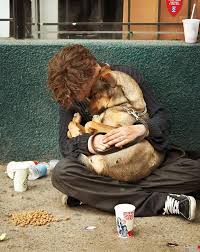
homeless man with dog

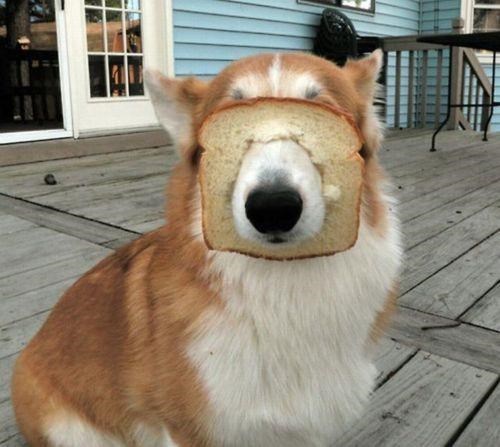
Breading a dog?

This isn’t a typo.  We’re not talking about breeding in this post – but breading.  This weird phenomenon started with cats and then people decided to do it with dogs.

Basically, it involves cutting a hole in slice of bread and then putting the bread over your dog’s muzzle – then take a silly photo and share it.

breading dog 2

Would you do this to your dog? Daisy would go crazy by trying to eat the bread.  But she also doesn’t enjoy being laughed at and so would greet ‘breading’ as she would when people try to put silly hats on her head.

Happy Monday!

breading dog 3Breading dog

Teaching wolves new tricks

The process of learning often involves mimicry or imitation.  In research published in the journal PLoS One, scientists from the Messerli Research Institute at the University of Veterinary Medicine, Vienna report on their behaviour experiments involving wolves and dogs.

The results show that wolves observe one another more closely than dogs and so are better at learning from one another. 

Photo Credit: Walter Vorbeck

Photo Credit: Walter Vorbeck

The scientists found that wolves are considerably better than dogs at opening a container, providing they have previously watched another animal do so. Their study involved 14 wolves and 15 mongrel dogs, all about six months old, hand-reared and kept in packs.

Each animal was allowed to observe one of two situations in which a trained dog opened a wooden box, either with its mouth or with its paw, to gain access to a food reward. Surprisingly, all of the wolves managed to open the box after watching a dog solve the puzzle, while only four of the dogs managed to do so. Wolves more frequently opened the box using the method they had observed, whereas the dogs appeared to choose randomly whether to use their mouth or their paw.

The researchers think that it is likely that the dog-human cooperation originated from cooperation between wolves. During the process of domestication, dogs have become able to accept humans as social partners and thus have adapted their social skills to include interactions with them, concomitantly losing the ability to learn by watching other dogs.

Source:  University of Vienna media release