Category Archives: research

Dogs play together to please us humans suggests new study

Sure, your dog plays with other pooches to have some fun and let off a little steam. But what if their decisions on when and how to play is largely based on making you happy?
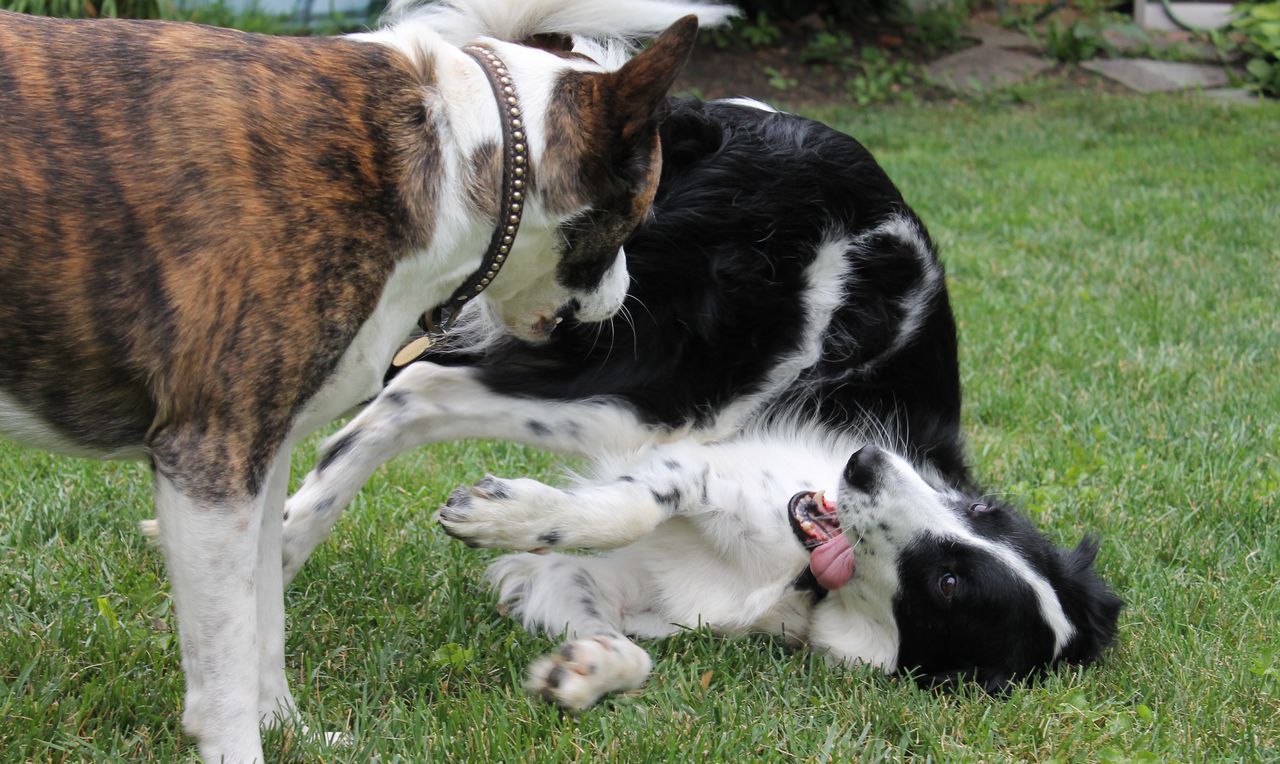
Kobe (left) and Ian (right) play. Photo courtesy of Lindsay Mehrkam

New research published by a Monmouth University scientist suggests our dogs base their playful behaviors on what they believe their owners expect of them.

Lindsay Mehrkam, the director of Monmouth’s Human and Animal Wellness Collaboratory, conducted the research as part of her dissertation. The study was published in February in the journal Animal Cognition.

“The goal of the study was whether or not owner attention could promote play between dogs,” Mehrkam said.

The experiment involved 10 pairs of dogs who lived together with their owners. Each pair was filmed during three separate, 15-minute-long play sessions. Those sessions were subdivided so that five minutes would have the owner be present, attentive and encouraging play, then five minutes with the owner not paying attention, and close with five minutes of the owner not being in the room.

“We saw that overall as a group, the dogs played more when the owners paid attention to them, which isn’t terribly surprising,” Mehrkam said. “The things that made it interesting was trying to figure out the why.”

One thing the study doesn’t do, according to Mehrkam, is definitively say that dogs are only playing with each other if they think it makes their owners happy.

“If you look back at the research on play, it’s pretty well regarded that dog-dog play is a self-rewarding behavior,” she said.

Still, the effect of an owner’s presence is undeniable.

“There’s something about our attention that seems to indicate ‘this is an appropriate time to play’ or that may enrich the environment,” Mehrkam said.

The new research lays the groundwork for further study of dog psychology. Mehrkam said her team is looking into long-standing questions about the relationships between dogs and their owners, and more contemporary questions posed by life under lockdown during the COVID-19 pandemic — like if dogs can perceive a virtual audience, or if they’re made more anxious by an owner’s constant presence at home.

Source: NJ.com

Do Dogs Increase Your Attractiveness and Matches on Dating Apps?

Honest Paws, manufacturer of organic CBD products for pets, surveyed 600 U.S. singles seasoned in the art of online dating, to find out if dog ownership is the secret to success on dating apps and to uncover which apps are most ideal for meeting fellow dog lovers.

Do dogs improve your chances on dating apps? U.S. singles certainly think so. 70% of respondents, overall, and 72% of millennials think having a dog in their profile photos helps them get more matches, while 63% of respondents are more tempted to match with someone who has a dog in their profile. 

Samantha Ross, the editor at Romantific, offers a solid rationale for this:

“Men, in particular, can be seen as committed and trustworthy when they are seen with a pet. In some case studies, men with dogs are more likely to be approached as they are found to be charming and appealing. Having a pet also assures a potential partner that you are capable of taking care of another creature.”

In many cases, pets take on the role of wingman (or wing-woman) in addition to man’s best friend. According to survey results, 50% of singles have no issue using their dog as a ploy to meet someone they’re attracted to while out and about. Sometimes ditching the canned pick-up lines and leaving the ice-breaking to the dogs is your best bet for success – a real-life “meet-cute.” 

Tractive, a real-time GPS for pets, agrees, calling doggos our “fearless, filter-free socializers, who not only boost our happiness levels but encourage us to interact with new people.”

When asked which dog breeds singles love seeing most on dating app profile photos, a few lead the pack. German Shepherds, Pitbulls, Huskies, Labs, and Golden Retrievers were named favorites by the largest percentage of respondents.

Other beloved breeds like Chihuahuas, American Bulldogs, Pomeranians, and Poodles followed closely behind.

More respondents who are dog owners would rather quarantine with their dogs (55%) over a romantic partner (45%). Pandemic stress and countless more hours at home with significant others certainly exacerbate the willingness of couples to take some time apart. But overall, most dog parents can’t bear to be away from their pets for too long. 

Almost half of respondents say they would break up with someone they were dating if their dog did not like them, and a quarter of respondents even admit to staying in a relationship because they didn’t want to risk losing the dog – proof that the bond between humans and our canine partners runs deep. 

21% of Gen Z respondents and 24% of male respondents would even go as far as borrowing a friend’s dog for their dating profile photos – even though (eventually) they will be found out. And when they are, the outlook isn’t promising. 64% of respondents would cut ties with someone who lied about owning a dog on their dating app profile. 

Source: Honest Paws

Dog’s body size and shape could indicate a greater bone tumor risk

Osteosarcoma is a painful and aggressive bone tumour in dogs that is known to be more common in certain breeds than others. New research has now confirmed that larger breeds, such as Rottweiler, Great Dane and Rhodesian Ridgeback, have a greater risk of osteosarcoma than smaller breeds, as well as showing that breeds with shorter skulls and legs have lower osteosarcoma risk. The findings could inform future breed health reforms as well as studies into the way tumours develop from normal bone.

The study led by the University of Bristol Veterinary School in collaboration with Cardiff University and Royal Veterinary College (RVC) London, and using data from VetCompass™ and Veterinary Pathology Group (VPG) histology, looked at the epidemiology surrounding which dog breeds get osteosarcoma, and what this means for canine welfare. This study also shows the huge benefits from studying  dogs as a model to study this cancer.  The findings are published in Canine Medicine and Genetics on 10 March 2021.

The study included 1,756 laboratory-confirmed osteosarcoma cases in dogs compared with 905,211 dogs under veterinary care in the VetCompass™ database during 2016.

The research team found twenty-seven breeds, mainly larger breeds, had an increased risk of osteosarcoma compared to crossbreeds. Thirty breeds, mainly smaller breeds, including Jack Russell, Border Terrier, Bichon Frise, French Bulldog, Cavalier King Charles Spaniel, had reduced risk of osteosarcoma compared to crossbreeds.  

The study also compared various measures of body mass and leg length, and confirmed previous findings that heavier dogs with longer legs and longer skull shapes are at greatest risk of bone tumours. The results could inform breed health reforms, especially in predisposed breeds such as the Rottweiler, Great Dane and Rhodesian Ridgeback, Mastiff and German Pointer. Whereas previous studies have identified high-risk breeds for bone tumours, this paper is novel by being able to identify breeds at lowest risk because of the huge size of the study population. The breeds identified here could be researched and compared to recognise novel genetic differences which cause bone tumours.

The findings that bone tumours are more common in certain breeds and conformations indicates that a dog’s genetics play a role in bone tumour development. This link between the biology of conformation and the biology of bone tumours in dogs provides valuable opportunities for further study into what causes bone tumours to develop, and how they could be treated in the future.

Osteosarcoma can affect any dog breed. However, owners of high-risk breeds should be especially alert for signs of the disease. These include lameness and painful, bony swelling and dog owners should contact their vet if concerned.

Dr Grace Edmunds, Clinical Veterinary Research Fellow and lead author at Bristol Veterinary School, said: “As a vet, I am always focussed on improving animal welfare by looking outwards to find new treatments for their diseases. As osteosarcoma also affects adolescents, it is hugely exciting that by understanding the biology of bone tumours, and working with my collaborators in human cancer research, we may make a difference to both canine and human cancer patients.”

Dr Dan O’Neill, Senior Lecturer in Companion Animals Epidemiology at the RVC, added: “There are increasing concerns about the wisdom of breeding dogs with extreme body shapes such as flat-faced breeds like French Bulldogs or breeds with long backs such as Dachshunds.

“This study highlights the health risks from another extreme body shape – large body size. The breeds at highest risk of osteosarcoma were large-sized breeds such as Rottweiler, Great Dane and Mastiff. To reduce the risks of picking a dog that may develop bone cancer, owners may need to consider choosing puppies from smaller-sized parents of these giant breeds or opting for different smaller breeds instead.”

Professor Rachel Errington at Cardiff University explained: “As a human cancer researcher at the School of Medicine this study shows that we can propose similar questions in human and canine disease with the aim of determining new therapies and diagnostics for both and this provides an exciting opportunity of joining forces across a diverse group of expertise.”

The research team is currently developing a project that will sequence certain genes in at-risk and protected breeds for osteosarcoma, with the aim of identifying those genetic pathways that cause bone tumours to develop from normal bone. Identifying such pathways will allow new drugs, or older, repurposed drugs, to be used to see if the outcomes when treating bone tumours in dogs can be improved.

Drs Grace Edmunds and Helen Winter, members of the study team, will be engaging with owners of dogs with cancer and younger patients who have had cancer as part of a One Health approach, and they would welcome contact from patients or dog owners who would like to participate in this research. 

Paper

Dog breeds and body conformations with predisposition to osteosarcoma in the UK: a case-control study‘ by G. Edmunds et al. (2021) in Canine Medicine and Genetics

Source: University of Bristol

Wolves, dogs and dingoes

Dogs are generally considered the first domesticated animal, while its ancestor is generally considered to be the wolf, but where the Australian dingo fits into this framework is still debated, according to a retired Penn State anthropologist.

“Indigenous Australians understood that there was something different about the dingoes and the colonial dogs,” said Pat Shipman, retired adjunct professor of anthropology, Penn State.  “They really are, I think, different animals. They react differently to humans. A lot of genetic and behavioral work has been done with wolves, dogs and dingoes. Dingoes come out somewhere in between.”

A) Person holding the front paws of a dingo spread wide.  B) Shows a dingo climbing rocks. Image: Lyn Watson

Wolves, dogs and dingoes are all species of the canidae family and are called canids. In most animals, hybridization between closely related species does not happen, or like female horses and male donkeys, produce mules — usually non-fertile offspring.  However, many canid species, including wolves, dingoes and dogs, can interbreed and produce fertile offspring. Defining species boundaries in canids becomes more difficult.

Domestic dogs came to the Australian continent in 1788 with the first 11 ships of convicts, but dingoes were already there, as were aboriginal Australians who arrived on the continent about 65,000 years ago. A large portion of dingoes in Australia today have domestic dog in their ancestry, but dingoes came to Australia at least 4,000 years ago according to fossil evidence. Shipman believes that date may be even earlier, but no fossils have yet been found.

“Part of the reason I’m so fascinated with dingoes is that if you see a dingo through American eyes you say, ‘that’s a dog,'” said Shipman. “In evolutionary terms, dingoes give us a glimpse of what started the domestication process.”

Shipman reports her analysis of wolves, dogs and dingoes in a January 2021 special issue of the Anatomical Record.

Dingoes, and the closely related New Guinea singing dogs, look like the default definition of dog, but they are not dogs. 

“There is a basic doggy look to dingoes,” said Shipman.

Genetically and behaviorally they differ from dogs and are more like wolves in their inability to digest starches and their relationships with humans. 

Most domestic dogs evolved along with humans as humans became agriculturalists and moved to a diet containing large amounts of starch, whether from maize, rice, potatoes or wheat. Their genome changed to allow the digestion of these starches. Dingoes, like wolves, have very few of the genes for starch digestion.

While indigenous Australians stole dingo puppies from their dens and raised them, these puppies generally left human homes at maturity and went off to breed and raise offspring. The ability to closely bond with humans is limited in dingoes, although present in dogs. Native Australians also did not manipulate dingo breeding, which is a hallmark of domestication.

Dingoes are also well-adapted to the Australian outback and fare well in that environment. Domestic dogs that become feral do not survive well in the outback.

“Aboriginal Australians were not well-regarded as holders of knowledge or special skill when Europeans came to the continent,” said Shipman. “So, no one thought to ask them about dingoes. Even recently, asking aboriginals for their scientific or behavioral knowledge really was not common.”

However, aboriginal Australians have a long history of living with dingoes in their lives. Many people argue that dingoes are just dogs — strange dogs, but just dogs, said Shipman.  But, according to aboriginals, dingoes are not dogs.

With dingoes showing behaviors somewhere between wolves and dogs and exhibiting only slight genetic ability to consume starchy foods or tolerate captivity, Shipman concluded that “A dingo is a wolf on its way to becoming a dog, that never got there.”

Source: Penn State News

Dogs put the fun into learning vital social skills

A new UBC Okanagan study finds children not only reap the benefits of working with therapy dogs–they enjoy it too.

“Dog lovers often have an assumption that canine-assisted interventions are going to be effective because other people are going to love dogs,” says Nicole Harris, who conducted this research while a master’s student in the School of Education. “While we do frequently see children improve in therapy dog programs, we didn’t have data to support that they enjoyed the time as well.”

Harris was the lead researcher in the study that explored how children reacted while participating in a social skill-training program with therapy dogs.

The research saw 22 children from the Okanagan Boys and Girls Club take part in a series of sessions to help them build their social skills. Over six weeks, the children were accompanied by therapy dogs from UBC Okanagan’s Building Academic Retention through K9s (BARK) program as they completed lessons.

Each week the children were taught a new skill, such as introducing themselves or giving directions to others. The children would first practice with their assigned therapy dog before running through the exercise with the rest of the group. In the final phase, the children —accompanied by their new furry friend and volunteer handler —would practice their new skills with university students located in the building.

“Therapy dogs are often able to reach children and facilitate their growth in surprising ways. We saw evidence of this in the social skills of children when they were paired with a therapy dog,” says Dr. John-Tyler Binfet, associate professor in the School of Education and director of BARK. “The dogs helped create a non-threatening climate while the children were learning these new skills. We saw the children practice and hone their social skills with and alongside the dogs.”

While the children were learning and practising their new skills, the research team collected data.

“Findings from our observations suggested that canine-assisted social and emotional learning initiatives can provide unique advantages,” says Harris. “Our team saw that by interacting with the therapy dogs, the children’s moods improved and their engagement in their lessons increased.”

In fact, 87 per cent of the team rated the children’s engagement level as very or extremely engaged during the sessions.

At the end of the six weeks, Harris interviewed eight children, aged 5 to 11 years old, who regularly attended the sessions. Each child indicated the social skill-training program was an enjoyable and positive experience and the dogs were a meaningful and essential part of the program.

One participant noticed that the children behaved better at the sessions than at their regular after-school care program, and they thought it was because the children liked being around the dogs.

Half of the children mentioned ways that they felt the dogs helped with their emotional well-being, with one participant crediting a dog with helping him “become more responsible and control his silliness.”

As a full-time elementary school teacher, Harris notes that schools have become increasingly important in helping students develop social and emotional skills, and this research could contribute to the development of future school-based or after-school programs.

“Dogs have the ability to provide many stress-reducing and confidence-boosting benefits to children,” says Harris. “It was really heartwarming to see the impact the program had on the kids.”

The research stemmed from the Building Confidence through K9s program, which was offered in partnership with the TELUS Thompson Okanagan Community Board.

The study was published in the Journal of Research in Childhood Education.

Source: University of British Columbia

New Stem Cell Therapy in Dogs

A team of scientists in Japan has developed a novel method to induce stem cell generation from the blood samples of dogs. Through this technique, the scientists hope to advance regenerative therapies in veterinary medicine. This would mean that, in the near future, veterinarians might be able to reverse conditions in dogs that were previously thought incurable.

Dogs have been faithful human companions ever since their domestication thousands of years ago. With various improvements in veterinary medicine in the past decades, their life expectancy has increased. However, an unfortunate side effect of this longevity, much like in humans, has been an increase in the occurrence of chronic and degenerative conditions.

In humans, modern efforts to fight such diseases have culminated in the development of regenerative therapies, largely based on stem cells. These “baby” cells have the potential to differentiate and mature into many specialized cell types— called “pluripotency.” By transplanting stem cells and guiding their differentiation into desired cell types, researchers are effectively able to regenerate damaged tissues, thereby reversing the course various complex diseases. Although this technology is widely studied in humans, the potential for stem cell therapy in dogs is lacking.

To this end, a research team from Japan, led by Associate Professor Shingo Hatoya from Osaka Prefecture University, has been working on isolating “induced pluripotent stem cells” (iPSCs) from canine blood samples. iPSCs are a type of stem cell that can be “programmed” from a developed (or “differentiated”) cell by introducing a specific set of genes into them. These genes code for proteins called “transcription factors,” which induce the change from a differentiated to a pluripotent stem cell, which then have the ability to mature into various cell types. iPSCs can proliferate very rapidly, providing a reliable supply of suitable stem cells for regenerative therapies. “We successfully established an efficient and easy generation method of canine iPSCs from peripheral blood mononuclear cells” explains Dr. Hatoya. He highlights the significance of these findings for veterinary science, stating he hopes that in the near future, “it may be possible to perform regenerative medicinal treatments in dogs.” These findings were published in the journal Stem Cells and Development.

The previous attempts by these scientists to generate iPSCs from canine blood cells, using viral “vectors” to deliver the pluripotency-inducing transcription factors, were not as effective as hoped. Therefore, in this study, they tested a different combination of inducing factors, which they believe were key to harvesting the full potential of these cells. Most importantly, the researchers needed to control how the reprogrammed cells replicated in the host body. Viral vectors that encode pluripotency-inducing transcription factors can be used to infect cells obtained from the blood and convert them into iPSCs; however, the researchers needed to be cautious: because these vectors integrate into the host genome, re-expression of these pluripotency factors in the host cell can cause tumor formation when these cells are transplanted in patients. To avoid this, the team developed “footprint-free” stem cells by using a particular type of viral vector that can generate iPSCs without genomic insertion and can be automatically “silenced” via “microRNAs” expressed by the cells. Then, they grew these cells in a special type of medium that contained various factors enhancing their pluripotency (including a “small-molecule cocktail”). Indeed, these cells grew and successfully developed germ layers (which form the basis of all organs).

Fascinatingly, these findings have paved the way for an easy stem cell therapy technique for man’s best friends. “We believe that our method can facilitate the research involving disease modeling and regenerative therapies in the veterinary field,” says Dr. Hatoya. Furthermore, the authors also believe that additional research into regenerative therapies for canines might have some ripple effects for human medicine. “Dogs share the same environment as humans and spontaneously develop the same diseases, particularly genetic diseases.”

Translating findings from one field to another might mean veterinarians are able to find treatments, maybe even cures, for some of the diseases that still plague humanity.

Source: Osaka Prefecture University

Liv­ing en­vir­on­ment af­fects the mi­cro­bi­ota and health of both dogs and their own­ers

For both dogs and humans, the risk of developing allergic diseases was at its lowest when the skin microbiota was shaped by a rural environment and a lifestyle that promotes microbial abundance. Photo: Emma Hakanen

In urban environments, allergic diseases are more common among dogs and their owners compared to those living in rural areas. Simultaneous allergic traits appear to be associated with the microbes found in the environment, but microbes relevant to health differ between dogs and humans.

In a joint research project known as DogEnvi, researchers from the University of Helsinki, the Finnish Environment Institute and the Finnish Institute for Health and Welfare have previously observed that dogs are more likely to have allergies when their owners suffer from allergic symptoms. In a new study, the researchers investigated whether such simultaneous presence of allergic traits is associated with gut or skin microbes shared by dogs and their owners. A total of 168 dog–owner pairs living in rural and urban environments participated in the study.

“Research shows that dogs and owners living in rural areas have a lower risk of developing an allergic disease compared to urban areas. We assumed that in rural areas both dogs and owners are exposed to health-promoting microbes. We found that the microbial exposure of both was different in rural and urban environments. For instance, the skin microbiota varied more between individuals in rural areas compared to their urban counterparts. A diverse and varying microbial exposure may be precisely what provides the associated health benefit,” says Senior Researcher Jenni Lehtimäki, PhD, from the Finnish Environment Institute.

Dogs and their own­ers seemed to share mi­crobes on their skin, but not in their gut

The study demonstrated that the living environment had a markedly more significant effect on the skin microbiota than on that of the gut in dogs and humans. Dogs living in urban areas had on their skin more microbes typically found on human skin, which may be caused by the accumulation of microbes typical to humans indoors and in urban areas, a phenomenon that has been previously observed.

In a study conducted earlier, the researchers noticed that both the living environment and living habits affected the canine skin microbiota.

“The same was now observed in humans. For both dogs and humans, the risk of developing allergic diseases was at its lowest when the skin microbiota was shaped by a rural environment and a lifestyle that promotes microbial abundance. Such a lifestyle was associated with a number of different animals in the family, as well as larger family size,” says Professor Hannes Lohi from the University of Helsinki.

While the living environment appeared to alter the species of the skin microbiota as well as the risk of allergic diseases in both dogs and their owners, no single shared microbe in the environment had a link to allergies in both dogs and humans.

“We detected microbes associated with allergies in urban dogs, as well as microbes connected to health in rural dogs and humans, but these microbes were different in dogs and humans. It appears that the microbes in the living environment are important for the health of both dogs and humans, but due to the physiological differences of the species, the microbes that are relevant can vary,” Lehtimäki sums up.

DogEnvi, a multidisciplinary research project launched in 2014, is aimed at investigating the significance of the living environment to canine health. Under the project, a study on the link between canine gut microbiota, nutrition and allergies is being prepared. The project has received funding from the Jane and Aatos Erkko Foundation, among others.

Source: University of Helsinki

Ori­ginal art­icle:  

Jenni Lehtimäki, Hanna Sinkko, Anna Hielm-Björkman, Tiina Laatikainen, Lasse Ruokolainen, Hannes Lohi. Simultaneous allergic traits in dogs and their owners are associated with living environment, lifestyle and microbial exposures. Scientific Reports 2020. DOI:10.1038/s41598-020-79055-x  

Women influenced co-evolution of dogs and humans

Man’s best friend might actually belong to a woman.

Photo by Wade Austin Ellis

In a cross-cultural analysis, Washington State University researchers found several factors may have played a role in building the mutually beneficial relationship between humans and dogs, including temperature, hunting and surprisingly—gender.

“We found that dogs’ relationships with women might have had a greater impact on the dog-human bond than relationships with men,” said Jaime Chambers, a WSU anthropology Ph.D. student and first author on the paper published in the Journal of Ethnobiology. “Humans were more likely to regard dogs as a type of person if the dogs had a special relationship with women. They were more likely to be included in family life, treated as subjects of affection and generally, people had greater regard for them.”

While dogs are the oldest, most widespread domesticated animal, very few anthropologic studies have directly focused on the human relationship with canines. Yet when the WSU researchers searched the extensive collection of ethnographic documents in the Human Relations Area Files database, they found thousands of mentions of dogs.

Ultimately, they located data from more than 844 ethnographers writing on 144 traditional, subsistence-level societies from all over the globe. Looking at these cultures can provide insight into how the dog-human relationship developed, Chambers said.

“Our modern society is like a blip in the timeline of human history,” she said. “The truth is that human-dog relationships have not looked like they do in Western industrialized societies for most of human history, and looking at traditional societies can offer a wider vision.”

The researchers noted specific instances that showed dogs’ utility, or usefulness, to humans, and humans’ utility to dogs as well as the “personhood” of dogs—when canines were treated like people, such as being given names, allowed to sleep in the same beds or mourned when they died.

A pattern emerged that showed when women were more involved with dogs, the humans’ utility to dogs went up, as did the dogs’ personhood.

Another prevalent trend involved the environment: the warmer the overall climate, the less useful dogs tended to be to humans.

“Relative to humans, dogs are really not particularly energy efficient,” said Robert Quinlan, WSU anthropology professor and corresponding author on the paper. “Their body temperature is higher than humans, and just a bit of exercise can make them overheat on a hot day. We saw this trend that they had less utility to humans in warmer environments.”

Quinlan noted there were some exceptions to this with a few dog-loving cultures in the tropics, but it was a fairly consistent trend.

Hunting also seemed to strengthen the dog-human connection. In cultures that hunted with dogs, they were more valued by their human partners: they were higher in the measures of dogs’ utility to humans and in personhood. Those values declined, however, when food production increased whether it was growing crops or keeping livestock. This finding seemed to go against the commonly held perception of herding dogs working in concert with humans, but Quinlan noted that in many cultures, herding dogs often work alone whereas hunting requires a more intense cooperation.

This study adds evidence to the evolutionary theory that dogs and humans chose each other, rather than the older theory that humans intentionally sought out wolf pups to raise on their own. Either way, there have been clear benefits for the dogs, Chambers said.

“Dogs are everywhere humans are,” she said. “If we think that dogs are successful as a species if there are lots of them, then they have been able to thrive. They have hitched themselves to us and followed us all over the world. It’s been a very successful relationship.”

Source: Washington State University

Study Sets Baseline for Sleep Patterns in Healthy Adult Dogs

A new canine sleep study from North Carolina State University could serve as a baseline for research on chronic pain and cognitive dysfunction in dogs, potentially improving detection and treatment of these conditions.

“The study was necessary because research on dogs and sleep has outpaced our basic knowledge about what a ‘normal’ sleep/wake cycle looks like,” says Margaret Gruen, assistant professor of behavioral medicine at NC State and corresponding author of the work. “The studies currently available are over 20 years old, only followed small numbers of dogs or dogs that were not in a home environment, and didn’t really capture data that is relevant to how dogs live (and sleep) now. We designed the study to update these findings and fill the knowledge gap.

“And for me, someone interested in how dogs develop and age, it’s a critically missing gap: we talk about a symptom of age-related cognitive dysfunction in dogs as being a disruption in the sleep/wake cycle without really understanding where the baseline is.”

The study followed 42 healthy adult dogs – 21 male and 21 female – ranging in age from 2 to 8 years old. The dogs wore activity monitors on their collars for a two-week period, and their owners filled out a questionnaire on the dogs’ sleep patterns. Functional linear modeling of the activity data showed that most dogs have two activity peaks during the day: a shorter window from 8 a.m. to 10 a.m., followed by a midday lull and a longer active period from about 5 p.m. to 11 p.m. All dogs were more active during weekends than weekdays.

“Since most of the participants were pets of people who work outside the home, we saw that the dogs were most active when human interaction happens,” Gruen says. “There were the occasional outliers – we did capture some midday ‘zoomies’ – but the pattern held true on average across 14 days for each dog. These findings aren’t surprising – they line up with many of the assumptions we’ve been making, but now the data are characterized and documented.”

The research revealed that weight and sex had an effect on the active periods; lighter dogs tended to be more active in a short period just after midnight, while female dogs seemed to be more active during the evening peak than males. Even in these healthy adult dogs, age had an effect; older dogs were less active during the peak activity times.

“Our hope is that this will serve as a foundational study for future work on the relationship between pain, cognitive dysfunction and sleep disruption, and as a study that is relevant to the way dogs live now,” Gruen says. “By establishing norms, we can better identify abnormalities and intervene earlier in the process. We can also use this as a baseline to evaluate development of adult sleep patterns in puppies.”

The research appears in Scientific Reports. NC State graduate student Hope Woods is first author. Duncan Lascelles, professor of translational pain research and management at NC State, also contributed to the work. Evolutionary anthropologist David Samson and his team, from the University of Toronto, Canada, created the functional linear models.

Source: North Caroline State University


New research reveals widespread contamination of English rivers with pesticides commonly used as flea treatments

Researchers at the University of Sussex have found widespread contamination of English rivers with two neurotoxic pesticides commonly used in veterinary flea products: fipronil and the neonicotinoid imidacloprid. The concentrations found often far exceeded accepted safe limits.  

These chemicals are banned for agricultural use due to the adverse environmental effects, but there is minimal environmental risk assessment for pesticides used on domestic cats and dogs. This is due to the assumption that there are likely to be fewer environmental impacts due to the amount of product used.  

River Nene, near Nassington taken by Iain Simpson – Wiki Commons (licensed under the Creative Commons Attribution-Share Alike 2.0 Generic license)

But there is growing concern that this assumption may be incorrect. To investigate this, Professor Dave Goulson and Rosemary Perkins from the University of Sussex analysed data gathered by the Environment Agency in English waterways between 2016-18. They found that fipronil was detected in 98% of freshwater samples, and imidacloprid in 66%.  

Rosemary Perkins, a PhD student at Sussex and a qualified vet, said: “The use of pet parasite products has increased over the years, with millions of dogs and cats now being routinely treated multiple times per year. 

“Fipronil is one of the most commonly used flea products, and recent studies have shown that it degrades to compounds that are more persistent in the environment, and more toxic to most insects, than fipronil itself. Our results, showing that fipronil and its toxic breakdown products are present in nearly all of the freshwater samples tested, are extremely concerning.”   

According to the Veterinary Medicines Directorate (VMD), who funded the research, there are 66 licensed veterinary products containing fipronil in the UK, and 21 containing imidacloprid, either alone or in combination with other parasiticides. These include spot-on solutions, topical sprays and collars impregnated with the active ingredient. 

While some of these products can be purchased only with a veterinary prescription, others can be bought without a prescription from pet shops, supermarkets, pharmacies and online. Many pet owners receive year-round preventative flea and/or tick treatment from their vet practice via healthcare plans. 

Fipronil has a history of very limited agricultural use prior to its ban in 2017. It is also licensed for use in ant and cockroach baits, however only one product is licensed for use by non pest-control professionals. Use on pets seems to be the most plausible source of the widespread contamination of rivers.

The paper, co-authored with Martin Whitehead from the Chipping Norton Veterinary Hospital and Wayne Civil at the Environment Agency, examines the occurrence of fipronil and imidacloprid in English rivers as indicators of the potential contamination of waterways from the use of pet flea treatments. 

They found that the average fipronil concentration across the rivers sampled by the Environment Agency exceeded chronic safety thresholds five-fold. The overall pollution levels in English rivers indicate that fipronil and its toxic breakdown products pose a high risk to aquatic ecosystems.

While, in most rivers, imidacloprid was found to pose a moderate risk, in seven out of the 20 rivers sampled there was a high environmental risk. 

Co-author Professor Dave Goulson said: “Fipronil and imidacloprid are both highly toxic to all insects and other aquatic invertebrates. Studies have shown both pesticides to be associated with declines in the abundance of aquatic invertebrate communities. The finding that our rivers are routinely and chronically contaminated with both of these chemicals and mixtures of their toxic breakdown products is deeply troubling.”

The paper, published in Science of the Total Environment, notes that the highest levels of pollution were found immediately downstream of wastewater treatment works, supporting the hypothesis that significant quantities of pesticide may be passing from treated pets to the environment via household drains. 

Bathing of pets treated with spot-on fipronil flea products has been confirmed as a potentially important route to waterways for fipronil via sewers, and the washing of hands, pet bedding or other surfaces that have come into contact with treated pets are potential additional pathways for entry to sewers. Other pathways for contamination of waterways includes swimming and rainfall wash-off from treated pets. The strong correlation between fipronil and imidacloprid levels across the river sites tested suggest that they may be coming from a common source. 

Rosemary Perkins added: “We’ve identified a number of steps that can be taken to minimise or avoid environmental harm from pet flea and/or tick treatments. These range from introducing stricter prescription-only regulations, to considering a more judicious and risk-based approach to the control of parasites in pets, for example by moving away from blanket year-round prophylactic use.  

“We’d recommend a re-evaluation of the environmental risks posed by pet parasite products, and a reappraisal of the risk assessments that these products undergo prior to regulatory approval.” 

Source: University of Sussex