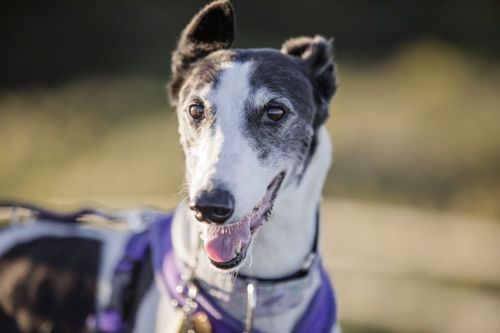
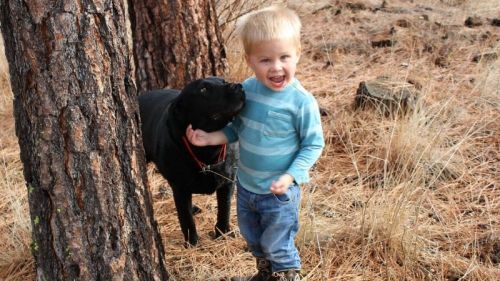
Your dog might be hiding its true colors

If you have a purebred dog, it’s likely that he or she looks fairly similar to other dogs of the same breed, especially when it comes to the color of their coats.

But what happens if a purebred puppy doesn’t look exactly like its siblings when it’s born? Chances are, it might not be a flaw – but rather a hidden gene variant that decided to show itself.

New research from Purdue University’s College of Veterinary Medicine shows that some breeds of dogs have hidden coat colors – and in some cases, other traits – that have been lurking all along.

Purdue university research into coat color

New research from Purdue University’s College of Veterinary Medicine shows that some breeds of dogs have hidden coat colors – and in some cases, other traits – that have been lurking all along. Example: There are around 18 recognized breeds of dogs that have the genetic potential to be born without a tail – such as the popular Australian Shepherd (shown in photo). But the data shows that up to 48 of the breeds analyzed possess the tailless gene variant, usually at a very low frequency.

Led by Kari Ekenstedt, DVM, Ph.D., assistant professor of anatomy and genetics, and Dayna Dreger, Ph.D., the lead scientist in Ekenstedt’s canine genetics research laboratory, the team looked at a dozen different genes in 212 dog breeds. Purdue researchers, together with industry partners at Wisdom Health, analyzed data that had been initially collected by WISDOM PANEL™ for the development of canine DNA tests. The work was published Oct. 28 in PLOS ONE.

“These are purebred dogs with traits that their breed clubs say they’re not supposed to have,” said Ekenstedt, whose research program focuses on canine genetics. “The message of this paper is, ‘Hey, these gene variants exist in your breed, and if a few dogs are born with these traits, it’s not caused by accidental breeding and it’s not a mutt; it’s a purebred showing this known genetic potential.’”

Along with analyzing the data, researchers used standard breed descriptions from major American and international dog breed registries to determine coat colors and tail lengths that were accepted within each breed.

“There was a lot of information we didn’t expect,” Dreger said. “When it comes to different dog breeds, their standards are mostly based on preference and aesthetics. We make assumptions for certain breeds based on what we expect their coat colors to be.”

Ekenstedt says coat color genes have a significant amount of epistasis between them, meaning that what happens at one gene can mask what’s happening at another gene. Because of epistasis, it’s rare to see those masked genes actually expressed in a dog’s coat color.

One example of a “fault” allele – a gene variant that would cause a trait that is not allowed in a breed standard – is an allele that causes the brown color, which affects both hair pigment and skin pigment. The color is allowed in breeds like the Labrador Retriever where it causes the chocolate color. However, researchers observed that in breeds where brown is not allowed, such as the Rottweiler and the German Shepherd Dog, brown alleles exist at low frequencies.

Another example of a fault allele is in the Weimaraner, which exists in both longhaired and shorthaired varieties. At least one dog breed organization does not allow longhaired Weimaraners while several others do allow them.  Of the Weimaraners sampled in this data, the longhaired allele is present at a 4% frequency.

The same goes for other traits, too, Dreger said. For example, there are around 18 recognized breeds of dogs that have the genetic potential to be born without a tail – such as the popular Australian Shepherd. But the data shows that up to 48 of the breeds analyzed possess the tailless gene variant, usually at a very low frequency; one of those breeds is the Dachshund.

“A breeder would certainly be surprised to see a Dachshund born without a tail,” Dreger said. “The chances are low, but our research shows that the potential is there.”

Both Dreger and Ekenstedt hope the research prompts some discussions within the dog community.

“I want this to start science-based conversations,” Dreger said. “We’re not here to make decisions on what a breed should or shouldn’t look like or what a breed club should do. We’re here to say these are the facts, and these are the gene variants that naturally exist in these breeds.”

They also hope it changes some perspectives when it comes to what is to be expected with certain breeds of dogs.

“There’s an assumption that the standards for these different breeds of dogs are set in stone,” Dreger said. “People will often make assumptions that if it doesn’t match this, it’s not purebred. This data shows that there is a lot of variation in some of these breeds, and the standards are not as concrete as we expect them to be.”

Wisdom Health funded a Veterinary Summer Scholar position to Blair Hooser, a student at the Purdue College of Veterinary Medicine and coauthor on the paper, for this work. Partial support for Dr. Ekenstedt was provided by the National Institutes of Health.

Source:  Purdue University media release

Come on, Jacinda, Ban the Boom

Successive governments, including the current Labour Government led by Prime Minister Jacinda Ardern, have refused to heed the growing calls from animal lovers to ban the private sales of fireworks.

That’s a real shame.  Let’s face it, a lot has been said about the Prime Minister because she chose to become a mother while acting as PM.

Here’s Zoe, one of Izzy’s friends, all rugged up for Guy Fawkes.  She’s in a thundershirt, with ear muffs, and music and still nervous and anxious.  There are lots of similar photos and videos of stressed out animals on Facebook this week.

Zoe for Guy Fawkes

Now I wonder if Jacinda would like it if one of these stressed out dogs was her baby, Neve Te Aroha Ardern Gayford?  Not a nice thought, is it?  I wouldn’t wish it on the Prime Minister’s baby.  Maybe she and her Government shouldn’t wish it on ours.

Maybe what will get action from this government is to remind them that all fireworks are single use and disposable.  Just like the plastic bags that they and their coalition partners banned earlier this year.  These fireworks are filling up our landfills, too.   What’s the deal, Green Party?

I’m not going to apologise if this post is a lot more ‘in your face’ than most of my posts.  I’m entirely sick of the inaction.  Are you?

Kathleen Crisley, Fear-Free certified professional and specialist in dog massage, rehabilitation and nutrition/food therapy, The Balanced Dog, Christchurch, New Zealand


Estrogen’s opposing effects on mammary tumors in dogs

Dogs that are spayed at a young age have a reduced risk of developing mammary tumors, the canine equivalent of breast cancer. Early spaying reduces levels of estrogen production, leading many veterinarians and scientists to cast estrogen in a negative light when it comes to mammary cancer.

But the effects of estrogen on cancer risk in dogs aren’t straightforward, according to a new study led by researchers from Penn’s School of Veterinary Medicine. While it’s clear that spaying dogs greatly minimizes their risk of developing mammary cancer, the findings suggest that the practice may increase the risk of more aggressive cancers. And in spayed animals with mammary tumors, the team found that higher serum estrogen levels were actually protective, associated with longer times to metastasis and improved survival times.

sorenmo_brownie_daube

Veterinary oncologist Karin Sorenmo and colleagues cast new light on the complex role of estrogen in canine mammary cancer. The research emerged from Penn Vet’s Shelter Canine Mammary Tumor Program, which assists in treating and then finding homes for dogs like Brownie, pictured with former oncology intern, Kiley Daube.

“Dogs that remain intact and have their ovaries develop many more mammary tumors than dogs that were spayed, so removing that source of estrogen does have a protective effect,” says Karin U. Sorenmo, a veterinary oncologist at Penn Vet and senior author on the study, published in PLOS ONE. “Estrogen does seem to drive mammary cancer development. But what it does for progression to metastasis—that I think is more complicated.”

Sorenmo and colleagues have been studying mammary tumors in dogs as a way of improving care and treatment for pets but also to make insights into human breast cancer biology.

“Much of the research we do in veterinary medicine looks at what is done in people and then adapts it,” she says. “But dogs are such a great, comprehensive model for cancer. Yes, there are differences in biology between dogs and people, but here those differences may allow us to ask very probing questions about what estrogen is doing in both dogs with mammary cancer and women with breast cancer.”

The research used data from two prospective studies, including one involving dogs in the Penn Vet Shelter Canine Mammary Tumor Program, through which shelter dogs with mammary tumors receive treatment, are studied by researchers like Sorenmo, and then find foster or permanent homes.

The team evaluated 159 dogs with mammary cancer, 130 that were spayed as part of the study and 29 that remain intact. In addition to surgically removing the dogs’ measurable tumors, the team collected information on serum estrogen levels, tumor type, disease grade and stage, time to metastasis, and survival time.

Despite estrogen’s link with an increased risk of developing mammary tumors, the researchers found that higher serum estrogen levels also seemed to help dogs avoid some of the riskiest aspects of their disease. Unexpectedly, when dogs were spayed at the same time their tumors were removed, those with estrogen receptor-positive tumors that had higher serum estrogen took longer to develop metastatic disease and survived longer than dogs with lower estrogen levels, confirming that these tumors depended on estrogen for progression.

Sorenmo speculates that, in these cases, estrogen’s action may be nuanced. “It drives the cancer, but it also seems to control or modulate it, reining it in,” she says, because most dogs with high serum estrogen levels had lower-grade and estrogen receptor-positive tumors, rendering them susceptible to hormonal deprivation by spaying.

The protective role of estrogen was also surprisingly pronounced in dogs with estrogen-receptor negative mammary tumors. In these higher-risk cancers, high serum estrogen was associated with delayed or absent metastasis. Complementing these findings and supporting a potential broader, tumor receptor-independent anti-cancer effect driven by estrogen, dogs with low serum estrogen had a significantly increased risk for developing other non-mammary aggressive fatal tumors, such as hemangiosarcoma, during their follow-up after mammary tumor surgery.

Some of the findings contradict what has been found in women with breast cancer. For example, higher serum estrogen levels in women following breast cancer therapy have been associated with higher rates of recurrence. But Sorenmo also notes that many cases of breast cancer in women arise just after menopause, when estrogen levels tumble. So there may be a more complex role for estrogen in people’s cancer risk as well.

The work points to new possibilities for examining the role of estrogen in cancer initiation and progression. Already, Sorenmo and colleagues, including Penn Vet’s Susan Volk and Ellen Puré, are pursuing investigations of how the hormone affects the tumor microenvironment, cells that aren’t themselves cancerous but may either stem or encourage a tumor’s growth and spread.

“I think this study opens some really complicated questions,” Sorenmo says. “If we start dissecting exactly what estrogen is doing, what genes or immune cells it’s interacting with, maybe we could harness the power of estrogen to be more clever in our treatment strategies.”

Source:  Penn Today

Doggy quote of the month for November

My fashion philosophy

(I wear dog hair with pride)

Kathleen Crisley, Fear-Free certified professional and specialist in dog massage, rehabilitation and nutrition/food therapy, The Balanced Dog, Christchurch, New Zealand

Halloween – proceed with caution

Halloween Dogs

Halloween is almost upon us and it’s important to remember that not every dog enjoys this holiday.

It could be as simple as a dog who does not want to be dressed up in a costume.  You’ll know.  The ears are flat, the tail is between their legs and they are not happy.  So if this is your dog, please don’t make them dress up.

If they are fearful of strangers, then the constant ring of the doorbell is likely to upset them.  Create a nice safe space for them in another room of the house as far away from the door as possible, play them soft music and include some enrichment toys.   Take turns visiting them while the Halloween trick-or-treaters come and go.

Then of course there is all the candy that is collected and handed out.  Chocolate contains theobromine which is toxic to dogs.  Generally speaking, the darker the chocolate, the more theobromine.

If your dog has eaten chocolate and you ring the vet for advice, they will need to know:

1.      Weight of your dog

2.      How much chocolate was eaten

3.      Type of chocolate

If you don’t know any of the above critical pieces of information, then get your dog to to the vet if they are open and, if not, to an emergency vet clinic.   Vets will usually induce vomiting as a first step to treatment.

The symptoms of theobromine poisoning include:

  • Vomiting
  • Diarrhea
  • Hyperactivity
  • Tremors
  • Seizures
  • Racing heart rhythm progressing to abnormal rhythms

Your dog can die from theobromine poisoning.


An increasing threat to dogs is the number of sweet products that are manufactured with xylitol, an artificial sweetener.  Sugar-free chewing gum, mints and sweets often use this sweetener and many other ‘sugar free’ products also use it.

If you have anyone diabetic in your house, chances are that you are buying products with xylitol in them.  Some medications also use it for flavouring instead of sugar – peanut butters, too.  (Clearly, some of these risks are year-round and not just Halloween risks).

The symptoms of xylitol poisoning include:

  • Weakness or lethargy
  • Depression
  • Walking drunk
  • Acute collapse
  • Vomiting
  • Trembling or tremoring
  • Seizures
  • A racing heart rate
  • Jaundiced gums
  • Black-tarry stool
  • Diarrhea
  • Bruising
  • Clotting problems

Your dog can die from xylitol poisoning.

If you think your dog has ingested a product with xylitol, I wouldn’t muck around.   Get to your vet and don’t wait for symptoms to develop.  They’ll check your dog’s blood sugar level and probably induce vomiting as a first step, but intravenous fluids, careful monitoring of liver function and other supportive care are often required.

Kathleen Crisley, Fear-Free certified professional and specialist in dog massage, rehabilitation and nutrition/food therapy, The Balanced Dog, Christchurch, New Zealand

The dog in Marieke’s life

News broke this week that Paralympian Marieke Vervoort has carried out her wishes for euthanasia in her home country of Belgium, where euthanasia has been legalized.

Vervoort with Zenn

Passing at the age of only 40, Vervoort won medals at the London 2012 and the Rio de Janeiro games in 2016 in wheelchair racing.

By all accounts, this woman suffered terribly during her life with a form of progressive tetraplegia, losing more function as the days passed.  She was in constant pain and also suffered epileptic seizures.

Marieke also shared her life with a Labrador named Zenn.  Zenn was credited with helping her to carry groceries, bringing her items of clothing, and warning her of impending seizures.

So my thoughts are now with Zenn, who has lost her human companion.

There are many dogs working around the world as assistance and emotional support dogs  and – since they are sentient creatures like us – I’m quite sure that they feel the loss of their loved ones.

Kathleen Crisley, Fear-Free certified professional and specialist in dog massage, rehabilitation and nutrition/food therapy, The Balanced Dog, Christchurch, New Zealand

Control the flies without chemicals

Spring has sprung around New Zealand and that means open doors and windows to let the fresh air in.

It also means that some people reach for cans of fly spray or, worse, those automatic dispensers that regularly dose your house with chemicals.  (Not to mention the regular ‘hiss’ of the spray which can be very upsetting to some dogs and that our dogs can smell things we can’t – remember that I only use Fear Free practices).

I’m no fan of chemicals.

A few years ago, a client of mine showed me their temporary fly screen door which they install every year.  It’s quite easy, really.  It comes with tacks and double-sided velcro and strong magnets which close the panels after you walk through it.  Dogs easily learn to walk through the screen, too, which means the panels close behind them as they go in/out (Izzy and her friends that visit have had no problems negotiating the door).

I put my fly screen up about a week ago and it’s made a huge difference.  Here are a couple of photos to show you what it looks like:

The temporary fly screens are available in major hardware stores and through Trade Me at very reasonable prices.

And for windows, good old fashion net curtains help to reduce the entry of flies into your home, too.

So much better than chemicals!

Kathleen Crisley, Fear-Free certified professional and specialist in dog massage, rehabilitation and nutrition/food therapy, The Balanced Dog, Christchurch, New Zealand

Dog Owners Often Inaccurately Measure Out Kibble, Study Finds

A cup might seem like the most obvious way to measure out dry dog food, but new University of Guelph research finds that when it comes to getting portions right, dog owners often get it wrong.

dog-kibble-768x576

(Pixabay)

The study, designed to test dog owners’ measuring skills, found owners were often inaccurate, ranging from a 48 percent underestimation to a 152 percent overestimation, depending on the device they used and the amount they tried to portion out.

The occasional measurement mistake may not seem like much, but errors made day after day could lead to under-nourishment, weight gain or obesity, said lead author Prof. Jason Coe from U of G’s Ontario Veterinary College.

“We found it particularly concerning to see how often participants over-measured the assigned portions, particularly given that there is an ongoing problem with pet obesity. Dog owners can easily overfeed their animals if they don’t measure out portions correctly, putting their animals at risk of several obesity-related diseases,” he said.

The solution, Coe said, is for dog owners to change their approach to measuring their dog’s dry food. The gold standard would be to use a kitchen scale to weigh out portions. Scales are precise and leave little room for error to ensure that dogs are neither over- nor underfed.

The study, published in the BMJ journal Veterinary Record and funded by Royal Canin, recruited 100 dog owners and asked them to use one of three common measuring devices to measure out kibble: a standard 2-cup scoop with gradated markings, sold at a local pet store; a 2-cup liquid measuring cup typically used for baking; and a 1-cup plastic dry-food measuring cup.

Each participant was asked to take their assigned measuring device and measure out three volumes of dry dog food: ¼ cup, ½ cup and 1 cup. The volume of dog food measured by participants was then compared to the correct weights respectively.

The participants’ portions varied considerably, particularly when they were asked to portion out the smallest volume which participants often got significantly wrong.

“That finding has important implications for small dogs, since they typically receive smaller volumes of food. Even a small amount of over measuring for a small dog can be a considerable increase in their daily caloric intake putting them at risk of weight gain from too much food,” said Coe, who is a researcher with the Department of Population Medicine.

Those using the 2-cup liquid measuring cup were most likely to inaccurately measure all three portions.

“The problem with trying to eyeball 1 cup or ½ cup in a 2-cup device is that there is lots of room for error in deciding where the measurement line is, depending on how you’re holding the cup,” said Coe.

Study participants were most accurate when they used a 1-cup dry-food measuring device to portion out 1 cup of kibble. Another option for improving accuracy is to use a dry-food measuring device matched to the amount needed, said Coe.

“The closer the measuring cup is to the portion you want to measure, the more accurate you’ll be,” said Coe.

But the best method of all, say the researchers, is the kitchen scale, which ensures each portion size is precise.

When the participants in this study were shown how off their usual measurement methods were, most indicated a high likelihood that they would start using a kitchen scale for measuring their dog’s kibble.

“I now use a scale in my own home for accurately measuring my own dog’s kibble. I first found it strange to use. But now that I’m in the routine of using it, it seems weird not to use a scale,” Coe said.

Coe says even dog owners who have pets that are at a healthy weight, ensuring correct food portions now is key to preventing weight gain and weight-related problems down the road.

“Most people want their pets to be happy and healthy and this is a way to keep their pets’ weights in control from Day 1, improving their chances of living long and full lives.”

Source:  University of Guelph

Preserving Christchurch’s water while walking

Christchurch residents really value their water, which is sourced from aquifers underneath the city.   It was only recently (within the last couple of years) that our water supply had to be chlorinated – an issue that remains contentious.

Izzy water meter

Izzy drinks from the puddle and runoff from a leaking water meter

But, thanks to our earthquakes and general deterioration of the infrastructure, we also have a very leaky water distribution system.

I have lost count of the number of leaking water meters I have found during my walks with Izzy which I have reported to the Christchurch City Council to ensure they are repaired. (You can also report using the Snap Send Solve app) We simply can’t assume that the Council knows about every leak in a timely way.

Another way dog walking benefits our community.

I encourage all my local readers to pay attention to water leaks as they walk around the city; take a photo and report the leak!

Kathleen Crisley, Fear-Free certified professional and specialist in dog massage, rehabilitation and nutrition/food therapy, The Balanced Dog, Christchurch, New Zealand

Overweight Danes are more likely to have overweight dogs according to new research

A new study from the University of Copenhagen reports that the prevalence of overweight dogs is markedly larger among overweight owners than among normal weight owners. Part of the explanation lies in whether treats are used as training tools or “hygge-snacks”. It is the first major study on canine obesity in Denmark.

Cute fat pug dog with funny face

Getty images

There’s a bit of truth to the saying “like owner, like dog”. This has now been confirmed by researchers. For the first time in Denmark, researchers have systematically investigated the factors related to our four-legged friends being overweight or obese.  One of the results demonstrates an unambiguous correlation between the weight status of a dog and its owner.

The study, conducted by researchers at the University of Copenhagen, shows that the prevalence of heavy or obese dogs is more than twice as large among overweight or obese owners than among owners who are slim or of a normal weight.

Part of the explanation rests upon how owners manage dog treats. The research results show a correlation between overweight dog owners and the use of dog treats as “hygge-candy” (cozy-candy).

“Whereas normal weight owners tend to use treats for training purposes, overweight owners prefer to provide treats for the sake of hygge. For example, when a person is relaxing on the couch and shares the last bites of a sandwich or a cookie with their dog,” says Charlotte R. Bjørnvad of the University of Copenhagen’s Department of Veterinary Clinical Sciences. Bjørnvad, a veterinarian and professor, is the main author of the research article, now published in the journal Preventive Veterinary Medicine.

The researchers studied 268 adult dogs recruited at animal clinics around Zealand and the Capital Region of Denmark. Of the pets recruited, 20% were either heavy or obese.

“Oftentimes, people don’t consider their dog’s weight status to be a problem. And this might contribute to a dog’s being overweight. But being heavy or obese does have a great impact on dog health – which on average results in a shortened lifespan”, according to bioethics professor and article co-author, Peter Sandøe, of the University of Copenhagen’s Department of Food and Resource Economics.

Previous studies have shown that on average, heavy dogs live 1.3 years less than dogs on restrictive diets and that part of the explanation may be an earlier development of osteoarthritis with the heavier weight.

Castration triples the risk of being heavy or obese

The researchers also looked into how castration and sterilization can be risk factors in relation to dog weight. The study shows that castrated male dogs have three times as high a risk of being heavy or obese compared to intact dogs. On the other hand, the study demonstrated that sterilization has no impact on weight in female dogs.  Whether they are intact or not, female dogs, have an increased risk of being heavy compared with intact males.

“When males are castrated, they face just as high of a risk of becoming overweight as females. Castration seems to decrease the ability to regulate the appetite in male dogs and at the same time, it might also decrease the incentive to exercise which results in an increased risk of becoming overweight. Therefore, an owner should be careful about how they feed their dog after it has been castrated,” says Bjørnvad.

Sandøe adds: “They might even want to consider not neutering. As long as there are no runaway females in the area, there are in most cases no reason to neuter.”

The researchers hope that this new knowledge raises awareness about canine weight among veterinarians and dog owners, and that it contributes to better obesity prevention and treatment strategies by identifying focus areas for intervention.

Source:  University of Copenhagen media release