“Moral distress” in the veterinary profession

This study’s lead author is Dr Lisa Moses.  Back in 2012, Lisa allowed me to follow her at Angell Animal Medical Center as she worked with dogs in her pain management clinic.

Although no one will argue about the rates of suicide in the veterinary profession, I’d also suggest that complementary practitioners also suffer from a level of moral distress – I’ve seen dogs that could have significant improvement but their owners are prevented from pursuing full therapy for a variety of reasons.  My very first tutor in canine massage prepared us by saying, “you will meet clients that don’t share your values or moral compass.”

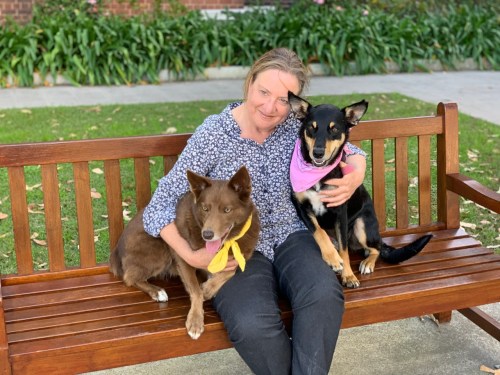
Kathleen Crisley, Fear-Free certified professional and specialist in dog massage, rehabilitation and nutrition/food therapy, The Balanced Dog, Christchurch, New Zealand


In some ways, it can be harder to be a doctor of animals than a doctor of humans.

“We are in the really unenviable, and really difficult, position of caring for patients maybe for their entire lives, developing our own relationships with those animals — and then being asked to kill them,” says Dr. Lisa Moses, a veterinarian at the Massachusetts Society for the Prevention of Cruelty to Animals-Angell Animal Medical Center and a bioethicist at Harvard Medical School.

Dr Lisa Moses

Dr Lisa Moses courtesy of MSPCA – Angell

She’s the lead author of a study published in the Journal of Veterinary Internal Medicine about “moral distress” among veterinarians. The survey of more than 800 vets found that most feel ethical qualms — at least sometimes — about what pet owners ask them to do. And that takes a toll on their mental health.

Dr. Virginia Sinnott-Stutzman is all too familiar with the results. As a senior staff veterinarian in emergency and critical care at Angell, she sees a lot of very sick animals — and quite a few decisions by owners that trouble her

Sometimes, owners elect to have their pets put to sleep because they can’t or won’t pay for treatment, she says. Or the opposite, “where we know in our heart of hearts that there is no hope to save the animal, or that the animal is suffering and the owners have a set of beliefs that make them want to keep going.”

Distress around choices such as those is pervasive among vets, Moses and her colleagues found. For example, 69 percent said they had felt moderate to severe distress about not being able to give animals what they thought was the right care. Almost two-thirds were bothered by inappropriate requests for euthanasia.

The study’s senior author, Cambridge Health Alliance psychiatrist and Harvard bioethicist J. Wesley Boyd, sees a connection between the study’s findings and daunting statistics about veterinarians’ suicide rates: “My assumption,” he says, “is that the findings from our survey are definitely part of, or even the majority of, the reason why veterinarians have higher-than-average suicide rates.”

And Moses says that while euthanizing an animal is often the right thing to do to end suffering, that doesn’t make it easy.

“I want to make a plea to the pet-owning public to understand that, no matter what you think, odds are the person who’s trying to help you take care of your animal has pretty strong feelings about how important that is,” she says. “And they feel it.”

The study’s authors are calling for better training — in veterinary school and beyond — on self-care and how to cope with moral distress and ethical conflict.

Sinnott-Stutzman defines moral distress as the feeling when the vet determines an optimal treatment course but is blocked from carrying it out — whether because of money, or an owner’s beliefs, or rules about, say, dogs that bite.

“The most poignant example is when a young dog has a fracture — so a totally fixable, non-life-threatening problem,” she says. But an owner neither wants to pay for a proper fix nor have a three-legged dog, and opts for euthanasia instead.

“That’s a really tough thing to go through,” she says. It’s also particularly hard, she says, when owners, caught up in their grief, project their anger onto the vet. “So in this example,” she says, they might say, ” ‘We have to kill our dog because you’re all about the money,’ which is of course not the case.”

In her 15 years doing emergency and critical care, Sinnott-Stutzman says, she has changed how she copes with moral distress. In the past, she would mainly talk tough cases through with colleagues. Now, she often tries to refocus her mind — meditate, take a walk, think about her kids. She might share an experience with her husband — who will focus on her feelings — rather than a colleague, who is likelier to focus on the medical aspects.

She strongly endorses the study authors’ call for better training for vets in how to handle moral distress. Everything she has learned about coping has come from mentors and friends outside the veterinary profession, she says, and “it absolutely needs to be part of how we teach vets.”

Source:  WBUR
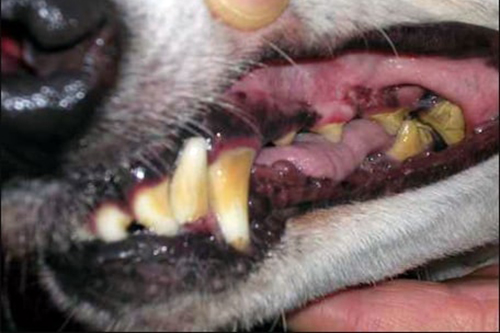
Bad teeth revealed as biggest problem for pet greyhounds

Dental disease is the most common health issue facing pet greyhounds, according to the largest ever study of greyhounds treated in first opinion veterinary clinics. The research, led by the Royal Veterinary College’s (RVC) VetCompass programme in collaboration with the University of Bristol Vet School, reveals that 39 per cent of greyhounds suffer from dental problems, which is a far higher percentage than for any other dog breed.

greyhound dental disease

As well as bad teeth, the research revealed that traumatic injuries, overgrown nails and osteoarthritis are also major concerns for pet greyhounds. Overgrown nails affected 11.1 per cent of greyhounds, wounds 6.2 per cent, osteoarthritis 4.6 per cent and claw injury 4.2 per cent.

Greyhounds in the UK are typically used for racing during their early lives, with an increasing number rehomed as pets after their racing careers are over. The results of this study, which is published in Canine Genetics and Epidemiology, adds significantly to evidence available for the debate on the welfare issues surrounding greyhound racing. It will also help breeders and regulators to prioritise activities to mitigate the worst of the harm to greyhounds from their racing careers, as well as help greyhound rehoming organisations advise adopters on optimal preventative care options.

Researchers studied 5,419 greyhounds seen by first opinion vets in 2016. Key findings include:

  • The most common disease in greyhounds was dental disease (39.0 per cent affected). This is much higher than reported for other larger breeds such as the German Shepherd Dog (4.1 per cent) or the Rottweiler (3.1 per cent);
  • Urinary incontinence was more common in female greyhounds (3.4 per cent) than males (0.4 per cent);
  • Aggression was more commonly reported in males (2.6 per cent) than females (one per cent);
  • The median lifespan for greyhounds is 11.4 years, compared to the 12 years previously reported for dogs overall;
  • The most common causes of death in greyhounds are cancer (21.5 per cent), collapse (14.3 per cent) and arthritis (7.8 per cent).

Dr Dan O’Neill, Veterinary Epidemiologist and VetCompassTM researcher at the RVC, who was the main author of the paper, said: “Pet greyhounds are now a common breed treated in general veterinary practices in the UK. Retired racing greyhounds can make very good pets, but these results sadly show that they also carry health legacies from inherent breed predispositions as well as impacts from their prior racing careers. These potential problems include bad teeth, behavioural issues and arthritis. Our new VetCompass evidence especially reveals a worryingly high level of dental disease. This awareness should encourage all those who care for the greyhound to prioritise preventive and remedial strategies for these issues and therefore to  improve the welfare of this lovely breed, both before and after rehoming as pets.”

Dr Nicola Rooney, co-author and lead researcher on Greyhound Welfare Project at the Bristol Veterinary School, added: “Greyhounds can make fantastic pets and live long healthy lives, but it has long been suspected that they are particularly prone to dental problems which can negatively impact upon their quality of life. Here we have the first evidence that levels of dental issues are higher in greyhounds than in other breeds. This highlights the importance of conducting research into ways of improving dental health.

“At Bristol we have been conducting a three-year research programme to further understand what causes dental problems in greyhounds and methods to avoid them. Combined with the current RVC study, this is an important step to understanding and improving the future welfare of greyhounds.”

Professor Steve Dean, Chairman of the Kennel Club Charitable Trust (KCCT), explained: “I must declare an interest in this study as my additional role as Chairman of the Greyhound Trust reveals my enthusiasm for this lovely breed. It will come as no surprise to those who love greyhounds that dental plaque is a significant condition in this breed. This latest study from the VetCompass initiative reveals the extent of the problem and should stimulate interest in further work to understand why periodontal disease is such an issue for both the racing dog and the retired greyhound. Effective research could also have a far reaching impact for several other breeds that suffer a similar challenge. The VetCompass programme has been helpful in revealing breed specific problems and this study is yet another informative analysis   of extensive clinical data. The Kennel Club Charitable Trust regards the financial support it provides as a successful investment in clinical research.”

Paper

Greyhounds under general veterinary care in the UK during 2016: demography and common disorders by O’Neill, D.G., Rooney, N.J., Brock, C., Church, D.B., Brodbelt, D.C. and Pegram, C. in Canine Genetics and Epidemiology [open access]

Source:  University of Bristol media statement

Your Kelpie is not a Dingo

Many kelpie owners wonder if their dog has a little bit of dingo in them. Some believe the kelpie was bred with the dingo to make them more resilient to the Australian climate. New research suggests this may be bush folklore.

Researchers at the University of Sydney have found no genetic evidence that the iconic Australian kelpie shares canine ancestry with a dingo, despite Australian bush myth.

The paper, published in the journal Genes, is the first peer-reviewed study of its kind to find that the domestic and wild dogs share no detectable common DNA in genes impacting coat colour and ear type.

Professor Claire Wade with Peppa and Cash (right). Photo by Vanessa Saines.

Some kelpie owners and “old-timers” believe the kelpie breed contains genes from the Australian dingo, said Professor Claire Wade in the School of Life and Environmental Sciences.

It has been said that the dingo was mixed with the kelpie, which originally came from Scotland, to produce a more-resilient and hardy dog that could withstand hot, dry Australian conditions,” Professor Wade said.

“Our analysis shows there is no genetic evidence for this from any genes affecting the way the domestic and wild dogs look,” Professor Wade says.

Professor Wade, who is an expert in dog genetics, said some people have come to believe there is a connection simply because the two dogs look similar. They both have pricked up ears, a similar body shape and hair texture, and some kelpies are yellow or cream in colour.

“There’s a bit of Australiana and sentiment here,” Professor Wade said. “We wish the Australian kelpie was somehow special or unique to us. But the breed has come from Scotland and the way we made it our own was by selecting it for our harsh climate.”

The study characterised known gene variants of both kelpie types (Australian kelpie —conformation; Australian working kelpie — herding) and compared the variants present with those in sequenced Australian dingoes.

Genes assessed included identified coat colour and ear type variants. None of the coat colour or ear type genes analysed offered support for a shared family history.

Kelpies in Australia

The kelpie was brought to Australia in the late 1800s from Scotland. They are a herding dog derived from the Scottish smooth collie or farm collie. There are two types of kelpies developed in Australia: the working kelpie, which has been selected specifically to handle the Australian climate and working conditions, and the conformational kelpie, which is usually a single colour all-over and is more likely to live in the city.

The best-known Australian kelpie in popular culture is Koko, the dog in the movie Red Dog.

Dingoes are believed to have arrived in Australia more than 4000 years ago, most likely with Asian seafarers.

The kelpie samples in the research were obtained as part of a larger genetic project helping breeders produce the best possible working dogs. Owners of working kelpies are invited to take part in a survey of current working dogs and their behaviours.

Source:  The University of Sydney

Image

Doggy quote of the month for June

Doris Day quotation

Owning a dog is influenced by our genetic make-up

A team of Swedish and British scientists have studied the heritability of dog ownership using information from 35,035 twin pairs from the Swedish Twin Registry. The results indicate that an individual’s genetic make-up has a great influence on whether they choose to acquire a dog. Genes appear to account for more than half of the difference in dog ownership.

Dog ownership

“Perhaps some people have a higher innate propensity to care for a pet than others” Photograph: Mikael Wallerstedt

Dogs were the first domesticated animal and have had a close relationship with humans for at least 15,000 years. Today, dogs are common pets in our society and are considered to increase the well-being and health of their owners. The team compared the genetic make-up of twins (using the Swedish Twin Registry – the largest of its kind in the world) with dog ownership. The results are published for the first time in Scientific Reports. The goal was to determine whether dog ownership has a heritable component.

“We were surprised to see that a person’s genetic make-up appears to be a significant influence in whether they own a dog. As such, these findings have major implications in several different fields related to understanding dog-human interaction throughout history and in modern times. Although dogs and other pets are common household members across the globe, little is known how they impact our daily life and health. Perhaps some people have a higher innate propensity to care for a pet than others,” says Tove Fall, lead author of the study, and Professor in Molecular Epidemiology at the Department of Medical Sciences and the Science for Life Laboratory, Uppsala University.

Health benefits of owning a dog

Carri Westgarth, Lecturer in Human-Animal interaction at the University of Liverpool and co-author of the study, adds: “These findings are important as they suggest that supposed health benefits of owning a dog reported in some studies may be partly explained by different genetics of the people studied”.

Studying twins is a well-known method for disentangling the influences of environment and genes on our biology and behaviour. Because identical twins share their entire genome, and non-identical twins on average share only half of the genetic variation, comparisons of the within-pair concordance of dog ownership between groups can reveal whether genetics play a role in owning a dog.

Genetics play a major role

The researchers found concordance rates of dog ownership to be much larger in identical twins than in non-identical ones – supporting the view that genetics indeed plays a major role in the choice of owning a dog.

“These kind of twin studies cannot tell us exactly which genes are involved, but at least demonstrate for the first time that genetics and environment play about equal roles in determining dog ownership. The next obvious step is to try to identify which genetic variants affect this choice and how they relate to personality traits and other factors such as allergy” says Patrik Magnusson, senior author of the study and Associate Professor in Epidemiology at the Department of Medical Epidemiology and Biostatistics at Karolinska Insitutet, Sweden and Head of the Swedish Twin Registry.

“The study has major implications for understanding the deep and enigmatic history of dog domestication” says zooarchaeologist and co-author of the study Keith Dobney, Chair of Human Palaeoecology in the Department of Archaeology, Classics and Egyptology at the University of Liverpool. “Decades of archaeological research have helped us construct a better picture of where and when dogs entered into the human world, but modern and ancient genetic data are now allowing us to directly explore why and how?”

Source:  Uppsala University

It makes my tail wag when the poop is in the bag

A common problem for most communities is ensuring that dog parents take responsibility for their dog’s poop.

This brochure at the Town of Needham offices caught my eye…a plea to dog owners and walkers to bag it and trash it…

What initiatives does your town have to ensure poop is scooped?

Municipup says

Kathleen Crisley, Fear-Free certified professional and specialist in dog massage, rehabilitation and nutrition/food therapy, The Balanced Dog, Christchurch, New Zealand

Dog pee on the sidewalk does more than just piss off your neighbors

Note from DoggyMom I follow all types of research.  But some – like this one – needs to be put into a larger context.  Urban cities have a lot of runoff thanks to all the hard surfaces including roads and sidewalks.  Urban designers look to institute green spaces to help with infiltration of water into soils and decrease runoff, which can be particularly helpful in high volume, storm events which overwhelm stormwater systems.

Urban runoff has a lot of contaminants from the oils, dust and debris of modern life.  All meat-eating animals have high nitrogen in their urine – and that’s why countries like NZ have issues with groundwater quality because of the number of cows that are left to graze and urinate on open pastures.  So of course dogs will have an impact on the soil quality and runoff in the very limited areas of green that they have to use in urban cities.  The solution?  Well, in my opinion, it’s partly an argument for creating more green space.


Nobody knows just how many dogs there are in the United States, but there are plenty—and many of them live (and pee) in human cities. Turns out, canine bathroom breaks may have more of an impact on the environment than you might think.

In a new study, a team of Columbia University undergraduate and graduate researchers led by ecologist Krista McGuire looked at the impact of pee on the urban soil microbiome. They found evidence that the nitrogen content and low pH of the urine can make city soil both harder and less absorbent of rainwater, while making the soil microbiome less diverse.

Your very good boy

The project was born out of McGuire’s observations with colleagues during other research on green infrastructure in NYC. In sites like unfenced tree pits, “the soils seemed barren, compacted, and the water from rainfall didn’t seem to penetrate very well,” she says.

The team suspected soil’s characteristics had something to do with all the dogs that urinated on those sites, so they designed an experiment to check. “We obtained soil from the city environment,” says McGuire, along with one species of commonly-used plant from the same nursery the city uses.

Both of these factors replicate what’s used out in the real world. Getting actual dog pee turned out to be harder. They approached animal shelters, which mostly turned them away, while the one shelter that acquiesced didn’t yield enough pee—the experiment required a whopping 40 gallons.

“Despite visiting the shelter twice a week for a couple months, less than 40mL [1.35 oz] of urine was collected due to difficulty in predicting when the dogs will urinate and the dogs’ refusal to continue urinating when a collecting bowl was brought near them as they were about to urinate,” the paper states.

“Ultimately, we decided to use coyote urine since coyotes are very closely related to domestic dogs, and their urine is commercially available,” McGuire says. If you’re not a gardener looking to repel deer from your tulips, you may not be aware of this, but yes, you can buy 40 gallons of coyote pee pretty easily.  (Note from DoggyMom:  Coyotes are kept in captivity and their urine is collected through drainage systems.  Some say that the income from the coyote urine farms help to support other conservation efforts.   I will need to research this further.)

Over the course of a month, they ran a greenhouse experiment, watering the plants at regular intervals with either straight water or water mixed with urine at different concentrations. They checked the soil each week. The results were dramatic: the bacterial community diversity decreased by up to a third during the experiment, and the kinds of bacteria in the microbiome changed. Meanwhile, the “runoff” from pots increased significantly, signifying that the soil was becoming less absorbent.

Outside the lab (say, outside your door), “a variety of different events can affect the impact of urine deposition,” says Gary King, a Louisiana State University biology professor who studies urban microbiomes. This experiment doesn’t address those factors—like, what if it’s raining, or what if some other pollutant has recently entered the soil?

But the results point to an important direction of research, he says. “There is a huge gap in our knowledge about basic microbial functions in the soils that are part of the system in our own built environment.”

That’s a serious problem, because soils help keep a city running. Things like street trees and planted medians aren’t just there to make downtown look good. Cities are mostly built on hard surfaces like concrete and asphalt, which don’t absorb water and allow it to enter the soil, so the sewer system works to keep water off the roads and out of your basement. But sometimes, it rains too much for this system. That’s where what’s known as “green infrastructure” comes in, by helping to absorb all the extra water. Otherwise, says McGuire, “What happens is that the stormwater combines with raw sewage in these below-ground piping systems. Past a certain threshold, it gets spewed out into local waterways.”

To keep this from happening, cities like New York are investing lots of money in building and maintaining green infrastructure, from street trees to deliberately designed water capture landscapes called “bioswales.” But as this research indicates, our furry friends’ bathroom breaks may be making these interventions less effective.

Journal citation:  Evaluating the effects of canine urine on urban soil microbial communities

Source:   Popular Science

Mutation makes bulldogs and Norwich terriers more susceptible to breathing problems

The discovery of a new mutation associated with breathing difficulties in popular dog breeds suggests that shortened skulls causing flat faces is not the only factor that contributes to the condition, but that swelling around the airways from edema may also play a role. Jeffrey Schoenebeck of the University of Edinburgh and colleagues report these findings in a new study published 9th May 2019 in PLOS Genetics.

Respiratory diseases are prevalent across dog breeds, particularly in brachycephalic breeds such as the Bulldog and French bulldog. The flat facial conformation of these breeds has long been assumed to be the major predisposing factor, however, the underlying genetics of their respiratory condition has never been elucidated.

Upper Airway Syndrome

The research team became interested in the Norwich Terrier, a breed presenting with many of the same respiratory disease symptoms as the Bulldog. A distinction, however, is that the Norwich terrier is not considered to be a brachycephalic breed and so presented an opportunity to dissociate respiratory disease from head conformation.

The researchers performed a genome-wide association analysis for respiratory disease severity in the Norwich Terrier and resolved an association on chromosome 13 to a missense mutation in ADAMTS3. Variants in this gene were previously shown to cause an oedematous phenotype–a disease characteristic in the airways of affected Norwich Terriers and brachycephalic dogs alike. The researchers screened over 100 breeds for the ADAMTS3 variant and found that it is enriched in the Norwich Terrier, Bulldog and French Bulldog. This discovery changes how we view respiratory disease predisposition in the dog, offers potential genetic screens and highlights a new biological function for ADAMTS3.

The study presents a new way of looking at these respiratory diseases in dogs, where fluid retention in the tissue that lines the airways makes it more likely that dogs with the mutation will develop breathing obstructions. “We conclude that there are additional genetic risk factors, that if inherited, will likely lead to airway disease in dogs regardless of their face shape,” stated author Jeffrey Schoenebeck. “The challenge ahead is to integrate these ideas, and implement sensible breeding practices and treatments that consider various health risks including those presented by the mutation of ADAMTS3.”

If scientists develop a test for this mutation, then dog breeders can develop better breeding practices to avoid passing on the faulty gene. Additionally, screening for the mutation may help veterinarians identify dogs which are at risk of UAS, and in particular identify the dogs at risk of swelling of their airways after surgical treatment, which is a common, life-threatening post-operative complication.

Sources:  Science Daily and PLOS Genetics

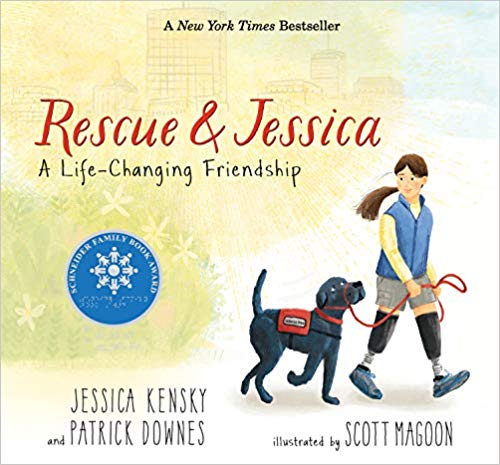
Rescue and Jessica

Rescue and Jessica

Children’s books featuring dogs are an integral part of educating children about the human-animal bond and dogs, generally (not to mention encouraging children to learn to read!)

In Rescue and Jessica:  A Life-Changing Friendship, service dog Rescue meets Jessica who is a double amputee.  Not only does he help her with everyday tasks, but he also helps her see a future for herself.

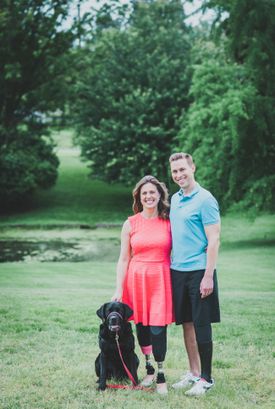
Although a work of fiction, authors Jessica Kensky and Patrick Downes, a wife and husband who suffered the loss of limbs in the Boston Marathon bombing, have drawn on their own experiences with their black Labrador service dog, Rescue.  The book includes an endnote which explains how service dogs are trained.

The authors and their illustrator have been recently honored with a Christopher Award. Christopher Award founder Father James Keller created the awards to salute media that “affirm the highest values of the human spirit.”

Kensky & Downes

Jessica Kensky and Patrick Downes (photo by Boston Globe)

Kathleen Crisley, Fear-Free certified professional and specialist in dog massage, rehabilitation and nutrition/food therapy, The Balanced Dog, Christchurch, New Zealand

Writing for Nanny

It’s always been important to me that my dogs participate in our lives.

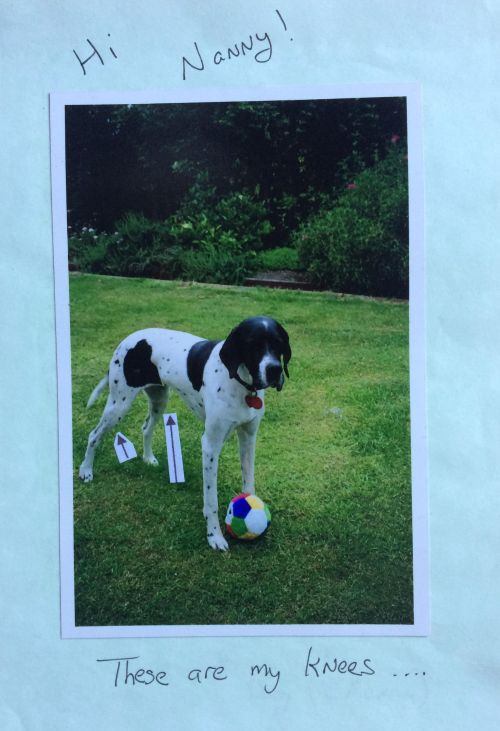
Sometimes, my dogs have written their own greeting cards.  When my Mum had knee replacement surgery in May 2007, my dog Daisy sent her this card and poem as part of our get well package.  (I found the card when sorting through some of my mother’s possessions).


Hi Nanny Greeting card

Kathleen Crisley, Fear-Free certified professional and specialist in dog massage, rehabilitation and nutrition/food therapy, The Balanced Dog, Christchurch, New Zealand