What I’ve been reading…

Most people in New Zealand went back to work on Monday after a couple of weeks of holidays around the Christmas and New Year period.

Although I worked the non-statutory days, I also had some ‘me time’ and I was able to get stuck into the many books that have been piling up on my end table.  (I prefer real books to electonic books, by the way, – no Kindle here!)

I read two of the David Rosenfelt books featuring Andy Carpenter, a lawyer and dog lover.  Andy has a Golden Retriever, Tara, and also supports a local rescue organisation.  He can afford to be choosy about the cases he decides to take on; Andy is wealthy thanks to a sizeable inheritance.

Play Dead and New Tricks are actually the 6th and 7th books in the Andy Carpenter series and I’ve got to get my hands on numbers 1-5 before proceeding in sequence again.

These novels were interesting stories packed with courtroom drama and, of course, dogs.

In Play Dead, the key to overturning Richard Evan’s  life sentence for murdering his girlfriend Stacy Harriman lies with his Golden Retriever, Reggie.  Presumed drowned after Richard murders Stacy on a boat (Stacy’s body was never found),  Reggie suddenly turns up at a local animal shelter years later.  Will Reggie lead Andy to the real killer?

In New Tricks, Andy becomes the court-appointed guardian of Waggy, a Bernese Mountain Dog puppy.  Waggy’s owner was murdered and the man’s wife is going to battle it out for custody of Waggy with her stepson.  That is, until the wife is also killed when her house explodes in front of Andy’s eyes and the stepson is charged with murder.  This story was full of twists and turns as well as courtroom drama.

Andy Carpenter is the protagonist is these books, unlike the Chet and Bernie books by Spencer Quinn (which I also love!) which feature Chet the Dog as the storyteller.

These novels were entertaining and made for a great, relaxing read over the holidays.   I definitely want to read all of the other Andy Carpenter books.  (there are 17 books so far with the latest book, Deck the Hounds, published in October 2018).

I think more books are going to pile up on the end table!

Kathleen Crisley, Fear-Free certified professional and specialist in dog massage, rehabilitation and nutrition/food therapy, The Balanced Dog, Christchurch, New Zealand

Research reveals overweight dogs may live shorter lives

New research from the University of Liverpool and Mars Petcare’s WALTHAM Centre for Pet Nutrition reveals overweight dogs are more likely to have shorter lives than those at ideal body weights.

Results from the study, conducted retrospectively across two decades and published in the Journal of Veterinary Internal Medicine, revealed the lifespan of dogs that were overweight was up to two and a half years shorter when compared to ideal-weight dogs.

fat bulldog

The study examined more than 50,000 dogs across 12 of the most popular dog breeds. The effect of being overweight was seen in all breeds, although the magnitude of the effect differed, ranging from between five months less for male German Shepherds to two years and six months less for male Yorkshire Terriers.

Poorer quality of life

It is estimated that over a quarter of households (26%) in the UK and nearly half in the US (47.6%) own a dog. However despite our affection for canine companions, concern is growing that many pet owners are unaware of the serious health implications of dogs carrying extra weight. Pet obesity is steadily on the rise, with latest figures estimating one in three dogs and cats in the U.S. is overweight.

Although the study did not examine the reasons behind the extra pounds in dogs, feeding habits are thought to play a role in pet obesity. According to a recent Better Cities For Pets survey , more than half (54%) of cat and dog owners always or often give their pet food if they beg for it, and nearly a quarter (22%) of cat and dog owners sometimes overfeed their pet to keep them happy.

Study co-author and Professor of Small Animal Medicine at the University of Liverpool Alex German, said: “Owners are often unaware that their dog is overweight, and many may not realise the impact that it can have on health. What they may not know is that, if their beloved pet is too heavy, they are more likely to suffer from other problems such as joint disease, breathing issues, and certain types of cancer, as well as having a poorer quality of life. These health and wellbeing issues can significantly impact how long they live.

“For many owners, giving food, particularly tasty table scraps and tidbits, is the way we show affection for our pets. Being careful about what you feed your dog could go a long way to keeping them in good shape and enabling them to be around for many years to come.
“Worryingly, it is estimated only one in five pet owners always measures how much food they are giving their pet, with four in five (87%) always or often simply estimating the amount of food they think their pet needs at each serving.”

About the Study

The University of Liverpool and WALTHAM study was a retrospective, observational cohort study that leveraged demographic, geographic and clinical data from dogs that received care at BANFIELD® Pet Hospitals between April 1994 and September 2015. Data were available from 50,787 dogs across 12 of the most popular family breeds: Dachshund, German Shepherd, Golden Retriever, Labrador Retriever, American Cocker Spaniel, Beagle, Boxer, Chihuahua, Pit Bull Terrier, Pomeranian, Shih Tzu, and Yorkshire Terrier. For each breed, the lifespan dogs whose owners reported them to be overweight and those in optimal body condition was compared.

As the largest general-veterinary practice in the world, Banfield has more than 1,000 hospitals across the United States and Puerto Rico comprised of veterinary teams who are committed to providing high-quality veterinary care for more than three million pets annually. The data extracted for this study included demographic (breed, sex, neuter status and date of birth) and geographic (latitude and longitude of the owner’s postcode) variables, plus data collected during in-clinic visits (date of visit, bodyweight and if available body condition), and date of death. Pedigree status and date of birth are both owner-reported parameters and were not verified by veterinary staff.

Source:  University of Liverpool

For gait transitions, stability often trumps energy savings

A dog’s gait, according to the American Kennel Club, is “the pattern of footsteps at various rates of speed, each distinguished by a particular rhythm and footfall.” When dogs trot, for example, the right front leg and the left hind leg move together. This is an intermediate gait, faster than walking but slower than running.

In the December 12, 2018 issue of the Proceedings of the Royal Society B, a multi-institutional team of researchers based at the University of Chicago Medical Center take a novel and wide-ranging approach to understanding such speed-related gait transitions. The generally accepted approach has long focused on reducing locomotor costs, essentially finding the least taxing way to ramp up from one gait to a faster one without wasting energy.

gait transitions

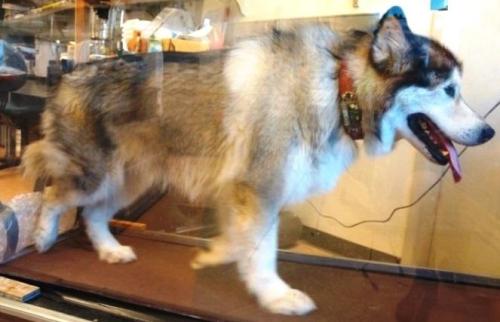
Each animal ran in the metabolic chamber two to five times a day. From these metrics it was possible to determine the energetic costs of running at a particular speed. Credit: Caleb Bryce from the Botswana Predator Conservation Trust

The researchers, however, uncovered a different explanation. They chose to focus less on energy conservation and more on locomotor instability–in layman’s terms, reducing the risk of stumbling or toppling over. Their findings suggest that gait transitions represent “predictive, anticipatory switching of movements to minimize unstable dynamic states.”

“We found that gait transitions occur when the stability of a gait decreases so much that switching to a new gait improves stability,” said Michael Granatosky, PhD, lead author of the study and a post-doctoral student in the department of Organismal Biology and Anatomy at the University of Chicago. “The mammals and birds we studied tend to make gait transitions at critical points to provide a more rhythmic, less unstable locomotor state.”

These transitions, he added, can minimize “high inter-stride variation and unstable dynamic states, reducing the risk of inter-limb interference, such as tripping or falling.”

This wide-ranging study focused on gait transitions in nine animal models–seven mammals and two birds. The researchers started with Virginia opossums, tufted capuchins (“organ grinder” monkeys) and domestic dogs.

They subsequently found similar data on gait transitions in six additional species: American minks, Australian water rats, brush-tailed bettongs (small marsupials also known as rat kangaroos), ostriches, North American river otters and the Svalbard rock ptarmigan.

All of the initial animals–dogs, monkeys and opossums–were trained to exercise at a range of speeds on a treadmill within a plexiglass metabolic chamber. This familiarized the animals with the treadmills while improving their physical fitness. By the end of the training period, all of the animals could sustain six to ten minutes of vigorous running at “speeds required for metabolic movements.”

Once the training was completed, the researchers began testing. They monitored oxygen uptake, carbon-dioxide production, temperature, moisture levels, barometric pressure and air flow. Each animal ran in the chamber two to five times a day. From these metrics it was possible to determine the energetic costs of running at a particular speed.

These energetic costs were collected over a range of speeds during walking and running. Variations in stride cycle duration were collected for each speed interval.

Based on the data collected from this broad phylogenetic range of species, the authors determined that the assumptions of the energetic minimization hypothesis for gait transitions were rarely met.

Instead, most animals choose not to switch gaits when it was most energetically efficient. In this study, dogs, ptarmigans, ostriches and otters, showed no significant change in the energy cost of transport while switching from a walk to a faster mode. In contrast, almost all of the other species demonstrated high variability near gait transitions. They subsequently reduced variability after switching to a new more stable gait.

“Energy savings do not predict gait transition patterns,” the authors conclude. Instead, gait transitions “maintain dynamic stability across a range of speeds.”

“Our data,” the authors conclude, “suggest that gait transitions represent predictive, anticipatory switching of movement types to minimize high variability and avoid unstable dynamic states.” Birds and mammals, they added, appear to have evolved sensorimotor mechanisms for monitoring inter-stride stability during locomotion and for triggering gait transitions at critical levels of variation.

Source:  EurekAlert!

Doggy quote of the month for January

“Heaven Is People Smiling and Dogs Playing”

– Stephen Huneck, artist, author and founder of Dog Mountain, 1948 – 2010

Izzy (Imperative) and Bergie (Jed Norton)

Positive ageing (no one I know is getting any younger and that includes your dog)

I have wanted to write this blog post for a while.

The motivation behind this post rests squarely with the contents I have been reading on some Facebook groups I belong to.  There are consistently posts which say:

  • My dog is slowing down, is this arthritis?
  • She pulled up lame today.  What should I do?
  • I can’t take him out with us on walks anymore; he’s too slow.
  • I’m gonna take her to the vet, but I thought I’d ask for advice here…

So let’s get this straight – what my mother always said holds true for our dogs as well as us – no one I know is getting any younger.

Stan positive ageing

Stan having a snooze. Rest is important for recovery and older dogs will sleep more.

The basic principles of well being are the same for us and our dogs.  It’s called positive ageing – and to look out for ourselves we need:

  • good nutrition
  • exercise that is appropriate for our physical condition
  • rest
  • social interaction and stimulation
  • safety and security
  • medical care

We can’t be rehabilitated out of old age and neither can our dogs.  We can, however, facilitate a long and happy life by managing all of the basic principles.  We’re responsible for taking care of ourselves and, if you’ve chosen to have a dog in your life, you’ve made a commitment to care for them for their lifetime as well and so you need to look out for age-related changes and adjust your dog’s lifestyle and routines.

Case study – Stan

The picture above is Stan, who is now aged 10+.  I first met him when his Mum joined one of my massage workshops for dog owners almost 3 years ago.  She then brought me in to work with him directly because he was stiff and would occasionally limp.

We’ve worked as a team on things like weight loss, making good food choices and adding fresh ingredients, supplementation, and things to ask the vet during consults.

Unfortunately, Stan ruptured a cruciate ligament in 2017 when playing on wet grass and then (as the textbooks suggest), he also ruptured the ligament on the other leg earlier this year.  But his Mum has managed through it all and has kept up with exercises for rehab and committed to his diet and supplement regime.

Stan benefits from having a family member care for him when Mum is at work – so no noisy day cares for Stan which also helps him rest.

His Mum told me today that she looks back on the last couple of years and it has been a challenge (in many ways – including financial) to manage ‘one surgery after another’ but because Stan is happy, she knows she’s done the right thing for him.

Positive Ageing.  Are you ready to give your dog what he/she needs?

Kathleen Crisley, Fear-Free certified professional and specialist in dog massage, rehabilitation and nutrition/food therapy, The Balanced Dog, Christchurch, New Zealand
Enrichment – food toys

Izzy is my greyhound and, periodically, I fill her food toy which has been made from plastic drink bottles with some of her dinner.  When she’s hungry enough, it’s game on!

With experience, Izzy has become an expert at figuring out this toy.  Each of the bottles has a different degree of tightness and spin – and so some are more difficult than others to get food from.

That’s called enrichment – something meaningful and rewarding.

Kathleen Crisley, Fear-Free certified professional and specialist in dog massage, rehabilitation and nutrition/food therapy, The Balanced Dog, Christchurch, New Zealand

Training children and adults in dog body language

A better understanding of the way dogs communicate distress could be the first step in reducing the risk of dog bites for both children and adults, a new study has found.

Psychologists investigating how children and parents perceive and interpret dog’s body language found that both groups significantly underestimate and misinterpret the way that dogs display distress or anxiety, including behaviours such as snarling or growling which can cause a significant risk to children.

Lip licking dog
The project consisted of three phases involving children aged three, four and five years old and one group of parents. Initially, each group was shown a series of short video clips of dogs displaying a full range of behavioural signals which ranged from happy dogs through to high-risk conflict-escalating behaviours such as growling, snarling or biting. Participants were then asked to rate their perception of the behaviours on a simple, child-friendly scale from ‘very happy’ to ‘very unhappy/very angry’.

The groups then took part in a training phase where the videos were repeated, this time accompanied by simple information explaining the type of behaviour the dog was displaying, for example, ‘the dog is licking its nose’, how to interpret the behaviour – i.e. the dog is worried, followed by a safety message such as ‘you should leave the dog alone’. Participants then also saw novel videos with all behaviours. Once the training phase was completed, participants were immediately tested to establish their judgements of the dogs’ behaviours then testing again after six months and after one year to measure whether the training had a lasting effect.

Results showed that younger children found it harder to correctly interpret dog distress signals with 53 per cent of three year olds misinterpreting high risk signals such as growling or snarling. Of the children who made mistakes, 65 per cent thought that these dogs were happy. Results showed 17per cent of the parents also incorrectly interpreted these behaviours.

After the training intervention, both children and adults showed better understanding. Most improvement was found on conflict-escalating signals such as staring, growling or snarling with adults and older children showing the highest levels of improvement. Pre-training, only 55 per cent of four year olds were able to correctly interpret high risk dog behaviours with this rising to 72 per cent post training. The training was also shown to have a lasting effect with the figure rising to 76 per cent twelve months post-training.

Lead researcher Professor Kerstin Meints from the University of Lincoln’s School of Psychology said: “We observed that children often try to apply an explanation for the dog’s signals that would be appropriate to explain human behaviour. For example, children often wrongly interpreted a dog snarling and showing its teeth to mean that the dog was happy, which could put them at significant risk if they were to approach a dog displaying these signals.

“This project is the first to offer an intervention to significantly enhance children’s and adults’ abilities to correctly interpret dog signalling and has shown that with simple training we can improve their awareness, knowledge, recognition and interpretation skills.”

Journal citation:  Teaching Children and Parents to Understand Dog Signalling, Frontiers in Veterinary Science, https://www.frontiersin.org/articles/10.3389/fvets.2018.00257/full

Source:  University of Lincoln media release

Women sleep better with dogs than with human partners

There are many dog trainers who advise against letting your dog sleep with you in bed.  Some new research by Dr Christy Hoffman at the Canisius College will challenge that notion.

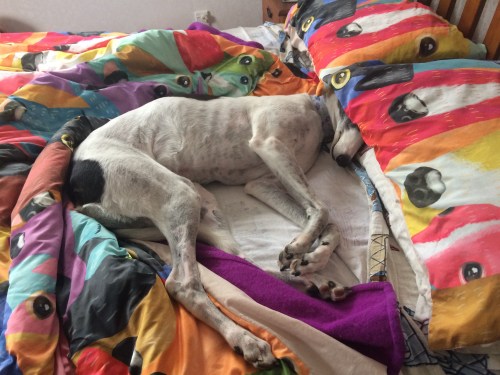
Izzy the greyhound in bed

In a survey of 962 women living in the United States, dogs who slept with their female owners were found to disturb sleep less than a human counterpart and they provided stronger feelings of comfort and security.

Dogs’ sleep patterns more closely coincide with sleep patterns in humans than do the sleep patterns of cats, which may explain why dog moms stick to a stricter sleep schedule and go to bed earlier.

Cats didn’t fare quite as well in this research.  Cats were reported to be equally disruptive as human partners and were associated with weaker feelings of comfort and security compared to dogs or humans.

Journal citation:  An Examination of Adult Women’s Sleep Quality and Sleep Routines in Relation to Pet Ownership and Bedsharing

Source:  Canisius College

Love me? Massage me!

In one week, I’ll be drawing the winners for my Love Me, Massage Me competition.  I’m on a mission to raise awareness of the benefits of dog massage for dogs of all ages and conditions.

Customers have been given a bandana for their dog and encouraged to submit photos of their dogs going about their stuff – regular activities and fun activities.

Here are a range of the photos that have been taken since the competition began in October.  As you can see, dogs of all ages, sizes and breeds – proving that all dogs can benefit from massage.

Listen to what your dog is telling you…”Love me?  Massage Me!”

Kathleen Crisley, Fear-Free certified professional and specialist in dog massage, rehabilitation and nutrition/food therapy, The Balanced Dog, Christchurch, New Zealand

Your dog’s water bowl: microbiology

This research was delivered to the 69th Annual Meeting of the European Federation of Animal Science meeting in August 2018.

It’s important to clean your dog’s water bowl regularly – don’t be tempted to simply keep filling it up because bacteria grows on the sides of the bowl.  (Run your finger over it and you’ll probably feel a slippery surface – that’s called biofilm)

I personally like stainless steel bowls because they can be washed in very hot water in the dishwasher and because they are durable and recyclable.

Dog water bowl


The number of pet dogs (Canis lupus familiaris) in the common household is continually rising. The increasingly close contact between humans and cohabitant pets is leading to concerns regarding bacterial transmission of zoonoses. The dog water bowl has been identified as the third most contaminated item within the household, suggesting that it is able to act as a fomite for bacterial transmission, particularly where young or immunocompromised individuals are present.

Studies in livestock have identified that water trough construction material influences bacterial count; however no similar research has been conducted for dog water bowls.

The objectives of the current study were to identify which dog bowl material, plastic, ceramic or stainless steel, harbours the most bacteria over a 14 day period and whether the species identified varies between bowl materials. The study took place over 6 weeks. A sample of 6, medium sized (10-25kg) dogs, aged 2-7 (mean= 3.8 ± 1.95), was used. All dogs were clinically healthy, housed individually and located within a rural environment. All bowls were purchased brand new and sterilised prior to a two week sampling period.

On day 0, day 7 and day 14 swabs were taken from each bowl and 10-fold serial dilutions were conducted on blood agar. The cultured bacteria were subjected to biochemical testing and the most prominent bacteria from day 14 were further identified using PCR. A significant difference was identified for all bowl materials when comparing total CFU/ml between day 0 and day 7 and day 0 and day 14 (p<0.05). No significant difference was identified between total CFU/ml and bowl material (P>0.05), however descriptive statistics suggest that the plastic bowl material maintains the highest bacterial count after 14 days.

Several medically important bacteria were identified from the bowls, including MRSA and Salmonella, with the majority of species being identified from the ceramic bowl. This could suggest that harmful bacteria may be able to develop biofilms more successfully on ceramic materials. Further research is required to identify the most suitable or alternative materials for dog water bowls.

Source: Microbiological Assessment of Canine Drinking Water and the Impact of Bowl Construction Material