Vaccination management

I meet owners who express concern about over-vaccination; more often than not, this has led them to the decision on not to vaccinate their dog. If they don’t send their dog to a boarding kennel or day care, there is little motivation for them to do so – other than any regular visits to their vet.

I can understand the concerns, but I also get concerned that these owners are relying on herd immunity – the odds that the majority of the herd (in this case, the dog population) are immunised and so their dog isn’t at risk because most animals are protected.

But then we have communities, like last year on the West Coast, who experience parvovirus infections across a range of puppies and dogs…

This blog is a re-print of an article I wrote for NZ Dog World magazine in 2014.  There is the option to titre test our dogs to test their levels of immunity and to give us more information on whether to vaccinate or not.


Titre testing is available in New Zealand but few dog owners appear to know about it, says Karen Cooper, Laboratory Manager with Gribbles Veterinary in Auckland.  “This testing option was not previously available here, but despite its recent introduction the uptake of the testing has not been huge.”

calming a cute puppy patient at the vet's

Vaccination time… or is it? (photo courtesy of Gribbles Veterinary)

A titre test measures the levels of antibodies in the blood.  Testing can be done for immunity to canine parvovirus and canine distemper virus.

Dr Jean Dodds, who is a leading holistic veterinarian and founder of Hemopet, a non-profit blood bank for dogs in the USA, says that research has found that an animal’s titre level remains constant for years.  Therefore, there is little risk that an animal will be misdiagnosed as having sufficient immunity.

A negative titre test would mean that the dog requires a booster vaccination, whereas a positive test would mean it does not.

Dr Dodd’s vaccination protocol calls for vaccine antibody titres to be undertaken every three years.  For most veterinary practices in New Zealand, three-yearly booster vaccination is routine.  Titre testing could be done in lieu of an automatic vaccination but in most cases the dog owner needs to ask for it.

The NZVA’s policy on vaccine use states:

Veterinarians should maintain a professional approach to all aspects of the use of vaccines. This includes encouraging widespread vaccination as an important means of preventing and controlling infectious diseases while ensuring that vaccines are not used unnecessarily.  Veterinarians should aim to maintain the profession as the source of informed knowledge on the use of vaccines and be responsible for the correct use of these agents.

Veterinarians should adhere to their ethical and legal obligations by informing their clients of the risks and benefits of vaccination of companion animals, keeping comprehensive patient records and vaccination certificates.

Why titre?

The most popular application is in puppies to check for an effective immune response; a titre test can be performed approximately two weeks following the final vaccination.

In older dogs, the main concern is avoiding the risks that are associated with vaccination.  These risks may involve localised swelling, lethargy, fever and allergic reactions ranging from mild to severe.   There may be no need to expose their bodies to the pressures associated with vaccination if they have sufficient immunity.  With rescue dogs, titre testing can provide insight into their immune status.

One issue for some owners is whether their boarding kennel will accept the tests.  The kennels I spoke to for this article varied in their position from “We require dogs to have a current vaccination certificate to “We would like to think of ourselves as educated and discerning and therefore we are happy to accept results of a titre test.” 

When boarding your dog, it is important to understand that there is no titre for kennel cough and so vaccination is likely to be needed.

Titre testing may not be suitable for every dog; re-vaccination may not be suitable for every dog.  It’s up to the owner to make an informed choice.

Kathleen Crisley, specialist in dog massage, rehabilitation and nutrition/food therapy, The Balanced Dog Ltd, Christchurch, New Zealand

Reflecting my values

They say that entrepreneurs start businesses because they want to do something that they enjoy.  I believe that.  I also believe that those of us who have started a business want it to reflect our personal values.

I remember that, when I was employed in my ‘first career’ as a manager, we were reminded about studies involving employee engagement.  These studies show that employees leave an organisation when they don’t feel that it matches their value system.  If the business reflects your values – you’ll be a happy employee.

So, I decided that when my practice was large enough, I wanted to give back to the local community by supporting dog adoptions and welfare.  Agencies involved in animal welfare always need money to operate and are financially stressed on a regular basis.  I decided to use my fundraising skills through organising and sponsoring an annual fundraiser.

This is my third year organising an event and the beneficiary is Second Chance Dog Rescue.

This fundraiser has a Second Chance theme – also reflecting my interests in the environment and sustainability.  It’s a swap party – and everyone who attends is being asked to bring a good, used item to swap with others.  We’ll also accept donations of good, used toys and other items for the rescue.

This means that the environment wins as much as the dogs.  And I think it will be an entertaining Sunday afternoon – 21 May 2017.

I’ll let you know how it goes after the event.

Kathleen Crisley, specialist in dog massage, rehabilitation and nutrition/food therapy, The Balanced Dog Ltd, Christchurch, New Zealand

Swap party announcement

Caption this

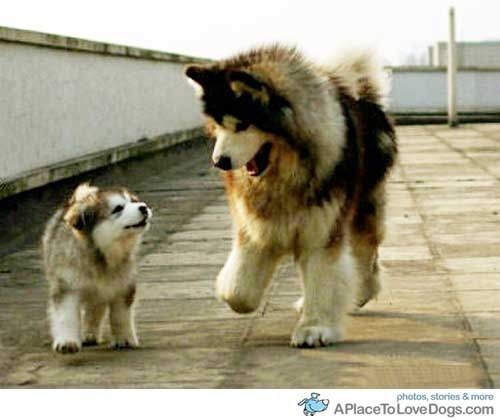
Since a lot of my posts are about really serious topics, today I decided to start the week with a cute photo.

How would you caption this?

malamutes

Kathleen Crisley, specialist in dog massage, rehabilitation and nutrition/food therapy, The Balanced Dog Ltd, Christchurch, New Zealand
Perspectives on dog walking

Rather than there being a one-way flow of power where the human is dominant, the dog walk is where humans and dogs negotiate power within their relationship. This new study highlights a delicate balance between ‘listening’ to what a dog wants and needs from a walk and acting out a human’s own dispositions and interpretations of what is best for themselves, their dog and others within the communal space.

off-lead-dog-walking

The study was led by Dr Thomas Fletcher, Senior Lecturer and Researcher within the Institute for Sport, Physical Activity and Leisure at Leeds Beckett University with Dr Louise Platt, Senior Lecturer at Manchester Metropolitan University.

Twelve people in Northern England, between the ages of 28 and 66 and who walk with dogs, took part in in-depth interviews as part of the research. The aim of the study was to examine how humans share spaces with their animal counterparts, and how walking experiences with animal companions are negotiated.

Respondents were asked to broadly discuss their dog’s personality, what their dogs meant to them and how their relationships with their dogs had developed and been negotiated. Respondents were asked to reflect on what walking meant, how it featured in their lives, how it was experienced and how they attempted to understand the relationship between themselves and their dog.

Dr Fletcher explained: “The study reveals that humans walk their dogs in large part because they feel a deep-rooted emotional bond with them and hold a strong sense of obligation to ensure they stay fit and healthy. Perhaps more interestingly, humans also walk their dogs because they believe their dogs have fun and are able to be more ‘dog-like’ while out on a walk.

“We found that it was whilst out on the walk that many respondents felt their relationship with their animal was most strongly enacted outside the confines of the domestic setting. This sense of humans ceding authority and providing the freedom and space for their dogs to enact their ‘dog-ness’ was important to the respondents.”

With 40% of UK households being home to a domestic pet and 8.5 million dogs living in UK homes (source: Pet Food Manufacturers Association, 2016), the average person walks with their dog for eight hours and 54 minutes a week, covering 36 miles (source: Esure Pet Insurance, 2011). The new research shows that a dog walk is a partnership, involving co-knowing and anticipatory knowledge, all of which is negotiated (and, to a degree, managed) by human walkers.

The study found that dog walkers commonly thought of the walk as something they did for their dog. Each respondent believed that dogs possess their own unique personality, likes and dislikes.

Dr Fletcher said: “In most cases, characteristics of the walk such as timing, length and place, were determined by their dog’s personality and what they, as humans, thought the dogs liked and disliked the most.”

Also important were ideas of caregiving and responsibility, and of walking being good for a dog’s health and wellbeing. Whilst walking patterns varied significantly, there was consensus that around 30 minutes twice a day was acceptable.

Whilst previous research suggests that the dog walk is seen as a human obligation, or even a chore, the new study found that, in most cases, this sense of obligation was actually overshadowed by the respondents’ want to walk, based on a desire to see their dogs having fun.

Dr Fletcher explained: “The walk was seen as an invaluable opportunity for dogs ‘to be dogs’. There was widespread belief that dogs are happiest when out in the open, and it is here that they are able to best demonstrate their ‘dog-ness’. This was important because, despite the respondents acknowledging that their dogs had been domesticated, they also took pleasure from seeing them behave ‘like dogs’.”

One respondent articulated this by saying: “One of the biggest joys for us is when one of us stands at one part of the field and the other; and he just runs. And we’ve managed to time him. He does 30 miles an hour. And he looks like a cheetah, he looks like a wild animal. And it just makes your heart, I mean, I feel a physical change in my body when I watch him run, which has never been created by anything else, really.”

Some respondents discussed modifying their walks as a result of anticipating their companion’s behaviour, which highlighted the tension between human authority and animal submission. For example, one walker generally kept his dog on a lead due to a perception of that breed being ‘poachers’. This walker feared if, let loose, his dog would kill rabbits and other small animals.

Dr Fletcher commented: “The dog’s ability to run free was often curtailed by her ‘other’ instincts and the human interpretation of these. In the case of the respondent highlighted above, whilst his intention was undeniably good, it does raise a number of questions about the ethics of domesticating animals to suit human needs.”

Similarly, respondents tended to frame their commitment to their dogs’ wellbeing and fun in terms of allowing them to behave in certain ways.

Dr Fletcher continued: “In spite of this, respondents did attempt to ‘listen’ to their companions and wanted to please them. They acknowledged and appreciated the ‘beastly’ nature of dogs in needing the freedom to explore and do their own thing independently. However, this ‘listening’ relies on humans imposing their own interpretations onto animals and their actions.”

Whilst dog walking is commonly thought of as a social activity, the researchers found that most of the respondents preferred to walk alone and some actively avoided interacting with other walkers. One noted that a culture of judgement existed in her dog walking community, where people known to walk their dogs less regularly were actively excluded.

Dr Fletcher said: “Respondents acknowledged the problematic nature of human and dog interaction, with some discussing how the spaces chosen for walks were selected purposefully to ensure a relatively straightforward (and pleasurable) experience is maintained for both dog and walker. Some respondents chose to walk routes they knew would be quiet. They did this for two reasons. Firstly, they did not want to socialise with other humans (or their dogs); and secondly, some believed their walk would be easier and less stressful if their route was human and dog-free.”

One participant commented: “Sometimes I have had to apologise for no reason, like even when my dog hasn’t done anything wrong. Just sometimes you get children who are scared of dogs and they would run away and have a little cry, even though he hasn’t gone anywhere near them. You just say “sorry”. I suppose it is just another etiquette thing really.”

Dr Fletcher said: “Walking with dogs represents a potentially important cultural space for making sense of human-animal relations. Our research has shown how the personalities of both dog and walker can shape not only walking practices, but also the human-animal bond.”

The researchers feel that future research in order to understand how humans attempt to fulfil the needs and wants of their dogs (and other animal companions), is vital.

Dr Fletcher added: “Moving forward, we would like to see research taking place that can capture the ‘beastly’ nature of animals, allowing them to act without human interference. Technology, such as ‘dog-cams’ and GPS, has great potential for furthering our understanding of the world of dogs beyond their relationships with human companions.”

Source:  Leeds Beckett University

Is dental care cultural?

Earlier this week, I went to the dentist.  There was nothing wrong – I just booked in for an annual check-up and a cleaning.  The lovely young dentist I saw said, “Oh, you’re an American.  Americans understand dental care.”

And, while I was flattered, it also got me thinking.

Here in New Zealand there are public service announcements on television with tooth fairies reminding parents they need to brush their kid’s teeth with fluoride toothpaste.  We never had anything like that when I was growing up and I don’t think it was needed because I remember that we even had health classes in school when we’d receive little complementary packs of a toothbrush and toothpaste to take home.

But if dental care varies across cultures, it would explain why I still meet many dog owners here in New Zealand who don’t brush their dog’s teeth.

teeth-brushing

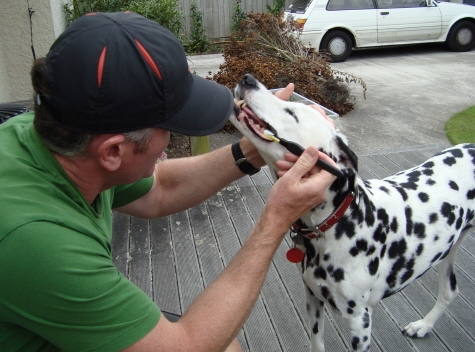
A client demonstrates teeth brushing

Most veterinarians will say that teeth brushing for our dogs is the best thing you can do – before dental diets, drinking water additives and chews – for your dog’s dental health.

Dental care, including teeth brushing, is a good habit for everyone in the family.  After I brush my teeth at night, Izzy gets her teeth brushed.

Greyhounds are known for their bad teeth – and yet more than 2 years after I adopted her, I am proud to say that Izzy has yet to need a dental cleaning at the vet.  And the vet comments that her teeth are in good condition.

Kathleen Crisley, specialist in dog massage, rehabilitation and nutrition/food therapy, The Balanced Dog Ltd, Christchurch, New Zealand
Doggy quote of the month for March

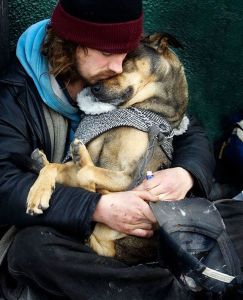
“When the Man waked up he said, ‘What is Wild Dog doing here?’ And the Woman said, ‘His name is not Wild Dog any more, but the First Friend, because he will be our friend for always and always and always.”

– Rudyard Kipling, in the The Cat That Walked By Himself

homeless-man-with-dog

Pawternity leave (puppy parental leave)

Well done to UK-based brewing company BrewDog.  The company was dog-friendly from its 2007 start – with 2 human founders and 1 dog.

Now with employees in the USA and UK, and already with dog-friendly offices, they have instituted one week of puppy parental leave for their employees.  When a new dog comes into your life, you can have a week off to get it settled.

This video tells you a bit more about it:

The Puppy Parental Leave policy is a first for the brewing industry.  Let’s hope more follow – along with companies in other industries.

Dogs are great for our health and well-being.  Happy dog owners also make happy and engaged employees when they feel that their status as dog parents is recognised.

Source:  BrewDog

A balanced approach to fitness in dogs

The name of my canine massage practice is The Balanced Dog.  Balance is important to many aspects of our lives as well as the lives of our dogs.

When I interview owners who come into my practice for the first time, we discuss all aspects of their dog’s history and health before I massage their dog.  That’s because I want to see how the dog feels, but in context of what I know about their history.

For example, for an owner with a dog that competes in agility, they will think their dog is fit because it ‘runs around like a maniac’ with a ‘desire to win.’  But they aren’t winning and that is why they end up at my door.

This is when I explain that for dogs of any age, there are different components to fitness – described in the chart below.

The individual components of dog fitness

Their agility dog may be strong, but perhaps they are lacking in body awareness or balance – and so that’s where we will concentrate on exercises to improve these aspects of fitness.

For an elderly dog, we will want to ensure good flexibility (where massage and stretching come in) and exercise that is within the bounds of what the dog can tolerate.  ‘Stamina’ is age and breed dependent, for example.

By the way, these aspects are also useful when considering your own fitness.

Kathleen Crisley, specialist in dog massage, rehabilitation and nutrition/food therapy, The Balanced Dog Ltd, Christchurch, New Zealand

Dogs share food with other dogs even in complex situations

Generosity, even among family members, had long been considered to be a specifically human characteristic. Yet rats, chimpanzees and other animals also exhibit similar behaviour. Rachel Dale, Friederike Range and colleagues, of the Messerli Research Institute at Vetmeduni Vienna had already shown that dogs also share food rewards with other dogs. Using a bar-pulling task, the dogs delivered the treats to partner dogs – especially if these were already known to them.

A new study by the research team, published in the journal PLoS ONE, now used a more complex task set-up to confirm the prosocial behaviour of dogs. The experiment showed that dogs continued to prefer familiar partners. However, the increased complexity of the task influenced the readiness with which the dogs delivered a food reward to another animal. The study thus confirmed that the chosen method affects the result and is much more dependent on social proximity than had previously been assumed.

Recognition of objects necessary for giving treats

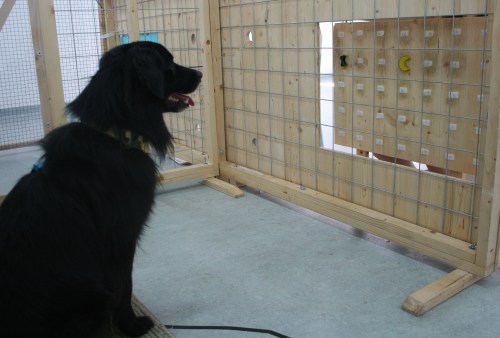
Instead of pulling on a rope, the dogs in the present study had to recognize special objects in the form of tokens in order to deliver a food reward to the other dog. “This time we not only tested a different experimental set-up but also the level of difficulty,” explains Dale. “The dogs were first trained to touch a token in exchange for a food reward for themselves. They were then trained to recognize two more tokens: one that resulted in a reward being delivered to a partner dog and another which did not.” Three experiments were then conducted to test whether the dogs exhibited prosocial behaviour even in this more complex task and whether they would deliver a food reward to a partner or not. The researchers also tested whether it made a difference to the donor dog if the receiver was familiar or a stranger and whether the presence of another dog was enough to trigger generous behaviour in the test dog even if the partner had no access to the food.

prosocial-behaviour-photo-1

For testing prosocial behaviour, donor dogs had to choose via tokens, if they share Food or not. (Photo: Rachel Dale/Vetmeduni Vienna)

Do dogs have to see the recipients to reward them?

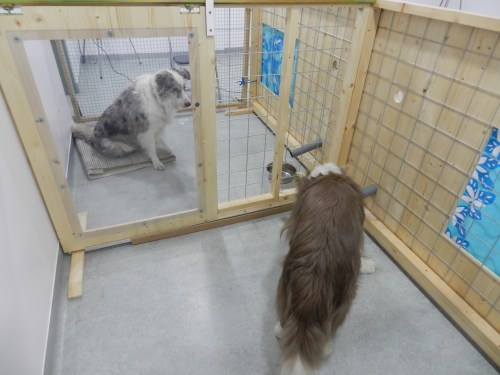
The test set-up consisted of two enclosures. The test dog was trained to wait on a specific location in one enclosure until the researchers revealed a board containing the tokens. The dog could then choose to deliver a food reward to the receiver dog or not. In the first test, either a familiar dog or a stranger sat in the receiver enclosure. The dogs could see each other during the experiment. In the second test, the receiver enclosure remained empty but the other dog was present in the testing room. In a third test, the test dogs were alone in the entire set-up. At the end of each test series, the donor animals could reward themselves by being allowed to touch the token that delivered the food reward to them. This was done to ensure that the dogs remained motivated and unstressed and did not become distracted by an unfamiliar dog.

Dogs remain charitable even in complex tasks

The experiment confirmed that dogs continue to exhibit prosocial behaviour despite the more complex task. The dogs clearly showed a preference for sharing the food reward with a familiar dog. Unfamiliar dogs were rewarded nearly three times less often than familiar ones. The higher level of complexity, however, impacted the general frequency of the food delivery. This influence could be shown among dogs for the first time by comparing the token choice experiment with the simpler bar-pulling set-up and confirms the results of similar tests performed with small children and chimpanzees.

prosocial-behaviour-photo-2

The donor dogs shared food even in the more complex token-test, but more likely for dogs they know. (Photo: Mylene Quervel-Chaumette/Vetmeduni Vienna)

Presence of a partner makes dogs more likely to share

The behavioural biologists found another significant difference regarding the question whether the presence of a partner was important for the motivation of the test dog. Even when a second dog was present in the testing room without being in the other enclosure, the donor dogs were more motivated to give a food reward. When the test dogs were alone in the room, the number of food deliveries went down.

This aspect, known as social facilitation, could not be shown in the first study. The social facilitation theory starts from the assumption that animals will perform more readily in the presence of conspecifics. Given a more complex task, the presence of a partner appears to play a greater role. In this case, too, the donor dogs preferred familiar partners. “The difference was smaller, however, than when there was direct visual contact. Social facilitation should therefore be considered and controlled more strongly in future studies and in simple experiments,” says Range.

Source:  Vetmeduni Vienna press release

R.I.P. Oddball the Maremma

I only recently watched the film about Oddball, although I blogged about the Maremma project in 2011….our thoughts go out to everyone who knew Oddball or loved the story

jaspersdoggyworld's avatarjaspersdoggyworld

Greeting loyal readers and fellow maremmas. We three were sad to learn of the passing over the Rainbow Bridge of Odball, a world famous maremma.

Oddball the pioneer passes away

12.20PM: Warrnambool’s former tourism services manager Peter Abbott has described how the story of Oddball tugged at heartstrings across the world.

He said there were a number of Qantas passengers on international flights to Australia who changed their travel plans to visit Warrnambool and the home of the pioneering Maremma.

“When I was there we had people changing their travel patterns because they had seen the movie on their flight,” Mr Abbott said.

He joked Oddball took the glory for the work the other Maremmas had kept up.

“We always laughed that Oddball took all the glory and our current dogs have been doing it for nine years and Oddball…

View original post 1,027 more words