Tag Archives: aging

Beyond Izzy’s pram (managing dogs through to old age) Part 2

According to statistics, one in every five dogs is affected by arthritis, or more specifically osteoarthritis.  It’s a disease that is progressive and is associated with a number of factors which result in degeneration of the joints.

In my opinion, the stats are probably a lot higher.  More than one in five.  And that’s because too many dog parents see the symptoms of arthritis but classify it as ‘normal slowing down with age’ and they don’t seek professional help until much later – if at all.   Arthritis can develop in young dogs – I’ve seen it in dogs between the ages of 1 and 2 –  but the odds certainly increase with age.  If a dog reaches the age of 7, then they have a 65% chance of developing arthritis.

So in this post, I want to introduce you to the ladder concept for managing dogs with arthritis.  There are various rungs to the ladder and we’re going to cover each one.  Each rung is a step up in terms of effort (and potentially cost) and, just like in real life, you can go up and down the ladder based on circumstances which can include progression of the disease.
Ladder diagram

The first rung is about identifying pain and discomfort in your dog.   Many owners expect their dog to whimper or cry out as the primary indicator that they are uncomfortable.  But that just isn’t true.  By the time a dog vocalises, chances are they have been experiencing discomfort for some time and have become very painful.

There are degrees of difference between discomfort and pain

Discomfort is tolerable.  People describing discomfort use words like lingering, annoying, or aching.

Pain is much more than discomfort.  Pain is intense.  It changes the way you do things or enjoy your day.  When people describe pain they choose words like burning, sharp, or shooting.

Discomfort tells us something is wrong and often helps us manage before the situation becomes painful.

Our dogs are non-verbal communicators.  We have to become experts at their non-verbal communication by being keen observers.

In late 2017, for example, I noticed a behavioural change in Izzy.  Over the course of about 10 days, it seemed that almost every time I looked over at her, she was licking her left carpus (wrist).  And so I took her to the vet and asked for x-rays.  These confirmed ”very minor arthritic changes” – so minor that we agreed a regular rubdown with an animal liniment would likely be sufficient rather than requiring pain medication.  Izzy was experiencing discomfort and not pain.

Changes can be subtle.  My intake questionnaire for new clients is many pages long and I ask questions about mobility and behaviour as well as personally observing the dog’s gait.  A reluctance to get out of bed in the morning may not be a sign of laziness, for example.  It could be that the dog is stiff after resting all night.

Other signs can include:

  • difficulty getting comfortable in bed
  • withdrawal from normal activities
  • snapping when touched
  • pressure sores on the elbows or other joints
  • lameness or changes in gait
  • scuffing of toe nails
  • pacing

The list goes on…

When we see someone every day (and this includes our pets), we often don’t pick up on small changes.  This is a main reason why asking for a professional’s assessment is a good thing to do.  They come into your situation with a fresh set of eyes.

Got questions about this post?  Please feel free to post a message or contact me through my practice, The Balanced Dog.

Kathleen Crisley, Fear-Free certified professional and specialist in dog massage, rehabilitation and nutrition/food therapy, The Balanced Dog, Christchurch, New Zealand

Beyond Izzy’s pram (managing dogs through to old age) Part 1

I promised a series on dog aging and care to explain that Izzy’s care started long before we introduced her pram (stroller).   Welcome to Part 1

For this series, I’ll be drawing on my experience as a dog parent with an aging dog as well as my 10+ years of professional experience in canine massage and rehabilitation.

Whenever I am asked about how I chose my profession, I explain that I had a muse.  Her name was Daisy.  An English Pointer who was neglected by her first family, Daisy entered my life at the age of 4 and left it at the age of 14 years and 3 weeks.

Daisy the English Pointer

Daisy, a sweet-natured and intelligent English Pointer, had many health problems over the course of her life. But we managed to get her to the age of 14+ which for a large-breed dog is a good life.


Izzy the greyhound

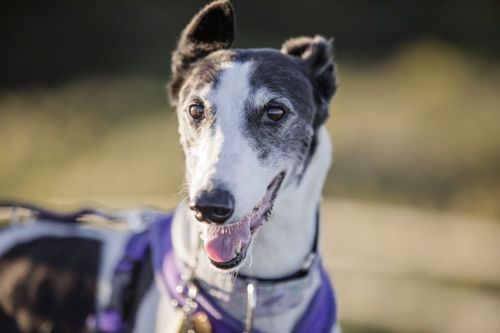
Izzy is my current canine companion. As I write this column in January 2020, she will be turning 11 in a few weeks. As an ex-racing greyhound, you can expect that Izzy’s body has seen some wear and tear and I will cover that in future posts.


For this introduction, let’s talk about time and age.  My mother, who passed away last year, used to say that, “no one I know is getting any  younger.”  The same is true of our dogs.  Aging is a fact of life.  It’s not a disease, it’s a life condition.

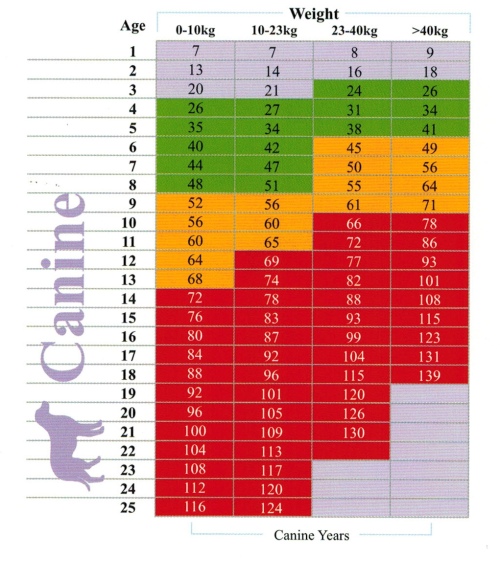
Most dog parents understand that their dogs don’t live as long as we do.  And you’ve probably seen charts like these before – but let’s review how a dog ages.  Smaller dogs tend to live longer, giant breed dogs have the shortest life expectancy.

I’ve included two charts because some of my readers go by weight in pounds, and others like my local clientele in New Zealand use kilograms.  Both charts have been derived by the work of Dr. Fred L. Metzger of Metzger Animal Hospital in State College, PA.

How old is your dog in poundsHow old is your dog in kgsSo I expect most of you have gone to find your dog’s human age on the chart.  That’s good; it’s how I start a conversation with one of my clients about their dog’s life status.

A more powerful use of these charts, however, is to consider time.  Because we age in our time, we tend to lose track of time in terms of our dog’s health.

Let’s say that we have a large breed dog who is 11 years old and he’s recently been to the vet for medication for the first time and the family has asked me to work with him because he’s reluctant to walk and doesn’t want to get into the car.

When we chat, the family tells me he has  probably been slowing down for ‘about a year.’  Today he is the equivalent of a 72 year-old man.  But his symptoms started when he was 10 and the human age of approximately 66.  So his family, although they clearly love him, waited 6 years to get professional help.

If your child was limping, would you wait 6 years to take them to the doctor? (I hope most of you say no.)

What I’d like each of you to do now is record your dog’s birthday and human year equivalent on your phone, wall calendar or diary – whatever you use.  If your dog was adopted and you don’t know their exact birth date, you can use their Gotcha Day instead.  Now, check out the chart and see how many human years will go by before their next birthday.

In the example above, it’s 6 years.

12 months/6  = 2 months

So if you were my client, I may ask you to enter a reminder message every two months in your diary and I’d give you a simple checklist of questions to review.  Just one tool that I use with some clients to help them understand their dog’s aging process and need to remain vigilant for signs of change.

Got questions about this post?  Please feel free to post a message or contact me through my practice, The Balanced Dog.

Kathleen Crisley, Fear-Free certified professional and specialist in dog massage, rehabilitation and nutrition/food therapy, The Balanced Dog, Christchurch, New Zealand


Doggy quote of the month for January 2020

“Dogs don’t age like people.   We peak at twenty-five, then hit a slow, gradual decline into oblivion.  Dogs mature fast, then plateau and stay there for a long while.  Then, in the last quarter of their lives, they show steady signs of aging – arthritis, deafness, graying, slowing down.”

– Steve Duno, author of Last Dog on the Hill

Izzy the greyhound

Izzy, a greyhound, is the Poster Dog of The Balanced Dog. In 2020, she will be turning 11. Thanks for reading my blog and we look forward to bringing you more doggy news in the year to come.

How Pets Contribute to Healthy Aging

Two-thirds of all pet owners say that having an animal helps them stay physically active. But for some older adults, time commitment, cost and allergies stand in the way.

A curled-up cat, a tail-wagging dog, a chirping parakeet or even a serene goldfish may help older adults cope with mental and physical health issues, according to a new poll, the National Poll on Healthy Aging (USA).

But while pets come with benefits, they can also bring concerns, and some people may even put their animals’ needs ahead of their own health, the poll finds.

In all, 55 percent of adults ages 50 to 80 have a pet, according to the new findings — and more than half of those have multiple pets. More than three-quarters of pet owners say their animals reduce their stress, and nearly as many say pets give them a sense of purpose. But 18 percent also said having a pet or pets puts a strain on their budget.

Two-thirds of all pet owners, and 78 percent of dog owners, said their pet helps them be physically active, according to the new findings from the National Poll on Healthy Aging.

The poll is conducted by the University of Michigan Institute for Healthcare Policy & Innovation, and sponsored by AARP and Michigan Medicine, U-M’s academic medical center.

For those who reported that their health was fair or poor, pet ownership appeared to offer even more benefits. More than 70 percent of these older adults said their pet helps them cope with physical or emotional symptoms, and 46 percent said their pets help take their mind off of pain.

“We have long known that pets are a common and naturally occurring source of support,” says Cathleen Connell, Ph.D., a professor at the U-M School of Public Health who has studied the role of companion animals in older adults’ lives.

“Although the benefits of pets are significant, social connections and activities with friends and family are also key to quality of life across the life span,” she says. “Helping older adults find low-cost ways to support pet ownership while not sacrificing other important relationships and priorities is an investment in overall mental and physical health.”

Poll director Preeti Malani, M.D., a U-M Medical School professor who has training in caring for older adults, says the poll results indicate a need for physicians and other health care providers to ask older adults about the role of pets in their lives.

“More activity, through dog walking or other aspects of pet care, is almost always a good thing for older adults,” Malani says. “But the risk of falls is real for many, and 6 percent of those in our poll said they had fallen or injured themselves due to a pet.”

“At the same time, given the importance of pets to many people, the loss of a pet can deal a very real psychological blow that providers, family and friends should be attuned to,” she says.

Mich-AgingPollPet-Graphic_0

“This study highlights the many physical, psychological and social benefits that pets can have for older adults,” says Alison Bryant, Ph.D., senior vice president of research for AARP. “In recognition of these health benefits, more assisted living facilities today are allowing residents to have pets.”

Pet positives

Companionship and social connection were positive side effects of pet ownership for many poll respondents.

In fact, more than half of those who owned pets said they did so specifically to have a companion — and a slightly higher percentage said their pets sleep in bed with them. Sixty-five percent of pet owners said having a pet helps connect them to other people, too.

“Relationships with pets tend to be less complicated than those with humans, and pets are often a source of great enjoyment,” says Mary Janevic, Ph.D., MPH, an assistant research scientist at the U-M School of Public Health who helped design the poll. “They also provide older adults with a sense of being needed and loved.”

Pet problems

Other concerns about pet ownership emerged in the poll results. More than half of pet owners said that having a pet also made it difficult to travel or enjoy activities outside the home.

And 1 in 6 said that they put their pet’s needs ahead of their own health needs — a figure that was closer to 1 in 4 among those with health issues.

“Later life is often a time when people have more freedom to travel, and a long list of things they want to do with their free time, and sometimes having a pet can get in the way,” says Janevic.

“For people living on a fixed income, expenses related to health care for pets, and especially pets that have chronic health issues, can be a struggle,” she says. “Older adults can also develop health problems or disabilities that make pet care difficult.”

The non-pet-owner perspective

The 45 percent of older adults who said they don’t have pets gave many reasons for not keeping a dog, cat, fish, lizard, bird or small mammal around.

Among non-pet owners, 42 percent said they didn’t want to be tied down. Twenty percent said they didn’t have time, and 23 percent gave cost as the reason, while 16 percent said their own allergies, or those of someone in their household, kept them from getting a pet.

For those who can’t own pets due to allergies, budget constraints, housing circumstances or schedules, there’s often a need for volunteers at local animal shelters or pet-sitting for friends and family, the researchers say.

They note that health care providers and family may even want to recommend these options to older adults who have no pets and wish to have one.

The National Poll on Healthy Aging results are based on responses from a nationally representative sample of 2,051 adults ages 50 to 80 who answered a wide range of questions online. Questions were written, and data interpreted and compiled, by the IHPI team. Laptops and internet access were provided to poll respondents who did not already have them.

A full report of the findings and methodology is available at healthyagingpoll.org, along with past National Poll on Healthy Aging reports.

Muscle loss and wasting

I encounter dogs in my practice who are experiencing muscle loss and wasting fairly often.

Since owners must submit veterinary records to me for review as part of my intake process as well as update me on any subsequent vet visits, if there’s a diagnosis of chronic illness – such as kidney disease or cancer – then this muscle loss  is understandable and classified as cachexia.

In the absence of a diagnosis of disease, and working with an aging dog, then the muscle loss is classified as sarcopenia.

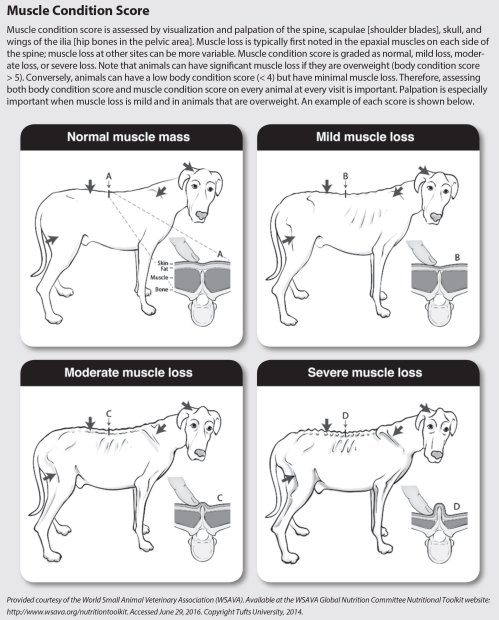
Muscle loss results in a change of appearance, which owners often notice first around the shoulder blades, top of the head, and around the pelvis.  Muscle wastage can be graded as noted below:

Muscle condition score

Exercise and good nutrition can be interventions with muscle loss.  Chronically ill dogs need a high quality diet that is appropriate for their disease, for example.  And aging dogs do need exercise that is targeted to their needs and abilities.

Owners should always be on the watch for signs of muscle loss – so early interventions that are medical and non-medical can be considered.

Kathleen Crisley, Fear-Free certified professional and specialist in dog massage, rehabilitation and nutrition/food therapy, The Balanced Dog, Christchurch, New Zealand

Inspirations

Another inspirational card shared with me on my recent course…

As you grow older

Remember what is important in life – and enjoy the weekend!

Kathleen Crisley, specialist in dog massage, rehabilitation and nutrition/food therapy, The Balanced Dog, Christchurch, New Zealand

A perspective on time, a precious resource

Time is a precious resource.  We only have so much time in our day – you don’t get any more or any less than anyone else.

I have often said that one of the most important things we have to give our dogs is our time.  Time for play, time for love, time for care…That said, since I often work with sick or elderly dogs in my massage practice, I am also very mindful of how time can get away on us.

Our dogs live at a different time scale than we do.  There are many illustrations of the this  – here’s just one:

dog age chart

With our dogs aging at a faster rate than we do,  we don’t always understand the impact of a delay.

For example:

I meet many dog owners who come to see me because they have a fear of putting their dog on medications such as those that are used for arthritis.  Let me be clear on this – although I practice natural therapies – I am not against using traditional medications like non-steroidal anti-inflammatory drugs (NSAIDs).  Actually, quite the opposite.

Many dogs benefit from pain relief just like we humans do.

One of the better ways to assess the levels of pain in a dog is to give it a short course of NSAIDs and simply watch for changes in the dog’s behaviour and levels of activity.   If the dog improves, this is often the best indicator we have about the dog’s level of discomfort.

If pain is managed, then we can do even more hands-on work like acupressure, stretching, acupuncture and massage and this often means dosages of the ‘hard drugs’ can be reduced without sacrificing pain management.

In this example, the owner is hesitating to make a decision on using medication – even with the idea that we go into the arrangement knowing the medications will be used for only a short period – perhaps 2-3 weeks.

The dog weighs 25 kg and is 10 years old.

I start working with the dog and suggest a number of times that I believe the dog is in pain or at a minimum – uncomfortable.

The owner takes 2 months to make a decision before agreeing to try some pain relief.

In human years, since the dog is aging at a rate of 6 years to 1 human year at this life stage… 

The owner has waited the equivalent of one human year to make a decision!

 I will ask– if this was your grandma/grandpa/father/mother –  would you allow them to live like this without pain relief?

The answer has always been ‘no.’

We have a duty to care for our dogs which involves acting in their best interests.  They can’t tell us in words how much pain they are in, it’s up to us to figure it out.  And in deciding what to do, we must always be mindful of how precious time is.

Kathleen Crisley, specialist in dog massage, rehabilitation and nutrition/food therapy, The Balanced Dog, Christchurch, New Zealand