Tag Archives: dog behaviour

Kennels may not be something to dread

New research suggests that dogs who spend a short time in boarding kennels may not find it unduly stressful and – quite the opposite – could find the change of scenery exciting.
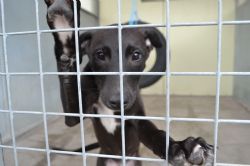
Photo courtesy of Jerry Green Dog Rescue

Photo courtesy of Jerry Green Dog Rescue

The research team, which included academics from the University of Lincoln, UK, University of Birmingham, Queen’s University Belfast and The Royal Veterinary College, measured a range of stress parameters in 29 privately-owned dogs – both at home and in one of three private boarding kennel establishments in Northern Ireland.

This study aimed to test the validity of a range of physiological, physical and behavioural welfare indicators and to establish baseline values reflecting good dog welfare.

Physical measurements included skin dryness, nose temperature, core body temperature and amount of food eaten. Behavioural measurements included spontaneous behaviours such as lip licking, paw lifting, yawning, shaking and restlessness. Physiological measures included stress hormones (corticosteroids) and epinephrine (adrenaline).

The study revealed that dogs have higher levels of arousal, colder noses and were generally more active in kennels than when they were at home.

Based on existing research it was assumed that dogs would show higher levels of stress in the kennel compared to the home environment.

The most widely used physiological indicator of canine welfare is urinary cortisol (hormone secreted following activation of one of the major stress response systems) and creatinine (chemical waste product created by the liver) ratios (C/Cr), which is considered a valid measure of acute and chronic stress in dogs. However, the reliability of this has been questioned.

The study revealed that C/Cr was significantly higher in the kennel compared to the home environment but cortisol levels have also been found to increase after exercise and excitement, and appear to provide an indication of arousal without specifying the emotional reason of that arousal.

Dr Lisa Collins, from the School of Life Sciences, University of Lincoln, UK, said: “Many owners find leaving their dog at a boarding kennels a stressful experience.  However, this study suggests that although dogs appeared to have a higher level of overall arousal or excitement in kennels compared with their state at home, this arousal is not necessarily due to dogs experiencing kennels as negatively stressful. The emotional reasons for the behavioural and physiological responses of the dogs were ambiguous and no definitive evidence was found to suggest that dogs were negatively stressed by kennelling.”

“Our findings did strongly suggest that C/Cr, epinephrine and nose temperature are robust measures of psychological arousal in dogs. Nonetheless, these measures can be easily misinterpreted and do not provide unequivocal indicators of psychological stress. Findings appear to suggest that the dogs in this study did not perceive admission to boarding kennels as an aversive stressor and perhaps, instead, perceived kennelling as an exciting change of scene, at least in the short-term.”

The team recommends further investigation to determine the validity of measurements tested as indicators of acute and chronic stress in domestic dogs.

Their study has been published in the journal Physiology & Behavior.

Source:  University of Lincoln media release

Short dog syndrome

You’ve probably heard about Short Man Syndrome.  (In fact, many of us (including me) have experienced it firsthand!)

Did you know that there is growing evidence of Short Dog Syndrome?

Researchers at the University of Sydney have published their research into this topic in the online journal PLoS One.  Professor Paul McGreevy is the lead author of the study and says, “the shorter the dogs the less controllable their behaviour is for their owners.”

Dachshunds and other short breed dogs may be more difficult to train and control

Dachshunds and other short breed dogs may be more difficult to control

The study used owners’ reports on the behaviour of over 8,000 dogs from across 80 breeds and related them to the shape of 960 dogs of those breeds, revealing strong relationships between height, bodyweight, skull proportions (relative width and length) and behaviour.

33 out of 36 undesirable behaviours were associated with height, bodyweight and skull shape

As a breed’s average height decreased, the likelihood of behaviors such as mounting humans or objects (humping), owner-directed aggression, begging for food and attention-seeking increased.

“The only behavioral trait associated with increasing height was ‘trainability’. When average bodyweight decreased, excitability and hyperactivity increased,” said Professor McGreevy.

The researchers admit that there is an aspect here of nature vs nurture.  If aggressive and ‘bad’ behaviours were present in larger dogs, the results could be more dangerous.  Poor behaviour in small dogs is likely to be tolerated more.  Over time, breeding has resulted in the patterns observed by the research team.

Source:  University of Sydney media release

A dog’s secret life and how it can help elderly owners

Experts at Newcastle University are using movement sensors to track normal dog behaviour while the animals are active outside the home and when they are home alone.

Dog photo for research blog

The sensors show not only when the dog is on the move, but also how much he is barking, sitting, digging and other key canine behaviours.

By mapping the normal behaviour of a healthy, happy dog, Dr Cas Ladha and students Nils Hammerla and Emma Hughes were able to set a benchmark against which the animals could be remotely monitored.  This allowed for any changes in behaviour which might be an indication of illness or boredom to be quickly spotted.

Presenting their findings at the 2013 UbiComp conference in Zurich, project lead Ladha, says the next step is to use the dog’s health and behaviour as an early warning system that an elderly owner may be struggling to cope.

“A dog’s physical and emotional dependence on their owner means that their wellbeing is likely reflect that of their owner and any changes such as the dog being walked less often, perhaps not being fed regularly, or simply demonstrating ‘unhappy’ behaviour could be an early indicator for families that an older relative needs help.” says Hammerla.

The team created a hi-tech, waterproof dog collar complete with accelerometer and collected data for a wide range of dog breeds.

Hammerla adds: “This is the first system of its kind which allows us to remotely monitor a dog’s behaviour in its natural setting” –  ultimately classifying 17 activities such as barking and chewing.

“But beyond this it also presents us with a real opportunity to use man’s best friend as a discreet health barometer.  It’s already well known that pets are good for our health and this new technology means dogs are supporting their older owners to live independently in even more ways than they already do.”

Source:  Newcastle University media statement

A mixed news week for dogs in Christchurch

It’s been a variable week of dog news here in Christchurch (to say the least).

The news was all bad by mid-week, when it was reported that two Rottweilers mauled a young boy of eight, named Mason Bennett.  Mason had been staying with his mother and her partner (who owned the dogs).    And there had been a previous incident when the dogs were aggressive with another young boy.

Read Dad’s shock at earlier attack by same dogs

The recent dog attack saw lots of comments about how Rottweilers can't be trusted.  Was it the dog or the owners who are to blame?

The recent dog attack saw lots of comments about how Rottweilers can’t be trusted. Was it the dog or the owners who are to blame?

In the same edition of the newspaper, columnist Rachel Young wrote about My dog was a rottweiler. In general, a defense of the breed, Ms Young also mentions in her story that when her family Rottweiler, Zeb, became unwell with kidney disease he became more aggressive.  Her parents decided to euthanize him.  To quote “Despite the loving environment, at times you can’t beat nature. In Zeb’s case, it seemed the protective, aggressive nature was developing as he got older and sicker.”

Which shows that even some dog owners don’t know a thing about dogs.  Maybe a sick dog lashes out because they are in pain and can’t communicate that in spoken words – and their family doesn’t get it!!!!!

This provoked a Letter to the Editor on my part – which the newspaper largely got right but they decided to edit it by attributing the dog attack to dogs that were unwell (which there isn’t any evidence of – just poor owners!)

The dog news turned for the brighter the next day when police dog Gage was honoured with the PDSA Gold Medal posthumously.  Killed in 2010 during a drug raid, Gage took a bullet that was meant for his handler Bruce Lamb.  The PDSA Gold Medal is known as the Animal’s George Cross, for civilian bravery.

Bruce Lamb tells his and Gage’s story here Shot police dog Gage honoured for bravery

Today is Monday and there is mixed news for dog owners in today’s newspaper.  Front page news is the story of landlords charging special pet bonds to allow tenants to keep pets.  This is when a tenant pays more than the standard four week’s rent upfront to secure their rental and it is illegal.

The story goes on to say that charging more for a pet-friendly rental (week to week, or month to month) is okay.  Unfortunately, since Christchurch is still in earthquake recovery mode, rental housing is at a premium.  Many dog owners don’t dare contest a pet bond because they need a home for all members of the family.  Read Landlords in dog box over pet bonds.

Further into the newspaper, some better news.  A little puppy of about six weeks old was found cowering under the seat of a car when it was stopped by police.  The offenders fled and the dog is believed to be stolen property.  A police constable is appealing for information about the wee puppy.

Read Police pursuit nets puppy

Here’s hoping that the stolen pup is returned home soon…

I’d like to see more positive news about dog and dog ownership in Christchurch.  But it seems that for every bad news story, we need about ten more to gain the confidence of the public.

How does your city/town deal with dog news?  Please get in touch.

Kathleen Crisley, specialist in dog massage, rehabilitation and nutrition/food therapy, The Balanced Dog, Christchurch, New Zealand

The alpha roll myth

When scientists studied captive wolves (and I’m talking about research that dates back to the 1960s), they observed fighting for dominance within the group and extrapolated that information as relevant to domesticated dog behaviour.  Unfortunately, by studying captive wolves, the scientists were observing an artificial pack – wolves that were placed together in very unnatural circumstances.

Over the years and ‘informed’ by this research, the theory of being the Alpha Dog developed.  The alpha dog is the top dog of the pack, the dog who eats first (as an example).

Trainers who picked up on the alpha dog theory taught their clients to ‘alpha roll’ their dog.  That is when you force your dog to roll over on its back to signal your dominance.

It is true that wolves roll over as a submissive behaviour, but nothing in the record suggests that wolves force other wolves to roll over.   Wolves will roll over on their backs as a submissive gesture – they do it willingly and not by force.

This YouTube video shows a wolf rolling over as a sign of submission:

http://www.youtube.com/watch?v=nw3q3FIv4SU

There are many trainers today who are adopting reward-based techniques, but others still adhere to a rigid interpretation of dominance theory including alpha rolls.  I’m saddened to say that when I first adopted Daisy eight years ago, I went to a local dog training club in Christchurch where the teacher believed in alpha rolls.  When Daisy didn’t go ‘down’ on my command, he took both of her legs on the right side and flipped her over.  I can still remember the frightened look in her eyes and I was almost in tears myself over the incident.

My advice is to stay away from any dog trainer that doesn’t use reward based techniques.  Make sure any trainer you use doesn’t have outdated ideas of what is true canine behaviour.