Tag Archives: health

Kids with dogs have less anxiety

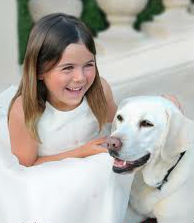
A research team at Bassett Medical Center in New York has found that kids with a dog at home experience far less clinical anxiety than do children who are dog-less.

This small study adds to the growing body of knowledge about the human-animal bond and the positive health impacts of dog ownership.

Child and dog

Read more about this study on NBC News.


Other blog posts about kids, dogs and health:

Kathleen Crisley, specialist in dog massage, rehabilitation and nutrition/food therapy, The Balanced Dog, Christchurch, New Zealand

Get Healthy, Get a Dog

The Harvard Medical School has published a special health report entitled Get Healthy, Get a Dog:  The health benefits of canine companionship. 

The report details the many ways that dogs can improve the lives of humans.

Get Healthy, Get a DogIn promoting the report, the School says:

There are many reason why dogs are called humans’ best friends: not only do they offer unparalleled companionship, but a growing body of research shows they also boost human health. Owning a dog can prompt you to be more physically active — have leash, will walk. It can also:

  • help you be calmer, more mindful, and more present in your life
  • make kids more active, secure, and responsible
  • improve the lives of older individuals
  • make you more social and less isolated

Just petting a dog can reduce the petter’s blood pressure and heart rate (while having a positive effect on the dog as well).

The report can be purchased in print (US$20), in .pdf electronic version (US$18) or both (US$29) from this webpage.

I’m pleased to see this type of publication coming from such a reputable institution.  Dogs and humans both benefit when  humans take responsibility for a committed and healthy relationship.  I particularly like that the report also covers grief, since we all will face grieving the loss of beloved pet (given the odds – since we live a lot longer than our dogs do).

The chapters in the report include:

  • Our dogs, ourselves
    • Benefits of dog ownership
    • Service dogs
  • How dogs make us healthier
    • Physical activity
    • Cardiovascular benefits
    • Reduced asthma and allergies in kids
    • Psychological benefits
    • How human contact benefits dogs
  • SPECIAL SECTION
    • Nutrition guidelines for dogs
  • Exercise for you and your dog
    • Exercise whys and wherefores
    • The exercise prescription for people
    • Exercise guidelines for dogs
    • Help your dog avoid injuries
    • Walking with your dog
    • Hiking
    • Running
    • Biking
    • Swimming
    • Playing fetch, Frisbee, or flying disc
    • Agility training
    • Skijoring
    • Playing inside the house
  • Adopting a dog
    • Deciding on the qualities you want
    • Breed considerations
    • Finding your dog
  • How to be a responsible dog owner
    • Basic equipment
    • Veterinary care
    • Dogs in cars
    • Providing for your dog while you’re at work
  • Raising a well-behaved dog
    • Obedience training
    • Housetraining
    • Keeping dogs off furniture … or not
    • Soothing the anxious hound
  • Grieving a loss
  • Resources
  • Glossary

Kathleen Crisley, specialist in dog massage, rehabilitation and nutrition/food therapy, Canine Catering Ltd, Christchurch, New Zealand

Doctors believe in the health benefits of pet ownership

DogDoctor

The Human-Animal Bond Research Initiative (HABRI) Foundation has released the findings of a survey revealing the views of the family physician (also known as the GP) on the benefits of pets to health.

An online panel survey of 1,000 family doctors and general practitioners explored the doctors’ knowledge, attitudes and behavior regarding the human health benefits of pets.  The 28-question survey was conducted in August 2014 with a margin of error of +/- 3.1%.   The physicians in the survey had a median of 18 years in professional practice.

Key findings included:

  • 69% of doctors have worked with animals in a hospital, medical center or medical practice to assist patient treatment
  • 88% believe that interaction with pets improves a patient’s physical condition
  • 97% believe that interaction with pets improves mental health condition
  • 78% found that interaction with animals helped to improve the relationships of patients with staff
  • 97% of doctors reported that they believe there were health benefits resulting from pet ownership
  • 75% of doctors said they saw health improve in one or more patients as a result of pet ownership

The survey also revealed that while 69% of doctors at least occasionally discussed the health benefits of pets with patients, 56% identified ‘time constraints’ as the largest barrier to having these discussions.

“The Human Animal Bond Research Initiative funds research on the evidence-based health benefits on human-animal interaction, and this survey demonstrates that we are on the right track” said HABRI Executive Director Steven Feldman.

“HABRI hopes that this survey will help break down the barriers and get more doctors and their patients talking about the important, scientifically-validated health benefits of pets.”

Source:  HABRI media release

Spa weekends

In my opinion, part of owning an older dog means ensuring you devote time to them for bonding, love, attention and care.

Daisy and I are just finishing a Spa Weekend.

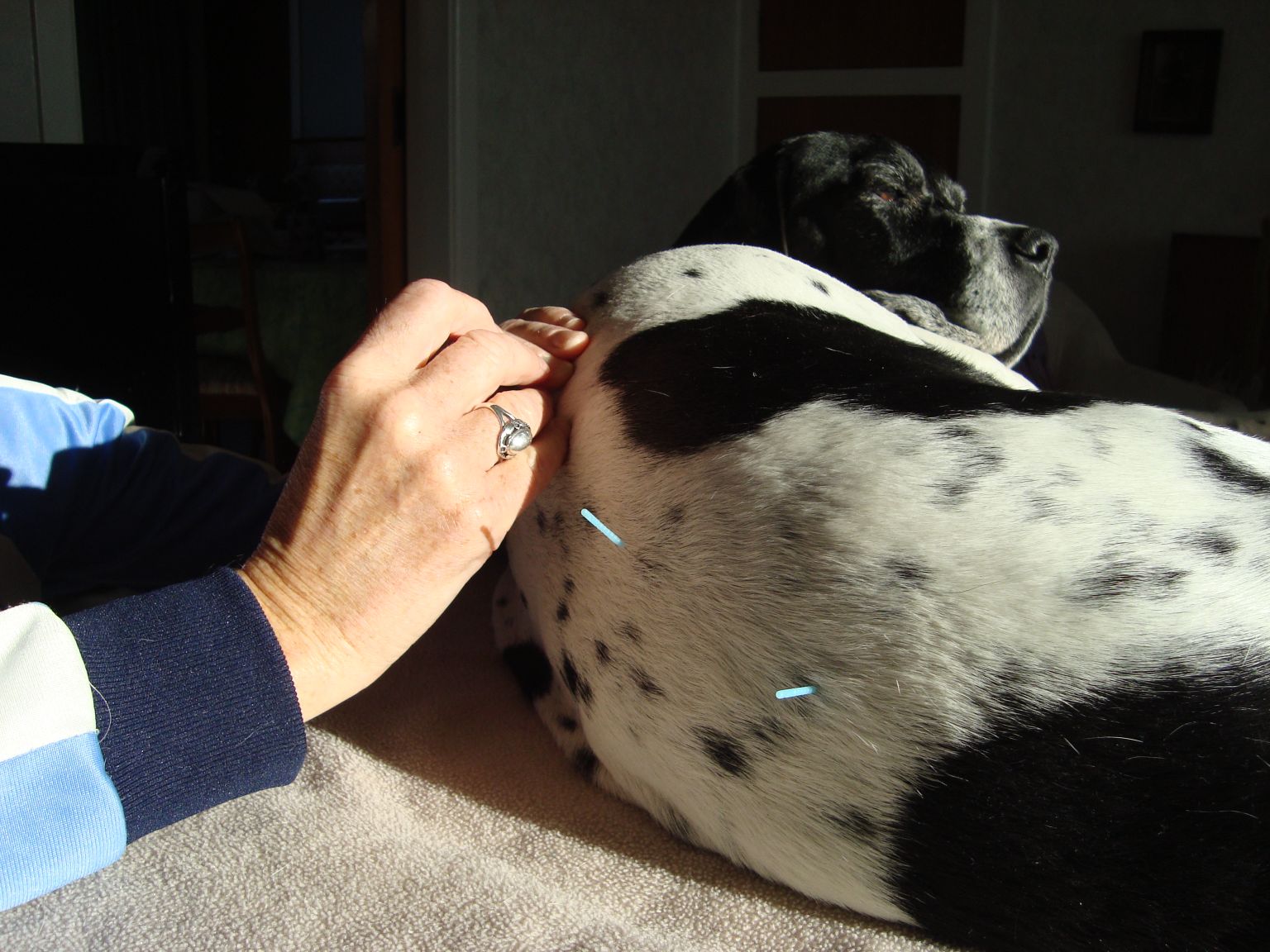
Daisy’s spa weekend started on Friday with a regular acupuncture session.  Daisy gets acupuncture every 5 weeks:

Daisy is happy to lay still while Dr Susanne Anderson places her acupuncture needles

Daisy is happy to lay still while Dr Susanne Anderson places her acupuncture needles

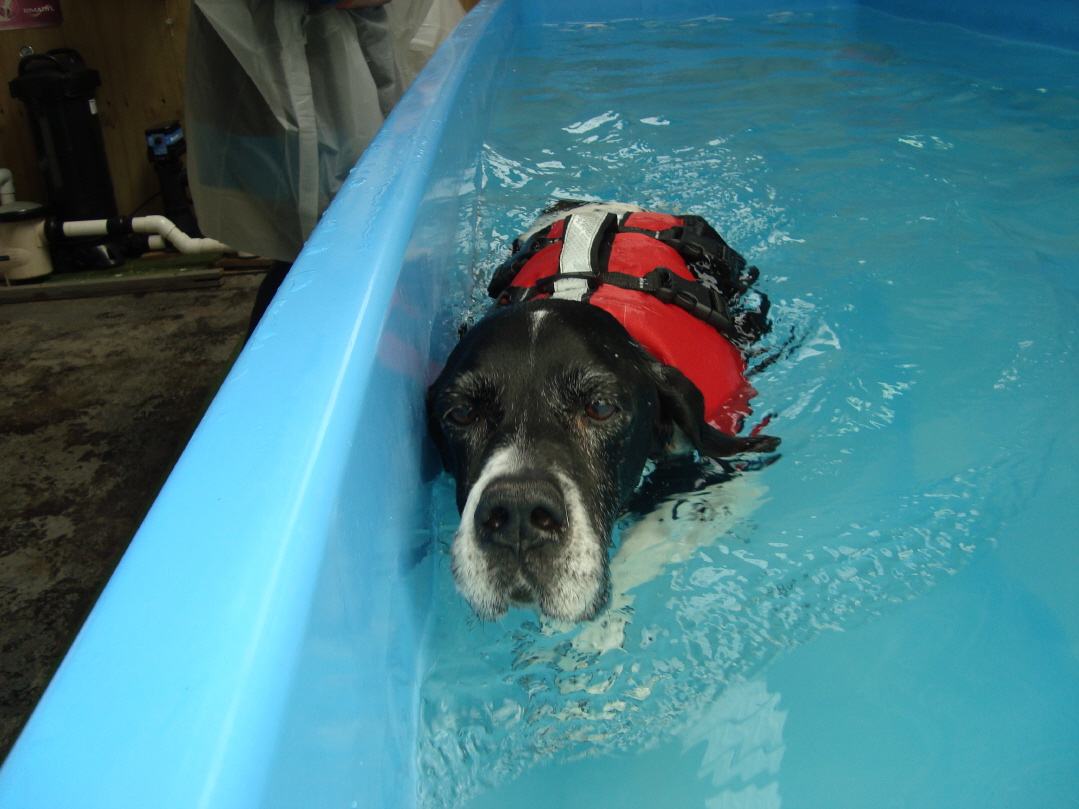
On Saturday, it was then time for Daisy’s hydrotherapy session.  Daisy swims every fortnight (2 weeks) to keep her muscles strong and to keep range of motion in her hind legs:

Swim time

And today (Sunday), it was time for Daisy to enjoy a massage and laser treatment – lovingly delivered by me – her personal massage therapist and DoggyMom:

Massage time

The only thing that was missing from Daisy’s spa weekend was a bath.  But that’s because she had a bath last weekend!

How do you spend quality time with your elderly dog?

Using dog hair for diagnosis

Dog hair is used to diagnose hyperadrenocorticism (Photo: Ouschan/Vetmeduni Vienna)

Dog hair is used to diagnose hyperadrenocorticism (Photo: Ouschan/Vetmeduni Vienna)

Many dogs suffer from hyperadrenocorticism, more commonly known as Cushing’s Disease.   The disease is characterised by excessive amounts of hormones known as glucocorticoids that are produced by the adrenal glands.  The disease is more common in older dogs.  Most cases result from a tumour in the pituitary gland but some are caused by tumours in the adrenal glands.

The symptoms of a dog with Cushing’s Disease often ‘creep up’ on the owner and vet.  Common symptoms include excessive drinking (and urination) and overeating, leading to a pot-bellied appearance, as well as with loss of hair.  Since all of these symptoms can stem from a number of disorders, it is difficult to be certain.  The methods traditionally used to diagnose the disease are complicated and costly and usually give information about the hormone concentrations at the time a sample is taken.  Since most dogs are stressed by veterinary examinations, their hormone levels will peak  because of the stress – making it difficult to rely on the analytical results.

Researcher Claudia Ouschan and colleagues at the University of Veterinary Medicine, Vienna decided to look for a way to monitor the long-term levels of glucocorticoids in dog hair that would also offer a diagnostic option that was less stressful to the dogs.   She compared the levels of cortisol, corticosterone and cortisone in the hair of twelve dogs with hyperadrenocorticism and ten healthy dogs.  The results were striking:  all three hormones were found at far higher levels in the hair of dogs with Cushing’s Disease than in the control group, with the increase in cortisol particularly pronounced.

She concludes, ‘we think it (our findings) have real promise for use as a rapid and non-invasive method to diagnose hyperadrenocorticism.’

Her research has been published in the journal Veterinary Dermatology.

Source:  University of Veterinary Medicine, Vienna media statement

Dogs reduce your risk of heart disease

The American Heart Association has released a scientific statement citing the link between pet ownership and reduced risk of heart disease.

The statement is published online in the association’s journal Circulation.

“Pet ownership, particularly dog ownership, is probably associated with a decreased risk of heart disease” said Glenn N. Levine, M.D., professor at Baylor College of Medicine in Houston, Texas, and chair of the committee that wrote the statement after reviewing previous studies of the influence of pets.

Research cited to support that statement includes:

  • Pet ownership is probably associated with a reduction in heart disease risk factors and increased survival among patients.  “It may be simply that healthier people are the ones that have pets, not that having a pet actually leads to or causes reduction in cardiovascular risk,” Levine said. (Disclaimer:  These studies aren’t definitive and do not necessarily prove that owning a pet directly causes a reduction in heart disease risk.)
  • Dog ownership in particular may help reduce cardiovascular risk. People with dogs may engage in more physical activity because they walk them. In a study of more than 5,200 adults, dog owners engaged in more walking and physical activity than non-dog owners, and were 54 percent more likely to get the recommended level of physical activity.
  • Owning pets may be associated with lower blood pressure and cholesterol levels, and a lower incidence of obesity.
  • Pets can have a positive effect on the body’s reactions to stress.

“In essence, data suggest that there probably is an association between pet ownership and decreased cardiovascular risk,” Levine said. “What’s less clear is whether the act of adopting or acquiring a pet could lead to a reduction in cardiovascular risk in those with pre-existing disease. Further research, including better quality studies, is needed to more definitively answer this question.”

Even with a likely link, people shouldn’t adopt, rescue or buy a pet solely to reduce cardiovascular risk, Levine said.

Statement co-writers are: Karen Allen, Ph.D.; Lynne T. Braun, Ph.D., C.N.P.; Hayley E. Christian, Ph.D.; Erika Friedmann, Ph.D.; Kathryn A. Taubert, Ph.D.; Sue Ann Thomas, R.N., Ph.D.; Deborah L. Wells, Ph.D.; and Richard A. Lange, M.D., M.B.A.

Source:  American Heart Association media statement

When your dog has the runs…

A client rang me this week to say that her dog had a major case of runny poos – the runs – or diarrhea to be exact.  She said her dog was her normal happy self but was going to the toilet regularly with fairly dramatic consequences – would I keep our massage appointment?

My answer was ‘no’ – not advisable – not because I was concerned that I’d have poo all over my massage table but because this dog’s body was telling us something.  Diarrhea is a symptom and not a disorder in itself and the dog’s body was working double-time to rid itself of an irritant.  Her system had enough to handle and a massage would only add to her metabolic load as lactic acid was released by the massage.  She didn’t need that.

My advice was to withhold food for 12 to 24 hours and to keep up the fluids.  Some people add low salt chicken or vegetable stock to the dog’s water bowl to encourage them to drink and keep hydrated, for example.  When food was again on the menu, I suggested replacing half the normal volume of food with cooked pumpkin to add fibre to the diet that the dog could easily tolerate and to keep this up for a few days until the stools returned to a normal consistency.

Other home remedies include a diet of boiled chicken with white rice, for example.

Typically, diarrhea is the result of a digestive indiscretion but it can be the result of poisoning from household or garden chemicals, a symptom of parasites such as hookworm, or a food allergy.  Some worming treatments can also stimulate a bought of diarrhea.

If a dog has additional symptoms such as lethargy, weakness, abdominal pain, blood in the diarrhea, vomiting and fever  then you need to see your veterinarian as soon as possible.   In this case, the dog seemed happy in herself and so that was a sign that she was probably not in danger.

A trip to the vet is a good idea if the diarrhea lasts for more than five days or so.

Diarrhea isn’t any fun for the dog owner or the dog.  Keeping an eye on symptoms is critically important to ensure you do the right thing when your dog has the runs…

Your dog is not a garbage can

This is a garbage can...

This is a garbage can…

...and this is a dog.

…and this is a dog

Please understand the difference this Christmas!

Veterinarians around the world see a surge in cases of pancreatitis each year during the Christmas holiday season.  That’s because our homes are filled with rich, fatty foods that are as tempting to dogs as they are to us.  A single high-fat meal is enough to trigger the problem – and so the well-meaning family members who empty their plate in your dog’s bowl rather than the garbage are often at fault.

Low protein, high fat diets have been known to cause pancreatitis and it is a life-treatening condition. Symptoms of pancreatitis are acute vomiting, abdominal pain, diarrhea, lethargy, loss of appetite, and in some cases, fever. The dog may have a tucked-up belly and assume a prayer position. The abdominal pain is caused by the release of digestive enzymes into the pancreas and surrounding tissue.

More severe cases of pancreatitis can develop rapidly and a dog can go into shock – a trip to the emergency veterinary center is essential.

Vets will treat your dog with fluids, antibiotics and pain relief and will withdraw all foods for a number of days to rest the pancreas.   Assuming your dog survives,  its pancreas may be permanently damaged.  In these cases, your dog may develop diabetes mellitus if the islet cells have been destroyed or may develop exocrine pancreatic insufficiency if the acinar cells have been destroyed.

Dogs who have experienced one pancreatitis episode are susceptible to having future attacks that can be anywhere from mild to severe.

The lesson?  Your dog is not a garbage can.  Treats should be served in moderation and carefully monitored by one member of the family to ensure the dog isn’t over-fed.  Avoiding table scraps is always a good idea.

Kissing your dog and the link to gum disease

My mother was never happy when our dog got too close and  managed to lick her on the mouth.   In the Snoopy cartoons, you might remember when Lucy would run around yelling ‘Get the iodine, get the hot water.  I’ve been kissed by a dog.’ 

It turns out that there is need for caution when considering the mouth-to-mouth contact with your dog.

Researchers from Japan have tracked a microbe that is very common in dogs but rare in humans.   In dog owners, 16% of them had the microbe and it appears that they share close contact with their dogs – including kissing.

The researchers also found ten human strains of periodontitis-related bacteria in the dogs’ mouths.  And they found that low levels of contact were enough to transmit mouth bacteria either way.

In considering the research, Dr Paul Maza, of the College of Veterinary Medicine at Cornell University, told America’s Fox News:  ‘Many of the different types of bacteria in dogs and cats are the same type of bacteria as in humans. If owners practice oral hygiene on their pets, such as  brushing their teeth, a pet’s mouth can actually be even cleaner than a human mouth.’

Read the full story in the Daily Mail.

The cost of veterinary care

Last night on consumer television programme Fair Go, there was an item about the high cost of veterinary care in New Zealand.

The makers of the programme compared costs for common veterinary procedures in cats and dogs – thinks like dental cleanings and microchipping.  And for those of us working in the companion animal field, it came as no surprise that there can be a huge variability in costs.

I remember when I was studying pet nutrition, our first assignment included a question about the cost of the first year of a dog’s care.    We had to itemise all costs for  everything from food to flea treatments to veterinary care.  And like so many other living costs in New Zealand, our prices were higher.  That’s what happens when you live on comparatively small islands in the middle of the Pacific!  In fact, my tutor said that our costs were the highest of all others in the class from around the world.

However, the Fair Go programme basically advised viewers that the way to control their costs was to shop around.  While I agree with this point – to a point, there’s a lot more that you can do to keep the costs of your veterinary care –  and your dog’s overall care – reasonable.

And I’m also a big supporter of the adage – YOU GET WHAT YOU PAY FOR.  In every aspect of my dog’s care, I aim to purchase quality products and services. They may not be the cheapest – but I’m satisfied that they are the best.

In my opinion, you should:

  • Adopt a preventive healthcare approach first

As soon as your dog comes into your life, vow that you will do the best you can for them.  This means choosing high quality, nutritious foods (‘you are what you eat’) and giving your dog the right amount of exercise.  Ensure your dog doesn’t become overweight and clean their teeth.

For teeth cleaning, there’s the old-fashioned approach which includes giving dogs raw meaty bones.  There are also good dental chews on the market and toys like rope chews act as dental floss.  There’s also some very good toothbrushes and toothpaste you can buy because not all dogs get enough cleaning from the items that they chew.

  • Build a relationship with a vet

If you go all over town chasing the best price, no single veterinary practice will have a full picture of your dog’s health history.  Shop around and then try to stick with the same vet.  Be honest about your ability to pay and if the practice knows you, they will be in a better position to offer you a payment plan or a reduction in price. You probably won’t have that as an option if the veterinary practice has never seen you before!

If you are unhappy with any service that a veterinarian provides you (including cost) you should raise your concerns with the practice first to see what solutions are available.  Then, if you’re still not happy, go out and find yourself another vet that you can work with.

  • Complementary therapies for longevity and quality of life

Complementary therapies like my massage, acupressure and laser therapy practice have a role in keeping your dog healthy (and the vet bills down).   I  offer advice on rehabilitation and exercise programmes that can help reduce your dog’s dependence on pain medication, for example.  I’m an advocate for therapies such as hydrotherapy and acupuncture, both of which I use for my own, aging dog.

  • Shop online

There are many outlets where you can find pet products at a more reasonable price than a traditional pet store or veterinary practice.  These include sites like Trade Me, but also online pet pharmacy My VetI also source and sell products online through my company – Canine Catering and, because I’m a smaller operation with lower overheads, you will pay a lower price.

(In general, retail costs are higher because there are more costs for doing business.  They have shop assistants to pay, rent, and bills for heating, maintenance and electricity. )

I hope these tips give you a broader perspective on the costs of caring for your dog.  If we save money, we have more money to spend on our families which includes our pets!