A new study by an international research team led by Friedrich Schiller University Jena and the Max Planck Institute for Evolutionary Anthropology (Leipzig) has revealed striking similarities in the way humans and dogs interact in very different societies. The research is published in the journal Scientific Reports.
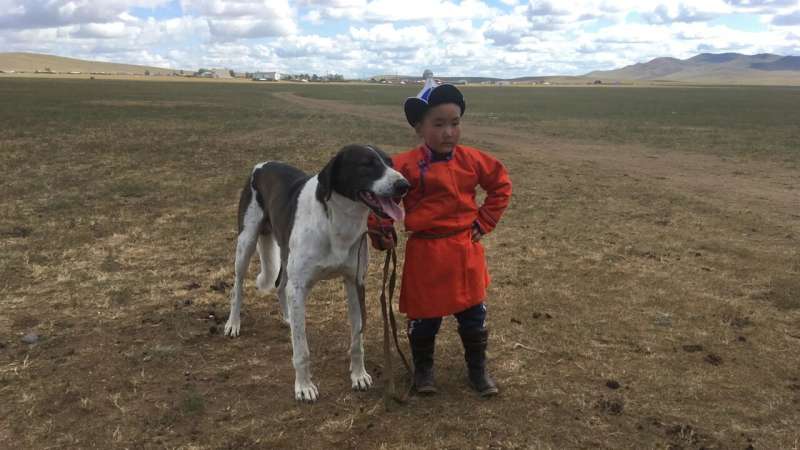
Researchers tested hunting dogs and their owners in five rural communities in Vanuatu, Mongolia, Madagascar, Peru and Germany. Despite major differences in culture, environment and dog-keeping practices, the study found that the relationship between dogs and humans is remarkably consistent around the world.
Most previous research on dog cognition has been conducted in Western, educated, industrialized, rich and democratic—or “WEIRD”—societies. However, around three-quarters of the world’s dogs do not live the life of a Western family pet. Many are free-ranging and work as hunting or guard dogs, interacting with humans in very different social settings.
To broaden this perspective, the team developed a cross-cultural test battery consisting of six well-established behavioral experiments and a questionnaire exploring the emotional and practical aspects of the bond between dogs and humans. They studied a total of 164 dog-owner pairs: 34 in rural Germany, 30 in Vanuatu, 35 in Mongolia, 33 in Madagascar and 32 in Peru. The team included local helpers whose input was particularly important for refining the study’s cross-cultural aspects.
Studying dog-human communication worldwide
“Dogs live with humans almost everywhere, but not in the same way,” says first author Juliane Bräuer of the DogStudies project at Friedrich Schiller University Jena. “We wanted to know whether the close relationship between dogs and humans, as seen in Western societies, is universal and also exists in very different cultural contexts.”
The researchers focused on hunting dogs because hunting is one of the oldest and most widespread forms of dog-human cooperation. The behavioral tests examined the following: whether the dogs came when called; whether they followed a human pointing gesture to find hidden food; whether they showed their owner where food was hidden; whether they avoided forbidden food when being observed; whether they looked to humans when faced with an unsolvable problem; and whether they used their owner’s reaction when approaching a novel, potentially frightening object.
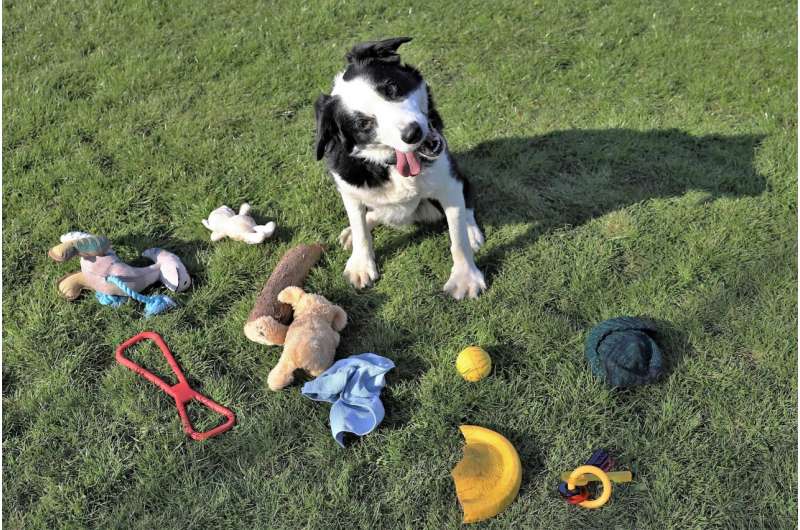
Across the five societies, dogs exhibited many similar social and cognitive behaviors. For example, they could use human pointing gestures to locate hidden food, and dog-owner pairs communicated successfully in tasks where the dog knew the location of hidden food and the owner had to find it. Dogs also frequently looked to humans for guidance in uncertain situations, suggesting that they closely monitor people and use them as a source of information.
A valued relationship across cultures
The questionnaire revealed that dog owners in all five countries valued their pets. All the owners reported enjoying having their dog around at least some of the time, and almost all said that life was sometimes better because they had a dog. More than 90% of owners in every country said they could rely on their dog at least sometimes, and more than 90% believed their dog would protect them in a threatening situation.
These findings suggest that, even in societies where they are not primarily kept as companion animals in the Western sense, dogs are not only useful working partners but also socially important to their owners.
The study also revealed some differences. Owners in Peru rated their relationships with their dogs lower than owners in other countries did. The researchers suggest that this may be linked to local hunting practices, given that dogs are not always essential for successful hunting there.
Local practices shape behavior
Some of the differences appear to reflect how dogs are used and trained in each society. For example, owners in Vanuatu were particularly adept at interpreting their dogs’ behavior in the hidden-food task, in which only the dogs knew where the food was hidden. This may be because dogs play a crucial role in hunting wild pigs in dense forests, so paying close attention to their signals is particularly important.
German dogs also differed in several respects. They approached their owners more quickly in the obedience test, persisted longer when attempting to open an unsolvable food container, and focused more on their owner than on an unfamiliar experimenter. These patterns may be a result of formal training for hunting-dog exams and the stronger emphasis placed on owner-dog relationships in Western contexts.
“Some of these differences make sense when we consider the everyday lives of dogs,” says Bräuer. “Training, hunting techniques and the social role of dogs all influence the way they interact with humans.”
An ancient and flexible bond
The researchers also investigated whether a closer relationship between owners and their dogs predicted better performance in behavioral tasks. Overall, this was rarely the case. However, one exception was the social referencing test: Dogs with a higher relationship score were more likely to approach a strange object alongside their owner. This suggests that the strength of the bond may be particularly important in uncertain or potentially frightening situations.
Taken together, the findings suggest that dog-human cooperation has a stable and flexible foundation. Dogs were domesticated about 30,000 years ago—earlier than any other animal—and their partnership with humans may have evolved from mutual benefits, such as hunting together, providing protection and sharing access to food.
“Despite enormous cultural diversity, we found more similarities than differences,” concludes senior author Russell Gray, director of the Department of Linguistic and Cultural Evolution at the Max Planck Institute for Evolutionary Anthropology. “The bond between humans and dogs appears to be a globally widespread relationship that has adapted to many different ways of life.”
Source: Phys.org