Tag Archives: mixed breeds

New Study Dispels Myth That Purebred Dogs Are More Prone To Health Problems

It’s a common belief that purebred dogs are more prone to disease than mixed-breed dogs, but a new study led by researchers at the Texas A&M School of Veterinary Medicine and Biomedical Sciences (VMBS) has busted this myth. 
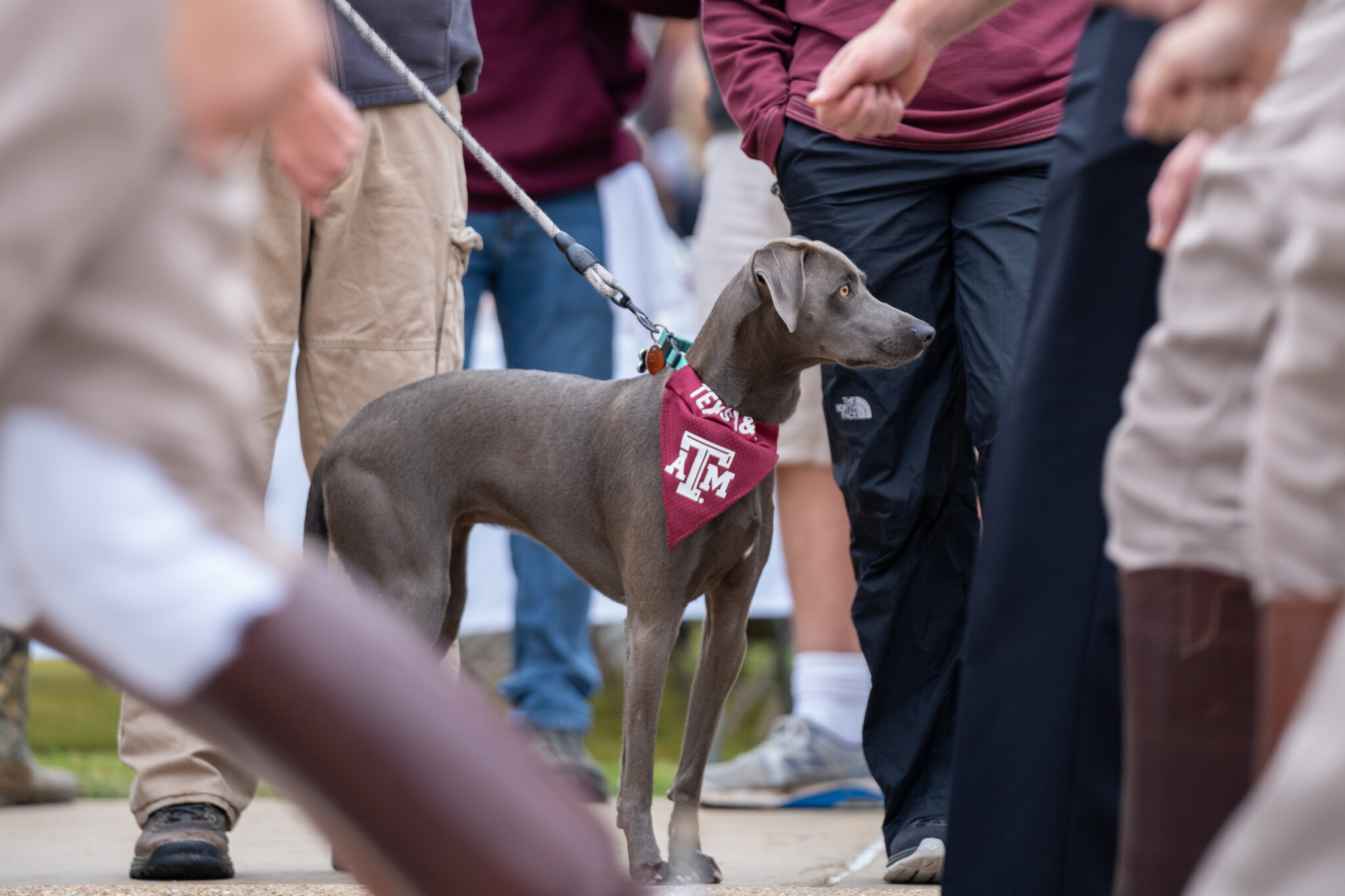
A study by researchers at Texas A&M University and the Dog Aging Project has found that purebred and mixed-breed dogs are mostly equal when it comes to overall frequency of health condition diagnoses. Jacob Svetz/Texas A&M University Division of Marketing and Communications

The study, published in the journal Frontiers In Veterinary Science, found that while certain dog breeds are prone to specific diseases, purebred and mixed-breed dogs are mostly equal when it comes to overall frequency of health condition diagnoses.

“There are several well-known diseases that frequently occur in specific dog breeds,” said Dr. Kate Creevy, chief veterinary officer of the Dog Aging Project and a professor in the VMBS’ Department of Small Animal Clinical Sciences. “This has helped perpetuate the misconception that all purebred dogs are more prone to disease, but that is not the case.”

The study — which surveyed the owners of more than 27,000 companion dogs — also found that some of the most common diagnoses, like ear infections or osteoarthritis, occur in both purebreds and mixed-breed dogs. 

Breaking Down The Data

According to the study, 25 breeds make up about 60% of the purebred dog population within the Dog Aging Project. In order of popularity, those breeds are: 

  • Labrador retriever
  • Golden retriever
  • German shepherd
  • Poodle
  • Australian shepherd
  • Dachshund
  • Border collie
  • Chihuahua
  • Beagle
  • Pembroke Welsh corgi
  • Boxer
  • Shi Tzu
  • Miniature schnauzer
  • Pug
  • Havanese
  • Cavalier King Charles spaniel
  • Yorkshire terrier
  • Great Dane
  • Greyhound
  • Boston terrier
  • Siberian husky
  • Shetland sheepdog
  • English springer spaniel
  • Australian cattle dog
  • Doberman pinscher

Within these 25 breeds, a total of 53 unique medical conditions make up the top owner-reported medical conditions. 

“The medical conditions reported by owners of purebred dogs varied considerably,” Creevy said. “However, some conditions appeared frequently in the top 10 reported health conditions by breed.”

Across the 25 most popular breeds, those 10 conditions were:

  • Dental calculus (hardened plaque)
  • Dog bites
  • Extracted teeth
  • Giardia (a parasite)
  • Osteoarthritis
  • Seasonal allergies
  • Ear infection
  • Heart murmur
  • Fractured teeth
  • Cataracts

For mixed-breed dogs, the most common reported conditions were highly similar, with cataracts and heart murmur being replaced by torn/broken toenail and chocolate toxicity.

Some conditions, like dental calculus and osteoarthritis, appeared with roughly the same frequency in both purebred and mixed-breed dogs. Other conditions were more common in one than the other; extracted teeth and dog bites were more common in purebreds, versus ear infections in mixed-breed dogs.

“Out of the 53 medical conditions that owners reported, 26 did not differ significantly between mixed-breed and purebred dogs,” Creevy said.

Implications For Dog Owners

Ultimately, one of the most important findings from the study is that dog breed is only one aspect of pet health to consider when creating a pet’s care plan or researching what kind of dog to adopt.

“People should consider many factors when choosing a dog, including environment, lifestyle, social interactions and physical activity that will be available to the dog,” Creevy said. “Planning for both preventive veterinary care and medical care as the dog ages is also prudent. Dog owners should also talk with their primary care veterinarians about the kinds of medical problems to which their new dog might be particularly prone based on breed, size, sex, etc.”

As the study also showed, some of the most common reasons owners take their dogs to the vet have little or nothing to do with breed.

“Dental disease, allergies and osteoarthritis are among the most common conditions for all dogs,” Creevy said. “Owners should work with their primary care veterinarians on a plan to manage dental health. Regular exercise and maintaining lean body weight may help delay, prevent or lessen the impact of osteoarthritis.”

Expanding Dog Health Understanding

Though the study is already one of the largest cross-sectional studies of canine health, researchers at the Dog Aging Project are far from done examining its findings.

“We were surprised by the number of owners who reported that their dogs had experienced a bite from another dog,” Creevy said. “More investigation is needed to determine what this means and what particular factors might put an individual dog at risk.”

The DAP is a collaborative, community scientist-driven data-gathering research project that enrolls companion dogs from all backgrounds to study the effects of aging and gain a better understanding of what contributes to a long and healthy life for a dog. 

The DAP continues to accept dogs of all breeds into the project. To date, more than 50,000 dogs have been enrolled.

Many of their research projects have led to translational studies that inform not only dog health, but also human health. To enroll your dog, or learn more, visit dogagingproject.org.
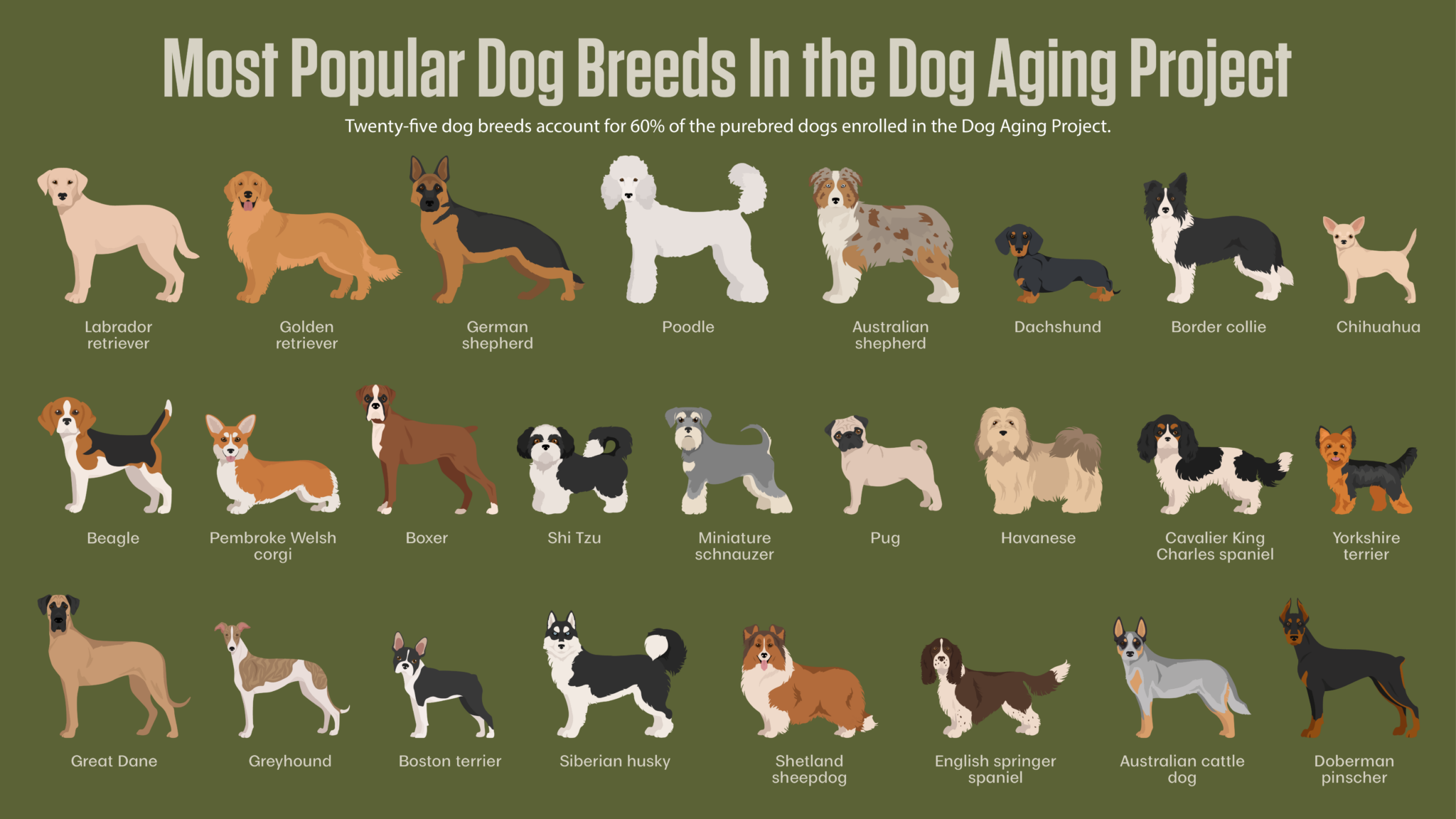
Twenty-five dog breeds account for 60% of the purebred dogs enrolled in the Dog Aging Project. Aubree Herrold/School of Veterinary Medicine and Biomedical Sciences

Source: Texas A&M University

Big Dogs Face More Joint Problems if Neutered Early

Heavier mixed-breed dogs have higher health risks if neutered or spayed early, according to a new study from researchers at the University of California, Davis. The study found mixed-breed dogs weighing more than 44 pounds as adults are at higher risk for one or more joint disorders if neutered before 1 year of age. Dogs weighing up to 43 pounds had no increased risk for joint problems. The study was published in the journal Frontiers in Veterinary Science.

It’s standard practice in the U.S. and much of Europe to neuter dogs by 6 months of age. This study, which analyzed 15 years of data from thousands of dogs at UC Davis Veterinary Medical Teaching Hospital, suggests dog owners should consider their options carefully.

“Most dogs are mixed breeds,” said lead author Benjamin Hart, distinguished professor emeritus at the UC Davis School of Veterinary Medicine. “We hope this study will influence the spay or neuter process in order to give people wishing to adopt a puppy the time to make an informed decision on when to spay or neuter.” 

Researchers examined common joint disorders including hip dysplasia, elbow dysplasia and cranial cruciate ligament tears, a knee injury, in five weight categories. They also looked at risks of mixed-breed dogs developing cancers based on weight but found no increased risk in any weight category compared to intact dogs.

The risk of joint disorders for heavier dogs can be up to a few times higher compared to dogs left intact. This was true for large mixed-breed dogs. For example, for female dogs over 43 pounds, the risk jumped from 4 percent for intact dogs to 10-12 percent if spayed before a year of age.

Neutering policies should be reviewed

“The study raises unique challenges,” noted co-author Lynette Hart, professor at the UC Davis School of Veterinary Medicine. “People like to adopt puppies from shelters, but with mixed breeds it may be difficult to determine just how big the dog will become if you don’t know anything about the dog’s parents.”

Neutering prior to adoption is a common requirement or policy of humane societies, animal shelters and breeders. The authors suggested the policy be reviewed and modified appropriately. Shelters, breeders and humane societies should consider adopting a standard of neutering at over a year of age for dogs that will grow into large sizes.

Lynette Hart said the study is especially relevant for people and organizations raising service dogs.

“They need to take a serious look at this,” said Hart. “Joint disorders can shorten a dog’s useful working life and impact its role as a family member.”

A previous study conducted by the UC Davis researchers found health risks based on neuter age varied greatly depending on the breed of the dog.

Source: University of California Davis media statement

2018 American Rescue Dog Show

Move over Westminster because rescue dogs have just been put into the spotlight with their very own show.

Premiering on the Hallmark Channel on Monday, 19th February 2018 – the American Rescue Dog Show!

I’m not sure we will ever get this in New Zealand (possibly through Netflix but it isn’t there yet)…but it is great to see Rescue Dogs being promoted to the public.

***For the record, rescue dogs may be mixed or pure breeds – a dog finds itself in need of rescue mostly because of human actions or inaction and not breeding***

Kathleen Crisley, specialist in dog massage, rehabilitation and nutrition/food therapy, The Balanced Dog, Christchurch, New Zealand

Patience

Patience

Some people find it hard to believe that a dog professional like myself has never raised a dog from a puppy.  That’s because my family raised me with the idea that you adopt, rather than buy, a dog.  And by default that has steered me into a life with re-homed dogs – both mixed breeds and purebreds – who have entered my life at different ages.

My first dog came from a shelter; my second came from a supermarket ‘free to a good home’ ad; my third was a private adoption facilitated by a local rescue group (but she had never lived in their shelter); my fourth was a word-of-mouth adoption of Daisy, a purebred Pointer, who had bounced back to her breeder through no fault of her own.  And now, I have Izzy who is a retired racing greyhound.

It’s a myth that ‘rescue’ dogs are all mixed breeds; many pure bred dogs also find themselves in need of re-homing.  Responsible breeders will take back a dog for any reason during the lifetime of the dog.  So, for example, in cases of divorce or an owner’s death, these dogs come up for adoption – and that’s only a couple of examples.  There are also breed specific rescue groups who are passionate supporters of a breed and work to re-home dogs who have fallen on bad times.

What my life of adopting dogs has taught me is patience.  It’s great to go out and buy the dog a bed, food and toys and envisage a perfect life together.  And it will be good- but there are usually teething problems.

For example, when I adopted Izzy , she was suffering from re-homing stress.  She was overwhelmed by her surroundings in my home – it was totally foreign territory.  She was off her food and made herself a bed on a blanket by the front door.  She remained there for almost 2 weeks (only moving to eat or drink or go out for walks) until she got her confidence to explore more of the house.

It took her 2 months to venture confidently into my bedroom (where large windows looking out onto the garden seemed to overwhelm her).  She did not get on my bed for almost 4 months.

We had a few toileting incidents but that was also because she was getting used to new food and was already stressed from her change of circumstances.  Whose tummy wouldn’t cause them problems?

But we got there and that takes patience.  When I do home-checking for Greyhounds as Pets, I get an idea about how well the family is prepared to be patient with their new dog.

A prospective owner with a very strict timeline for getting their dog settled is unlikely to be successful – the dog doesn’t know about the timeline.

The best advice I can give is – be patient.  If anything, give your new dog some space.  Let them decide when they are comfortable in trying new things and don’t overwhelm them with affection too soon.

It’s worth the wait.

Kathleen Crisley, specialist in dog massage, rehabilitation and nutrition/food therapy, The Balanced Dog, Christchurch, New Zealand


Myths about dogs

Some information that circulates about dogs just isn’t true.  Here are some examples:

Mutts (mixed breeds) are healthier

Actually, any dog can have health problems but pure bred dogs commonly have more genetic disorders.  Mixed breeds, according to many vets, have hybrid vigor.  This term refers to superior qualities that appear when genetically different animals are crossbred.   The technical term for hybrid vigor is heterosis.

Licking helps to heal a wound

This is not necessarily the case.  Some dogs obsessively lick a wound and this does more damage than good.  You should consult your veterinarian if your dog is worrying a sore or wound.

Puppies and dogs don’t need house training because they naturally know where to go (wolfs, from where dogs descended,  won’t soil their den)

Nice try but most dogs and puppies need to be trained to do their business outside.  Some dogs (like children) are easier to train.

If a dog wags its tail, its friendly and happy

This isn’t always the case.  A wagging tail can mean a dog is excited or agitated.  Unless you know a dog, the best precaution is to ask its owner before you pet it.

Only male dogs ‘hump’ or raise their leg to pee

Female dogs will also do this,  particularly if they are dominant. Spaying does not affect this behavior.

Doggy quote of the month for May

“A lot of shelter dogs are mutts like me.”

– Barack Obama

The National Mutt Census (USA)

With the advancement of DNA technology, more people want to know what their mixed breed dog is made up of.   More than half of all dogs in the USA are mixed breeds, making The Mutt the most popular dog!

Mars Veterinary, which has its own veterinarians and genetics research unit, decided to conduct the first-ever Mutt Census last year, inviting owners of mutts to complete an on-line questionnaire and requiring them to use a DNA test kit  called the Wisdom Panel ™.

It is now official that the German Shepherd Dog is the breed most commonly found in mixed breed dogs.  The Top 10 Mutt Breeds are:

The Top 10 Mutt Breeds

1. German Shepherd Dog
2. Chow Chow
3. Labrador Retriever
4. Boxer
5. Rottweiler
6. American Staffordshire Terrier
7. Miniature Poodle
8. Golden Retriever
9. Siberian Husky
10. Cocker Spaniel

To find out more about the Mutt Census, click on the logo below.  This will take you directly to the Mutt Census website.

Kathleen Crisley, Fear-Free certified professional and specialist in dog massage, rehabilitation and nutrition/food therapy, The Balanced DogChristchurch, New Zealand


