
I’ve previously written about how to test if your dog is right-pawed or left pawed. Researchers at the University of Adelaide led by Dr Luke Schneider tested a group of 73 dogs using 50 manipulations of an object to determine their paw preference. They then interviewed the dog owners about their dog’s behavior to see if there was a pattern.
“We found that dogs with a preference for left paws were reported by their owners to show high levels of aggression towards strangers. The left pawed dogs scored almost twice as high as ambilateral (ones with no preference) and also higher than dogs with right paws.
“There is research in the human world as well that positive and negative emotions can be located in the left and right hemispheres and it seems to go the same way in humans and other animal species, that the negative emotions are located in the right hemisphere. There are many, many overlaps between human and animal brains.”
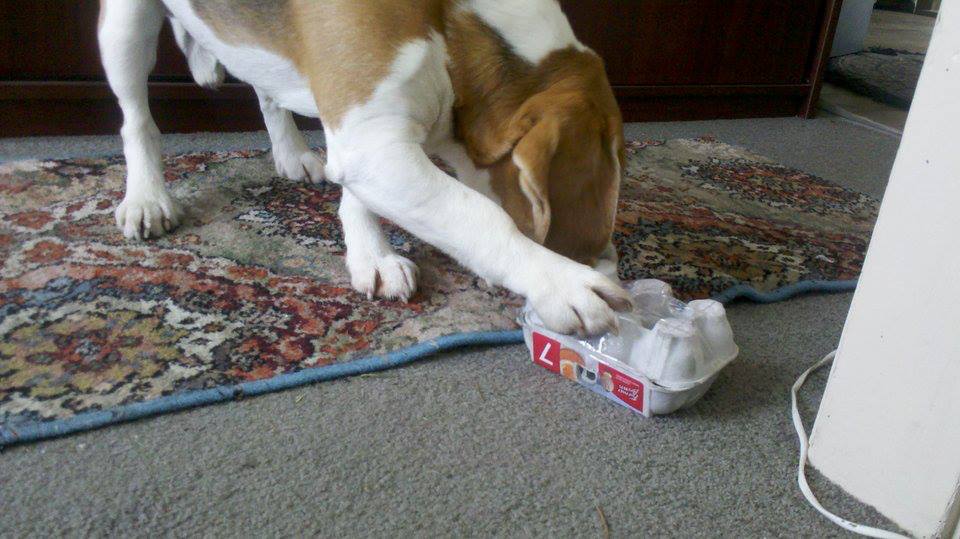
Blake the Beagle shows his preference for the right paw
When testing dogs for paw preference, the research team found a roughly even split between those dogs that had a right paw preference vs those with a left paw preference.
None of the dogs in the study were noted as particularly aggressive, and so the research team wants to do more work with dogs who are noted for aggression-type responses. A larger testing group would also help to validate results. The research team’s study has been published in the Journal of Veterinary Behavior.







 DoggyMom.com