A new study has found that having a pet dog or cat can slow down cognitive decline.
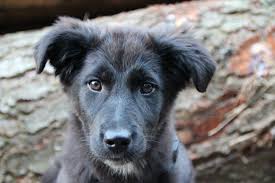
Stock image of a puppy looking at its owner. Credit : Getty
NEED TO KNOW
A new study has found that having a cat or a dog may have a “protective factor” over cognitive abilities as you age, helping to “slow down” mental decline
The study looked at 18 years of data in adults over 50 and found a “slower decline in multiple cognitive domains” for dog and cat owners
Having a fish or a bird didn’t have an impact on cognitive abilities, the study found
The type of pet you have can impact how your brain ages — and dogs and cats have a “protective factor” that can “slow down cognitive decline.”
Dog and cat owners saw improved brain health — more than those who had birds or fish, or no pets — according to a new study, published in Scientific Reports, that used 18 years of data on cognitive decline in adults over 50.
“Both cat and dog owners experienced slower decline in multiple cognitive domains — dog owners in immediate and delayed recall, cat owners in verbal fluency and delayed recall,” the study found. “Fish and bird ownership had no significant association with cognitive decline.”
“Several explanations may help explain the absence of this association in fish and bird owners, despite the reports of their ownership’ positive influence on wellbeing in ways that are usually associated with cognitive benefits,” study author Adriana Rostekova, from the University of Geneva’s lifespan developmental psychology research group said, per The Guardian.
The study theorized that the shorter lifespan of a bird or fish impacts “the level of emotional connection,” due to “frequently having to deal with the pet’s death.” The study also pointed out that birds can be incredibly loud: “Bird ownership may negatively affect the owner’s sleep quality due to the increased noise levels, which has been shown to be associated with cognitive decline.”
But the very nature of owning a cat or a dog may help the brain stay healthy, Rostekova explained: “There is also a possibility of increased social stimulation facilitated by cats and dogs, which may be linked to the slower cognitive decline experienced by their owners: an increased frequency of social interactions when accompanied by a dog – or for cats, a substitute for a social network.”
The study says that, since “dog and cat ownership might act as a protective factor aiding to slow down cognitive decline, thus contributing to healthy cognitive [aging],” these findings could help inform policies on healthy aging, specifically to make veterinary care or pet insurance “more accessible to older adults” — as well as advocate for “animal-friendly senior housing options, such as assisted living facilities or nursing homes.”
Researchers have uncovered new insights into the relationship between dogs and their owners. A study published in Scientific Reports has found that a dog’s heart rate variability adapts to its owner’s heart rate variability during interaction. This physiological “co-modulation” suggests that emotional states are shared between dogs and their owners, offering new understanding of the deep bond shared between the two species.
The relationship between dogs and humans has evolved over thousands of years, creating bonds akin to those between human caregivers and children. Researchers sought to explore whether these bonds are reflected in shared physiological states, such as heart rate variability, which indicates the balance between relaxation and arousal in the autonomic nervous system.
While prior studies examined behavioral and hormonal synchronization between dogs and humans, little was known about their physiological synchrony. By investigating this co-modulation, the researchers hoped to provide a clearer picture of the emotional and physiological connections that underpin the human-dog bond.
“I have always been fascinated by human-animal relationships and the close attachment bonds we can form with non-human animals, both from personal experience and from a scientific perspective. The dog-human relationship is particularly intriguing because the domestication of dogs has resulted in their remarkable sensitivity and ability to interpret human gestures and emotions,” said study author Aija Koskela, a researcher at the University of Helsinki and University of Jyväskylä
The study included 25 dog-owner pairs, focusing on cooperative dog breeds such as retrievers and herding dogs, which are known for their sensitivity to human cues. Dogs and their owners were recruited through social media and a cognitive testing company. Exclusion criteria for participants ensured that neither dogs nor owners had health conditions or behaviors that could interfere with the study’s measures. The owners, mostly women aged 40.8 years on average, lived with their dogs as indoor pets, and most of the dogs had been trained in dog sports like agility or obedience.
In a controlled environment, researchers attached heart rate monitors to both dogs and owners to measure heart rate variability. The pairs participated in six different tasks designed to mimic natural interactions, such as playing, stroking, training, and sniffing. These activities varied in physical intensity to distinguish the effects of emotional arousal from physical activity. Heart rate variability data was collected and analyzed alongside measures of physical activity using synchronized monitors.
Owners also completed questionnaires to assess their temperament and the quality of their relationship with their dogs. These tools allowed researchers to investigate how individual differences in personality and emotional closeness influenced the physiological responses of both dogs and owners.
The researchers found that dogs’ heart rate variability and activity levels were closely linked to their owners’. During periods of rest and calm interaction, such as before and after structured tasks, dogs and owners showed significant co-modulation in heart rate variability. This suggests a shared emotional arousal, likely influenced by the strong bond between the pairs. During more physically demanding activities like playing, the correlation between the pairs’ physical activity was stronger, but heart rate variability remained influenced by the shared emotional context.
“I believe this study confirms that the emotional mechanisms underlying dog-human interactions are similar to those in human attachment relationships, where emotions are shared and transmitted between attachment figures,” Koskela told PsyPost. “From a practical standpoint, I think it’s helpful for dog owners to remember that their emotions can greatly influence their dog’s behavior. We often focus so much on the dog’s actions that we overlook the emotional state driving them, or how our own feelings influence our dog.”
“For example, trying to calm a child while feeling upset yourself often doesn’t work—whereas calming yourself first helps the child feel secure. Likewise, dogs are highly attuned to human emotions. Being mindful of your emotional state can make challenging situations easier for both you and your dog.”
Interestingly, several factors shaped these physiological connections. For example, the dog’s heart rate variability was influenced by its size, the duration of its relationship with its owner, and the level of shared activities reported by the owner. Larger dogs and those living with their owners for a longer time tended to have lower heart rate variability, suggesting greater arousal or excitement during the tasks. Owners who scored higher on measures of negative affectivity (a tendency toward experiencing negative emotions) had dogs with higher heart rate variability.
Notably, the physiological synchronization between dogs and owners occurred only within the established pairs. When researchers randomly matched dogs with non-owners, this connection disappeared, confirming that the bond between a dog and its owner uniquely facilitates this co-modulation.
“Quite a few things surprised us,” Koskela said. “First, it was fascinating to observe that the emotional connection between dogs and their owners could be detected at physiological level over a relatively short time—the study lasted just an hour. Previously, emotional synchronization between dogs and owners has been studied at hormonal level over much longer time periods. Our study shows that this emotional connection can be detected in a very short time period and I think it’s amazing.”
“Second, it was surprising that the dog’s physiological state measured as heart rate variability explained the owner’s heart rate variability more than the other factors generally affecting the heart rate variability like age or weight. Lastly, I find it interesting that dogs belonging to owners with higher levels of negative affectivity, one of the four temperament traits, were more relaxed throughout the study. This could be because such owners often form very close emotional bonds with their dogs, offering also emotional support for the dog.”
The study highlights the physiological connection between dogs and their owners, suggesting that emotional and autonomic states are interlinked during interaction. However, there are some limitations to consider.
“The current study was limited by its relatively small sample size,” Koskela noted. “However, statistical analysis confirmed the reliability of the findings. Our sample also primarily consisted of female dog owners, which is noteworthy since an owner’s gender may influence both dog behavior and physiology. Furthermore, the sample likely reflects a bias toward active and committed dog owners, as most of the participants practiced dog sports and volunteered for the study in their free time without monetary compensation. Therefore, it is plausible that dog-owner dyads with more functional relationships than average are overrepresented in this study.”
Looking forward, Koskela said that she is “interested in studying emotional synchrony between dogs and their owners in greater detail, particularly on a moment-to-moment level and the factors that modulate it (e.g., personality traits or time lived together). More broadly, I aim to identify the factors associated with functional dog-owner relationships.”
“It’s noteworthy that we studied only cooperative breeds, which are known to be especially sensitive to human behavior and emotions. It would be fascinating to study more ancient breeds to determine whether their emotional states are similarly modulated by their owners.”
Researchers at the University of Liverpool have turned to the popular video-sharing site YouTube to study the complex issue of dog bites.
Preventing dog bites is an increasingly important public health and political issue with implications for both human and animal health and welfare. However, it remains difficult for researchers to understand the circumstances leading up to dog bites, with most studies relying on evidence collected after bites happen, such as hospital records and victim interviews.
In a new study published in Scientific Reports researchers have, for the first time, used YouTube videos to directly observe and analyse dog bites in situ.
Lead author Sara Owczarczak-Garstecka said: “Online videos present us with an unexplored opportunity to observe dog bites first-hand, something which is just not possible using other methods. Making more use of this type of shared content for research could help us better understand how and why bites occur and contribute to the development of bite prevention strategies.”
Using search terms such as ‘dog bite’ and ‘dog attack’ the researchers sampled 143 videos that were uploaded to YouTube between January 2016 and March 2017. For each video the context of bites, bite severity, victim and dog characteristics were recorded. For 56 of these videos they were also able to analyse the details of human and dog behaviour leading up to the bite.
The researchers acknowledge that YouTube videos of dog bites are likely subject to some bias, with, for example, bites by small dogs perhaps perceived as ‘comical’ and therefore more likely to be uploaded online.
The findings reveal that despite this potential bias, the demographic characteristics of the victims and dogs seen in YouTube bite videos, such as breed type and victims’ sex and age, are consistent with those found in previous studies. Common dog breeds observed included Chihuahuas, German Shepherds, Pit bulls and Labrador Retrievers. Around 7 in 10 of the bite victims in the videos were male, while more than half of bites observed were to children and infants.
Although this small study did not allow an exploration of the causal relationship between human behaviour and dog bites, some behaviours that have been previously observed within the context of dog bites were observed here to precede a bite. For example, the researchers observed that tactile contact with a dog increased approximately 20 seconds before a bite, as did standing or leaning over a dog.
Sara Owczarczak-Garstecka added: “These findings could offer some valuable new insight for the development of bite prevention strategies. Prevention messages could emphasise the risk of leaning over a dog and simply advise avoiding contact with a dog when possible or in doubt.”
Future research plans to better understand people’s behaviour around dogs and their perceptions of dog bites include a series of interviews with dog owners, people who work around dogs and bite recipients.
The paper ‘Online videos indicate human and dog behaviour preceding dog bites and the context in which bites occur’ is published in Scientific Reports [doi:10.1038/s41598-018-25671-7]
A team of Swedish scientists have used national registries of more than 3.4 million Swedes aged 40 to 80 to study the association between dog ownership and cardiovascular health. Their study shows that dog owners had a lower risk of death due to cardiovascular disease or to other causes during the 12-year follow-up.
A total of more than 3.4 million individuals without any prior cardiovascular disease in 2001 were included in the researchers’ study linking together seven different national data sources, including two dog ownership registers. The results are being published for the first time in Scientific Reports. The goal was to determine whether dog owners had a different risk of cardiovascular disease and death than non-dog owners.
“A very interesting finding in our study was that dog ownership was especially prominent as a protective factor in persons living alone, which is a group reported previously to be at higher risk of cardiovascular disease and death than those living in a multi-person household. Perhaps a dog may stand in as an important family member in the single households. The results showed that single dog owners had a 33% reduction in risk of death and 11% reduction in risk of myocardial infarction during follow-up compared to single non-owners. Another interesting finding was that owners to dogs from breed groups originally bred for hunting were most protected,” says Mwenya Mubanga, lead junior author of the study and PhD student at the Department of Medical Sciences and the Science for Life Laboratory, Uppsala University.
In Sweden, every person carries a unique personal identity number. Every visit to a hospital is recorded in national databases, accessible to researchers after de-identification of data. Even dog ownership registration has been mandatory in Sweden since 2001. These scientists studied whether being registered as a dog-owner was associated with later diagnosis of cardiovascular disease or death from any cause.
“These kind of epidemiological studies look for associations in large populations but do not provide answers on whether and how dogs could protect from cardiovascular disease. We know that dog owners in general have a higher level of physical activity, which could be one explanation to the observed results. Other explanations include an increased well-being and social contacts or effects of the dog on the bacterial microbiome in the owner,” says Tove Fall, senior author of the study and Associate Professor in Epidemiology at the Department of Medical Sciences and the Science for Life Laboratory, Uppsala University.
“There might also be differences between owners and non-owners already before buying a dog, which could have influenced our results, such as those people choosing to get a dog tending to be more active and of better health. Thanks to the population-based design, our results are generalisable to the Swedish population, and probably also to other European populations with similar culture regarding dog ownership,” says Tove Fall.
The study was conducted by researchers at Uppsala University, Karolinska Institutet, Stanford University and the Swedish University of Agricultural Sciences.
Dogs produce more facial expressions when humans are looking at them, according to new research from the University of Portsmouth.
Scientists at the University’s Dog Cognition Centre are the first to find clear evidence dogs move their faces in direct response to human attention. Dogs don’t respond with more facial expressions upon seeing tasty food, suggesting that dogs produce facial expressions to communicate and not just because they are excited.
Brow raising, which makes the eyes look bigger – so-called puppy dog eyes – was the dogs’ most commonly used expression in this research.
Puppy dog eyes
Dog cognition expert Dr Juliane Kaminski led the study, which is published in Scientific Reports.
She said: “We can now be confident that the production of facial expressions made by dogs are dependent on the attention state of their audience and are not just a result of dogs being excited. In our study they produced far more expressions when someone was watching, but seeing food treats did not have the same effect.
“The findings appear to support evidence dogs are sensitive to humans’ attention and that expressions are potentially active attempts to communicate, not simple emotional displays.”
Most mammals produce facial expressions – such expressions are considered an important part of an animal’s behavioural repertoire – but it has long been assumed that animal facial expressions, including some human facial expressions, are involuntary and dependent on an individual’s emotional state rather than being flexible responses to the audience
Dr Kaminski said it’s possible dogs’ facial expressions have changed as part of the process of becoming domesticated.
The researchers studied 24 dogs of various breeds, aged one to 12. All were family pets. Each dog was tied by a lead a metre away from a person, and the dogs’ faces were filmed throughout a range of exchanges, from the person being oriented towards the dog, to being distracted and with her body turned away from the dog.
The dogs’ facial expressions were measured using DogFACS, an anatomically based coding system which gives a reliable and standardised measurement of facial changes linked to underlying muscle movement.
Co-author and facial expression expert Professor Bridget Waller said: “DogFACS captures movements from all the different muscles in the canine face, many of which are capable of producing very subtle and brief facial movements.
“FACS systems were originally developed for humans, but have since been modified for use with other animals such as primates and dogs.”
Dr Kaminski said: “Domestic dogs have a unique history – they have lived alongside humans for 30,000 years and during that time selection pressures seem to have acted on dogs’ ability to communicate with us.
“We knew domestic dogs paid attention to how attentive a human is – in a previous study we found, for example, that dogs stole food more often when the human’s eyes were closed or they had their back turned. In another study, we found dogs follow the gaze of a human if the human first establishes eye contact with the dog, so the dog knows the gaze-shift is directed at them.
“This study moves forward what we understand about dog cognition. We now know dogs make more facial expressions when the human is paying attention.”
It is impossible yet to say whether dogs’ behaviour in this and other studies is evidence dogs have flexible understanding of another individual’s perspective – that they truly understand another individual’s mental state – or if their behaviour is hardwired, or even a learned response to seeing the face or eyes of another individual.
Puppy dog eyes is a facial expression which, in humans, closely resembles sadness. This potentially makes humans more empathetic towards the dog who uses the expression, or because it makes the dog’s eyes appear bigger and more infant-like – potentially tapping into humans’ preference for child-like characteristics. Regardless of the mechanism, humans are particularly responsive to that expression in dogs.
Previous research has shown some apes can also modify their facial expressions depending on their audience, but until now, dogs’ abilities to do use facial expression to communicate with humans hadn’t been systematically examined.
A readiness to help and a positive attitude toward others are considered foundations of human relationships and human cooperation. But not only humans cooperate and support each other, animals do so, too. A group of ethologists from the Messerli Research Institute at the Vetmeduni Vienna have shown for the first time that dogs also behave prosocially toward others – provided that they know the other dog. The results were published in Nature’s Scientific Reports.
Compared to the rest of the animal kingdom, the human capacity for cooperation is something quite special. Cooperating with one another requires a certain amount of prosocial behaviour. This means helping others without any direct personal benefit.
“Dogs and their nearest relatives, the wolves, exhibit social and cooperative behaviour, so there are grounds to assume that these animals also behave prosocially toward conspecifics. Additionally, over thousands of years of domestication, dogs were selected for special social skills,” explains study director Range. For this reason, Range and her colleagues Mylene Quervel-Chaumette, Rachel Dale and Sarah Marshall-Pescini studied 16 dogs to test their readiness to benefit familiar versus unfamiliar partners.
The researchers studied the prosocial behaviour of the animals using a bar-pulling task in which the dogs had to pull trays and decide whether a second dog would receive a treat or not. In the test, the donor dogs used their mouths to pull a string to bring a tray toward a second dog. They could choose either an empty tray or a tray containing a treat on the partner’s side.
The donor dog (right) can pull a tray and donate food to the receiver-dog (left). (Photo: Mylène Quervel-Chaumette/Vetmeduni Vienna)
Dogs donate to familiar partners more often than to unfamiliar ones
Whether the donor dogs knew the recipient made a difference. Donor dogs pulled the giving tray more often for familiar dogs than for unfamiliar ones. “Dogs truly behave prosocially toward other dogs. That had never been experimentally demonstrated before. What we also found was that the degree of familiarity among the dogs further influenced this behaviour. Prosocial behaviour was exhibited less frequently toward unfamiliar dogs than toward familiar ones.
Prosocial behaviour put to the test
In the bar-pulling task, the donor dogs decided whether another dog would receive a treat or not. The donor dog itself did not get the treat. The only purpose of the task was to benefit the other dog. By conducting several control tests, the researchers excluded the possibility that the dogs were simply pulling the trays for the fun of it. Donor dogs were reserved in pulling the tray when an unfamiliar dog was in the next enclosure.
At the end of each test run, the researchers conducted another test to show that the donor dogs knew what pulling the tray meant. They allowed the donor dogs to pull on a tray to give themselves a treat, and all dogs did just that. “This control excludes the possibility that the dogs did not pull on the tray out of fear of the unfamiliar dogs. Given the same situation, the dogs gladly gave themselves a treat,” says Range.
“We were also able to disprove the argument that the dogs pulled the string less frequently because they were distracted by the unfamiliar partner during the test. Only rarely did a donor dog interact with the unfamiliar dog,” Range explains.











 DoggyMom.com