Tag Archives: stress

Therapy Dogs Ease Stress for Nurses, Doctors, Too

Therapy dogs can help boost the spirits of healthcare workers in the same way they brighten the moods of hospital patients, a new study shows.

Photo: Ohio State University Wexner Medical Center

 The furry, four-legged friends reduced emotional exhaustion and job stress among a small group of workers at two surgical and two intensive care units in the Midwest, researchers report.

“We brought the dogs to the units and many times we had staff in tears sitting with the dogs, telling them about their day,” said lead investigator Beth Steinberg, a senior researcher with Ohio State University’s Center for Integrative Health.

“For the most part, people have an affinity to a non-judgmental, warm, furry animal that can come and just sit with them and listen,” Steinberg said in a university news release. “Dogs don’t care what you look like, how you’re feeling that day; they just know that when you need them, they’re there.”

Steinberg is co-founder of Buckeye Paws, a therapy dog program initially aimed at improving the mental and emotional health of staff at the Ohio State University Wexner Medical Center.

Buckeye Paws launched in March 2020, shortly before the pandemic began taking its toll on overtaxed health professionals.

To see whether the program is making a difference, researchers focused therapy dog sessions with a group of 64 health care workers. The group included doctors, nurses, nurse practitioners, respiratory and rehabilitation therapists, patient care associates and unit clerks.

“The recruitment for this study was incredibly easy because as soon as you said, ‘We’re going to do a study assessing your response to therapy dog interaction,’ people were like, ‘I’m in!’” Steinberg said. “Even before COVID-19 hit hospitals so hard, the staff were already struggling with stress, burnout, lack of work engagement.”

Buckeye Paws handlers — all hospital employees who volunteered their time — brought in seven certified therapy dogs three times a week for eight weeks. The study ran from October 2021 to March 2022.

“There was free interaction with the dogs that people could spend as much or as little time as they wanted with the dogs,” Steinberg said. “Prior to their interactions, we asked them to fill out a basic 1 to 10 mood scale. And then, after the interaction, they did that again.”

Most interactions were brief, just a few minutes between a dog and a health care worker at a clinical workstation or in a team room or break room.

But results showed the brief sessions made a big impact.

Many study participants reported an immediate decrease in feelings of stress, emotional exhaustion, depersonalization and burnout.

“Our findings suggest that an animal-assisted activity, available for healthcare workers within busy inpatient settings, may offer immediate benefits through improved mood,” researchers concluded in their report, which was published recently in the International Journal of Complementary & Alternative Medicine.

Buckeye Paws expanded in March 2022, and now provides therapy dog assistance to students, faculty and staff at Ohio State University. There are now 29 dog-handler teams in the program, with another 11 teams going under training and eight more beginning the process, researchers said.

Source: Newsmax

When Dogs Smell Your Stress, They Act Sad

Hailey Seelig/Getty Images

Humans and dogs have been close companions for perhaps 30,000 years, according to anthropological and DNA evidence. So it would make sense that dogs would be uniquely qualified to interpret human emotion. They have evolved to read verbal and visual cues from their owners, and previous research has shown that with their acute sense of smell, they can even detect the odor of stress in human sweat. Now researchers have found that not only can dogs smell stress—in this case represented by higher levels of the hormone cortisol—they also react to it emotionally.

For the new study, published Monday in Scientific Reports, scientists at the University of Bristol in England recruited 18 dogs of varying breeds, along with their owners. Eleven volunteers who were unfamiliar to the dogs were put through a stress test involving public speaking and arithmetic while samples of their underarm sweat were gathered on pieces of cloth. Next, the human participants underwent a relaxation exercise that included watching a nature video on a beanbag chair under dim lighting, after which new sweat samples were taken. Sweat samples from three of these volunteers were used in the study.

Participating canines were put into three groups and smelled sweat samples from one of the three volunteers. Prior to doing so, the dogs were trained to know that a food bowl at one location contained a treat and that a bowl at another location did not. During testing, bowls that did not contain a treat were sometimes placed in one of three “ambiguous” locations. In one testing session, when the dogs smelled the sample from a stressed volunteer, compared with the scent of a cloth without a sample, they were less likely to approach the bowl in one of the ambiguous locations, suggesting that they thought this bowl did not contain a treat. Previous research has shown that an expectation of a negative outcome reflects a down mood in dogs.

The results imply that when dogs are around stressed individuals, they’re more pessimistic about uncertain situations, whereas proximity to people with the relaxed odor does not have this effect, says Zoe Parr-Cortes, lead study author and a Ph.D. student at Bristol Veterinary School at the University of Bristol. “For thousands of years, dogs have learned to live with us, and a lot of their evolution has been alongside us. Both humans and dogs are social animals, and there’s an emotional contagion between us,” she says. “Being able to sense stress from another member of the pack was likely beneficial because it alerted them of a threat that another member of the group had already detected.”

The fact that the odor came from an individual who was unfamiliar to the dogs speaks to the importance of smell for the animals and to the way it affects emotions in such practical situations, says Katherine A. Houpt, a professor emeritus of behavioral medicine at Cornell University’s College of Veterinary Medicine. Houpt, who was not involved in the new study, suggests that the smell of stress may have reduced the dogs’ hunger because it’s known to impact appetite. “It might not be that it’s changing their decision-making but more that it’s changing their motivation for food,” she says. “It makes sense because when you’re super stressed, you’re not quite as interested in that candy bar.”

This research, Houpt adds, shows that dogs have empathy based on smell in addition to visual and verbal cues. And when you’re stressed, that could translate into behaviors that your dog doesn’t normally display, she says. What’s more, it leaves us to wonder how stress impacts the animals under the more intense weight of an anxious owner. “If the dogs are responding to more mild stress like this, I’d be interested to see how they responded to something more serious like an impending tornado, losing your job or failing a test,” Houpt says. “One would expect the dog to be even more attuned to an actual threat.”

Source: Scientific American

Interactions with dogs can increase brainwaves associated with stress relief and heightened concentration

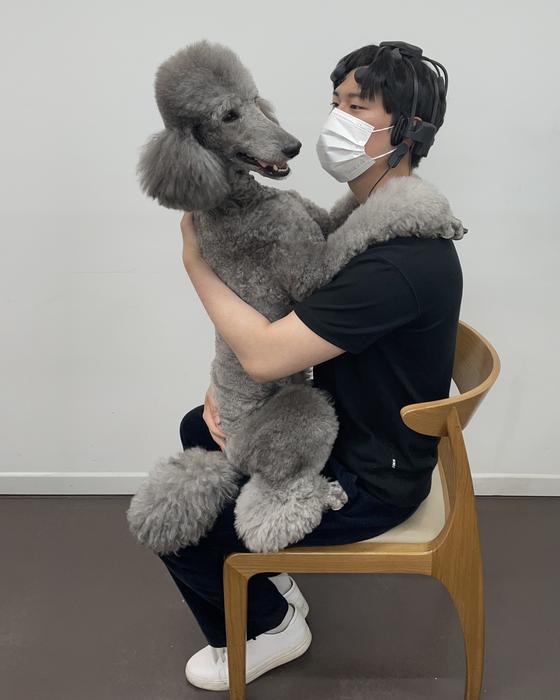
Spending quality time with dogs reduces stress and increases the power of brain waves associated with relaxation and concentration, according to a study published on March 13, 2024 in the open-access journal PLOS ONE by Onyoo Yoo from Konkuk University, South Korea, and colleagues.

An animal-assisted activity (hug) performed by a participant. Photo credit
Yoo et al., 2024, PLOS ONE, CC-BY 4.0

Animal-assisted interventions, like canine therapy, are widely used in hospitals, schools, and beyond to help reduce anxiety, relieve stress, and foster feelings of trust. Studies of the potential benefits of animal interactions often take a holistic approach, comparing people’s mood or hormone levels before and after spending time with a service animal. But this approach doesn’t differentiate between types of interactions, like grooming, feeding, or playing with an animal, limiting our understanding of how each specific interaction impacts a person’s health and well-being.

To better understand how such animal-related activities affect mood, Yoo and colleagues recruited a small sample of 30 adult participants to each perform eight different activities with a well-trained dog, such as playing with a hand-held toy, giving her treats, and taking pictures with her. Participants wore electroencephalography (EEG) electrodes to record electrical activity from the brain while they interacted with the dog, and they recorded their subjective emotional state immediately following each activity.

The relative strength of alpha-band oscillations in the brain increased while participants played with and walked the dog, reflecting a state of relaxed wakefulness. When grooming, gently massaging, or playing with the dog, relative beta-band oscillation strength increased, a boost typically linked to heightened concentration. Participants also reported feeling significantly less fatigued, depressed, and stressed after all dog-related activities.

While not all participants had pets of their own, their fondness for animals likely motivated their willingness to participate in the experiment, potentially biasing the results. Nonetheless, the authors state that the unique relationships between specific activities and their physiological effects could serve as a reference for programming targeted animal-assisted interventions in the future.

The authors add: “This study provides valuable information for elucidating the therapeutic effects and underlying mechanisms of animal-assisted interventions.”

Source: Eurekalert

Cortisol in shelter dog hair shows signs of stress

In the Netherlands, thousands of dogs stay in a shelter every year. Despite the good care, a shelter can be a stressful environment for dogs. Researchers at Utrecht University investigated if the amount of the hormone cortisol in hair indicates the levels of stress that dogs experience before, during and after their stay in the shelter.

There is no difference between the cortisol levels of dogs when they enter the shelter and the control group of domestic dogs. After six weeks in the shelter, cortisol levels in the hair appear to have increased by one-third (on average from 16 pg/mg to 21.8 pg/mg). In measurements six weeks and six months after adoption, cortisol levels lowered, moving in the direction of the values at admission to the shelter. The results were published in the scientific journal Scientific Reports on 21 April 2022.

Cortisol in hair

The stress hormone cortisol accumulates in hair, in humans but also in animals. By measuring cortisol levels in hair, researchers can get an idea of the stress response and recovery over weeks or months – depending on the length of the hair examined. This technique has been used extensively in humans and other species, and some fifteen scientific studies have been carried out in dogs so far.

“In addition to the cortisol measurements in hair, we also measured cortisol values in the dogs’ urine. This gives a short-term picture while the hair measurements show the long term”, researcher Janneke van der Laan explains.

To the shelter every day

The researchers examined hair of 52 shelter dogs at four moments: just before admission, after six weeks in the shelter, six weeks after adoption and six months after adoption. They compared the cortisol values before admission with those of twenty domestic dogs, which were similar in terms of breed, age and sex. 

Van der Laan: “We took daily measurements in the shelter for over a year. After adoption, the new owners – after clear instructions – cut the dogs hair and sent it to us. They were helpful and enthusiastic, and were very interested in what their dog had experienced before adoption.” 
 

For the cortisol measurements, hair from the same location on the body was used every time. The researchers shaved the area and allowed new hair to grow during the period in which they wanted to measure the stress hormones. This is called a ‘shave-reshave method’. 

More cortisol in small dogs

A surprising result is that smaller dogs generally have higher cortisol levels than larger dogs. “We have also seen this pattern in previous studies, for example in a study on the resting pattern of shelter dogs. We don’t have a clear hypothesis about why that is, but it is interesting and is an area of focus for future research.”

Well-being in shelter

All the examined shelter dogs were in the same shelter, the largest in the Netherlands. Of course there are significant differences between shelters, not only within the Netherlands but also internationally. In The Netherlands, dogs are usually kept individually, while in other countries they are often kept in groups. 

“We know that a shelter is not a stress-free environment for dogs, even though staff members do their best to achieve the highest possible welfare,” Van der Laan says. “Even if you organise a shelter in the best possible way, there are still stress factors, such as crowds of other dogs and not being able to go outside as often as usual. And most important: the dog is gone from their old, familiar environment.”

The shelter in this study has a pioneering role in improving the welfare of dogs: they use glass walls instead of bars to reduce noise pollution for the dogs, for example. “The fact that we measured an increased amount of cortisol even in this shelter, suggests that this will also be the case in other shelters,” Van Der Laan said.

Source: Utrecht University

Walking your dog is better at reducing stress than strolling alone says new study

It’s time to slip on your boots and grab the lead because walking a dog is better at combating stress that strolling alone, a new study has found.

Darrya/Getty Images

According to scientists at the University of Animal Health Technology in Tokyo, sharing a daily ramble with a pet reduces the chances of depression, stress and anxiety. We know that heading outside with your pup provides dogs with the opportunity to get regular physical activity, but it can also help boost the calming GABA chemical in your body, too.

Researchers in the team took saliva samples from 14 dog owners for a week to see whether it was better to walk alone or with a pet. The results, published in the journal Animals, revealed that levels of stress (including the stress-inducing MHPG chemical) were much lower when owners took their dogs on a walk. Meanwhile, the levels of the GABA chemical were also 40% higher.

This isn’t the first time dog walks have been praised for their mental and health benefits, either. In fact, a previous 2017 study found that humans get just as much as their pups from regular strolls.

Rather than social or physical health benefits, it was found the ability of the walk to make them happy was the biggest drive, while findings also discovered that owners were happier when they believed they were making their four-legged friend happier too.

Why not wrap up warm and enjoy a scenic dog walk…

Source: CountryLiving

Full journal article: Hormonal and Neurological Aspects of Dog Walking for Dog Owners and Pet Dogs

Common household noises may be stressing your dog

Researchers at the University of California, Davis, have found that people may not recognize that their dog is stressed when exposed to common household noises. While it’s well established that sudden loud noises, such as fireworks or thunderstorms, commonly trigger a dog’s anxiety, a new study finds even common noises, such as a vacuum or microwave, can be a trigger.

UC Davis study finds even common household items like a vacuum cleaner can cause stress and anxiety for dogs. (Photo: Getty)

The study was published in Frontiers in Veterinary Science.

The research found that high-frequency, intermittent noises such as the battery warning of a smoke detector are more likely to cause a dog anxiety, rather than low-frequency, continuous noise.

“We know that there are a lot of dogs that have noise sensitivities, but we underestimate their fearfulness to noise we consider normal because many dog owners can’t read body language,” said lead author Emma Grigg, a research associate and lecturer at the UC Davis School of Veterinary Medicine.

Signs of anxiety

Some common signs of a dog’s anxiety include cringing, trembling or retreating, but owners may be less able to identify signs of fear or anxiety when behaviors are more subtle. For example, stressed dogs could pant, lick their lips, turn their head away or even stiffen their body. Sometimes their ears will turn back, and their head will lower below their shoulders. Grigg suggests owners better educate themselves on anxiety-related behavior.

Researchers conducted a survey of 386 dog owners about their dogs’ responses to household sounds and examined recorded dog behaviors and human reactions from 62 videos available online. The study found that owners not only underestimated their dogs’ fearfulness, but the majority of people in videos responded with amusement rather than concern over their dog’s welfare.

“There is a mismatch between owners’ perceptions of the fearfulness and the amount of fearful behavior actually present. Some react with amusement rather than concern,” Grigg said. “We hope this study gets people to think about the sources of sound that might be causing their dog stress, so they can take steps to minimize their dog’s exposure to it.”

Some sounds painful for dogs

Grigg said because dogs have a wider range of hearing, some noises could also be potentially painful to a dog’s ears, such as very loud or high-frequency sounds. She said minimizing exposure may be as simple as changing batteries more frequently in smoke detectors or removing a dog from a room where loud noises might occur.

“Dogs use body language much more than vocalizing and we need to be aware of that,” said Grigg. “We feed them, house them, love them and we have a caretaker obligation to respond better to their anxiety.”

Source: UC Davis

Long-term stress in dogs linked to the owner-dog relationship

The relationship a dog has with its owner is related to its stress level. This is the conclusion of a study from Linköping University. The results, published in the journal Scientific Reports, also suggest that the link between stress and the owner’s personality traits differs between dog breeds.

Researchers at Linköping University study how the interaction between dog and human is connected to the wellbeing of the animal. Photo credit: Nataba

Researchers at Linköping University have investigated whether the stress levels of dogs are affected by the people they live with. Stress levels for the past several months can be determined in both dogs and humans by measuring the levels of stress hormone stored in hairs as they grow.

The researchers have collected hair from both dogs and owners, and measured levels of cortisol, the most important stress hormone, in them. They were interested in whether there are differences between different dog breeds. Breeding has led to the genetic selection of different breeds for different tasks. The study included 18 dogs from breeds that have been bred for independent hunting, such as the Swedish elkhound, the Norwegian elkhound, and the dachshund. A second group included dogs from ancient breeds that are genetically more closely related to the wolf than other breeds. This group comprised 24 dogs from breeds such as the shiba inu, the basenji, and the Siberian husky. All owners completed questionnaires about their own personality and that of their dog. They also answered questions about their relationship with their dog, including such matters as how the owner experienced the interaction with the dog, degree of emotional attachment to the dog, and the extent to which owning a dog gave rise to problems.

“The results showed that the owner’s personality affected the stress level in hunting dogs, but interestingly enough not in the ancient dogs. In addition, the relationship between the dog and the owner affected the stress level of the dogs. This was the case for both types, but the result was less marked for the ancient dogs”, says Lina Roth, senior lecturer in the Department of Physics, Chemistry and Biology (IFM).

In a previous study, the same researchers had seen that dogs from herding breeds, which have been genetically selected for their ability to collaborate with humans, mirror the long-term stress level of their owner. When the researchers now added information about the relationship of the herding dogs to their owner, it became clear that the relationship was significant for the long-term stress levels also in these dogs.

The researchers conclude that long-term stress is influenced least strongly by the owner and their relationship to the dog for ancient breeds. The hunting dogs show clear links between both the personality of the owner and their relationship to the dog, but it is only herding dogs that demonstrate the unique synchronisation with the long-term stress in the owner.

“We believe that the synchronisation of stress is a consequence of breeding the herding dogs for collaboration with people, while the relationship to the owner and the owner’s personality are important parameters that influence the synchronisation of stress levels”, says Lina Roth.

Parts of the study have received financial support from the Sveland Foundation.

Translation by George Farrants.

The article: Long term stress in dogs is related to the human-dog relationship and personality traits”, Amanda Höglin, Enya Van Poucke, Rebecca Katajamaa, Per Jensen, Elvar Theodorsson and Lina S. V. Roth, (2021), Scientific Reports, published online 21 April 2021, doi: 10.1038/s41598-021-88201-y

Source: Linköping University

Pets are a priority when moving

Is it a case of the tail wagging the dog, or every dog having his day? However you define it, the cat is out of the bag when it comes to pet owners and moving into a new home.

A new survey from US company Mayflower reveals pet priorities are often equal to or more important than human-focused amenities when American dog and cat owners decide on new homes and communities.

african american man with labrador dog in new apartment with cardboard boxes

Overall, pet owners say one-third of their overall decision to move was related to their pet, and survey respondents cited willingness to pay significantly more and even forgo perks like shorter commutes and updated kitchens in favor of pet-friendly features.

The 2019 Mayflower Mover Insights Survey explored the process of moving or preparing to move with a pet, including just how much pets factor into choices about home and community features. According to the survey, cat and dog owners who have moved recently say their pet influenced which new home they chose by 39 percent and which new community they chose by 26 percent. Additionally:

  • Pet owners who plan to move say their pet will influence their choice of home by 48 percent and their choice of community by 33 percent.
  • Pet owners who are likely to move in the next five years are willing to pay an average of 32 percent more each month to get the pet-friendly features they want, such as a fenced-in yard and plenty of indoor space, as compared to their current monthly housing costs.
  • Kitchen vs. Canine: Half of future movers (50 percent) want an updated kitchen, and the other half (50 percent) prioritize a pet-friendly feature.
  • Pet vs. Place of Business: While nearly half (49 percent) of future movers want to live close to work, the other half (51 percent) prioritizes pet-friendly features in their new home.

Mayflower’s survey also found more than three-fourths of past movers and future movers with pets didn’t stay close or don’t plan to stay close to their current neighborhood or part of town when choosing their next home. Yet, more than two-thirds of past movers tried to stay close to their pet’s favorite human and furry friends, their favorite park and their vet. The pet-related decisions meant more than staying near their old neighborhood.

“In the last few years, we’ve heard more and more from our customers about the impact moving has on pets. With every move, we strive to ensure the process is smooth for both our customers and their animals by providing expertise, information and constant support,” said Eily Cummings, director of corporate communications, Mayflower.

Settling in: Stressful or smooth for Fido and Fluffy  

Pets may get the priority for perks when their humans relocate, but moving is still a stressful activity for dogs and cats. Mayflower’s survey also shed light on pets’ experiences during moves.

  • Half of pet owners (50 percent) reported their pets struggled to adjust to their new home – especially the feline friends. Nearly two-thirds of all cat owners say their cat had difficulty adjusting.
  • Prior to a move, almost half of pet owners (47 percent) sought information about moving with a pet, including researching online, talking with others who have moved with a pet or speaking with a vet.
  • To smooth the transition, eight in 10 pet owners gave their pet extra attention and showed them where things were in the new home.
  • Nearly half of all future owners (48 percent) will introduce their pet to the new home prior to moving in to minimize their dog and/or cat’s stress.
  • More than half of all survey respondents (53 percent) said their spouse/partner added or will add more stress to the move than their pet did.

However, there’s still good news for pet owners: more than nine in 10 owners say their pets adjusted to their new setting in less than a month. And, more than 90 percent of pet owners agree that wherever they and their pets are together is instantly home.

Survey Background and Methodology

TRUE Global Intelligence, the in-house research practice of FleishmanHillard, fielded an online survey of 2,904 American cat and/or dog owners who have moved with their pet(s) within the past five years or are likely to move with their pet(s) within the next five years. The survey was fielded between January 11 to January 20, 2019. Sampling was conducted to balance age, gender, and, for the nationwide sample, geographic region. Some questions were asked with a “Not Applicable” option. Those questions have been reported based on the total number for whom the question/item was applicable. To clarify the different experiences of cat and dog owners, statistics referencing cat and dog owners specifically include only those respondents with a dog(s) or a cat(s) and exclude respondents who own both.

Editor’s note: Additional survey data is available by request. If interested, please contact Bonnie Stack at 314-982-1730 or bonnie.stack@fleishman.com.

About Mayflower

Mayflower is America’s most recognized and trusted moving company. With headquarters in suburban St. Louis, Mayflower maintains a network of 300 affiliated agencies.

Source:  Mayflower Mover press release

Therapy dogs as an employment benefit

Trained dogs can be employed in so many ways that help humans and here’s another one:  stress therapy in the office.

Pet Partners based in Washington began sending trained dogs into the office setting two years ago as part of a workplace wellbeing program.

Well-known employers like Intel and Aetna have employed the services of the dogs.

A dog being petted by an Aetna employee

A dog receiving attention by an Aetna employee, photo by Alexandra Gunnoe

Instead of allowing dogs in the office full-time (which I obviously prefer), these programs are a novelty that also manages other issues such as employees who have dog allergies or who are extremely fearful of dogs.

In settings where people have very demanding jobs, and expectations of long working hours, a visit by a well-behaved dog must certainly be a welcome relief!

Source:  MarketWatch

Why I chose Fear Free

This week, I announced that I attained my Fear Free certification; completing this certification was one of my professional development goals for the year.

(I am currently New Zealand’s first practitioner in the canine massage and rehab field to hold this certification.)

Fear Free certification

I have been in practice in canine massage and rehabilitation since 2009. I see dogs who are injured, are recovering from surgeries and those who have developed age-related conditions like intervertebral disc disease or arthritis.

An ordinarily friendly and happy dog can become fearful when it is in pain – which is totally understandable.  For this reason, I became more interested in dog behavior and how behavior was a reflection of physical status (and often, vice-versa).

So I spent a fair amount of my professional development time between 2013 and 2017 at Best Friends Animal Society learning from their dog trainers and behavior consultants.  Understanding non-verbal communication, and methods for de-sensitization and counter-conditioning are all skills that are very useful when working hands-on with dogs.

Added to this is the fact that in many cases, management of these dogs requires me to develop a long-term relationship with them.  These dogs need to trust me – that I won’t knowingly hurt them and that I respect their boundaries when they tell me that something hurts too much.

They also help me in my job when they let me know that something feels good and is working.

So Fear Free certification was on the To Do list to expand my skills tool box.

Then one day last year, I was asked to see a new client.   Her 12-year old mixed-breed dog was regularly lame; she had stopped seeing a physical therapist about 4 months earlier after 6 months of regular sessions. Her dog needed to be handled on the floor because he would not tolerate being lifted onto a massage table.

During our first session, he progressed with his warnings to me that he wasn’t happy:  first a low growl, then a lip curl, and then baring of teeth.  The entire time, the owner was telling me, ‘he’s just being a guts’ to which I replied, ‘no, he’s telling me he isn’t happy with being touched there.’

This owner was also one of those who was adamant her dog wasn’t in pain, to which I also disagreed, based on his age and regular lameness.  She also didn’t have many positive things to say about her vet, which for me was a signal that perhaps she wasn’t willing to listen to either her vet or me.  She hadn’t supplied copies of her dog’s veterinary records, either, and so I explained that until I saw his vet records, I wouldn’t be able to book him in for subsequent appointments.  (Provision of vet records is part of my standard intake process.)

Then she said, ‘our other physical therapist muzzled him.’

This is when I explained that I didn’t want to do that; that massage and physical therapy were likely to feature in her dog’s long-term management for quality of life.  Dogs don’t ‘opt-in’ the way people can for a massage.  They don’t book me in – their owner does.  And they don’t know what to expect from a massage and so it is all new to them.  Add a level of pain into the equation, and you can understand a dog’s reluctance to be touched.

By muzzling him for hands-on work (without pain management), the previous therapist set this dog up for escalated levels of fear, anxiety and stress.

The relationship with both owner and dog was going to take time.  Sadly, this owner didn’t like my recommendation that her vet should be consulted about trialing a short course of anti-inflammatory drugs to see if this resulted in a happier and less lame dog.  She wanted a quick fix which I was unable to give her- and I also had my personal safety to consider.

It was a light bulb moment.  I had more work to do – and Fear Free was another platform to explain and educate my customers about my approach to working with their dogs.

Fear Free seems like a ‘no brainer,’ but in reality it isn’t for many owners and therapists who don’t understand that there is a better way.  Some procedures are a ‘must have’ (veterinarians will know this!), but others are worth the wait if we can build a better relationship with the dog that doesn’t make them go over threshold into anxiety and fear.

Kathleen Crisley, specialist in dog massage, rehabilitation and nutrition/food therapy, The Balanced Dog, Christchurch, New Zealand