Author Archives: DoggyMom.com

It makes my tail wag when the poop is in the bag

A common problem for most communities is ensuring that dog parents take responsibility for their dog’s poop.

This brochure at the Town of Needham offices caught my eye…a plea to dog owners and walkers to bag it and trash it…

What initiatives does your town have to ensure poop is scooped?

Municipup says

Kathleen Crisley, Fear-Free certified professional and specialist in dog massage, rehabilitation and nutrition/food therapy, The Balanced Dog, Christchurch, New Zealand

Dog pee on the sidewalk does more than just piss off your neighbors

Note from DoggyMom I follow all types of research.  But some – like this one – needs to be put into a larger context.  Urban cities have a lot of runoff thanks to all the hard surfaces including roads and sidewalks.  Urban designers look to institute green spaces to help with infiltration of water into soils and decrease runoff, which can be particularly helpful in high volume, storm events which overwhelm stormwater systems.

Urban runoff has a lot of contaminants from the oils, dust and debris of modern life.  All meat-eating animals have high nitrogen in their urine – and that’s why countries like NZ have issues with groundwater quality because of the number of cows that are left to graze and urinate on open pastures.  So of course dogs will have an impact on the soil quality and runoff in the very limited areas of green that they have to use in urban cities.  The solution?  Well, in my opinion, it’s partly an argument for creating more green space.


Nobody knows just how many dogs there are in the United States, but there are plenty—and many of them live (and pee) in human cities. Turns out, canine bathroom breaks may have more of an impact on the environment than you might think.

In a new study, a team of Columbia University undergraduate and graduate researchers led by ecologist Krista McGuire looked at the impact of pee on the urban soil microbiome. They found evidence that the nitrogen content and low pH of the urine can make city soil both harder and less absorbent of rainwater, while making the soil microbiome less diverse.

Your very good boy

The project was born out of McGuire’s observations with colleagues during other research on green infrastructure in NYC. In sites like unfenced tree pits, “the soils seemed barren, compacted, and the water from rainfall didn’t seem to penetrate very well,” she says.

The team suspected soil’s characteristics had something to do with all the dogs that urinated on those sites, so they designed an experiment to check. “We obtained soil from the city environment,” says McGuire, along with one species of commonly-used plant from the same nursery the city uses.

Both of these factors replicate what’s used out in the real world. Getting actual dog pee turned out to be harder. They approached animal shelters, which mostly turned them away, while the one shelter that acquiesced didn’t yield enough pee—the experiment required a whopping 40 gallons.

“Despite visiting the shelter twice a week for a couple months, less than 40mL [1.35 oz] of urine was collected due to difficulty in predicting when the dogs will urinate and the dogs’ refusal to continue urinating when a collecting bowl was brought near them as they were about to urinate,” the paper states.

“Ultimately, we decided to use coyote urine since coyotes are very closely related to domestic dogs, and their urine is commercially available,” McGuire says. If you’re not a gardener looking to repel deer from your tulips, you may not be aware of this, but yes, you can buy 40 gallons of coyote pee pretty easily.  (Note from DoggyMom:  Coyotes are kept in captivity and their urine is collected through drainage systems.  Some say that the income from the coyote urine farms help to support other conservation efforts.   I will need to research this further.)

Over the course of a month, they ran a greenhouse experiment, watering the plants at regular intervals with either straight water or water mixed with urine at different concentrations. They checked the soil each week. The results were dramatic: the bacterial community diversity decreased by up to a third during the experiment, and the kinds of bacteria in the microbiome changed. Meanwhile, the “runoff” from pots increased significantly, signifying that the soil was becoming less absorbent.

Outside the lab (say, outside your door), “a variety of different events can affect the impact of urine deposition,” says Gary King, a Louisiana State University biology professor who studies urban microbiomes. This experiment doesn’t address those factors—like, what if it’s raining, or what if some other pollutant has recently entered the soil?

But the results point to an important direction of research, he says. “There is a huge gap in our knowledge about basic microbial functions in the soils that are part of the system in our own built environment.”

That’s a serious problem, because soils help keep a city running. Things like street trees and planted medians aren’t just there to make downtown look good. Cities are mostly built on hard surfaces like concrete and asphalt, which don’t absorb water and allow it to enter the soil, so the sewer system works to keep water off the roads and out of your basement. But sometimes, it rains too much for this system. That’s where what’s known as “green infrastructure” comes in, by helping to absorb all the extra water. Otherwise, says McGuire, “What happens is that the stormwater combines with raw sewage in these below-ground piping systems. Past a certain threshold, it gets spewed out into local waterways.”

To keep this from happening, cities like New York are investing lots of money in building and maintaining green infrastructure, from street trees to deliberately designed water capture landscapes called “bioswales.” But as this research indicates, our furry friends’ bathroom breaks may be making these interventions less effective.

Journal citation:  Evaluating the effects of canine urine on urban soil microbial communities

Source:   Popular Science

Mutation makes bulldogs and Norwich terriers more susceptible to breathing problems

The discovery of a new mutation associated with breathing difficulties in popular dog breeds suggests that shortened skulls causing flat faces is not the only factor that contributes to the condition, but that swelling around the airways from edema may also play a role. Jeffrey Schoenebeck of the University of Edinburgh and colleagues report these findings in a new study published 9th May 2019 in PLOS Genetics.

Respiratory diseases are prevalent across dog breeds, particularly in brachycephalic breeds such as the Bulldog and French bulldog. The flat facial conformation of these breeds has long been assumed to be the major predisposing factor, however, the underlying genetics of their respiratory condition has never been elucidated.

Upper Airway Syndrome

The research team became interested in the Norwich Terrier, a breed presenting with many of the same respiratory disease symptoms as the Bulldog. A distinction, however, is that the Norwich terrier is not considered to be a brachycephalic breed and so presented an opportunity to dissociate respiratory disease from head conformation.

The researchers performed a genome-wide association analysis for respiratory disease severity in the Norwich Terrier and resolved an association on chromosome 13 to a missense mutation in ADAMTS3. Variants in this gene were previously shown to cause an oedematous phenotype–a disease characteristic in the airways of affected Norwich Terriers and brachycephalic dogs alike. The researchers screened over 100 breeds for the ADAMTS3 variant and found that it is enriched in the Norwich Terrier, Bulldog and French Bulldog. This discovery changes how we view respiratory disease predisposition in the dog, offers potential genetic screens and highlights a new biological function for ADAMTS3.

The study presents a new way of looking at these respiratory diseases in dogs, where fluid retention in the tissue that lines the airways makes it more likely that dogs with the mutation will develop breathing obstructions. “We conclude that there are additional genetic risk factors, that if inherited, will likely lead to airway disease in dogs regardless of their face shape,” stated author Jeffrey Schoenebeck. “The challenge ahead is to integrate these ideas, and implement sensible breeding practices and treatments that consider various health risks including those presented by the mutation of ADAMTS3.”

If scientists develop a test for this mutation, then dog breeders can develop better breeding practices to avoid passing on the faulty gene. Additionally, screening for the mutation may help veterinarians identify dogs which are at risk of UAS, and in particular identify the dogs at risk of swelling of their airways after surgical treatment, which is a common, life-threatening post-operative complication.

Sources:  Science Daily and PLOS Genetics

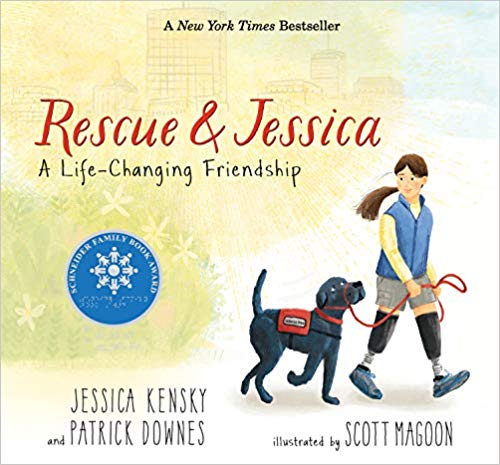
Rescue and Jessica

Rescue and Jessica

Children’s books featuring dogs are an integral part of educating children about the human-animal bond and dogs, generally (not to mention encouraging children to learn to read!)

In Rescue and Jessica:  A Life-Changing Friendship, service dog Rescue meets Jessica who is a double amputee.  Not only does he help her with everyday tasks, but he also helps her see a future for herself.

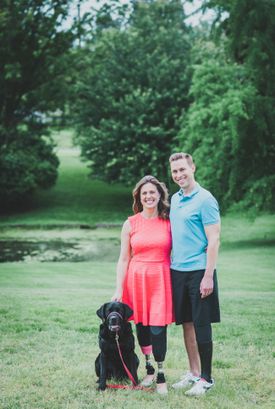
Although a work of fiction, authors Jessica Kensky and Patrick Downes, a wife and husband who suffered the loss of limbs in the Boston Marathon bombing, have drawn on their own experiences with their black Labrador service dog, Rescue.  The book includes an endnote which explains how service dogs are trained.

The authors and their illustrator have been recently honored with a Christopher Award. Christopher Award founder Father James Keller created the awards to salute media that “affirm the highest values of the human spirit.”

Kensky & Downes

Jessica Kensky and Patrick Downes (photo by Boston Globe)

Kathleen Crisley, Fear-Free certified professional and specialist in dog massage, rehabilitation and nutrition/food therapy, The Balanced Dog, Christchurch, New Zealand

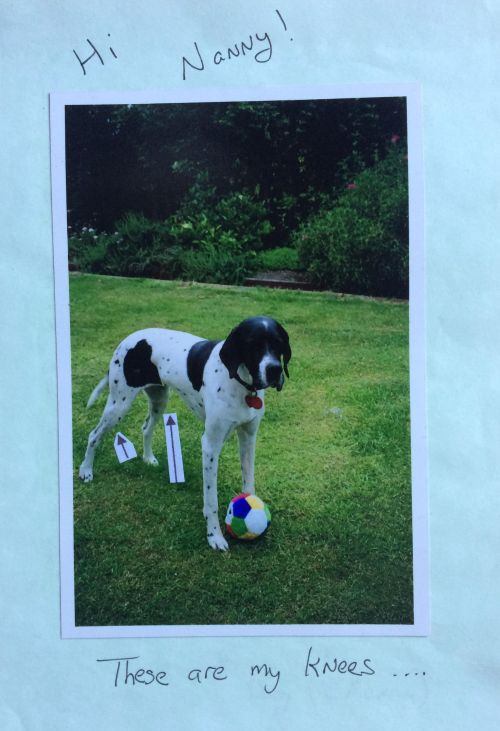
Writing for Nanny

It’s always been important to me that my dogs participate in our lives.

Sometimes, my dogs have written their own greeting cards.  When my Mum had knee replacement surgery in May 2007, my dog Daisy sent her this card and poem as part of our get well package.  (I found the card when sorting through some of my mother’s possessions).


Hi Nanny Greeting card

Kathleen Crisley, Fear-Free certified professional and specialist in dog massage, rehabilitation and nutrition/food therapy, The Balanced Dog, Christchurch, New Zealand

CSI for dog poop

PooPrints is a DNA pet waste management service which helps condominium, apartments and senior living communities to identify owners who are not picking up their dog’s waste.

It’s basically CSI for dog poop.

As part of lease or purchase agreements, there is mandatory DNA testing of the resident’s dogs which is done with a mouth swab.  PooPrints analyses the dog’s DNA and then adds it to its database.

If a pile of poop is found on the property, site managers collect a sample of poop using a PooPrints sample collection kit and send it to the lab for testing.  Because cells of the intestine are sloughed off as feces passes through the digestive tract, DNA can be extracted from the sample and matched to the profiles found in the database.

And then the offending dog owner can receive a warning, citation or other enforcement action taken against them.

This type of profiling works well in closed communities because there’s a mechanism for capturing the DNA of the dogs who live there.

Kathleen Crisley, Fear-Free certified professional and specialist in dog massage, rehabilitation and nutrition/food therapy, The Balanced Dog, Christchurch, New Zealand

Doggy quote of the month for May

“I always say, the time you spend with your dog makes the difference in a great dog or a crate dog.” 

― M.K. Clinton, author

Dog in crate

Desmond’s Law – and more coming

Desmond’s Law, in the US State of Connecticut, came into force in October 2016.

Desmond’s Law is a program that uses qualified pro-bono lawyers and volunteer law students to provide investigations to guide the court in animal abuse cases.

  • The program is discretionary and under the supervision of the Court
  • It allows volunteer advocates to access facts, records and other information regarding the animal, readily share information with each party (prosecutor, defense attorney), and make recommendations to the Court
  • It applies only to cases involving cats and dogs
  • The court-appointed advocate does not directly represent the animal, but rather the ‘interests of justice’

A Harvard Journal on Legislation article published last year discusses that the law, although groundbreaking, could be significantly stronger if it allowed the advocates to represent the animal – as is currently done in child abuse cases using a children’s advocate.  The rationale is that animals are sentient, as are children, and so they deserve stronger advocacy to represent their interests in the court system

Illinois, Michigan, New Jersey, New York and Rhode Island all have similar laws in the development and, hopefully, these laws will expand upon Desmond’s Law with even stronger advocacy for animals.

Desmond

Desmond’s body was found in a trash bag in the woods, emaciated, bruised, and starved. As punishment, his abuser was given Accelerated Rehabilitation, and the incident has been expunged from his record.

Kathleen Crisley, Fear-Free certified professional and specialist in dog massage, rehabilitation and nutrition/food therapy, The Balanced Dog, Christchurch, New Zealand

Pets are a priority when moving

Is it a case of the tail wagging the dog, or every dog having his day? However you define it, the cat is out of the bag when it comes to pet owners and moving into a new home.

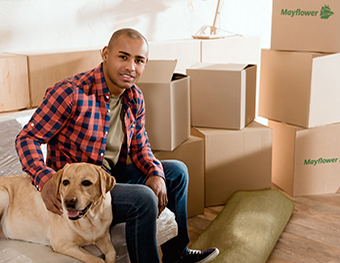
A new survey from US company Mayflower reveals pet priorities are often equal to or more important than human-focused amenities when American dog and cat owners decide on new homes and communities.

african american man with labrador dog in new apartment with cardboard boxes

Overall, pet owners say one-third of their overall decision to move was related to their pet, and survey respondents cited willingness to pay significantly more and even forgo perks like shorter commutes and updated kitchens in favor of pet-friendly features.

The 2019 Mayflower Mover Insights Survey explored the process of moving or preparing to move with a pet, including just how much pets factor into choices about home and community features. According to the survey, cat and dog owners who have moved recently say their pet influenced which new home they chose by 39 percent and which new community they chose by 26 percent. Additionally:

  • Pet owners who plan to move say their pet will influence their choice of home by 48 percent and their choice of community by 33 percent.
  • Pet owners who are likely to move in the next five years are willing to pay an average of 32 percent more each month to get the pet-friendly features they want, such as a fenced-in yard and plenty of indoor space, as compared to their current monthly housing costs.
  • Kitchen vs. Canine: Half of future movers (50 percent) want an updated kitchen, and the other half (50 percent) prioritize a pet-friendly feature.
  • Pet vs. Place of Business: While nearly half (49 percent) of future movers want to live close to work, the other half (51 percent) prioritizes pet-friendly features in their new home.

Mayflower’s survey also found more than three-fourths of past movers and future movers with pets didn’t stay close or don’t plan to stay close to their current neighborhood or part of town when choosing their next home. Yet, more than two-thirds of past movers tried to stay close to their pet’s favorite human and furry friends, their favorite park and their vet. The pet-related decisions meant more than staying near their old neighborhood.

“In the last few years, we’ve heard more and more from our customers about the impact moving has on pets. With every move, we strive to ensure the process is smooth for both our customers and their animals by providing expertise, information and constant support,” said Eily Cummings, director of corporate communications, Mayflower.

Settling in: Stressful or smooth for Fido and Fluffy  

Pets may get the priority for perks when their humans relocate, but moving is still a stressful activity for dogs and cats. Mayflower’s survey also shed light on pets’ experiences during moves.

  • Half of pet owners (50 percent) reported their pets struggled to adjust to their new home – especially the feline friends. Nearly two-thirds of all cat owners say their cat had difficulty adjusting.
  • Prior to a move, almost half of pet owners (47 percent) sought information about moving with a pet, including researching online, talking with others who have moved with a pet or speaking with a vet.
  • To smooth the transition, eight in 10 pet owners gave their pet extra attention and showed them where things were in the new home.
  • Nearly half of all future owners (48 percent) will introduce their pet to the new home prior to moving in to minimize their dog and/or cat’s stress.
  • More than half of all survey respondents (53 percent) said their spouse/partner added or will add more stress to the move than their pet did.

However, there’s still good news for pet owners: more than nine in 10 owners say their pets adjusted to their new setting in less than a month. And, more than 90 percent of pet owners agree that wherever they and their pets are together is instantly home.

Survey Background and Methodology

TRUE Global Intelligence, the in-house research practice of FleishmanHillard, fielded an online survey of 2,904 American cat and/or dog owners who have moved with their pet(s) within the past five years or are likely to move with their pet(s) within the next five years. The survey was fielded between January 11 to January 20, 2019. Sampling was conducted to balance age, gender, and, for the nationwide sample, geographic region. Some questions were asked with a “Not Applicable” option. Those questions have been reported based on the total number for whom the question/item was applicable. To clarify the different experiences of cat and dog owners, statistics referencing cat and dog owners specifically include only those respondents with a dog(s) or a cat(s) and exclude respondents who own both.

Editor’s note: Additional survey data is available by request. If interested, please contact Bonnie Stack at 314-982-1730 or bonnie.stack@fleishman.com.

About Mayflower

Mayflower is America’s most recognized and trusted moving company. With headquarters in suburban St. Louis, Mayflower maintains a network of 300 affiliated agencies.

Source:  Mayflower Mover press release

Top reasons for using dog massage

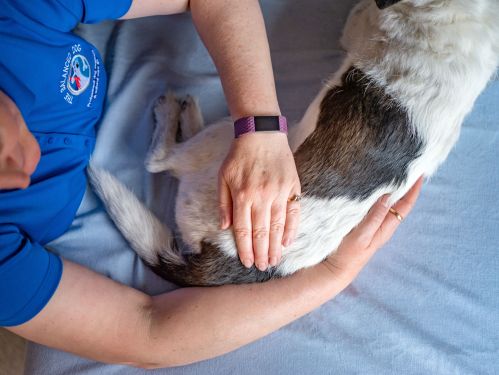
I’m often asked why people should employ a professional dog massage therapist.

balanced_dog-0002

In the 10 years I’ve been in professional practice, these are always the top reasons:

Care for an older dog

The dog whose been the love of your life is slowing down, possibly with a diagnosis of arthritis and medication from the vet.  This is often when I get the call…

A change in behaviour

The dog is doing something it hasn’t before; the family doesn’t know why.  And possibly they’ve been to the vet about it or possibly they haven’t.  We always need to rule out a physical reason for the behaviour and once I’ve seen the dog for myself, I often give the owners a list of questions to ask the vet.

General health & wellbeing

I love these enquiries!  They are from owners who tell me that “there’s nothing wrong with their dog” and they want to keep it that way.  Can I come and have a look and work on a fitness programme for them?  My answer is always yes!

Recovery from injuries and/or surgery

A dog on crate rest or restricted exercise gets all jammed up.  And many will need an exercise and rehab program.  My rehab programs always include ideas for mental stimulation and enrichment – key concepts behind my Fear Free practice.

Kathleen Crisley, Fear-Free certified professional and specialist in dog massage, rehabilitation and nutrition/food therapy, The Balanced Dog, Christchurch, New Zealand