Author Archives: DoggyMom.com

Both dogs and wolves cooperate with humans

A recent study conducted by behavioural researchers at Vetmeduni Vienna shows that dogs and wolves both work equally well with humans, albeit in different ways. The allegedly unequal brothers are thus much more similar than often assumed.

Human social life would be unthinkable without cooperation. The frequency and complexity with which humans cooperate with each other are extraordinary, if not unique. To better understand the evolution of this outstanding human skill, researchers have proposed dogs (Canis familiaris) as a good model of human cooperation.
Wolves cooperate with humans

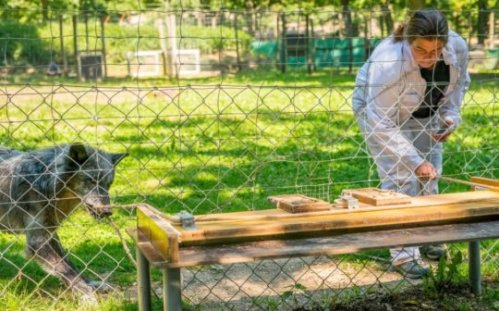
Wolves cooperate with humans, but they take the lead. Credit: Friederike Range/Vetmeduni Vienna

The wolf inside dogs makes the difference

A recent study by Vetmeduni Vienna, published in the journal Scientific Reports, shows that the ability to work with people lies not so much within dogs themselves but in the “wolf within the dog” – that is to say, in very specific behavioural characteristics that dogs share with wolves. The study tested the extent to which dogs and grey wolves collaborate with humans in order to solve certain tasks. The findings show that both dogs and wolves cooperate intensively with humans and are equally successful, although the animals attain their goals in different ways.

Wolves show more initiative

Especially in one point the two closely related animals show significantly different forms of behaviour. In their cooperation with human partners, dogs follow the behaviour of the humans while wolves lead the interaction: they are more independent. Study director Friederike Range from the Konrad Lorenz Institute at Vetmeduni Vienna says, “The detailed analysis of the cooperative interactions revealed interesting differences between wolves and dogs. It shows that, while wolves tend to initiate behaviour and take the lead, dogs are more likely to wait and see what the human partner does and follow that behaviour.”

Differences in behaviour due to domestication

Based on the results of the study, the researchers propose that in the course of domestication dogs were selected for breeding because of their higher submissive tendencies (deferential behaviour hypothesis). According to this hypothesis, this helped minimize conflicts over resources and ensured the safe coexistence and cooperation in which humans lead and dogs follow.

Teamwork counts for wolves

Forming the background to the study are certain fundamental considerations in the field of behavioural science. As humans and dogs have been exposed to similar environmental pressures, this could conceivably represent a case of convergent evolution. Some research suggests that dogs acquired specific predispositions for cooperative interactions during the domestication process due to reduced aggression and increased tolerance. Against this background, better cooperation with humans would be expected in dogs than in wolves. However, wolves are a highly cooperative species, working together to raise the young, hunt and defend their territory.

Early socialization with humans is crucial

The research team led by Friederike Range therefore hypothesized that dogs did not develop any new traits during domestication, but rather that the collaborative skills of their common ancestors – wolves – form the basis for the evolution of dog-human cooperation (canine cooperation hypothesis). In contrast to the hypotheses of other scientists, the researchers from Vetmeduni Vienna therefore did not assume that dogs will outperform wolves when cooperating with humans. As Friederike Range says, “Based on the canine cooperation hypothesis, we expected that wolves would cooperate with humans as well as dogs if early and intensive socialization is given.” The present study fully confirms this assumption.

For the experiment portion of the study, 15 grey wolves (11 males, 4 females, age: 2 to 8 years) and 12 mixed-breed dogs (7 males, 5 females, age: 2 to 7 years) were tested at the Wolf Science Center in Ernstbrunn, Austria, where animals are socialized with people very early on and have close ties to them. The results of the experiment show that dogs and wolves, when socialized with humans and kept under similar conditions, work similarly successfully with humans, albeit in very different ways, which explains why dogs make the better pet.

The article “Wolves lead and dogs follow, but they both cooperate with humans” by Friederike Range, Sarah Marshall-Pescini, Corinna Kratz and Zsófia Virányi was published in Scientific Reports.

Source:  Vetmeduni Vienna media release
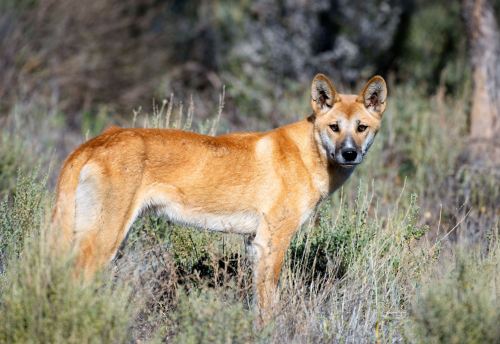
The Australian Dingo is unique

Since the arrival of British settlers more than 230 years ago, most Australians have assumed dingoes are a breed of wild dog.

Now 20 leading researchers have confirmed in a new study that the dingo is actually a unique, Australian species in its own right.

Dingo

Dingoes play a vital ecological role in Australia by competing with introduced predators like feral cats and foxes, researchers say. Photo: Getty Images.

The latest findings provide further evidence of specific characteristics that differentiate dingoes from domestic dogs, feral dogs, and other wild canids such as wolves.

The finding that a dingo is not a ‘dog’ comes after the Government of Western Australia contemplated declaring the dingo as ‘non-fauna’, which would have given more freedom to landowners to kill them without a licence.

Co-author Professor Corey Bradshaw of Flinders University says the classification of dingoes has serious consequences for the fragile ecosystems they inhabit, and state governments are required to develop and implement management strategies for species considered native fauna.

“In fact, dingoes play a vital ecological role in Australia by outcompeting and displacing noxious introduced predators like feral cats and foxes. When dingoes are left alone, there are fewer feral predators eating native marsupials, birds and lizards.

“Dingoes can also increase profits for cattle graziers, because they target and eat kangaroos that otherwise compete with cattle for grass in semi-arid pasture lands,” says Professor Bradshaw.

Lead author, Dr Bradley Smith from Central Queensland University, says the scientific status of the dingo is contentious, resulting in inconsistency in government policy.

“The dingo has been geographically isolated from all other canids, and genetic mixing driven mainly by human interventions has only been occurring recently,” Dr Smith says.

“Further evidence in support of dingoes being considered a ‘wild type’ capable of surviving in the absence of human intervention and under natural selection, is demonstrated by the consistent return of dog-dingo hybrids to a dingo-like canid throughout the Australian mainland and on several islands.

“We have presented scientifically valid arguments to support the ongoing recognition of the dingo as a distinct species (Canis dingo), as was originally proposed by Meyer in 1793.”

Dr Smith says little evidence exists to support the notion that any canid species are interchangeable with dingoes, despite the fact that most canids can successfully interbreed.

“There is no historical evidence of domestication once the dingo arrived in Australia, and the degree of domestication prior to arrival is uncertain and likely to be low, certainly compared to modern domestic dogs.”

“We show that dingoes have survived in Australia for thousands of years, subject to the rigours of natural selection, thriving in all terrestrial habitats, and largely in the absence of human intervention or aid,” Dr Smith says.

“The dingo is without doubt a native Australian species,” concludes Professor Bradshaw.

Source:  Flinders University media release

Chemical pollutants in the home

New research by scientists at the University of Nottingham suggests that environmental contaminants found in the home and diet have the same adverse effects on male fertility in both humans and in domestic dogs.

Chemicals in homes

Chemicals commonly found in homes, at concentrations relevant to environmental exposure, have the same damaging effect on sperm from both man and dog. Credit: © Tatyana Gladskih / Fotolia

There has been increasing concern over declining human male fertility in recent decades with studies showing a 50% global reduction in sperm quality in the past 80 years. A previous study by the Nottingham experts showed that sperm quality in domestic dogs has also sharply declined, raising the question of whether modern day chemicals in the home environment could be at least partly to blame.

In a new paper published in Scientific Reports, the Nottingham team set out to test the effects of two specific man-made chemicals namely the common plasticizer DEHP, widely abundant in the home (e.g. carpets, flooring, upholstery, clothes, wires, toys) and the persistent industrial chemical polychlorinated biphenyl 153, which although banned globally, remains widely detectable in the environment including food.

The researchers carried out identical experiments in both species using samples of sperm from donor men and stud dogs living in the same region of the UK. The results show that the chemicals, at concentrations relevant to environmental exposure, have the same damaging effect on sperm from both man and dog.

Leading the work, Associate Professor and Reader in Reproductive Biology at the School of Veterinary Medicine and Science, Richard Lea, said: “This new study supports our theory that the domestic dog is indeed a ‘sentinel’ or mirror for human male reproductive decline and our findings suggest that man-made chemicals that have been widely used in the home and working environment may be responsible for the fall in sperm quality reported in both man and dog that share the same environment.”

“Our previous study in dogs showed that the chemical pollutants found in the sperm of adult dogs, and in some pet foods, had a detrimental effect on sperm function at the concentrations previously found in the male reproductive tract. This new study is the first to test the effect of two known environmental contaminants, DEHP and PCB153, on both dog and human sperm in vitro, in the same concentrations as found in vivo.

Rebecca Sumner, who carried out the experimental work as part of her PhD, said “In both cases and in both subjects, the effect was reduced sperm motility and increased fragmentation of DNA.

Dr Sumner added: “We know that when human sperm motility is poor, DNA fragmentation is increased and that human male infertility is linked to increased levels of DNA damage in sperm. We now believe this is the same in pet dogs because they live in the same domestic environment and are exposed to the same household contaminants. This means that dogs may be an effective model for future research into the effects of pollutants on declining fertility, particularly because external influences such as diet are more easily controlled than in humans.”

Professor Gary England, Dean of the School of Veterinary Medicine and Science and Professor of Comparative Veterinary Reproduction said:“Since environmental pollutants largely reflect a Western way of life such as the effects of industry, the chemicals present in the environment are likely to depend on the location.  An important area of future study is to determine how the region in which we live may affect sperm quality in both man and dog.”

The full research paper, ‘Independent and combined effects of diethylhexyl phthalate and polychlorinated biphenyl 153 on sperm quality in the human and dog’  is available here.

Source:  University of Nottingham media release

Doggy quote of the month for March

“The love of a dog is a pure thing.  He gives you a trust which is total.  You must not betray it.”

– Michel, Houellebecq, author

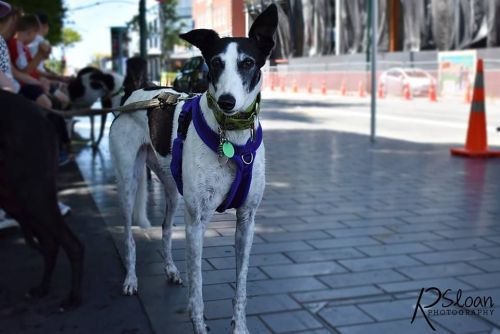
Izzy greyhound by R Sloan Photography

Love is Blind – Health is Real

I’ve been practising for ten years now and, during this time, I’ve seen a fair number of the brachycephalic breeds including Pugs, French Bulldogs and English Bulldogs.  These breeds can have a lot of health problems.

In 2016, the Australian Veterinary Association and the RSPCA Australia joined forces to produce the Love is Blind campaign.  Watch this short 3 minute video:

The message is fairly clear – consumer preference is driving the breeding of these dogs.  So increase the understanding of the health implications consequences of that cute, squishy face, and change the breeding standards, too.

In the show ring, it’s suggested that you give the blue ribbon to the healthiest dog.  Not a bad idea.

Kathleen Crisley, Fear-Free certified professional and specialist in dog massage, rehabilitation and nutrition/food therapy, The Balanced Dog, Christchurch, New Zealand

Good dog? Bad dog? Your dog’s personality can change

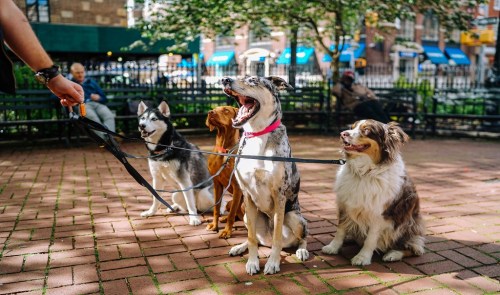
MSU dogs in park

When dog-parents spend extra time scratching their dogs’ bellies, take their dogs out for long walks and games of fetch, or even when they feel constant frustration over their dogs’ naughty chewing habits, they are gradually shaping their pets’ personalities. Dogs, like people, have moods and personality traits that shape how they react in certain situations. New findings from Michigan State University went where few researchers have gone before to reveal that, also like humans, dogs’ personalities likely change over time.

“When humans go through big changes in life, their personality traits can change. We found that this also happens with dogs – and to a surprisingly large degree,” said William Chopik, professor of psychology and lead author. “We expected the dogs’ personalities to be fairly stable because they don’t have wild lifestyle changes humans do, but they actually change a lot. We uncovered similarities to their owners, the optimal time for training and even a time in their lives that they can get more aggressive toward other animals.”

Additionally, Chopik found that dogs’ personalities can predict many important life outcomes. For example, canines’ personalities will influence how close they feel to their owners, biting behavior and even chronic illness.

The research, published in Journal of Research in Personality, is one of the first – and is the largest – studies of its kind to examine changes in dogs’ personalities. Chopik surveyed owners of more than 1,600 dogs, including 50 different breeds. Dogs ranged from just a few weeks old to 15 years, and were split closely between male and female. The extensive survey had owners evaluate their dog’s personalities and answered questions about the dog’s behavioral history. The owners also answered a survey about their own personalities.

“We found correlations in three main areas: age and personality, in human-to-dog personality similarities and in the influence a dog’s personality has on the quality of its relationship with its owner,” Chopik said. “Older dogs are much harder to train; we found that the ‘sweet spot’ for teaching a dog obedience is around the age of six, when it outgrows its excitable puppy stage but before its too set in its ways.”

One trait that rarely changes in age with dogs, Chopik said, was fear and anxiety.

Honing in on the saying, “dogs resemble their owners,” Chopik’s research showed dogs and owners share specific personality traits. Extroverted humans rated their dogs as more excitable and active, while owners high in negative emotions rated their dogs as more fearful, active and less responsive to training. Owners who rated themselves as agreeable rated their dogs as less fearful and less aggressive to people and animals.

The owners who felt happiest about their relationships with their dogs reported active and excitable dogs, as well as dogs who were most responsive to training. Aggression and anxiety didn’t matter as much in having a happy relationship, Chopik said.

“There are a lot of things we can do with dogs – like obedience classes and training – that we can’t do with people,” he said. “Exposure to obedience classes was associated with more positive personality traits across the dog’s lifespan. This gives us exciting opportunities to examine why personality changes in all sorts of animals.”

Chopik’s findings prove how much power humans have over influencing a dog’s personality. He explained that many of the reasons a dog’s personality changes are a result of the “nature versus nurture” theory associated with humans’ personalities.

Next, Chopik will examine how the environment owners provide their dogs might change the dogs’ behavior.

“Say you adopt a dog from a shelter. Some traits are likely tied to biology and resistant to change, but you then put it in a new environment where it’s loved, walked and entertained often. The dog then might become a little more relaxed and sociable,” Chopik said. “Now that we know dogs’ personalities can change, next we want to make strong connection to understand why dogs act – and change – the way they do.”

Link to the journal article here.

Source:  Michigan State University

Military dogs on stamps

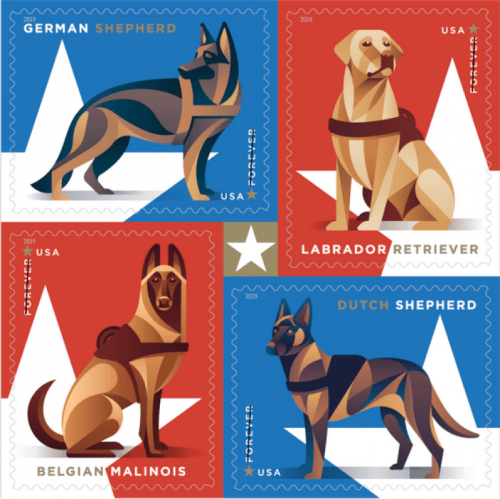
The United States Postal Service has announced a new release of stamps for 2019 dedicated to military dogs.

The Forever stamp set includes five, four-stamp blocks (20 stamps in total). Each block has a German Shepherd stamp, a Labrador Retriever stamp, a Belgian Malinois stamp and a Dutch Shepherd stamp.

The release date for the stamps isn’t known yet; but they are going to be hot property for dogs lovers and stamp collectors alike!


Military Dog stamp set

Kathleen Crisley, Fear-Free certified professional and specialist in dog massage, rehabilitation and nutrition/food therapy, The Balanced DogChristchurch, New Zealand

Quote

Helping the Hounds of Macau — Whippet Wisdom – a Highland Journey

We want to share a story with you today about greyhounds that have been racing far away, in the Canidrome at Macau. Greyhound breeders from Australia sent their slower dogs here without much regard for their welfare. The ground on the track was hard, the facilities for the greyhounds were poor. Many were […]

via Helping the Hounds of Macau — Whippet Wisdom – a Highland Journey

Izzy, the poster dog of The Balanced Dog, is a greyhound.  We had to share this post because there are many greyhounds needing homes.

Kathleen Crisley, Fear-Free certified professional and specialist in dog massage, rehabilitation and nutrition/food therapy, The Balanced Dog, Christchurch, New Zealand

Heavy (or automatic) petting?

We live in an era of automation.  There’s a machine for just about everything.

Would you want a machine to take over the ‘job’ of petting your dog?  Woodworker Matt Thompson of Michigan thinks so.

Here’s his prototype design…

Nice idea?

I’m not sure if all the dogs would approve.  My greyhound, Izzy, likes to be petted while laying  in her (or my) bed.

Kathleen Crisley, Fear-Free certified professional and specialist in dog massage, rehabilitation and nutrition/food therapy, The Balanced Dog, Christchurch, New Zealand

Feeding eggs to dogs

I feed eggs to Izzy, my greyhound.

If you read the internet for advice on dog nutrition, you’ll probably find references about not feeding raw eggs because this could lead to biotin deficiency.  Egg whites contain avidin, an enzyme that interferes with biotin.  

Biotin is one of the complex B vitamins group and it’s linked to a number of key health benefits, including:

  • Healthy skin and coat
  • Proper muscle formation
  • Healthy digestion
  • Normal growth
  • Improved energy
  • Thyroid and adrenal gland function

What these references rarely say, however, is that the egg yolk is very high in biotin.  So if you are feeding the entire egg – not just the egg white – there really shouldn’t be a major risk.

Now, I’m not suggesting that you feed your dog eggs as a steady diet – let’s remember that old adage about “everything in moderation.”  Rather consider eggs to be a pretty nifty package of nutrition.  They are a great source of bio-available protein and, for most dogs, they are highly digestible.

An egg or 3 a week (small dogs require less) for dogs that are at their ideal weight, is a nutritious and easy source of fresh food and nutrition.

I like to feed Izzy her eggs cooked – with a little dried tripe as an omelette:

Kathleen Crisley, Fear-Free certified professional and specialist in dog massage, rehabilitation and nutrition/food therapy, The Balanced Dog, Christchurch, New Zealand