“The problem with loving dogs is that you outlive all but the last one.”
– Edward Grinnan, author of Always By My Side: Life Lessons From Millie and All the Dogs I’ve Loved
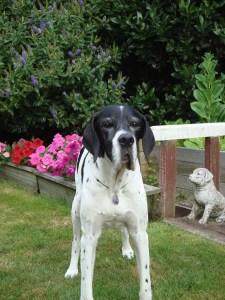
Daisy

“The problem with loving dogs is that you outlive all but the last one.”
– Edward Grinnan, author of Always By My Side: Life Lessons From Millie and All the Dogs I’ve Loved
Daisy
Shakespeare famously wrote in Romeo and Juliet, “A rose by any other name would smell as sweet.” When you choose to bring a dog into your life, sometimes they already have a name and some new owners choose to change that name, too.
In my massage practice, I have found that the dog’s name often matches his/her character. Havoc by name, Havoc by nature – for example!
Website Rover.com has published its survey on the top dog names for 2017. There are clear trends showing the influence of media and movies: Star Wars, Wonder Woman, and Game of Thrones inspired names are featured.
So too are the names of influential and powerful women (yeah!)

Kathleen Crisley, specialist in dog massage, rehabilitation and nutrition/food therapy, The Balanced Dog, Christchurch, New Zealand
In today’s workplace ‘leadership’ is the prized personal quality and politicians are expected to show leadership when creating and debating policies and conducting themselves (hmmmm – some do better than others in this regard).
It is rather interesting to me that in a week of coverage about the US Government shutdown and stalemate over a budget, and in NZ where all the news is about a Prime Minister who has announced she’s pregnant, will multi-task, and be back at work in 6 weeks following the birth… that the USA’s Government is winning in one respect over New Zealand’s.
Congress and the Senate are pet-friendly. New Zealand’s Parliament doesn’t seem to know what that means…
In August 2017, a survey sponsored by by Nestlé Purina PetCare and conducted on behalf of the Human Animal Bond Research Institute was conducted by personal interviews in the House and Senate offices. The purpose was to call attention the benefits of a pet-friendly workplace.
The 192 House and Senate offices who responded say they welcome pets in the office, either during recess, while Congress is in session, or both.
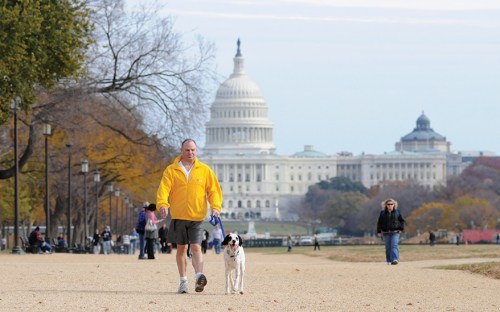
The Assistant Senate Historian, Dan Holt, said senators used to bring their hunting dogs into the Old Senate Chamber — to sit right by their feet during floor debates.
Circa 1800, congressional rules were enacted to prohibit pets on the Chamber floors. Congressional rules, however, permit pets nearly everywhere else on Capitol Hill, and staffers are almost universally aware that pets are permitted throughout congressional buildings, with few limitations.
The rich tradition of pets on Capitol Hill continues today:
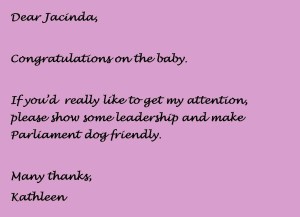
Source: DC Stands for Dogs and Cats: New Survey Confirms Capitol Hill is a Very Pet-Friendly Workplace
Kathleen Crisley, specialist in dog massage, rehabilitation and nutrition/food therapy, The Balanced Dog, Christchurch, New Zealand
Posted in dog-friendly accommodation, dog-friendly shops, dog-friendly workplaces, Dogs
Tagged Common Ground, Congress, Parliament, Senate
I’ve owned Scents and Sensibility, the 8th book in the Chet and Bernie series, for at least a year (it was published in 2015). When I interviewed Peter Abrahams (pen name Spencer Quinn) in September 2016 for my column in NZ Dog World, he had put his plans for another Chet and Bernie ‘on hold’ whilst writing The Right Side. (The Right Side was published last year, 2017, and is on my reading list). 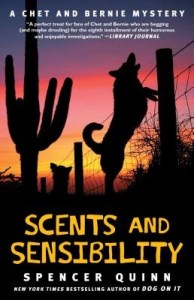
Given that I’m a huge Chet and Bernie fan, I held off reading this book since I knew the ninth book would be a way off. Scents and Sensibility was another good read with a solid pace to the story of Chet and Bernie, my favorite private detectives.
Chet and Bernie return home one day to find that Mr Parsons, their elderly neighbor, has a new saguaro cactus planted in his yard. Since the cactus is a protected species, Mr Parsons is soon under investigation and he shows a decided reluctance to reveal the source of the plant, which he says was a gift.
Bernie steps in to help and, soon, there is a murder to investigate.

A saguaro cactus (Source: Wikipedia)
We also meet a new puppy named Shooter who bears a striking resemblance to Chet. Has Chet fathered puppies???
The book finishes with Bernie, our hero, in hospital but on the road to recovery – the scene is set for Book #9. Presumably, in the next book we will also find out if Bernie’s relationship with Suzie is over or not. Suzie has only a brief mention in this book; she’s taken a job in London and wants Bernie to join her…
Kathleen Crisley, specialist in dog massage, rehabilitation and nutrition/food therapy, The Balanced Dog, Christchurch, New Zealand
2018 is the Year of the Dog in the Chinese calendar.
The dog is the symbol of loyalty and honesty (which isn’t terribly surprising). People born in the Year of the Dog will possess the best qualities observed in our dogs: things like honesty, loyalty and intelligence.
The Temple of Eighteen Deities in Taiwan is often cited as an example of the dog’s loyalty in the Chinese tradition.

Statue of dog by the Eighteen Kings Temple. Photo by David Chen of the Taipei Times
As the story goes, 17 fishermen and their dog were crossing the Taiwan Strait when their boat capsized. All of the fishermen drowned but the dog survived. When the bodies washed ashore, the locals prepared a collective grave and ghost temple on a cliff overlooking the shore. The dog was so loyal to its masters that it jumped into the grave with the bodies and refused to leave. The dog was buried alive and called the 18th of the Eighteen Kings.
Chinese New Year begins on 16 February 2018.
Posted in Dogs
When Tracey Stewart’s book was launched in 2015, it was to great fanfare and lots of reviews. It has taken me a while to get this book to the top of my reading pile.
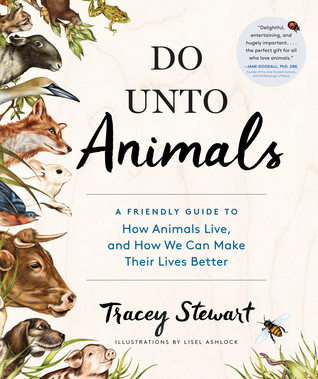 The theme of the book is ‘how to give back’ to animals of all types. The first 70 or so pages are about domestic dogs and cats and the remaining 110+ pages are about other creatures including wildlife and farm animals.
To be honest, I think Stewart could have cut the chapters about dogs and cats and focused solely on the ‘other’ creatures. The advice given for dogs and cats is pretty basic and not particularly well thought out because the information is so brief. For example, she has included two pages about dog massage with 6 ‘moves’ and the usual warnings about ‘not to be substituted for veterinary care.’
The book comes into its own, however, when the other animals become the focus of the text. For American audiences, the chapters about backyard wildlife and the roles of each of the ‘pests’ is enlightening. In the farm animals section, she covers pigs, cows, goats, sheep, horses, chickens, turkeys, ducks and geese. And for each type of animal, she includes a hard hitting ‘what makes a pig (cow, goat, sheep, horse, chicken, turkey, duck or goose) unhappy.’
These pages constitute a simple ‘list of shame’ when it comes to factory farming and the realities of individual consumer choices for meat, dairy, and even feather down garments.
The best part of the book, in my opinion, are the illustrations by Lisel Ashlock. In full color, these adorn every page of the book and are a reason why this book should be owned and shared in print version (not electronic).
My overall grade: A-
Tracey Stewart has a veterinary technician qualification although her first career was in design. She is the wife of comedian and talk show host Jon Stewart. Both are committed to animal welfare, with a large animal family of their own on their New Jersey farm property; part of the proceeds of each book sold go to support Farm Sanctuary.
Kathleen Crisley, specialist in dog massage, rehabilitation and nutrition/food therapy, The Balanced Dog, Christchurch, New Zealand
Posted in animal welfare, dog books, dog care, Dogs
Tagged guides, Lisel Ashlock, Tracey Stewart
Izzy has a boyfriend named Bergie who lives across town from us. Bergie is approximately one year younger than Izzy, but from the day they first met on an organized Greyhounds as Pets walk, it was clear that these two really enjoyed each other’s company.
We make an effort for them to have dates on a regular basis; one of their favourite places is the red zone – this is an area in eastern Christchurch where homes were demolished after the 2011 earthquake; the residents were bought out by the government so they could relocate elsewhere because the land is unsuitable for building. There are a few locations in the red zone that are fully fenced, allowing greyhounds the opportunities to do zoomies in a safe environment.

Bergie


This area of the red zone is very sandy (which is why it isn’t suitable for re-building). It is, however, very good for digging holes. Bergie likes to dig holes for Izzy and she likes to watch…
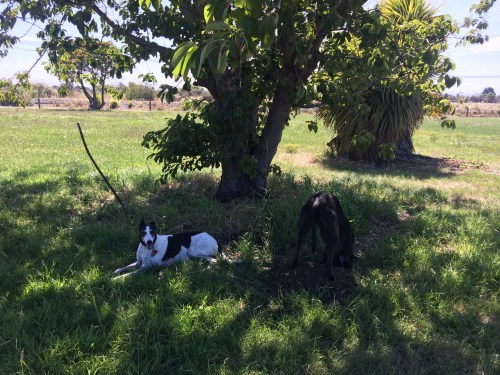
Bergie digs a hole for Izzy
And greyhounds generally like to do zoomies (short bursts of running). Here is Izzy chasing Bergie:
Izzy is now asleep in her bed after having a great day with Bergie. (I think their next date will be at the beach – Izzy loves the beach!)
Kathleen Crisley, specialist in dog massage, rehabilitation and nutrition/food therapy, The Balanced Dog, Christchurch, New Zealand
When you make a commitment to a dog, you make it for life – or at least you should (although from many of the listings I see in Facebook groups and on Trade Me, it is clear that others don’t believe in the lifetime commitment). With that lifetime commitment comes a fairly significant financial commitment.
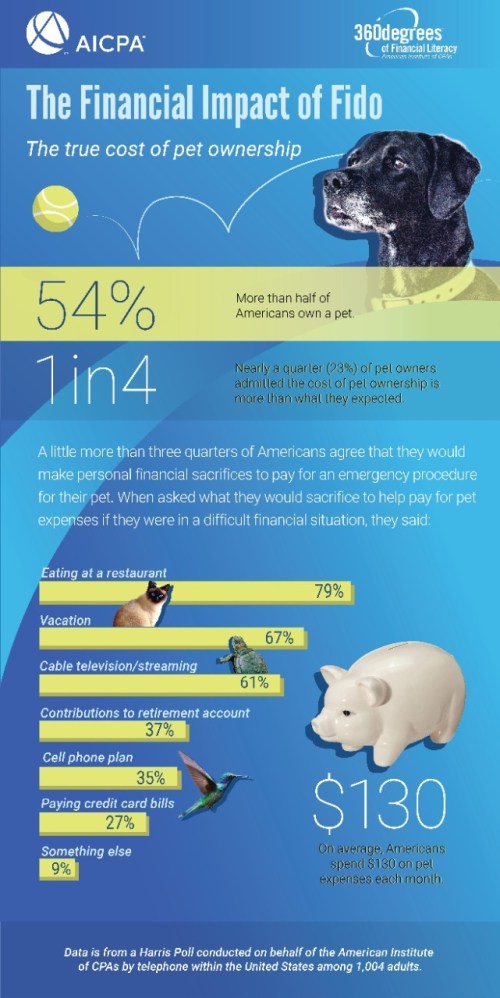
That’s why I applaud the recent survey undertaken by the American Institute of Certified Professional Accountants (AICPA) concerning the cost of pet ownership. Although this survey was done in the USA, I would expect the findings to be broadly transferable to New Zealand – certainly the recommendations are!
The overall findings were:
And the survey even asked how these pet owners would make financial sacrifices, if they had to, to fund emergency pet care expenses which is illustrated in the graphic below:
To help Americans fully understand the financial commitment that comes with bringing a pet into their home, the AICPA’s National CPA Financial Literacy Commission has the following tips:
Kathleen Crisley, specialist in dog massage, rehabilitation and nutrition/food therapy, The Balanced Dog, Christchurch, New Zealand
For anyone interested in animal welfare, the story of the dogs rescued from Michael Vick’s Bad Newz Kennels is both sobering and encouraging. Their rescue and the legal cases that followed were thoroughly documented in the New York Times bestseller, The Lost Dogs, by Jim Gorant.
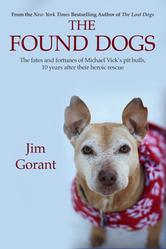
In 2017, to mark the 10th anniversary of the bust which rescued the dogs, Gorant came back with this slim volume to update us on the stories of the dogs and people involved in the case.
Told simply and straightforwardly, the book opens on the property at 1915 Moonlight Road which is now the Good News Rehab Center for Chained and Penned Dogs. In 2016, a ceremony at the property reunited many of the people involved in the case and the adopters with the dogs who had been saved. 51 dogwood trees were planted along with 51 plaques depicting the names of each of the dogs found at the property. In some cases, the adopters were planting the trees for their dogs in memory, because by then many had already passed away.
Part II of the book is the longest part of the book; it’s an alphabetical list of each of the dogs by name and their story since being rescued. Some are heartbreakingly short. Other parts of the book update us on the key people involved in the bust and the legal case, and a discussion about what has changed in the last 10 years.
Much like the documentary film The Champions, the book couldn’t have been published too soon. Many of the Vick dogs have passed, including cover girl Little Red whose story opened and closed The Champions.
Definitely worth reading and, if you are like me, adding to your ‘real’ dog book collection. (I’m talking physical books, not Kindle files!)
And the last words go to Jim Gorant: “As the dogs showed us – and continue to prove – accepting the state of things as they actually are and forging on in the face of those realities is the only way to make progress and create a new, better reality.”
Kathleen Crisley, specialist in dog massage, rehabilitation and nutrition/food therapy, The Balanced Dog, Christchurch, New Zealand
Posted in animal welfare, dog books, Dogs
Tagged Best Friends Animal Society, Jim Gorant, Little Red, Michael Vick, The Found Dogs, Vicktory dogs
Children get more satisfaction from relationships with their pets than with their brothers or sisters, according to research from the University of Cambridge. Children also appear to get on even better with their animal companions than with siblings.

The fact that pets cannot understand or talk back may even be a benefit as it means they are completely non-judgmental
Matt Cassells
The research adds to increasing evidence that household pets may have a major influence on child development, and could have a positive impact on children’s social skills and emotional well-being.
Pets are almost as common as siblings in western households, although there are relatively few studies on the importance of child-pet relationships.
‘‘Anyone who has loved a childhood pet knows that we turn to them for companionship and disclosure, just like relationships between people,” says Matt Cassells, a Gates Cambridge Scholar at the Department of Psychiatry, who led the study. “We wanted to know how strong these relationships are with pets relative to other close family ties. Ultimately this may enable us to understand how animals contribute to healthy child development”
This study, published in the Journal of Applied Developmental Psychology, was conducted in collaboration with the WALTHAM Centre for Pet Nutrition, part of Mars Petcare and co-funded by the Economic and Social Research Council as part of a larger study, led by Prof Claire Hughes at the University of Cambridge Centre for Family Research.
Researchers surveyed 12 year old children from 77 families with one or more pets of any type and more than one child at home. Children reported strong relationships with their pets relative to their siblings, with lower levels of conflict and greater satisfaction in owners of dogs than other kinds of pets.
‘‘Even though pets may not fully understand or respond verbally, the level of disclosure to pets was no less than to siblings,” says Cassels. “The fact that pets cannot understand or talk back may even be a benefit as it means they are completely non-judgmental.
“While previous research has often found that boys report stronger relationships with their pets than girls do, we actually found the opposite. While boys and girls were equally satisfied with their pets, girls reported more disclosure, companionship, and conflict with their pet than did boys, perhaps indicating that girls may interact with their pets in more nuanced ways.’’
“Evidence continues to grow showing that pets have positive benefits on human health and community cohesion,” says Dr Nancy Gee, Human-Animal Interaction Research Manager at WALTHAM and a co-author of the study. “The social support that adolescents receive from pets may well support psychological well-being later in life but there is still more to learn about the long term impact of pets on children’s development.”
Reference
Cassells, M et al. One of the family? Measuring early adolescents’ relationships with pets and siblings. Journal of Applied Developmental Psychology; 24 Jan 2017; DOI: 10.1016/j.appdev.2017.01.003
Posted in dogs and families, research
Tagged child development, Matt Cassells, siblings, University of Cambridge





 DoggyMom.com