Author Archives: DoggyMom.com

Road trip – good manners essential!

Yesterday, I took Izzy for a road trip – a day out somewhere new for the both of us.  The mechanic said the car battery would benefit from a good solid trip on the open road – since all of my work is based in the city limits and so lots of short-term driving.

We stopped at a cafe for lunch which was ideally suited for dog owners – you could walk around back to access their large patio area without having to walk through the cafe.

I travel with a mat for Izzy to rest on and a water bottle and bowl.

Everyone complimented me on how laid back and easy Izzy was.  If you are going to take your dog out in public, they need good manners!

Izzy waiting patiently

Izzy displaying good manners, waiting on her mat at the cafe

The cafe was happy to give me a takeaway container, which I decided to fill with water on one side and use the lid side for her share of the food.

Izzy eating

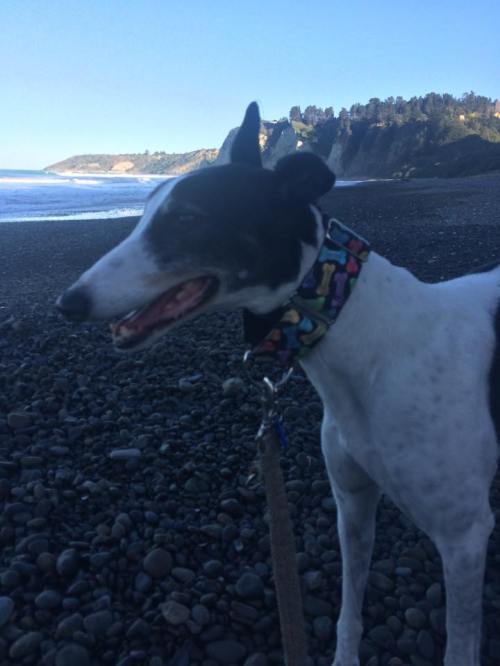
And after we had lunch, we went for a walk at Gore Bay.  This is a beach we have never been to before – and even in a cold winter chill, Izzy enjoyed the sights and smells.

Izzy at Gore Bay

I’m glad I got out of town yesterday. Today is cold and with heavy rain – so not a good day for a road trip.

Kathleen Crisley, specialist in dog massage, rehabilitation and nutrition/food therapy, The Balanced Dog, Christchurch, New Zealand

When a rescue champion retires…

I have just finished writing a column for NZ Dog World magazine about the issue of demographic change in the veterinary medicine sector.

And then in my Linkedin newsfeed pops up this article about a rescue group in Utah that is winding up.  It’s founder and stalwart is retiring after 13 years…

Linda-Elwell-retiring-970x546

Santa Clara City Councilwoman Mary Jo Hafen presents Linda Elwell with a bouquet of flowers in appreciation of her work with Friends of Ivins Animal Shelter, Santa Clara, Utah, May 31, 2017 | Photo by Julie Applegate, St. George News

…and the rescue group is ceasing its operations as a result.

Something that ‘experts’ warned for quite a few years is upon us – demographic change.  In the next 10 years, many Baby Boomers will be retiring.  They’ve done their bit and it’s time to slow down and enjoy life.

The problem is – the Gen X and Millennials that are living their lives have different pressures and priorities.  Gen X are dealing with aging parents, educating their children, and retaining full-time employment to pay for their own retirement.  Millennials have different priorities too.  They may have aspirations to buy a home in a rising housing market; they are integrally connected to technologies of all types, and they don’t ‘volunteer’ the way previous generations did.

Rescue groups and those involved in re-homing need to take heed.

Succession planning is important if your rescue group is to survive.  This means an honest look at business processes and how they relate to the current generations with disposal income and the ability to support your efforts.

Digital presence is a must; as is content curation – the provision of new and regular content.

It’s a real shame to see groups winding up; but there will probably be more who don’t survive the rapid change in their memberships.

Need help?  I’m an experienced not-for-profit and public sector manager as well as a canine massage therapist and entrepreneur.  I’d be happy to work with your group to facilitate the development of action plans for your future.

Kathleen Crisley, specialist in dog massage, rehabilitation and nutrition/food therapy, The Balanced Dog, Christchurch, New Zealand

Doggy quote of the month for June

“Such short little lives our pets have to spend with us, and they spend most of it waiting for us to come home each day.”

– John Grogan, author of Marley & Me

IMG_0906

DNA influences face shape

A study of dog DNA has revealed a genetic mutation linked to flat face shapes such as those seen in pugs and bulldogs.

The research reveals new insights into the genes that underpin skull formation in people and animals.  Scientists say their findings also shed light on the causes of birth defects that affect babies’ head development in the womb.

Researchers at the University of Edinburgh’s Roslin Institute analysed DNA samples from 374 pet dogs of various pedigree and mixed breeds. The dogs were being treated at the Royal (Dick) School of Veterinary Studies.

All of the animals underwent body scans as part of their care, producing detailed 3-dimensional images of the dogs’ heads.  These high-resolution images — called CT scans — enabled the researchers to take precise measurements of the shape of the dog’s skull.

By comparing the dogs’ genetic information with measurements of their skulls, the team were able to pinpoint DNA variations that are associated with different head shapes.

One variation — found to disrupt the activity of a gene called SMOC2 — was strongly linked to the length of the dog’s face. Animals with the mutation had significantly flatter faces, a condition called brachycephaly.

Babies are sometimes born with brachycephaly too, though little is known about its causes. Scientists say screening children for changes in the SMOC2 gene could help to diagnose the condition.

Lead researcher Dr Jeffrey Schoenebeck, of the University’s Roslin Institute, said: “Our results shed light on the molecular nature of this type of skull form that is so common and popular among dogs.”

Source:  University of Edinburgh news

Reflections on palliative care

My latest palliative care dog passed away about 2 weeks ago.  While it has been a busy couple of weeks for me, I do think about her.  I sometimes wonder if owners really believe me when I say that I think about their dogs not only when they are active clients but also after they have passed.

This old girl was 17 years old and came with a long file of veterinary records for me to review.   From the outset, I knew I wouldn’t be working with her for very long.   Her owner was very open when booking an appointment with me, “I’m just not ready to say goodbye.”

At the first consult, we talked about expectations, her vet’s advice, and quality of life.  I provided the owner with a quality of life checklist that I’ve developed specifically for older and palliative care dogs.

This old girl had fighting spirit, but she was also frail.  So the focus was on acupoints for immune system strengthening and endorphin release.  The first session went well and the feedback was great – “she’s been her old self….”

Having personal experience with this, I know that sometimes these dogs at the end of life have a final burst of life energy.  It rarely lasts.

We ended up having only one additional session.  Although we re-booked for a third session, it wasn’t to be.

I am grateful to all the people who entrust their dog to me, but especially honored by those who are facing critical and emotional decisions and are not afraid to share their distress.

Kathleen Crisley, specialist in dog massage, rehabilitation and nutrition/food therapy, The Balanced Dog, Christchurch, New Zealand

Improving the lives of kids with disabilities – one family dog at a time

The family dog could serve as a partner and ally in efforts to help children with disabilities incorporate more physical activity into their daily lives, a new study from Oregon State University indicates.

In a case study of one 10-year-old boy with cerebral palsy and his family’s dog, researchers found the intervention program led to a wide range of improvements for the child, including physical activity as well as motor skills, quality of life and human-animal interactions.

“These initial findings indicate that we can improve the quality of life for children with disabilities, and we can get them to be more active,” said Megan MacDonald, an assistant professor in OSU’s College of Public Health and Human Sciences and corresponding author on the study. “And in this case, both are happening simultaneously, which is fantastic.”

CP-kid-and-dog-2-e1402346844838

A boy with cerebral palsy and a therapy dog (not the dog in this study) Photo courtesy of: http://www.michigancerebralpalsyattorneys.com

The researchers detailed the child’s experience in the adapted physical activity intervention program in a case study just published in the journal Animals.

Children with physical disabilities such as cerebral palsy spend significantly less time participating in physical activity compared to their peers and are considered a health disparity group, meaning they generally face more health concerns than their peers.

Researchers designed an adapted physical activity, animal-assisted intervention where the family dog would serve as a partner with the child in physical activities designed to help improve overall physical activity, motor skills and quality of life. The family dog is a good choice for this type of intervention because the animal is already known to the child and there is an existing relationship – and both the dog and the child will benefit from the activities, MacDonald said.

Researchers took initial assessments of the child’s daily physical activity, motor skills and quality of life before starting the eight-week intervention. A veterinarian examined the dog’s fitness for participation and the human-animal interaction between the dog, a year-old Pomeranian, and the child was also assessed.

Then the pair began the eight-week intervention, which included a supervised physical activity program once a week for 60 minutes and participation in activities such as brushing the dog with each hand; playing fetch and alternating hands; balancing on a wobble board; and marching on a balancing disc.

“The dog would also balance on the wobble board, so it became a challenge for the child – if the dog can do it, I can, too,” MacDonald said. “It was so cool to see the relationship between the child and the dog evolve over time. They develop a partnership and the activities become more fun and challenging for the child. It becomes, in part, about the dog and the responsibility of taking care of it.”

The dog and the child also had “homework,” which included brushing the dog, playing fetch and going on daily walks. The child wore an accelerometer to measure physical activity levels at home.

At the conclusion of the intervention, researchers re-assessed and found that the child’s quality of life had increased significantly in several areas, including emotional, social and physical health, as assessed by the child as well as the parent. In addition, the child’s sedentary behavior decreased and time spent on moderate to vigorous activity increased dramatically.

“The findings so far are very encouraging,” MacDonald said. “There’s a chance down the road we could be encouraging families to adopt a dog for the public health benefits. How cool would that be?” 

The researchers also found that the relationship between the dog and the child improved over the course of the therapy as they worked together on various tasks. The dog’s prosocial, or positive, behavior toward the child is a sign of wellbeing for both members of the team, said Udell, who is director of the Human-Animal Interaction Lab at OSU.

“A closer child-dog bond increases the likelihood of lasting emotional benefits and may also facilitate long-term joint activity at home, such as taking walks, simply because it is enjoyable for all involved,” she said.

This study is one of the first to evaluate how a dog’s behavior and wellbeing are affected by their participation in animal-assisted therapy, Udell noted. From an animal welfare standpoint, it is promising that the dog’s behavior and performance on cognitive and physical tasks improved alongside the child’s.

Though the case study features only one child, the research team recruited several families with children with disabilities and their dogs to participate in the larger project, which was designed in part to test the design and methodology of the experiment and determine if it could be implemented on a larger scale.

Based on the initial results, researchers hope to pursue additional studies involving children with disabilities and their family dogs, if funding can be secured. They would like to examine other benefits such a pairing might have, including the sense of responsibility the child appears to gain during the course of the intervention.

“We’re also learning a lot from our child participants,” MacDonald said. “They’re teaching us stuff about friendship with the animal and the responsibility of taking care of a pet, which allows us to ask more research questions about the influence of a pet on the child and their family.” 

Source:  Oregon State University media statement

The behavior connection – some lessons

Just a few thoughts in this post about the need to investigate behavior changes in our dogs.

Since our dogs can’t communicate with us in our language, behavior changes can be an indicator of an underlying physical condition.

A few instances from my practice just within the last couple of weeks…

a)  I have been working with a client in my nutrition practice to isolate the food ingredients that her dog will tolerate.  He’s been a very itchy boy.  Working in combination with a vet, we’ve isolated both the foods he can’t tolerate and also environmental factors that need to be managed.  He was still gnawing at his feet, however.  So this very good owner called in a dog trainer who pointed out that her dog was anxious – needing more boundaries at home.  His condition continues to improve as his owner implements a training program and I am now working on recipes for the homemade portion of his diet.

Lessons:  A good owner keeps observing and bringing the right skills and people into their dog’s care team.  Problems are often multi-layered and they need different skill sets.  Rarely does one professional tick all the boxes.

b)  I was contacted by a dog owner who has had their dog on pain medication for a while and wanted to know what I could do for him since he didn’t respond to acupuncture.  They returned from an overseas vacation and were told that there dog was happy and playful at the boarding kennels.  But, to them he was withdrawn and unhappy.  My recommendation was to get back to the vet for x-rays to help with a diagnosis before taking a ‘shot in the dark’ about what to try.  The x-rays have proven a number of structural conditions with his spine and tail.  We now have a better chance of getting together a management plan that will work.

Lessons:  It’s understandable that owners are reluctant to put their dog under anesthesia in order to have tests done.  But if a condition isn’t improving, pain medication alone isn’t the answer without knowing the rest of the story.  Your dog deserves a solid diagnosis and you need it to have the best chance of success in managing their health.

c)  Another itchy dog.  This time, much more than usual.  He’s had a history of food reaction.  The owners introduced a new treat that marketed itself as having high levels of antioxidants as a way of augmenting his homemade diet.  Who wouldn’t give this a try?  But the change in behavior – itching not only his ears and feet but also constantly licking at his private parts – was marked.

I read the label on these new treats, which use wheat.  I am 99% sure that his previous intolerance to commercial foods was caused by the grain content.  My recommendation – ditch the new treats and move onto other solutions.  We’re doing this now.

Lessons:  Just because the label says the product benefits health doesn’t mean it will for every dog.  Be willing to withdraw products in favor of new ones.

Kathleen Crisley, specialist in dog massage, rehabilitation and nutrition/food therapy, The Balanced Dog, Christchurch, New Zealand

Fundraising

I haven’t been posting as frequently as I would like.  Forgive me.

Over the last two months, I have been pulling together the prizes and other arrangements for my third annual fundraising event.  While I always walk away feeling good that I’ve invested my time in giving back to the community, these events take time and effort.

I haven’t had much time to do my usual research and writing – but we are in countdown mode with less than 2 days to go.  And then it will be over for another year.

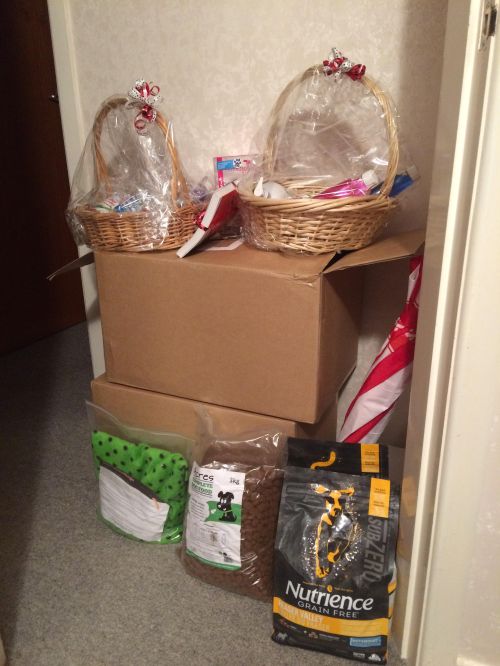
Tonight, I am wrapping prizes.  This photo shows my progress – but thankfully there is still a long way to go thanks to many generous donors/sponsors.

Prizes

Back soon with doggy news.

Kathleen Crisley, specialist in dog massage, rehabilitation and nutrition/food therapy, The Balanced Dog, Christchurch, New Zealand

Pet dogs help kids feel less stressed

Pet dogs provide valuable social support for kids when they’re stressed, according to a study by researchers from the University of Florida, who were among the first to document stress-buffering effects of pets for children.

boy-and-dog

Darlene Kertes and colleagues tested the commonly held belief that pet dogs provide social support for kids using a randomized controlled study – the gold standard in research.

“Many people think pet dogs are great for kids but scientists aren’t sure if that’s true or how it happens,” Kertes said. Kertes reasoned that one way this might occur is by helping children cope with stress. “How we learn to deal with stress as children has lifelong consequences for how we cope with stress as adults.” 

For their study, recently published in the journal Social Development, the researchers recruited approximately 100 pet-owning families, who came to their university laboratory with their dogs. To tap children’s stress, the children completed a public speaking task and mental arithmetic task, which are known to evoke feelings of stress and raise the stress hormone cortisol, and simulates real-life stress in children’s lives. The children were randomly assigned to experience the stressor with their dog present for social support, with their parent present, or with no social support.

“Our research shows that having a pet dog present when a child is undergoing a stressful experience lowers how much children feel stressed out,” Kertes said . “Children who had their pet dog with them reported feeling less stressed compared to having a parent for social support or having no social support.”

Samples of saliva was also collected before and after the stressor to check children’s cortisol levels, a biological marker of the body’s stress response. Results showed that for kids who underwent the stressful experience with their pet dogs, children’s cortisol level varied depending on the nature of the interaction of children and their pets.

“Children who actively solicited their dogs to come and be pet or stroked had lower cortisol levels compared to children who engaged their dogs less,” said Kertes, an assistant professor in the psychology department of UF’s College of Liberal Arts and Sciences. “When dogs hovered around or approached children on their own, however, children’s cortisol tended to be higher.”

The children in the study were between 7 to 12 years old.

“Middle childhood is a time when children’s social support figures are expanding beyond their parents, but their emotional and biological capacities to deal with stress are still maturing,” Kertes explained. “Because we know that learning to deal with stress in childhood has lifelong consequences for emotional health and well-being, we need to better understand what works to buffer those stress responses early in life.”

Source:  University of Florida News

Downward Dog

A new tv series is coming this week (in the USA).  I just saw the trailer.  It sounds really good – life told from the perspective of Martin the dog!

If you live in the USA and watch it, let me know what you think.

And maybe this will come to New Zealand’s screens later in the year?

Kathleen Crisley, specialist in dog massage, rehabilitation and nutrition/food therapy, The Balanced Dog, Christchurch, New Zealand