Author Archives: DoggyMom.com

Do dogs take orders from Donald Trump?

After yesterday’s election results, a lot more of us (including our dogs) will be taking orders from Donald Trump.

Good thing Jimmy Kimmel tested this on National Dog Day in last year….

I don’t intend to get too political in this blog.  But the people have spoken and in the interests of a peaceful transition of power, it is time to move on.

And if you are still worked up about yesterday’s election, I suggest a long walk with your dog.  Communing with nature and your dog is better than meditation.

Kathleen Crisley, specialist in dog massage, rehabilitation and nutrition/food therapy, The Balanced Dog, Christchurch, New Zealand

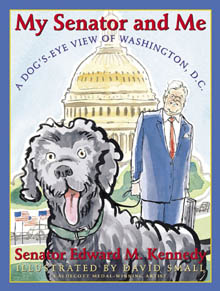
My Senator and Me

BOOKS TED KENNEDY

With the world’s eyes on the Presidential Election of 2016 today, I thought of this book – My Senator and Me,  A Dog’s Eye View of Washington.  Written by the late Senator Edward Kennedy of Massachusetts in 2006, this picture book features the Senator’s Portuguese Water Dog, Splash.

Splash was a regular companion to Senator Kennedy during the later years of his career in Washington, DC.

The book explains how a bill becomes a law, the roles of Congress and the Senate and includes profiles of the Senator and Splash.  The story follows the senator through a busy day including a visit by schoolchildren to The Capitol.

Senator Kennedy passed away in 2009; Splash followed him in 2010.  With US politics on everyone’s mind today – sitting down with your kids and explaining how the Government works during the four years after the election would be entirely appropriate.

Kathleen Crisley, specialist in dog massage, rehabilitation and nutrition/food therapy, The Balanced Dog, Christchurch, New Zealand

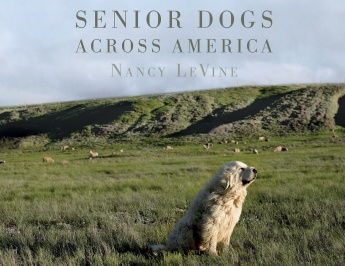
Senior Dogs Across America

As a canine massage therapist, I see my fair share of senior dogs. There is something both elegant and heartwarming to see a dog reach its senior years, knowing that they will not be with us for much longer.

Now, a special book of photography pays homage to the senior dog.

Senior Dogs Across America features the photography of Nancy LeVine.  LeVine travelled widely in the United States in her quest for the best senior dog photos; 86 are featured in this book.

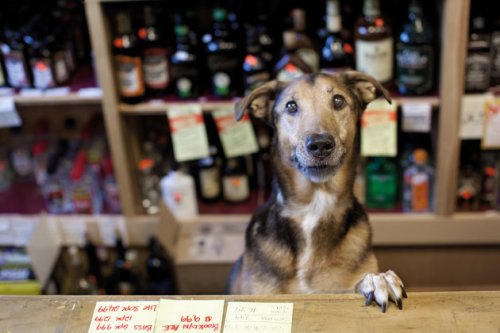
Below are a few:

Senior Dogs Across America

murphy-10-years-old-milford-ct

Murphy, 10 years old, from Milford, Connecticut (photo credit to Nancy LeVine)

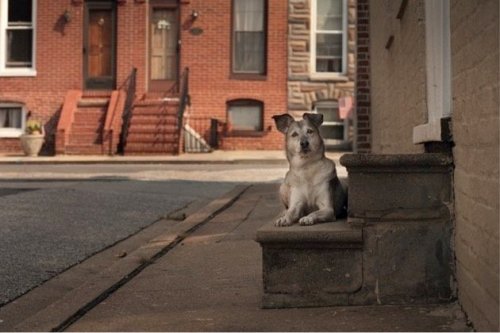
cecilia-12-years-old-baltimore

Cecilia, 12 years old, from Baltimore, Maryland (photo credit to Nancy LeVine)

I haven’t seen the book in its entirety yet – but it’s on my wish list.

Kathleen Crisley, specialist in dog massage, rehabilitation and nutrition/food therapy, The Balanced Dog, Christchurch, New Zealand


Mindfulness and your dog

Mindfulness is “a mental state achieved by focusing one’s awareness on the present moment, while calmly acknowledging and accepting one’s feelings, thoughts, and bodily sensations, used as a therapeutic technique.”

I’m reading more about mindfulness these days – thanks to people’s hectic lives and long working hours. Modern living seems to have more pressures than ever before.

And then I came across this item, from Dr John Moore – 7 Mindfulness Tips From Your Dog

Seems ultimately sensible:

  1. Live in the here and now
  2. Focus on self care
  3. Forgiveness
  4. Use caution
  5. Make the most of every moment
  6. Self-acceptance
  7. Awareness of others
Izzy greyhound and Ben greyhound after a play date

Izzy and Ben – living in the moment

Kathleen Crisley, specialist in dog massage, rehabilitation and nutrition/food therapy, The Balanced Dog, Christchurch, New Zealand

A girl and her service dog head to the Supreme Court

UPDATE: On 22 February 2017, the Supreme Court ruled 8-0 in favor of Ehlena Fry and her parents. They are not obligated to go through time-consuming administrative appeals with the local school board before suing for damages for the emotional distress she said she suffered by being denied the assistance of her dog, a goldendoodle named Wonder.

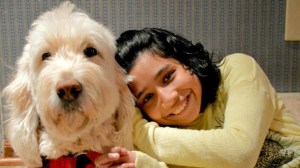
Ehlena Fry, a girl born with cerebral palsy, has had her Goldendoodle service dog named Wonder since 2009.  When it was time for her to go to school, the school refused to allow Wonder onto school grounds.

ehlena-and-wonder-2

The case has gone to the US Supreme Court – so that other parents won’t face the same hurdles.

Listen to and read the full story here.

Doggy quote of the month for November

“When an eighty-five pound mammal licks your tears away, then tries to sit on your lap, it’s hard to feel sad.”

– Kristan Higgins, author

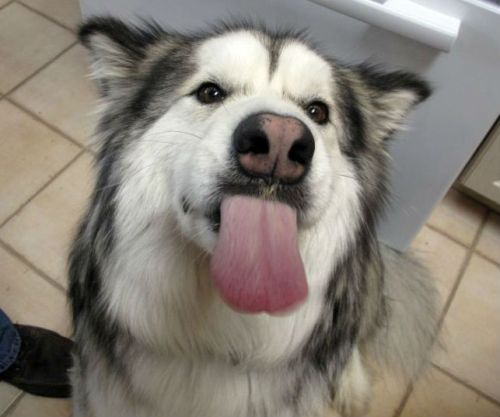
85-pound-dog


The wedding

Life is full of firsts.

Yesterday, it was my first truly dog-friendly wedding.  When clients (and now friends) asked me to bake the cake for the dogs attending their wedding- I said ‘yes’!  I already make dog cakes for special occasions like birthdays.  A wedding was taking it to a whole new level (no pun intended).

dog wedding cake

The dog wedding cake by Kathleen Crisley of The Balanced Dog, Christchurch

Since the couple’s Bernese Mountain Dogs were part of the wedding party, and the couple married on the birthday of the Bernese Mountain Dog who brought them together – I found a Bernese Mountain Dog figure for the topper on Amazon.com

Dog wedding cake cross section

One of the couple’s dogs is on an exclusionary diet – having tested to be intolerant to most meat ingredients. She’s on a rabbit-based diet and so the top layer was made only of rabbit meat and pumpkin.  The middle layer was salmon and cottage cheese in a rice flour base.  The base layer was lamb’s liver with egg in a rice flour base along with garlic.

The frosting was made of low fat cream cheese sweetened with local dandelion honey.

The heart decorations were dog treats – my recipe called Carrot, Ginger and Molasses Crunchies.

Izzy was also invited to the wedding.  In fact, guests were encouraged to bring their dogs to the wedding which is why I say this was my first truly dog-friendly wedding.

dsc03206

The ceremony

kash-and-dany-cut-the-cake

The happy couple cut the dog cake (and also the human cakes – not shown)

Congratulations Kash and Dany!  Izzy and I wish you many happy years together (with lots of dogs).

Kathleen Crisley, specialist in dog massage, rehabilitation and nutrition/food therapy, The Balanced Dog, Christchurch, New Zealand

Sniffing out UTIs

Urinary tract infections, or UTIs, are a real problem in people with mobility and neurological disorders. Often, a bacterial infection is well-advanced before the person shows symptoms.  And the consequences for a vulnerable patient like someone who is elderly can be dire.

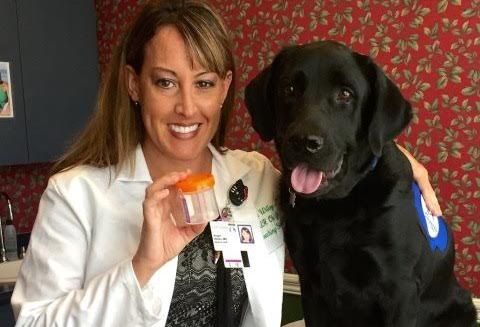
Knowing that dogs have been trained to sniff out cancers, Assistance Dogs of Hawaii thought they could be put to use in detecting UTIs at an early stage.

urinary-tract-infection-and-dogs

They were right.

All dogs in a controlled study detected samples with between 90 and 94% accuracy, even in very diluted samples.

Read the full journal article here.

Kathleen Crisley, specialist in dog massage, rehabilitation and nutrition/food therapy, The Balanced Dog, Christchurch, New Zealand

Eggshells – a natural source of calcium

I like using wholefoods and avoiding waste – reasons why I make my own dog treats and why I feed my dog a hybrid diet (incorporating raw, homemade and commercial foods).

In the case of egg shells, I used to put them in my compost pile.  But, they always seemed to the source of attraction for rats (yuck!). I could throw them in my  green organics bin that is collected each week; this is taken away to a commercial composting operation – but of course from a sustainability point of view, we’re using trucks and diesel to cart waste away.

There’s another option – making some natural calcium supplement for my dog.

And it’s very easy to do!

First, after I use eggs for baking or cooking, I gather the shells and leave them out on my kitchen bench to to dry for 24 hours.  After that, I store them in refrigerator to keep them from growing bacteria.

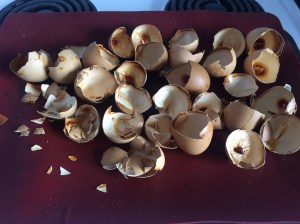
Then I arrange them on a baking tray and bake them for 5 minutes at 180 degrees C (roughly 350 degrees F).  Then I turn the oven off and let the shells cool in the oven.

This is what the look like when they are finished:

eggshells-after-baking

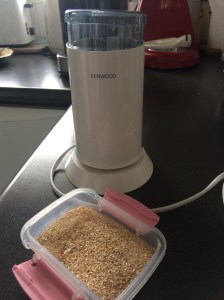
Final step:  into the coffee grinder.  After just a few pulses, I have a fine calcium powder.

grind

I keep the calcium powder in the refrigerator for up to 2 weeks; using 1/2 teaspoon mixed into raw food per meal.

Dogs need calcium in their diet and I am confident in feeding this to Izzy, who is a large-breed dog with no health problems.  For all dogs, we need to be confident in their health status before deciding to feed certain foods and supplements.

Kathleen Crisley, specialist in dog massage, rehabilitation and nutrition/food therapy, The Balanced Dog, Christchurch, New Zealand

Team develops treatment for canine megaesophagus

The Veterinary Health Center (VHC) at the University of Missouri’s College of Veterinary Medicine is pioneering a new approach to treat one type of canine megaesophagus, a devastating disease of dogs.

megaesophagus-scan

This image shows a canine patient during a video fluoroscopic swallow study. These studies, performed by members of a collaborative research project at the University of Missouri, were a major component of revolutionary techniques developed for the diagnosis and treatment of megaesophagus, a devastating disease of dogs. Credit: MU College of Veterinary Medicine

A partnership between the VHC’s Small Animal Internal Medicine, Radiology, Surgery, and Nutrition services and an investigator in the Otolaryngology-Head and Neck Surgery department at the university’s School of Medicine has resulted in the discovery of a breakthrough treatment for a subpopulation of dogs with megaesophagus. The Mizzou team has identified a defect of the lower esophageal sphincter (LES) as a potential treatable cause of megaesophagus.

Megaesophagus (ME) refers to a large, dilated esophagus with poor or no motility preventing normal passage of food and liquid into the stomach. With ingesta not reaching the stomach to produce the sensation of being full, the dog will continue to eat. As a result, the esophagus enlarges greatly. Dogs end up not getting enough calories so they waste away. Dogs with ME also regurgitate large amounts of undigested food and some of that material can be inhaled into the lungs. This inhalation can result in aspiration pneumonia, a dangerous additional symptom that kills many affected animals.

“In general, dogs with megaesophagus typically die of malnutrition, aspiration pneumonia, or are euthanized because the owners are told they have a terrible prognosis,” according to Associate Professor Carol Reinero, DVM, PhD, an internal medicine specialist helping coordinate the efforts of the multidisciplinary team. “We’re taking a closer look at a subpopulation of dogs with idiopathic megaesophagus, which means we don’t know what causes it. We run all of our traditional tests, but we’ve never been able to find an underlying cause. Now with our video fluoroscopic swallow studies, we have identified an abnormality that we believe is driving the problem: an LES-achalasia-like syndrome.”

The LES acts as a valve between the esophagus and the stomach, opening when food and water are swallowed, then clamping tight so food doesn’t come back from the stomach into the esophagus. In dogs afflicted with megaesophagus caused by an achalasia-like syndrome, the LES remains closed.

 “Video fluoroscopic swallow studies have been around a long time,” Reinero said. “The problem with prior protocols is they did not represent normal eating and drinking behaviors. Those tests had very little to do with reality. A dog had to be restrained, lying on its side, and syringe-fed barium, which was not palatable even when mixed with food. If dogs don’t eat during the swallow study you’re not going to get a diagnostic study.”

In order to receive a better diagnostic result, the Mizzou collaborative research team blended innovation with adaptation, developing new techniques and tools while borrowing procedures from human medical practices to diagnose and treat this type of canine ME.

Assistant Professor Teresa Lever, MS, PhD, from the Otolaryngology-Head and Neck Surgery department, spearheaded the development of trapezoidal holding chambers or kennels—which are now patented—where dogs walk in and are funneled to the narrow end of the enclosure. The animals are more naturally restrained and are given food that they consume while standing upright. Lever’s lab, in cooperation with an independent company that conducts feeding trials in dogs, also developed a number of different recipes and consistencies of food and liquid to optimize how well the dogs could take it down and discover which contrast agent was more palatable and effective.

“So, now we have these chambers, we have optimized palatable recipes, and we have experience in normal, healthy dogs without swallowing disorders, as well as lots and lots of patients coming in with other swallowing disorders,” Reinero said. “It was in the process of developing this protocol and having clinical patients come in when we recognized that LES-achalasia-like syndrome was the underlying cause of megaesophagus in some dogs. That’s when we began to adapt what they do with humans, a therapy where we’re opening or dilating the LES with Botox and/or balloon dilation.

“We perform an endoscopy to first dilate the LES and then administer Botox, which paralyzes the sphincter muscles that formerly wanted to remain closed. While we are still evaluating this procedure, we’ve had dogs with remarkable clinical improvement. Additionally, when we repeat the fluoroscopic studies, we can document an open LES. The patients that show improvement can be candidates for surgery, and that surgery is potentially curative,” Reinero said.

During a patient’s recovery, residents in the Nutrition Service monitor the dog’s weight and food intake. The amount of food an owner may give a pet might need to be altered every couple of days.

James Schachtel, Bvet Med, MRCVS, is a Radiology resident and key collaborator in the study.

“This approach gives these dogs a chance, whereas a lot of them didn’t have much of one,” Schachtel said. “At this time, it is early in the evaluation process, but it’s a novel approach that shows promise.

“This subpopulation can receive a really significant benefit from our direct ability to detect their malady. It can give them a really good quality of life. This is a revolutionary diagnostic technique for a disorder identified with a pathological outcome. It offers us the opportunity to use therapies that have been successful in people, so we’re optimistic we can experience similar success with canines,” Schachtel said.

Source:  University of Missouri-Columbia

See also my 2014 post about megaesophagus