Author Archives: DoggyMom.com

Changes in Skin “Microbiome” During Canine Atopic Dermatitis Could Lead to Antibiotic-Free Therapies

Atopic dermatitis (AD), a chronic inflammatory skin condition and the most common form of eczema, is estimated to afflict as much as 10 percent of the U.S. population, and is much more common now than it was 50 years ago. Veterinary clinical estimates also show that approximately 10 percent of dogs have atopic dermatitis.

How AD arises isn’t yet fully understood, but a study from researchers from the Perelman School of Medicine at the University of Pennsylvania and Penn’s School of Veterinary Medicine, have uncovered important insights about the association of AD in dogs compared to humans. The study appears online in the Journal of Investigative Dermatology.

atopy

To a greater extent than mouse models, canine AD shares important features of the human version. For example, in both humans and dogs AD has been linked to abnormal blooms of Staphyloccocus bacteria on the skin – mostly Staphyloccocus aureus in humans, and Staphyloccocus pseudintermedius in dogs.

In the study, the research team, comprised of veterinary dermatologists, microbiologists, pathologists, and primary scientists, tracked the bacterial populations, or “microbiomes,” on dogs’ skin, and key properties of the skin’s barrier function during an occurrence of AD, and again after standard treatment with antibiotics. During the flare, researchers observed a sharp decrease in the diversity of the skin bacterial population as certain bacterial species proliferated, along with a decrease in the skin’s protective barrier. With antibiotic therapy, both measures returned to normal levels.

“In both canine and human atopic dermatitis we hypothesize there is a similar relationship among skin barrier function, the immune system, and microbes, even if the individual microbe species aren’t identical,” said senior author Elizabeth A. Grice, PhD, an assistant professor of Dermatology and Microbiology at the Perelman School of Medicine at the University of Pennsylvania. “The hope is that insights gained from this study and others like it will enable us one day to treat this condition by altering the skin’s microbiome without antibiotics.”

Thirty-two dogs (15 with canine AD, and 17 without) from Penn Vet’s Ryan Hospital were enrolled in the study. On three occasions – first during AD flares in the affected dogs, then after 4-6 weeks of targeted antibiotics, and finally 4-6 weeks after treatment concluded – the team took swabs from several areas of skin on the affected dogs. They surveyed the microbiomes of these samples by amplifying and sequencing copies of a key bacterial gene whose DNA sequence is distinct for different bacterial species.

Samples from the dogs with ongoing AD had almost ten times the proportion of Staphylococcus species, compared to the control dogs. Corynebacterium species also rose, as they typically do in humans with AD. A standard measure of the diversity of the dogs’ skin microbiomes also decreased sharply, indicating that the abnormal bacterial proliferation – chiefly from S. pseudintermedius – had crowded out other, harmless or potentially beneficial bacterial species.

At the second visit, immediately following completion of antibiotic therapy, the abundance of Staphyloccocus and Corynebacterium on the skin of affected dogs and the diversity of their skin microbiome had returned almost to the levels seen in the control dogs. Those measures remained largely the same in the third visit, after antibiotic therapy was finished.

Impairment in the skin’s ability to work as a “barrier” to keep moisture in and harmful bacteria out is considered a possible factor in triggering or advancing AD. Under the guidance of Elizabeth Mauldin, DVM DACVP, DACVD, an associate professor of Dermatopathology in Penn’s School of Veterinary Medicine, the researchers also tested skin barrier function in the dogs at each of their three visits. Results showed that the low-bacterial-diversity state of AD flares – corresponding to lesions of AD on the skin – correlated with impairments in the skin barrier, as indicated by a standard test of the water loss rate through the skin (TEWL).

“We don’t know if the bacterial overgrowth is weakening the skin’s barrier function or a weakening of the barrier is enabling the bacterial overgrowth, but we do know now that they’re correlated, and that’s a novel finding,” Grice said.

The research team is now conducting further studies of the microbiome in canine atopic dermatitis, in particular to determine how antimicrobial therapy promotes bacterial resistance.

“This investigation is a prime example of the One Health approach to research, a recognition that we’re dealing with the same disease processes in animals and in humans,” said lead author Charles Bradley, VMD, DACVP, a lecturer and dermatopathologist of pathobiology in Penn’s School of Veterinary Medicine. “The findings highlight the importance of dogs as a model for human dermatitis and help lay the groundwork for new therapeutic strategies, for example involving microbiome transplants to compete with the harmful bacterial overgrowth, as an alternative to antibiotic therapy.”

Source:  University of Pennsylvania media release

Pet therapy can combat homesickness

The expression dog is man’s best friend might have more weight in the case of first-year university students suffering from homesickness, according to a new UBC study.

The study shows that animal-assisted therapy can help students combat homesickness and could be a useful tool in lowering post-secondary drop-out rates.

homesickness-research-photo

John Tyler Binfet, seen with his dog Frances, conducted a study on the effect of pet therapy on homesickness. Binfet runs the Building Academic Retention Through K’9s (B.A.R.K.) program at UBC’s Okanagan campus. Credit: UBC

“Transitioning from high school to university can prove to be a challenge for many first-year students,” says Assistant Professor John Tyler Binfet of UBC’s Okanagan campus.

“Given that students who experience homesickness are more likely than their non-homesick cohorts to drop out of university, universities have a vested interest in supporting students during their first-year transition.”

In the study, 44 first-year university students who self-identified as homesick were given a survey to measure levels of homesickness, satisfaction with life and connectedness with campus. Half of the students completed eight weeks of dog therapy, while the other half were informed that their sessions would begin in eight weeks’ time. Dog therapy included 45-minute weekly sessions involving small group interactions with the dogs and handlers, and engagement with other first-year students participating in the study.

Following the initial eight-week session, participants in both the treatment group and the non-treatment group completed the survey again.

Participants who completed the eight-week program experienced significant reductions in homesickness and greater increase in satisfaction with life. Participants reported that sessions “felt like they were at home chatting with friends who brought their puppies.” While the non-treatment group reported an increase in their feelings of homesickness.

According to a 2009 report conducted for B.C. Stats, students who left post-secondary happy were almost twice as likely to have felt a sense of belonging compared to students who left unhappy. Students who left university unhappy were almost twice as likely to say they did not feel a sense of belonging on campus.

A total of 29 per cent of students who dropped out cited more interactions and friendships with other students as a factor that would have influenced their decision to stay longer.

While further study is needed, a university’s ability to influence campus connections could be a useful tool in lowering drop-out rates in first-year students, says Binfet.

“Many first-year university students face the challenge of integrating into their new campus community,” says Binfet. “Homesick students are three times more likely than those who manage their homesickness to disengage and drop out of university.”

“Moving to a new city, I did not know anyone at the university and became very homesick and depressed,” says UBC Okanagan student Varenka Kim. “I was mainly secluded in my dorm room and did not feel like I belonged here. Coming to animal assisted therapy sessions every Friday gave me a sense of purpose and kept me enthusiastic about life.”

Source:  University of British Columbia media release

Saving the whole family

As the Northern Hemisphere enters its hurricane season, it’s a useful time to review your plans for disaster preparedness regardless of your location in the world.

In New Zealand, as our seismic activity continues to make the news, it’s important to be ready regardless of season.  Things like refreshing your stored water supply, for example.  And if you don’t have a bottled water supply, get one!  This includes storing enough water for 3 days for you and your animals.

The American Veterinary Medical Association (AVMA) distributed this video last year.  It outlines the things you need as a pet parent and not just things for dogs.  I have clients on lifestyle blocks with horses, for example.  Although I don’t know much about horse care, I can certainly understand the need to have harnesses and a trailer ready for evacuation.

The video mentions how to make a temporary dog tag out of a luggage tag. This may work for larger dogs, but is impractical for small breed dogs.

What I prefer is to have an old dog registration tag in my emergency kit.    It’s been covered with a blank label and I have a pen in the kit.

If we had to evacuate to a temporary location, I will write our contact details on this temporary tag.

I’m also a supporter of micro chipping, which is compulsory for dogs in New Zealand.

Kathleen Crisley, specialist in dog massage, rehabilitation and nutrition/food therapy, The Balanced Dog, Christchurch, New Zealand

Blue Dog for President

Forget Trump.  Forget Clinton.  Vote Blue Dog for President.

The  Rodrigue Studio in New Orleans will be exhibiting artworks including portraits of Ronald Reagan and Bill Clinton along with many other Blue Dog  works by George Rodrigue.

Blue Dog for President was originally exhibited in 1996 at Union Station in Washington DC.

Sadly, George Rodrigue passed away in December 2013 after a long battle with cancer.

Lucky for us that his Blue Dog works live on.

Kathleen Crisley, specialist in dog massage, rehabilitation and nutrition/food therapy, The Balanced Dog, Christchurch, New Zealand

The 9/11 rescue dog memorial

September 11th is a date that will be forever remembered for the loss of life in the worst act of terrorism ever experienced on United States soil.  While the victims and first responders have been honored in many ways, the search and rescue dogs have not.

Until now.

In the city of West Orange, New Jersey, there is a new statue that pays homage to the 350 search and rescue dogs who worked at the World Trade Center and Pentagon.  Made of bronze and weighing 5,000 pounds, it sits on a granite base.  The official dedication was held on 17 August 2016.

9_11 dog statue

In a media statement marking the dedication, Newark Public Safety Director Anthony Ambrose said, “Search dogs covered 16 acres of land at Ground Zero covered with metal and debris, and went where humans could not go.  This is a fitting way to remember how many families gained some sort of closure because of the work by dogs.”

The statue was funded through corporate donations.  It is located in the park in New Jersey where many residents gathered to witness the horror of the World Trade Center attacks, fire and collapse on September 11, 2001.

9_11 dog statue with plaque

Source:  NJ.com

Is my dog in pain?

One of the questions I get asked fairly often by clients is ‘how do I know if my dog is in pain?’

The month of September is Animal Pain Awareness Month.  The International Veterinary Academy of Pain Management has created this one-page poster to help pet owners.

The only thing I would add is that once you have a veterinary diagnosis of your pet’s condition, then it is useful to seek out complementary therapies like massage and laser that can help with pain management.

Kathleen Crisley, specialist in dog massage, rehabilitation and nutrition/food therapy, The Balanced Dog, Christchurch, New Zealand

IVAPM-Pet-Pain-Awareness-Month-Poster-2016

Source:  International Veterinary Academy of Pain Management

Gambling wolves take more risks than dogs

Would you rather get 100 euros for certain, or have a fifty-fifty chance of receiving either 200 euros or nothing? Most choose the first, as humans tend to be “risk-averse”, preferring a guaranteed pay-off over the possibility of a greater reward. It is thought that the human preference for “playing it safe” has evolved through natural selection: when you live precariously, like our remote ancestors, losing all your food reserves might be catastrophic, while adding to them might not make much difference to your chances of survival.

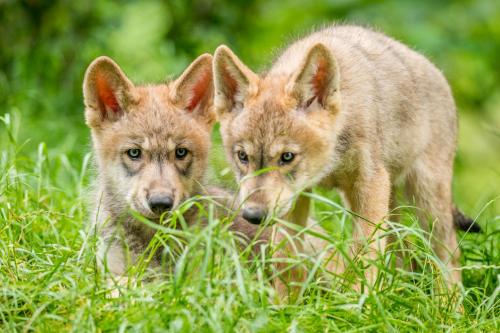
Wolf pups

Etu and Ela, two wolf pups at the Wolf Centre Photo credit: Rooobert Bayer

Here, in one of the first studies on risk preferences in animals other than primates, scientists show that wolves are consistently more prone to take risks when gambling for food than dogs. When faced with the choice between an insipid food pellet and a fifty-fifty chance of either tasty meat or an inedible stone, wolves nearly always choose the risky option, whereas dogs are more cautious.

“We compared the propensity to take risks in a foraging context between wolves and dogs that had been raised under the same conditions,” says Sarah Marshall-Pescini, a postdoctoral fellow at the Messerli Research Institute at the Veterinary University of Vienna and the Wolf Science Centre, Ernstbrunn, Austria, the study’s first author. “We found that wolves prefer the risky option significantly more often than dogs. This difference, which seems to be innate, is consistent with the hypothesis that risk preference evolves as a function of ecology.”

The study was done at the Wolf Science Centre, Ernstbrunn, Austria, a research institute where scientists study cognitive and behavioral differences and similarities between wolves and dogs. Here, wolves and dogs live in packs, under near-natural conditions within large enclosures.

Marshall-Pescini let each of 7 wolves and 7 dogs choose 80 times between two upside-down bowls, placed side-by-side on a movable table-top. The animals had been trained to indicate the bowl of their choice with their paw or muzzle, after which they would receive the item that was hidden beneath it.

The researchers had taught the wolves and dogs that beneath the first bowl, the “safe” option, was invariably an insipid food pellet, while beneath the second bowl, the “risky” option, was either an inedible item, a stone, in a random 50% of trials, and high-quality food, such as meat, sausage, or chicken, in the other 50%. As a control, the side for the “safe” and “risky” option changed between trials, but the animals were always shown which side corresponded to which option; whether they would get a stone or high-quality food if they chose the “risky” option was the only unknown. Rigorously designed control trials confirmed that the animals understood this rule, including the element of chance.

Wolves are much more prone to take risks than dogs, show the results. Wolves chose the risky option in 80% of trials, whereas dogs only did so in 58% of trials.

The researchers believe that dogs evolved a more cautious temperament after they underwent an evolutionary shift from their ancestral hunter lifestyle to their present scavenger lifestyle, which happened between 18,000 to 32,000 years ago when humans first domesticated dogs from wolves. Previous research has suggested that species that rely on patchily distributed, uncertain food sources are generally more risk-prone. For example, chimpanzees, which feed on fruit trees and hunt for monkeys, are more risk-prone than bonobos, which rely more on terrestrial vegetation, a temporally and spatially reliable food source.

“Wild wolves hunt large ungulates — a risky strategy, not only because hunts often fail, but also because these prey animals can be dangerous — whereas free-ranging dogs, which make up 80% of the world’s dog population, feed mostly by scavenging on human refuse, a ubiquitous, unlimited resource. So dogs no longer need to take risks when searching for food, and this may have selected for a preference to play if safe,” concludes Marshall-Pescini.

Source:  EurekAlert! media statement

Dogs understand both vocabulary and intonation of human speech

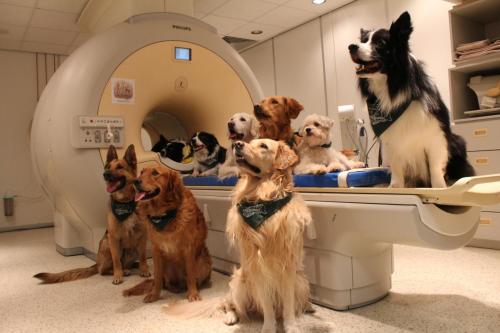
Dogs in MRI machine

Trained dogs are around the fMRI scanner. This material relates to a paper that appeared in the Sept. 2, 2016, issue of Science, published by AAAS. The paper, by A. Andics at Eötvös Loránd University in Budapest, Hungary, and colleagues was titled, “Neural mechanisms for lexical processing in dogs.”  Credit:  Enik Kubinyi

Sometimes research about our dogs goes viral which is the case with this latest research.  It’s already done the rounds on Facebook because it has been reported by several major news agencies.

Here is the original media release  from the American Association for the Advance of Science in its entirety:

Dogs have the ability to distinguish vocabulary words and the intonation of human speech through brain regions similar to those that humans use, a new study reports.

Attila Andics et al. note that vocabulary learning “does not appear to be a uniquely human capacity that follows from the emergence of language, but rather a more ancient function that can be exploited to link arbitrary sound sequences to meanings.” Words are the basic building blocks of human languages, but they are hardly ever found in nonhuman vocal communications. Intonation is another way that information is conveyed through speech, where, for example, praises tend to be conveyed with higher and more varying pitch.

Humans understand speech through both vocabulary and intonation. Here, Andics and colleagues explored whether dogs also depend on both mechanisms. Dogs were exposed to recordings of their trainers’ voices as the trainers spoke to them using multiple combinations of vocabulary and intonation, in both praising and neutral ways. For example, trainers spoke praise words with a praising intonation, praise words with a neutral intonation, neutral words with a praising intonation, and neutral words with neutral intonation.

Researchers used fMRI to analyze the dogs’ brain activity as the animals listened to each combination. Their results reveal that, regardless of intonation, dogs process vocabulary, recognizing each word as distinct, and further, that they do so in a way similar to humans, using the left hemisphere of the brain. Also like humans, the researchers found that dogs process intonation separately from vocabulary, in auditory regions in the right hemisphere of the brain. Lastly, and also like humans, the team found that the dogs relied on both word meaning and intonation when processing the reward value of utterances. Thus, dogs seem to understand both human words and intonation.

The authors note that it is possible that selective forces during domestication could have supported the emergence of the brain structure underlying this capability in dogs, but, such rapid evolution of speech-related hemispheric asymmetries is unlikely. Humans, they say, are only unique in their ability to invent words.

Source:  EurekAlert! media release

Doggy quote of the month for September

“There’s nothing like a wagging tail to make you feel better”

Golden retriever tail wagging

– Dr. J. Michael McFarland, DVM, ‎DABVP, Group Director of US Companion Animal Marketing at Zoetis

Lawn burn and your dog – there are no guarantees

There are a lot of myths and home ‘cures’ for avoiding lawn burn when you have a dog in your life.  One of the more recent myths shared with me was ‘I was told that once I switched him to raw food, that he wouldn’t burn the lawn.’

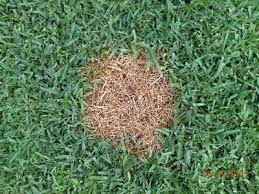
Burnt grass

Hmmmm…

There’s something at work here called basic chemistry.  When a dog digests protein, a by-product is nitrogen that is excreted in the urine.  Because the nitrogen content is so high, it’s like putting too much nitrogen fertilizer on the lawn.  It burns.  Plain and simple.

Some owners report that by ensuring digestible proteins (hence, I believe the link here to a recommendation for a raw diet), the degree and frequency of lawn burn is diminished.  However, I’ve never met a dog parent yet who has successfully managed a balance between a nutritious diet and lawn burn simply by balancing protein content.

It’s more likely that owners are encouraging their dog to drink more through adding fluids to their food, effectively diluting the concentration of urine.  Others add dilute broths to the drinking water to encourage the dog to drink more. Here again, the result is diluted urine.

It’s fact that female dogs tend to empty their bladder more fully with each urination whereas male dogs tend to mark and spread their urine more.  So owners of female dogs can anticipate lawn burn as a fact of life.

And of course, the larger the dog – the more urine.  No brainer there, either.

If you are really stressed about having burnt out lawn patches, here are some practical management techniques that have nothing to do with your dog’s diet:

  • teach your dog to urinate in designated parts of your yard
  • make sure you don’t over-fertilize your lawn – if your starting point is already lots of nitrogen, then your dog’s urine just tips the balance
  • ask at your local garden centre about types of grass that are more nitrogen tolerant; re-seed with these varieties

Since my practice is all about balance, it does concern me that owners are prepared to dose their dog with substances reporting to help with lawn burn.  Your dog eats protein.  Nitrogen excretion in the urine is natural.  Why upset that balance?

Kathleen Crisley, specialist in dog massage, rehabilitation and nutrition/food therapy, The Balanced Dog, Christchurch, New Zealand