Author Archives: DoggyMom.com

Pets at Home

In the upcoming animated film The Secret Life of Pets, you may wonder if the pets and their antics are accurately depicted.

Well, the creative people at Realtor.com have taken scenes from the film and compared them to real life…

Kathleen Crisley, specialist in dog massage, rehabilitation and nutrition/food therapy, The Balanced Dog, Christchurch, New Zealand

Favorite Video Friday – Seek peace, walk your dog

I really liked the thought and sentiment behind this blog post and the peaceful dog video attached. I hope you do too.

Mel's avatarNo Dog About It Blog

The last couple of days have been filled with sadness and anger and fear. I am saddened by the loss of life. I am angry that so much harm has been done and that we seem to be beyond communicating with one another. I am heartbroken that so many families are grieving today.

On days like today, I need to get away and walk with my dogs. I need to think, process what has happened. I need to be in nature. That’s why I chose this video for today. I am hoping it brings you the zen I seek as I head out today.

Be thoughtful. Be safe. Be kind.

Daybreak – HD from Steven Dempsey on Vimeo.

View original post

Using therapy dogs to prepare for the Olympics

Olympic dog

The Summer Olympics in Rio are not far away and it’s a stressful time for athletes as they prepare and aim to qualify for the competition.

In the United States, the swim team is using  dogs to help manage the stress! A Havanese named Holly and a Goldendoodle named Larry are among the crew supporting the swimmers.

Read more in this New York Times article – US Swimmers Using Therapy Dogs to Relax Before Races

Kathleen Crisley, specialist in dog massage, rehabilitation and nutrition/food therapy, The Balanced Dog, Christchurch, New Zealand

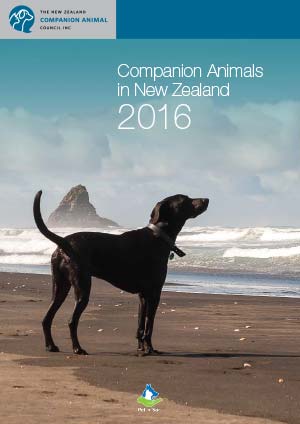
Companion Animals in New Zealand 2016

The 2011 study into companion animals in this country has been updated and the 2016 report is now available from the NZ Companion Animal Council.  Download it here.


Companion Animals in New Zealand 2016

There are lots of facts, figures and data quoted in the report.

Things I noticed in my first reading include:

  • 13% of dog owners prepare homemade food specifically for their animals (yes!)
  • The vast majority of people who have companion animals view them as members of the family.  As such, many trends seen in human wellness and wellbeing are mirrored in pet care.
  • The gender and age profiles of the veterinary profession are changing.  Younger veterinarians are more likely to be female than male.
  • Visits to the vet represent one of the most significant areas of expenditure for households with companion animals (that’s probably not a surprise to most of you).
  • Expenditure on pet insurance has increased by 133% from 2011.

If you are interested in the care of your animals, then this report is well worth downloading.  See how you stack up in terms of the statistics and trends.

Kathleen Crisley, specialist in dog massage, rehabilitation and nutrition/food therapy, The Balanced Dog, Christchurch, New Zealand

The Greyt New Zealand Caterpillar Craze

As you know, Izzy is a greyhound.  And as a devoted greyhound owner, I belong to several Facebook groups dedicated to greyhounds.  One is the Greyhound Collective, based here in New Zealand.

Early last week, a fellow owner posted that their hound loved their large stuffed caterpillar from The Warehouse (the New Zealand equivalent of Walmart) and – coincidentally – they were available at the annual toy sale for 50% off (so $40 compared to $80)…Caterpillar

The caterpillars being sold by The Warehouse are 250 cm long

…and so started the Greyt New Zealand Caterpillar Craze!

I slept on it overnight and then decided Izzy should have one.  I ordered it online and then emailed my friend Marie “I’ve just bought Izzy one of those caterpillars.”  Marie wrote back “So did I, for Ben”   Gosh, I thought – we are good dog mothers…

And then another one and another one posted on The Greyhound Collective.  Their hounds were also reveling in their new colourful friends.  It’s been like that all week (and the sale is still going).  More and more New Zealand greyhounds are loving their warm and cuddly friends.  It’s winter here and greyhounds feel the cold.  A caterpillar makes a greyt friend on a cold winter’s day…

This slideshow requires JavaScript.

So enjoy these snaps of our Caterpillar Craze…can you spot Izzy?

Kathleen Crisley, specialist in dog massage, rehabilitation and nutrition/food therapy, The Balanced Dog, Christchurch, New Zealand


Doggy quote of the month for July

“A dog can express more with his tail in minutes than an owner can express with his tongue in hours.”

Dog tail

– Karen Davison, trainer and author

How dogs can sniff out diabetes

A chemical found in our breath could provide a flag to warn of dangerously-low blood sugar levels in patients with type 1 diabetes, according to new research from the University of Cambridge. The finding, published in the journal Diabetes Care, could explain why some dogs can be trained to spot the warning signs in patients.

Claire Pesterfield, a paediatric diabetes specialist nurse at Addenbrooke’s Hospital, Cambridge University Hospitals NHS Foundation Trust has type 1 diabetes, which requires insulin injections to manage blood sugar levels. She also has a golden Labrador dog that has been trained by the charity Medical Detection Dogs to detect when her blood sugar levels are falling to potentially dangerous levels.

“Low blood sugar is an everyday threat to me and if it falls too low – which it can do quickly – it can be very dangerous,” says Claire. “Magic is incredible – he’s not just a wonderful companion, but he’s my ‘nose’ to warn me if I’m at risk of a hypo. If he smells a hypo coming, he’ll jump up and put his paws on my shoulders to let me know.”

Hypoglycaemia – low blood sugar – can cause problems such as shakiness, disorientation and fatigue; if the patient does not receive a sugar boost in time, it can cause seizures and lead to unconsciousness. In some people with diabetes, these episodes can occur suddenly with little warning.

Given the reports of dogs alerting owners to blood glucose changes, researchers at the Wellcome Trust-MRC Institute of Metabolic Science, University of Cambridge, believed that certain naturally-occurring chemicals in exhaled breath might change when glucose levels were low. In a preliminary study to test this hypothesis, the scientists gradually lowered blood sugar levels under controlled conditions in 8 women, all around their forties, and all with type 1 diabetes. They then used mass spectrometry – which look for chemical signatures – to detect the presence of these chemicals.

The researchers found that levels of the chemical isoprene rose significantly at hypoglycaemia – in some cases almost doubling. They believe that dogs may be sensitive to the presence of isoprene, and suggest that it may be possible to develop new detectors that can identify elevated levels of isoprene in patients at risk.

“Isoprene is one of the commonest natural chemicals that we find in human breath, but we know surprisingly little about where it comes from,” says Dr Mark Evans, Honorary Consultant Physician at Addenbrooke’s Hospital, University of Cambridge. “We suspect it’s a by-product of the production of cholesterol, but it isn’t clear why levels of the chemical rise when patients get very low blood sugar.

“Humans aren’t sensitive to the presence of isoprene, but dogs with their incredible sense of smell, find it easy to identify and can be trained to alert their owners about dangerously low blood sugar levels. It provides a ‘scent’ that could help us develop new tests for detecting hypoglycaemia and reducing the risk of potentially life-threatening complications for patients living with diabetes. It’s our vision that a new breath test could at least partly – but ideally completely – replace the current finger-prick test, which is inconvenient and painful for patients, and relatively expensive to administer.”

The research was funded by the National Institute for Health Research (NIHR) Cambridge Biomedical Research Centre with support from the Cambridge NIHR Wellcome Trust Clinical Research Facility.

Source:  University of Cambridge media release

Clinical trials to help beat cancer

Raelene Wouda’s passion for improving cancer treatment starts with our four-legged friends.

Dog cancer photo
Wouda, Kansas State University assistant professor of clinical sciences, is conducting clinical trials to treat cancers in dogs, cats and other companion animals.

When pet owners bring their dogs, cats, horses and other animals to the College of Veterinary Medicine’s Veterinary Health Center for treatment, Wouda and the Oncology Service can offer groundbreaking new treatments often at a lower cost to pet owners.

Wouda also is able to study important topics, such as improved diagnostic testing, monitoring approaches and innovative treatment options, including anti-cancer vaccines, t-cell transfer, combination chemotherapy and nanoparticle drug formulations. She has recently published her research in Veterinary Comparative Oncology and the Journal of the American Veterinary Medical Association.

“Although surgery, radiation therapy, chemotherapy and, more recently, immunotherapy have improved patient outcomes, many cancers still do not have a long-term cure,” said Wouda, a clinical veterinary oncologist. “These clinical trials are a crucial step.”

But Wouda’s research benefits humans, too. Many cancers in animals — especially dogs — are similar to those in humans, which means that the diagnosis, monitoring, treatment and response to treatment are also similar.

“Any research that we do in our patients has the potential to provide important information for how the disease can be better diagnosed, monitored and treated in human patients,” Wouda said. “That’s what I would like to do with our research. I would like to continue to improve outcomes for our veterinary patients and, by extension, help human cancer patients.”

Companion animals offer several research advantages. Wouda’s clinical trial program focuses primarily on dogs because of the similarities between their cancers and human cancers, such as osteosarcoma, melanoma, lung cancer and urogenital cancers. Osteosarcoma, for example, is both clinically and genetically almost identical in dogs and human pediatric patients.

Dogs also live with us and are exposed to the same environmental factors. Additionally, because dogs age faster than humans — one dog year is equivalent to seven human years — their diseases progress faster, which is a practical advantage for rapidly evaluating a new treatment’s efficacy and clinical benefit, Wouda said.

“We get clinical answers more quickly in dogs,” Wouda said. “The benefit of a particular therapy becomes evident in dogs more rapidly compared to people, and because of this we can preserve research and development finances, but more importantly, we save valuable time and resources.”

Animal clinical trials are structured similarly to human clinical trials and are tightly regulated and overseen. Wouda works with Mary Lynn Higginbotham, associate professor of clinical sciences, their graduate students and oncology technicians as well as the Veterinary Health Center’s referring veterinarians to conduct these clinical trials. They also collaborate with human medical researchers to discuss how the research can best be applied in the field of human oncology.

“For many pet owners, cancer is a terminal diagnosis for their beloved family member,” Wouda said. “These studies provide owners an opportunity to trial a cutting-edge therapy for their pets at a reasonable price. Moreover, owners participating in these clinical trials take comfort and are pleased to know that they are helping to achieve better treatments and outcomes for pets that may be diagnosed with cancer in the future.”

Source:  Kansas State University

A long wait for a new home (hopefully)

Today, I am sponsoring a community fundraiser by showing the award-winning documentary, The Champions. I’m looking forward to sharing the ground-breaking case and the work that has proved that bull breed dogs can be successfully rehabilitated and re-homed.

One of the things that the Vicktory dogs had in common with many dogs seized in enforcement matters is the long wait they endure in isolation kennels – and usually the dogs are destroyed once a conviction is secured.

Such is the case of Stella, a dog that was left in isolation without exercise for two years in the UK awaiting her owner’s day in court.

Stella

Stella the dog death row dog inside her 3ft x 9ft cage at the Foredowne Kennels in Kingskerswell, Devon. Stella was not exercised for two years. Photo courtesy of The Plymouth Herald

Stella’s owner used her to attack police and Stella paid the price by being labelled a dangerous dog.

The police have now given their blessing for Stella to be re-homed, after her previous owner relinquished all rights to her.

And they have defended their need to hold Stella in isolation, saying it’s the system’s fault…“Devon and Cornwall Police has on a number of occasions shared its concerns at the lengthy delay to cases, caused by legislation, the court system and on occasions the unfit owners surrounding the issue of dangerous dogs.”

You can read more about Stella’s case here, in The Herald. And in this previous item which put pressure on officials to address her living conditions.

There’s still much work to be done to ensure that dogs are not collateral damage in cases of cruelty and dangerous owners.

For Stella, at least, there seems to be a happy ending after a long wait.

Kathleen Crisley, specialist in dog massage, rehabilitation and nutrition/food therapy, The Balanced Dog, Christchurch, New Zealand


Cancer sniffing dogs

I write frequently about special dogs and assistance dogs. But this post isn’t about research – it’s about real-life stories where common pet dogs have detected cancer in their owner.

For example, I have a client in my massage practice who said that her dog was acting differently towards her.  We initially attributed this to stress in the home – since they had recently moved house with all of the associated angst. And then came a diagnosis of bladder cancer and she’s now in the middle of aggressive treatment for it.. On reflection, I believe her dog, who is a sensitive boy, picked up on the scent of her cancer but he didn’t know how to tell her.

And then this week, I read about Banjo who lives in North Carolina with his owner, Tim Buckner.  Banjo acted strangely to a wart on his Tim’s arm…and when Tim went to get it checked by a dermatologist, he was diagnosed with melanoma.

We know that dogs have extremely sensitive noses.  And I include here the PBS NewsHour item about dogs and how they can detect cancer.  This piece opens with yet another dog owner telling the tale of how her dog detected her cancer.

Dogs continue to show us unique ways they can help us and our quality of life.  You may have saved your pet, but your pet could also save you.

Kathleen Crisley, specialist in dog massage, rehabilitation and nutrition/food therapy, The Balanced Dog, Christchurch, New Zealand