Author Archives: DoggyMom.com

Re-purposing

I’ve heard recently that prices in local op shops (opportunity shops) and secondhand stores are on the rise with a trend towards ‘shabby chic’ and ‘vintage’ clothes.

Another trend is ‘re-purposing’ – taking a textile garment and making it into something else for an entirely different purpose.  For example, a friend ‘re-purposed’ a flannel onesie into a dog coat for Izzy.

Earlier this year, at summer camp (northern hemisphere summer), the kids of Southwest Airlines employees re-purposed a heap of old Southwest Airlines t-shirts.  They made them into dog toys for Texas-based animal shelter Operation Kindness!

Southwest Airlines t-shirt

The outdated t-shirts from Southwest Airlines became…

T-shirt dog toys

…700 dog toys!

(Photos courtesy of Operation Kindness Facebook page)

Operation Kindness logo


What a great summer camp project – the kids learned to recycle and supported a good cause, too.

Kathleen Crisley, specialist in dog massage, rehabilitation and nutrition/food therapy, Canine Catering Ltd, Christchurch, New Zealand

Dogs in the workplace – a health benefit

Think dog-friendly workplaces are only found the in the USA?  Take heart, New Zealanders, they’re moving closer to home…to our rival Australia.

This is good news – because like it or not, New Zealand tends to look to Australia when it comes to things like health and safety initiatives.

Every Friday, for example, workers at VicHealth enjoy Take Your Dog to Work Day.

Suki at the feet of her owner Jane Shill. Photo: Simon Schluter, The Age

Suki at the feet of her owner Jane Shill. Photo: Simon Schluter, The Age

Clothing retailer Cotton On is also allowing office staff to bring their dogs to work.

It’s a boost to morale and encourages workers to go out for walks at lunch breaks.  And, when owners are allowed to bring their dogs with them, absentee rates decrease.

Allowing dogs in the workplace is a ‘perk’ to attract and retain talented workers.

Sounds like you, doesn’t it?

Source:  The Age

Kathleen Crisley, specialist in dog massage, rehabilitation and nutrition/food therapy, Canine Catering Ltd, Christchurch, New Zealand


Early contact with dogs linked to lower risk of asthma

A team of Swedish scientists have used national registries encompassing more than one million Swedish children to study the association between early life contact with dogs and subsequent development of asthma.

The new study found that children who grew up with dogs had about 15 percent lower risk of asthma than children without dogs.

Childhood asthma and dog ownership

Tove Fall is Assistant Professor in Epidemiology at the Department of Medical Sciences and the Science for Life Laboratory.
Photograph: Mikael Wallerstedt

A total of more than one million children were included in the researchers’ study linking together nine different national data sources, including two dog ownership registers not previously used for medical research. The results are being published for the first time in JAMA Pediatrics. The goal was to determine whether children exposed to animals early in life are at different risk of asthma.

‘Earlier studies have shown that growing up on a farm reduces a child’s risk of asthma by about half. We wanted to see if this relationship also was true also for children growing up with dogs in their homes. Our results confirmed the farming effect, and we also saw that children who grew up with dogs had about 15 percent less asthma than children without dogs. Because we had access to such a large and detailed data set, we could account for confounding factors such as asthma in parents, area of residence and socioeconomic status’ says Tove Fall, Assistant Professor in Epidemiology at the Department of Medical Sciences and the Science for Life Laboratory, Uppsala University. She coordinated the study together with researchers from Karolinska Institutet in Stockholm, Sweden.

In Sweden, every person carries a unique personal identity number. Every visit to a specialist physician and every prescription made are recorded in national databases, accessible to researchers after de-identification of data. Even dog ownership registration is mandatory in Sweden since 2001. These scientists studied whether having a parent registered as a dog-owner or animal farmer was associated with later diagnosis or medication for childhood asthma.

’These kind of epidemiological studies look for associations in large populations but do not provide answers on whether and how animals could protect children from developing asthma. We know that children with established allergy to cats or dogs should avoid them, but our results also indicate that children who grow up with dogs have reduced risks of asthma later in life. Thanks to the population-based design, our results are generalizable to the Swedish population, and probably also to other European populations with similar culture regarding pet ownership and farming‘ says Catarina Almqvist Malmros, senior author of the study, Paediatrician at Astrid Lindgren Children’s Hospital and Professor in Clinical epidemiology at Dept of Medical Epidemiology and Biostatistics at Karolinska Institutet, Stockholm.

Source:  Uppsala University media release

In 2012, I wrote about another study linking childhood asthma and dog ownership in Of dogs, house dust and asthma…

“Dog” (an appropriately named book)

Mitra Farmand is a comic book artist.  When she was studying at the Center for Cartoon Studies in White River Junction, Vermont, she was given an assignment.

“We had to draw a cartoon from a dream and I was dreaming about my dog a lot because she had just died.”

She called the book Dog (the original title was Gone – but she didn’t want to give away the ending).

I contacted Mitra through her website to see if she would allow me to publish some of the sketches from Dog.  She was very gracious and sent me a number – only some of which I will use here – because I’d like you to support this artist and buy her book (and other drawings).

Dog by Mitra FarmandDog, a small book of only 20 pages, would make a great gift this Christmas for any dog lover.  And it covers, with sensitivity and heart, the feeling of those days after you’ve lost a loved dog.

Kathleen Crisley, specialist in dog massage, rehabilitation and nutrition/food therapy, Canine Catering Ltd, Christchurch, New Zealand

Doggy quote of the month for November

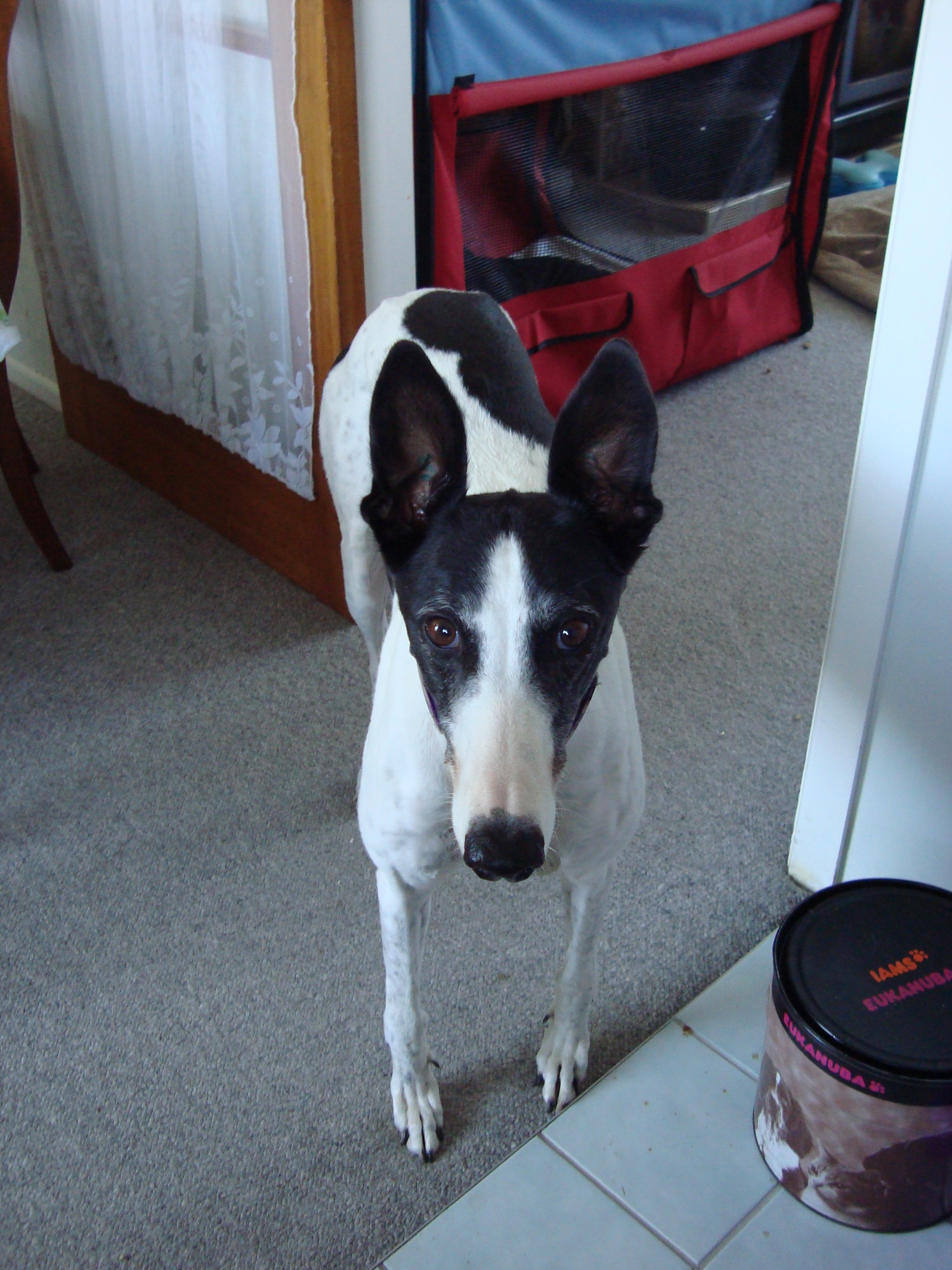
Izzy the Greyhound of Canine Catering Ltd

“Hounds follow those who feed them.”

– Otto von Bismarck

Rescuing pups from Afghanistan

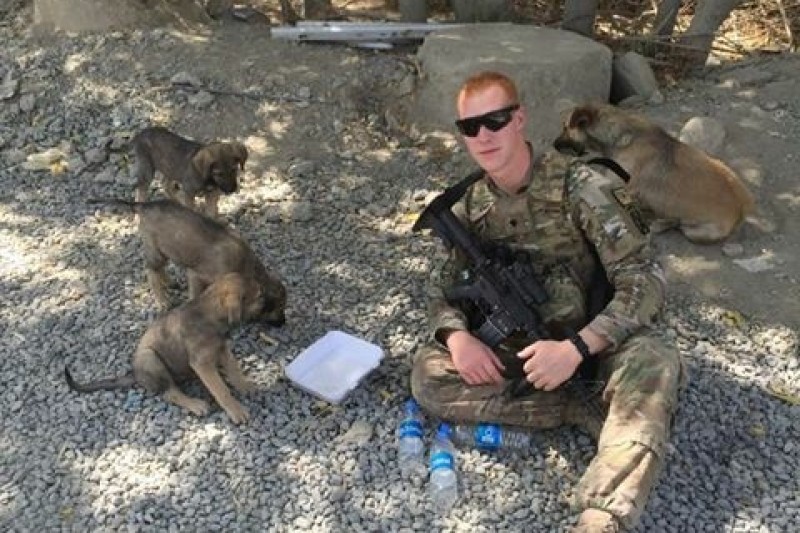
U.S. Army Specialist Combat Medic Holden Schoenig, who is 22, wants to save five puppies and their mother found in the streets of Afghanistan where they have been living under a scrap metal pile.

Kabul Commandos puppy rescue

He’s enlisted his mother’s help to get these dogs into the USA.   He’s affectionately named the pups the ‘Kabul Commandos.’   Lucky, one of the pups, is destined to go to New York where he will live with the Schoenig family and await Holden’s arrival.

So far, funds have been raised for 4 of the 6 dogs.

If you’d like to help, you can donate to the Go Fund Me campaign being administered by Holden’s mother, Melanie.

Dogs give a lot of comfort to soldiers serving in battle; at only 22, I think Holden deserves a happy ending for his ‘pet project.’

Kathleen Crisley, specialist in dog massage, rehabilitation and nutrition/food therapy, Canine Catering Ltd, Christchurch, New Zealand

Halloween and your dog

halloween+dog

Halloween is only a couple of nights away.  Time to start putting your dog inside at dusk (if he/she isn’t already).

Halloween can be a very scary time for dogs.  Lots of people out on the street and ringing the doorbell.  It’s a lot to cope with.

Then there’s the individually wrapped candies that aren’t good for your dog.  Put them out of reach and monitor your dog carefully on the night to ensure he/she doesn’t sneak a bite when you’re not looking…

Decide which area of your house is your dog’s quiet place and make the area comfortable with a bed, toys and suitable dog treats.

Personally speaking, I don’t like costumes for dogs.  Keep your dog happy by not dressing them up and humiliating them.

With a few precautions, you all can make it through Halloween safe and happy.

Kathleen Crisley, specialist in dog massage, rehabilitation and nutrition/food therapy, Canine Catering Ltd, Christchurch, New Zealand

Ivermectin sensitivity in herding breed dogs

Owners of herding breed dogs should be aware of their possible sensitivity to ivermectin, an active ingredient used in worming products for livestock and also in heartworm preventative drugs.  A genetic test is available to check for this sensitivity.

The Cummings School of Veterinary Medicine at Tufts University has recently published the story of Bristol, a 4-year-old Australian Shepherd, who presented with persistent seizures.

Bristol recovered from ivermectin poisoning but it required a 40-day stay in hospital. Credit: Andy Cunningham, Tufts University

Bristol recovered from ivermectin poisoning but it required a 40-day stay in hospital.
Credit: Andy Cunningham, Tufts University

Bristol required immediate and aggressive care, including the assistance of a mechanical ventilator. She also underwent a brain MRI to rule out other causes of her condition. “It took a great amount of intervention, without which this condition would have been fatal,” said Dr. Terri O’Toole, D.V.M., one of a team of critical care specialists overseeing Bristol’s care.

Ivermectin toxicity is characterised by the chemical crossing the blood-brain barrier and causing neurological damage.

Although Bristol began to breathe on her own within 10 days, she remained unconscious for three weeks. Eventually, she began walking with the assistance of a cart and leg splints, and later began walking under her own power with support from hospital staff.

After a month of treatment, Bristol regained her normal personality traits and the ability to walk, eat and drink on her own.   She was in hospital for 40 days.

Tufts treats only one or two cases of ivermectin toxicity each year, and they are most frequently the result of accidents, such as when dogs are exposed to higher-dose ivermectin products intended for horses.

Although products containing ivermectin are typically safe and effective, many white-footed herding breed dogs like Bristol have a genetic mutation that makes them sensitive to it and several other drugs, including some common chemotherapy drugs. O’Toole recommends that owners have their herding breed dogs undergo a simple genetic test to determine if they have a mutation in the multidrug resistance (MDR1) gene.

Getting the gene mutation test would enable them to know for sure if they could safely use some of these other drugs,” said O’Toole. “The kits are readily available through veterinarians, and they include a small brush that you use to take a swab of the inside of the dog’s mouth.” The swab is sent to a testing lab at Washington State University.

Many herding breed dog owners are aware of the risk and use alternative medicines, as was the case with Bristol’s owner. However, Bristol was exposed to ivermectin indirectly. While at a herding lesson, she ingested the feces of sheep that had recently been de-wormed with a product containing ivermectin.

O’Toole said the case highlights the need for owners to be vigilant when their dogs are in certain settings, such as on farms or in barns, where other animals might have been treated with high concentrations of ivermectin.

Source:  TuftsNow media release


The companionship of dogs helps kids undergoing cancer treatment

Although survival rates for children diagnosed with cancer have increased dramatically over the past 40 years, hard evidence of proven psychosocial benefits to improve quality of life among patients and families during treatment has remained elusive.

Many hospitals have therapy dogs who visit with patients, and anecdotal evidence underscores the positive impact these programs have on children with cancer and their families.

Preliminary findings from a new, multi-center trial provides some of the first quantitative data to validate these claims.  The study, to be presented at the American Academy of Pediatrics (AAP) National Conference & Exhibition in Washington, DC, collected data on blood pressure, pulse rates and anxiety levels of children before and after a weekly visit from a therapy dog. During the visits, children pet or talk to the dog, brush its fur, view the dog’s photos, watch the dog practicing tricks or commands, and learn about dog breeds.

Photo courtesy of University of Texas Health Science Center

Photo courtesy of University of Texas Health Science Center

Preliminary findings show that blood pressure readings in the group receiving animal-assisted interventions remains more stable across all sessions than in the control group, said lead researcher Amy McCullough, Ph.D., National Director of Humane Research and Therapy for the American Humane Association. Similarly, there was a higher degree of variability in heart rate within the control group patients than with the treatment group patients.

“These findings suggest that the dog may have a calming effect on the patient,” Dr. McCullough said.

In addition to the effects on pulse and heart rate to date, preliminary results indicate the canine encounters appear to improve anxiety levels among parents. Parents in the control group report fluctuating anxiety levels with peaks and valleys; parents in the treatment group show more consistency in anxiety levels, and even a small decline in anxiety levels by the end of their participating in the study. Overall, children in both groups saw a decrease in anxiety over the course of their study enrollment. Researchers are also gauging the therapy dogs’ temperament and behavior during the visits.

“This study will be a milestone in understanding of the benefits of the vital bond shared between people and animals,” Dr. McCullough said.

Source:  American Academy of Pediatrics media release

Professional athletes as spokespeople for animal welfare

Professional athletes in most competitive sports gain a lot of media attention for their achievements and rightly so.  Some also use their fame to help other causes, including animal welfare (and this makes me like them even more).

Some athletes, like professional baseball player David Ortiz (‘Big Papi’) of the Boston Red Sox, team with corporate sponsors to get the word out about animal adoption and shelters.  Such is the case in the video linked below, sponsored by Pedigree.

Earlier today, New Zealand’s All Blacks won a place in the Rugby World Cup final.  Sadly, I’m struggling to name an All Black that has used his fame to promote an animal welfare cause.  Please tell me if I’m wrong.

Kathleen Crisley, specialist in dog massage, rehabilitation and nutrition/food therapy, Canine Catering Ltd, Christchurch, New Zealand