Category Archives: dog breeds

AI could help diagnose dogs suffering from chronic pain

A new artificial intelligence (AI) technique developed by the University of Surrey could eventually help veterinarians quickly identify Cavalier King Charles Spaniel (CKCS) dogs with a chronic disease that causes crippling pain. The same technique identified unique biomarkers which inspired further research into the facial changes in dogs affected by Chiari-like malformation (CM).

CKCS

Photo by Getty Images

Cavalier King Charles Spaniels are predisposed to CM – a disease which causes deformity of the skull, the neck (cranial cervical vertebrae) and, in some extreme cases, lead to spinal cord damage called syringomyelia (SM). While SM is straightforward to diagnose, pain associated with CM is challenging to confirm and why this research is innovative.

In a paper published by the Journal of Veterinary Internal Medicine, researchers from Surrey’s Centre for Vision, Speech and Signal Processing (CVSSP) and School of Veterinary Medicine (SVM) detail how they used a completely automated, image mapping method to discover patterns in MRI data that could help vets identify dogs that suffer from CM associated pain. The research helped identify features that characterise the differences in the MRI images of dogs with clinical signs of pain associated with CM and those with syringomyelia from healthy dogs. The AI identified the floor of the third ventricle and its close neural tissue, and the region in the sphenoid bone as biomarkers for pain associated with CM and the presphenoid bone and the region between the soft palate and the tongue for SM.

Dr Michaela Spiteri, lead author of the study from CVSSP, said: “The success of our technique suggests machine learning can be developed as a diagnostic tool to help treat Cavalier King Charles Spaniel’s that are suffering from this enigmatic and terrible disease. We believe that AI can be a useful tool for veterinarians caring for our four-legged family members.”

Identification of these biomarkers inspired a further study, also published in the Journal of Veterinary Internal Medicine, which found that dogs with pain associated with CM had more brachycephalic features (having a relatively broad, short skull) with reduction of nasal tissue and a well-defined stop.

SVM student, Eleonore Dumas, whose 3rd year project formed part of the study data, said: “Being able to contribute to the development of diagnostic tools that allow for earlier diagnosis of patients suffering from this painful condition has been both challenging and incredibly rewarding.”

Dr Penny Knowler, lead author of the study from SVM, said: “This study suggests that the whole skull, rather than just the hindbrain, should be analysed in diagnostic tests. It also impacts on how we should interpret MRI from affected dogs and the choices we make when we breed predisposed dogs and develop breeding recommendations.”

Adrian Hilton, Distinguished Professor from the University of Surrey and Director of CVSSP, said: “This project demonstrates the potential for AI using machine learning to provide new diagnostic tools for animal health. Collaboration between experts in CVSSP and Surrey’s School of Veterinary Medicine is pioneering new approaches to improve animal health and welfare.”

Both studies were funded by the Memory of Hannah Hasty Research Fund. Hannah was a CKCS unaffected by CM/ SM and a much beloved companion, giving her owner much support and joy. The AI study was also supported by the Pet Plan Charitable Trust.

The findings of the studies are available to read on the Journal of Veterinary Internal Medicine website here and here.
Your dog might be hiding its true colors

If you have a purebred dog, it’s likely that he or she looks fairly similar to other dogs of the same breed, especially when it comes to the color of their coats.

But what happens if a purebred puppy doesn’t look exactly like its siblings when it’s born? Chances are, it might not be a flaw – but rather a hidden gene variant that decided to show itself.

New research from Purdue University’s College of Veterinary Medicine shows that some breeds of dogs have hidden coat colors – and in some cases, other traits – that have been lurking all along.

Purdue university research into coat color

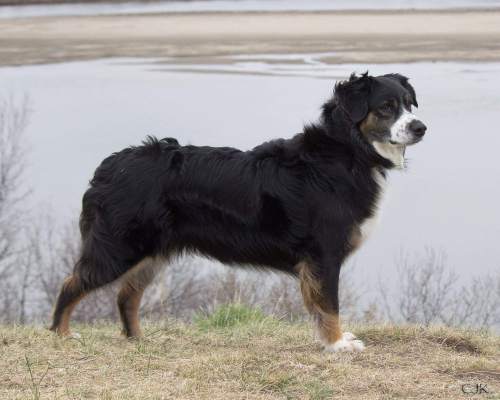
New research from Purdue University’s College of Veterinary Medicine shows that some breeds of dogs have hidden coat colors – and in some cases, other traits – that have been lurking all along. Example: There are around 18 recognized breeds of dogs that have the genetic potential to be born without a tail – such as the popular Australian Shepherd (shown in photo). But the data shows that up to 48 of the breeds analyzed possess the tailless gene variant, usually at a very low frequency.

Led by Kari Ekenstedt, DVM, Ph.D., assistant professor of anatomy and genetics, and Dayna Dreger, Ph.D., the lead scientist in Ekenstedt’s canine genetics research laboratory, the team looked at a dozen different genes in 212 dog breeds. Purdue researchers, together with industry partners at Wisdom Health, analyzed data that had been initially collected by WISDOM PANEL™ for the development of canine DNA tests. The work was published Oct. 28 in PLOS ONE.

“These are purebred dogs with traits that their breed clubs say they’re not supposed to have,” said Ekenstedt, whose research program focuses on canine genetics. “The message of this paper is, ‘Hey, these gene variants exist in your breed, and if a few dogs are born with these traits, it’s not caused by accidental breeding and it’s not a mutt; it’s a purebred showing this known genetic potential.’”

Along with analyzing the data, researchers used standard breed descriptions from major American and international dog breed registries to determine coat colors and tail lengths that were accepted within each breed.

“There was a lot of information we didn’t expect,” Dreger said. “When it comes to different dog breeds, their standards are mostly based on preference and aesthetics. We make assumptions for certain breeds based on what we expect their coat colors to be.”

Ekenstedt says coat color genes have a significant amount of epistasis between them, meaning that what happens at one gene can mask what’s happening at another gene. Because of epistasis, it’s rare to see those masked genes actually expressed in a dog’s coat color.

One example of a “fault” allele – a gene variant that would cause a trait that is not allowed in a breed standard – is an allele that causes the brown color, which affects both hair pigment and skin pigment. The color is allowed in breeds like the Labrador Retriever where it causes the chocolate color. However, researchers observed that in breeds where brown is not allowed, such as the Rottweiler and the German Shepherd Dog, brown alleles exist at low frequencies.

Another example of a fault allele is in the Weimaraner, which exists in both longhaired and shorthaired varieties. At least one dog breed organization does not allow longhaired Weimaraners while several others do allow them.  Of the Weimaraners sampled in this data, the longhaired allele is present at a 4% frequency.

The same goes for other traits, too, Dreger said. For example, there are around 18 recognized breeds of dogs that have the genetic potential to be born without a tail – such as the popular Australian Shepherd. But the data shows that up to 48 of the breeds analyzed possess the tailless gene variant, usually at a very low frequency; one of those breeds is the Dachshund.

“A breeder would certainly be surprised to see a Dachshund born without a tail,” Dreger said. “The chances are low, but our research shows that the potential is there.”

Both Dreger and Ekenstedt hope the research prompts some discussions within the dog community.

“I want this to start science-based conversations,” Dreger said. “We’re not here to make decisions on what a breed should or shouldn’t look like or what a breed club should do. We’re here to say these are the facts, and these are the gene variants that naturally exist in these breeds.”

They also hope it changes some perspectives when it comes to what is to be expected with certain breeds of dogs.

“There’s an assumption that the standards for these different breeds of dogs are set in stone,” Dreger said. “People will often make assumptions that if it doesn’t match this, it’s not purebred. This data shows that there is a lot of variation in some of these breeds, and the standards are not as concrete as we expect them to be.”

Wisdom Health funded a Veterinary Summer Scholar position to Blair Hooser, a student at the Purdue College of Veterinary Medicine and coauthor on the paper, for this work. Partial support for Dr. Ekenstedt was provided by the National Institutes of Health.

Source:  Purdue University media release

Dachshund gait research has broader implications for rehab medicine

The trademark wiggle of a dachshund’s stride could point to more than just life with little legs.

Over the summer, a team at the Western College of Veterinary Medicine set out to characterize what the breed’s normal gait looks like in order to better detect abnormalities like back injuries.

Dachshund

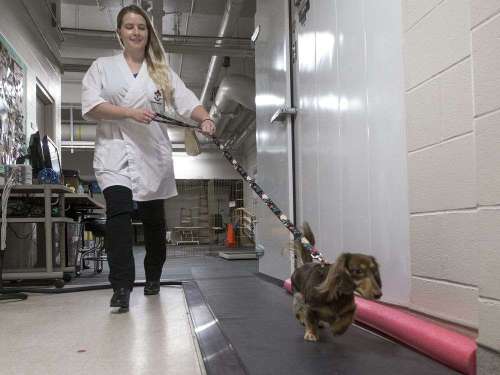
Veterinary student Rachel McCann takes Juniper down a pressure walkway. The research project focused on how dachshunds walk and found they put more weight on their front limbs than other breeds. Liam Richards / Saskatoon StarPhoenix

Supervised by Drs. Romany Pinto, Danielle Zwueste and Kira Penney, veterinary student Rachel McCann trotted 30 dachshunds through the Veterinary Medical Centre’s canine rehabilitation centre and looked at how they moved.

Ultimately, the findings will go toward a second project looking at rehabilitating dogs of various breeds with spinal injuries. Because it’s expected that many of the subjects involved in that project will be dachshunds, it made sense to establish a norm to work from, McCann said.

The research, already completed on a handful of breeds like labradors and beagles, is the first to focus on dachshunds.

“There hasn’t been any papers published on them and what the normal parameters for them are,” she said. “They’re a breed that suffers from intervertebral disc disease, and that comes in so often for rehab medicine. So it would be really useful to the veterinary community to know what’s normal in them.”

The subjects, volunteered by owners in Saskatoon, walked across a computerized pressure walkway connected to an interface that measured various aspects of their gait, like pressure distribution and length of stride.

“One thing that we focused on, because we found it was different in dachshunds from other breeds that have been studied before, is how much weight they place in their front limbs compared to their hind limbs,” McCann said.

The project found that dachshunds have a higher thoracic to pelvic force ratio than other breeds, meaning they put more weight on their front limbs.

McCann said she was initially drawn to the field of veterinary rehabilitation while working with her own dog when she suffered from a torn ligament.

“I brought her in for the treatments and it was really a fun time. They gave me a treatment plan where I had to go home and work with her on rehabilitating her,” she said.

“What I like about veterinary rehabilitation is that it really harbours the human-animal bond. This summer has been one of the best experiences of my life.”

Source: Saskatoon Star Phoenix, 25 September 2019

Bad teeth revealed as biggest problem for pet greyhounds

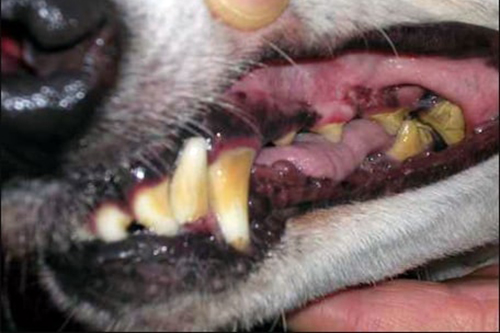
Dental disease is the most common health issue facing pet greyhounds, according to the largest ever study of greyhounds treated in first opinion veterinary clinics. The research, led by the Royal Veterinary College’s (RVC) VetCompass programme in collaboration with the University of Bristol Vet School, reveals that 39 per cent of greyhounds suffer from dental problems, which is a far higher percentage than for any other dog breed.

greyhound dental disease

As well as bad teeth, the research revealed that traumatic injuries, overgrown nails and osteoarthritis are also major concerns for pet greyhounds. Overgrown nails affected 11.1 per cent of greyhounds, wounds 6.2 per cent, osteoarthritis 4.6 per cent and claw injury 4.2 per cent.

Greyhounds in the UK are typically used for racing during their early lives, with an increasing number rehomed as pets after their racing careers are over. The results of this study, which is published in Canine Genetics and Epidemiology, adds significantly to evidence available for the debate on the welfare issues surrounding greyhound racing. It will also help breeders and regulators to prioritise activities to mitigate the worst of the harm to greyhounds from their racing careers, as well as help greyhound rehoming organisations advise adopters on optimal preventative care options.

Researchers studied 5,419 greyhounds seen by first opinion vets in 2016. Key findings include:

  • The most common disease in greyhounds was dental disease (39.0 per cent affected). This is much higher than reported for other larger breeds such as the German Shepherd Dog (4.1 per cent) or the Rottweiler (3.1 per cent);
  • Urinary incontinence was more common in female greyhounds (3.4 per cent) than males (0.4 per cent);
  • Aggression was more commonly reported in males (2.6 per cent) than females (one per cent);
  • The median lifespan for greyhounds is 11.4 years, compared to the 12 years previously reported for dogs overall;
  • The most common causes of death in greyhounds are cancer (21.5 per cent), collapse (14.3 per cent) and arthritis (7.8 per cent).

Dr Dan O’Neill, Veterinary Epidemiologist and VetCompassTM researcher at the RVC, who was the main author of the paper, said: “Pet greyhounds are now a common breed treated in general veterinary practices in the UK. Retired racing greyhounds can make very good pets, but these results sadly show that they also carry health legacies from inherent breed predispositions as well as impacts from their prior racing careers. These potential problems include bad teeth, behavioural issues and arthritis. Our new VetCompass evidence especially reveals a worryingly high level of dental disease. This awareness should encourage all those who care for the greyhound to prioritise preventive and remedial strategies for these issues and therefore to  improve the welfare of this lovely breed, both before and after rehoming as pets.”

Dr Nicola Rooney, co-author and lead researcher on Greyhound Welfare Project at the Bristol Veterinary School, added: “Greyhounds can make fantastic pets and live long healthy lives, but it has long been suspected that they are particularly prone to dental problems which can negatively impact upon their quality of life. Here we have the first evidence that levels of dental issues are higher in greyhounds than in other breeds. This highlights the importance of conducting research into ways of improving dental health.

“At Bristol we have been conducting a three-year research programme to further understand what causes dental problems in greyhounds and methods to avoid them. Combined with the current RVC study, this is an important step to understanding and improving the future welfare of greyhounds.”

Professor Steve Dean, Chairman of the Kennel Club Charitable Trust (KCCT), explained: “I must declare an interest in this study as my additional role as Chairman of the Greyhound Trust reveals my enthusiasm for this lovely breed. It will come as no surprise to those who love greyhounds that dental plaque is a significant condition in this breed. This latest study from the VetCompass initiative reveals the extent of the problem and should stimulate interest in further work to understand why periodontal disease is such an issue for both the racing dog and the retired greyhound. Effective research could also have a far reaching impact for several other breeds that suffer a similar challenge. The VetCompass programme has been helpful in revealing breed specific problems and this study is yet another informative analysis   of extensive clinical data. The Kennel Club Charitable Trust regards the financial support it provides as a successful investment in clinical research.”

Paper

Greyhounds under general veterinary care in the UK during 2016: demography and common disorders by O’Neill, D.G., Rooney, N.J., Brock, C., Church, D.B., Brodbelt, D.C. and Pegram, C. in Canine Genetics and Epidemiology [open access]

Source:  University of Bristol media statement

Your Kelpie is not a Dingo

Many kelpie owners wonder if their dog has a little bit of dingo in them. Some believe the kelpie was bred with the dingo to make them more resilient to the Australian climate. New research suggests this may be bush folklore.

Researchers at the University of Sydney have found no genetic evidence that the iconic Australian kelpie shares canine ancestry with a dingo, despite Australian bush myth.

The paper, published in the journal Genes, is the first peer-reviewed study of its kind to find that the domestic and wild dogs share no detectable common DNA in genes impacting coat colour and ear type.

Professor Claire Wade with Peppa and Cash (right). Photo by Vanessa Saines.

Some kelpie owners and “old-timers” believe the kelpie breed contains genes from the Australian dingo, said Professor Claire Wade in the School of Life and Environmental Sciences.

It has been said that the dingo was mixed with the kelpie, which originally came from Scotland, to produce a more-resilient and hardy dog that could withstand hot, dry Australian conditions,” Professor Wade said.

“Our analysis shows there is no genetic evidence for this from any genes affecting the way the domestic and wild dogs look,” Professor Wade says.

Professor Wade, who is an expert in dog genetics, said some people have come to believe there is a connection simply because the two dogs look similar. They both have pricked up ears, a similar body shape and hair texture, and some kelpies are yellow or cream in colour.

“There’s a bit of Australiana and sentiment here,” Professor Wade said. “We wish the Australian kelpie was somehow special or unique to us. But the breed has come from Scotland and the way we made it our own was by selecting it for our harsh climate.”

The study characterised known gene variants of both kelpie types (Australian kelpie —conformation; Australian working kelpie — herding) and compared the variants present with those in sequenced Australian dingoes.

Genes assessed included identified coat colour and ear type variants. None of the coat colour or ear type genes analysed offered support for a shared family history.

Kelpies in Australia

The kelpie was brought to Australia in the late 1800s from Scotland. They are a herding dog derived from the Scottish smooth collie or farm collie. There are two types of kelpies developed in Australia: the working kelpie, which has been selected specifically to handle the Australian climate and working conditions, and the conformational kelpie, which is usually a single colour all-over and is more likely to live in the city.

The best-known Australian kelpie in popular culture is Koko, the dog in the movie Red Dog.

Dingoes are believed to have arrived in Australia more than 4000 years ago, most likely with Asian seafarers.

The kelpie samples in the research were obtained as part of a larger genetic project helping breeders produce the best possible working dogs. Owners of working kelpies are invited to take part in a survey of current working dogs and their behaviours.

Source:  The University of Sydney

Mutation makes bulldogs and Norwich terriers more susceptible to breathing problems

The discovery of a new mutation associated with breathing difficulties in popular dog breeds suggests that shortened skulls causing flat faces is not the only factor that contributes to the condition, but that swelling around the airways from edema may also play a role. Jeffrey Schoenebeck of the University of Edinburgh and colleagues report these findings in a new study published 9th May 2019 in PLOS Genetics.

Respiratory diseases are prevalent across dog breeds, particularly in brachycephalic breeds such as the Bulldog and French bulldog. The flat facial conformation of these breeds has long been assumed to be the major predisposing factor, however, the underlying genetics of their respiratory condition has never been elucidated.

Upper Airway Syndrome

The research team became interested in the Norwich Terrier, a breed presenting with many of the same respiratory disease symptoms as the Bulldog. A distinction, however, is that the Norwich terrier is not considered to be a brachycephalic breed and so presented an opportunity to dissociate respiratory disease from head conformation.

The researchers performed a genome-wide association analysis for respiratory disease severity in the Norwich Terrier and resolved an association on chromosome 13 to a missense mutation in ADAMTS3. Variants in this gene were previously shown to cause an oedematous phenotype–a disease characteristic in the airways of affected Norwich Terriers and brachycephalic dogs alike. The researchers screened over 100 breeds for the ADAMTS3 variant and found that it is enriched in the Norwich Terrier, Bulldog and French Bulldog. This discovery changes how we view respiratory disease predisposition in the dog, offers potential genetic screens and highlights a new biological function for ADAMTS3.

The study presents a new way of looking at these respiratory diseases in dogs, where fluid retention in the tissue that lines the airways makes it more likely that dogs with the mutation will develop breathing obstructions. “We conclude that there are additional genetic risk factors, that if inherited, will likely lead to airway disease in dogs regardless of their face shape,” stated author Jeffrey Schoenebeck. “The challenge ahead is to integrate these ideas, and implement sensible breeding practices and treatments that consider various health risks including those presented by the mutation of ADAMTS3.”

If scientists develop a test for this mutation, then dog breeders can develop better breeding practices to avoid passing on the faulty gene. Additionally, screening for the mutation may help veterinarians identify dogs which are at risk of UAS, and in particular identify the dogs at risk of swelling of their airways after surgical treatment, which is a common, life-threatening post-operative complication.

Sources:  Science Daily and PLOS Genetics

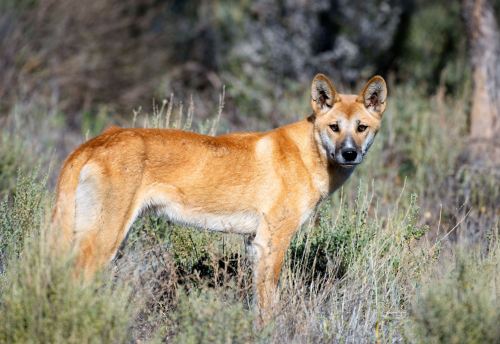
The Australian Dingo is unique

Since the arrival of British settlers more than 230 years ago, most Australians have assumed dingoes are a breed of wild dog.

Now 20 leading researchers have confirmed in a new study that the dingo is actually a unique, Australian species in its own right.

Dingo

Dingoes play a vital ecological role in Australia by competing with introduced predators like feral cats and foxes, researchers say. Photo: Getty Images.

The latest findings provide further evidence of specific characteristics that differentiate dingoes from domestic dogs, feral dogs, and other wild canids such as wolves.

The finding that a dingo is not a ‘dog’ comes after the Government of Western Australia contemplated declaring the dingo as ‘non-fauna’, which would have given more freedom to landowners to kill them without a licence.

Co-author Professor Corey Bradshaw of Flinders University says the classification of dingoes has serious consequences for the fragile ecosystems they inhabit, and state governments are required to develop and implement management strategies for species considered native fauna.

“In fact, dingoes play a vital ecological role in Australia by outcompeting and displacing noxious introduced predators like feral cats and foxes. When dingoes are left alone, there are fewer feral predators eating native marsupials, birds and lizards.

“Dingoes can also increase profits for cattle graziers, because they target and eat kangaroos that otherwise compete with cattle for grass in semi-arid pasture lands,” says Professor Bradshaw.

Lead author, Dr Bradley Smith from Central Queensland University, says the scientific status of the dingo is contentious, resulting in inconsistency in government policy.

“The dingo has been geographically isolated from all other canids, and genetic mixing driven mainly by human interventions has only been occurring recently,” Dr Smith says.

“Further evidence in support of dingoes being considered a ‘wild type’ capable of surviving in the absence of human intervention and under natural selection, is demonstrated by the consistent return of dog-dingo hybrids to a dingo-like canid throughout the Australian mainland and on several islands.

“We have presented scientifically valid arguments to support the ongoing recognition of the dingo as a distinct species (Canis dingo), as was originally proposed by Meyer in 1793.”

Dr Smith says little evidence exists to support the notion that any canid species are interchangeable with dingoes, despite the fact that most canids can successfully interbreed.

“There is no historical evidence of domestication once the dingo arrived in Australia, and the degree of domestication prior to arrival is uncertain and likely to be low, certainly compared to modern domestic dogs.”

“We show that dingoes have survived in Australia for thousands of years, subject to the rigours of natural selection, thriving in all terrestrial habitats, and largely in the absence of human intervention or aid,” Dr Smith says.

“The dingo is without doubt a native Australian species,” concludes Professor Bradshaw.

Source:  Flinders University media release

Love is Blind – Health is Real

I’ve been practising for ten years now and, during this time, I’ve seen a fair number of the brachycephalic breeds including Pugs, French Bulldogs and English Bulldogs.  These breeds can have a lot of health problems.

In 2016, the Australian Veterinary Association and the RSPCA Australia joined forces to produce the Love is Blind campaign.  Watch this short 3 minute video:

The message is fairly clear – consumer preference is driving the breeding of these dogs.  So increase the understanding of the health implications consequences of that cute, squishy face, and change the breeding standards, too.

In the show ring, it’s suggested that you give the blue ribbon to the healthiest dog.  Not a bad idea.

Kathleen Crisley, Fear-Free certified professional and specialist in dog massage, rehabilitation and nutrition/food therapy, The Balanced Dog, Christchurch, New Zealand

No link between hypoallergenic dogs and lower risk of childhood asthma

Growing up with dogs is linked to a lower risk of asthma, especially if the dogs are female, a new study from Karolinska Institutet and Uppsala University in Sweden shows. However, the researchers found no relation between ‘allergy friendly’ breeds and a lower risk of asthma. The study is published in the journal Scientific Reports.

asthma and child

Children growing up with female dogs, but not with ‘allergy friendly’ dogs have a lower risk of asthma. Photo: iStock

Earlier studies have demonstrated a link between growing up with dogs and a lower risk of childhood asthma, but it has not been known whether this association is modified by dog characteristics. In this new study, the researchers have interrogated how variables such as sex, breed, number of dogs or size of dog are associated with the risk of asthma and allergy amongst children raised in a home with a dog during their first year of life.

“The sex of the dog can affect the amount of allergens released, and we know that uncastrated male dogs express more of a particular allergen than castrated dogs and female dogs,” says Tove Fall, Senior Lecturer at the Department of Medical Sciences – Molecular Epidemiology at Uppsala University, who led the study with Professor Catarina Almqvist Malmros at Karolinska Institutet. “Moreover, some breeds are described anecdotally as ‘hypoallergenic’ or ‘allergy friendly’ and are said to be more suitable for people with allergies, but there is no scientific evidence for this.”

Classified by different traits

The study included all children born in Sweden from 1 January 2001 to 31 December 2004 who had a dog in their home for the first year of life (23,600 individuals). Data from the Swedish population and health data registries were linked anonymously to two dog-owner registries from the Swedish Board of Agriculture and the Swedish Kennel Club. The dogs were classified by sex, breed, number, size and alleged ‘hypoallergenicity’.

The researchers then studied the relationship between the dogs’ characteristics and the risk of asthma and allergy diagnosis or the prescription of asthma or allergy drugs at the age of six. The statistical analyses controlled for all known confounders that could affect the risk of developing asthma or allergies, such as parental asthma/allergy, geographical location and number of siblings.

Their results showed that the prevalence of asthma at age six was 5.4 per cent. Children with only female dogs at home had a 16 per cent lower risk of asthma than those raised with male dogs. However, living with a male dog did not correlate with a higher risk than living with no dog at all. Children living with two or more dogs had a 21 per cent lower risk of asthma than those who only lived with one dog.

Hypoallergenic dogs linked to higher risk of allergy

Children of parents with asthma/allergies more often had breeds described as ‘hypoallergenic’ than children of parents without asthma/allergies – 11.7 per cent versus 7.6 per cent. Exposure to these breeds was associated with a 27 per cent higher risk of allergy but no increased risk of asthma.

“The likely explanation for this higher risk is that families with a history of allergy to furred pets more often choose these dogs, and also that ‘allergy friendly’ dogs do not in fact release less allergens,” says Catarina Almqvist Malmros, Professor at the Department of Medical Epidemiology and Biostatistics, Karolinska Institutet and Consultant at Astrid Lindgren Children’s Hospital.

“The finding should be treated with caution as we can say nothing about any actual causality,” she continues. “More studies are needed to monitor differences over time, measure the risk of allergies using biomarkers, and take account of the microflora.”

The study was financed with grants from the Swedish Research Council, the Swedish Initiative for Research on Microdata in the Social And Medical Sciences (SIMSAM), Agria, Forte, the Swedish Research Council for Environment, Agricultural Sciences and Spatial Planning (Formas), the Swedish Heart and Lung Foundation, Stockholm County Council (ALF funding) and the Strategic Research Programme in Epidemiology (SFO-epi) at Karolinska Institutet.

Source:  Karolinska Institutet media release

There’s a technical term for almost everything – the zoomie

The zoomie is something that greyhounds specialize in.  But, of course, other breeds do them too.

Did you know that the technical term for the zoomie is Frenetic Random Activity Period (or FRAP for short)?

Enjoy these videos of greyhound zoomies!

Kathleen Crisley, Fear-Free certified professional and specialist in dog massage, rehabilitation and nutrition/food therapy, The Balanced Dog, Christchurch, New Zealand