Category Archives: dog care

Dentistry without anesthesia?

I had a phone call yesterday from an older gentleman who wanted to know if I cleaned dogs’ teeth without anesthetic.  (I do not)  I told him that I do sell dog toothbrushes and toothpaste and he wasn’t aware that these things existed!  And then he said that he would never be able to brush his dog’s teeth because he wouldn’t cooperate.

This made me wonder why he thought a dental procedure without sedating his dog was going to be effective.  But I try to be positive when engaging with new clientele; it seems that he was after a procedure that would cost him less money – not necessarily what was appropriate (or comfortable) for his dog.

I explained that I thought he would be better served by having a proper dental cleaning which is a veterinary procedure and then focusing on prevention.  This would include things like teeth-brushing by getting his dog accustomed to the taste of the paste, then gradually introducing the brush with praise and treats (positive reinforcement) throughout.

He thanked me for my advice.

I’ve done a little homework about this practice, because I have concerns whether an animal could truly be treated thoroughly without sedation.  I’ve just been to the dentist myself for a cleaning this week and it isn’t always a comfortable procedure!  Imagine a dog being restrained for it…

The American Veterinary Dental College refers to Anesthesia-Free Dentistry as Non-Professional Dental Scaling (NPDS) and cautions owners against the procedure for the following reasons:

1. Dental tartar is firmly adhered to the surface of the teeth. Scaling to remove tartar is accomplished using ultrasonic and sonic power scalers, plus hand instruments that must have a sharp working edge to be used effectively. Even slight head movement by the patient could result in injury to the oral tissues of the patient, and the operator may be bitten when the patient reacts.
2. Professional dental scaling includes scaling the surfaces of the teeth both above and below the gingival margin (gum line), followed by dental polishing. The most critical part of a dental scaling procedure is scaling the tooth surfaces that are within the gingival pocket (the subgingival space between the gum and the root), where periodontal disease is active. Because the patient cooperates, dental scaling of human teeth performed by a professional trained in the procedures can be completed successfully without anesthesia. However, access to the subgingival area of every tooth is impossible in an unanesthetized canine or feline patient. Removal of dental tartar on the visible surfaces of the teeth has little effect on a pet’s health, and provides a false sense of accomplishment. The effect is purely cosmetic.

3. Inhalation anesthesia using a cuffed endotracheal tube provides three important advantages… the cooperation of the patient with a procedure it does not understand, elimination of pain resulting from examination and treatment of affected dental tissues during the procedure, and protection of the airway and lungs from accidental aspiration.

4. A complete oral examination, which is an important part of a professional dental scaling procedure, is not possible in an unanesthetized patient. The surfaces of the teeth facing the tongue cannot be examined, and areas of disease and discomfort are likely to be missed.

In my blog on Managing Dental Health, I explain the things I do for Daisy to keep her teeth in good condition.  I recommend professional veterinary care to ensure your dog’s oral health, followed by a preventative regime that minimizes the need for future cleanings and anesthesia.

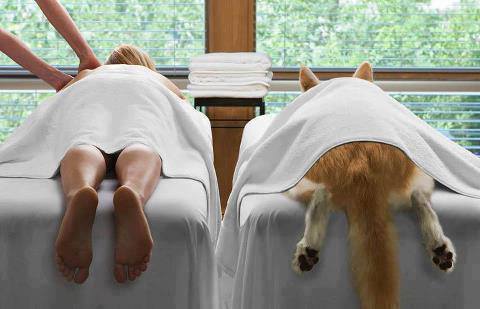
A new dog massage service?

Thought for Friday…

Should I start offering couples massage?

A new way to look at dog massage

Canine cancer: the warning signs and the way to a cure?

According to the Animal Cancer Foundation, one in four dogs will develop cancer in their lifetime.  That’s a pretty scary statistic.  A diagnosis of a malignant cancer for one’s dog is just as traumatic and worrying as a diagnosis of the disease in any member of the family.

Experts in both human and canine cancers agree that we still have much to learn about the types of these diseases and how to treat them.

The National Veterinary Cancer Registry has been launched recently to identify and register pets diagnosed with cancer.  The Registry’s goal is to facilitate and promote medical treatments that lead to advances, higher success rates and eventual cures for cancer in pets and people by matching animals with cancer to clinical trials for new cancer treatments.

NVCR logo

The Registry is a joint venture between the CARE Foundation, Baylor University Medical Center (BUMC) at Dallas and the Texas Veterinary Oncology Group.

Dr Gerald S Post, Founder and President of the Animal Cancer Foundation says there are 10 warning signs of cancer in both dogs and cats.  They are:

1. Swollen lymph nodes: These “glands” are located all throughout the body but are most easily detected behind the jaw or behind the knee. When these lymph nodes are enlarged they can suggest a common form of cancer called lymphoma. A biopsy or cytology of these enlarged lymph nodes can aid in the diagnosis.

2. An enlarging or changing lump: Any lump on a pet that is rapidly growing or changing in texture or shape should have a biopsy. Lumps belong in biopsy jars, not on pets.

3. Abdominal distension: When the “stomach” or belly becomes rapidly enlarged, this may suggest a mass or tumor in the abdomen or it may indicate some bleeding that is occurring in this area. A radiograph or an ultrasound of the abdomen can be very useful.

4. Chronic weight loss: When a pet is losing weight and you have not put your pet on a diet, you should have your pet checked. This sign is not diagnostic for cancer, but can indicate that something is wrong. Many cancer patients have weight loss.

5. Chronic vomiting or diarrhea: Unexplained vomiting or diarrhea should prompt further investigation. Often tumors of the gastrointestinal tract can cause chronic vomiting and/or diarrhea. Radiographs, ultrasound examinations and endoscopy are useful diagnostic tools when this occurs.

6. Unexplained bleeding: Bleeding from the mouth, nose, penis, vagina or gums that is not due to trauma should be examined. Although bleeding disorders do occur in pets, they usually are discovered while pets are young. If unexplained bleeding starts when a pet is old, a thorough search should be undertaken.

7. Cough: A dry, non-productive cough in an older pet should prompt chest radiographs to be taken. This type of cough is the most common sign of lung cancer. Please remember there are many causes of cough in dogs and cats.

8. Lameness: Unexplained lameness especially in large or giant breed dogs is a very common sign of bone cancer. Radiographs of the affected area are useful for detecting cancer of the bone.

9. Straining to urinate: Straining to urinate and blood in the urine usually indicate a common urinary tract infection; if the straining and bleeding are not rapidly controlled with antibiotics or are recurrent, cancer of the bladder may be the underlying cause. Cystoscopy or other techniques that allow a veterinarian to take a biopsy of the bladder are useful and sometimes necessary to establish a definitive diagnosis in these cases.

10. Oral odor: Oral tumors do occur in pets and can cause a pet to change its food preference (i.e. from hard to soft foods) or cause a pet to change the manner in which it chews its food. Many times a foul odor can be detected in pets with oral tumors. A thorough oral examination with radiographs or CT scan, necessitating sedation, is often necessary to determine the cause of the problem.

Helping pet owners make tough choices

When your dog becomes seriously ill, it’s your job as the owner to make decisions about quality of life.  And it’s one of the toughest decisions we face during our lives.

Researchers at Michigan State University  are developing a new tool to help people assess their pet’s quality of life, a key factor in decisions about when to order life-prolonging procedures and when an animal’s suffering means it’s time to put them to sleep.

The research team, led by veterinarian Maria Iliopoulou, created a survey to help dog owners monitor the quality of life of 29 dogs undergoing chemotherapy treatment for cancer.   The owners completed the questionnaire when they received their dog’s cancer diagnosis and answered questions about how their dog was behaving then and how they behaved six months prior to the diagnosis.

Similar questions were asked in questionnaires administered at three and six weeks into chemotherapy. Meanwhile, the veterinarians treating the dogs filled out shorter surveys based on their observations.   The research team wanted to see if owners and clinicians agreed.

The research found that there was a close match between owners and vets, particularly in questions involving play behaviour, the dog’s happiness as perceived by the owner and clinical signs of disease.  These areas of commonality create the basis for a tool that will help to facilitate client and vet communication.  If there’s agreement about what constitutes quality of life, then it is these criteria that owners and vets should use to help agree on next steps for the dog’s care.

For the study, dog owners completed a questionnaire at the time of diagnosis about how the animal was behaving then and how they typically behaved six months prior. Follow-up questionnaires filled out three and six weeks later documented changes in behavior as the dogs underwent chemo. Meanwhile, the veterinarians filled out shorter surveys based on their observations. – See more at: http://msutoday.msu.edu/news/2013/helping-pet-owners-make-tough-choices/#sthash.aUqdUd6n.dpuf
Dr Iliopoulou and her dog Rocky (photo by G L Kohuth)

Dr Iliopoulou and her dog Rocky (photo by G L Kohuth)

The research team has published their results in the Journal of the American Veterinary Medical Association.  All dogs were patients at the Michigan State University Animal Cancer Care Clinic.  The plan is to expand the work using a much larger sample size of patients and Iliopoulou hopes to develop questionnaires for dogs suffering from other diseases as well.

Source:  Michigan State University media statement

ichigan State University researchers are developing a new tool to help people assess their ailing pets’ quality of life, a key factor in decisions about when to order life-prolonging procedures and when an animal’s suffering means it’s time to let go. – See more at: http://msutoday.msu.edu/news/2013/helping-pet-owners-make-tough-choices/#sthash.aUqdUd6n.dpuf

The USA’s first permanent evacuation center (for animals)

Did you know that the USA has an evacuation center to cater for animals?

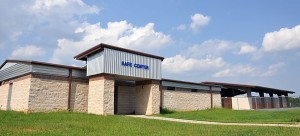
The Georgia State Animal Facility for Emergencies Center (S.A.F.E. Center) is the nation’s first permanent evacuation center for animals.  It recently opened at the Fort Valley State University. The 7,800-square-foot facility contains 105 dog cages, 84 cat cages, stalls for 30 horses plus pastures available for livestock.  It can be activated at short notice in the event of an emergency.

The S.A.F.E. Center

The S.A.F.E. Center

The facility is intended to temporarily house animals rescued from large-scale abuse cases, natural disasters, terrorist attack, as well as household pets whose owners are fleeing due to emergency evacuations.  The Georgia location is ideal for southern state communities that may be fleeing large hurricanes during hurricane season via the interstate highway system.  The University offers the services of an on-site school of veterinary medicine.

Through fundraising, the center is equipped with oxygen masks that can be used on dogs, cats, ferrets, rabbits, guinea pigs, birds and other animals.  Used for resuscitation, these masks could help during emergency surgeries as well as to help animals exposed to toxic fume releases.

Lose the shoes (housekeeping for dog owners)

According to Consumer Reports on Health (March 2013), a significant portion of the dirt, pesticides and pollutants in people’s homes are carried in from outside on shoes and pet paws.

They recommend leaving your footwear at the door and wiping your dog’s feet when they come inside to keep substances that may cause illness off the floor and carpets of your home.

dog with slipper

Hypothermia after surgery involving anaesthetic

A  research team from the Universidad CEU Cardenal Herrera directed by Professor José Ignacio Redondo has published research  in the journal Veterinary Record about the prevalence of hypothermia in dogs after surgery and other diagnostic tests that require anaesthetic. 83.6% of the 1,525 dogs studied presented with the complication, whereas in humans this percentage is between 30 and 60% of cases.

This research supports what many of us have experienced with our own dogs.  For example, when Daisy had a dental cleaning earlier this year, her vet reported to me that her temperature dropped after the surgery and they had extra blankets around her to warm her.  For this and other reasons, I’m glad I use a veterinary practice that is full-service, and I’m not an owner that is focused simply on costs.  (I’ve heard of people shopping around for the lowest cost for a dental; chances are that their pet will not be monitored closely and may not even be given fluids as part of the surgery and recovery.)

The researchers analysed over 1,500 cases of anesthetized animals in the University Clinical Hospitals of the CEU Cardenal Herrera and Cordoba. The variables directly related to hypothermia in dogs registered at the end of an operation include the duration of the pre-anaesthesia and anaesthesia, the physical condition of the animal and, also, their posture during surgery (sternal and dorsal recumbencies showed lower temperatures than lateral recumbency).

Hypothermia is the most common anaesthetic complication in dogs.  The researchers recommend that temperature should be continuously monitored and vets should take preventive measures to avoid heat loss during procedures.

Source:  AlphaGalileo Foundation media statement

Outmoded notion of the alpha wolf

It’s been almost a year and a half since I wrote about the alpha roll myth.  Yet, there are still dog trainers who are using methods that are based on outdated thinking about animal behaviour and training.

Here’s a great video by L David Mech, who wrote “The Wolf: Ecology and Behavior of an Endangered Species” in 1968.  The book, published in 1970 and re-published in paperback in 1981, is often cited as the reason why ‘dominance’ and ‘leadership’ models for dog training are acceptable.

L David Mech now admits he was wrong and has publicly announced on his website that he has pleaded with the publisher to stop publishing his book.

“Alpha” implies competing with others and becoming top dog by winning a contest or battle. However, most wolves who lead packs achieved their position simply by mating and producing pups, which then became their pack. In other words they are merely breeders, or parents, and that’s all we call them today, the “breeding male,” “breeding female,” or “male parent,” “female parent,” or the “adult male” or “adult female.”

In the rare packs that include more than one breeding animal, the “dominant breeder” can be called that, and any breeding daughter can be called a “subordinate breeder.”

I’m a supporter of positive reinforcement training.  Please be on the lookout for trainers who still use outdated information and possibly damaging training techniques.

Deaf pets

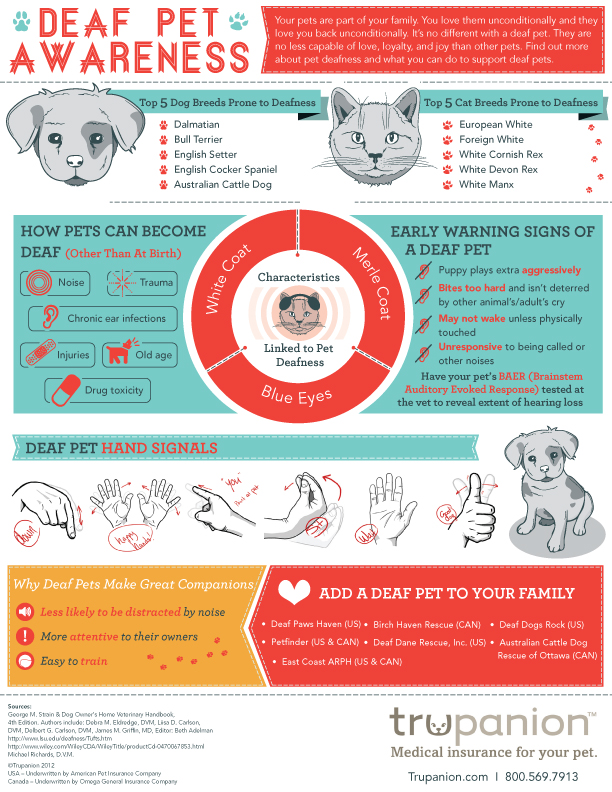
Trupanion, providers of pet insurance, have published this very useful guide to deaf animals.  Deaf pets make great pets.  Yes – they have special needs – but they are often even more attentive to their owners because of their deafness and they are easy to train.

Have you considered adopting a special needs pet?  Consider a deaf one!

DeafPets

NutriScan

Veterinarian Dr Jean Dodds is the inventor of patented NutriScan, a saliva test for food intolerance and sensitivities.

Many people confuse food allergy with intolerance.  Intolerances are the third most common disorder found in dogs and symptoms can include itchy skin or irritable bowel problems.   When people seek out my advice on nutrition, it is often because they know their dog is having a reaction to their food.   Sometimes, picking the culprit is easy (it depends on what the core diet is in the first place), but in others, there appears to be multiple ingredients that are the offenders.

Enter NutriScan, which tests for intolerances to 22 different food ingredients.

Food allergy is an immediate reaction mediated by production of IgE and IgG antibodies. Food sensitivity and intolerance, by contrast, measures a more delayed body response to offending foods by measuring production of IgA and IgM antibodies primarily in mucosal secretions from the bowel.

NutriScan is split into two test panels, so you can order one or both:

Panel 1:                         Panel 2:
Beef                               Chicken Eggs
Corn                               Barley
Wheat                            Millet
Soy                                 Oatmeal
Cow’s Milk                    Salmon
Lamb                             Rabbit
Venison/Deer               Rice
Chicken                         Quinoa
Turkey                            Potato
White Fish                     Peanut/Peanut Butter
Pork                                Sweet Potato

Dr. Dodds recommends that dogs are tested annually because canine food tolerances and intolerances change over time.

I’m pleased to be able to offer this testing to my clients, with NutriScan test kits on hand and ready to be sent to the United States once we take the saliva sample.  Within a week of ordering my test kit supply, my first canine saliva sample is on its way.