Category Archives: Dogs

A bit more about the surfing dogs of Hawaii

Sava and Billy Hamilton have featured in a Eukanuba commercial.  Sava is 11 years old and still surfs:

Malu and Erik Lillmars are often seen on the beach at Waikiki (Oahu).  Malu was homeless before she met Erik, and now they are best buddies in the surf:

And I hope you enjoy this Hawaii Surf Session report, focusing exclusively on the surfing dogs of Hawaii:

Interested in learning to surf with your dog?  Then check out The Dog’s Guide to Surfing:  Hanging Ten with Man’s Best Friend by Kevin Reed.

Kathleen Crisley, specialist in dog massage, rehabilitation and nutrition/food therapy, The Balanced Dog, Christchurch, New Zealand

The surfing dogs of Hawaii

I have just returned from a short holiday in Maui to celebrate my mother’s 80th birthday.   I hadn’t even arrived on Maui when I knew this trip was ‘meant to be’.  The cover story of Hana Hou, the magazine of Hawaiian Airlines, was about dogs who surf!

Read the story, with pictures,  about Buddy Surfing today.

Kathleen Crisley, specialist in dog massage, rehabilitation and nutrition/food therapy, The Balanced Dog, Christchurch, New Zealand

The Museum of the Dog

Heading to St Louis for a vacation with your dog?

Don’t miss the American Kennel Club’s Museum of the Dog.  The museum offers a range of exhibits all about our favourite topic:  dogs!

The museum also has a Fido Friendly Visitation Policy.  The museum actively encourages owners to bring their dogs for a visit, providing fresh water and treats as well as a place to exercise.  Dogs must be obedience trained and on leash to visit.

Dogs visiting at the Museum of the Dog

The Museum of the Dog is located at 1721 South Mason Road in St Louis and is open Tuesday through Saturday from 10 am to 4 pm.   On Sundays, you can visit between 1 and 5 pm.

Admission:  $5.00 adults, $2.50 seniors and $1.00 for children from the ages of 5 – 14.

Kathleen Crisley, specialist in dog massage, rehabilitation and nutrition/food therapy, The Balanced Dog, Christchurch, New Zealand

Sydney’s dog restaurant

Did you know that Sydney has its very own dog restaurant?  This isn’t just a restaurant that allows dogs – this is a restaurant catering for dogs only (owners are not even served here!)

Called Chew Chew, the restaurant is located at Woolstonecraft Station and is open from Wednesday to Sunday.  Meals are prepared on site using organic meats and are formulated using a basic recipe of 50% meat, 25% grain and 25% vegetables.  Owners can ask for an adjusted recipe that meets their dog’s dietary restrictions.

At Chew Chew, dogs can indulge in a number of dishes including chicken risotto, salmon pasta and beef steak.   A three-course set menu consists of an soup entree, followed by salad with beef, chicken or fish, and a cup cake or doggie cappuccino for dessert.

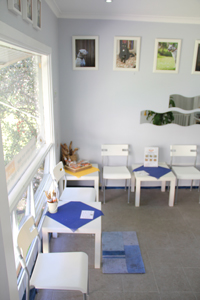
The interior of the Chew Chew Restaurant

Chew Chew also sells takeaway meals for dogs in two sizes:  200 g and 400 g.

Not surprisingly, the opening of the restaurant in 2010 captured a fair bit of media attention.

Sydney dog owners:  take your dog for a special day out at Chew Chew.

Kathleen Crisley, specialist in dog massage, rehabilitation and nutrition/food therapy, The Balanced Dog, Christchurch, New Zealand

Dog imports to New Zealand

Did you know that approximately 3,100 dogs are imported into New Zealand per year?

New immigrants bring their dogs into the country; breeders also import dogs to add to their bloodlines, and individuals import dogs as pets or show dogs.

MAF had to put changes to dog importation rules on hold last month because there was an application for an independent review.   Proposed changes that are now on hold include introduction of a quarantine for dogs coming from Britain and the Irish Republic  (currently these dogs are allowed into the country without quarantine as long as they have lived 6 months in these areas).

Read about the conflict over MAF’s intention to change the rules in this Otago Daily Times article.

Kathleen Crisley, specialist in dog massage, rehabilitation and nutrition/food therapy, The Balanced Dog, Christchurch, New Zealand

Pointer vs Dalmatian

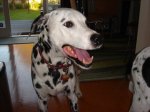
When I am out walking with Daisy, many people stop us to ask, “She’s a Dalmatian crossed with what?”  And I reply politely, “She’s a pure bred English Pointer, actually.  But it is the spots that throw people off.”

With the help of our friend, Olliver (Ollie for short), I am going to explain the differences between a Pointer and a Dalmatian.  
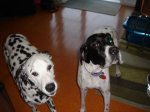
To start off, let’s look at Daisy and Ollie side by side:  they are different!
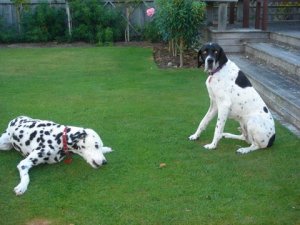
Maybe a side by side comparison will help:

Both dogs are black & white, but Ollie has only small spots whereas Daisy has large and small ones.  Daisy’s head is almost solid black; Olliver’s head has spots all over!

Perhaps the best way to tell the dogs apart is to read Daisy’s lips.  Our friends call these saggy doggy lips.  Ollie’s lips are clearly not the same!
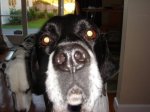
Both dogs shed on a regular basis and are single-coated.  This means that they feel the cold and so their favourite place in winter is in front of the fire.  They also benefit from wearing a coat on colder days.

 Some basic Dalmatian facts:

The Dalmatian is a non-sporting dog and the breed is recognised by the American Kennel Club and the New Zealand Kennel Club, as well as many other clubs worldwide.   Dalmatians are either bi-coloured or tri-coloured. Bi-coloured dogs are black and white and tri-coloured dogs have brown, liver and black spots.  Puppies are born white and their spots develop over time.

The breed has a long history, with some people suggesting that Dalmatians were featured on the walls of the Egyptian pyramids. Gypsies that travelled Europe used Dalmatians to calm horses and provide companionship to travellers.  The word ‘Dalmatian’ is derived from the area of Croatia that was known as Dalmatia.  Dogs were traded for goods to the British, who were the first to breed the dogs.

During the late 1700s, Dalmatians were known to be riding under the axles or alongside the carriages of their noblemen owners for the sole purpose of being a status symbol.  The dogs could run or trot for over a hundred miles in a single day. In the evening, the dogs were placed alongside the horses in the stables to guard and to calm the horses.

When Dalmatians came to America in 1870, they arrived as the mascot to the fire truck and this association with firehouses continues to this day.

Dalmatians are known for their spots, energy, devotion, protective nature and intelligence.

Some basic Pointer facts:

The English Pointer, also known as the Pointer, is a gun dog that is recognised by major kennel clubs worldwide.  Pointers may be liver and white, black and white, lemon and white or orange and white.  The dogs can be tri-coloured and also come as solids.  (Solids are more rare and are much sought after.)

Like the Dalmatian, the Pointer has a long history.  It was bred to be a gentleman’s hunting dog and so they are known for being gentle and well-mannered once they are trained.  History records Pointers as far back as the 1600s, with Pointers being used to locate hares and greyhounds being used to chase them.  The breed is thought to be a cross of Foxhound, Bloodhound, Greyhound, Newfoundland, and Setter.  Other records say that there was a Spanish Pointer that was bred in 17th and 18th century to form the basis of today’s breed.

Pointers are often shown ‘on point’ when they are standing still and pointing at the location of birds.  Pointers are not naturally known for their retrieving skills but they can be trained to find dead or wounded game.

Pointers are known for their strength, cleverness, dependability, hardworking nature, loyalty and congeniality.

Famous dogs

Sensation was one of the most famous Pointers.  He was imported to the United States in 1876 and is the mascot for the Westminster Kennel Club, appearing on their emblem.

The Pointer ‘on point’ is also the official registered trademark of the Rodd & Gunn clothing company and the image of the Pointer is found on all of their menswear garments. 

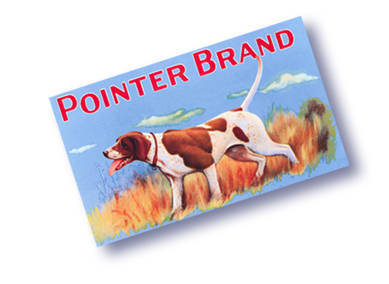
Pointer Brand clothing has also been manufactured in the United States since 1913.  The company’s logo features Carolina Bill, the dog of Landon Clayton King who founded the company, L. C. King Manufacturing Company, in Tennessee. 

Sparky® the Fire Dog is one famous Dalmatian.

He is the mascot and logo for the National Fire Protection Association.  Perhaps the best known Dalmatians are Pongo, Perdita, Prince and the puppies made famous by 101 Dalmatians.  The One Hundred and One Dalmatians was a novel published in 1956 by Dodie Smith that was made into animated films by Walt Disney Productions.

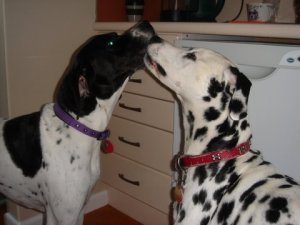
I hope that this article gives you some better information about why Pointers are different from Dalmatians.   Despite their differences, the dogs get along just fine!
Sources:

 www.allsands.com

www.dogbreedinfo.com

www.dogster.com

www.trademarkia.com

www.wikipedia.org

Kathleen Crisley, specialist in dog massage, rehabilitation and nutrition/food therapy, The Balanced Dog, Christchurch, New Zealand

Paddy the Wanderer, Wellington NZ

Whenever I travel for work, I love to share information on dogs from those locations.  Having been in Wellington this week, I took the time to visit a favourite site of mine:  Paddy the Wanderer’s drinking fountain.

Located on the Wellington waterfront in front of the Academy of Fine Arts building, this memorial was erected in 1945 in the memory of an Airedale Terrier who was nicknamed Paddy the Wanderer.

The drinking fountain for people and dogs erected as a memorial for Paddy the Wanderer in Wellington, New Zealand

Paddy’s original name was believed to have been Dash and he was owned by a little girl named Elsie whose father was a seaman and, for this reason, he was a frequent visitor to the wharves.  Elsie passed away at the tender age of 3 1/2 years from pneumonia and the dog began to wander the foreshore area, some saying it was in search of the little girl.  And somewhere along the line he was given the nickname of Paddy.

Paddy was a celebrity of sorts on the Wellington waterfront during the Depression years.  Harbour board workers, seamen, watersiders  and taxi drivers took turns at paying his annual dog license.  His fame grew as he joined ships that traveled to various port cities in New Zealand and Australia.  In December 1935 he even took an airplane ride in a gypsy moth.

The Wellington Harbour Board gave him the title of Assistant Night Watchman with responsibility for keeping an eye out for pirates, smugglers and rodents.  As he aged, Paddy did less wandering and  he grew ill.  He was given a sickbed in a shed on the wharves and he had many visitors who were concerned for his welfare.

When Paddy died on 17 July 1939, obituary notices were placed in the local papers; a radio tribute was also  broadcast.   Paddy’s body was accompanied to the city council yards for cremation by a funeral procession of black taxis.

Paddy’s memorial fountain was built using stones taken from Waterloo Bridge in London and paid for with funds raised by his friends and admirers.  Its design includes two drinking bowls at the bottom for dogs, much like the designs for fountains we see today in our dog parks.

Paddy’s story is also told in a children’s book written by Dianne Haworth and published by Harper Collins.

Kathleen Crisley, specialist in dog massage, rehabilitation and nutrition/food therapy, The Balanced Dog, Christchurch, New Zealand

Doggy quote of the month for May

“Bless you for greeting me as if I’ve been gone for a year every time I come in the door.”

– A blessing for your dog (author unknown)

The Corgi

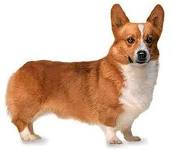
Since I’m on line just hours before the big Royal Wedding, I’ve decided to write about the Corgi, a breed of dog that is often associated with Queen Elizabeth II (and the now deceased  Queen Mother as well).  Queen Elizabeth has 16 corgis!

The Corgi goes by other names:  Pembroke Welsh Corgi or Welsh Corgi for short  (however a Cardigan Welsh Corgi can also be called a Welsh Corgi).  It is a naturally active little dog who has short legs and a long back (often having a back that is twice as long as its legs).  Being a massage therapist, I see corgis that are prone to back problems because of this anatomical structure which can be exacerbated by weight gain (something they do easily).

The dogs are known for their intelligence, devotion and eagerness to please.  The Corgi was bred to herd cattle and is the oldest breed of herding dog.  As a herding breed, however, they can develop problems such as nipping at people’s heels and so they do need training.  The nipping tendency means that they may not be as suitable for homes with smaller children.

Kathleen Crisley, specialist in dog massage, rehabilitation and nutrition/food therapy, The Balanced Dog, Christchurch, New Zealand

D.A.P. for stressed dogs

D.A.P.™ (Dog Appeasing Pheromone) is a great product for dogs who are having problems managing stress.

A pheromone is a natural chemical that animals, especially mammals, secrete which can have an effect on behaviour or development of animals of their species.  D.A.P. is the pheromone that bitches secrete when they have puppies and are lactating.  Within 3-5 days of giving birth, the bitch secretes this pheromone and it has a calming effect on her puppies.

Scientists have isolated this chemical compound and re-created it in the lab, creating the D.A.P. product.   I can speak from experience that this product helps to manage temporary behavioural and anxiety problems.   Things like separation anxiety, the anxiety brought on by a change of home,  having to go to a boarding kennel, or fear of thunderstorms are all situations where D.A.P. can be used.

8-10 sprays of the product (pictured)  are recommended, to be sprayed in the dog’s environment 15 minutes before they are introduced to it.   D.A.P. is also available in a plug-in diffuser that consistently delivers it to the environment.  There is a slight alcohol smell when you first spray the product, this quickly disappears.

You can buy D.A.P. from veterinarians; shop around for the best price!

Kathleen Crisley, specialist in dog massage, rehabilitation and nutrition/food therapy, The Balanced Dog, Christchurch, New Zealand