Category Archives: research

Early-life diet and can­ine atopy can have a con­nec­tion

Meat-based maternal diet during pregnancy and as the puppies’ first solid diet during the early postnatal period (at 1–2 months of age), both showed a significant “protective” effect from atopy in adult age.

Researchers from the international multidisciplinary research group “DogRisk” at the University of Helsinki have found novel early-life risk factors that impact the prevalence of atopic dermatitis in adult dogs. The results are also interesting for human medicine as the disease, atopy, is very similar in young dogs and in children.

The identified risk factors include non-modifiable and modifiable variables in the pre- and postnatal age, being just before or after birth. This new knowledge empowers dog owners, opens up research on processed foods, and advances primary atopy preventive strategies. 

So far over 12,000 dog owners have answered the Finnish internet-based DogRisk food frequency questionnaire. The data allows for associating many non-modifiable and modifiable risk factors with owner-reported canine atopic dermatitis (CAD) prevalence.

As partly reported previously, an increased prevalence of atopy in adult age significantly associated with the dog being from an allergy prone breed, its mother having a history of atopy, and more than 50 % of the dog’s hair coat being white. But the most interesting for the owners are the things that they can have an impact on: early life diet had the strongest association with the disease.

Novel diet-re­lated risk factors for atopy in dogs

A non-heat-processed, meat-based maternal diet during pregnancy and as the puppies’ first solid diet during the early postnatal period (at 1–2 months of age), both showed a significant “protective” effect from atopy in adult age. The same diet also indicated protection at a later puppy stage (at 2–6 months of age), but this finding did not reach significance.

On the contrary, an ultra-processed carbohydrate based maternal diet (commercial dry kibble) during pregnancy and as the puppies’ first solid diet during the early postnatal period, increased atopy incidence in adult age.

“As the differently processed diets also have a very different macro-nutrient profile it is, at this stage, impossible to say whether it is the lack of “cooking”, the minimal amount of carbohydrates, preservatives and coloring agents, the different quality and quantity of animal proteins and fats, the non-sterility of the food, or something else, that made raw foods come out as superior for atopy health in our data”, says the study’s main researcher Dr. Manal Hemida from the Helsinki One Health network.

Additionally, de-worming the dam during pregnancy, exposing the young puppies to sun light for at least one hour per day, spending time on a dirt floor or lawn before six months of age, keeping the young puppies at normal body weight, and continuing to live in the same family where they were born, were all associated with a significant decrease of CAD risk at adult age.

“These results, however, only suggest causality, but do not prove it. A prospective diet intervention during pregnancy and at young age is needed to confirm our findings”, says Adjunct Professor Anna Hielm-Björkman, leader of the DogRisk research group.

Original article in PLOS ONE: Identification of modifiable pre- and postnatal dietary and environmental exposures associated with owner-reported canine atopic dermatitis in Finland using a web-based questionnaire. Manal Hemida, Kristiina A. Vuori, Siru Salin, Robin Moore, Johanna Anturaniemi, Anna Hielm-Björkman. Published: May 29, 2020, https://doi.org/10.1371/journal.pone.0225675

Source: University of Helsinki

Study of ancient dog DNA traces canine diversity to the Ice Age

A global study of ancient dog DNA, led by scientists at the Francis Crick Institute, University of Oxford, University of Vienna and archaeologists from more than 10 countries, presents evidence that there were different types of dogs more than 11,000 years ago in the period immediately following the Ice Age.

In their study, published in Science, the research team sequenced ancient DNA from 27 dogs, some of which lived up to nearly 11,000 years ago, across Europe, the Near East and Siberia.* They found that by this point in history, just after the Ice Age and before any other animal had been domesticated, there were already at least five different types of dog with distinct genetic ancestries. 

This finding reveals that the diversity observed between dogs in different parts of the world today originated when all humans were still hunters and gatherers.

Photo by E.E. Antipina

Pontus Skoglund, author and group leader of the Crick’s Ancient Genomics laboratory, says: “Some of the variation you see between dogs walking down the street today originated in the Ice Age. By the end of this period, dogs were already widespread across the northern hemisphere.”

This study of ancient genomics involves extracting and analysing DNA from skeletal material. It provides a window into the past, allowing researchers to uncover evolutionary changes that occurred many thousands of years ago.

The team showed that over the last 10,000 years, these early dog lineages mixed and moved to give rise to the dogs we know today. For example, early European dogs were initially diverse, appearing to originate from two highly distinct populations, one related to Near Eastern dogs and another to Siberian dogs. However, at some point this diversity was lost, as it is not present in European dogs today.

Anders Bergström, lead author and post-doctoral researcher in the Ancient Genomics laboratory at the Crick, says: “If we look back more than four or five thousand years ago, we can see that Europe was a very diverse place when it came to dogs. Although the European dogs we see today come in such an extraordinary array of shapes and forms, genetically they derive from only a very narrow subset of the diversity that used to exist.” 

The researchers also compared the evolution in dog history to changes in human evolution, lifestyles and migrations. In many cases comparable changes took place, likely reflecting how humans would bring their dogs with them as they migrated across the world.

But there are also cases when human and dog histories do not mirror each other. For example, the loss of diversity that existed in dogs in early Europe was caused by the spread of a single dog ancestry that replaced other populations. This dramatic event is not mirrored in human populations, and it remains to be determined what caused this turnover in European dog ancestry. 

Greger Larson, author and Director of the Palaeogenomics and Bio-Archaeology Research Network at the University of Oxford, says: “Dogs are our oldest and closest animal partner. Using DNA from ancient dogs is showing us just how far back our shared history goes and will ultimately help us understand when and where this deep relationship began.”

Ron Pinhasi, author and group leader at the University of Vienna, says: “Just as ancient DNA has revolutionised the study of our own ancestors, it’s now starting to do the same for dogs and other domesticated animals. Studying our animal companions adds another layer to our understanding of human history.”  

While this study provides major new insights into the early history of dog populations and their relationships with humans and each other, many questions still remain. In particular, research teams are still trying to uncover where and in which human cultural context, dogs were first domesticated. 

*The researchers sequenced ancient DNA from 27 dogs. Their analysis also included previously sequenced genomic data from a further 5 dogs.

Source: The Francis Crick Institute

The first re-homing of laboratory beagles in Finland

The paper’s abstract begins “The fate of experimental animals represents an ethical dilemma and a public concern.” I would say that this is an understatement. But, researchers in Finland decided to re-home their laboratory Beagles once their work was completed and documented the process of helping the dogs to adjust to pet life.


The re-homing of laboratory dogs was the first of its kind in Finland. The re-homing process was started with months of practising basic pet dog skills with the dogs and by familiarising them with the world outside the laboratory.  

The practice period lasted from four to six months, depending on the dog.

“However, we found out that the socialisation time was not quite sufficient for all dogs; owners reported that some dogs continued to be timid and suffer from separation anxiety. The laboratory dog re-homing process would be smoother if in the future laboratory dog facilities separated out the defecation and rest areas, gave dogs access to an outside area and walked them outside on a leash,” says Docent Marianna Norring from the Faculty of Veterinary Medicine at the University of Helsinki.

The dogs had been living in packs of eight dogs for two to eight years in the University’s laboratory animal facilities, from where they had daily access to an enclosed outside space. They spent the nights in smaller groups of dogs.

At the University, the dogs had participated in both animal cognition and veterinary medical studies. The cognition research provided basic information on canine minds, and a new tranquilising agent suitable for dogs was developed in the veterinary medical study. The University of Helsinki does not currently have laboratory dogs.

The re-homing of laboratory dogs was implemented as a collaboration between SEY Animal Welfare Finland and the University of Helsinki. A large group of individuals participated in socialising the dogs and acquainting them with life outside the facility: animal caretakers, researchers, animal-rights campaigners and dog trainers. The aim was to take into account the individual characteristics of each dog when searching for a new home for them. Whenever possible, dogs were re-homed in pairs. Generally speaking, the new owners have been extremely happy about their new pets.

For the study, the dog re-homing process was monitored at the University for four years by interviewing the participants and collecting information from the new owners.  

Article:

Laura Hänninen and Marianna Norring, 2020, The First Rehoming of Laboratory Beagles in Finland: The Complete Process from Socialisation Training to Follow-up, Alternatives to Laboratory Animals (ATLA), Vol 48, Issue 3, 2020.

Source: University of Helsinki

Tracking the working dogs of 9/11

When veterinarian Cynthia Otto was in Manhattan in the wake of the 9/11 attacks helping support the search and rescue dogs, she heard rumors about the possible impact on the dogs’ long-term health.

“I was at Ground Zero and I would hear people make comments like, ‘Did you hear that half of the dogs that responded to the bombing in Oklahoma City died of X, Y, or Z?’ Or they’d say dogs responding to 9/11 had died,” she recalls. “It was really disconcerting.” 

Cynthia Otto (center) cared for search-and-rescue dogs during their work at the 9/11 disaster site, later studying the impact of their service on their health. (Image: Courtesy of Cynthia Otto)

It also underscored to her the importance of collecting rigorous data on the health of dogs deployed to disaster sites. An initiative that launched in the weeks after the Sept. 11, 2001, terrorist attacks did just that, and this week, 19 years later, Otto and colleagues’ findings offer reassurance. Dogs that participated in search-and-rescue efforts following 9/11 lived a similar length of time, on average, compared to a control group of search-and-rescue dogs and outlived their breed-average life spans. There was also no discernible difference in the dogs’ cause of death.

“Honestly this was not what we expected; it’s surprising and wonderful,” says Otto, director of the School of Veterinary Medicine’s Working Dog Center, who shared the findings in the Journal of the American Veterinary Medical Association

While postmortem results showed that dogs that deployed after the 9/11 attacks had more particulate material in their lungs upon their death, it seems this exposure didn’t cause serious problems for the animals in life. The most common cause of death were age-related conditions, such as arthritis and cancer, similar to the control group.

During and in the immediate aftermath of the 9/11 response, Otto and colleagues reached out to handlers to recruit search-and-rescue dogs into a longitudinal study that would track their health, longevity, and cause of death. They recruited 95 dogs that had worked at the World Trade Center, Fresh Kills Landfill, or Pentagon disaster sites. As a control group, they also included in the study 55 search-and-rescue dogs that had not deployed to 9/11.

As part of being involved, the dogs received annual medical examinations, including chest X-rays and blood work. When the dogs died, the researchers paid for the handlers to have veterinarians collect samples of various organ tissues and send them for analysis at Michigan State University. Forty-four of the 9/11 dogs and 19 of the control group dogs underwent postmortems. For most of the other dogs in the study, the research team obtained information on cause of death from medical records or the handlers themselves.

While the team had expected to see respiratory problems in the exposed dogs—conditions that have been reported by human first responders to 9/11—they did not.

“We anticipated that the dogs would be the canary in the coal mine for the human first responders since dogs age faster than humans and didn’t have any of the protective equipment during the response,” Otto says. “But we didn’t see a lot that was concerning.”

In fact, the median age at death for 9/11 dogs was about the same as the control group: 12.8 compared to 12.7 years. The most common cause of death for the dogs that deployed was degenerative causes—typically euthanasia due to severe arthritis—followed closely by cancer, though the risk of cancer was about the same as in control group dogs. 

Otto and her colleagues have ideas for why the foreign particulate matter found in some of the dog’s lungs did not translate to ill health, though they emphasize that they’re speculations, not yet based in data. 

“For the pulmonary effects, it’s somewhat easier to explain because dogs have a really good filtering system,” Otto says. “Their lungs are different—they don’t get asthma, for example—so it seems like there is something about their lungs that’s more tolerant than in humans.”

She notes that working dogs tend to be extremely physically fit compared to pet dogs, perhaps counteracting any ill effects of the deployment conditions on health. But working dog handlers and trainers can always do more to focus on fitness and conditioning, especially because doing so could slow the progression of arthritis, a disease which played a role in the death of many dogs in the study.

“We know when people stop moving, they gain weight and that puts them at a higher risk of arthritis, and arthritis makes it painful to move, so it’s a vicious cycle,” she says. “The same can be true of dogs.”

The mind-body connection may also help explain the difference between humans and dogs and the longevity of the working dogs, Otto says, as dogs don’t necessary worry and experience the same type of stress in the wake of a disaster.

“These dogs have an incredible relationship with their partners,” Otto says. “They have a purpose and a job and the mental stimulation of training. My guess is that makes a difference, too.”

Cynthia Otto is director of the Penn Vet Working Dog Center and professor of working dog sciences and sports medicine in the Department of Clinical Sciences and Advanced Medicine at the University of Pennsylvania School of Veterinary Medicine.

Source: University of Pennsylvania, Penn Today

New research finds Australian labradoodles are more poodle than lab. Here’s what that tells us about breeds

It all started in the late 1980s. Wally Conron, a breeding manager for Guide Dogs Victoria, noticed that some people needing a guide dog appeared to be allergic to the shedding hairs of Labrador retrievers.

Aware of the perception that poodles shed little hair and so shouldn’t create such a reaction, Wally crossed a Labrador retriever with a standard poodle. The result proved to be successful, and breeding “labradoodles” took off around the world, with Wally left standing on the sidelines.

In a new study published in the journal PLOS, an international research team has documented the molecular basis of the Australian labradoodle. Their main conclusion is that animals in the Australian labradoodle breed registry are mostly poodle, and not a 50-50 split as might have been expected. It’s also important to mention the Australian labradoodle is a budding breed, not yet an official one.

These results aren’t surprising to animal geneticists. They provide scientific evidence for the common understanding of how breeders choose dogs to mate for their desirable traits, such as a poodle-like coat. And over generations, this preference leads to a strong genetic predominance in the new breed.

This is Sultan, the very first Labradoodle. Credit: Guide Dogs Victoria

What the research found

The researchers from U.S., Pakistan and South Korea analyzed genetic data from individual Australian labradoodle dogs and a variety of other breeds, including Labrador retrievers and poodles of different varieties. They included dogs from the two distinct types of labradoodles:

Labradoodles: the offspring of a Labrador and a poodle

Australian labradoodles: dogs resulting from generations of breeding and selection among the descendants of early crosses between Labrador retrievers and standard poodles and (as it turns out) the occasional other breed.

So what did the researchers discover? Not surprisingly, the actual offspring of a cross between a Labrador and a poodle have an equal share of genetic material from each breed. We expect this because each pup will have one Labrador chromosome and one poodle chromosome for each chromosome pair.

Also not surprisingly, individual dogs of the Australian labradoodle breed have a range of proportions of Labrador and poodle ancestry, strongly tending towards the poodle.

When first generation labradoodles are bred together, their resulting descendants have a range of genetic contributions from the Labrador or poodle grandparents.

Any pup can have 100% Labrador DNA, 50% poodle DNA or 100% poodle DNA at any particular gene. If a pup accidentally inherits no poodle DNA at the relevant coat genes, then it will have a Labrador coat.

Given the main initial aim of creating labradoodles was to make use of the perceived low-allergenic properties of poodles, the higher proportion of poodle ancestry in Australian labradoodles is expected after generations of selection for a poodle-like coat. This is the main conclusion of the paper just published.

Interestingly, the researchers make the important point that even though a poodle-like coat is widely regarded as being lowly allergenic, there seems to have been no research study that has investigated this. This is an important knowledge-gap that needs to be filled.

The study also found other breeds have made small contributions to Australian labradoodles, including poodles of different size varieties. There’s even a touch of spaniel.

This is a common occurrence. As soon as breeders decide to mix two breeds in the hope of combining some desirable traits, it makes sense to introduce other breeds if it’s thought they could make a useful contribution. For example, a cockerpoo (cocker spaniel crossed with a poodle) might have been mixed in to make the breed smaller.

What does this tell us about the concept of dog breeds?

This study reinforces the common understanding that, from a biological point of view, a breed is an amalgam of genetic variation derived from various sources. It shows Australian labradoodles have considerable genetic diversity, most of it derived from poodles.

As a breed becomes more recognized and more formalized, the only animals that can be registered as members of that breed are the offspring of other registered members. At present, Australian labradoodles are commonly regarded as a breed but are not, so far as we can determine, officially recognized as such by relevant national authorities.

Importantly, there are no scientific criteria for when a breed should become closed and when it should be formally recognized: these are decisions that are made solely by interested breeders and the registering authorities.

What this means for breeders

The Australian Labradoodle Association lists 32 accredited breeders which suggests the breed is a moderately-sized population in Australia. It likely produces 150 to 300 pups per year. This is a population size comparable with many other registered dog breeds in Australia.

As in any population of most animal species, problems can arise in any breed from the mating of close relatives. The more closely related the parents, the greater is the chance valuable genetic variation will be lost from a breed, and the greater the chance of offspring having inherited diseases.

Two examples of problems like this are progressive retinal atrophy (a disorder that causes blindness) and degenerative myelopathy (a disorder that causes paralysis in aged dogs).

Fortunately, pedigree tools are available to enable breeders to consider a wide range of possible matings. DNA tests, which are becoming increasingly available for inherited diseases, can also be very helpful.

The International Partnership for Dogs provides information on resources available for breeders to improve dog genetic health.

In any case, the new research results have provided an important, solid scientific underpinning of the common understanding of how breeds are formed. By combining the desirable aspects of both Labradors and poodles in one breed, the Australian labradoodle is a welcome addition to the dog-breed pantheon.

It is to be hoped breeders of Australian labradoodles, indeed breeders of all breeds, use the available powerful scientific tools to maintain genetic variation within their breed and reduce substantially the chance of inherited diseases.

Source: Phys.org


Why flat-faced dogs remain popular despite health problems

Owners of bulldogs, French bulldogs and pugs are highly likely to want to own their breed again in the future, and to recommend their breed to other owners, according to a study published August 26, 2020 in the open-access journal PLOS ONE by Rowena Packer of the Royal Veterinary College, UK, and colleagues.

Photo by Mia Knight on Unsplash

The development of breed loyalty toward these so-called brachycephalic (flat-faced) dogs may lead to their continued proliferation and popularity, despite their substantial health risks.

In the past decade, the popularity of brachycephalic dogs has dramatically increased worldwide. But these breeds are strongly predisposed to a range of severe disorders, including respiratory disease, eye disease, spinal disease, heat stroke and pneumonia, and their lifespan is reduced by on average four years compared to dogs with longer muzzles. Some veterinarians consider bulldogs, French bulldogs and pugs as having health and welfare too compromised to continue breeding, while owners of pets with chronic illnesses report greater psychological distress and a lower quality of life. It is important to understand factors that influence breed choice to avoid the future proliferation of breeds that are prone to substantial health risks. Toward this goal, Packer and colleagues conducted the first large-scale study to explore owners’ desires to reacquire or recommend the most popular brachycephalic breeds in the UK.

Among the 2168 owners surveyed, 93% would choose to own their current breed again in the future, and two-thirds would recommend their current breed to a potential first-time dog owner. The likelihood of reacquisition or recommendation is increased by first-time ownership and increased strength of the dog-owner relationship, and is decreased by an increased number of health problems and dog behavior being worse than expected. Owners recommend their breed because of positive behavioral attributes for a companion dog, breed suitability for a sedentary lifestyle with limited space, and suitability for households with children. Owners recommended against their breed due to the high prevalence of health problems, expense of ownership, ethical and welfare issues associated with breeding brachycephalic dogs, negative effects upon owner lifestyle and negative behavioral attributes. According to the authors, these results can be used to inform interventions that highlight undesirable traits of brachycephalic dogs and desirable traits of other breeds to control the population boom in brachycephalic breeds in the long term.

The authors add: “Although dog breed popularity often follows a boom and bust pattern, our results are of real concern as they indicate that this ‘brachy boom’ is here to stay. Owners are becoming hooked on the loving personalities of these sweet dogs, but also accepting and normalising their shocking health issues.”

Read: Come for the looks, stay for the personality? A mixed methods investigation of reacquisition and owner recommendation of Bulldogs, French Bulldogs and Pugs here

Source: Science Daily

Big Dogs Face More Joint Problems if Neutered Early

Heavier mixed-breed dogs have higher health risks if neutered or spayed early, according to a new study from researchers at the University of California, Davis. The study found mixed-breed dogs weighing more than 44 pounds as adults are at higher risk for one or more joint disorders if neutered before 1 year of age. Dogs weighing up to 43 pounds had no increased risk for joint problems. The study was published in the journal Frontiers in Veterinary Science.

It’s standard practice in the U.S. and much of Europe to neuter dogs by 6 months of age. This study, which analyzed 15 years of data from thousands of dogs at UC Davis Veterinary Medical Teaching Hospital, suggests dog owners should consider their options carefully.

“Most dogs are mixed breeds,” said lead author Benjamin Hart, distinguished professor emeritus at the UC Davis School of Veterinary Medicine. “We hope this study will influence the spay or neuter process in order to give people wishing to adopt a puppy the time to make an informed decision on when to spay or neuter.” 

Researchers examined common joint disorders including hip dysplasia, elbow dysplasia and cranial cruciate ligament tears, a knee injury, in five weight categories. They also looked at risks of mixed-breed dogs developing cancers based on weight but found no increased risk in any weight category compared to intact dogs.

The risk of joint disorders for heavier dogs can be up to a few times higher compared to dogs left intact. This was true for large mixed-breed dogs. For example, for female dogs over 43 pounds, the risk jumped from 4 percent for intact dogs to 10-12 percent if spayed before a year of age.

Neutering policies should be reviewed

“The study raises unique challenges,” noted co-author Lynette Hart, professor at the UC Davis School of Veterinary Medicine. “People like to adopt puppies from shelters, but with mixed breeds it may be difficult to determine just how big the dog will become if you don’t know anything about the dog’s parents.”

Neutering prior to adoption is a common requirement or policy of humane societies, animal shelters and breeders. The authors suggested the policy be reviewed and modified appropriately. Shelters, breeders and humane societies should consider adopting a standard of neutering at over a year of age for dogs that will grow into large sizes.

Lynette Hart said the study is especially relevant for people and organizations raising service dogs.

“They need to take a serious look at this,” said Hart. “Joint disorders can shorten a dog’s useful working life and impact its role as a family member.”

A previous study conducted by the UC Davis researchers found health risks based on neuter age varied greatly depending on the breed of the dog.

Source: University of California Davis media statement

Study finds parasites common in dog parks

Dogs that visit dog parks may be more likely to have parasites than dogs in the general pet population, according to survey results.

Through tests on feces, researchers found more than one-fifth of dogs at parks across the country (USA) were shedding parasites.

Dr. Susan E. Little, who is a parasitology professor in the Oklahoma State University College of Veterinary Medicine, described results of a study by Oklahoma State and Idexx that identified parasites in feces collected from 85% of parks visited across the U.S. She thinks that figure underestimates the prevalence because of limited sampling per park.

“Many of us have already been made aware or probably could have anticipated that parasites are really common at dog parks,” she said.

Dr. Little described the study results Friday in an Elanco-sponsored presentation for the AVMA Virtual Convention 2020.

Dr. Little also noted that one survey conducted in 2017-18 found that 37% of people bring their dogs on road trips, almost double the proportion who did 10 years earlier.

“Dogs are invited, encouraged to go many more places than was the case just a few years ago,” she said. “And most of us see this as a very good thing.”

But parasites travel with dogs, she said.

In the new study, researchers collected fecal samples from 3,000 dogs over six weeks in July and August 2019 at 288 dog parks across the U.S., with owner permission and participation in questionnaires.

Overall, about 21% of dogs had some parasites. Citing a study from 2009, Dr. Little said about 12% of dogs presented for wellness care at that time were positive for parasites.

Hookworms, whipworms, and Giardia species were the most common among the dogs in dog parks in the new study, although some were infected with roundworms, coccidia, or tapeworms. Most dog parks are open to the public without screening for animal health, Dr. Little said.

The researchers found parasites in the feces of visiting dogs at about 90% of dog parks in the Southeastern U.S., 87% in the Midwest, 80% in the Northeast, and 79% in the West, Dr. Little said.

The South also had the highest rates of positive tests for hookworms, affecting 15% of dogs and 72% of parks, versus a low in the West of 1.5% of dogs and 17% of parks. The Miami area had a particularly high prevalence, with hookworms present in more than one-third of dogs sampled, Dr. Little said.

The researchers found about equal Giardia prevalence across the U.S., with positive samples from about 13% of dogs and about three-quarters of parks. Dr. Little noted many dog parks had wading pools, sprinklers, or splash pads during the summer sampling period, and Giardia species do well in water.

The questionnaire results combined with the sampling also found lower hookworm prevalence among dogs on heartworm preventives, at 6% rather than almost 12% of all dogs. When dog owners said their pets were on heartworm preventives, most of the dogs positive for hookworms were antigen positive only and not shedding eggs, and they may have been reinfected between doses.

Source: AVMA Virtual Convention news

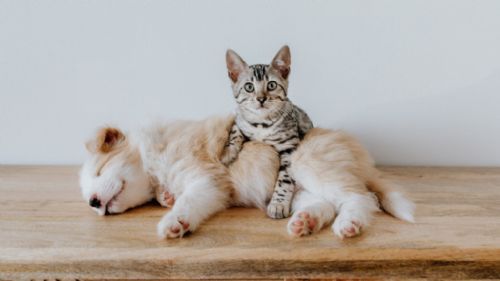
Fighting like cats and dogs? Scientists reveal pheromones are key to harmonious pet relationships

We are all familiar with the old adage “fighting like cat and dog”, but a new scientific study now reveals how you can bid farewell to those animal scraps and foster a harmonious relationship between your pet pooch and feline friend.

Animal behaviour scientists from the University of Lincoln, UK, have discovered that filling your home with appeasing pheromones could be the key to a happy household where both dogs and cats are living under the same roof.

Fighting like cats and dogs

The new research, led by Professor Daniel Mills and Dr Miriam Prior, explored the effects of two different pheromone products on cat-dog interactions in homes where owners could see room for improvement in their pets’ relationships.

Their new scientific paper is now available to read online via the journal Frontiers in Veterinary Science.

The results show that both products used – Feliway Friends, which emits pheromones that are calming for cats, and Adaptil, which does the same for dogs – both had a positive impact on the interactions between cats and dogs living in the same home.

Over a six week period, both products led to a notable decrease in undesirable interactions – such as dog chasing cat, cat hiding from dog, cat and dog staring at each other, and dog barking at cat. Users of Adaptil even observed a significant increase in some desirable behaviours – friendly greetings between cat and dog, and time spent relaxing in the same room.

“Although we are all aware of the perceived tensions between cats and dogs, we believe this is the first study of its kind to explore the use of pheromone products to improve the relationship when the two species are living in the same household,” explained Professor Mills, Professor of Veterinary Behavioural Medicine in Lincoln’s School of Life Sciences.

“Seven per cent of households in the UK own both a cat and a dog, which represents a large number of pet owners and their animals living with potentially stressful animal relationships on a day-to-day basis. Many cat and dog owners report that their animals are comfortable in each other’s company, but where this isn’t the case, a poor relationship between a resident cat and dog can have serious consequences for the welfare of individual animals. There may be an unacceptable level of social stress or restricted access to key resources such as food, water or suitable toilet areas. There will also be increased stress for the remainder of the family (both human and animal), and potential risks of injury due to conflict.”

It has also been reported that a problematic relationship between a new pet and an existing pet is one of the main reasons for cats and dogs being taken to shelters for rehoming.

The pet owners involved in this new scientific trial reported weekly on the frequency of 10 specific undesirable interactions and seven specific desirable interactions between their cats and dogs. They were split into two groups; one group using Feliway Friends and the other using Adaptil, with the pheromones supplied in unlabelled packaging and randomly assigned by an independent staff member such that neither the participants nor the researchers knew which product was being trialled in each household until after the statistics had been collected.

The researchers were aware that in many households, the comfortability of the cat seems to have a stronger influence over the quality of the cat-dog relationship. It could therefore be seen as surprising that it was the product releasing dog pheromones which was seen to increase specific desirable interactions.

Miriam, a Lincoln-based vet who undertook the work as part of her postgraduate degree in Clinical Animal Behaviour at the University of Lincoln, said: “While it might be expected that Feliway Friends would be more effective in multi-species homes given the apparently stronger contribution of the cat’s comfortability to the quality of the cat-dog relationship, this did not appear to be the case. Our results might be explained by the behaviour of the dog being the primary determinant of the cat’s quality of interaction with it.

“We would like to investigate this further to really tease out the effects of these pheromone products individually and also to investigate their use in combination with each other. We suggest that Adaptil may have had such a beneficial effect because a more relaxed dog may be less likely to disturb the cat (e.g. by chasing it), resulting in a cat that is less stressed and more willing to form some form of social bond with the dog.”

Source:  University of Lincoln

Oil spill clean-up gets ‘doggone’ hairy

Dog fur is particularly good at cleaning up crude oil, according to a new study investigating sustainable options to clean up oil spill disasters. Together with human hair recycled from salons, recycled dog fur can be used as an effective and sustainable way to mop up dangerous environmental contaminants on land.

Dog photo oil spills

Oil spill disasters on land cause long-term damage for communities and the natural environment, polluting soils and sediments and contaminating groundwater. Current methods using synthetic sorbent materials can be effective for cleaning up oil spills, but these materials are often expensive and generate large volumes of non-biodegradable plastic wastes.

Now the first comparison of natural-origin sorbent materials for land-based oil spills, including peat moss, recycled human hair, and dog fur, shows that sustainable, cheaper and biodegradable options can be developed.

The University of Technology Sydney (UTS) project found that dog fur and human hair products – recycled from salon wastes and dog groomers – can be just as good as synthetic fabrics at cleaning up crude oil spills on hard land surfaces like highway roads, pavement, and sealed concrete floors.

“Dog fur in particular was surprisingly good at oil spill clean-up, and felted mats from human hair and fur were very easy to apply and remove from the spills,” said lead author of the study, UTS Environmental Scientist Dr Megan Murray.

Dr Murray investigates environmentally-friendly solutions for contamination and leads The Phyto Lab research group at UTS School of Life Sciences.

“This is a very exciting finding for land managers who respond to spilled oil from trucks, storage tanks, or leaking oil pipelines. All of these land scenarios can be treated effectively with sustainable-origin sorbents,” she said.

The sorbents tested included two commercially-available products, propylene and loose peat moss, as well as sustainable-origin prototypes including felted mats made of dog fur and human hair. Prototype oil-spill sorbent booms filled with dog fur and human hair were also tested. Crude oil was used to replicate an oil spill. The results of the study are published in Environments.

The research team simulated three types of land surfaces; non-porous hard surfaces, semi-porous surfaces, and sand, to recreate common oil-spill scenarios.

“We found that loose peat moss is not as effective at cleaning up oil spills on land compared to dog fur and hair products, and it is not useful at all for sandy environments,” Dr Murray said.

“Based on this research, we recommend peat moss is no longer used for this purpose. Given that peat moss is a limited resource and harvesting it requires degrading wetland ecosystems, we think this is a very important finding,” she said.

The research concluded that, for now, sandy environments like coastal beaches can still benefit from the use of polypropylene sorbents, but further exploration of sustainable-origin sorbents is planned.

The researchers say that future applications from the research include investigating felted mats of sustainable-origin sorbents for river bank stabilisation, as well as the removal of pollutants from flowing polluted waters, similar to existing membrane technology.

Publication details:
Decontaminating Terrestrial Oil Spills: A Comparative Assessment of Dog Fur, Human Hair, Peat Moss and Polypropylene Sorbents 

Source: University of Technology Sydney