Category Archives: research

The dog on the editorial board

Read through my blog categories and you’ll notice that the research category is one of the largest.  What can I say?  I’m a bit of a science geek.  I trained and worked in environmental science for over 20 years and so I understand the value of research – it creates new knowledge and underpins new developments that can help us and our dogs.

But research comes at a price – and that’s not just the cost of doing the research.  Research quality is often judged on the basis of whether or not the research has been peer-reviewed.  And like any system, the peer review  and publishing system has become a money-maker for some journals.  Academic staff are judged on their production of papers which show not only their name, but also the name of their employing institution.  When I worked at the University of Canterbury in Christchurch, this system was commonly referred to as ‘publish or perish.’

There are journals that scam researchers into paying to be published when there is no real peer behind the peer review and the journal is one that may look reputable, but isn’t.

peer reviewer

Professor Mike Daube of Curtin University in Australia thought it would be a good idea to challenge the system in a tongue-in-cheek way.  He offered the services of his Staffordshire terrier, Olivia Doll, as a peer reviewer with expertise in subjects like “avian propinquity to canines in metropolitan suburbs” and “the benefits of abdominal massage for medium-sized canines.”

Olivia was approached to peer review at least one article.    The Global Journal of Addiction & Rehabilitation Medicine appointed her as an Associate Editor (no job interview required) and a journal called Psychiatry and Mental Disorders listed her as a member of its editorial board.  At last count, Olivia served on the editorial board of seven journals.

I hope I’m a bit more discerning in selecting the dog-related research that I share on this blog; and wherever possible I include a link to the original source to respect copyright.

Source:  Science Magazine

Kathleen Crisley, specialist in dog massage, rehabilitation and nutrition/food therapy, The Balanced Dog, Christchurch, New Zealand

A chicken-flavored electrolyte drink could help sniffer dogs stay hydrated

The first comparison of three common hydration methods for sniffer dogs shows that while all are effective, dogs drink more and are more hydrated when given a chicken-flavored electrolyte drink compared to plain water or when injected with electrolytes under the skin. The study, published in open-access journal Frontiers in Veterinary Science, also shows that the dogs did not suffer from a buildup of electrolytes from the drink, suggesting that electrolyte drinks are a safe hydration alternative for sniffer dogs, who are at risk of heat stroke in hot weather.

Working dogs, such as search and rescue dogs or police dogs, are crucial assistants when authorities respond to disasters or check for contraband at border crossings. These dogs often work in challenging environments, and can sometimes exert themselves to the point of exhaustion and heat stroke. In fact, hot weather can be dangerous for working dogs, as dogs don’t sweat much and rely on panting to cool themselves, meaning they can overheat easily.

detection dog

The risk of heat stroke increases with dehydration, so one effective way to help working dogs stay safe is to keep them hydrated. However, there are different ways to do this. “People use different techniques to hydrate working dogs,” says Cynthia Otto of the University of Pennsylvania, who was involved in the study. “Dog handlers disagree about the most effective method, and since there was no data on the safety or effectiveness of each technique, we wanted to provide some clarity.”

The classic hydration technique is to provide free access to plain drinking water. A second technique involves delivering water and electrolytes through a needle under the skin, which is known as subcutaneous hydration. Drinks containing electrolytes, such as sodium and potassium, are a third option, but these are controversial. Such drinks make sense as a rehydration aid for humans, as we lose electrolytes when we sweat. However dogs sweat very little, leading critics to say that the drinks could cause an unhealthy buildup of electrolytes in dogs.

The research team investigated these three common hydration strategies in a group of Border Patrol sniffer dogs who inspect vehicles at the Texas border, during the hot summer months. The team took a variety of measurements for each dog, including their hydration levels, fluid intake and work performance.

Happily, all three hydration strategies appear to be effective, and the dogs showed similar behavior, body temperature, and work performance regardless of the way they were hydrated. “In this controlled setting, all the hydration techniques were safe and effective,” says Otto.

However, dogs receiving a chicken-flavored electrolyte drink drank significantly more fluid and had greater hydration levels. Interestingly, these dogs did not suffer from a buildup of sodium, a component of electrolyte drinks that could have negative effects in the body in large quantities. The dogs who drank electrolytes excreted the sodium in their urine, meaning their blood levels remained normal. Overall, the dogs handled the electrolytes well, suggesting they are a safe and effective hydration method.

These results surprised the researchers, as a previous study had reported that dogs who were offered a non-flavored electrolyte drink, drank very little of it. The chicken flavoring may have been key, making the dogs think they were having a tasty treat, but the team will need to investigate this further.

“If a dog is reluctant to drink, then a highly palatable flavored electrolyte solution may give them a boost,” says Otto. “However, these are healthy dogs in a controlled environment, and we don’t know if all electrolyte or flavoring approaches are created equal, so we will need to do further work.”

Journal reference:  Cynthia M. Otto, Elizabeth Hare, Jess L. Nord, Shannon M. Palermo, Kathleen M. Kelsey, Tracy A. Darling, Kasey Schmidt, Destiny Coleman. Evaluation of Three Hydration Strategies in Detection Dogs Working in a Hot Environment. Frontiers in Veterinary Science, 2017; 4 DOI: 10.3389/fvets.2017.00174

Dog ownership linked to lower mortality

A team of Swedish scientists have used national registries of more than 3.4 million Swedes aged 40 to 80 to study the association between dog ownership and cardiovascular health. Their study shows that dog owners had a lower risk of death due to cardiovascular disease or to other causes during the 12-year follow-up.

A total of more than 3.4 million individuals without any prior cardiovascular disease in 2001 were included in the researchers’ study linking together seven different national data sources, including two dog ownership registers. The results are being published for the first time in Scientific Reports. The goal was to determine whether dog owners had a different risk of cardiovascular disease and death than non-dog owners.

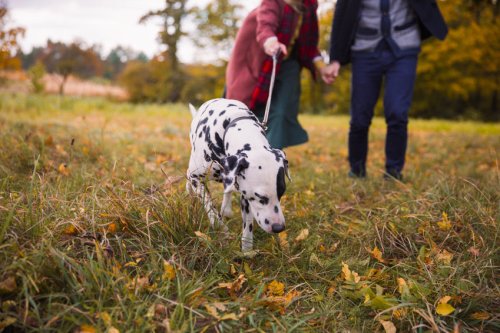
An elderly couple

An elderly couple walks their dalmatian dog. Credit: © Myroslava / Fotolia

“A very interesting finding in our study was that dog ownership was especially prominent as a protective factor in persons living alone, which is a group reported previously to be at higher risk of cardiovascular disease and death than those living in a multi-person household. Perhaps a dog may stand in as an important family member in the single households. The results showed that single dog owners had a 33% reduction in risk of death and 11% reduction in risk of myocardial infarction during follow-up compared to single non-owners. Another interesting finding was that owners to dogs from breed groups originally bred for hunting were most protected,” says Mwenya Mubanga, lead junior author of the study and PhD student at the Department of Medical Sciences and the Science for Life Laboratory, Uppsala University.

In Sweden, every person carries a unique personal identity number. Every visit to a hospital is recorded in national databases, accessible to researchers after de-identification of data. Even dog ownership registration has been mandatory in Sweden since 2001. These scientists studied whether being registered as a dog-owner was associated with later diagnosis of cardiovascular disease or death from any cause.

“These kind of epidemiological studies look for associations in large populations but do not provide answers on whether and how dogs could protect from cardiovascular disease. We know that dog owners in general have a higher level of physical activity, which could be one explanation to the observed results. Other explanations include an increased well-being and social contacts or effects of the dog on the bacterial microbiome in the owner,” says Tove Fall, senior author of the study and Associate Professor in Epidemiology at the Department of Medical Sciences and the Science for Life Laboratory, Uppsala University.

“There might also be differences between owners and non-owners already before buying a dog, which could have influenced our results, such as those people choosing to get a dog tending to be more active and of better health. Thanks to the population-based design, our results are generalisable to the Swedish population, and probably also to other European populations with similar culture regarding dog ownership,” says Tove Fall.

The study was conducted by researchers at Uppsala University, Karolinska Institutet, Stanford University and the Swedish University of Agricultural Sciences.

Source:  Uppsala University media release


Dogs May Protect Against Childhood Eczema and Asthma

Two studies presented at the American College of Allergy, Asthma and Immunology (ACAAI) Annual Scientific Meeting show there may be even more reason to love your dog.

The first study shows babies born in a home with a dog during pregnancy receive protection from allergic eczema, though the protective effect goes down by age 10. A second study shows dogs may provide a protective effect against asthma, even in children allergic to dogs.

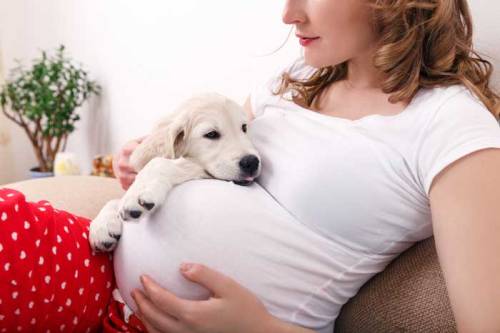
pregnant woman with dog

“Although eczema is commonly found in infants, many people don’t know there is a progression from eczema to food allergies to nasal allergies and asthma,” says allergist Gagandeep Cheema, MD, ACAAI member and lead author. “We wanted to know if there was a protective effect in having a dog that slowed down that progress.”

The study examined mother-child pairs exposed to a dog. “Exposure” was defined as keeping one or more dogs indoors for at least one hour daily. “We found a mother’s exposure to dogs before the birth of a child is significantly associated with lower risk of eczema by age 2 years, but this protective effect goes down at age 10,” says allergist Edward M. Zoratti, MD, ACAAI member and a study co-author.

In the second study, researchers examined the effects of two different types of dog exposure on children with asthma in Baltimore. The first type was the protein, or allergen, that affects children who are allergic to dogs. The second type were elements, such as bacteria, that a dog might carry. The researchers concluded that exposure to the elements that dogs carry may have a protective effect against asthma symptoms. But exposure to the allergen may result in more asthma symptoms among urban children with dog allergy.

“Among urban children with asthma who were allergic to dogs, spending time with a dog might be associated with two different effects,” says Po-Yang Tsou, MD, MPH, lead author. “There seems to be a protective effect on asthma of non-allergen dog-associated exposures, and a harmful effect of allergen exposure.” The researchers believe that a child’s contact with factors other than dog allergen, such as bacteria or other unknown factors, may provide the protective effect. “However, dog allergen exposure remains a major concern for kids who are allergic to dogs,” says Dr. Tsou.

People with dog allergy should work with their allergist to reduce exposure. ACAAI has additional tips for those with dog allergy who keep a dog in the home:

  • Keep your dog out of your bedroom and restrict it to only a few rooms. But know that keeping the dog in only one room will not limit the allergens to that room.
  • After you pet or hug your dog, wash your hands with soap and water.
  • High-efficiency particulate air (HEPA) cleaners that run continuously in a bedroom or living room can reduce allergen levels over time. Regular use of a high-efficiency vacuum cleaner or a central vacuum can also reduce allergen levels.
  • Giving your dog a bath at least once a week can reduce airborne dog allergen.

Abstract Title: Effect of Prenatal Dog Exposure on Eczema Development in Early and Late Childhood.
Author: Gagandeep Cheema, MD

Abstract Title:  The Effect of Animal Exposures on Asthma Morbidity Independent of Allergen Among Inner-city Asthmatic Children.
Author: Po-Yang Tsou, MD, MPH


Source:  American College of Allergy, Asthma and Immunology media release

Dogs are more expressive when someone is looking

Dogs produce more facial expressions when humans are looking at them, according to new research from the University of Portsmouth.

Scientists at the University’s Dog Cognition Centre are the first to find clear evidence dogs move their faces in direct response to human attention. Dogs don’t respond with more facial expressions upon seeing tasty food, suggesting that dogs produce facial expressions to communicate and not just because they are excited.

Brow raising, which makes the eyes look bigger – so-called puppy dog eyes – was the dogs’ most commonly used expression in this research.

Puppy dog eyes

Puppy dog eyes

Dog cognition expert Dr Juliane Kaminski led the study, which is published in Scientific Reports.

She said: “We can now be confident that the production of facial expressions made by dogs are dependent on the attention state of their audience and are not just a result of dogs being excited. In our study they produced far more expressions when someone was watching, but seeing food treats did not have the same effect.

“The findings appear to support evidence dogs are sensitive to humans’ attention and that expressions are potentially active attempts to communicate, not simple emotional displays.”KAMINSKI-dog-eyes

Most mammals produce facial expressions – such expressions are considered an important part of an animal’s behavioural repertoire – but it has long been assumed that animal facial expressions, including some human facial expressions, are involuntary and dependent on an individual’s emotional state rather than being flexible responses to the audience

Dr Kaminski said it’s possible dogs’ facial expressions have changed as part of the process of becoming domesticated.

The researchers studied 24 dogs of various breeds, aged one to 12. All were family pets. Each dog was tied by a lead a metre away from a person, and the dogs’ faces were filmed throughout a range of exchanges, from the person being oriented towards the dog, to being distracted and with her body turned away from the dog.

The dogs’ facial expressions were measured using DogFACS, an anatomically based coding system which gives a reliable and standardised measurement of facial changes linked to underlying muscle movement.

Co-author and facial expression expert Professor Bridget Waller said: “DogFACS captures movements from all the different muscles in the canine face, many of which are capable of producing very subtle and brief facial movements.

“FACS systems were originally developed for humans, but have since been modified for use with other animals such as primates and dogs.”

Dr Kaminski said: “Domestic dogs have a unique history – they have lived alongside humans for 30,000 years and during that time selection pressures seem to have acted on dogs’ ability to communicate with us.

“We knew domestic dogs paid attention to how attentive a human is – in a previous study we found, for example, that dogs stole food more often when the human’s eyes were closed or they had their back turned. In another study, we found dogs follow the gaze of a human if the human first establishes eye contact with the dog, so the dog knows the gaze-shift is directed at them.

“This study moves forward what we understand about dog cognition. We now know dogs make more facial expressions when the human is paying attention.”

It is impossible yet to say whether dogs’ behaviour in this and other studies is evidence dogs have flexible understanding of another individual’s perspective – that they truly understand another individual’s mental state – or if their behaviour is hardwired, or even a learned response to seeing the face or eyes of another individual.

Puppy dog eyes is a facial expression which, in humans, closely resembles sadness. This potentially makes humans more empathetic towards the dog who uses the expression, or because it makes the dog’s eyes appear bigger and more infant-like – potentially tapping into humans’ preference for child-like characteristics. Regardless of the mechanism, humans are particularly responsive to that expression in dogs.

Previous research has shown some apes can also modify their facial expressions depending on their audience, but until now, dogs’ abilities to do use facial expression to communicate with humans hadn’t been systematically examined.

Source:   University of Portsmouth news

Link to publication

Dogs´social skills linked to oxytocin sensitivity

The tendency of dogs to seek contact with their owners is associated with genetic variations in sensitivity for the hormone oxytocin, according to a new study. The findings contribute to our knowledge of how dogs have changed during their development from wolf to household pet.

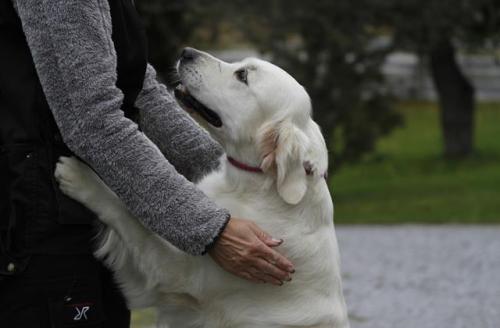
Golden Retriever

A golden retriever turns to his owner for help. Photo credit: Mia Persson

During their domestication from their wild ancestor the wolf to the pets we have today, dogs have developed a unique ability to work together with humans. One aspect of this is their willingness to “ask for help” when faced with a problem that seems to be too difficult. There are, however, large differences between breeds, and between dogs of the same breed. A research group in Linköping, led by Professor Per Jensen, has discovered a possible explanation of why dogs differ in their willingness to collaborate with humans. The results have been published in the scientific journal Hormones and Behavior.

The researchers suspected that the hormone oxytocin was involved. It is well-known that oxytocin plays a role in social relationships between individuals, in both humans and animals. The effect of oxytocin depends on the function of the structure that it binds to, the receptor, in the cell. Previous studies have suggested, among other things, that differences in dogs’ ability to communicate are associated with variations in the genetic material located close to the gene that codes for the oxytocin receptor. The researchers in the present study examined 60 golden retrievers as they attempted to solve an insoluble problem.

“The first step was to teach the dogs to open a lid, and in this way get hold of a treat. After this, they were given the same task with the lid firmly fixed in place, and thus impossible to open. We timed the dogs to see how long they attempted on their own, before turning to their owner and asking for help,” says Mia Persson, PhD student at the Department of Physics, Chemistry and Biology, and principal author of the article.

Before the behavioural test, the researchers increased the levels of oxytocin in the dogs’ blood by spraying the hormone into their nose. As a control, the dogs carried out the same test after having received a spray of neutral salt water in the same way. The researchers also collected DNA using a cotton swab inside the dogs’ cheek, and determined which variant of the gene for the oxytocin receptor that each dog had.

The results showed that dogs with a particular genetic variant of the receptor reacted more strongly to the oxytocin spray than other dogs. The tendency to approach their owner for help increased when they received oxytocin in their nose, compared with when they received the neutral salt water solution. The researchers suggest that these results help us understand how dogs have changed during the process of domestication. They analysed DNA also from 21 wolves, and found the same genetic variation among them. This suggests that the genetic variation was already present when domestication of the dogs started, 15,000 years ago.

“The results lead us to surmise that people selected for domestication wolves with a particularly well-developed ability to collaborate, and then bred subsequent generations from these,” says Mia Persson.

The genetic variations that the researchers have studied do not affect the oxytocin receptor itself: they are markers used for practical reasons. Further research is necessary to determine in more detail which differences in the genetic material lie behind the effects.

Per Jensen points out that the study shows how social behaviour is to a large extent controlled by the same genetic factors in different species.

“Oxytocin is extremely important in the social interactions between people. And we also have similar variations in genes in this hormone system. This is why studying dog behaviour can help us understand ourselves, and may in the long term contribute to knowledge about various disturbances in social functioning,” he says.

The article: Intranasal oxytocin and a polymorphism in the oxytocin receptor gene are associated with human-directed social behavior in golden retriever dogs, Persson, M.E., Trottier, A.J., Beltéky, J., Roth, L.S.V., Jensen, P., 2017, Hormones and Behavior 95, 85–93, published online 17 August 2017. doi:10.1016/j.yhbeh.2017.07.016

Source:  Linköping University media release

Owners of seriously ill pets at risk of stress, anxiety and depressive symptoms

Owners of seriously or terminally ill pets are more likely to suffer with stress and symptoms of depression and anxiety, as well as poorer quality of life, compared with owners of healthy animals, finds a study published by Veterinary Record.

old dog

Caring for a sick or dying pet can be a serious emotional burden. Credit: © tuaindeed / Fotolia

This ‘caregiver burden’ may also lead to increased veterinarian stress, say the authors.

Research on human caregiving describes ‘caregiver burden’ as a response to problems and challenges encountered while providing informal care for a sick family member. But little is known about the impact of caregiver burden on owners of animals with chronic or terminal diseases – and the veterinarians who care for them.

So a team of researchers, led by Mary Beth Spitznagel at Kent State University in Ohio, set out to assess caregiver burden and psychosocial function in 238 owners of a dog or cat.

They compared 119 owners of an animal diagnosed with a chronic or terminal disease with 119 healthy controls blindly matched for owner age and sex and animal species.

Symptoms of stress, anxiety and depression were measured using recognised scales, and quality of life was assessed by questionnaire. Owners’ demographic information was also recorded.

Results showed greater burden, stress and clinically meaningful symptoms of depression and anxiety, as well as poorer quality of life, in owners of animals with chronic or terminal disease. Higher burden was also related to poorer psychosocial functioning.

The authors outline some study limitations which could have introduced bias, but they say their findings “may help veterinarians understand and more effectively handle client distress in the context of managing the challenges of sick companion animal caregiving.”

And they suggest that future research is needed to better understand risks for caregiver burden in the client, how this might be reduced, and how it impacts veterinarian wellbeing.

In a linked commentary, Katherine Goldberg calls for improved training for veterinarians around provision of long term care for serious illness. This includes tailoring treatment plans to client preferences, recognising when clients are distressed, and partnering with mental health professionals to provide support.

“This inaugural exploration of caregiver burden within a veterinary setting is the first step in assessing the impact of veterinary caregiving on clients, as well as the impact of client emotional distress on veterinarian wellbeing,” writes Goldberg. “It is my hope that with continued dialogue, we will continue to build the literature in these essential areas.”

Source:  BMJ press release

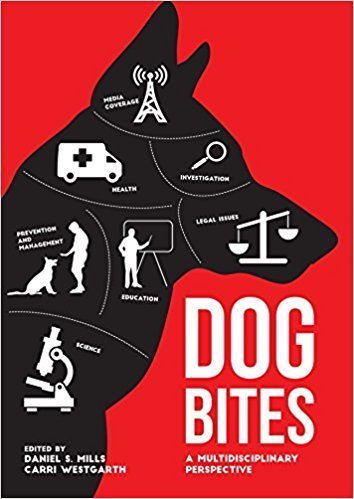
Dog Bites: A Multidisciplinary Perspective

There’s a new book out about the subject of dog bites, taking a multidisciplinary perspective.  I haven’t read it yet – but is positive to see a publication incorporating different views on the issue – all in one place.

Dog Bites is organized into nine sections titled Fundamental Principles, Perceptions of Dogs that Bite, Dog Bites and Risk, Investigative and Legal Issues, Health Issues, Handling the Aggressive Dog, Managing Future Risk, Prevention, and Concluding Comments.

Dog Bites A Multidisciplinary Perspective

The book’s description says:

The issue of dog bites and dog aggression directed at humans is frequently in the media. However, scientific research and evidence on the subject is scattered and sparse. Public and political opinions are often misinformed and out of proportion to the extent of the problem. Dog Bites brings together expert knowledge of the current situation, from a wide variety of disciplines, to provide information to the many people and professions affected by this issue. Subjects range from the practical, medical, behavioural, sociological, and theoretical, but the overall approach of the book is objective and integrative. Topics addressed include: the genetic basis of aggression; the public image of aggressive dogs; bite statistics; risk factors; the forensics and surgical aspects of dog bites; international legal perspectives; court evidence; first aid treatment; zoonotic disease potential; behavioural rehabilitation options; the risk to children; and a consideration of why some dogs kill. All contributors are academic or long-standing professional experts in their field, and they represent a wide spread of international expertise. This issue is an important one for pet owners, vets, animal shelters, and anyone who works with dogs, such as the police. This book will be a valuable resource for them, as well as for animal behaviourists, academic researchers, health professionals, dog breeders, and handlers.

I’m adding this one to my reading list!

Kathleen Crisley, specialist in dog massage, rehabilitation and nutrition/food therapy, The Balanced Dog, Christchurch, New Zealand

Research dog helps scientists save endangered carnivores

Scat-sniffing research dogs are helping scientists map out a plan to save reclusive jaguars, pumas, bush dogs and other endangered carnivores in the increasingly fragmented forests of northeastern Argentina, according to a new study from Washington University in St. Louis.
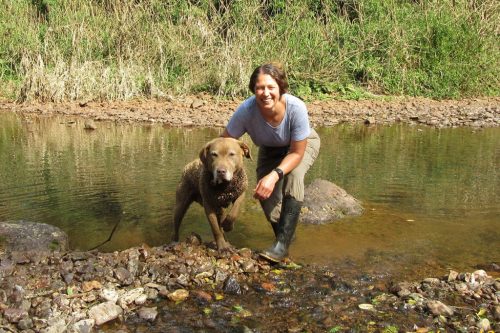
Scat sniffing dog Train

Washington University researcher Karen DeMatteo and her scat-sniffing dog Train are on a mission to preserve jaguars, pumas, bush dogs and other carnivores in the forests of Northeastern Argentina. (Photo: courtesy of Karen DeMatteo/Washington University)

The study explores options for mitigating the impact of human encroachment on five predators who cling to survival in isolated pockets of protected forest surrounded by a mosaic of roadways, unprotected forest, plantations and pastures.

“The study details a least-cost plan for the development of a multispecies biological corridor that connects protected areas in the Upper Parana Atlantic Forest Region of Misiones, Argentina,” said co-author Karen DeMatteo, a biology research scientist and lecturer in environmental studies in Arts & Sciences.

DeMatteo, who has spent 10 years working on the project,  said completion of the corridor model will allow researchers and community leaders to begin working with property owners to establish the habitat corridors.

“This plan is exciting not only for the future of the local biodiversity, but also because it involved a lot of collaboration from the local government and universities to make it happen,” she said.

Recent studies have argued that establishing small, protected reserves for endangered species, even in the best of habitats, is not enough to ensure long-term survival because species must move across their range to breed with other scattered populations and maintain genetic diversity.

Using dogs trained to detect the scat of specific species, DeMatteo’s team searched for evidence of the carnivores’ presence across a broad swath of northeastern Argentina, including public and private wildlife reserves, privately owned plantations, farms and pastures, and along roads and pathways leading to scattered communities.

DNA analysis of more than 900 scat samples collected over several summers allowed researchers to develop detailed maps of the species frequenting these habitats, including a sense of how their movements were influenced by habitat quality, topography, roadways and other human disturbances.

For species such as the jaguar, which rarely crosses into territory disturbed by humans, survival may hinge on the creation of habitat corridors linking isolated population pockets. Because the jaguar is so averse to human interaction, some studies have suggested that habitat corridors designed for it also would cover the needs of other predators.

DeMatteo’s study, which examined the habitat needs of jaguars, pumas, ocelots, oncillas and bush dogs, offers a more nuanced approach, suggesting that the optimal footprint for habitat corridors should be drawn with the overlapping needs of many species in mind.

While some species were less intimidated by the presence of humans, each had its own unique requirements in terms of what constitutes a suitable habitat and the length and width of possible corridor connections.

“Despite variation in body size, the jaguar, puma, ocelot, oncilla and bush dog overlap in their ecological requirements,” the study said. “However, this is not without variation in the degree of habitat flexibility. Puma, oncilla, and bush dog have comparatively higher levels of modified habitats in their potential distributions compared to the jaguar and ocelot.”

By combining data on all five of these species, researchers developed a model that provides maximum habitat connectivity for all species while minimizing the cost of establishing these corridors through privately owned lands and communities.

“The findings illustrate the benefit of using multiple species versus a single species to develop corridors, because using only the highly restricted jaguar to develop the corridor would mean that the potential distributions of the other four carnivores would be restricted and decreased by as much as 30 percent,” DeMatteo said. “So, it appears that, at least in the Misiones province, the jaguar should not be modeled as an umbrella species because the results fail to capture the varied requirements of coexisting species across the breadth of potential habitats.”

DeMatteo and colleagues hope the study provides a methodology for identifying the optimal footprint for proposed habitat connection corridors, while incorporating enough flexibility to ensure that the needs and desires of private landholders can be incorporated into the process.

“The approach in making a corridor a reality is multi-pronged and involves a strong investment from the local community, especially when developing corridors that use existing protected areas as ‘stepping stones,’ as private land will inevitably be involved to varying degrees in and around the corridor,” the study concludes.

Source:  Washington University media statement

Your dog and a 2-year old have similar social intelligence

Most dog owners will tell you they consider their beloved pets to be members of their families. Now research suggests that dogs may be even more like us than previously thought.

Evan MacLean, director of the Arizona Canine Cognition Center at the University of Arizona, found that dogs and 2-year-old children show similar patterns in social intelligence, much more so than human children and one of their closest relatives: chimpanzees. The findings, published in the journal Animal Behaviour, could help scientists better understand how humans evolved socially.

Researchers point for treats

Researchers hid treats and toys and communicated their location to dogs with cues such as pointing or looking in the direction of the concealed item. (Photo courtesy of Evan MacLean)

testing dogs with game based tests

Evan MacLean and his colleagues assessed more than 500 dogs using a battery of game-based tests designed to measure various types of cognition. (Photo courtesy of Evan MacLean)

MacLean and his colleagues looked at how 2-year-olds, dogs and chimpanzees performed on comparable batteries of tests designed to measure various types of cognition. While chimps performed well on tests involving their physical environment and spatial reasoning, they did not do as well when it came to tests of cooperative communication skills, such as the ability to follow a pointing finger or human gaze.

Dogs and children similarly outperformed chimps on cooperative communication tasks, and researchers observed similar patterns of variation in performance between individual dogs and between individual children.

A growing body of research in the last decade has looked at what makes human psychology special, and scientists have said that the basic social communication skills that begin to develop around 9 months are what first seem to set humans apart from other species, said MacLean, assistant professor in the School of Anthropology in the UA College of Social and Behavioral Sciences.

“There’s been a lot of research showing that you don’t really find those same social skills in chimpanzees, but you do find them in dogs, so that suggested something superficially similar between dogs and kids,” MacLean said. “The bigger, deeper question we wanted to explore is if that really is a superficial similarity or if there is a distinct kind of social intelligence that we see in both species.

“What we found is that there’s this pattern, where dogs who are good at one of these social things tend to be good at lots of the related social things, and that’s the same thing you find in kids, but you don’t find it in chimpanzees,” he said.

One explanation for the similarities between dogs and humans is that the two species may have evolved under similar pressures that favored “survival of the friendliest,” with benefits and rewards for more cooperative social behavior.

“Our working hypothesis is that dogs and humans probably evolved some of these skills as a result of similar evolutionary processes, so probably some things that happened in human evolution were very similar to processes that happened in dog domestication,” MacLean said. “So, potentially, by studying dogs and domestication we can learn something about human evolution.”

The research could even have the potential to help researchers better understand human disabilities, such as autism, that may involve deficits in social skills, MacLean said.

Looking to dogs for help in understanding human evolution is a relatively new idea, since scientists most often turn to close human relatives such as chimpanzees, bonobos and gorillas for answers to evolutionary questions. Yet, it seems man’s best friend may offer an important, if limited, piece of the puzzle.

“There are different kinds of intelligence, and the kind of intelligence that we think is very important to humans is social in nature, and that’s the kind of intelligence that dogs have to an incredible extent,” MacLean said. “But there are other aspects of cognition, like the way we reason about physical problems, where dogs are totally dissimilar to us. So we would never make the argument that dogs in general are a better model for the human mind — it’s really just this special set of social skills.”

MacLean and his collaborators studied 552 dogs, including pet dogs, assistance-dogs-in-training and military explosive detection dogs, representing a variety of different breeds. The researchers assessed social cognition through game-based tests, in which they hid treats and toys and then communicated the hiding places through nonverbal cues such as pointing or looking in a certain direction. They compared the dogs’ results to data on 105 2-year-old children who previously completed a similar cognitive test battery and 106 chimpanzees assessed at wildlife sanctuaries in Africa.

Source:  University of Arizona news