Category Archives: research

A bond that goes way back

The special relationship between humans and dogs may go back 27,000 to 40,000 years, according to genomic analysis of an ancient Taimyr wolf bone reported in the Cell Press journal Current Biology on May 21. Earlier genome-based estimates have suggested that the ancestors of modern-day dogs diverged from wolves no more than 16,000 years ago, after the last Ice Age.

The genome from this ancient specimen, which has been radiocarbon dated to 35,000 years ago, reveals that the Taimyr wolf represents the most recent common ancestor of modern wolves and dogs.

his image compares an ancient Taimyr Wolf bone from the lower jaw to a modern pipette.  Photo by Love Dalén

This image compares an ancient Taimyr Wolf bone from the lower jaw to a modern pipette. Photo by Love Dalén

“Dogs may have been domesticated much earlier than is generally believed,” says Love Dalén of the Swedish Museum of Natural History. “The only other explanation is that there was a major divergence between two wolf populations at that time, and one of these populations subsequently gave rise to all modern wolves.” Dalén considers this second explanation less likely, since it would require that the second wolf population subsequently became extinct in the wild.

“It is [still] possible that a population of wolves remained relatively untamed but tracked human groups to a large degree, for a long time,” adds first author of the study Pontus Skoglund of Harvard Medical School and the Broad Institute.

The researchers made these discoveries based on a small piece of bone picked up during an expedition to the Taimyr Peninsula in Siberia. Initially, they didn’t realize the bone fragment came from a wolf at all; this was only determined using a genetic test back in the laboratory. But wolves are common on the Taimyr Peninsula, and the bone could have easily belonged to a modern-day wolf. On a hunch, the researchers decided to radiocarbon date the bone anyway. It was only then that they realized what they had: a 35,000-year-old bone from an ancient Taimyr wolf.

The DNA evidence also shows that modern-day Siberian Huskies and Greenland sled dogs share an unusually large number of genes with the ancient Taimyr wolf.

“The power of DNA can provide direct evidence that a Siberian Husky you see walking down the street shares ancestry with a wolf that roamed Northern Siberia 35,000 years ago,” Skoglund says. To put that in perspective, “this wolf lived just a few thousand years after Neandertals disappeared from Europe and modern humans started populating Europe and Asia.”

Source:  EurekAlert! media statement

Dogs on Prozac – but not exclusively for best results

Dogs who suffer with separation anxiety become more optimistic when taking the animal equivalent of Prozac during behavioural treatment, according to the results of an innovative new study.

Led by researchers at the University of Lincoln, UK, the research has for the first time revealed how the animals feel during the clinical treatment of behaviours associated with negative emotions.

Jess Cook signed up for the study as her dog Lexi would become so distraught when left alone in the house neighbours would complain about her howling.

Jess Cook and Lexi, photo courtesy of University of Lincoln, UK

Jess Cook and Lexi, photo courtesy of University of Lincoln, UK

For five weeks in 2013, Lexi, now seven, took two tablets a day in some butter. She also underwent behaviour management therapy, which taught her to cope better with being separated from her owner.

Miss Cook, who runs Like My Own Pet Care Services in Derbyshire and is studying for her MSc in Clinical Animal Behaviour at the University of Lincoln, slowly built up the amount of time Lexi was left unattended for. It proved successful and now she has come off her medication.

Canine separation-related problems – also described as separation anxiety or separation distress – are among the most common behavioural complaints of dog owners. But the issue of using psychoactive medication to help pets with behavioural problems is a widely debated one.

Treatment with psychoactive medication in parallel with a behaviour modification plan is well documented, but it is unknown if this is associated with an improvement in underlying emotion or mood, or simply an inhibition of the behaviour.

The new study, published in the peer-reviewed veterinary science journal BMC Veterinary Research, has thrown new light on the topic with researchers devising a method to evaluate animals’ emotional state when treated with fluoxetine – the active ingredient in Prozac for humans and Reconcile for pets. Prozac, the trade name for fluoxetine, is typically used to treat depression, obsessive compulsive disorder and anxiety in humans.

The researchers recruited dogs showing signs of separation anxiety, such as barking, howling, destruction of property and toileting when alone, and used a special behaviour test to determine if they were feeling ‘optimistic’ or ‘pessimistic’.

In the test, dogs were taught that when a food bowl was placed in one location it contained food, but when placed in another location that it was empty. The bowl was then placed in ambiguous locations, and the dogs’ response was assessed to determine whether they expected food (i.e. ‘optimistic’) or not (i.e. ‘pessimistic’).

The results indicated that when dogs were treated for separation problems using both a behaviour modification programme combined with fluoxetine treatment that they did become more optimistic, and as their mood improved so did the behaviour problem. The same results were not recorded for the control group.

Research lead Daniel Mills, Professor of Veterinary Behavioural Medicine at the School of Life Sciences, University of Lincoln, said: “For quite a while, I, like many others, have been concerned as to whether drugs such as Reconcile simply inhibit the behaviour and perhaps had no effect on the animal’s mood. With the advent of new methods to assess animal welfare, we were able to answer this question and were pleased to see that, when the drug is used within normal therapeutic ranges, the dogs do indeed seem better.”

“However, it is important to emphasise that animals were treated with both the drug and a behaviour modification programme – with both being essential for effective treatment. Using the drug does seem to bring about a rapid improvement in mood while the animal responds to the training programme. The reality is, whether we like it or not, there are animals who are suffering and we need to take measures to both prevent the problem but also manage it as effectively as possible when it arises.”

Source:  University of Lincoln media release

A closer relationship than with siblings

Matt Cassels had at least 10 pets when he was growing up and yet it had never occurred to him to think about how important his relationships with them were. Until he came to Cambridge and started working on a rich data set from the Toddlers Up Project led by Professor Claire Hughes at the Centre for Family Research.

This 10-year longitudinal study of children’s social and emotional development included a section on children’s relationships with their pets, as well as a broad range of other data from the children, their parents, teachers, and siblings.

William and Peaches 2008 Credit: Amy McCartney

William and Peaches 2008
Photo Credit: Amy McCartney

Matt was looking for a research topic for his MPhil in Social and Developmental Psychology. He says: “The data on pet relationships stood out as it had never occurred to me to consider looking at pet relationships although I had studied children’s other relationships for some time and even though my own experience of pets while I was growing up was so important.”

Research on pet relationships has been going on for some time, but few studies have used the same tool to compare children’s relationships with pets with their other relationships or have focused on how the quality of pet relationships affects outcomes for children.

Matt decided that was what he wanted to focus on. What he found surprised him. He had thought strong pet relationships would make for happier children, but the truth was more complex.

Instead he discovered that children who had suffered adversity in their lives, such as a bereavement, divorce, instability and illness or were from disadvantaged backgrounds, were more likely to have a stronger relationship with their pets than their peers, although they did less well academically and suffered more mental health problems.

Matt says this may be because they come from backgrounds that predispose them to such problems. Despite this, the study showed children with stronger relationships with their pets had a higher level of prosocial behaviour – such as helping, sharing, and co-operating – than their peers. The study also demonstrated that these children, particularly girls and those whose pet was a dog, were more likely to confide in their pets than in their siblings.

Matt says: “It is really surprising that these children not only turn to their pets for support when faced with adversity, but that they do so even more than they turn to their siblings. This is even though they know their pets don’t actually understand what they are saying. “

Asked why the research might show girls talk and argue with their pets more than boys when previous less detailed research tends to suggest it is boys who have a better relationship with their pets, Matt adds: “They may feel that their pets are not judging them and since pets don’t appear to have their own problems they just listen. Even confiding in a journal can be therapeutic, but pets may be even better since they can be empathetic.”

Matt’s research was based mostly on data collected when the children, 88 of whom had pets at the time, were 12 years old, 10 years after they had begun participating in this study. The children, their parents, siblings, and teachers all provided information on prosocial behaviour, emotional wellbeing, academic ability, and children’s relationship with their pet. Matt measured this information against how much children confided in their pet, how much they argued with their pet, what satisfaction they got out of their relationship with their pet, and how often they did things with their pet each day.

To do so he used a new pet attachment scale adapted from an established and psychometrically validated measure of human attachment. His results supported the validity of using the tool and of considering human-animal relationships in similar terms to human-human relationships. “I had to first prove that it was valid to talk about child pet relationships in the same way we talk about sibling relationships and that we were not indulging in anthropomorphism. My research found the tool was better than those that have previously been available so the possibilities for future research in this area are exciting.”

Matt, who is now doing a PhD in the Psychiatry Department with the support of a Gates Cambridge Scholarship, has written two papers on his research, which are currently under review for publication. He says there is a lot more that could be done with the Toddlers Up data, for instance, looking at the impact of pet deaths on children.

“Pets are relatable and ubiquitous,” he says. “In the US and England pets are more common in families with young children than resident fathers and yet we don’t quantify how important they are to us.”

Source:  University of Cambridge press release

Robot dogs likened to Facebook

The Sony Aibo

The Sony Aibo

Sharing your live with a beloved dog is going to become unsustainable, says an Australian researcher, leading to a shift to companion robotic dogs.

Ugh.

Dr. Jean-Loup Rault, an animal welfare researcher at the University of Melbourne, Australia says that this prediction is similar to describing the power of Facebook to someone 20 years ago.  “If you’d described Facebook to someone 20 years ago, they’d think you were crazy. But we are already seeing people form strong emotional bonds with robot dogs in Japan.”

Dr Rault says that when a robot dog dies in Japan because it is not repairable, many owners hold a funeral  for it.

Dr Rault says the consequences of a shift towards robotic pets will be good for people who suffer from allergies, but may also cause a shift in ethics – with people more detached from the suffering of mortal beings.

I don’t want to live in a world that goes backwards in terms of animal welfare.  And I can’t cuddle up in bed at night with a robot, nor see the blissful look on its face when I massage it.

I hope Dr Rault is wrong.

Kathleen Crisley, specialist in dog massage, rehabilitation and nutrition/food therapy, Canine Catering Ltd, Christchurch, New Zealand

You can read Dr Rault’s article in the journal Frontiers of Veterinary Science by clicking here.

Source:  Market Business News

Want a compassionate child? Get a dog!

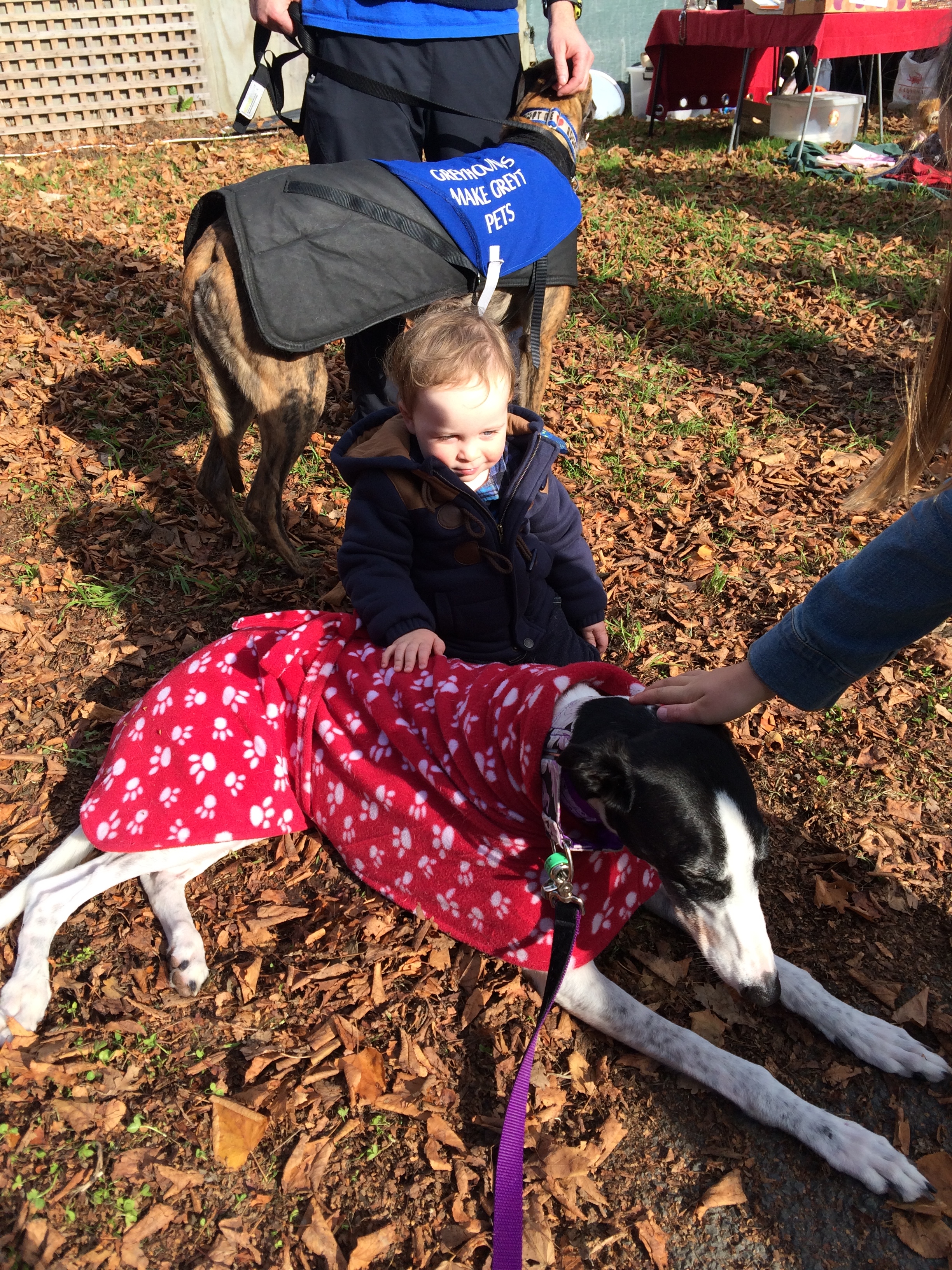
My dog Izzy meets a little boy at a promotion for Greyhounds as Pets

My dog Izzy meets a little boy at a promotion for Greyhounds as Pets

Children who grow up with dogs and cats develop a greater level of emotional intelligence, research shows.

Children living with a pet develop:

a) Compassion – by learning to care for someone other than themselves, and understanding that a dog has feelings

b)  Self-esteem – by being assigned tasks to help care for the family dog

c) Cognitive development – by playing, talking and even reading to the family dog

d) Understanding of life – because our dogs don’t live as long as we do, sometimes it is the loss of a family dog that is the child’s first real loss, teaching them to understand and manage grief.  If your dog has puppies, they also understand that other animals become parents and have little offspring to care for.

And, as in adults, dog ownership is linked to managing stress.  In today’s very modern world, children have more pressures on them at an earlier stage of life.  Having a dog is an outlet for managing stress; such as when a child plays with or walks the dog – exercise helps reduce stress.

Source:  Mother Nature Network


New Directions in Canine Behaviour

New directions in canine behavior

The January 2015 special edition of the journal Behavioural Processes is fully online (until January 2016).  This means you can download .pdf copies of fifteen  interesting research articles about dogs and behavior.

In the opening editorial of this journal, Monique A.R. Udell says that research into social development and cognitive evolution of dogs is just beginning to scratch the surface despite the long history of the human-canine relationship.

I am particularly interested in these fields of research (as my many blog postings under the category of ‘research’ show!) because of the work I do with dogs.  Understanding dogs is critical to working with them in a holistic approach to health.

My only criticism of journal articles generally (not just this journal) is the odd and often long names that researchers choose for the title of their articles.  It is just one indication that researchers work in a different world from generalist audiences; they are often judged in peer reviews for language this is technical.  In my experience as a research manager, I have also found that most academic researchers write in a style using long sentences and paragraphs.

Some of these articles are easier to read than others because of this.

The articles in this issue are:

  • Revisiting the concept of behavior patterns in animal behavior with an example from food-caching sequences in Wolves (Canis lupus), Coyotes (Canis latrans), and Red Foxes (Vulpes vulpes)
  • Assessment of attachment behaviour to human caregivers in wolf pups (Canis lupus lupus)
  • Self-regulatory depletion in dogs:  insulin release is not necessary for the replenishment of persistence
  • Dogs and their human companions:  The effect of familiarity on dog-human interactions
  • Scent of the familiar:  An fMRI study of canine brain responses to familiar and unfamiliar human and dog odors
  • Shut up and pet me!  Domestic dogs (Canis lupus familiaris) prefer petting to vocal praise in concurrent and single-alternative choice procedures
  • A comparison of pet and purpose-bred research dog (Canis familiaris) performance on human-guided object-choice tasks
  • Gazing toward humans:  A study on water rescue dogs using the impossible task paradigm
  • Is that fear?  Domestic dogs’ use of social referencing signals from an unfamiliar person
  • Why do adult dogs ‘play’?
  • Down but not out:  Supine postures as facilitators of play in domestic dogs
  • The advent of canine performance science:  Offering a sustainable future for working dogs
  • Do you see what I see?  Can non-experts with minimal training reproduce expert ratings in behavioral assessments of working dogs?
  • Which personality dimensions do puppy tests measure?  A systematic procedure for categorizing behavioral assays
  • Citizen science:  A new direction in canine behavior research

Kathleen Crisley, specialist in dog massage, rehabilitation and nutrition/food therapy, Canine Catering Ltd, Christchurch, New Zealand


Get Healthy, Get a Dog

The Harvard Medical School has published a special health report entitled Get Healthy, Get a Dog:  The health benefits of canine companionship. 

The report details the many ways that dogs can improve the lives of humans.

Get Healthy, Get a DogIn promoting the report, the School says:

There are many reason why dogs are called humans’ best friends: not only do they offer unparalleled companionship, but a growing body of research shows they also boost human health. Owning a dog can prompt you to be more physically active — have leash, will walk. It can also:

  • help you be calmer, more mindful, and more present in your life
  • make kids more active, secure, and responsible
  • improve the lives of older individuals
  • make you more social and less isolated

Just petting a dog can reduce the petter’s blood pressure and heart rate (while having a positive effect on the dog as well).

The report can be purchased in print (US$20), in .pdf electronic version (US$18) or both (US$29) from this webpage.

I’m pleased to see this type of publication coming from such a reputable institution.  Dogs and humans both benefit when  humans take responsibility for a committed and healthy relationship.  I particularly like that the report also covers grief, since we all will face grieving the loss of beloved pet (given the odds – since we live a lot longer than our dogs do).

The chapters in the report include:

  • Our dogs, ourselves
    • Benefits of dog ownership
    • Service dogs
  • How dogs make us healthier
    • Physical activity
    • Cardiovascular benefits
    • Reduced asthma and allergies in kids
    • Psychological benefits
    • How human contact benefits dogs
  • SPECIAL SECTION
    • Nutrition guidelines for dogs
  • Exercise for you and your dog
    • Exercise whys and wherefores
    • The exercise prescription for people
    • Exercise guidelines for dogs
    • Help your dog avoid injuries
    • Walking with your dog
    • Hiking
    • Running
    • Biking
    • Swimming
    • Playing fetch, Frisbee, or flying disc
    • Agility training
    • Skijoring
    • Playing inside the house
  • Adopting a dog
    • Deciding on the qualities you want
    • Breed considerations
    • Finding your dog
  • How to be a responsible dog owner
    • Basic equipment
    • Veterinary care
    • Dogs in cars
    • Providing for your dog while you’re at work
  • Raising a well-behaved dog
    • Obedience training
    • Housetraining
    • Keeping dogs off furniture … or not
    • Soothing the anxious hound
  • Grieving a loss
  • Resources
  • Glossary

Kathleen Crisley, specialist in dog massage, rehabilitation and nutrition/food therapy, Canine Catering Ltd, Christchurch, New Zealand

The basics of animal behavior

Nikolaas Tinbergen, who lived from 1907-1988, was a scientist who developed four basic questions that would explain animal behavior; he ultimately won the Nobel Prize for his work.

If you get involved in animal advocacy or rescue work, it helps to have some understanding of animal behavior.   The ‘4 Questions’ help us to understand why an animal is exhibiting a behavior.  Some published resources call these Questions ‘the Four Whys…’ (although the questions aren’t always phrased as a why)

1.  What is the function of the trait, or why does it exist?

2.  What is the phylogeny, or evolutionary history, of the trait?

3.  What is the cause of the trait?  Regardless of history or function, there is likely to be a physical basis for the behavior.

4.  How did the trait develop?  This is where you consider how the animal interacted with its environment and surroundings over time.

Barking dog

So, as a simple example – let’s consider barking.  Barking exists as a form of communication that augments physical body language.  So that’s the function question answered.

As far as evolution is concerned, it is probable that early dogs had different vocal sounds which developed into the barking we know today in the wide range of dog breeds.

The cause of barking is the passing of air through vocal chords – much like in humans.

And how the trait developed…well this is connected to domestication and how dogs could communicate with the canine and human members of their pack.  Animal trainers learn to distinguish the different types of barking and help to pass this knowledge onto their clients.

Most dog owners can also understand the differences in their dog’s barking.

Kathleen Crisley, specialist in dog massage, rehabilitation and nutrition/food therapy, Canine Catering Ltd, Christchurch, New Zealand

One out of every three cars in the drive thru…

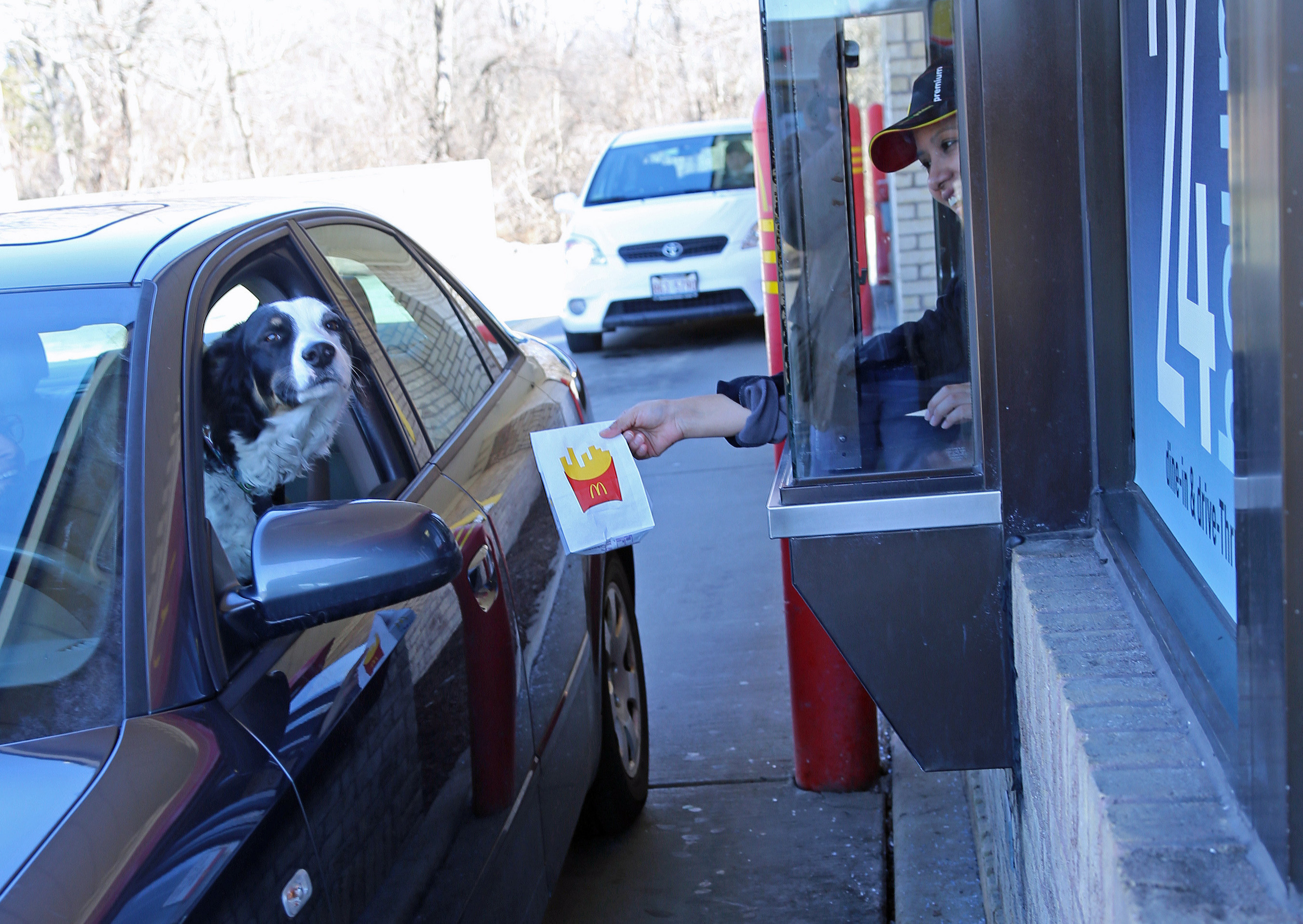
Courtesy of Reyes, Maggie (Photographer). March 2015

Courtesy of Reyes, Maggie (Photographer). March 2015

A survey by market research firm Relevation Research, based in Illinois, has shown that 1 out of every 6 US households buys fast food for a dog during at least some of their drive-thru or take-out window visits.  At this rate, over 1,000,000,000 visits annually are catering to a dog.

One third of dog owners  drive through with their dog in the car; four-fifths of those actually claim to order something specifically for the dog.  McDonald’s is visited most often for the dog followed by Burger King and Wendy’s.  Starbucks is patronized less despite offering Puppy Whip/Puppuccino.

Nan Martin, principal at Relevation Research, advises that QSRs (known as quick service restaurants in the ‘biz’) should team up with dog food/treat manufacturers to design dog-safe offerings at their establishments.

In Christchurch, McDonald’s outlets usually stock dog treats at their drive-thru windows.  If your dog rides in the back seat, the window attendant doesn’t always notice and so you have to ask for dog treats.  And the only surviving Starbucks outlet (thanks to our earthquakes) doesn’t offer a drive-thru, let alone Puppuccinos.

(I’m a big fan of Starbucks coffee and so – please – open a drive-thru branch here and please stock it with Puppuccinos.  Izzy and I would be frequent customers.)

Kathleen Crisley, specialist in dog massage, rehabilitation and nutrition/food therapy, Canine Catering Ltd, Christchurch, New Zealand

Source:  PR Newswire media release


New products to help train dogs for explosive detection

The Department of Homeland Security (USA) has been conducting independent assessments and developing products to assist canine explosive teams.

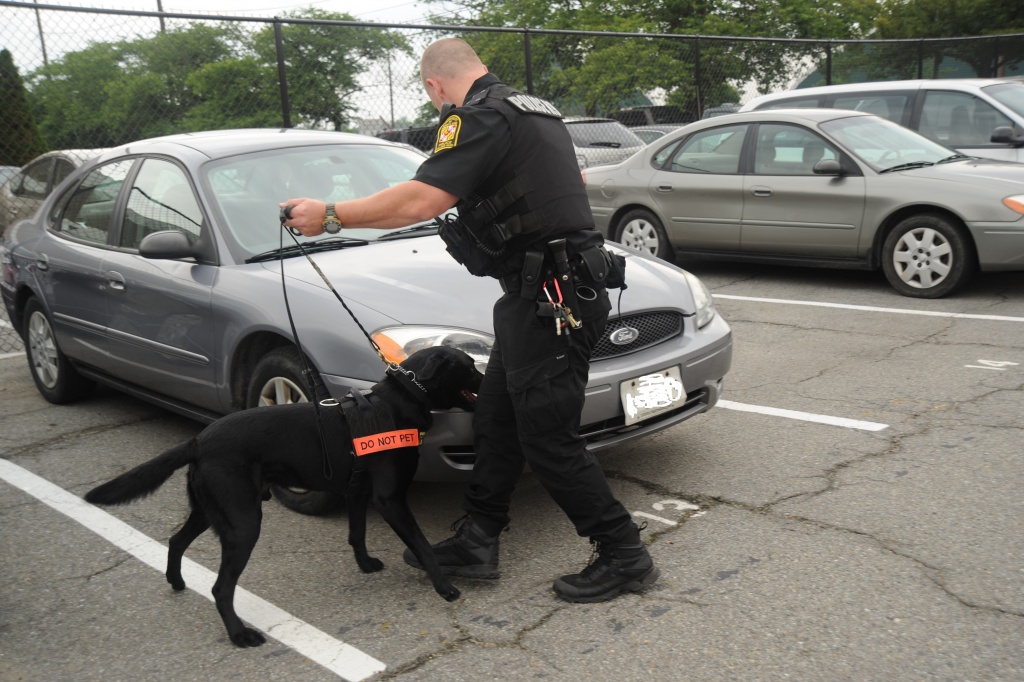
An explosive detection dog in action. Photo courtesy of the Department of Homeland Security

An explosive detection dog in action. Photo courtesy of the Department of Homeland Security

One of the biggest challenges in the training and testing of canine teams results from the explosives materials themselves – especially new homemade explosives. Due to the potential safety risks of explosives, only specially trained federal explosive technicians can provide the material for training and testing. This not only limits training times and opportunities, but also increases the costs since the technicians must travel to a central location for multi-day training events.

Researchers have been developing a new training aid that matches the scent of explosive materials but poses no danger to the trainers, the canines or the environment. It is currently undergoing field testing within federal, state and local canine detection teams. A key objective was to for the canines to react to the non-hazardous, non-explosive training aid the same way they would actual explosive material.

“It doesn’t go boom if you drop it, hit it or light it on fire,” said Canine Program Manager, Don Roberts. “That allows teams to take the training from the very controlled environment we currently have to train in for safety reasons and put it in a real-world scenario – for example putting the odor in a cinderblock and seeing if the dog can find it. We can put this new training aid in car wheel wells, airports etc., without fear that they’ll explode.”

S&T’s partner, Johns Hopkins Applied Physics Lab, developed the new training aid, Roberts said. After a number of trials, they’re ready to transfer the technology to the Transportation Security Administration, the primary customer for the aid. The bigger news, according to Roberts, is that the product was also designed to fit first responders’ needs as well.

“The design price point and usability factor has been geared to the first responder community – state and local explosive detection dogs who don’t have the regular training support TSA has. They are the ones who really need these products,” said Roberts.

The training aids are made to be thrown away after being used. These aids can last for over eight hours and can be stored up to two years. The scent can be dissolved in water, as opposed to the previous explosive training materials, which required special handling, transport and had to be stored in a bunker.

Next steps for this program include developing a second scent for training the dogs, and licensing so that the products can be produced outside of the federal government.

Source:  Department of Homeland Security media release

Read my other blog posts about explosives detector dogs: