Category Archives: research

Want a compassionate child? Get a dog!

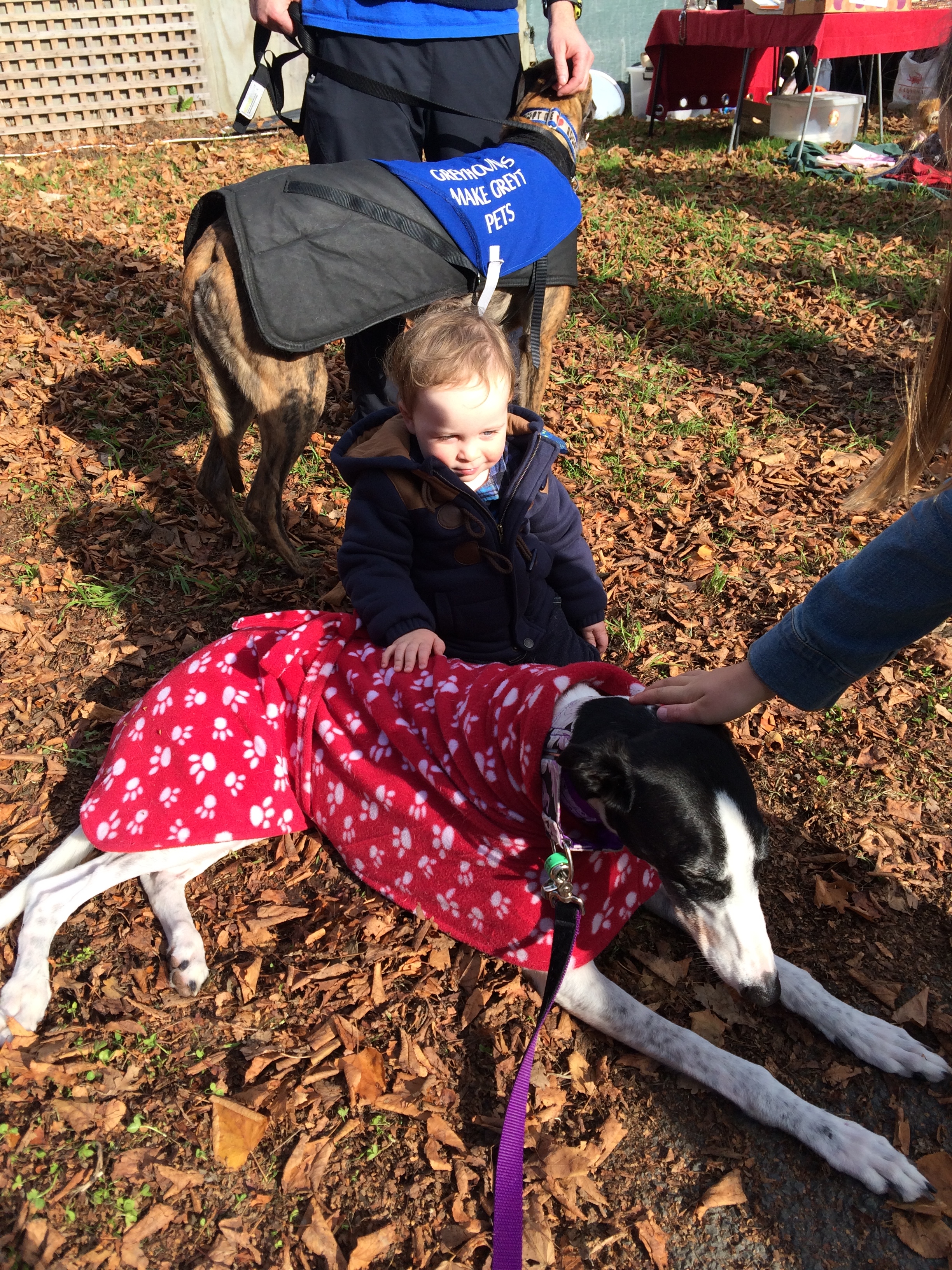
My dog Izzy meets a little boy at a promotion for Greyhounds as Pets

My dog Izzy meets a little boy at a promotion for Greyhounds as Pets

Children who grow up with dogs and cats develop a greater level of emotional intelligence, research shows.

Children living with a pet develop:

a) Compassion – by learning to care for someone other than themselves, and understanding that a dog has feelings

b)  Self-esteem – by being assigned tasks to help care for the family dog

c) Cognitive development – by playing, talking and even reading to the family dog

d) Understanding of life – because our dogs don’t live as long as we do, sometimes it is the loss of a family dog that is the child’s first real loss, teaching them to understand and manage grief.  If your dog has puppies, they also understand that other animals become parents and have little offspring to care for.

And, as in adults, dog ownership is linked to managing stress.  In today’s very modern world, children have more pressures on them at an earlier stage of life.  Having a dog is an outlet for managing stress; such as when a child plays with or walks the dog – exercise helps reduce stress.

Source:  Mother Nature Network


New Directions in Canine Behaviour

New directions in canine behavior

The January 2015 special edition of the journal Behavioural Processes is fully online (until January 2016).  This means you can download .pdf copies of fifteen  interesting research articles about dogs and behavior.

In the opening editorial of this journal, Monique A.R. Udell says that research into social development and cognitive evolution of dogs is just beginning to scratch the surface despite the long history of the human-canine relationship.

I am particularly interested in these fields of research (as my many blog postings under the category of ‘research’ show!) because of the work I do with dogs.  Understanding dogs is critical to working with them in a holistic approach to health.

My only criticism of journal articles generally (not just this journal) is the odd and often long names that researchers choose for the title of their articles.  It is just one indication that researchers work in a different world from generalist audiences; they are often judged in peer reviews for language this is technical.  In my experience as a research manager, I have also found that most academic researchers write in a style using long sentences and paragraphs.

Some of these articles are easier to read than others because of this.

The articles in this issue are:

  • Revisiting the concept of behavior patterns in animal behavior with an example from food-caching sequences in Wolves (Canis lupus), Coyotes (Canis latrans), and Red Foxes (Vulpes vulpes)
  • Assessment of attachment behaviour to human caregivers in wolf pups (Canis lupus lupus)
  • Self-regulatory depletion in dogs:  insulin release is not necessary for the replenishment of persistence
  • Dogs and their human companions:  The effect of familiarity on dog-human interactions
  • Scent of the familiar:  An fMRI study of canine brain responses to familiar and unfamiliar human and dog odors
  • Shut up and pet me!  Domestic dogs (Canis lupus familiaris) prefer petting to vocal praise in concurrent and single-alternative choice procedures
  • A comparison of pet and purpose-bred research dog (Canis familiaris) performance on human-guided object-choice tasks
  • Gazing toward humans:  A study on water rescue dogs using the impossible task paradigm
  • Is that fear?  Domestic dogs’ use of social referencing signals from an unfamiliar person
  • Why do adult dogs ‘play’?
  • Down but not out:  Supine postures as facilitators of play in domestic dogs
  • The advent of canine performance science:  Offering a sustainable future for working dogs
  • Do you see what I see?  Can non-experts with minimal training reproduce expert ratings in behavioral assessments of working dogs?
  • Which personality dimensions do puppy tests measure?  A systematic procedure for categorizing behavioral assays
  • Citizen science:  A new direction in canine behavior research

Kathleen Crisley, specialist in dog massage, rehabilitation and nutrition/food therapy, Canine Catering Ltd, Christchurch, New Zealand


Get Healthy, Get a Dog

The Harvard Medical School has published a special health report entitled Get Healthy, Get a Dog:  The health benefits of canine companionship. 

The report details the many ways that dogs can improve the lives of humans.

Get Healthy, Get a DogIn promoting the report, the School says:

There are many reason why dogs are called humans’ best friends: not only do they offer unparalleled companionship, but a growing body of research shows they also boost human health. Owning a dog can prompt you to be more physically active — have leash, will walk. It can also:

  • help you be calmer, more mindful, and more present in your life
  • make kids more active, secure, and responsible
  • improve the lives of older individuals
  • make you more social and less isolated

Just petting a dog can reduce the petter’s blood pressure and heart rate (while having a positive effect on the dog as well).

The report can be purchased in print (US$20), in .pdf electronic version (US$18) or both (US$29) from this webpage.

I’m pleased to see this type of publication coming from such a reputable institution.  Dogs and humans both benefit when  humans take responsibility for a committed and healthy relationship.  I particularly like that the report also covers grief, since we all will face grieving the loss of beloved pet (given the odds – since we live a lot longer than our dogs do).

The chapters in the report include:

  • Our dogs, ourselves
    • Benefits of dog ownership
    • Service dogs
  • How dogs make us healthier
    • Physical activity
    • Cardiovascular benefits
    • Reduced asthma and allergies in kids
    • Psychological benefits
    • How human contact benefits dogs
  • SPECIAL SECTION
    • Nutrition guidelines for dogs
  • Exercise for you and your dog
    • Exercise whys and wherefores
    • The exercise prescription for people
    • Exercise guidelines for dogs
    • Help your dog avoid injuries
    • Walking with your dog
    • Hiking
    • Running
    • Biking
    • Swimming
    • Playing fetch, Frisbee, or flying disc
    • Agility training
    • Skijoring
    • Playing inside the house
  • Adopting a dog
    • Deciding on the qualities you want
    • Breed considerations
    • Finding your dog
  • How to be a responsible dog owner
    • Basic equipment
    • Veterinary care
    • Dogs in cars
    • Providing for your dog while you’re at work
  • Raising a well-behaved dog
    • Obedience training
    • Housetraining
    • Keeping dogs off furniture … or not
    • Soothing the anxious hound
  • Grieving a loss
  • Resources
  • Glossary

Kathleen Crisley, specialist in dog massage, rehabilitation and nutrition/food therapy, Canine Catering Ltd, Christchurch, New Zealand

The basics of animal behavior

Nikolaas Tinbergen, who lived from 1907-1988, was a scientist who developed four basic questions that would explain animal behavior; he ultimately won the Nobel Prize for his work.

If you get involved in animal advocacy or rescue work, it helps to have some understanding of animal behavior.   The ‘4 Questions’ help us to understand why an animal is exhibiting a behavior.  Some published resources call these Questions ‘the Four Whys…’ (although the questions aren’t always phrased as a why)

1.  What is the function of the trait, or why does it exist?

2.  What is the phylogeny, or evolutionary history, of the trait?

3.  What is the cause of the trait?  Regardless of history or function, there is likely to be a physical basis for the behavior.

4.  How did the trait develop?  This is where you consider how the animal interacted with its environment and surroundings over time.

Barking dog

So, as a simple example – let’s consider barking.  Barking exists as a form of communication that augments physical body language.  So that’s the function question answered.

As far as evolution is concerned, it is probable that early dogs had different vocal sounds which developed into the barking we know today in the wide range of dog breeds.

The cause of barking is the passing of air through vocal chords – much like in humans.

And how the trait developed…well this is connected to domestication and how dogs could communicate with the canine and human members of their pack.  Animal trainers learn to distinguish the different types of barking and help to pass this knowledge onto their clients.

Most dog owners can also understand the differences in their dog’s barking.

Kathleen Crisley, specialist in dog massage, rehabilitation and nutrition/food therapy, Canine Catering Ltd, Christchurch, New Zealand

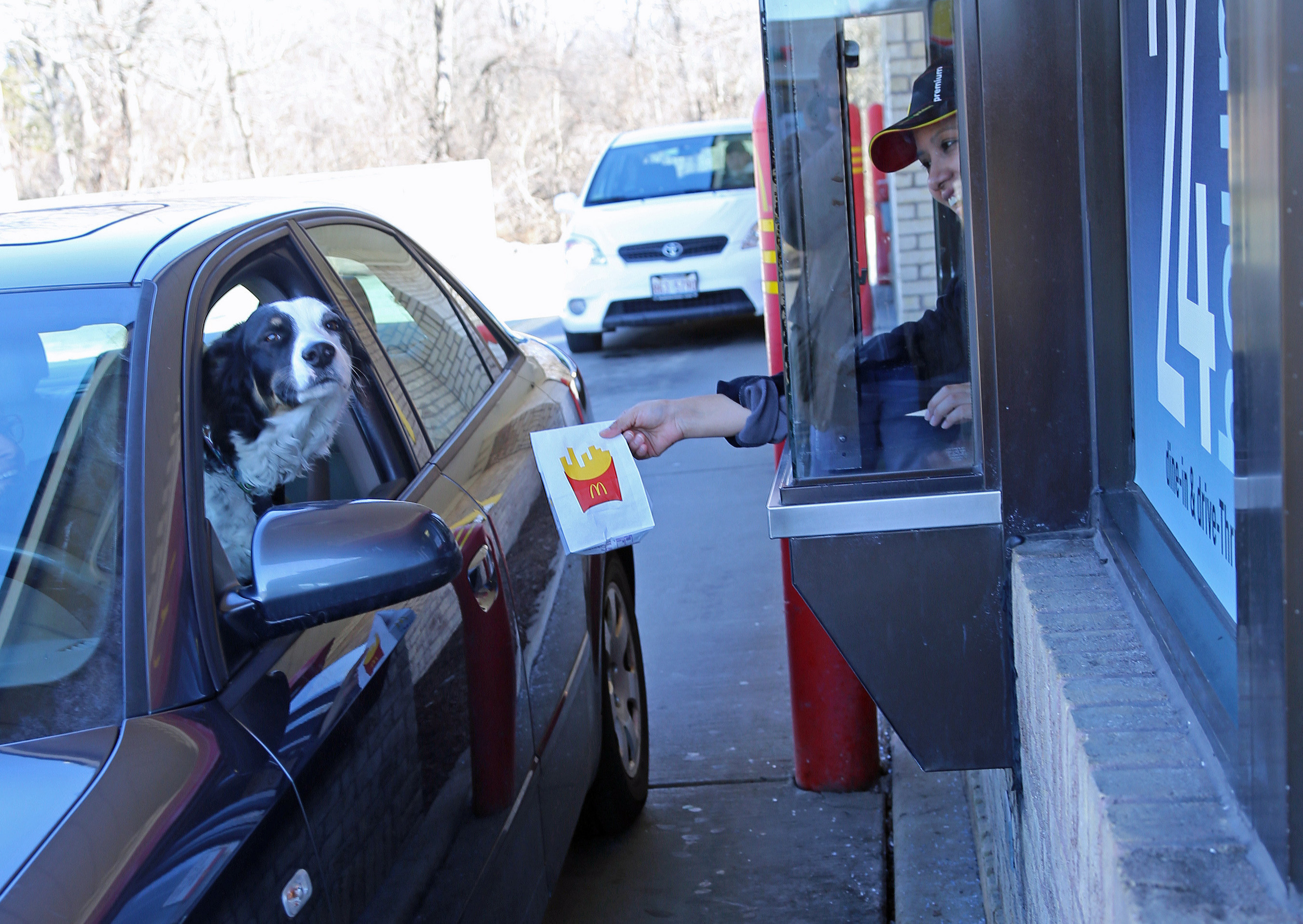
One out of every three cars in the drive thru…

Courtesy of Reyes, Maggie (Photographer). March 2015

Courtesy of Reyes, Maggie (Photographer). March 2015

A survey by market research firm Relevation Research, based in Illinois, has shown that 1 out of every 6 US households buys fast food for a dog during at least some of their drive-thru or take-out window visits.  At this rate, over 1,000,000,000 visits annually are catering to a dog.

One third of dog owners  drive through with their dog in the car; four-fifths of those actually claim to order something specifically for the dog.  McDonald’s is visited most often for the dog followed by Burger King and Wendy’s.  Starbucks is patronized less despite offering Puppy Whip/Puppuccino.

Nan Martin, principal at Relevation Research, advises that QSRs (known as quick service restaurants in the ‘biz’) should team up with dog food/treat manufacturers to design dog-safe offerings at their establishments.

In Christchurch, McDonald’s outlets usually stock dog treats at their drive-thru windows.  If your dog rides in the back seat, the window attendant doesn’t always notice and so you have to ask for dog treats.  And the only surviving Starbucks outlet (thanks to our earthquakes) doesn’t offer a drive-thru, let alone Puppuccinos.

(I’m a big fan of Starbucks coffee and so – please – open a drive-thru branch here and please stock it with Puppuccinos.  Izzy and I would be frequent customers.)

Kathleen Crisley, specialist in dog massage, rehabilitation and nutrition/food therapy, Canine Catering Ltd, Christchurch, New Zealand

Source:  PR Newswire media release


New products to help train dogs for explosive detection

The Department of Homeland Security (USA) has been conducting independent assessments and developing products to assist canine explosive teams.

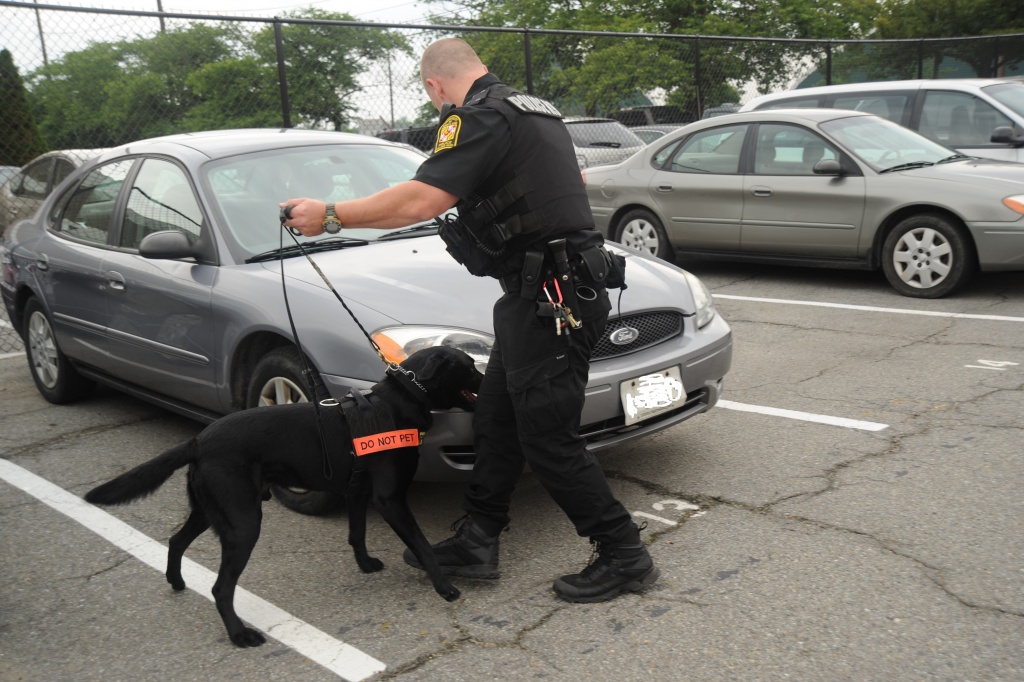
An explosive detection dog in action. Photo courtesy of the Department of Homeland Security

An explosive detection dog in action. Photo courtesy of the Department of Homeland Security

One of the biggest challenges in the training and testing of canine teams results from the explosives materials themselves – especially new homemade explosives. Due to the potential safety risks of explosives, only specially trained federal explosive technicians can provide the material for training and testing. This not only limits training times and opportunities, but also increases the costs since the technicians must travel to a central location for multi-day training events.

Researchers have been developing a new training aid that matches the scent of explosive materials but poses no danger to the trainers, the canines or the environment. It is currently undergoing field testing within federal, state and local canine detection teams. A key objective was to for the canines to react to the non-hazardous, non-explosive training aid the same way they would actual explosive material.

“It doesn’t go boom if you drop it, hit it or light it on fire,” said Canine Program Manager, Don Roberts. “That allows teams to take the training from the very controlled environment we currently have to train in for safety reasons and put it in a real-world scenario – for example putting the odor in a cinderblock and seeing if the dog can find it. We can put this new training aid in car wheel wells, airports etc., without fear that they’ll explode.”

S&T’s partner, Johns Hopkins Applied Physics Lab, developed the new training aid, Roberts said. After a number of trials, they’re ready to transfer the technology to the Transportation Security Administration, the primary customer for the aid. The bigger news, according to Roberts, is that the product was also designed to fit first responders’ needs as well.

“The design price point and usability factor has been geared to the first responder community – state and local explosive detection dogs who don’t have the regular training support TSA has. They are the ones who really need these products,” said Roberts.

The training aids are made to be thrown away after being used. These aids can last for over eight hours and can be stored up to two years. The scent can be dissolved in water, as opposed to the previous explosive training materials, which required special handling, transport and had to be stored in a bunker.

Next steps for this program include developing a second scent for training the dogs, and licensing so that the products can be produced outside of the federal government.

Source:  Department of Homeland Security media release

Read my other blog posts about explosives detector dogs:

Dog-human cooperation is based on social skills of wolves

Dogs are man’s best friend and partner. The origins of this dog-human relationship were subject of a study, published recently in the journal Frontiers in Psychology,  by behavioural scientists from the Messerli Research Institute at the Vetmeduni Vienna and the Wolf Science Center.

They showed that the ancestors of dogs, the wolves, are at least as attentive to members of their species and to humans as dogs are. This social skill did not emerge during domestication, as has been suggested previously, but was already present in wolves. 

Photo by the Wolf Science Center

Photo by the Wolf Science Center

Commonly accepted hypotheses about domestication suggest: “Dogs have become tolerant and attentive as a result of humans actively selecting for these skills during the domestication process in order to make dogs cooperative partners.”

Friederike Range and Zsófia Virányi from the Unit of Comparative Cognition at the Messerli Research Institute question the validity of this view and have developed the “Canine Cooperation Hypothesis”. Their hypothesis states that since wolves already are tolerant, attentive and cooperative, the relationship of wolves to their pack mates could have provided the basis for today’s human-dog relationship. An additional selection, at least for social attentiveness and tolerance, was not necessary during canine domestication.

The researchers believe that wolves are not less socially attentive than dogs. Dogs however cooperate more easily with humans because they more readily accept people as social partners and more easily lose their fear of humans. To test their hypothesis, Range and Virányi examined the social attentiveness and tolerance of wolves and dogs within their packs and toward humans.

Various behavioural tests showed that wolves and dogs have quite similar social skills. Among other things, the researchers tested how well wolves and dogs can find food that has been hidden. Both wolves and dogs used information provided by a human to find the hidden food.

In another study, they showed that wolves followed the gaze of humans. To solve the task, the animals may need to be capable of making a mental representation of the “looker’s” perspective. Wolves can do this quite well. 

Another experiment gave dogs and wolves the chance to observe conspecifics as they opened a box. When it was the observer’s turn to do the same, the wolves proved to be the better imitators, successfully opening the box more often than dogs. “Overall, the tests showed that wolves are very attentive to humans and to each other. Hypotheses which claim that wolves have limited social skills in this respect in comparison to dogs are therefore incorrect,” Range points out. 

At the Wolf Science Center in Ernstbrunn in Lower Austria, Range and Virányi investigated the social behaviour of dogs and wolves that grew up with members of their species and with humans. “The animals are socialized both with conspecifics and with humans. To be able to compare the behaviour of dogs and wolves and to investigate the effects of domestication, it is important that the animals live in the same conditions,” Virányi explains.

Source:  Vetmeduni Vienna media release

Read my other post about the Institute’s research with wolves here

Kathleen Crisley, specialist in dog massage, rehabilitation and nutrition/food therapy, Canine Catering Ltd, Christchurch, New Zealand

Dog people vs cat people

As you know, I enjoy writing about research that gives us new insights into  all things dog.

Earlier this year, I blogged about research into personality and what makes a good pet parent.

But I think the debate will continue for some time in terms of characterizing dog people vs cat people.

Here’s another video to add to the debate:

Kathleen Crisley, specialist in dog massage, rehabilitation and nutrition/food therapy, Canine Catering Ltd, Christchurch, New Zealand
A biological trigger for canine bone cancer?

Researchers at the University of Wisconsin-Madison School of Veterinary Medicine have identified the biological mechanism that may give some cancer cells the ability to form tumors in dogs.

Yurtie, a canine cancer patient, in the UW Veterinary Care oncology ward.  Photo: Nik Hawkins

Yurtie, a canine cancer patient, in the UW Veterinary Care oncology ward.
Photo: Nik Hawkins

The recent study uncovered an association between the increased expression of a particular gene in tumor cells and more aggressive behavior in a form of canine bone cancer. It may also have implications for human cancers by detailing a new pathway for tumor formation.

The findings of the research have been published  in the journal Veterinary and Comparative Oncology and may eventually provide oncologists with another target for therapy and improve outcomes for canine patients with the disease.

The researchers examined cell lines generated from dogs with osteosarcoma, a common bone cancer that also affects people, with the intent of uncovering why only some cells generate tumors. After the dogs underwent tumor-removal surgery, cells from the tumors were grown in the lab.

This led to six different cancer cell lines, which were then transplanted into mice. The researchers then looked to see which lines developed tumors and which did not and studied the differences between them.

“We found several hundred genes that expressed differently between the tumor-forming and nontumor-forming cell lines,” said Timothy Stein, an assistant professor of oncology. However, one protein called frizzled-6 was present at levels eight times higher in cells that formed tumors.

“It’s exciting because it’s kind of uncharted territory,” says Stein “While we need more research to know for sure, it’s possible that frizzled-6 expression may be inhibiting a particular signaling pathway and contributing to the formation of tumor-initiating cells.”

The team’s genetic research will continue on dogs and be extended to humans.

Source:  University of Wisconsin-Madison media release

Infection control guidelines for animal visitation

The use of dogs in hospitals and other therapy institutions is on the rise, as more medical professionals acknowledge the positive effects of dogs on human patients.

New expert guidance by the Society for Healthcare Epidemiology of America (SHEA) outlines recommendations for developing policies regarding the use of animals in healthcare facilities, including animal-assisted activities, service animals, research animals and personal pet visitation in acute care hospitals.

The guidance was published online in Infection Control & Hospital Epidemiology, the journal of SHEA.

“Animals have had an increasing presence in healthcare facilities,” said David Weber, MD, MPH, a lead author of the recommendations. “While there may be benefits to patient care, the role of animals in the spread of bacteria is not well understood. We have developed standard infection prevention and control guidance to help protect patients and healthcare providers via animal-to-human transmission in healthcare settings.”

Guidance is grouped by the role of animals – animal-assisted activities (i.e., pet therapy and volunteer programs), service animals, research animals and personal pet visitation. Select recommendations include:

Animal-Assisted Activities

  • Facilities should develop a written policy for animal-assisted activities. An animal-assisted activity visit liaison should be designated.
  • Allow only dogs to serve in animal-assisted activities, such as pet therapy.
  • Animals and handlers should be formally trained and evaluated.
  • Animal interaction areas should be determined in collaboration with the Infection Prevention and Control team and clinical staff should be educated about the program.
  • Animal handlers must have all required immunizations, restrict contact of their animal to patient(s) visited and prevent the animal from having contact with invasive devices, and require that everyone who touches the animal to practice hand hygiene before and after contact.
  • The hospital should maintain a log of all animal-assisted activities visits including rooms and persons visited for potential contact tracing.

Service Animals

  • The policy allowing service animals of patients and visitors into the facility should be compliant with the Federal Americans for Disability Act (ADA), other applicable state and local regulations and include a statement that only dogs and miniature horses are recognized as Service Animals under federal law.
  • If an inpatient has a service animal, notification should be made to the Infection Prevention and Control Team, followed by discussion with the patient to make sure the owner of the service animal complies with institutional policies.
  • Healthcare providers or staff may ask the patient or visitor to describe what work/tasks the dog performs for the patient, but may not ask for a “certification” or “papers.”

Personal Pet Visitation

  • Pets should, in general, be prohibited from entering the healthcare facility.
  • Exceptions can be considered if the healthcare team determines that visitation with a pet would be of benefit to the patient and can be performed with limited risk. Even then, visitation should be restricted to dogs.
  • The patient must perform hand hygiene immediately before and after contact with the animal.

The authors of the guidance also note that as the role of animals in healthcare evolves, there is a need for stronger research to establish evidence-based guidelines to manage the risk to patients and healthcare providers.

This guidance on animals in healthcare facilities has been endorsed by the Association for Professionals in Infection Control and Epidemiology (APIC), the leading professional association for infection preventionists with more than 15,000 members.

Source:  EurekAlert! media release

Previous blogs about therapy dogs include: