Category Archives: research

Core strength could help dogs avoid knee injuries

Photo by Angel Luciano on UnSplash

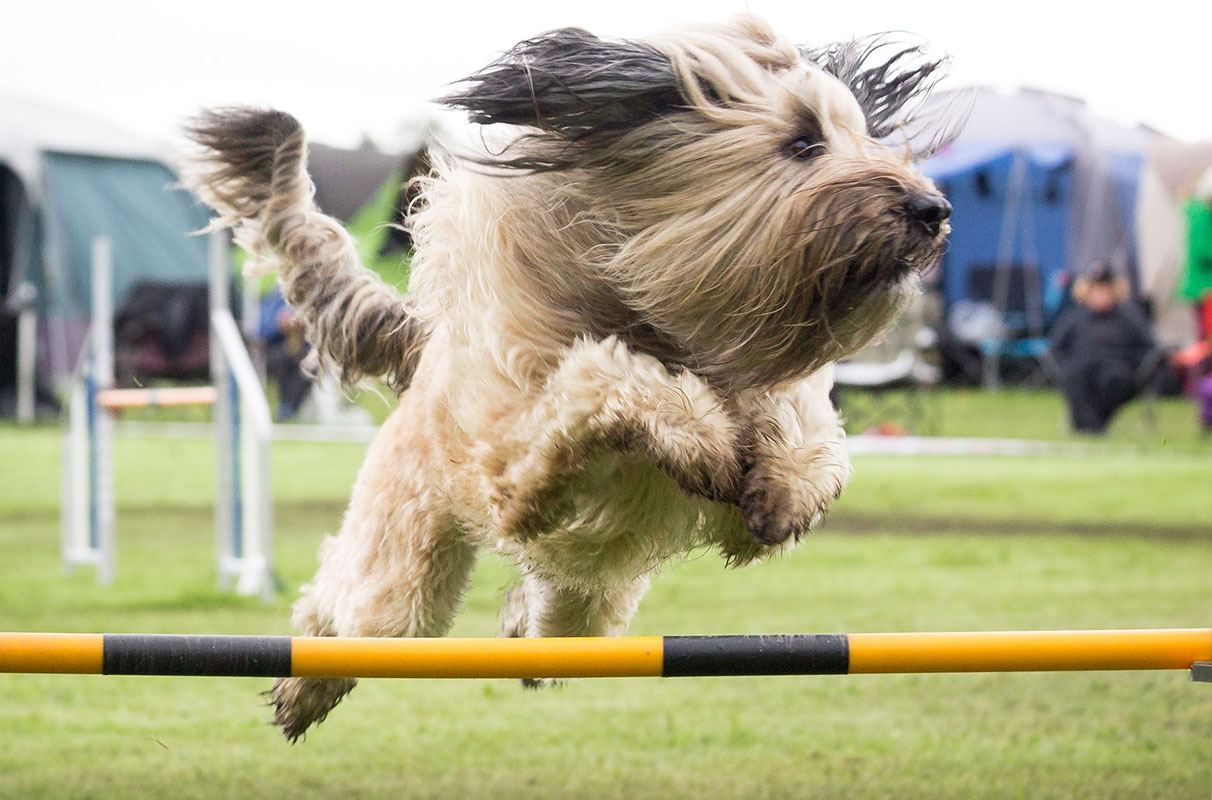
Agility dogs lacking core strength from routine physical exercise and those participating in activities like flyball may be more susceptible to one of the most common canine knee injuries.

That knee injury is a cranial cruciate ligament rupture, which is equivalent to an anterior cruciate ligament (ACL) tear in humans.

According to a research survey documenting activity and injury odds of more than 1,200 agility dogs, just about any physical exercise seems to lower the risk of rupturing the ligament, but some exercises seem to increase the risk. In addition, the size and shape of the dog — and thereby certain breeds — were also found to be at higher risk.

“Balance exercises, wobble boards, anything that improves the core strength of the dog seemed to lower the odds of a ligament tear,” said Deb Sellon, a Washington State University veterinarian and lead author on the study published in BMC Veterinary Research. “We found fitness matters for dogs just like it does for people, and we haven’t shown that before.”

Sellon is also the founder of the university’s Agility Dog Health Network, which was accessed in the study. By using odds ratios, which is essentially a statistical risk assessment, Sellon and Denis Marcellin-Little, a veterinary orthopedic specialist with University of California, Davis, looked for trends in 1,262 agility dogs — 260 that tore the ligament and 1,002 dogs that did not.

In addition to balance and core strengthening exercises activities like dock diving, barn hunt and scent work are associated with a decreased rate of ligament rupture, too.

While regular activity, like swimming, playing fetch or frisbee, walking or running didn’t increase the risk of injury, it didn’t lower the odds either.

Surprisingly, dogs that competed more frequently in agility events and competed at a higher level on more technically rigorous types of courses were less likely to rupture their cruciate ligaments.

The only physical activities that increased the odds of injury were short walks or runs over hilly or flat terrain on a weekly basis, and many of those injuries were in dogs early in their agility career that lacked core strength from routine physical exercise or at times, rest days.

Training or competing in the new and popular dog sport flyball was found to be the riskiest activity of all activities evaluated in the survey. Agility dogs that also engaged in the sport of flyball were nearly twice as likely to rupture the ligament as compared to other dogs. Nearly 12% of dogs reported to play flyball ruptured the ligament.

The survey confirmed some long-standing and well-accepted risk factors as well. In particular, female dogs spayed before the age of one were almost twice as likely to rupture the ligament compared to dogs that were spayed after their first birthday. Sellon said this is believed to reflect the importance of hormones in developing strong ligaments in young animals.

Trends were also identified among certain breeds.

Survey results indicated Australian shepherds and Labrador retrievers were more than twice as likely to rupture the ligament. Rottweilers and Australian cattle dogs were more than four times as likely to tear the ligament.

Marcellin-Little speculates that could have something to do with the shape of the dog, and maybe its tail.

“Larger dogs doing agility tend to be less balanced, so it is not surprising a Rottweiler or Australian Shepherd may be at a higher risk of a rupture compared to smaller breeds,” he said. “The tail could also be a factor; the tail has been proven very important for cheetahs and you can imagine it has a role to play in the overall balance of the dog.”

Marcellin-Little said there is still a great deal of research that needs to be completed, but the survey gives veterinarians a place to start. 

“This research decreases uncertainty; it doesn’t bring certainty, but this one study could provoke thoughts and help us look at potential research areas to target moving forward,” he said. “That is the type of research that the Agility Dog Health Network is planning to support.”

Source: Washington State University

Dog faeces and urine could be harming nature reserves, according to new study

New research finds that dogs being walked in nature reserves contribute a significant amount of nutrients to the environment through their faeces and urine, which researchers warn could negatively impact local biodiversity. The research is published in the British Ecological Society journal, Ecological Solutions and Evidence.

Sign prohibiting dogs at one of the nature reserves. Credit: Pieter De Frenne

Significant levels of fertilisation

Researchers at Ghent University have estimated that each year dog faeces and urine add an average of 11kg of nitrogen and 5kg of phosphorous per hectare to nature reserves near the Belgian city of Ghent. The researchers say that the nutrients added through this neglected form of fertilisation are substantial and could be detrimental to biodiversity and ecosystem functioning.

The estimates for the amount of nitrogen being added by this previously unrecorded source are particularly significant when compared to the total levels of nitrogen being added across most of Europe through fossil fuel emissions and agriculture, which range from 5 to 25kg of nitrogen per hectare.

Professor Pieter De Frenne of Ghent University and lead author of the research said: “We were surprised by how high nutrient inputs from dogs could be. Atmospheric nitrogen inputs from agriculture, industry and traffic rightfully receive a lot of policy attention, but dogs are entirely neglected in this respect.

The researchers call for land managers, especially in low nutrient ecosystems, to emphasise the negative fertilisation effects of dogs to visitors, encouraging them to remove their dogs’ faeces. They also call for leash use to be enforced more stringently and the establishment of more off-leash dog parks to reduce the pressure on nature reserves.

Dogs on leashes and owners removing faeces have big impacts

In the experiment, which calculated the amount of nutrients dogs were adding to the environment by recording the number of dogs present in four nature reserves, the researchers modelled different scenarios including if the dogs were on or off leashes and if owners picked up dog faeces.

When the researchers modelled a scenario where all dogs were kept on leashes (legally required in all these reserves) they found that this reduced the fertilisation rates in the largest part of the reserves but strongly increased fertilisation rates in the small areas around paths. Over a year this input was as high as 175 kg of nitrogen and 73 kg of phosphorus per hectare.

Professor De Frenne said: “In our scenario where all dogs were kept on leashes, we found that in these concentrated areas around paths, nutrient inputs of both nitrogen and phosphorus exceeded legal limits for fertilization of agricultural land. Which is quite staggering as our study concerned nature reserves!”

In a scenario where dogs were on leashes, but all owners picked up their dogs’ faeces, the researchers found that this reduced fertilisation levels by 56% for nitrogen and 97% for phosphorus. This is due to dog faeces accounting for nearly all phosphorous being deposited whereas nitrogen is deposited equally by both faeces and urine.

Dog being walked on lead
In models where all dogs were kept on leashes, the researchers found that this reduced fertilisation rates in most of the reserves but strongly increased fertilisation rates in the areas around paths.

Increased nutrients a problem for nature reserves

The addition of nutrients to nature reserves might sound beneficial as these lead to increased plant growth, however, this mostly occurs in a limited number of nutrient demanding species that outcompete rarer specialists, reducing biodiversity.

“In many nature reserves, the management is specifically directed towards lowering soil nutrient levels to enhance plant and animal biodiversity. This can be done through methods like mowing and hay removal.” Explains Professor De Frenne. “Our findings suggest that the currently neglected inputs of dogs in nature reserves could delay restoration goals.”

Calculating nutrient levels

To estimate the amount of nutrients dogs were adding to the environment, the researchers first calculated dog abundance per hectare, per year, by counting dogs in four nature reserves close to the city of Ghent, Belgium. These counts were performed on 487 occasions over 18 months. They then performed a literature search of nutrient concentrations in dog urine and faeces to model different scenarios.

While this method meant that researchers could accurately calculate the abundance of dogs in the nature reserves, estimations had to be made based on the average dog and average volumes of urine and mass of faeces, as well as estimates of nitrogen and phosphorus concentrations.

The researchers say that their data could be improved by recording breeds of dogs, as well as their size, weight and the number of urine and faecal deposits, for instance, by asking owners. The researchers also suggest that georeferencing dog faeces and urine locations could further help to detect fertilisation ‘hot spots’.

Source: British Ecological Society

Paw hygiene no reason to ban assistance dogs from hospitals

Over 10,000 people in Europe use an assistance dog; think of guide dogs for the blind and visually impaired, hearing or signal dogs for the deaf and hard of hearing, medical response dogs and psychiatric service dogs.

Assistance dog user Iris and her dog Sandy in the recovery room after surgery. After a severe epileptic seizure, Iris was not doing well and Sandy was brought to the hospital in the hopes she could help improve Iris’ condition, which was indeed the case. Sandy even accompanied Iris to the OR, where Iris had to undergo a major surgery. One year earlier, bringing Sandy along was not negotiable in this particular hospital. Photo: private photo of Iris and Sandy.

According to European law, these dogs are welcome in stores, hospitals and other public places. However, in practice, many assistance dog users and their dogs are regularly refused entry. In the Netherlands, four out of five assistance dog users indicate that they regularly experience problems with this.

Often, hygiene reasons are given as the main argument for refusing entry to assistance dogs. Research by Utrecht University now shows that the paws of assistance dogs are cleaner than the shoe soles of their users, and thus, paw hygiene is no reason to ban assistance dogs from hospitals.

To investigate this, Jasmijn Vos, Joris Wijnker and Paul Overgaauw of Utrecht University’s Faculty of Veterinary Medicine took samples from the paws of 50 assistance dogs and the shoe soles of their users. For comparison, they also investigated an equally large group of pet dogs and their owners. Vos and her colleagues examined the samples for poop bacteria (Enterobacteriaceae), which are very common outdoors, and for an important diarrhoeal bacteria (Clostridium difficile).

“The dogs’ paws turned out to be cleaner than the soles of their shoes,” says Jasmijn Vos, Masters student at Utrecht University. “This makes the hygiene argument that is often used to ban assistance dogs from public locations invalid.” Moreover, the diarrhoeal bacteria did not occur on the dogs’ paws whatsoever, and only once on a shoe sole.

81% of assistance dogs are refused

Dutch assistance dog users were also surveyed about their experiences. 81% are still regularly refused entry to public places with their dog, even though this is prohibited by law. This is mainly down to lack of knowledge on the part of the person refusing entry: lack of knowledge on what an assistance dog is, how it can be recognised, and about the rules of law.

The study also shows that assistance dog users constitute only a small fraction of the total number of patients in Dutch hospitals. Should they decide to bring their assistance dog to the hospital, or elsewhere, this should be made possible; assistance dogs are usually well behaved and are no more of a hygiene hazard than people!

Research publication
Vos SJ, Wijnker JJ, Overgaauw PAM. A pilot study on the contamination of assistance dogs’ paws and their users’ shoe soles in relation to admittance to hospitals and (in)visible disability. Int. J. Environ. Res. Public Health. 2021; 18(2): 513.
Full text: https://www.mdpi.com/1660-4601/18/2/513

Source: Utrecht University

Pets’ impact on human gut microbiome to be explored

Could pets offer “probiotic” benefits to their owners?

Researchers at the University of Pennsylvania School of Veterinary Medicine (Penn Vet) are set to investigate whether pets could be a source of microbiota that can help restore deficiencies in their owner’s gut microbiome (i.e. collection of microbes in the intestines).

The study, which has received funding from the Human Animal Bond Research Institute (HABRI), will follow pet owners (60 years or older) who are taking antibiotics for dental implant placement. Antibiotics disrupt the native gut microbiome, HABRI reports, which can result in adverse outcomes, ranging from mild diarrhea to severe “C. diff” (Clostridioides difficile) infection.

Researchers hypothesize the gut microbiomes of owners and their pets will resemble each other prior to the course of antibiotics, diverge during the disruption phase, then steadily converge during the recovery phase.

“A growing number of studies have documented the ability of animal contact to impact the human microbiome in ways that may help prevent certain types of disease, such as cardiovascular disease and asthma,” says principal investigator, Laurel Redding, VMD, PhD, DACVPM, an assistant professor of epidemiology at Penn Vet. “In conducting this study, our goal is to shed light on the microbial exchanges that occur between pets and pet owners and assess whether pets can mitigate disruption of their owner’s gut microbiome following antibiotic therapy.”

Researchers say the study’s results could support the promotion of contact between older adults and household pets, HABRI reports.

“HABRI is proud to fund research that will contribute to our understanding of the physiological health benefits of the human-animal bond,” says the group’s president, Steven Feldman. “We know pets and people are good for each other, and it’s exciting we can still discover new evidence underlying this powerful, mutually-beneficial relationship.”

Source: Veterinary Practice News

Walking your dog is better at reducing stress than strolling alone says new study

It’s time to slip on your boots and grab the lead because walking a dog is better at combating stress that strolling alone, a new study has found.

Darrya/Getty Images

According to scientists at the University of Animal Health Technology in Tokyo, sharing a daily ramble with a pet reduces the chances of depression, stress and anxiety. We know that heading outside with your pup provides dogs with the opportunity to get regular physical activity, but it can also help boost the calming GABA chemical in your body, too.

Researchers in the team took saliva samples from 14 dog owners for a week to see whether it was better to walk alone or with a pet. The results, published in the journal Animals, revealed that levels of stress (including the stress-inducing MHPG chemical) were much lower when owners took their dogs on a walk. Meanwhile, the levels of the GABA chemical were also 40% higher.

This isn’t the first time dog walks have been praised for their mental and health benefits, either. In fact, a previous 2017 study found that humans get just as much as their pups from regular strolls.

Rather than social or physical health benefits, it was found the ability of the walk to make them happy was the biggest drive, while findings also discovered that owners were happier when they believed they were making their four-legged friend happier too.

Why not wrap up warm and enjoy a scenic dog walk…

Source: CountryLiving

Full journal article: Hormonal and Neurological Aspects of Dog Walking for Dog Owners and Pet Dogs

Most dog breeds highly inbred

Dog breeds are often recognized for distinctive traits — the short legs of a dachshund, wrinkled face of a pug, spotted coat of a Dalmatian. Unfortunately, the genetics that give various breeds their particular attributes are often the result of inbreeding.

A study shows the majority of canine breeds are highly inbred, contributing to an increase in disease and health care costs throughout their lifespan. (Getty)

In a recent study published in Canine Medicine and Genetics, an international team of researchers led by University of California, Davis, veterinary geneticist Danika Bannasch show that the majority of canine breeds are highly inbred, contributing to an increase in disease and health care costs throughout their lifespan.

“It’s amazing how inbreeding seems to matter to health,” Bannasch said. “While previous studies have shown that small dogs live longer than large dogs, no one had previously reported on morbidity, or the presence of disease. This study revealed that if dogs are of smaller size and not inbred, they are much healthier than larger dogs with high inbreeding.”

Inbreeding affects health

The average inbreeding based on genetic analysis across 227 breeds was close to 25%, or the equivalent of sharing the same genetic material with a full sibling. These are levels considered well above what would be safe for either humans or wild animal populations. In humans, high levels of inbreeding (3-6%) have been associated with increased prevalence of complex diseases as well as other conditions.

“Data from other species, combined with strong breed predispositions to complex diseases like cancer and autoimmune diseases, highlight the relevance of high inbreeding in dogs to their health,” said Bannasch, who also serves as the Maxine Adler Endowed Chair in Genetics at the UC Davis School of Veterinary Medicine.

The researchers partnered with Wisdom Health Genetics, a world leader in pet genetics, to obtain the largest sample size possible for analysis. Wisdom Health’s database is the largest dog DNA database in the world, helping researchers collect data from 49,378 dogs across 227 breeds — primarily from European sources.

Some breeds more inbred

So, what makes a dog breed more inbred than others? Bannasch explained that it’s often a combination of a small founding population followed by strong selection for particular traits in a breed — often based on looks rather than purpose. While she has always had an interest in the population structure of some of these breeds, she became particularly interested in the Danish-Swedish farmdog several years ago. She fell in love with their compact size, disposition and intelligence, and ended up importing one from Sweden.

Bannasch discovered that Danish-Swedish farmdogs have a low level of inbreeding based on their history of a relatively large founding population of 200, and being bred for function, rather than a strong artificial selection for looks. And according to the insurance health data on breeds collected from Agria Insurance Sweden and hosted online by the International Partnership for Dogs, the farmdog is one of the healthiest breeds.

The study also revealed a significant difference in morbidity between brachycephalic (short skull and snout) and non-brachycephalic breeds. While that finding wasn’t unexpected, the researchers removed brachycephalic breeds from the final analysis on effects of inbreeding on health.

Preserving genetic diversity

In the end, Bannasch said she isn’t sure there is a way out of inbred breeds. People have recognized that creating matches based solely on pedigrees is misleading. The inbreeding calculators don’t go back far enough in a dog’s genetic line, and that method doesn’t improve overall high levels of population inbreeding.

There are other measures that can be taken to preserve the genetic diversity and health of a breed, she said. They include careful management of breeding populations to avoid additional loss of existing genetic diversity, through breeder education and monitoring of inbreeding levels enabled by direct genotyping technologies.

Outcrosses are being proposed or have already been carried out for some breeds and conditions as a measure to increase genetic diversity, but care must be taken to consider if these will effectively increase overall breed diversity and therefore reduce inbreeding, Bannasch said. In particular, in the few breeds with low inbreeding levels, every effort should be made to maintain the genetic diversity that is present.

Source: UC Davis

Common household noises may be stressing your dog

Researchers at the University of California, Davis, have found that people may not recognize that their dog is stressed when exposed to common household noises. While it’s well established that sudden loud noises, such as fireworks or thunderstorms, commonly trigger a dog’s anxiety, a new study finds even common noises, such as a vacuum or microwave, can be a trigger.

UC Davis study finds even common household items like a vacuum cleaner can cause stress and anxiety for dogs. (Photo: Getty)

The study was published in Frontiers in Veterinary Science.

The research found that high-frequency, intermittent noises such as the battery warning of a smoke detector are more likely to cause a dog anxiety, rather than low-frequency, continuous noise.

“We know that there are a lot of dogs that have noise sensitivities, but we underestimate their fearfulness to noise we consider normal because many dog owners can’t read body language,” said lead author Emma Grigg, a research associate and lecturer at the UC Davis School of Veterinary Medicine.

Signs of anxiety

Some common signs of a dog’s anxiety include cringing, trembling or retreating, but owners may be less able to identify signs of fear or anxiety when behaviors are more subtle. For example, stressed dogs could pant, lick their lips, turn their head away or even stiffen their body. Sometimes their ears will turn back, and their head will lower below their shoulders. Grigg suggests owners better educate themselves on anxiety-related behavior.

Researchers conducted a survey of 386 dog owners about their dogs’ responses to household sounds and examined recorded dog behaviors and human reactions from 62 videos available online. The study found that owners not only underestimated their dogs’ fearfulness, but the majority of people in videos responded with amusement rather than concern over their dog’s welfare.

“There is a mismatch between owners’ perceptions of the fearfulness and the amount of fearful behavior actually present. Some react with amusement rather than concern,” Grigg said. “We hope this study gets people to think about the sources of sound that might be causing their dog stress, so they can take steps to minimize their dog’s exposure to it.”

Some sounds painful for dogs

Grigg said because dogs have a wider range of hearing, some noises could also be potentially painful to a dog’s ears, such as very loud or high-frequency sounds. She said minimizing exposure may be as simple as changing batteries more frequently in smoke detectors or removing a dog from a room where loud noises might occur.

“Dogs use body language much more than vocalizing and we need to be aware of that,” said Grigg. “We feed them, house them, love them and we have a caretaker obligation to respond better to their anxiety.”

Source: UC Davis

Many new college students report pet separation anxiety

Pets are not the only ones who experience separation anxiety; their people do too.

Washington State University researchers surveyed a sample of new first-year college students leaving pets at home and found that 75% experienced some level of pet separation anxiety—with one in four reporting moderate to severe symptoms.

“Students who are struggling with missing their pets should know that they’re not alone,” said Alexa Carr, the lead author of the study which is part of her WSU doctoral dissertation. “There’s nothing necessarily wrong with them if they are experiencing a lot of distress from leaving their pets. It can be an isolating experience to lose that coping resource.”

The students who had higher anxiety tended to be those who treated their pets more like people, identifying them as friends, sleeping in the same room and generally spending a lot of time with them. Interestingly, students who had dogs at home also tended to report more attachment to their pets—and more separation anxiety—than those with cats and other types of pets.

While there are many anecdotal accounts of students missing their pets, the study published in Anthrozoos, is the first known research investigating this kind of pet separation anxiety in humans.

Carr and co-author Patricia Pendry, a WSU associate professor of human development, surveyed a sample of about 150 incoming first-year students who had pets at home. The vast majority of respondents, 81%, were women—which is a limitation of the study but also consistent with trends in college enrollment. In 2020, 60% of enrolled college students were women, according to National Center for Education Statistics.

A woman with dark hair smiling and holding a black cat on her shoulder
Alexa Carr

The researchers surveyed the group before they arrived on campus and after their first two weeks of the semester in fall 2019 before the pandemic forced many universities online. The students answered questions related to their mental health, attachment to their pets and feelings about leaving them behind.

Even after controlling for pre-existing mental health issues, the researchers found that pet-related separation anxiety was very strong in the group during the transition to college, especially among students who were closely attached to their pets.

The findings indicate this is an issue for many students and should be taken seriously by campus counselors, Carr said. It also has implications for pet visitation programs now popular at many U.S.  universities which bring animals to campus to help stressed students. A previous WSU study found that petting dogs or cats for just 10 minutes lowers levels of the stress hormone cortisol.

The authors said more research is needed to understand the implications of pet separation anxiety. For example, whether students’ symptoms are stable or become less severe over the course of the semester; or whether pet visitation programs might have some unintended effects, such as potentially exacerbating separation anxiety for students missing their specific pets back home.

The researchers also cautioned that this study should not be used as justification for students to bring their pets with them when they go to college, particularly if they would be their sole caregivers.

“It’s a big responsibility to take care of an animal and would a student then able to balance their school responsibilities, social lives and jobs?” Carr said. “There are more things to take into consideration and explore before we could advocate for more pets on campus.”

Source: WSU Insider

Behaviour resembling human ADHD seen in dogs

A study involving some 11,000 dogs carried out at the University of Helsinki demonstrated that the gender, age and breed of the dog, as well as any behavioural problems and certain environmental factors, are connected to hyperactive and impulsive behaviour and inattention (ADHD).

(Image: Mostphotos)

“Our findings can help to better identify, understand and treat canine hyperactivity, impulsivity and inattention. Moreover, they indicated similarity with human ADHD, consolidating the role of dogs in ADHD-related research,” says Professor Hannes Lohi, head of a canine gene research group at the University of Helsinki.

“Dogs share many similarities with humans, including physiological traits and the same environment. In addition, ADHD-like behaviour naturally occurs in dogs. This makes dogs an interesting model for investigating ADHD in humans,” says doctoral researcher Sini Sulkama.

Professor Lohi’s research group collected data on more than 11,000 dogs by conducting an extensive behavioural survey. Hyperactivity, impulsivity and inattention were examined using questions based on a survey utilised in human ADHD research. The goal of the study was to identify environmental factors underlying canine ADHD-like behaviour and potential links to other behavioural traits.

The dog’s age and gender as well as the owner’s experience of dogs make a difference

“We found that hyperactivity, impulsivity and inattention were more common in young dogs and male dogs. Corresponding observations relating to age and gender in connection with ADHD have been made in humans too,” says Jenni Puurunen, PhD.

Dogs who spent more time alone at home daily were more hyperactive, impulsive and inattentive than dogs who spent less time on their own.

“As social animals, dogs can get frustrated and stressed when they are alone, which can be released as hyperactivity, impulsivity and inattention. It may be that dogs who spend longer periods in solitude also get less exercise and attention from their owners,” Sulkama muses.

The researchers discovered a new link between hyperactivity and impulsivity, and the owner’s experience with dogs, as the two traits were more common in dogs who were not their owners’ first dogs. The causality of this phenomenon remains unclear.

“People may pick as their first dog a less active individual that better matches the idea of a pet dog, whereas more active and challenging dogs can be chosen after gaining more experience with dogs,” explains Sulkama.

Significant differences between breeds

Breeding has had a significant effect on the breed-specific behaviour of different dog breeds. Differences between breeds can also indicate genes underlying the relevant traits.

“Hyperactivity and impulsivity on the one hand, and good concentration on the other, are common in breeds bred for work, such as the German Shepherd and Border Collie. In contrast, a more calm disposition is considered a benefit in breeds that are popular as pets or show dogs, such as the Chihuahua, Long-Haired Collie and Poodle, making them easier companions in everyday life. Then again, the ability to concentrate has not been considered as important a trait in these breeds as in working breeds, which is why inattention can be more common among pet dogs,” Professor Lohi says.

Link to other behavioural problems

The study confirmed previously observed interesting links between hyperactivity, impulsivity and inattention, and obsessive-compulsive behaviour, aggressiveness and fearfulness. ADHD is also often associated with other mental disorders and illnesses. For example, obsessive-compulsive disorder (OCD) often occurs in conjunction with ADHD. In dogs, OCD-like obsessive-compulsive behaviour can appear as, among other things, tail chasing, continuous licking of surfaces or themselves, or staring at ‘nothing’.

“The findings suggest that the same brain regions and neurobiological pathways regulate activity, impulsivity and concentration in both humans and dogs. This strengthens the promise that dogs show as a model species in the study of ADHD. In other words, the results can both make it easier to identify and treat canine impulsivity and inattention as well as promote ADHD research,” Sulkama sums up.

Funding

This study was part of the Academy of Finland project investigating the epidemiology of canine behaviour and related environmental and genetic factors and metabolic changes. This study was also supported by the European Research Council (Starting Grant), the ERA-NET NEURON funding platform and the Jane and Aatos Erkko Foundation.

Original article

Sulkama S, Puurunen J, Salonen M, Mikkola S, Hakanen E, Araujo C, Lohi H. Canine hyperactivity, impulsivity, and inattention share similar demographic risk factors and behavioural comorbidities with human ADHD. Transl Psychiatry. 2021 Oct 1;11(1):501. doi: 10.1038/s41398-021-01626-x.

Source: University of Helsinki

Survey finds a need for pet care during hospitalizations

It’s hard to heal in your hospital bed if you’re concerned about your pets at home.

Credit: Bryan McCullough

Tiffany Braley, M.D., M.S., an associate professor of neurology at University of Michigan Health, was surprised when a patient she was caring for explained why they needed to go home from the hospital as soon as possible: their pets.

After she heard several more patients voice concern for their cats, dogs and other animals at home as they sat in the hospital, she soon realized that this occurrence was not uncommon. In many cases, it involved patients who were the sole caregivers for their pets.

“I’ve had patients with acute strokes explain to me that they needed to get home to their pets, even though it was in their best medical interest to be admitted or remain in the hospital,” Braley said. “Through these interactions, it became evident to me that we needed to learn more about the scope of this problem and how we could find better ways to address it.”

Braley, who also loves animals, then reached out to fellow animal lover colleagues in neurology, social work, nursing, and U-M’s Office of Patient Experience to investigate this question.  The first step: learning about pet owner experiences from Michigan Medicine’s own patient advisors.

Study results

In partnership with U-M’s Office of Patient Experience, Braley and colleagues sent a survey to patient and family advisors who previously offered to help share their experiences to improve the patient experience. The purpose of the survey was to understand how a need to care for animals at home might affect how hospitalized patients follow their doctors’ recommendations.

Researchers published their findings in the Journal of Patient Experience.

More than half of the 113 people who responded to the survey (63%) reported difficulty figuring out pet care during their own hospitalization and/or that of a loved one.

Nearly a third reported that pet care needs impacted their decision, the decision of someone they knew, or both, about whether to stay at the hospital when the medical team recommended it.

And 16% of respondents said they know someone who has left the hospital against medical advice to go care for their pets.

“These patients are stressed already; how do you heal or accept staying in the hospital for treatment when you’re also worried about the welfare of your beloved pets?” said first author Carri Polick, R.N., a doctoral student at the U-M School of Nursing. “It can be hard if a patient doesn’t have a lot of social contacts or family members.”  “I’ve had patients with acute strokes explain to me that they needed to get home to their pets, even though it was in their best medical interest to be admitted or remain in the hospital.” Tiffany Braley, M.D., M.S.

Although social work is typically brought in to help patients come up with care plans for their pets, they may not be notified until several days into the hospitalization, typically when the situation is urgent, and are usually forced to turn to the patient’s social circle for help. Unfortunately, some patients do not have available social support, and there are limitations in what is available for assistance.

“We see a rising need for a formalized services to identify patients early in their course who need assistance with pet care, and a need to provide better resources, before it becomes a crisis and impacts their care or the welfare of their pets,” said Braley, the senior author and principal investigator.

The study team notes that, while this study is an important first step, the survey was small and included mostly women and white participants who live in nearby Washtenaw, Wayne and Oakland counties, which could indicate low estimations of the issue at large. To learn more about the overall scope and impact of pet care needs in a larger, more diverse group, the team is now studying people currently hospitalized or in the Emergency Department at Michigan Medicine to explore how pet care needs affect their hospital outcomes.

They’ve also started talking with potential local partners, including the Michigan Humane Society, to brainstorm what a future foster care collaboration could look like.

“This research is further evidence that pets are truly a part of the family and an important part of how and why we make decisions,” said Matt Pepper, the organization’s president and CEO. “Here at Michigan Humane, our work has taught us that people will forego their own health and safety for that of their pet. This study reinforces the need for communities to support families inclusive of the pet.”

Braley said a pilot program might start by focusing on a specific unit or patient population first – perhaps people needing inpatient rehabilitation, or parents of a child in the hospital who have an animal back at home. That way, the team could start helping people and their pets while they continue learning about the needs.

“Given the importance of pets to human health, follow-on studies are needed to explore how pet ownership impacts patients’ healthcare decision-making and outcomes,” Braley said. “If there is a link between pet ownership and adherence to medical treatments, I hope that early assessment of pet care needs and implementation of patient-centered methods to meet these needs will become standard of care for hospitalized patients.”

Additional authors include Jennifer W. Applebaum, M.S., Caitlin Hanna, Darnysus Jackson, II, M.S., Sophia Tsaras-Schumacher, LMSW, Rachel Hawkins, LMSW, Alan Conceicao, Louise M. O’Brien, Ph.D., M.S. and Ronald D. Chervin, M.D., M.S.

Paper cited: “The impact of pet care needs on medical decision-making among hospitalized patients: A cross-sectional analysis of patient experience,” Journal of Patient Experience. DOI: 10.1177/23743735211046089.

Source: University of Michigan Health