We’re multitasking while walking our dogs. Animal experts say this is a problem

We’ve all seen it. Many of us have done it.

We treat dog walks as a chance to accomplish two (or three) things at once, leading our pooches around the neighborhood while gazing at our phones, chatting with a friend, listening to a podcast or pushing a stroller.

A dog walker checks his phone while guiding dogs on February 21, 2023, at Washington Park in Denver. Photo by: David Zalubowski/AP

The more ambitious among us even incorporate dogs into our exercise regimens, jogging or biking while our pets trot alongside.

It’s understandable. In today’s overscheduled world, this kind of multitasking can feel extra productive. And walking a dog twice a day around the same streets can get boring.

But animal behaviorists say that at best, dog walkers who aren’t paying full attention can confuse or frustrate dogs by giving them conflicting signals. And at worst, they can endanger the dog’s safety — and their own as well.

“It’s kind of like the dog-walking equivalent of distracted driving,” says Leslie Sinn, a board-certified veterinary behaviorist in Ashburn, Virginia. “You’re not paying attention to the signs that your dog is uncomfortable … and if you’re missing all those clues because your head is elsewhere, that’s a problem.”

Dogs can gobble something harmful when you’re not looking

Matt Semrad is an avid reader and devours audiobooks from the library — about one a week. He also spends several hours each day walking his two black doodles, Sirius and Sonny.

So to maximize his reading time, the suburban Atlanta resident listens to books on his dog walks.

“I would be bored just walking the dogs,” he says.

Semrad says he doesn’t worry much about his dogs’ well-being on walks because they’re well-behaved and he watches them closely when they pass other dogs on the street.

Other dog walkers may not be as vigilant. CNN spoke to a handful of animal behaviorists who say they routinely see people walking dogs in their neighborhoods who are on their phones or pushing strollers and appear to be largely ignoring their pets.

This can pose a safety problem for several reasons, dog experts say. Research has shown that only a small percentage of people can multitask effectively. Distracted dog walkers may not notice potential threats: bicyclists, joggers, cars or unleashed dogs, experts say. By the time a person looks up from their phone, their pet could be in an altercation with another dog — or worse.

“You need to be alert at all times,” says Jacob Hollier, founder of Crate Escape, a dog-walking and pet-sitting service based in Atlanta. “If there’s a car out of control or a scooter coming on the sidewalk … at any given moment, it could be dangerous and possibly be fatal.”

Hollier says he requires his employees to stay off their phones while walking dogs — except to snap photos of the dogs to send to their owners.

“I work with an 180-pound Great Dane, and I have to be watching him at all times,” he says. “He’s bigger than me.”

It’s not just the dogs that are at risk. Experts say they have seen distracted dog walkers injure themselves tripping over sidewalks or even their own dogs. One study found that humans’ injuries while dog walking increased more than fourfold from 2001 to 2020.

Also, dogs are notorious for eating stuff that’s bad for them, experts say.

“If you aren’t paying attention, dogs can pick up and eat things QUICKLY — chicken bones, cigarette butts, dead/poisoned rats, etc.,” says Amy L. Pike, a board-certified veterinary behaviorist in Fairfax, Virginia.

“If you didn’t see it, you won’t know to take them into the vet. Or if you do take them in because they are sick, you won’t know what they ingested, which helps your vet treat them.”

Distracted dog walkers can affect pets’ mental health, too

Physical safety is the most urgent concern, but distracted dog walking also can be detrimental to a dog’s behavioral training and even mental health, experts say.

A multitasking dog owner may be missing an opportunity to reinforce basic training — sit, come, stay and other commands — in a practical setting, says animal behaviorist Mary R. Burch, director of the American Kennel Club’s Family Dog program.

Someone buried in their phone also may not notice when their dog becomes agitated or shows signs of fatigue or an injury.

“Your dog ‘speaks’ primarily with their non-verbal body language,” Pike says. “If you aren’t paying enough attention to what they are ‘saying,’ you won’t know how your dog feels.”

Walks are about more than physical exercise for dogs — they offer mental benefits as well, says Valli Parthasarathy, a board-certified veterinary behaviorist at Synergy Veterinary Behavior in Portland, Oregon. Parthasarathy says dogs like structure and consistency on their walks.

If their owner is just marching forward or not paying full attention, the dog could become confused by conflicting signals — for example, being allowed to sniff one bush but jerked away from sniffing another.

Dogs experience much of the world through their nose, and can become frustrated if they’re not allowed some latitude to explore, Parthasarathy says.

“My ideal walk for a dog is one where they have a lot of time to sniff and take in their environment,” she says. “They have their own doggy priorities. Using the nose is their enrichment … it’s like they’re reading the news.”

Parthasarathy says she’s even seen oblivious dog owners yank on the leash while their dog was in the middle of peeing.

A distracted walker also may be missing an opportunity to bond with their dog, says Burch of the American Kennel Club. “Interacting and having fun together forms a bond that can last a lifetime,” she says.

Some dog owners try to multitask during walks without sacrificing their animal’s wellbeing. Teddy Thomas of suburban Atlanta likes to listen to music or audiobooks on his walks with Stella, a tan-colored rescue mix.

“I don’t feel like I look at my phone all that much while I’m walking her,” he says. “I’d say she has most of my attention — maybe not 100% of it, but enough to keep us both safe.”

Parthasarathy says she understands why some people multitask while walking their dogs. Some overworked parents can’t leave their kids behind during dog walks, so they bring the kids along. Other parents don’t have time for separate outings each day.

“Everyone’s trying the best that they can,” she says. “But going for a walk with your dog should be about building that relationship and focusing on what your dog needs. That may be the only time he gets out of the house that day.”

Source: CNN


My two cents

If you have reached the bottom of this article – congratulations and thank you. I had to share it because the reporter has done a good job of seeking commentary from a number of experts and in a range of contexts.

In my practice, I employ a standard intake questionnaire which includes behavioural questions and observations by owners. The more you observe, the better information we have to adjust your dog’s programme and to understand what is going on with your dog in the first place. I often ask owners to record their observations which helps us discern trends.

The dog trainers I work alongside often ask for recorded observations, too.

If you use a dog walker, you can ask them to observe your dog but remember that most walkers undertake group walks and have many dogs to look after. Please take the time to walk with your dog (without multitasking) to enhance your bond and to watch them!

Kathleen Crisley, Fear-Free certified professional and specialist in dog massage, rehabilitation and nutrition/food therapy, The Balanced Dog, Christchurch, New Zealand
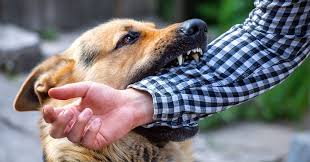
Dog bites increase as the temps rise, study finds

Science has shown that violence among monkeys, rats, and mice increases when the weather is warm. Now it seems we can add dogs to the list.

New findings from researchers at Harvard Medical School and Spaulding Rehabilitation Hospital show that the incidence of dog bites rises with the temperature. In an analysis of 69,525 cases in eight U.S. cities, the team found that dog bites increased 3 percent on days with high ozone pollution, 4 percent on days with higher temperatures, and 11 percent on days with elevated ultraviolet radiation, a marker of increased sunshine.

Clas Linnman, assistant professor of physical medicine and rehabilitation at Harvard Medical School and Spaulding Rehabilitation Hospital, was an author on the paper. We asked him about the team’s key findings in a conversation edited for clarity and length.

Q&A

Clas Linnman

GAZETTE: Does this work show that dogs are just like us in the summertime — cranky when the weather gets hot and uncomfortable?

LINNMAN: Probably, but one needs to keep in mind that the interaction between humans and dogs is crucial to reduce dog bites.

GAZETTE: Are the results limited to warm-weather months?

LINNMAN: No. In sensitivity analysis, we found that the effect is actually somewhat stronger in winter months.

GAZETTE: Doesn’t that negate the finding that bite risk rises on hot, sunny, smoggy days?

LINNMAN: No. We are looking at the relative risk on warmer versus cooler days, so, if you only look at winter months, the effect of temperature on risk is still there, and even somewhat stronger. This does not mean that the risk is higher on winter vs. summer days. It means that the effect is still present if you remove the hottest days from the analysis.

GAZETTE: You found that rising temps, ozone levels, and UV radiation are linked to a higher rate of dog bites. Is it just discomfort or are there biological reasons behind the phenomenon?

LINNMAN: We know from animal studies that the HPA axis — the brain’s hypothalamic pituitary adrenal axis, important in responding to stress — is impacted by these factors, and there is some evidence suggesting a change in striatal dopamine turnover with exposure to ozone, but there is a lot of work needed to understand how these phenomena may work in dogs and humans.

GAZETTE: Dopamine is a hormone responsible for making you feel good — how might that affect aggressive behavior?

LINNMAN: Dopamine is involved in short-term rewarding behavior, or impulsivity, and while reward is typically associated with pleasant things, aggression is often impulsive and can also be short-term rewarding, so we think there may be a link here.

GAZETTE: So together, we know that temperature, ozone, and UV affect parts of the brain responsible for stress responses and perhaps lowers inhibition to aggression?

LINNMAN: We cannot really conclude that just yet, but we are looking into both behavioral and neuroimaging data to see if there are subtle effects of these factors.

GAZETTE: The study found an effect from one common summertime pollutant — ozone — but not another, the tiny damaging particles in PM 2.5. What accounts for the divergence?

LINNMAN: Great question. Short-term PM 2.5 has been linked to aggression in humans in multiple studies, so we were expecting to see it here as well. It is possible that anatomical differences between snouts and noses play a part here.

GAZETTE: You also saw increasing precipitation reducing aggression. Why might that be?

LINNMAN: Dogs love to run in the rain! It may be as simple as fewer interactions between humans and dogs on rainy days.

GAZETTE: How well does this agree with what’s been found in humans and other species?

LINNMAN: It fits quite well into the picture. People are also more aggressive with higher temperature and air pollution. There are even studies demonstrating higher rates of violent crime downwind of major highways, and this shifts when the wind shifts.

GAZETTE: There’s also an indication in the journal article that the effects may be related to the way humans interact with dogs on these hot days. How likely is that a factor rather than biological factors within the dogs themselves?

LINNMAN: We don’t have the type of data needed to assess the behavior of the victim in these reports. But dogs typically do not bite without some type of provocation, and they usually warn us first, so the behaviors of the human may be a factor.

GAZETTE: Have you ever been bitten by a dog?

LINNMAN: Yes, actually, once in an aggressive situation.

GAZETTE: What happened?

LINNMAN: I love dogs, I grew up with several family dogs, although I am currently not a dog owner. What happened was that I was parking my bicycle as my neighbor walked by with her dog, and perhaps it was the bike that triggered it to bite me. It was nothing serious, gave me a bruise and put a hole in my T-shirt. Maybe it was a hot, smoggy day. I do not recall.

GAZETTE: As we come into the summer months, any advice for dog owners or people visiting others with dogs?

LINNMAN: Keep your dogs happy, cool, and under control. And learn to read the behavior of dogs — that is probably the most protective thing one can do. Most bites occur with dogs we know.

Source: The Harvard Gazette

Image

Doggy quote of the month for July

The greyhound ‘supplementary report’

In May, a smaller report from NZ’s Racing Integrity Board (RIB) was released.

The Supplementary Report (dated March 2023) was written at the request of the Minister of Racing. Whereas the December report talks at great lengths about all the things that would have to happen to reform the industry, the bulky report didn’t say much about options for closing down the industry.

The request of the RIB to report on options for closure was done with the express request to keep it confidential. That is, the Board could not talk with anyone working in animal welfare, or from within the industry, about how to manage closure. The report relies entirely on publicly available material from other countries with the understanding that a more detailed strategy and plan are needed.

The RIB is probably not the body that should be in charge of a closure plan, but they’ve come up with a long list of references. Had the Minister bothered to read submissions from previous reviews, he would have seen that people like me cautioned that a planned and phased closure are needed to preserve the rights and welfare of the hounds.

Such is the case, for example, with the State of Florida.

In 2018, 70% of Florida voters approved a ban on greyhound racing with an effective date of January 2021. The phase-out period was two years. The racing industry in Florida blacklisted adoption groups that had supported the industry’s closure; only adoption groups that were neutral or pro-racing were allowed to receive dogs for adoption. Nonetheless,‘it was reported that there are more willing adopters than dogs coming off the tracks.’

The Supplementary Report summarises the pros and cons of a shorter transition period vs a longer one for an industry closure. Those summaries are copied here:

Let’s face it, both options have their benefits and the risks will have to be managed. No one who truly cares about the dogs wants to see greyhounds over-raced and their welfare otherwise compromised. The RIB has already acknowledged in its longer report that progress towards animal welfare goals is only accomplished under strict supervision and watchful monitoring of the industry.

A closure of the industry will be no different.

This report is a start, but what NZ really needs is the leadership to make a decision on greyhound racing. If that leadership doesn’t eventuate, then a binding referendum will be needed and sooner rather than later.

Meanwhile, who looks after the dogs?

Kathleen Crisley, Fear-Free certified professional and specialist in dog massage, rehabilitation and nutrition/food therapy, The Balanced Dog, Christchurch, New Zealand
A treat-dispensing vacuum cleaner?

There are many creative thinkers in the pet industry. The latest is a prototype Roomba® vacuum cleaner that will dispense treats.

Dubbed the Tasty Reward Emission Apparatus Thingy (T.R.E.A.T for short), the company says that the product is an experimental prototype created for fun. Sadly, there are no plans to release it as a commercial product.

If you are a resident of the US or Canada, you can apply to test the prototype. For all others, enjoy the product video.

Kathleen Crisley, Fear-Free certified professional and specialist in dog massage, rehabilitation and nutrition/food therapy, The Balanced Dog, Christchurch, New Zealand

Another bulky report into NZ’s greyhound racing industry

On 23 May 2023, MP Kieran McAnulty released a report about greyhound racing that was dated December 2022. Authored by the Racing Integrity Board (RIB), this report is 175 pages long.

There have already been three (3) reports, all reviews, of the NZ greyhound racing industry, in 2013, 2017 and 2021. All have included substantive lists of shortcomings in the industry with issues for improving the welfare of greyhounds. This latest report was to have been the final report – the industry was ‘put on notice’ that it should improve and given one year – until the end of 2022 – to do so.

Since I’m writing this blog in June 2023, I figure you can guess that government has failed to act on its promise; even the delay of five months in releasing the report is suspect in terms of who is committed to animal welfare.

I used to work for local and central government agencies in my earlier working life. Whenever a report is long, it is usually because the writers do not want to be the bearers of bad news and so wade through every possible detail to hide the glaringly obvious. Such is the case with this report.

Please bear in mind that the Racing Integrity Board’s purpose is: Promote and ensure the racing industry complies with high standards of animal welfare, integrity and professionalism for the benefit of the public, participants and racing industry

Let me repeat that – high standards, integrity and professionalism…

Key points (direct quotes from the report):

  • There remains much to do
  • The industry has a way to go to convince stakeholders that animal welfare is the overriding imperative
  • Race day injuries have been a long-standing concern. The injury reduction strategy has not yet delivered improved outcomes.
  • Progress on track standards has been slow. Track assessments were completed but did not always result in timely remediation. This leads to the inevitable conclusion that greyhounds could have been injured unnecessarily.
  • Adoption of the Greyhound Australasia rules was a significant undertaking, underestimated by GRNZ (Greyhound Racing NZ).
  • The RIB is confident progress would not have been achieved to the extent it has without the work programme in combination with close monitoring.
  • A broader range of greyhound registration process issues remain unresolved and are affecting traceability.
  • Implement education programmes that ensure all licensed persons understand their obligations under the standards, rules and policies. This is a long-standing issue, for which progress remains slow.
  • Should the industry continue, a high degree of monitoring will be essential.
  • If the RIB is asked to continue its role in the implementation and monitoring of a future work programme, there will be cost implications not currently budgeted
  • Inevitably there will be cost implications for the industry if greyhound racing is to continue based on a revised work programme.

If you’re reading this and wonder what’s next for NZ’s greyhounds, please ensure you focus on the last few bullet points above. If racing is allowed to continue, progress is unlikely to be achieved without close monitoring for which the RIB does not have the budget and resources to undertake. No one else in NZ is resourced to do this either, and the industry itself will face costs to improve.

What’s the odds of these things happening given NZ’s current economic situation and with the lack of leadership?

But wait, there’s more! The RIB has issued a supplementary report, another 31 pages, this time dated March 2022. I’ll cover that report in a future blog.

Kathleen Crisley, Fear-Free certified professional and specialist in dog massage, rehabilitation and nutrition/food therapy, The Balanced Dog, Christchurch, New Zealand

Pet ownership saves $22.7 billion on health care costs in the USA

Millions of people view pets as family and count on their unconditional love. While it’s hard to put a value on the human-animal bond and what it means for so many of us, the Human Animal Bond Research Institute (HABRI) commissioned a new economic impact report which gives us a partial answer – pet ownership saves the U.S. health care system $22.7 billion every year.

The Health Care Cost Savings Report was made possible by a grant from Banfield Pet Hospital.

Access the full Health Care Cost Savings of Pet Ownership Report here.

Key Findings

The report not only reflects better overall health for pet owners in the form of fewer doctor visits per year, but also tracks specific savings for reduced obesity, reduced infections, and better mental health for children, seniors, and our nation’s veterans. For each of these populations, there exists solid evidence supporting the benefits of pet ownership.

$15 billion

Looking at a key measure of general health, pet owners are estimated to visit the doctor less than non-pet owners on an annual basis producing a costs savings of $15 billion.

$4.5 billion

Dog owners who regularly walk their dogs have lower levels of obesity, leading to a $4.5 billion reduction in health care spending.

$90.5 million

Pet ownership correlates to a 14% reduction of C. difficile reinfection cases for hospitalized individuals with a treatment cost savings of $90.47 million.

$672 million

Children (ages 8-10) in households with a dog have a 9% lower probability of having a clinical diagnosis of anxiety. Dog ownership can therefore be linked to $672 million in annual mental health care cost savings.

$1.8 billion

Older Americans with pets are less likely to suffer from health maladies connected to loneliness and social isolation, lowering annual Medicare spending by an estimated $1.8 billion.

$688 million

Overall spending on treatment for PTSD is projected to be $688 million lower for veterans with service animals and emotional support animals.

$22.7 billion

In total, pet ownership saves the U.S. health care system $22.7 billion every year.

For more details on these key findings please see the Health Care Cost Savings of Pet Ownership infographic.

Report Methodology

The report was co-authored by Terry L. Clower, PhD and Tonya E. Thornton, PhD, MPPA, both of whom have extensive expertise in economic and public policy research. Their analysis not only reflects savings from better overall health for pet owners in the form of fewer doctor visits per year, but also tracks specific savings for key public health issues affecting millions of Americans, including reduced obesity, reduced infections, and better mental health for children, seniors, and our nation’s veterans.

Using the methodology employed in the 2015 analysis and adapted for more recent health care services consumption and cost information, pet ownership rates, and population increase, the researchers examined the scientifically-documented health benefits of pet ownership; identified the populations receiving these benefits; and quantified the avoided health care costs for those populations. To do this, the authors first conducted a review of relevant, peer-reviewed academic and professional literature regarding the health benefits of pet ownership. The most recent cost estimates for health services and treatments related to the health conditions identified in the literature review were identified based on an examination of publicly available health care cost data. Pet ownership data was also identified from publicly available sources. The estimated savings to the U.S. healthcare system associated with pet ownership were calculated using these inputs. An additional discussion of identified health benefits associated with pet ownership for which cost savings calculations could not be made was also included in the report.

Downloads

  • Download the full Health Care Cost Savings of Pet Ownership Report here

Source: HABRI

Doggy quote of the month for June

“Einstein has grown to love Italian food; age doesn’t matter.”

Actor George Clooney talking about his senior dog, Einstein

To all the dog mothers

14 May 2023 is Mother’s Day. On this Mother’s Day, I have been giving some thought to the role of us, the Dog Moms.

I know that there are people who dislike the terms “dog parent” “pet parent” “dog mom” and “dog mum” – or other variations of this theme. I hope everyone will remember that the definition of ”to mother” is “to care for or protect.”

I say, without hesitation, that I am proudly a Dog Mum (Mom). I care for and protect Sox as if I had given birth to him. As dogs have the cognition of a two-year old child, the care and protection of a dog is very similar to that of a two-year old human child. A two-year old child will mature and become more self-reliant, whereas our dogs will not.

A Dog Mum truly makes a lifetime commitment.

If anything, I think the role of a Dog Mom is underrated and undervalued by society.

Please consider:

  1. I have Sox entirely through my own choice. You may have heard that some people become parents as the result of an ‘accidental pregnancy.’ Well, there’s no excuse when you are a pet parent. You take on the role entirely through choice.
  2. There are no Working for Families NZ tax credits for pet parents. Our dogs are dependent on us as caregivers but we are entirely financially responsible for their care, whereas parents to human children receive tax subsidies. One could argue that a pet parent without human children is paying more than their fair share of taxes.
  3. My under age 13 does not qualify for zero fees at the doctor, either. Whenever Sox goes to the vet, I pay a bill for the professional time and drugs to care for him. I have pet insurance for him, but this also comes at a price.
  4. If Sox required day care, we wouldn’t qualify for 20 hours of early childhood education for free, either.
  5. At a time when our health care systems are failing us, dogs support both physical and mental health and encourage social connections. By staying healthy, we reduce the demand on our healthcare system.

On this Mother’s Day, let’s give a big thanks to all the Dog Mums. They contribute to our communities in many ways that are not recognised by our system of rewards.

Happy Mother’s Day, from Sox and Me.

Kathleen Crisley, is Fear-Free certified dog massage therapist and canine fitness trainer. She has a particular passion for working with dogs and their families to ensure injury prevention and quality of life. She specialises in working with anxious and emotionally damaged dogs. Her mobile practice, The Balanced Dog, is based in Christchurch, New Zealand.

Image

Doggy quote of the month for May


