Scent dogs detect coronavirus reliably from skin swabs

Scent dog Silja at the Helsinki-Vantaa airport. (Image: Egil Björkman)

A recent study by the University of Helsinki and Helsinki University Hospital confirmed that scent detection dogs can be taught to identify individuals with a coronavirus infection from skin swabs. In the experimental set-up the accuracy of the dogs in identifying the samples was 92 percent.

The rapid and accurate identification and isolation of patients with coronavirus infection is an important part of global pandemic management. The current diagnosis of coronavirus infection is based on a PCR test that accurately and sensitively identifies coronavirus from other pathogens. However, PCR tests are ill-suited for screening large masses of people because of, among other things, their slow results and high cost.

Researchers from the Faculties of Veterinary Medicine and Medicine at the University of Helsinki and from Helsinki University Hospital jointly designed a triple-blind, randomized, controlled study set-up to test the accuracy of trained scent detection dogs where none of the trio – dog, dog handler or researcher – knew which of the sniffed skin swab samples were positive and which negative. The study also analysed factors potentially interfering with the ability of the dogs to recognize a positive sample.

The three-faceted study has now been published in the journal BMJ Global Health. The study provides valuable information on the use of scent dogs in pandemic control.

Correct identification in over 90 percent of samples; only small differences in accuracy between dogs

In the first phase of the study, the dogs were taught to discriminate the skin swab samples of coronavirus patients from those of volunteers who tested negative. After a training period of several weeks, the dogs moved from the training centre to Helsinki-Vantaa Airport for the next stages of the study.

In the second phase of the study, four trained dogs completed a validation test to prove their discriminatory ability. During the experiment, each dog was presented with a series of 420 samples over a period of seven days. As several parallel samples had been collected from each sample donor, each dog received an identical set of 114 coronavirus patient samples and 306 control samples for sniffing. The coronavirus status of all sample donors had been confirmed by PCR. During each testing day, the dog sniffed 20 sample tracks with three samples each, with the tracks presented in random order.

The dogs recognized the samples correctly 92 percent of the time. While their sensitivity to detect a positive coronavirus sample was 92 percent, their specificity was 91 percent. Only small differences in accuracy were observed between the four dogs. The coronavirus infection being caused by virus variants was the single largest factor contributing to erroneous identification by the dogs.

The study confirms previous reports suggesting that scent dogs can identify individuals with a coronavirus infection.

“Our study set-up was of a high scientific standard. The sample sizes were sufficiently large, and all dogs sniffed an identical set of samples, allowing comparison of their performances. The dogs also had to successfully indicate sample sets containing only negative samples – an important trait when screening individuals. Another significant advantage was that samples were collected from outpatients instead of hospital patients. In addition, the testing was performed under real-life conditions rather than in a laboratory”, says the leader of the DogRisk research group and docent of clinical research in companion animals Anna Hielm-Björkman from the University of Helsinki.

“I was particularly impressed by the fact that dogs performed worse with samples we had collected from patients suffering from a disease caused by a coronavirus variant. The explanation is simple: the dogs had originally been trained with the initial wild-type virus, and thus they did not always identify the variant samples as positive. This reveals their incredible ability of discrimination”, says Anu Kantele, Professor of Infectious Diseases and Chief Physician at the University of Helsinki and Helsinki University Hospital.

Major help from scent dogs at airports and ports

The third phase of the study was conducted by screening passengers and staff at Helsinki-Vantaa Airport in a real-life situation. The scent dogs correctly identified 98.7 percent of the negative samples. The low number of coronavirus-positive samples in real-life testing prevented a proper assessment of the dogs’ performance with positive samples. However, based on positive ‘work motivation samples’ regularly given to the dogs during this part of the study, the performance on the correctly identified positive samples also was evaluated at 98.7 percent. Work motivation samples are naive samples pre-collected from PCR positive patients, but not previously sniffed by dogs. They are provided to the dogs at regular intervals to maintain their interest in the target odour in situations and environments where the proportion of positive samples is otherwise very low.

“Scent dogs can provide an invaluable tool for limiting viral spread during a pandemic, serving for example at air- and seaports. Such a reliable, cheap approach to rapidly screen a vast number of samples or to identify passing virus carriers from a large crowd is of value particularly when the testing capacity with traditional approaches is insufficient”, says Anu Kantele.

“Our research group will continue to study how scent dogs can best help our society. We hope that this newly published study will help to allocate funds for the development of this new ‘tool’. There are many other diseases where research could benefit from the excellent sense of smell that these dogs possess”, says Hielm-Björkman.

The study was conducted with the support of the Finnish Cultural Foundation, Svenska Kulturfonden i Finland, Academy of Finland, Jane and Aatos Erkko Foundation, Finnish Medical Association, Veterinary Hospital Chain Evidensia, Nose Academy, Finavia, Vantaa city and deputy mayor Timo Aronkytö. The research group of Anna Hielm-Björkman has also been supported by private donations through the coronadog fundraising campaign, organized jointly by the Finnish Kennel Club and the University of Helsinki. The dogs were initially trained at the NGO Wise Nose trainings center.

Original article: Kantele A, Paajanen J, Turunen S, Pakkanen S, Mattress A, Itkonen L, Heiskanen E, Lappalainen M, Desquilbet L, Vapalahti O, Hielm-Björkman A. Scent dogs in detection of COVID-19 – triple-blinded randomized trial and operational real -life screening in airport setting . BMJ – Global Health, 2022; 0: e008024. Doi : 10.1136/bmjgh-2021-008024

Source: University of Helsinki

Doggy quote of the month for June

Sophia Yin was a pioneer and advocate for low-stress handling. She sadly took her own life in 2014; veterinarians around the world have high suicide rates – a combination of on-the-job stress and easy access to drugs. Please be kind to your veterinarian and others in your dog’s healthcare team.

Growing up with a dog might protect against Crohn’s disease

A recent study suggests that having a pet dog or a larger family in early life may protect against Crohn’s disease, a type of inflammatory bowel disease.

Researchers observed that individuals who owned a dog as a child were less likely in later life to have increased gut permeability, which is an early indicator of Crohn’s disease.

These results may help understand how environmental factors, such as having a pet dog, may influence the risk of Crohn’s disease.

Having a dog as a pet in childhood may be protective against Crohn’s disease, a study suggests. Catherine Falls Commercial/Getty Image

Owning a dog or growing up in a large family during childhood could reduce the risk of Crohn’s disease later in life, according to a study presented at the Digestive Disease Week conference in San Diego.

The study also reports that owning a dog and having a larger family size were associated with changes in gut microbiome composition or gut permeability, paving the way to understand how these factors could influence the risk of Crohn’s disease.

The study’s co-author Dr. Williams Turpin, a research associate at Mount Sinai Hospital, told Medical News Today, “[ these results] imply that environmental factors are associated with risk of developing Crohn’s disease, and thus offer novel modifiable targets for studies aiming to reduce the risk of developing Crohn’s disease.”

Source: Medical News Today

Quantifying Cognitive Decline in Dogs Could Help Humans With Alzheimer’s Disease

Researchers have found that a suite of complementary tests can quantify changes in dogs suspected of suffering from cognitive decline. The approach could not only aid owners in managing their elderly canine’s care, but could also serve as a model for evaluating cognitive decline progression in – and treatments for – humans with Alzheimer’s disease.

Photo by Ken Reid on Unsplash

Canine cognitive dysfunction syndrome (CCDS) is similar to Alzheimer’s disease in humans in that cognitive decline is associated with the development of amyloid plaques as well as cortical atrophy, a progressive degeneration of brain tissue. CCDS is also challenging to diagnose. Traditionally, CCDS is diagnosed based on ruling out any obvious physical conditions and an owner’s answers to a questionnaire.

“One problem with the current approach is that questionnaires only capture a constellation of home behaviors,” says Natasha Olby, the Dr. Kady M. Gjessing and Rahna M. Davidson Distinguished Chair in Gerontology at North Carolina State University and co-senior author of a paper describing the work. “There can be other reasons for what an owner may perceive as cognitive decline – anything from an undiagnosed infection to a brain tumor.”

Olby and co-senior author Margaret Gruen, assistant professor of behavioral medicine at NC State, wanted to determine whether cognitive function could be accurately quantified in dogs.

“Our goal was to bring together multiple tools in order to get a more complete picture of how CCDS presents in dogs,” Gruen says.

To that end, the researchers recruited 39 dogs from 15 breeds. All of them were in the senior and geriatric age range, but in good health overall. A dog is considered “senior” if it is in the last 25% of its expected life span based on breed and size, and geriatric beyond that.

The dogs underwent physical and orthopedic exams, as well as lab work that included a blood test that is a marker of neuronal death. Their owners filled out two commonly used diagnostic questionnaires, and then the dogs participated in a series of cognitive tests designed to assess executive function, memory and attention.

“The approach we took isn’t necessarily designed to be diagnostic; instead, we want to use these tools to be able to identify dogs at an early stage and be able to follow them as the disease progresses, quantifying the changes,” Olby says.

The team found that cognitive and blood test results correlated well with the questionnaire scores, suggesting that a multi-dimensional approach can be used to quantify cognitive decline in aging dogs.

“Being able to diagnose and quantify CCDS in a way that is clinically safe and relevant is a good first step toward being able to work with dogs as a model for Alzheimer’s disease in humans,” Olby says. “Many of the current models of Alzheimers disease – in rodents, for example – are good for understanding physiological changes, but not for testing treatments.”

“Dogs live in our homes and develop naturally occurring disease just like we do,” Gruen says. “These findings show promise for both dogs and humans in terms of improving our understanding of disease progression as well as for potentially testing treatments.”

The work appears in the Journal of Alzheimer’s Disease. NC State postdoctoral fellows Gilad Fefer and Wojciech K. Panek are co-first authors of the work.

Source: NC State News

What does your dog’s tag say?

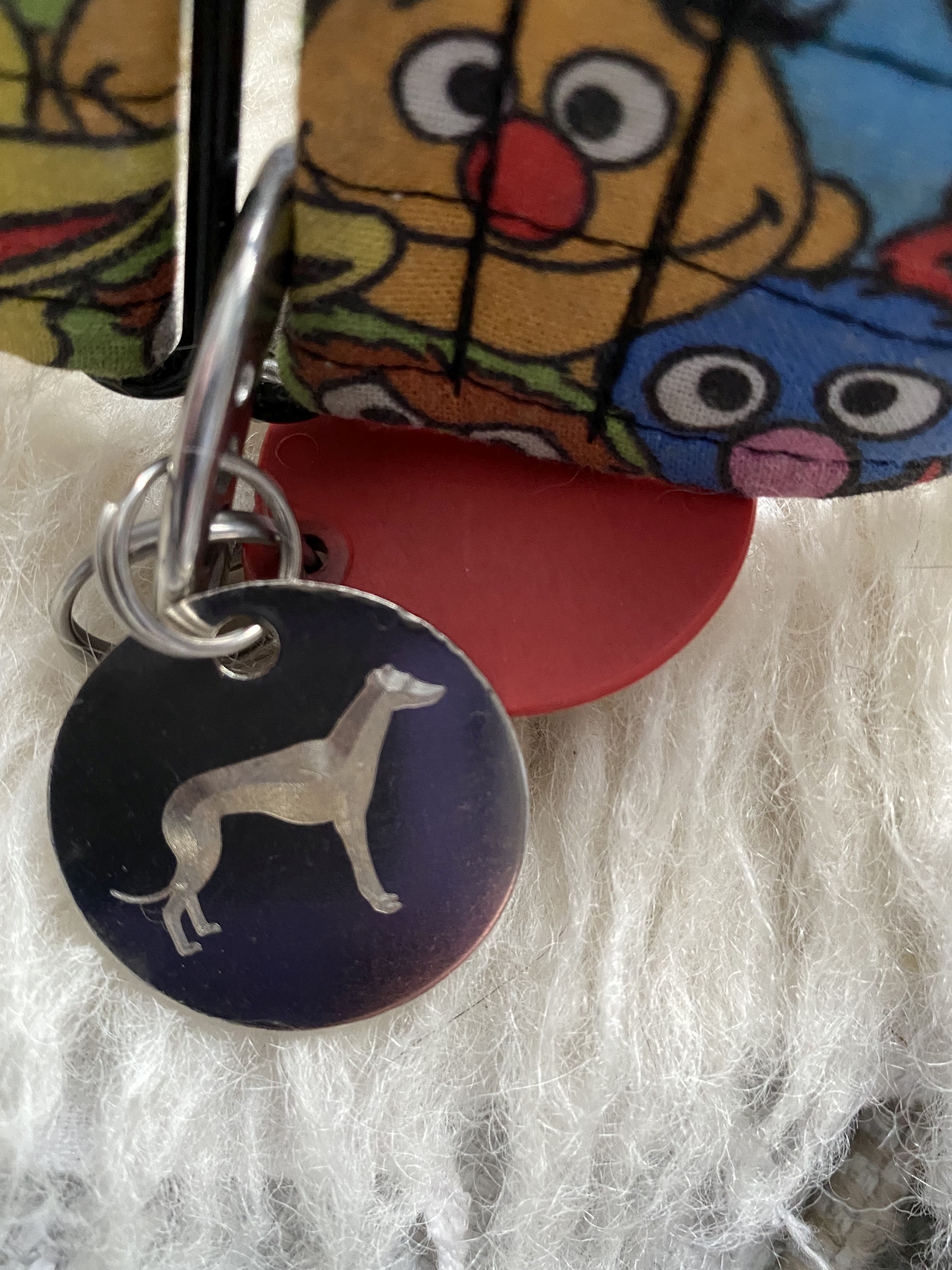
Sox is gradually coming up to speed with all the coats, food, treats, toys and accessories he needs for pet life. This week, I added his ID tag which I chose because it featured a greyhound.

On the reverse, it reads:

I’m Sox If I’m lost Call my Mum (and then my phone number)

I think ID tags are a personal choice with many designs available. Sox is happy with his tag.

Kathleen Crisley, Fear-Free certified professional and specialist in dog massage, rehabilitation and nutrition/food therapy, The Balanced Dog, Christchurch, New Zealand

Doggy quote of the month for May

“Did you know that there are over three hundred words for love in canine?”

– Gabrielle Zevin, author

A spontaneous photo of Zevin and her late dog Nico taken on a sofa trashed in Los Angeles. “As soon as we were done, a random guy loaded it into his truck.”
Photograph by Hans Canosa, Zevin’s partner

Most US dog owners don’t follow FDA pet food handling guidelines

A new analysis suggests that most U.S. dog owners are unaware of—and do not follow—guidelines on safe pet food and dish handling from the Food and Drug Administration (FDA), but that better education and implementation of the guidelines could reduce contamination. Dr. Emily Luisana of North Carolina State University in Raleigh and colleagues present these findings in the open-access journal PLOS ONE on April 6, 2022.

Study mascot, Sally Star, at North Carolina State University College of Veterinary Medicine. Photo credit: Emily Luisana, CC-BY 4.0 (https://creativecommons.org/licenses/by/4.0/)

Pet food and dish handling involves potential health risks for both dogs and people, especially those with compromised immune systems. Multiple outbreaks of bacterial illness among dogs and humans have occurred as a result of contaminated dog food. The FDA has issued guidelines on protocols for safe pet food and dish handling, available online, but the information is limited, and the effects of the recommendations have been unclear.

To help clarify, Dr. Luisana and colleagues surveyed 417 dog owners. They found that less than 5 percent were aware of the guidelines, and many owners did not follow many of the recommendations. For instance, only one third reported washing their hands after feeding, and only two thirds reported preparing dog food on separate surfaces from those used for human food. The latter fact is of potential public health importance, but is not addressed in the FDA recommendations.

To better understand the effects of the FDA recommendations, the researchers tested 68 household dog food dishes for bacterial contamination. After initial testing, they divided the owners into three groups with different instructions for implementing food handling guidelines, then tested the dishes again after 1 week. They found significantly reduced contamination of dishes from owners who instituted the FDA’s pet food handling guidelines, either alone or in combination with the FDA’s human food handling protocol, versus dishes from owners who were not asked to implement either protocol.

The researchers note that their study was small and that future research could clarify optimal hygiene strategies and ways to communicate them.

Nonetheless, on the basis of their findings, the researchers outline suggestions to reduce contamination in pet food dishes for owners, veterinarians, pet food sellers and manufacturers. These include ensuring household members who feed pets adhere to FDA guidelines and including written information on guidelines with pet food sales.

The authors add: “Most pet owners are unaware that pet food bowls can be a hidden source of bacteria in the household. Knowing how to mitigate this risk and practice proper pet food storage and hygiene may make for a happier, healthier household.”

To access the journal article in PLOS ONE: https://journals.plos.org/plosone/article?id=10.1371/journal.pone.0259478  

FDA’s Tips for Safe Handling of Pet Food and Treats

Source: EurekAlert!

Cannabis poisoning cases in pets have increased significantly, study finds

A survey of veterinarians in the U.S. and Canada highlights mounting cases of cannabis poisoning among pets and sheds new light on symptoms, treatments, and outcomes. Richard Quansah Amissah of the Ontario Veterinary College at the University of Guelph in Ontario, Canada, and colleagues present these findings in the open-access journal PLOS ONE on April 20, 2022.

Pets that are exposed to cannabis, most often by ingestion, may experience symptoms of cannabis poisoning — also known as cannabis-induced toxicosis — with varying degrees of severity. While prior evidence suggests that cases of cannabis poisoning among pets are increasing, the actual magnitude of the problem, including typical outcomes for pets, has been unclear.

To improve understanding of cannabis poisoning in pets, Amissah and colleagues analyzed survey data from 251 veterinarians based in Canada or the U.S. Conducted in 2021; the survey included questions about cannabis poisoning cases encountered by participants over several previous years.

Statistical analysis of the survey responses showed that the number of cannabis poisoning cases jumped significantly in both the U.S. and Canada following the 2018 legalization of cannabis in Canada. Unattended ingestion of cannabis edibles was the most frequent cause of poisoning, but it was unclear what proportion of cannabis products had been obtained for human consumption versus medicinal consumption by pets. The authors note that the post-legalization boost could be explained by increased cannabis use, but that increased reporting may have contributed as well.

Cannabis poisoning was most frequently seen in dogs, but cases were also reported in cats, iguanas, ferrets, horses, and cockatoos. While most cases were benign, observed symptoms — seen primarily in dogs — included urinary incontinence, disorientation, and abnormally slow heart rate. Most animals were treated with outpatient monitoring, and nearly all animals recovered completely.

In a small number of cases, veterinarians reported that pets had died due to cannabis poisoning, though the researchers note that other potential causes, such as underlying conditions, could not be ruled out in the study. With use of cannabis products continuing to rise, they call for additional research into the effects of cannabis on pets to help inform veterinary efforts and policies to keep pets healthy.

The authors add: “This is an important topic to study in the light of recent legalization of cannabis in Canada and across multiple states. In order to understand the mechanisms underlying cannabis-induced toxicosis in pets, and to develop treatments for it, we need to first understand what it looks like; this is what we had hoped to accomplish with this survey, and believe that these findings will help us get a better handle on this under-studied topic.”

Journal reference: Prevalence and characteristics of cannabis-induced toxicoses in pets: Results from a survey of veterinarians in North America

Cortisol in shelter dog hair shows signs of stress

In the Netherlands, thousands of dogs stay in a shelter every year. Despite the good care, a shelter can be a stressful environment for dogs. Researchers at Utrecht University investigated if the amount of the hormone cortisol in hair indicates the levels of stress that dogs experience before, during and after their stay in the shelter.

There is no difference between the cortisol levels of dogs when they enter the shelter and the control group of domestic dogs. After six weeks in the shelter, cortisol levels in the hair appear to have increased by one-third (on average from 16 pg/mg to 21.8 pg/mg). In measurements six weeks and six months after adoption, cortisol levels lowered, moving in the direction of the values at admission to the shelter. The results were published in the scientific journal Scientific Reports on 21 April 2022.

Cortisol in hair

The stress hormone cortisol accumulates in hair, in humans but also in animals. By measuring cortisol levels in hair, researchers can get an idea of the stress response and recovery over weeks or months – depending on the length of the hair examined. This technique has been used extensively in humans and other species, and some fifteen scientific studies have been carried out in dogs so far.

“In addition to the cortisol measurements in hair, we also measured cortisol values in the dogs’ urine. This gives a short-term picture while the hair measurements show the long term”, researcher Janneke van der Laan explains.

To the shelter every day

The researchers examined hair of 52 shelter dogs at four moments: just before admission, after six weeks in the shelter, six weeks after adoption and six months after adoption. They compared the cortisol values before admission with those of twenty domestic dogs, which were similar in terms of breed, age and sex. 

Van der Laan: “We took daily measurements in the shelter for over a year. After adoption, the new owners – after clear instructions – cut the dogs hair and sent it to us. They were helpful and enthusiastic, and were very interested in what their dog had experienced before adoption.” 
 

For the cortisol measurements, hair from the same location on the body was used every time. The researchers shaved the area and allowed new hair to grow during the period in which they wanted to measure the stress hormones. This is called a ‘shave-reshave method’. 

More cortisol in small dogs

A surprising result is that smaller dogs generally have higher cortisol levels than larger dogs. “We have also seen this pattern in previous studies, for example in a study on the resting pattern of shelter dogs. We don’t have a clear hypothesis about why that is, but it is interesting and is an area of focus for future research.”

Well-being in shelter

All the examined shelter dogs were in the same shelter, the largest in the Netherlands. Of course there are significant differences between shelters, not only within the Netherlands but also internationally. In The Netherlands, dogs are usually kept individually, while in other countries they are often kept in groups. 

“We know that a shelter is not a stress-free environment for dogs, even though staff members do their best to achieve the highest possible welfare,” Van der Laan says. “Even if you organise a shelter in the best possible way, there are still stress factors, such as crowds of other dogs and not being able to go outside as often as usual. And most important: the dog is gone from their old, familiar environment.”

The shelter in this study has a pioneering role in improving the welfare of dogs: they use glass walls instead of bars to reduce noise pollution for the dogs, for example. “The fact that we measured an increased amount of cortisol even in this shelter, suggests that this will also be the case in other shelters,” Van Der Laan said.

Source: Utrecht University

What does your car say about you?

This is an important question for someone like me, with a mobile practice.

Let me start by saying that I have never been a ‘car person.’ I don’t notice makes and models when I am out and about, and I most certainly do not follow things like car reviews or new model releases. I consider myself lucky to know that there are cars that run on petrol, diesel, hybrid and EVs. That’s where my car knowledge stops.

My 20-year old Toyota had served me well and I always said that 2022 was when it would be time for a replacement before it started costing me a lot of money. I also had to face it, the advertising on my car was starting to look dated because when we originally designed it, I did not have enough photos that were adequate and so we resorted to purchase a stock photo license for some of the design.

Here is what my tried and true Toyota looked like before I traded it in:

Last year, we filmed a customer story commercial for accounting company Xero and I had in my hands a number of professional-quality photos in addition to the few I had commissioned for my website and brochure several years earlier.

It was time for a refresh!

Things that were important to me in buying a new car and commissioning a new design were:

  • an economical vehicle with fuel efficiency and a degree of reliability. These are important for my bottom line and also because people rely on me to get to their homes on time and ready to work. I can’t have a car leaving me at the side of the road.
  • in terms of the business, I also think that my customers need to know that I am not wasteful with their money. Dog care is expensive and not subsidised in any way. Pet insurance doesn’t cover everything, even when you can afford a policy. Driving around in an expensive sports car or top-of-the-line SUV sends the wrong message, if you ask me. People work hard for their money and to take care of their dogs, my car had to reflect that.
  • retaining Izzy’s photo on the car in some way. Izzy was my canine sidekick in the last 7 years of the business which were our major growth years. I could not have done it without her and needed to honour her time with me
  • using photos of real dogs that portrayed the range of services I provide
  • retaining the Fear Free logo which I attained in 2018, becoming the first New Zealand-based Fear-Free certified professional working in canine massage and rehabilitation

I searched for another Toyota because they come up tops for reliability (this blog post is not being sponsored by Toyota in any way in case you are thinking that). And when I say ‘new car’ what I really mean is a new car to me – but secondhand in the marketplace. New cars are incredibly expensive and my Dad always said that once you drive a new car off the lot, 50% of its value is already gone.

In the end, I chose a blue Toyota Yaris because it had low mileage (a trade-in, not a Japanese import), a better safety rating, 4.5 star fuel efficiency and the right color to go with my branding.

What do you think?

Kathleen Crisley, Fear-Free certified professional and specialist in dog massage, rehabilitation and nutrition/food therapy, The Balanced Dog, Christchurch, New Zealand