Researchers lay groundwork for potential dog allergy vaccine

Scientists have identified a series of molecular candidates for those parts of dog allergens that cause immune reactions in people—the first step in developing a vaccine against most causes of dog allergies.

There have been many research efforts describing the nature and progression of dog allergies, but there have been very few applied studies that use this information to try to cure people of dog allergies entirely by artificially inducing immune tolerance. But researchers have now for the first time identified candidates for those parts of the molecules that make up dog allergens that could give us precisely that: a ”dog allergy vaccine.”

Their findings were published in the Federation of European Biochemical Societies journal on October 26, 2021.

Being allergic to dogs is a common malady and one that is growing worldwide. Over the years, scientists have been able to identify seven different dog allergens—molecules or molecular structures that bind to an antibody and produce an unusually strong immune response that would normally be harmless.

These seven are named Canis familiaris allergens 1 to 7 (Can f 1-7). But while there are seven, just one, Can f 1, is responsible for the majority (50-75 percent) of reactions in people allergic to dogs. It is found in dogs’ tongue tissue, salivary glands, and their skin.

Researchers have yet to identify Can f 1’s IgE epitopes—those specific parts of the antigens that are recognized by the immune system and stimulate or ‘determine’ an immune response (which is why epitopes are also called antigen determinants). More specifically, epitopes are short amino acid sequences making up part of a protein that induces the immune response.

Epitopes bind to a specific antigen receptor on the surface of immune system antibodies, B cells, or T Cells, much like how the shape of a jigsaw puzzle piece fits the specific shape of another puzzle piece. (The part of the receptor that binds to the epitope is in turn called a paratope). Antibodies, also known as immunoglobulin, come in five different classes or isotypes: IgA (for immunoglobulin A), IgD, IgE, IgG, or IgM. The IgE isotype (only found in mammals) plays a key role in allergies and allergic diseases. There is also an IgE epitope that is the puzzle piece that fits the IgE isotype’s paratope.

In recent years, there has been extensive effort at developing epitope-focused vaccines—in this case, a vaccine against dog allergies.

“We want to be able to present small doses of these epitopes to the immune system to train it to deal with them, similar to the principle behind any vaccine,” said Takashi Inui, a specialist in allergy research, professor at Osaka Prefecture University and a lead author of the study. “But we can’t do this without first identifying the Can f 1’s IgE epitope.”

So the researchers used X-ray crystallography (in which the diffraction of x-rays through a material is analyzed to identify its ‘crystal’ structure) to determine the structure of the Can f 1 protein as a whole—the first time this had ever been done.

They found that the protein’s folding pattern is at first glance extremely similar to three other Can f allergens. However, the locations of surface electrical charges were quite different, which in turn suggest a series of ‘residues’ that are good candidates for the IgE epitope.

Using this basic data, further experimental work needs to be performed to narrow the candidates down, but the findings suggest the development of a hypoallergenic vaccine against Can f 1—a dog-allergy vaccine—is within our grasp.

The production of a ‘hypoallergenic vaccine’ by use of such epitopes would not just be a world-first with respect to dog allergies but is rare with respect to any allergic reaction. If the researchers’ work is indeed used to develop a dog allergy vaccine, the principles behind it could be used much more widely against various allergies.

Allergic reaction and immune tolerance mechanism
Paper Information
Journal title: Federation of European Biochemical Societies journal
Paper title: Structure-based prediction of the IgE epitopes of the major dog allergen Can f 1
DOI: 10.1111/febs.16252

Source: Osaka Prefecture University

Walking your dog is better at reducing stress than strolling alone says new study

It’s time to slip on your boots and grab the lead because walking a dog is better at combating stress that strolling alone, a new study has found.

Darrya/Getty Images

According to scientists at the University of Animal Health Technology in Tokyo, sharing a daily ramble with a pet reduces the chances of depression, stress and anxiety. We know that heading outside with your pup provides dogs with the opportunity to get regular physical activity, but it can also help boost the calming GABA chemical in your body, too.

Researchers in the team took saliva samples from 14 dog owners for a week to see whether it was better to walk alone or with a pet. The results, published in the journal Animals, revealed that levels of stress (including the stress-inducing MHPG chemical) were much lower when owners took their dogs on a walk. Meanwhile, the levels of the GABA chemical were also 40% higher.

This isn’t the first time dog walks have been praised for their mental and health benefits, either. In fact, a previous 2017 study found that humans get just as much as their pups from regular strolls.

Rather than social or physical health benefits, it was found the ability of the walk to make them happy was the biggest drive, while findings also discovered that owners were happier when they believed they were making their four-legged friend happier too.

Why not wrap up warm and enjoy a scenic dog walk…

Source: CountryLiving

Full journal article: Hormonal and Neurological Aspects of Dog Walking for Dog Owners and Pet Dogs

Most dog breeds highly inbred

Dog breeds are often recognized for distinctive traits — the short legs of a dachshund, wrinkled face of a pug, spotted coat of a Dalmatian. Unfortunately, the genetics that give various breeds their particular attributes are often the result of inbreeding.

A study shows the majority of canine breeds are highly inbred, contributing to an increase in disease and health care costs throughout their lifespan. (Getty)

In a recent study published in Canine Medicine and Genetics, an international team of researchers led by University of California, Davis, veterinary geneticist Danika Bannasch show that the majority of canine breeds are highly inbred, contributing to an increase in disease and health care costs throughout their lifespan.

“It’s amazing how inbreeding seems to matter to health,” Bannasch said. “While previous studies have shown that small dogs live longer than large dogs, no one had previously reported on morbidity, or the presence of disease. This study revealed that if dogs are of smaller size and not inbred, they are much healthier than larger dogs with high inbreeding.”

Inbreeding affects health

The average inbreeding based on genetic analysis across 227 breeds was close to 25%, or the equivalent of sharing the same genetic material with a full sibling. These are levels considered well above what would be safe for either humans or wild animal populations. In humans, high levels of inbreeding (3-6%) have been associated with increased prevalence of complex diseases as well as other conditions.

“Data from other species, combined with strong breed predispositions to complex diseases like cancer and autoimmune diseases, highlight the relevance of high inbreeding in dogs to their health,” said Bannasch, who also serves as the Maxine Adler Endowed Chair in Genetics at the UC Davis School of Veterinary Medicine.

The researchers partnered with Wisdom Health Genetics, a world leader in pet genetics, to obtain the largest sample size possible for analysis. Wisdom Health’s database is the largest dog DNA database in the world, helping researchers collect data from 49,378 dogs across 227 breeds — primarily from European sources.

Some breeds more inbred

So, what makes a dog breed more inbred than others? Bannasch explained that it’s often a combination of a small founding population followed by strong selection for particular traits in a breed — often based on looks rather than purpose. While she has always had an interest in the population structure of some of these breeds, she became particularly interested in the Danish-Swedish farmdog several years ago. She fell in love with their compact size, disposition and intelligence, and ended up importing one from Sweden.

Bannasch discovered that Danish-Swedish farmdogs have a low level of inbreeding based on their history of a relatively large founding population of 200, and being bred for function, rather than a strong artificial selection for looks. And according to the insurance health data on breeds collected from Agria Insurance Sweden and hosted online by the International Partnership for Dogs, the farmdog is one of the healthiest breeds.

The study also revealed a significant difference in morbidity between brachycephalic (short skull and snout) and non-brachycephalic breeds. While that finding wasn’t unexpected, the researchers removed brachycephalic breeds from the final analysis on effects of inbreeding on health.

Preserving genetic diversity

In the end, Bannasch said she isn’t sure there is a way out of inbred breeds. People have recognized that creating matches based solely on pedigrees is misleading. The inbreeding calculators don’t go back far enough in a dog’s genetic line, and that method doesn’t improve overall high levels of population inbreeding.

There are other measures that can be taken to preserve the genetic diversity and health of a breed, she said. They include careful management of breeding populations to avoid additional loss of existing genetic diversity, through breeder education and monitoring of inbreeding levels enabled by direct genotyping technologies.

Outcrosses are being proposed or have already been carried out for some breeds and conditions as a measure to increase genetic diversity, but care must be taken to consider if these will effectively increase overall breed diversity and therefore reduce inbreeding, Bannasch said. In particular, in the few breeds with low inbreeding levels, every effort should be made to maintain the genetic diversity that is present.

Source: UC Davis

Doggy quote of the month for December

“Dogs and philosophers do the greatest good and get the fewest rewards”

-Diogenes, Greek philosopher

Ed’s feature for Christmas gift vouchers

Ed, a Bull Terrier, loves his regular massage sessions. Ed responds to massage much like a person does, so we decided to cover him in a blanket and take a video.

I have launched this video on social media as a promotion for gift vouchers for Christmas 2021. Dog massage is the calorie-free gift which supports wellness, relaxation, and can provide an early warning for sinister lumps and bumps. It helps arthritic dogs like Ed with pain relief and mobility and should be an essential part of any rehab program following an injury or surgery.

Kathleen Crisley, Fear-Free certified professional and specialist in dog massage, rehabilitation and nutrition/food therapy, The Balanced Dog, Christchurch, New Zealand

Common household noises may be stressing your dog

Researchers at the University of California, Davis, have found that people may not recognize that their dog is stressed when exposed to common household noises. While it’s well established that sudden loud noises, such as fireworks or thunderstorms, commonly trigger a dog’s anxiety, a new study finds even common noises, such as a vacuum or microwave, can be a trigger.

UC Davis study finds even common household items like a vacuum cleaner can cause stress and anxiety for dogs. (Photo: Getty)

The study was published in Frontiers in Veterinary Science.

The research found that high-frequency, intermittent noises such as the battery warning of a smoke detector are more likely to cause a dog anxiety, rather than low-frequency, continuous noise.

“We know that there are a lot of dogs that have noise sensitivities, but we underestimate their fearfulness to noise we consider normal because many dog owners can’t read body language,” said lead author Emma Grigg, a research associate and lecturer at the UC Davis School of Veterinary Medicine.

Signs of anxiety

Some common signs of a dog’s anxiety include cringing, trembling or retreating, but owners may be less able to identify signs of fear or anxiety when behaviors are more subtle. For example, stressed dogs could pant, lick their lips, turn their head away or even stiffen their body. Sometimes their ears will turn back, and their head will lower below their shoulders. Grigg suggests owners better educate themselves on anxiety-related behavior.

Researchers conducted a survey of 386 dog owners about their dogs’ responses to household sounds and examined recorded dog behaviors and human reactions from 62 videos available online. The study found that owners not only underestimated their dogs’ fearfulness, but the majority of people in videos responded with amusement rather than concern over their dog’s welfare.

“There is a mismatch between owners’ perceptions of the fearfulness and the amount of fearful behavior actually present. Some react with amusement rather than concern,” Grigg said. “We hope this study gets people to think about the sources of sound that might be causing their dog stress, so they can take steps to minimize their dog’s exposure to it.”

Some sounds painful for dogs

Grigg said because dogs have a wider range of hearing, some noises could also be potentially painful to a dog’s ears, such as very loud or high-frequency sounds. She said minimizing exposure may be as simple as changing batteries more frequently in smoke detectors or removing a dog from a room where loud noises might occur.

“Dogs use body language much more than vocalizing and we need to be aware of that,” said Grigg. “We feed them, house them, love them and we have a caretaker obligation to respond better to their anxiety.”

Source: UC Davis

Metal dog tags reduce plastic waste

A Wellington dog donning a new, longer lasting metal dog tag. Photo credit: Wellington City Council

Each year in New Zealand, there is an annual renewal process for our dog’s registrations, which is the responsibility of the local town or city council. Typically, this consists of a round disc with the dog’s registration number on it, the registration number changes each year as the new plastic tag is issued on renewal.

But in an effort to reduce plastic waste, a number of councils including Christchurch and Wellington have announced that dogs will be issued with a more durable metal tag starting in 2022. The Selwyn District instituted the tags in 2021.

This means that the dog’s registration number will remain the same with the registration renewing after each year’s fee is paid; the metal tag is designed to last the dog’s lifetime.

In Christchurch, where I live, the council issues 40,000 tags each year which would normally go to landfill. Instead, the metal tags will be recyclable when the tag is no longer required.

In managing our environment, it is nice to think that our dogs are doing their part and I, for one, will happily polish Izzy’s tag to keep it looking brand new while foregoing the annual change of the plastic tag.

Kathleen Crisley, Fear-Free certified professional and specialist in dog massage, rehabilitation and nutrition/food therapy, The Balanced Dog, Christchurch, New Zealand

Image

Doggy quote of the month for November

Many new college students report pet separation anxiety

Pets are not the only ones who experience separation anxiety; their people do too.

Washington State University researchers surveyed a sample of new first-year college students leaving pets at home and found that 75% experienced some level of pet separation anxiety—with one in four reporting moderate to severe symptoms.

“Students who are struggling with missing their pets should know that they’re not alone,” said Alexa Carr, the lead author of the study which is part of her WSU doctoral dissertation. “There’s nothing necessarily wrong with them if they are experiencing a lot of distress from leaving their pets. It can be an isolating experience to lose that coping resource.”

The students who had higher anxiety tended to be those who treated their pets more like people, identifying them as friends, sleeping in the same room and generally spending a lot of time with them. Interestingly, students who had dogs at home also tended to report more attachment to their pets—and more separation anxiety—than those with cats and other types of pets.

While there are many anecdotal accounts of students missing their pets, the study published in Anthrozoos, is the first known research investigating this kind of pet separation anxiety in humans.

Carr and co-author Patricia Pendry, a WSU associate professor of human development, surveyed a sample of about 150 incoming first-year students who had pets at home. The vast majority of respondents, 81%, were women—which is a limitation of the study but also consistent with trends in college enrollment. In 2020, 60% of enrolled college students were women, according to National Center for Education Statistics.

A woman with dark hair smiling and holding a black cat on her shoulder
Alexa Carr

The researchers surveyed the group before they arrived on campus and after their first two weeks of the semester in fall 2019 before the pandemic forced many universities online. The students answered questions related to their mental health, attachment to their pets and feelings about leaving them behind.

Even after controlling for pre-existing mental health issues, the researchers found that pet-related separation anxiety was very strong in the group during the transition to college, especially among students who were closely attached to their pets.

The findings indicate this is an issue for many students and should be taken seriously by campus counselors, Carr said. It also has implications for pet visitation programs now popular at many U.S.  universities which bring animals to campus to help stressed students. A previous WSU study found that petting dogs or cats for just 10 minutes lowers levels of the stress hormone cortisol.

The authors said more research is needed to understand the implications of pet separation anxiety. For example, whether students’ symptoms are stable or become less severe over the course of the semester; or whether pet visitation programs might have some unintended effects, such as potentially exacerbating separation anxiety for students missing their specific pets back home.

The researchers also cautioned that this study should not be used as justification for students to bring their pets with them when they go to college, particularly if they would be their sole caregivers.

“It’s a big responsibility to take care of an animal and would a student then able to balance their school responsibilities, social lives and jobs?” Carr said. “There are more things to take into consideration and explore before we could advocate for more pets on campus.”

Source: WSU Insider

3 in 5 people consider their pet a ‘soulmate’

Would you risk your life for your fur baby? A new survey reveals that three in five Americans would willingly run into a burning building to save their pet.

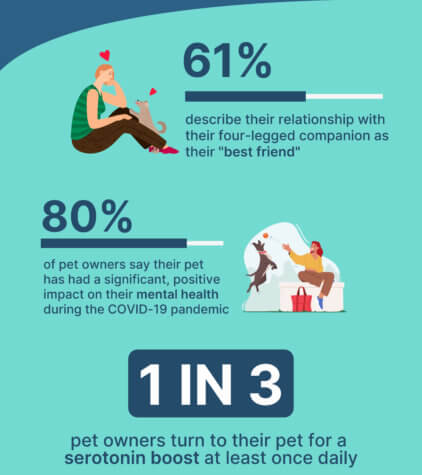
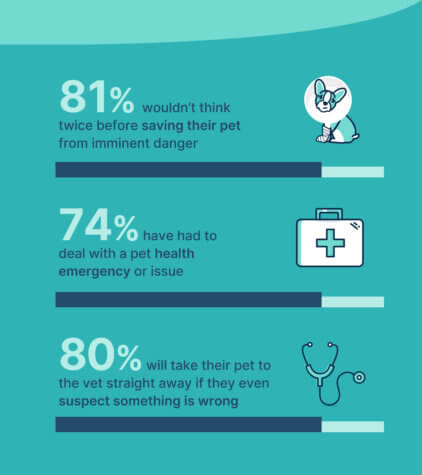
The poll of 2,000 cat and dog owners also shows that 81 percent wouldn’t think twice before saving their pet from immediate danger. Six in 10 (59%) would willingly fight another person to save their four-legged friend.

Say hello to my little friend

Pet Love

Sixty-two percent would even describe their pet as their “best friend,” while three in five agree that their pet is their “soulmate.”

Conducted by OnePoll on behalf of Figo Pet Insurance, the survey also reveals that pet owners often search for similar affirmations of love from their pets as they do from their partners. That includes their pet “following them around” (63%), “giving them kisses” (59%) and sleeping in their bed (53%) as the top signs of endearment.

Research also showed that 84 percent of Gen Z (ages 18-24) are likely to include their pet in their wedding or a milestone event. More than three-fourths of Gen Zers are likely to get a tattoo inspired by them as well. Of those who own multiple species of pets, 48 percent admit they’ve bonded to one in particular — including 80 percent who feel more tied to their dog than their cat.

Regardless of which pet they bond more with, two-thirds (67%) believe that because they are so connected, they can read each other’s minds. Four in five pet owners believe that their pet significantly impacts their mental health in a positive way.

Furthermore, more than one-third of the survey admit turning to their pet for a boost of serotonin at least once every single day of the week.

“The connection we have with our pets goes much further than just owner and companion. Our pets comfort us when we’re sad, stick by us through ups and downs and provide unconditional love like no other relationship can. Our pets are family, and while they may not be able to verbalize their affection for us, any pet parent can attest to the strength and depth of their devotion,” says Lizbeth Bastidas, claim supervisor and certified vet technician in a statement.

No hesitation in pet health

Pet Love

Because of being the most loyal companion, more than two-thirds of pet owners feel obligated in some way to repay their pet for all they do for them. Eight in 10 say it is likely that they will take their pet to the vet straight away if they even suspect something is wrong.

Almost one in five add they would pay more than $7,000 to save their pet’s life, and 53 percent would willingly go into debt or spend any amount necessary to save them from immediate danger. Although only one-third have pet insurance, 54 percent of pet owners agree that it is a good way to repay their pet.

Of those who have pet insurance, one in three say it has come in handy three to four times. Of those who don’t, two in five believe it is too expensive.

“With the growing cost of vet care in the U.S., the sad reality is that many pet parents will at some point face an expensive vet bill that could put them in a terrible position – having to choose between their beloved companion and their financial health. Our pets are there for us through thick and thin, and many pet parents would do anything to return the favor. This is especially true today, when pet medical care has advanced so drastically; sophisticated cancer treatments, alternative therapies, pain management and the list goes on. Pet insurance lightens the financial, mental and emotional load for pet owners, ensuring that cost does not dictate their pet’s care,” Bastidas adds.

Source: Studyfinds.org