“No man can fully understand the meaning of love unless he’s owned by a dog. ”
― Gene Hill, author


“No man can fully understand the meaning of love unless he’s owned by a dog. ”
― Gene Hill, author
An outbreak of vomiting among dogs has been traced back to a type of animal coronavirus by researchers.

Vets across the country began reporting cases of acute onset prolific vomiting in 2019/20.
The Small Animal Veterinary Surveillance Network (SAVSNet) at the University of Liverpool asked vets for help in collecting data, with 1,258 case questionnaires from vets and owners plus 95 clinical samples from 71 animals.
Based on this data, a team from the universities of Liverpool, Lancaster, Manchester and Bristol identified the outbreak as most likely to be a variant of canine enteric coronavirus (CeCoV).
Canine coronavirus only affects dogs and is not the same as Sars Cov2 which causes Covid in humans. Researchers found no evidence of any similar illness in people.
The work is published in Emerging Infectious Diseases.
The team are working on a project funded by the Dogs Trust called SAVSNet-Agile which aims to develop a national surveillance system for canine health.
Dr Barry Rowlingson from Lancaster University said: “We’ve developed complex statistical models to look for disease outbreaks. Being able to rapidly detect increased incidence, without triggering a false alarm from a natural random variation, is the key problem here. Early detection is crucial to early treatment and enhanced monitoring.
“The SAVSNet Agile project aims to feed information back to local veterinary practices so they can be alert to any new outbreaks.”
Vets began to suspect an infectious cause because vomiting was more frequent than is typical for canine gastroenteritis.
SAVSNet researchers found a specific and significant increase in the number of dogs recorded as exhibiting gastroenteric signs between late December 2019 and March 2020.
As well as reusing health records, SAVSNet also collected questionnaire data from vets and owners caring for affected animals, as well as healthy controls. This showed male dogs were more at risk than females.
Charlotte Appleton, SAVSNet Agile PhD Student, said: “Obtaining such important results at an early stage of my PhD is a wonderful achievement and will hopefully provide a pathway of higher visibility into the health of domestic animals.”
Source: Lancaster University
Many long for a return to a post-pandemic “normal,” which, for some, may entail concerts, travel, and large gatherings. But how to keep safe amid these potential public health risks?
One possibility, according to a new study, is dogs. A proof-of-concept investigation published in the journal PLOS ONE suggests that specially trained detection dogs can sniff out COVID-19-positive samples with 96% accuracy.
“This is not a simple thing we’re asking the dogs to do,” says Cynthia Otto, senior author on the work and director of the University of Pennsylvania School of Veterinary Medicine Working Dog Center. “Dogs have to be specific about detecting the odor of the infection, but they also have to generalize across the background odors of different people: men and women, adults and children, people of different ethnicities and geographies.”
In this initial study, researchers found the dogs could do that, but training must proceed with great care and, ideally, with many samples. The findings are feeding into another investigation that Otto and colleagues have dubbed “the T-shirt study,” in which dogs are being trained to discriminate between the odors of COVID-positive, -negative, and -vaccinated individuals based on the volatile organic compounds they leave on a T-shirt worn overnight.
“We are collecting many more samples in that study—hundreds or more—than we did in this first one, and are hopeful that will get the dogs closer to what they might encounter in a community setting,” Otto says.
Through the Working Dog Center, she and colleagues have had years of experience training medical-detection dogs, including those that can identify ovarian cancer. When the pandemic arrived, they leveraged that expertise to design a coronavirus detection study.
Collaborators Ian Frank from the Perelman School of Medicine and Audrey Odom John from the Children’s Hospital of Philadelphia provided SARS-CoV-2-positive samples from adult and pediatric patients, as well as samples from patients who had tested negative to serve as experimental controls. Otto worked closely with coronavirus expert Susan Weiss of Penn Medicine to process some of the samples in Penn’s Biosafety Level 2+ laboratory to inactivate the virus so they would be safe for the dogs to sniff.
Because of workplace shutdowns due to the pandemic, instead of working with dogs at Penn Vet, the researchers partnered with Pat Nolan, a trainer with a facility in Maryland.
Eight Labrador retrievers and a Belgian Malinois that had not done medical-detection work before were used in the study. First the researchers trained them to recognize a distinctive scent, a synthetic substance known as universal detection compound (UDC). They used a “scent wheel” in which each of 12 ports is loaded with a different sample and rewarded the dog when it responded to the port containing UDC.
When the dogs consistently responded to the UDC scent, the team began training them to respond to urine samples from SARS-CoV-2 positive patients and discern positive from negative samples. The negative samples were subjected to the same inactivation treatment—either heat inactivation or detergent inactivation—as the positive samples.
Processing the results with assistance from Penn criminologist and statistician Richard Berk, the team found that after three weeks of training all nine dogs were able to readily identify SARS-CoV-2 positive samples, with 96% accuracy on average. Their sensitivity, or ability to avoid false negatives, however, was lower, in part, the researchers believe, because of the stringent criteria of the study: If the dogs walked by a port containing a positive sample even once without responding, that was labeled a “miss.”
The researchers ran into many complicating factors in their study, such as the tendency of the dogs to discriminate between the actual patients, rather than between their SARS-CoV-2 infection status. The dogs were also thrown off by a sample from a patient that tested negative for SARS-CoV-2 but who had recently recovered from COVID-19.
“The dogs kept responding to that sample, and we kept telling them no,” Otto says. “But obviously there was still something in the patient’s sample that the dogs were keying in on.”
Major lessons learned from the study, besides confirming that there is a SARS-CoV-2 odor that dogs can detect, were that future training should entail large numbers of diverse samples and that dogs should not be trained repeatedly on the samples from any single individual.
“That’s something we can carry forward not only in our COVID training but in our cancer work and any other medical detection efforts we do,” says Otto. “We want to make sure that we have all the steps in place to ensure quality, reproducibility, validity, and safety for when we operationalize our dogs and have them start screening in community settings.”
Cynthia M. Otto is a professor of working dog sciences & sports medicine and director of the Working Dog Center in the University of Pennsylvania School of Veterinary Medicine.
Source: Penn Today
Posted in Dogs, research, special dogs and awards
Tagged coronavirus, detection dogs
I downloaded and watched this independent film on Vimeo.

The film, confronting at times, interviews dog owners from around the world about the bond and relationship they have with their dogs.
Filmmakers Matthew Salleh and Rose Tucker filmed in 11 countries.
Footage of “Day of the Dogs” in Nepal is both colourful and a window into the Nepalese culture.
A dog walker in Istanbul is as busy as those in many western countries…
Former child victims of the civil war in Uganda are interviewed about the healing love their dogs provide to them as they suffer from PTSD. There is a lot of evidence to show how important emotional support dogs are to victims of PTSD – but the stories are often focused on North America for the support given to returning US soldiers from Iraq and Afghanistan and to victims of sexual and family abuse. The use of dogs for PTSD victims in this poor country is an insightful departure from the norm.
Viewers warning: I was totally unprepared for the segment towards the end of the film which features a butcher in Vietnam who trades in dog meat. While the butchering itself is not filmed, we see a live dog in a cage and then its gutted carcass as it is sent to market.
I think the placement of this segment is by design – to underpin the film’s title. Be prepared for the segment because the rest of the film is insightful and largely uplifting.
Dog lovers from around the world share much in common – and dogs provide unconditional love and devotion which crosses cultural boundaries. In a Covid-19 world, it’s a good theme for us to focus on because we have much in common regardless of where in the world we live.
You can rent or buy the film on a number of platforms including Prime Video, YouTube and Vimeo which will support the work of these independent filmmakers. The film’s website gives you all the links and details on how to access the film.
Kathleen Crisley, Fear-Free certified professional and specialist in dog massage, rehabilitation and nutrition/food therapy, The Balanced Dog, Christchurch, New Zealand
Dog bones dated between circa 4200 and 4000 BCE discovered
A team of archaeologists in north-west the Kingdom of Saudi Arabia has uncovered the earliest evidence of dog domestication by the region’s ancient inhabitants.

The discovery came from one of the projects in the large-scale archaeological surveys and excavations of the region commissioned by the Royal Commission for AlUla (RCU).
The researchers found the dog’s bones in a burial site that is one of the earliest monumental tombs identified in the Arabian Peninsula, roughly contemporary with such tombs already dated further north in the Levant.
Evidence shows the earliest use of the tomb was circa 4300 BCE and received burials for at least 600 years during the Neolithic-Chalcolithic era – an indication that the inhabitants may have had a shared memory of people, places and the connection between them.
“What we are finding will revolutionize how we view periods like the Neolithic in the Middle East. To have that kind of memory, that people may have known for hundreds of years where their kin were buried – that’s unheard of in this period in this region,” said Melissa Kennedy, assistant director of the Aerial Archaeology in the Kingdom of Saudi Arabia (AAKSAU) – AlUla project.
“AlUla is at a point where we’re going to begin to realize how important it was to the development of mankind across the Middle East,” said the AAKSAU director, Hugh Thomas.
This is the earliest evidence of a domesticated dog in the Arabian Peninsula by a margin of circa 1,000 years.
The findings are published in the Journal of Field Archaeology.
The project team, with Saudi and international members, focused its efforts on two above-ground burial sites dating to the 5th and 4th millennia BCE and located 130 kilometers apart, one in volcanic uplands and the other in arid badlands. The sites were above ground, which is unique for that period of Arabian history, and were positioned for maximum visibility.
The research team detected the sites by using satellite imagery and then by aerial photography from a helicopter. Ground fieldwork began in late 2018.
It was in the volcanic uplands site that 26 fragments of a single dog’s bones were found, alongside with bones from 11 humans – six adults, an adolescent and four children.
The dog’s bones showed signs of arthritis, which suggests the animal lived with the humans into its middle or old age.
After assembling the bones, the team then had to determine that they were from a dog and not from a similar animal such as a desert wolf.
The team’s zoo archaeologist, Laura Strolin, was able to show it was indeed a dog by analyzing one bone in particular, from the animal’s left front leg. The breadth of this bone was 21.0 mm, which is in the range of other ancient Middle Eastern dogs. In comparison, the wolves of that time and place had a breadth of 24.7 to 26 mm for the same bone.
The dog’s bones were dated to between circa 4200 and 4000 BCE.
Rock art found in the region indicates that the Neolithic inhabitants used dogs when hunting ibex, and other animals.
The fieldwork uncovered other noteworthy artefacts, including a leaf-shaped mother-of-pearl pendant at the volcanic uplands site and a carnelian bead found at the arid badlands site.
The researchers expect more findings in future as a result of the massive survey from the air and on the ground, and multiple targeted excavations in the AlUla region undertaken by the AAKSAU and other teams, which are operating under the auspices of the Royal Commission for AlUla (RCU). The AAKSAU team is led by researchers from the University of Western Australia in Perth, Australia.
The researchers note that AlUla is a largely unexplored area located in a part of the world that has a fertile archaeological heritage of recognized global value.
“This article from RCU’s work at AlUla establishes benchmarks. There is much more to come as we reveal the depth and breadth of the area’s archaeological heritage,” said Rebecca Foote, Director of Archaeology and Cultural Heritage Research for RCU.
Source: Taylor and Francis Group
This is Luke, he’s an ex-racing greyhound who is both a regular client for massage and also one of Izzy’s friends.
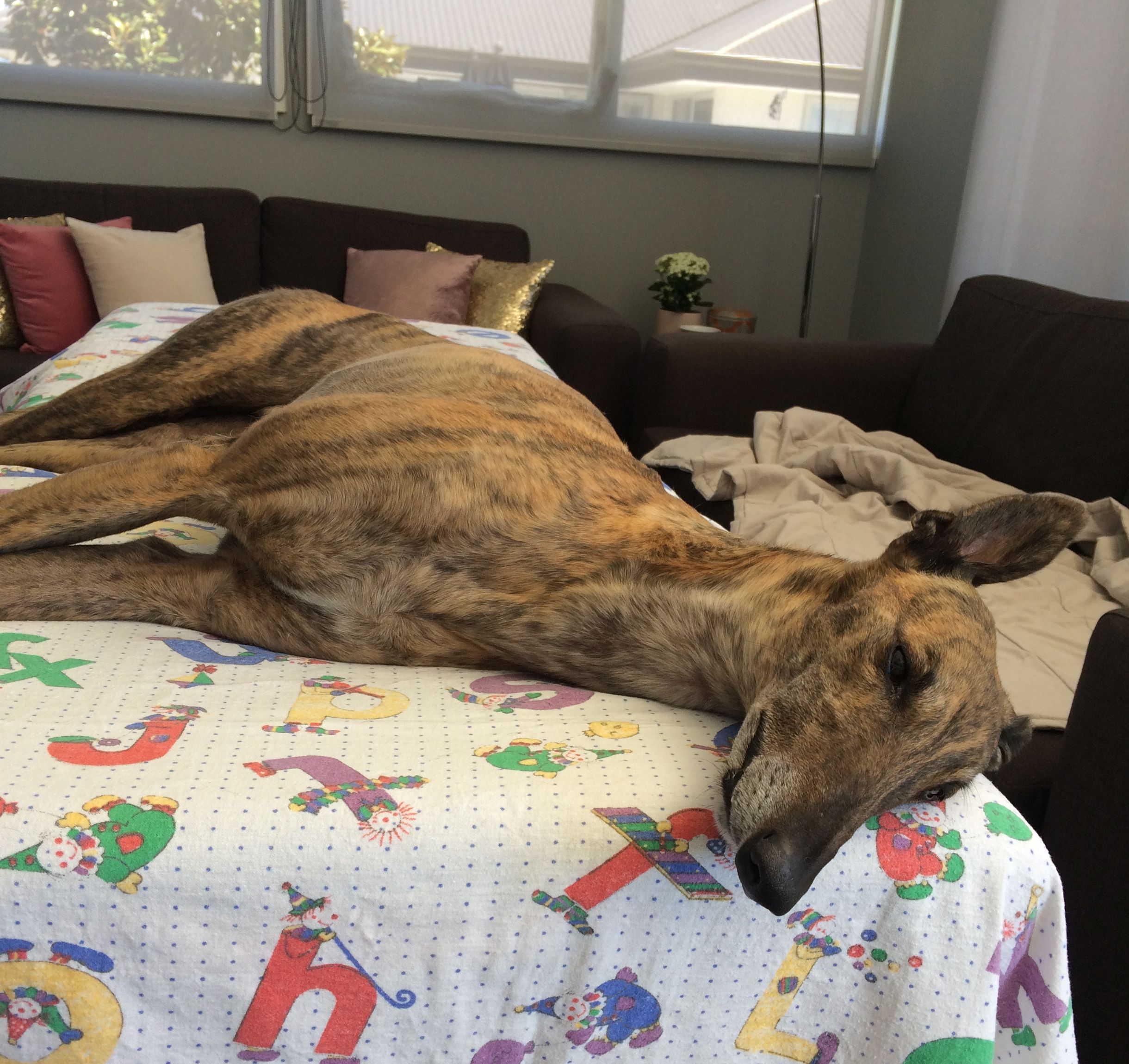

During one of my massage sessions with Luke, his Mum and I talked about how he was jumping on and off the deck at the back of the house. Upon inspection, I could see that the steps were narrow and steep and this was causing Luke to jump to avoid them.
My first rule is to prevent injuries before they happen and I was worried that as Luke gets older, he could severely injure himself by missing the jump, misjudging the jump, or sliding awkwardly when the surface was wet and slippery. We discussed replacing the narrow steps with a much wider landing surface that would be safer.
I also recommend home adjustments for dogs to ensure that they are not putting unnecessary strain on their joints and soft tissues. Over time, these stresses and strains cause wear and tear and, ultimately, arthritis.
Luke’s Mum and Dad have been working on the alterations over summer and they are now complete. Luke has a wide surface to turn upon with non-slip carpet tiles. The hand rail will keep him from jumping off the side and the humans in the house can hold onto it for their safety, too.
Kathleen Crisley, Fear-Free certified professional and specialist in dog massage, rehabilitation and nutrition/food therapy, The Balanced Dog, Christchurch, New Zealand
Past surveys have shown that more than 80% of dog owners report observing jealous behaviors from their dogs—vocalizations, agitated behavior, pulling on a leash—when they give attention to other dogs. New research published in the journal Psychological Science supports these observations and finds that dogs also exhibit jealous behaviors when they merely imagine that their owner is interacting with a potential rival, in this case, a highly realistic artificial dog.
“Research has supported what many dog owners firmly believe—dogs exhibit jealous behavior when their human companion interacts with a potential rival,” said Amalia Bastos with the University of Auckland and lead author on the paper. “We wanted to study this behavior more fully to determine if dogs could, like humans, mentally represent a situation that evoked jealousy.”
Dogs appear to be one of the few species that might display jealous behaviors in ways similar to a human child showing jealousy when their mother gives affection to another child. In humans, jealousy is closely linked with self-awareness, which is one reason animal-cognition researchers are so interested in studying jealousy and other secondary emotions in animals.
To test how and when dogs display jealous behavior, the researchers presented 18 dogs with situations where they could imagine a social interaction between their human companion and either a realistic fake dog or a fleece cylinder. The fake dog served as a potential rival for attention while the cylinder served as a control.
In the experiment, the dogs observed the fake-dog rival positioned next to their owner. A barrier was then placed between the dog and the potential rival obscuring them from view. Despite blocking the line of sight, the dogs forcefully attempted to reach their owners when they appeared to stroke the rival fake dog behind the barrier. In a repeat experiment using a fleece cylinder rather than a fake dog, the dogs pulled on the lead with far less force.
Through their study, Bastos and her colleagues found that dogs showed three human-like signatures of jealous behavior. Jealous behavior emerged only when their owner interacted with a perceived social rival and not an inanimate object; occurred as a consequence of that interaction and not due to a potential rival’s mere presence; and emerged even for an out-of-sight interaction between their owner and a social rival.
“These results support claims that dogs display jealous behavior. They also provide the first evidence that dogs can mentally represent jealousy-inducing social interactions,” said Bastos. “Previous studies confounded jealous behavior with play, interest, or aggression, because they never tested the dogs’ reactions to the owner and the social rival being present in the same room but not interacting.”
“There is still plenty of work to do to establish the extent of the similarities between the minds of humans and other animals, especially in terms of understanding the nature of nonhuman animals’ emotional experiences,” said Bastos. “It is too early to say whether dogs experience jealousy as we do, but it is now clear that they react to jealousy-inducing situations, even if these occur out-of-sight.”
# # #
Reference: Bastos, A. P. M., Neilands, P. D., Hassal, R. S., Lim, B. C., & Taylor A. H. (2021). Dogs mentally represent jealousy-inducing social interactions. Psychological Science. Advance online publication. https://doi.org/10.1177/0956797620979149

Loved the article on Andrew Cotter in NZ Dog World and decided to tell
you about my life’s journey with an incredible pack/mixture of dogs over
the last 76 years.
On my 10th birthday in England my parents gave me an Irish Setter puppy
(Shamus) who was just mine until I emigrated to NZ in 1956 and went
shepherding on a 7,000 acre back country block near Gisborne. I managed
to buy a Border Collie heading dog (Star) and a Huntaway (Mate) who
taught me all about mustering and how to handle stock.
A six year period on oil exploration in Africa and the Middle East saw me rescue a terrier
cross (Remus) from SPCA in Mombasa who was with me for 4 years.
Returning to NZ shepherding saw a succession of wonderful working dogs
until I was priested in 1984 – but still managed to rescue a German
Shepherd who fitted in well with my new wife’s Cavalier King Charles!!
Retiring from the church in 1996 we were given a Border Collie bitch by
a friend moving overseas to help on our small 13 acre block. Discovering
she was pedigree we started breeding which we did until our last bitch
died in 2020. In 1999 my wife and I started competing with our Border
Collies in Championship Obedience and had a run of wonderful dogs but in
2015 having had a little health problem decided it was time to retire my
two old competition dogs. A year later I was offered a pup to rear and
train for a friend and believing it would be my last dog called him Mate
in memory of my first huntaway but not wanting to waste his talent
started competing again – his first 3 shows gave us 1st,2nd and 1st!.
In 2019 Mate got very ill with an auto immune sickness and thinking we may
lose him and having got back into competition decided to accept a pup
from a friend I had done some breeding with. Again believing this would
be my last dog (I had just had my 85th birthday!) I called this little
girl Star again in memory of my first working Border Collie. Last week
we went to a Champ show and in her first outing aged 14 months Star
achieved 2nd place in Novice while Mate won his Test B. Getting out each
day to play and work and compete with my kids seems to keep me
reasonably fit aged 86 and the gift I have been given with my wonderful
hairy mates has been a blessing and a gift all my life.
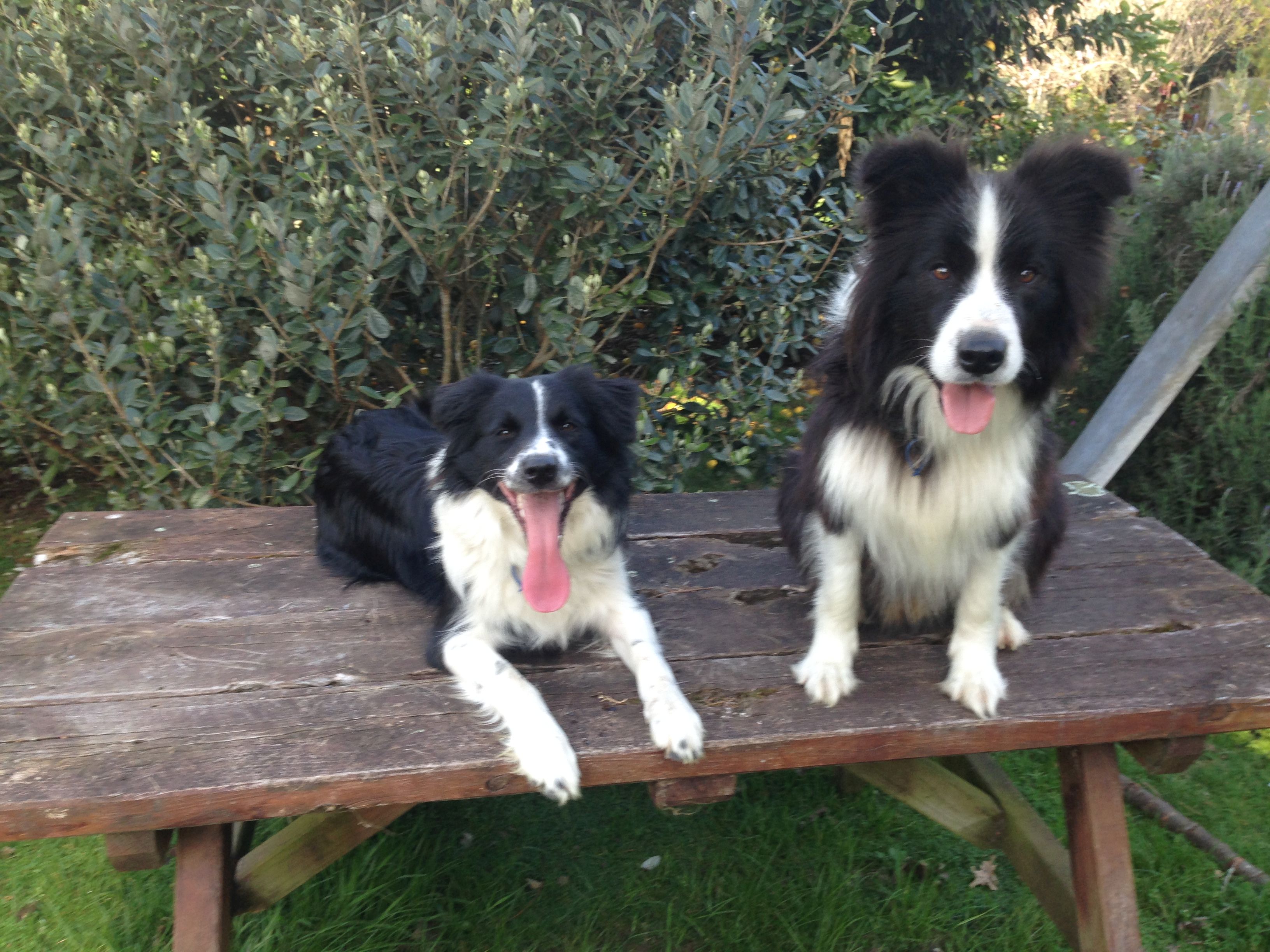
“I look at dogs as furry Prozac”
-Rick Springfield, musician, author, actor and sufferer from depression

The lists of Earth’s endangered animals and plants are getting increasingly longer. But in order to stop this trend, we require more information. It is often difficult to find out exactly where the individual species can be found and how their populations are developing. According to a new overview study published in Methods in Ecology and Evolution by Dr Annegret Grimm-Seyfarth from the Helmholtz Centre for Environmental Research (UFZ) and her colleagues, specially trained detection dogs can be indispensable in such cases. With the help of these dogs, the species sought can usually be found faster and more effectively than with other methods.
How many otters are there still in Germany? What habitats do threatened crested newts use on land? And do urban hedgehogs have to deal with different problems than their rural conspecifics? Anyone wishing to effectively protect a species should be able to answer such questions. But this is by no means easy. Many animals remain in hiding – even their droppings can be difficult to find. Thus, it is often difficult to know exactly whether and at what rate their stocks are shrinking or where the remaining survivors are. “We urgently need to know more about these species”, says Dr Annegret Grimm-Seyfarth of the UFZ. “But first we must find them”.

Remote sensing with aerial and satellite images is useful for mapping open landscapes or detecting larger animals. But when it comes to densely overgrown areas and smaller, hidden species, experts often carry out the search themselves or work with cameras, hair traps, and similar tricks. Other techniques (e.g. analysing trace amounts of DNA) have also been attracting increasing interest worldwide. The use of specially trained detection dogs can also be particularly useful. After all, a dog’s sense of smell is virtually predestined to find the smallest traces of the target species. While humans have about six million olfactory receptors, a herding dog has more than 200 million – and a beagle even 300 million. This means that dogs can perceive an extremely wide range of odours, often in the tiniest concentrations. For example, they can easily find animal droppings in a forest or plants, mushrooms, and animals underground.
At the UFZ, the detection dogs have already proven their abilities in several research projects. “In order to be able to better assess their potential, we wanted to know how detection dogs have previously been used around the world”, says Grimm-Seyfarth. Together with UFZ employee Wiebke Harms and Dr Anne Berger from the Leibniz Institute for Zoo and Wildlife Research (IZW) in Berlin, she has evaluated 1220 publications documenting the use of such search dogs in more than 60 countries. “We were particularly interested in which breeds of dogs were used, which species they were supposed to track down, and how well they performed”, explains the researcher.
The longest experience with the detection dogs is in New Zealand, where dogs have been tracking threatened birds since around 1890. Since then, the idea has been implemented in many other regions, especially in North America and Europe. The studies analysed focused mainly on finding animals as well as their habitats and tracks. Dogs have been used to find more than 400 different animal species – most commonly mammals from the cat, dog, bear, and marten families. They have also been used to find birds and insects as well as 42 different plant species, 26 fungal species, and 6 bacterial species. These are not always endangered species. The dogs sometimes also sniff out pests such as bark beetles or invasive plants such as knotgrass and ragweed.
“In principle, you can train all dog breeds for such tasks”, says Grimm-Seyfarth. “But some of them may require more work than others”. Pinschers and Schnauzers, for example, are now more likely to be bred as companion dogs and are therefore less motivated to track down species. And terriers tend to immediately snatch their targets – which is, of course, not desirable.
Pointers and setters, on the other hand, have been specially bred to find and point out game – but not to hunt it. This is why these breeds are often used in research and conservation projects in North America, Great Britain, and Scandinavia in order to detect ground-breeding birds such as ptarmigans and wood grouse. Retrievers and herding dogs also have qualities that make them good at tracking species. They are eager to learn, easy to motivate, enjoy working with people, and generally do not have a strong hunting instinct. That is why Labrador Retrievers, Border Collies, and German Shepherds are among the most popular detection dogs worldwide.
Grimm-Seyfarth’s Border Collie Zammy, for example, learned as a puppy how to track down the droppings of otters. This is a valuable contribution to research because the droppings can be genetically analysed to find out which individual it comes from, how it is related to other conspecifics, and what it has eaten. However, even for experienced experts, these revealing traces are not so easy to find. Especially small and dark coloured droppings are easy to overlook. Dogs, on the other hand, sniff even the most unremarkable droppings without distinction. In an earlier UFZ study, they found four times as many droppings as human investigators alone. And the fact that Zammy is now also looking for crested newts makes his efforts even more rewarding.
According to the overview study, many other teams around the world have had similarly good experiences. In almost 90% of cases, the dogs worked much more effectively than other detection methods. Compared with camera traps, for example, they detected between 3.7 and 4.7 fold more black bears, pied martens, and bobcats. They are also often reach their destination particularly quickly. “They can find a single plant on a football field in a very short time”, says Grimm-Seyfarth. They are even able to discover underground parts of plants.
However, there are also cases where the use of detection dogs is not the method of choice. Rhinos, for example, leave their large piles of excrement clearly visible on paths so that humans can easily find them on their own. And animal species that know feral dogs as enemies are more likely to find (and fight) the detection dogs than to be found. “However, in most cases where the dogs did not perform so well, poor training is to blame”, says Grimm-Seyfarth. She believes that good training of the animal is the most important recipe for success for detection dogs. “If you select the right dog, know enough about the target species, and design the study accordingly, this can be an excellent detection method”. She and her colleagues are already planning further applications for the useful detection dogs. A new project that involves tracking down invasive plant species will soon be launched.
Publication:
Annegret Grimm-Seyfarth, Wiebke Harms, Anne Berger: Detection dogs in nature conservation: A database on their worldwide deployment with a review on breeds used and their performance compared to other methods. Methods in Ecology and Evolution (2020), DOI: 10.1111/2041-210X.13560. https://besjournals.onlinelibrary.wiley.com/doi/abs/10.1111/2041-210X.13560
Posted in Dogs, research, special dogs and awards
Tagged detection dogs, endangered species







 DoggyMom.com