New Stem Cell Therapy in Dogs

A team of scientists in Japan has developed a novel method to induce stem cell generation from the blood samples of dogs. Through this technique, the scientists hope to advance regenerative therapies in veterinary medicine. This would mean that, in the near future, veterinarians might be able to reverse conditions in dogs that were previously thought incurable.

Dogs have been faithful human companions ever since their domestication thousands of years ago. With various improvements in veterinary medicine in the past decades, their life expectancy has increased. However, an unfortunate side effect of this longevity, much like in humans, has been an increase in the occurrence of chronic and degenerative conditions.

In humans, modern efforts to fight such diseases have culminated in the development of regenerative therapies, largely based on stem cells. These “baby” cells have the potential to differentiate and mature into many specialized cell types— called “pluripotency.” By transplanting stem cells and guiding their differentiation into desired cell types, researchers are effectively able to regenerate damaged tissues, thereby reversing the course various complex diseases. Although this technology is widely studied in humans, the potential for stem cell therapy in dogs is lacking.

To this end, a research team from Japan, led by Associate Professor Shingo Hatoya from Osaka Prefecture University, has been working on isolating “induced pluripotent stem cells” (iPSCs) from canine blood samples. iPSCs are a type of stem cell that can be “programmed” from a developed (or “differentiated”) cell by introducing a specific set of genes into them. These genes code for proteins called “transcription factors,” which induce the change from a differentiated to a pluripotent stem cell, which then have the ability to mature into various cell types. iPSCs can proliferate very rapidly, providing a reliable supply of suitable stem cells for regenerative therapies. “We successfully established an efficient and easy generation method of canine iPSCs from peripheral blood mononuclear cells” explains Dr. Hatoya. He highlights the significance of these findings for veterinary science, stating he hopes that in the near future, “it may be possible to perform regenerative medicinal treatments in dogs.” These findings were published in the journal Stem Cells and Development.

The previous attempts by these scientists to generate iPSCs from canine blood cells, using viral “vectors” to deliver the pluripotency-inducing transcription factors, were not as effective as hoped. Therefore, in this study, they tested a different combination of inducing factors, which they believe were key to harvesting the full potential of these cells. Most importantly, the researchers needed to control how the reprogrammed cells replicated in the host body. Viral vectors that encode pluripotency-inducing transcription factors can be used to infect cells obtained from the blood and convert them into iPSCs; however, the researchers needed to be cautious: because these vectors integrate into the host genome, re-expression of these pluripotency factors in the host cell can cause tumor formation when these cells are transplanted in patients. To avoid this, the team developed “footprint-free” stem cells by using a particular type of viral vector that can generate iPSCs without genomic insertion and can be automatically “silenced” via “microRNAs” expressed by the cells. Then, they grew these cells in a special type of medium that contained various factors enhancing their pluripotency (including a “small-molecule cocktail”). Indeed, these cells grew and successfully developed germ layers (which form the basis of all organs).

Fascinatingly, these findings have paved the way for an easy stem cell therapy technique for man’s best friends. “We believe that our method can facilitate the research involving disease modeling and regenerative therapies in the veterinary field,” says Dr. Hatoya. Furthermore, the authors also believe that additional research into regenerative therapies for canines might have some ripple effects for human medicine. “Dogs share the same environment as humans and spontaneously develop the same diseases, particularly genetic diseases.”

Translating findings from one field to another might mean veterinarians are able to find treatments, maybe even cures, for some of the diseases that still plague humanity.

Source: Osaka Prefecture University

Labeling of raw ingredients

I use a fair amount of lambs fry (liver) since I make my own dog treats and cakes. A friend recently bought some liver at the supermarket and was feeding it to her dog (raw) as a treat. I asked her if she had frozen the lamb first, and she hadn’t.

I explained that the liver I buy from the supermarket, which is human grade, comes with this warning:

She had purchased her human-grade liver from her local supermarket but it wasn’t marked. So I asked a few questions about labeling and, apparently, a warning about freezing or cooking is only required if the liver is sold for pets; if selling for humans, this type of labeling isn’t required because it is assumed that humans will be cooking the liver. My supermarket opts to label the lambs fry even though it is sold in the human-grade butchery area.

Eating of raw liver (if not frozen beforehand) increases the risk of hydatids. Since many pet owners opt to buy human-quality food, I wonder if we are missing a vital step in educating people about the risks? Raw pet food retailers in our area all supply their products to consumers in a frozen state.

Anyway, my friend promised to go home and freeze the remaining liver first before feeding it to her dog…

Kathleen Crisley, Fear-Free certified professional and specialist in dog massage, rehabilitation and nutrition/food therapy, The Balanced Dog, Christchurch, New Zealand

Doggy quote of the month for February

“Not to hurt our humble brethren (the animals) is our first duty to them, but to stop there is not enough. We have a higher mission – to be of service to them whenever they require it. If you have men who will exclude any of God’s creatures from the shelter of compassion and pity, you will have men who will deal likewise with their fellow men.”

– Saint Francis of Assisi

Liv­ing en­vir­on­ment af­fects the mi­cro­bi­ota and health of both dogs and their own­ers

For both dogs and humans, the risk of developing allergic diseases was at its lowest when the skin microbiota was shaped by a rural environment and a lifestyle that promotes microbial abundance. Photo: Emma Hakanen

In urban environments, allergic diseases are more common among dogs and their owners compared to those living in rural areas. Simultaneous allergic traits appear to be associated with the microbes found in the environment, but microbes relevant to health differ between dogs and humans.

In a joint research project known as DogEnvi, researchers from the University of Helsinki, the Finnish Environment Institute and the Finnish Institute for Health and Welfare have previously observed that dogs are more likely to have allergies when their owners suffer from allergic symptoms. In a new study, the researchers investigated whether such simultaneous presence of allergic traits is associated with gut or skin microbes shared by dogs and their owners. A total of 168 dog–owner pairs living in rural and urban environments participated in the study.

“Research shows that dogs and owners living in rural areas have a lower risk of developing an allergic disease compared to urban areas. We assumed that in rural areas both dogs and owners are exposed to health-promoting microbes. We found that the microbial exposure of both was different in rural and urban environments. For instance, the skin microbiota varied more between individuals in rural areas compared to their urban counterparts. A diverse and varying microbial exposure may be precisely what provides the associated health benefit,” says Senior Researcher Jenni Lehtimäki, PhD, from the Finnish Environment Institute.

Dogs and their own­ers seemed to share mi­crobes on their skin, but not in their gut

The study demonstrated that the living environment had a markedly more significant effect on the skin microbiota than on that of the gut in dogs and humans. Dogs living in urban areas had on their skin more microbes typically found on human skin, which may be caused by the accumulation of microbes typical to humans indoors and in urban areas, a phenomenon that has been previously observed.

In a study conducted earlier, the researchers noticed that both the living environment and living habits affected the canine skin microbiota.

“The same was now observed in humans. For both dogs and humans, the risk of developing allergic diseases was at its lowest when the skin microbiota was shaped by a rural environment and a lifestyle that promotes microbial abundance. Such a lifestyle was associated with a number of different animals in the family, as well as larger family size,” says Professor Hannes Lohi from the University of Helsinki.

While the living environment appeared to alter the species of the skin microbiota as well as the risk of allergic diseases in both dogs and their owners, no single shared microbe in the environment had a link to allergies in both dogs and humans.

“We detected microbes associated with allergies in urban dogs, as well as microbes connected to health in rural dogs and humans, but these microbes were different in dogs and humans. It appears that the microbes in the living environment are important for the health of both dogs and humans, but due to the physiological differences of the species, the microbes that are relevant can vary,” Lehtimäki sums up.

DogEnvi, a multidisciplinary research project launched in 2014, is aimed at investigating the significance of the living environment to canine health. Under the project, a study on the link between canine gut microbiota, nutrition and allergies is being prepared. The project has received funding from the Jane and Aatos Erkko Foundation, among others.

Source: University of Helsinki

Ori­ginal art­icle:  

Jenni Lehtimäki, Hanna Sinkko, Anna Hielm-Björkman, Tiina Laatikainen, Lasse Ruokolainen, Hannes Lohi. Simultaneous allergic traits in dogs and their owners are associated with living environment, lifestyle and microbial exposures. Scientific Reports 2020. DOI:10.1038/s41598-020-79055-x  

Women influenced co-evolution of dogs and humans

Man’s best friend might actually belong to a woman.

Photo by Wade Austin Ellis

In a cross-cultural analysis, Washington State University researchers found several factors may have played a role in building the mutually beneficial relationship between humans and dogs, including temperature, hunting and surprisingly—gender.

“We found that dogs’ relationships with women might have had a greater impact on the dog-human bond than relationships with men,” said Jaime Chambers, a WSU anthropology Ph.D. student and first author on the paper published in the Journal of Ethnobiology. “Humans were more likely to regard dogs as a type of person if the dogs had a special relationship with women. They were more likely to be included in family life, treated as subjects of affection and generally, people had greater regard for them.”

While dogs are the oldest, most widespread domesticated animal, very few anthropologic studies have directly focused on the human relationship with canines. Yet when the WSU researchers searched the extensive collection of ethnographic documents in the Human Relations Area Files database, they found thousands of mentions of dogs.

Ultimately, they located data from more than 844 ethnographers writing on 144 traditional, subsistence-level societies from all over the globe. Looking at these cultures can provide insight into how the dog-human relationship developed, Chambers said.

“Our modern society is like a blip in the timeline of human history,” she said. “The truth is that human-dog relationships have not looked like they do in Western industrialized societies for most of human history, and looking at traditional societies can offer a wider vision.”

The researchers noted specific instances that showed dogs’ utility, or usefulness, to humans, and humans’ utility to dogs as well as the “personhood” of dogs—when canines were treated like people, such as being given names, allowed to sleep in the same beds or mourned when they died.

A pattern emerged that showed when women were more involved with dogs, the humans’ utility to dogs went up, as did the dogs’ personhood.

Another prevalent trend involved the environment: the warmer the overall climate, the less useful dogs tended to be to humans.

“Relative to humans, dogs are really not particularly energy efficient,” said Robert Quinlan, WSU anthropology professor and corresponding author on the paper. “Their body temperature is higher than humans, and just a bit of exercise can make them overheat on a hot day. We saw this trend that they had less utility to humans in warmer environments.”

Quinlan noted there were some exceptions to this with a few dog-loving cultures in the tropics, but it was a fairly consistent trend.

Hunting also seemed to strengthen the dog-human connection. In cultures that hunted with dogs, they were more valued by their human partners: they were higher in the measures of dogs’ utility to humans and in personhood. Those values declined, however, when food production increased whether it was growing crops or keeping livestock. This finding seemed to go against the commonly held perception of herding dogs working in concert with humans, but Quinlan noted that in many cultures, herding dogs often work alone whereas hunting requires a more intense cooperation.

This study adds evidence to the evolutionary theory that dogs and humans chose each other, rather than the older theory that humans intentionally sought out wolf pups to raise on their own. Either way, there have been clear benefits for the dogs, Chambers said.

“Dogs are everywhere humans are,” she said. “If we think that dogs are successful as a species if there are lots of them, then they have been able to thrive. They have hitched themselves to us and followed us all over the world. It’s been a very successful relationship.”

Source: Washington State University

Stolen

Last week, a 14-year old boy took his 14-week old Staffordshire bull terrier puppy, Billy, to the local dairy and tied him up outside because the dog was not allowed inside. (Dairies are ‘convenience stores’, for those of you located overseas). While the boy was inside, a man and his accomplice stole Billy.

I can only imagine the panic and heartbreak of the boy. It would be hard enough as an adult to discover your dog has been stolen.

Thankfully, the security camera at the dairy captured the theft and, probably because of the age of the boy and Billy, there was widespread public outcry, particularly on social media, to bring Billy home with the public encouraged to identify the offenders and to report sightings of Billy.

The photo of Billy was circulated widely over social media

I am pleased to report a happy ending. The NZ Police, acting on information from the public, saved Billy and we are waiting to hear if charges will be laid. Police officers also visited the boy and Billy, who received a soft toy NZ Police dog to help him recover from the ordeal (this photo was also widely circulated on social media).

This incident serves as a wake-up call to all dog parents and caregivers. It is so tempting to want to include our dogs in everyday activities and, since most of us are time poor, being able to run an errand while walking the dog seems a perfect solution.

Sadly, it isn’t. There are unscrupulous people who think it’s okay to steal dogs and many of them get away with it. They don’t necessarily treat the dogs as pets, either. Some could be abused or used as bait dogs – a totally frightening scenario for anyone who loves their dog.

I recently had someone tell me that it’s okay to tie their dog at the local supermarket because the security guard is watching. But what happens if the security guard gets called away or takes his break? How do you know that the dogs are safe outside?

I admit that over the years I have caught myself thinking I could possibly pick up takeaways and bring the dog for a walk, too. I have always stopped myself because of the risk.

Remember, it’s our job to keep our dogs safe and secure at all times. I certainly do not blame the boy – he made a mistake and he’s learnt such a hard lesson. We can all learn from Billy’s story – leave your dog at home unless you have a companion who can wait outside to supervise.

One solution, of course, would be to have more dog-friendly shops…

Kathleen Crisley, Fear-Free certified professional and specialist in dog massage, rehabilitation and nutrition/food therapy, The Balanced Dog, Christchurch, New Zealand

The pledge

With every New Year, I read about how people make resolutions – many of which despite the good intentions don’t last much longer than February. But I’ve been thinking a lot about the lifelong commitment we make to a dog, and of course the number of cases we see each year when people don’t fulfill that commitment.

If we could change the rules of pet ownership, I’d definitely support the case for licensing owners rather than the dogs.

If I could change one thing about my practice, it would be that I would see more dogs for canine fitness and well-being and less for rehabilitation. Rehab means that the dog has been injured in some way, and often when I do the health history as part of my intake process, I can see where the dog was probably going to have a problem and that the early warning signs were missed or ignored.

So here’s my best effort for the Dog Parent’s Pledge for 2021.

Kathleen Crisley, Fear-Free certified professional and specialist in dog massage, rehabilitation and nutrition/food therapy, The Balanced Dog, Christchurch, New Zealand

Ban this toy from your household

Ball launchers are ‘cheap’ and plentiful – and full of hazards for your dog

I follow a number of Facebook pages dedicated to pets. On some, the main theme appears to be ‘what’s the cheapest?: What’s the cheapest vet? What’s the cheapest groomer? What’s the cheapest food… and, of course, what is the cheapest toy?

These plastic ball launchers are plentiful in supply and sell for about $2 each. It would seem like an easy solution: buy one and stand still in the park while you chuck a ball at high speed for your dog to chase over and over so they come home tired and exercised. Yet, it is this chasing that puts undue strain on your dog’s joints and increases their likelihood of painful injuries – some of which will require expensive surgery and intensive physical therapy.

You’re basically taking a pet dog and asking them to run like a sprint athlete, and then leap and twist to get the ball. They start from a standing position and then sprint before braking hard to catch the ball. At speed, the forces on the dog’s muscles and joints is much greater and the repetitive nature of the exercise is likely to cause micro-tears in the tissues of the muscles and the cartilage of the joints.

It probably is fun, until your dog ruptures a cruciate ligament or develops arthritis over the years of chasing balls in this way.

Often, I see these toys being used in the park on wet grass (a slip hazard) or at the beach over soft sand which isn’t supportive to joints and exacerbates the effects of a twisting and landing.

There’s so much more we can do for our dog’s fitness, flexibility, and stamina as well as enrichment. And we shouldn’t be lazy dog owners – standing in the park chucking a ball is hardly a sign of commitment as your dog’s guardian.

In as little as one session, I will interview you about your lifestyle and your dog’s health and we can come up with the basics of a fitness regime for your dog. Fitness is fun!

Kathleen Crisley, Fear-Free certified professional and specialist in dog massage, rehabilitation and nutrition/food therapy, The Balanced Dog, Christchurch, New Zealand

My calendars

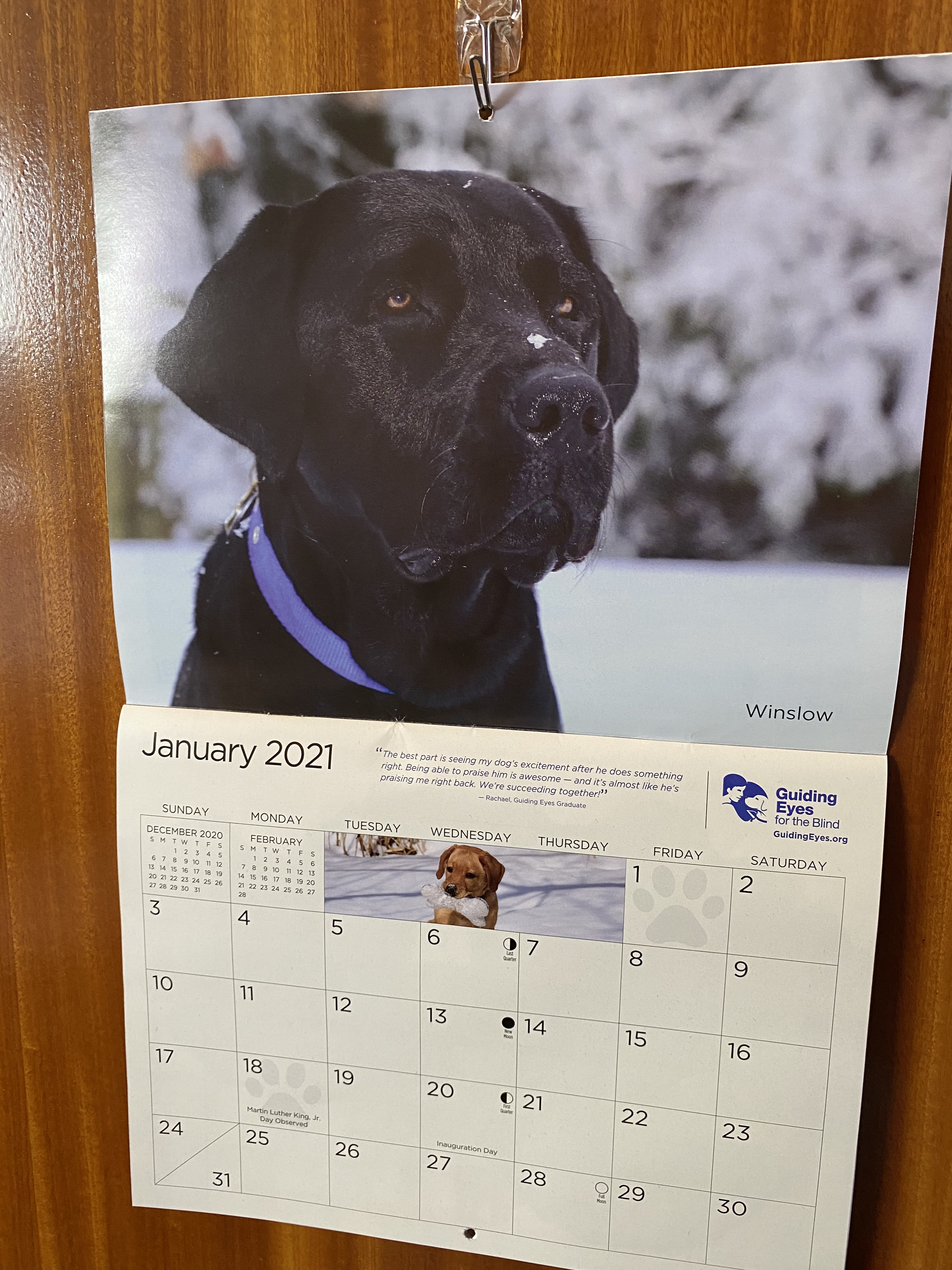
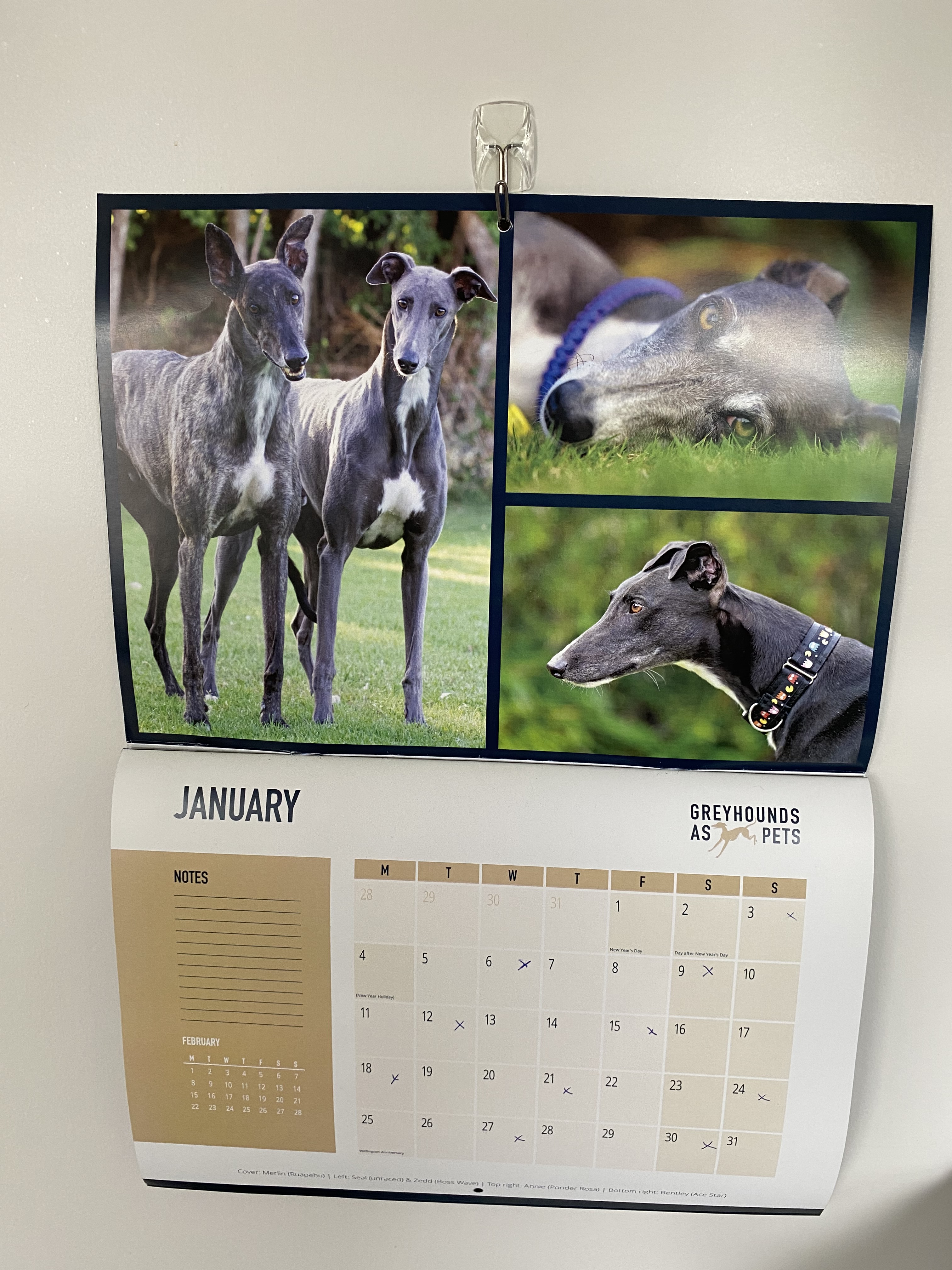
It’s the start of a new year and one of my annual rituals is hanging up my new wall calendars for the year in the office and kitchen. My calendar choices are a reflection of my interest in dogs and the causes I hold dear.

Guiding Eyes for the Blind is a US-based charity dedicated to providing guide dogs to the vision-impaired. When I was only 10 years old I read Emma and I by Sheila Hocken, a memoir about the chocolate Labrador guide dog who changed Sheila’s life. I have read many other dog books since then, too, but Emma and I continues to be one of my favourites.
Greyhounds as Pets (NZ) is the adoption agency responsible for matching me with Izzy. Buying the calendar each year is a simple way of supporting the work of GAP. This calendar features the photos of greyhounds that have been adopted through GAP – all are submitted by their families in the annual calendar competition

What does your calendar say about you?

Kathleen Crisley, Fear-Free certified professional and specialist in dog massage, rehabilitation and nutrition/food therapy, The Balanced Dog, Christchurch, New Zealand

Image

Doggy quote of the month for January