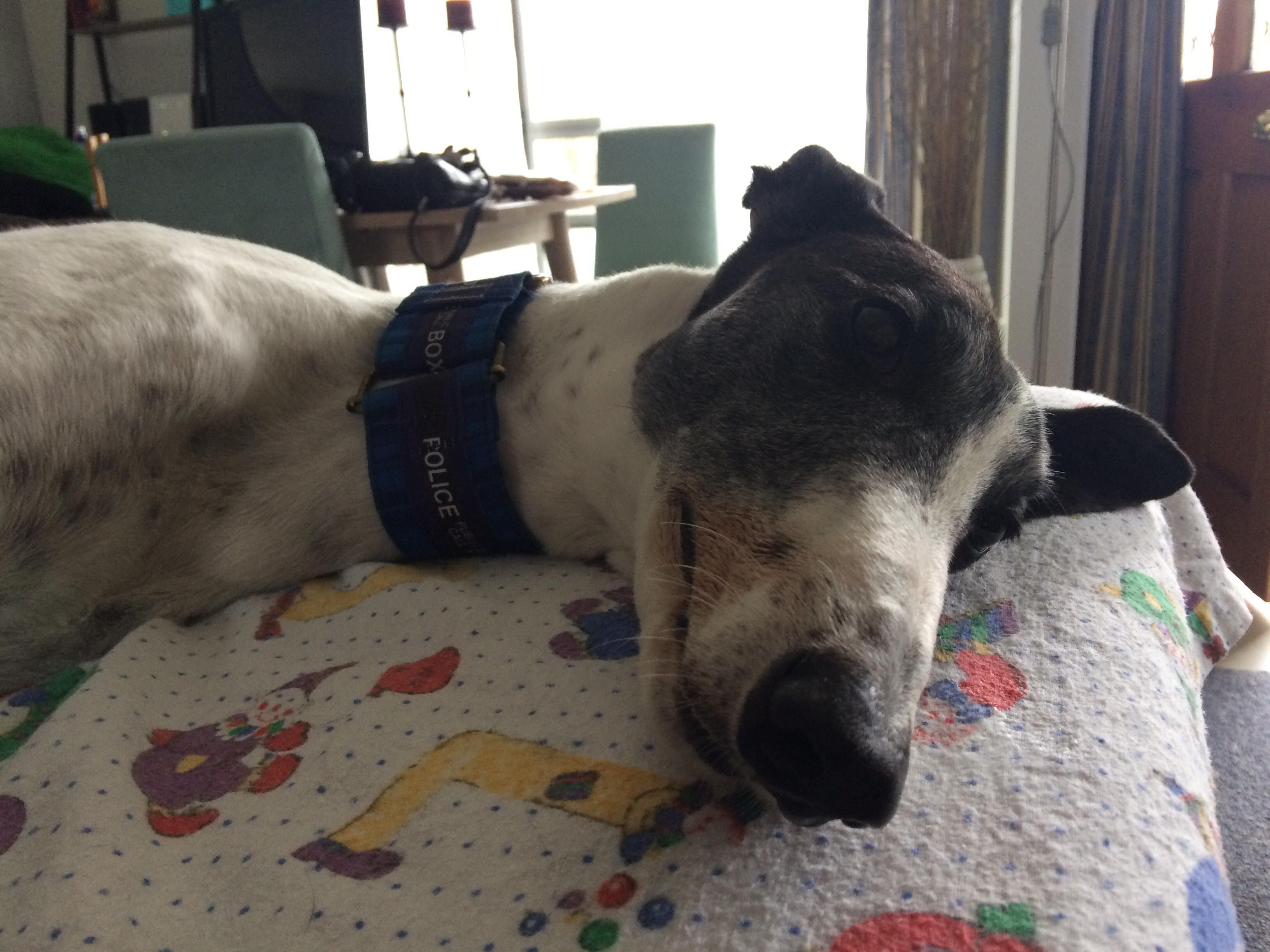
Reflections on 2020, Covid-19, resilience and our dogs

I’m staying home tonight (New Year’s Eve), in my pajamas and with Izzy. As it should be. I don’t particularly like being out and about on New Year’s Eve, which is a holiday that seems to equate to lots of inebriated people, loud noises (often including fireworks), and general debauchery.

If you are one of my followers who is currently locked down due to Covid-19, I realise that it has been a tough year and that you are probably itching to get back to a normal social life. Try to see the glass as half-full – you are home safe with your dog.

As we see out 2020 and welcome 2021, I cannot help but reflect on the events of this year and the role our dogs have played in it:

  • The best lockdown companions you can have – dogs. We always knew that dogs are great companions but how much did they prove it to us (and continue to do so in many places) during lockdown?
  • Izzy was the host of Word of the Day during our lockdown and she also was the reason I was outside walking twice every day – as usual for us – but even more important for structure to our lockdown days and for the mental health that physical exercise and fresh air bring.
  • So many office-based jobs can be done from a home office – and how many dogs benefited from this? If my friends and clients are anything to go by – plenty.
  • My hope is that employees have proven their ability to remain productive in a working-from-home environment and, therefore, that employers will be more receptive to work from home arrangements going into the future.
  • Working from home cuts down on commuting times, reducing pressure on the environment from emissions which is good for the environment. And reduced commuting times mean added time for quality of life for everyone. More time typically means that dogs benefit from longer walks and bonding time with their owners – and both benefit from the companionship of having the owner around more. I’m not a big fan of commercial day cares, with dogs in an over-stimulated environment and walking/standing on concrete all day – working from home is such a better option for office-based roles!
  • Olive and Mabel – the rise of the dog superstars and their sports commentator Dad, Andrew Cotter. I loved watching all the YouTube videos with expert commentary by Andrew. What an example of “When life gives you lemons, make lemonade.” With professional sports shut down, Andrew directed his talents in a new direction and he and his dogs have become celebrities because of it. I haven’t read Andrew’s book yet, but it is on my reading list. Here’s one of my favourites from the Olive and Mabel YouTube series:
  • Teaching humans resilience. Dogs live in the moment and how much of that did we need in 2020? They didn’t understand a virus and the need to obey physical distancing. But they did it. And so can (and should) we!
  • A new respect for vaccinations and their role in society. I’m not an anti-vaxxer but I have a healthy respect for what protections proper vaccination can give. How many people are now totally reliant on a global strategy to vaccinate against Covid-19? It makes you think, doesn’t it?
  • Emergency planning – what happens if you can’t be there to take care of your dog? With the prospect of getting ill, many pet parents have finally made the time to make arrangements for their pets.
  • Adoption rates soar – a recognition that it takes time to settle in a new pet and a Covid-induced lockdown provided that time. And while there have been training challenges for puppies raised during periods where socialization hasn’t been possible, overall the role of a pet to support physical and mental wellness has never been more recognised.

The pandemic has also taught us about how much we rely on each other – for trade, for the manufacturing and the movement of goods, and for our economies. I am grateful to all who embraced SUPPORT LOCAL and have deliberately chosen my independent practice to support their dog’s needs, even when faced with reduced incomes and stress brought about by Covid-19.

As many of you know, I embraced Fear Free certification in 2018. Fear Free is about reducing fear, anxiety and stress in animals and promoting these strategies to professionals in pet care and to pet parents. My wish for you is that 2021 is also a Fear Free year – where we see an improvement in the pandemic, and for all those affected, the time and space to begin the healing process.

My best wishes to you and yours for 2021.

Kathleen Crisley, Fear-Free certified professional and specialist in dog massage, rehabilitation and nutrition/food therapy, The Balanced Dog, Christchurch, New Zealand

Study Sets Baseline for Sleep Patterns in Healthy Adult Dogs

A new canine sleep study from North Carolina State University could serve as a baseline for research on chronic pain and cognitive dysfunction in dogs, potentially improving detection and treatment of these conditions.

“The study was necessary because research on dogs and sleep has outpaced our basic knowledge about what a ‘normal’ sleep/wake cycle looks like,” says Margaret Gruen, assistant professor of behavioral medicine at NC State and corresponding author of the work. “The studies currently available are over 20 years old, only followed small numbers of dogs or dogs that were not in a home environment, and didn’t really capture data that is relevant to how dogs live (and sleep) now. We designed the study to update these findings and fill the knowledge gap.

“And for me, someone interested in how dogs develop and age, it’s a critically missing gap: we talk about a symptom of age-related cognitive dysfunction in dogs as being a disruption in the sleep/wake cycle without really understanding where the baseline is.”

The study followed 42 healthy adult dogs – 21 male and 21 female – ranging in age from 2 to 8 years old. The dogs wore activity monitors on their collars for a two-week period, and their owners filled out a questionnaire on the dogs’ sleep patterns. Functional linear modeling of the activity data showed that most dogs have two activity peaks during the day: a shorter window from 8 a.m. to 10 a.m., followed by a midday lull and a longer active period from about 5 p.m. to 11 p.m. All dogs were more active during weekends than weekdays.

“Since most of the participants were pets of people who work outside the home, we saw that the dogs were most active when human interaction happens,” Gruen says. “There were the occasional outliers – we did capture some midday ‘zoomies’ – but the pattern held true on average across 14 days for each dog. These findings aren’t surprising – they line up with many of the assumptions we’ve been making, but now the data are characterized and documented.”

The research revealed that weight and sex had an effect on the active periods; lighter dogs tended to be more active in a short period just after midnight, while female dogs seemed to be more active during the evening peak than males. Even in these healthy adult dogs, age had an effect; older dogs were less active during the peak activity times.

“Our hope is that this will serve as a foundational study for future work on the relationship between pain, cognitive dysfunction and sleep disruption, and as a study that is relevant to the way dogs live now,” Gruen says. “By establishing norms, we can better identify abnormalities and intervene earlier in the process. We can also use this as a baseline to evaluate development of adult sleep patterns in puppies.”

The research appears in Scientific Reports. NC State graduate student Hope Woods is first author. Duncan Lascelles, professor of translational pain research and management at NC State, also contributed to the work. Evolutionary anthropologist David Samson and his team, from the University of Toronto, Canada, created the functional linear models.

Source: North Caroline State University


Izzy’s thank-you Christmas message

Izzy has a friend named Trevor whom she has never met. But it is Trevor who gives us many egg cartons over the course of a year.

This year, Izzy sent him this Christmas message, along with a video:

“Dear Trevor,

Thanks for all the egg cartonz.

I hope you have a Merry Christmas and eat more eggz.

Love, Izzy”

From our home to yours this Christmas season…

Kathleen Crisley, Fear-Free certified professional and specialist in dog massage, rehabilitation and nutrition/food therapy, The Balanced Dog, Christchurch, New Zealand

Training methods based on punishment compromise dog welfare, study finds

Dogs trained using aversive stimuli, which involve punishments for incorrect behavior, show evidence of higher stress levels compared to dogs trained with reward-based methods, according to a study published on December 16 2020 in the open-access journal PLOS ONE by Ana Catarina Vieira de Castro from the Universidade do Porto, Portugal, and colleagues.

The researchers observed the behavior of 92 companion dogs from 7 dog training schools in Portugal that use either aversive methods (which use mainly aversive stimuli), reward methods (which focus on rewarding desired behaviours), and mixed methods (which combine the use of both rewards and aversive stimuli). They filmed training sessions and tested saliva samples for the stress-related hormone cortisol. Dogs trained using aversive and mixed methods displayed more stress-related behaviors, such as crouching and yelping, and showed greater increases in cortisol levels after training than dogs trained with rewards.

The cognitive bias test

The authors also conducted a cognitive bias test in an unfamiliar location outside of the dog’s usual training environment with 79 of the dogs, to measure their underlying emotional state. They found that dogs from schools using aversive methods responded more pessimistically to ambiguous situations compared with dogs receiving mixed- or reward-based training.

Previous survey-based studies and anecdotal evidence has suggested that punishment-based training techniques may reduce animal welfare, but the authors state that this study is the first systematic investigation of how different training methods influence welfare both during training and in other contexts. They say that these results suggest that aversive training techniques may compromise animal welfare, especially when used at high frequency.

The authors add: “This is the first large scale study of companion dogs in a real training setting, using the types of training methods typically applied in dog training schools and data collected by the research team. The results suggest that the use of aversive training methods, especially in high proportions, should be avoided because of their negative impact on dog welfare.”

Source: Science Daily

Journal reference: Ana Catarina Vieira de Castro, Danielle Fuchs, Gabriela Munhoz Morello, Stefania Pastur, Liliana de Sousa, I. Anna S. Olsson. Does training method matter? Evidence for the negative impact of aversive-based methods on companion dog welfare. PLOS ONE, 2020; 15 (12): e0225023 DOI: 10.1371/journal.pone.0225023


K9 Chemistry: A Safer Way to Train Detection Dogs

Trained dogs are incredible chemical sensors, far better at detecting explosives, narcotics and other substances than even the most advanced technological device. But one challenge is that dogs have to be trained, and training them with real hazardous substances can be inconvenient and dangerous.

NIST scientists have been working to solve this problem using a jello-like material called polydimethylsiloxane, or PDMS for short. PDMS absorbs odors and releases them slowly over time. Enclose it in a container with an explosive or narcotic for a few weeks until it absorbs the odors, and you can then use it to safely train dogs to detect the real thing. 

A detection dog in training.
Credit: Courtesy of Auburn University College of Veterinary Medicine

But a few weeks is a long time, and now, NIST researchers have developed a faster way to infuse PDMS with vapors. In the journal Forensic Chemistry, they describe warming compounds found in explosives, causing them to release vapors more quickly, then capturing those vapors with PDMS that is maintained at a cooler temperature, which allows it to absorb vapors more readily. This two-temperature method cut the time it took to “charge” PDMS training aids from a few weeks to a few days. 

“That time savings can be critical,” said NIST research chemist Bill MacCrehan. “If terrorists are using a new type of explosive, you don’t want to wait a month for the training aids to be ready.”

For this experiment, MacCrehan infused PDMS with vapors from dinitrotoluene (DNT), which is a low-level contaminant present in TNT explosives but the main odorant that dogs respond to when detecting TNT. He also infused PDMS with vapors from a small quantity of TNT. Co-authors at the Auburn University College of Veterinary Medicine then demonstrated that trained detection dogs responded to the DNT-infused PDMS training aids as if they were real TNT. 

While this study focused on DNT as a proof of concept, MacCrehan says he believes the two-temperature method will also work with other explosives and with narcotics such as fentanyl. Some forms of fentanyl are so potent that inhaling a small amount can be harmful or fatal to humans and dogs. But by controlling how much vapor the PDMS absorbs, MacCrehan says, it should be possible to create safe training aids for fentanyl.

Other safe training aids already exist. Some are prepared by dissolving explosives and applying the solution to glass beads, for example. “But most have not been widely accepted in the canine detection community because their effectiveness has not been proven,” said Paul Waggoner, a co-author and co-director of Auburn’s Canine Performance Sciences Program. “If you put an explosive in a solvent, the dogs might actually be detecting the solvent, not the explosive.”

To test the two-temperature method, MacCrehan devised a PDMS “charging station” with a hot plate on one side and a cooling plate on the other (so the “hot stays hot and the cool stays cool,” as a 1980s commercial jingle put it). He prepared various samples by placing the DNT on the hot side, where the chemical was warmed to temperatures ranging from 30 to 35 degrees Celsius (86 to 95 degrees Fahrenheit) — well below the temperature that would cause TNT to detonate. The PDMS was kept a relatively cool 20 degrees Celsius, or about room temperature, on the other side of the charging station. 

MacCrehan loaded the DNT-infused PDMS samples, which hold their charge for up to a few months, into perforated metal cans. He also loaded several cans with blanks — PDMS samples to which no vapors were added. He labeled the cans with codes and shipped them to Auburn University. 

The researchers at Auburn had trained a team of six Labrador retrievers to detect TNT using real TNT explosives. They then conducted a study to determine if the dogs would alert to the PDMS from NIST samples as if it were real TNT.

This study was “double blind”: Neither the dog handlers nor the note-takers who scored the dogs’ responses knew which containers underwent which preparation. This is important because dogs are keenly attuned to the body language of their handlers. If the handlers knew which samples were prepared with DNT, they might inadvertently cue the dogs with the direction of their gaze, a subtle shift in body position or some other subconscious gesture. And if the note-takers knew which samples were which, they might over-interpret the dogs’ responses.

The dogs alerted to all the DNT-infused PDMS samples. They did not alert to the blanks, meaning that they were responding to the DNT, not to the PDMS itself. “They responded to the samples as if they were the real thing,” Waggoner said. 

The dogs did not respond as consistently to PDMS that was infused with limited quantities of TNT. However, MacCrehan explains that the very small amounts of TNT he used for this purpose may not have contained sufficient amounts of DNT to fully infuse the samples.

Looking forward, MacCrehan will be experimenting with ways to safely prepare PDMS training aids for the improvised explosives TATP and HMTD. These compounds are extremely unstable and detonate easily, so having safe training aids for them will be especially useful.

MacCrehan is a laboratory chemist, not an animal behavior expert. But despite his technological orientation, he is amazed by dogs. He estimates that they are 10,000 to 100,000 times more sensitive than the most sophisticated analytical instruments. “We are nowhere near having a hand-held gizmo that can do what they do,” he said.  


Paper: W. MacCrehan, M. Young, M. Schantz, T.C. Angle, P. Waggoner and T. Fischer. Two-temperature preparation method and visualization of PDMS-based canine training aids for explosives. Forensic Chemistry. Published online Oct. 15, 2020. DOI: 10.1016/j.forc.2020.100290

Source: National Institute of Standards and Technology

Showered with love

Christchurch is known as The Garden City because so many residents, including me, like to have flower and vegetable gardens.

When I was gardening a few weeks ago, I noticed that the flowers on the left and right ends of my planter boxes had died. The others were coming away again with the spring rains and warmth.

And then I remembered. Spot has been coming to stay with us for daycare dates over the winter and spring. A boy, Spot likes to mark and my planter boxes are the perfect height for him.

Spot

Dog urine has a high concentration of nitrogen which will kill lawns and other plants when applied in a concentrated way. This is the same reason why gardeners who don’t follow the instructions on the label of nitrogen fertilizers find that instead of feeding their lawns and plants, they kill them off.

“Showered with love,” says Spot’s Mum… It’s okay. I like Spot and so does Izzy. A couple of dead plants are a small price to pay when we can enjoy the company of this beautiful boy.

Kathleen Crisley, Fear-Free certified professional and specialist in dog massage, rehabilitation and nutrition/food therapy, The Balanced Dog, Christchurch, New Zealand

Pets, touch and Covid-19: why our furry friends are lifesavers

Lockdowns, job losses and social isolation have been the hallmarks of 2020 as COVID-19 tightens its grip on the world, not only infecting millions and leaving a mounting death toll, but also denying humans the most basic sense – touch.

In the absence of human-to-human contact, in millions of households worldwide, animals have stepped into the breach for many people, providing much-needed comfort via cuddles, pats and a constant physical presence.

A new study published by University of South Australia researchers points to the lifesaving role that pets have played in 2020 and why governments need to sit up and take notice.

The Journal of Behavioural Economics for Policy (JBEP) paper outlines how pets have a crucial role to play in an era where human-human contact can be life endangering.

Lead author Dr Janette Young says physical touch is a sense that has been taken for granted – even overlooked – until COVID-19 visited our door earlier this year.

“In a year when human contact has been so limited and people have been deprived of touch, the health impacts on our quality of life have been enormous,” Dr Young says.

“To fill the void of loneliness and provide a buffer against stress, there has been a global upsurge in people adopting dogs and cats from animal shelters during lockdowns. Breeders have also been inundated, with demands for puppies quadrupling some waiting lists.”

Spending on pets was already hitting record levels, topping $13 billion in Australia and in the region of US$260 billion globally in 2020, but this is bound to be surpassed.

It is estimated that more than half the global population share their lives with one or more pets. The health benefits have been widely reported, but little data exists regarding the specific benefits that pets bring to humans in terms of touch.

“Pets seem to be particularly important when people are socially isolated or excluded, providing comfort, companionship and a sense of self-worth,” Dr Young says.

“Touch is an understudied sense, but existing evidence indicates it is crucial for growth, development and health, as well as reducing the levels of the stress hormone cortisol in the body. It is also thought that touch may be particularly important for older people as other senses decline.”

In interviews with 32 people, more than 90 per cent said touching their pets both comforted and relaxed them – and the pets seemed to need it as well.

Examples of dogs and cats touching their owners when the latter were distressed, sad, or traumatised were cited. Many people referenced pets’ innate ability to just “know” when their human counterparts weren’t feeling well and to want to get physically close to them.

“The feedback we received was that pets themselves seem to get just as much pleasure from the tactile interaction as humans,” Dr Young says.

Not just dogs and cats either. Interviewees mentioned birds, sheep, horses and even reptiles who reciprocate touch.

“Animals, like people, are living, breathing others, with individual interests, styles and preferences. While culturally, animals are not seen as ‘human’, they are still seen as individuals with likes and dislikes.

“In the era of COVID-19, social distancing, sudden lockdowns and societal upheaval, our pets may be the only living beings that many people are able to touch and draw comfort from.

“Humans have an innate need to connect with others but in the absence of human touch, pets are helping to fill this void. They need to be considered from a policy angle, therefore, to help mitigate some of the mental and physical stressors that people are experiencing during this time.”

Dr Young says hospitals, hospices and aged care facilities should be encouraging pet connections with residents.

“Residential aged care is yet to recognise the value of human-animal relationships. Had more pets being living with their owners in aged care when COVID-19 restrictions were applied, it could have helped people immeasurably,” she says.

Source: University of South Australia

Perspectives on budgeting

In the 11+ years I have been in professional practice, I’ve met a lot of great dogs with equally loving families. Yet, when it comes down to discussions with their veterinarian, often the only ‘budget’ that is mentioned is that of the financial budget.

In this post, I’d like to discuss budgeting because I think there are a total of four (4) budgets. These are the financial budget, the time budget, the physical budget and the emotional budget. Dog owners may, at any time, face a crisis in one or more of these budgets.

The Financial Budget – how much money can you spend to keep your dog healthy and happy? This typically becomes the budget of concern when a major procedure like surgery is required and that’s why veterinarians discuss it the most. Whether by an accident or illness, some owners are caught without enough money in the bank or pet insurance to cover the necessary treatment.

In other cases, a dog may be diagnosed with a medical condition which requires regular medication. Since medications for dogs are not subsidised by the Government (as they are in human health in New Zealand), some medications can be quite expensive. As our dogs age, it’s very common to develop mobility problems associated with arthritis, for example. Not only does this condition require medication, but also changes to the home environment, equipment ranging from harnesses to ramps to mobility carts, and professional help with canine fitness and physical therapy.

Veterinarians are often asked to euthanise a pet when the family cannot afford the cost of their dog’s care. This is referred to in the profession as ‘economic euthanasia.’

The Time Budget usually becomes an issue when a dog requires care at home. Dogs that require crating post-surgery have to be taken out to the toilet on lead on a regular basis, for example. Many pet parents can’t work from home because of the nature of their jobs; some employers may not be supportive of the need for regular breaks to return home to care for a dog or to allow the dog in the office…

I see the time budget become an issue in my practice because of the exercises needed to improve a dog’s strength, balance and flexibility. I specialise in in-home care and, while I always aim to make these exercises easy to do with items in the home, some owners struggle to have the time to undertake them on a consistent basis. Just this week I had a regular client ask, “do I have to do these every day, because they take another half-hour on top of our walk…?”

An owner’s physical abilities is also a budget of sorts. Let’s call this the Physical Budget. A large-sized dog that needs lifting because of an injury or longer-term mobility problem is going to be a challenge to an older owner or one who is slight of frame themselves.

Finally, there’s the Emotional Budget. The bond with our pets is quite strong and caring for a dog with major mobility or other health issues results in caregiver stress, just as it does with human caregivers. Unfortunately, without extended family or close friends who can provide some relief, I’ve seen owners who are totally depleted in energy and enthusiasm for life because of the toll of taking care of a geriatric or unwell pet.

Owners of dogs with severe behavioural problems often find that caring for them takes an emotional toll, as well.

Let’s remember that a pet owner in crisis may not have finances at the top of their list – and so a deeper conversation about pressures of care is required. I find that my in-home service, with clients in their own home and more relaxed and willing to talk, is of huge benefit to getting the best results for their dog, working as a team.

Kathleen Crisley, Fear-Free certified professional and specialist in dog massage, rehabilitation and nutrition/food therapy, The Balanced Dog, Christchurch, New Zealand

Doggy quote of the month for December

Kathleen Crisley, Fear-Free certified professional and specialist in dog massage, rehabilitation and nutrition/food therapy, The Balanced Dog, Christchurch, New Zealand

A Christmas song for dogs

It doesn’t sound very ‘Christmas-y’ to me, but Raise the Woof! is reported to be the first Christmas single written specifically for dogs.

It was made using scientific research into how dogs interact with sound, both noises and the spoken word (like ‘walkkies’).

How does your dog react when you play it for them?

Kathleen Crisley, Fear-Free certified professional and specialist in dog massage, rehabilitation and nutrition/food therapy, The Balanced Dog, Christchurch, New Zealand