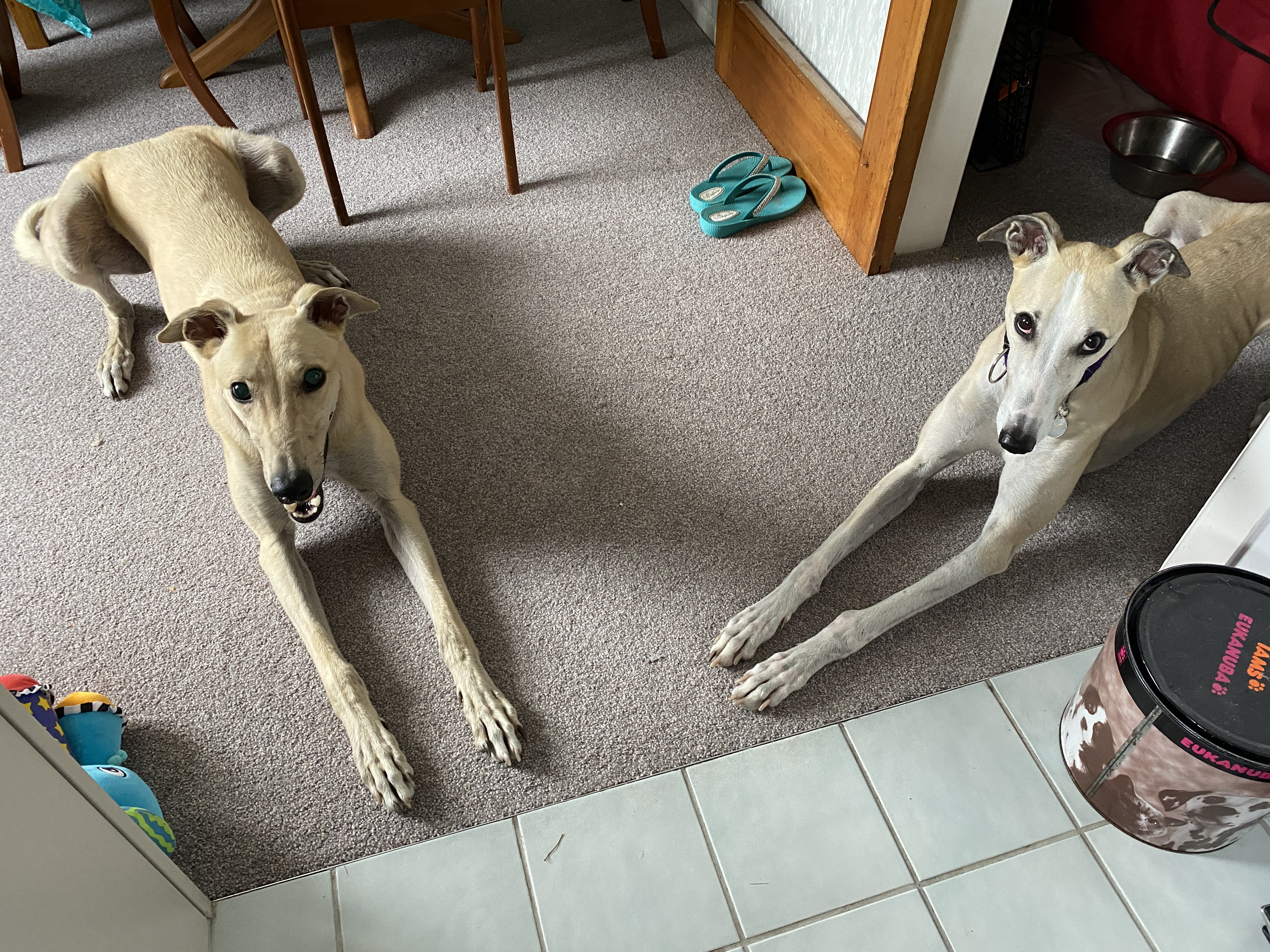
Dogs’ and owners’ hearts sync during interactions, research finds

Photo credit: Adobe Stock

Researchers have uncovered new insights into the relationship between dogs and their owners. A study published in Scientific Reports has found that a dog’s heart rate variability adapts to its owner’s heart rate variability during interaction. This physiological “co-modulation” suggests that emotional states are shared between dogs and their owners, offering new understanding of the deep bond shared between the two species.

The relationship between dogs and humans has evolved over thousands of years, creating bonds akin to those between human caregivers and children. Researchers sought to explore whether these bonds are reflected in shared physiological states, such as heart rate variability, which indicates the balance between relaxation and arousal in the autonomic nervous system.

While prior studies examined behavioral and hormonal synchronization between dogs and humans, little was known about their physiological synchrony. By investigating this co-modulation, the researchers hoped to provide a clearer picture of the emotional and physiological connections that underpin the human-dog bond.

“I have always been fascinated by human-animal relationships and the close attachment bonds we can form with non-human animals, both from personal experience and from a scientific perspective. The dog-human relationship is particularly intriguing because the domestication of dogs has resulted in their remarkable sensitivity and ability to interpret human gestures and emotions,” said study author Aija Koskela, a researcher at the University of Helsinki and University of Jyväskylä

The study included 25 dog-owner pairs, focusing on cooperative dog breeds such as retrievers and herding dogs, which are known for their sensitivity to human cues. Dogs and their owners were recruited through social media and a cognitive testing company. Exclusion criteria for participants ensured that neither dogs nor owners had health conditions or behaviors that could interfere with the study’s measures. The owners, mostly women aged 40.8 years on average, lived with their dogs as indoor pets, and most of the dogs had been trained in dog sports like agility or obedience.

In a controlled environment, researchers attached heart rate monitors to both dogs and owners to measure heart rate variability. The pairs participated in six different tasks designed to mimic natural interactions, such as playing, stroking, training, and sniffing. These activities varied in physical intensity to distinguish the effects of emotional arousal from physical activity. Heart rate variability data was collected and analyzed alongside measures of physical activity using synchronized monitors.

Owners also completed questionnaires to assess their temperament and the quality of their relationship with their dogs. These tools allowed researchers to investigate how individual differences in personality and emotional closeness influenced the physiological responses of both dogs and owners.

The researchers found that dogs’ heart rate variability and activity levels were closely linked to their owners’. During periods of rest and calm interaction, such as before and after structured tasks, dogs and owners showed significant co-modulation in heart rate variability. This suggests a shared emotional arousal, likely influenced by the strong bond between the pairs. During more physically demanding activities like playing, the correlation between the pairs’ physical activity was stronger, but heart rate variability remained influenced by the shared emotional context.

“I believe this study confirms that the emotional mechanisms underlying dog-human interactions are similar to those in human attachment relationships, where emotions are shared and transmitted between attachment figures,” Koskela told PsyPost. “From a practical standpoint, I think it’s helpful for dog owners to remember that their emotions can greatly influence their dog’s behavior. We often focus so much on the dog’s actions that we overlook the emotional state driving them, or how our own feelings influence our dog.”

“For example, trying to calm a child while feeling upset yourself often doesn’t work—whereas calming yourself first helps the child feel secure. Likewise, dogs are highly attuned to human emotions. Being mindful of your emotional state can make challenging situations easier for both you and your dog.”

Interestingly, several factors shaped these physiological connections. For example, the dog’s heart rate variability was influenced by its size, the duration of its relationship with its owner, and the level of shared activities reported by the owner. Larger dogs and those living with their owners for a longer time tended to have lower heart rate variability, suggesting greater arousal or excitement during the tasks. Owners who scored higher on measures of negative affectivity (a tendency toward experiencing negative emotions) had dogs with higher heart rate variability.

Notably, the physiological synchronization between dogs and owners occurred only within the established pairs. When researchers randomly matched dogs with non-owners, this connection disappeared, confirming that the bond between a dog and its owner uniquely facilitates this co-modulation.

“Quite a few things surprised us,” Koskela said. “First, it was fascinating to observe that the emotional connection between dogs and their owners could be detected at physiological level over a relatively short time—the study lasted just an hour. Previously, emotional synchronization between dogs and owners has been studied at hormonal level over much longer time periods. Our study shows that this emotional connection can be detected in a very short time period and I think it’s amazing.”

“Second, it was surprising that the dog’s physiological state measured as heart rate variability explained the owner’s heart rate variability more than the other factors generally affecting the heart rate variability like age or weight. Lastly, I find it interesting that dogs belonging to owners with higher levels of negative affectivity, one of the four temperament traits, were more relaxed throughout the study. This could be because such owners often form very close emotional bonds with their dogs, offering also emotional support for the dog.”

The study highlights the physiological connection between dogs and their owners, suggesting that emotional and autonomic states are interlinked during interaction. However, there are some limitations to consider.

“The current study was limited by its relatively small sample size,” Koskela noted. “However, statistical analysis confirmed the reliability of the findings. Our sample also primarily consisted of female dog owners, which is noteworthy since an owner’s gender may influence both dog behavior and physiology. Furthermore, the sample likely reflects a bias toward active and committed dog owners, as most of the participants practiced dog sports and volunteered for the study in their free time without monetary compensation. Therefore, it is plausible that dog-owner dyads with more functional relationships than average are overrepresented in this study.”

Looking forward, Koskela said that she is “interested in studying emotional synchrony between dogs and their owners in greater detail, particularly on a moment-to-moment level and the factors that modulate it (e.g., personality traits or time lived together). More broadly, I aim to identify the factors associated with functional dog-owner relationships.”

“It’s noteworthy that we studied only cooperative breeds, which are known to be especially sensitive to human behavior and emotions. It would be fascinating to study more ancient breeds to determine whether their emotional states are similarly modulated by their owners.”

The study, “Behavioral and emotional co-modulation during dog–owner interaction measured by heart rate variability and activity,” was authored by Aija Koskela, Heini Törnqvist, Sanni Somppi, Katriina Tiira, Virpi-Liisa Kykyri, Laura Hänninen, Jan Kujala, Miho Nagasawa, Takefumi Kikusui, and Miiamaaria V. Kujala.

Source: Psypost.org

Senior dog walkers demonstrate better balance and fewer falls

A new study from Trinity College Dublin suggests that older adults who regularly walk their dogs show improved balance and fewer falls compared to their peers.

The research, published in the Journals of Gerontology, examined data from over 4,000 community-dwelling adults aged 60 and older, finding that 15% were regular dog walkers, defined as walking their dogs four or more times per week.

“Regular dog walking was associated with better mobility, with a 1.4 second faster Timed-Up-and-Go test on average,” the study noted. “Regular dog walkers also had a 40% lower likelihood of unexplained falls over the last 2 years and a 20% lower likelihood of current fear of falling in fully-adjusted regression models.”

The research also found that simply owning a dog without regularly walking it did not provide the same benefits. Dog owners who didn’t regularly walk their pets showed no reduction in mobility problems or falls, suggesting the physical activity of dog walking, rather than pet ownership alone, drives the improvements.

Regular dog walkers in the study tended to be younger, used fewer medications, and had lower rates of heart disease. They were also more likely to have never smoked, suggesting an overall healthier lifestyle profile.

The study observed that almost 13% of participants owned dogs but didn’t walk them regularly. This group showed higher rates of mobility concerns and fear of falling compared to regular dog walkers, further emphasizing the importance of consistent dog walking activity.

The findings add to growing evidence that dog walking can serve as a consistent form of physical activity that helps maintain mobility and reduce fall risk among older adults.

Source: McKnights Long-Term Care News

Doggy quote of the month for February

“Not everyone is in a position to help other animals, but everybody is in the position not to harm them.”

-Anthony Douglas Williams, author

Canines trained to detect clubroot in the fields of Alberta

Note from DoggyMom: I published a post in November 2024 about scent detection dogs trained to identify tubers of an endangered orchid in New South Wales (Australia). Bill Grimmer, who is featured in this article, reached out to me to make me aware of the use of dogs in Alberta. “We had similar success with the tuber “Clubroot” affecting a $12 billion operation for canola oil.” Bill also says that training of the detector dogs has become a service business for dog trainers in the area. Another success story on using the natural abilities of dogs to benefit humans and the environment.


Any dog lover knows that dogs can do amazing things. Add to that list the ability to detect clubroot in canola.

“The idea behind using dogs as detectors has been around for quite a long time. Using them to detect crop diseases has been around for the last five years or so,” said Michael Harding, plant pathologist with Alberta Agriculture and Forestry.

Last spring, Harding got a cold call from a dog trainer in New Brunswick wanting to connect with a plant pathologist to see if dogs could be trained to detect crop diseases.

After some discussion, he and two trainers from Grimmer’s Canine College in Shediac, New Brunswick, Bill Grimmer and Mario Bourque, agreed to conduct a trial on clubroot. Four dogs — all young with high energy and eager-to-please dispositions — were selected and trained using clubroot galls.

Bill Grimmer, a dog trainer from New Brunswick, walks with Adi while the Goldendoodle sniffs out clubroot in a canola field. Photo: Morton Molyneux

“They started doing the clinical training to teach the dogs to alert them when and where they detected the clubroot gall,” said Harding. “The dogs are smelling these things all the time anyway. The trick is just getting them to alert you when they smell what it is you want to detect.”

Once the dogs were trained to the scent indoors, the training moved outdoors, a much more challenging environment because of all the visual, auditory and scent distractions.

“After a couple of months of clinical training indoors and outdoors, they were ready to be field tested,” said Harding.

Funding was an issue but was resolved when Harding connected with Ken Coles, general manager of Lethbridge’s Farming Smarter, who secured a Canadian Agricultural Partnership grant.

In October, the trainers and dogs landed in Alberta and visited four canola fields — two in the southern Alberta brown soil zone, and a pair in the black soil zone near Edmonton. The dogs selected for the project were two-year-old Josie, a German shepherd, and Adi, an eight-month-old Goldendoodle rescued from the humane society.

“When the trainers were here, they showed us using their clinical training aids that the dogs were able to detect clubroot,” said Harding. “They have trained the first two dogs in the world that can detect clubroot by scent.”

Dogs will alert by barking, putting their nose on the infected canola plant, or by digging. It was surprising how quickly the dogs were able to master the task, said Harding.

“The dogs came from New Brunswick, and had never set foot in a canola field before and there were a few distractions, like gophers.”

While Adi and Josie are good examples of “working dogs,” almost any breed could be trained to do this, said Harding.

“Some dogs have some advantages when it comes to scent detection,” he said. “All dogs have the capacity to do this. It’s just a matter of rewarding the behaviour that you want.

“You could as easily train a Chihuahua or a Great Dane but we’re looking for dogs that can move through fields easily and be easy to transport.”

The trainers put GPS collars on the dogs, so they could map the fields and see where the dogs stopped. The results can then be mapped and shown on an iPad.

There are several advantages to using dogs to sniff out clubroot. First, it’s quicker than having a person walk a field looking for stunted or damaged plants, and then digging them up to see if they have galls. It might also be a way to detect the presence of the disease when an infestation is at a very early stage.

Then there’s the cost factor.

“Once you’ve borne the upfront cost of the dog, it’s not that expensive to keep a dog around, compared to what it costs to provide salaries and benefits for employees who are doing scouting,” noted Harding. “You could add multiple inspectors to your inspection crew and not have it be as financially onerous if you were going to add human inspectors.”

While some canola producers might like to train their dogs to do early identification of clubroot, another option is for individual counties to train dogs in order to beef up their level of scouting. Dog trainers might also want to add clubroot detection to their roster of services.

“This was a research project to determine feasibility and so our part in it is done,” said Harding. “If there is something valuable that the industry is going to run with, we hope that this is the case.”

There are skeptics who don’t believe the industry will be keen to adopt sniffer dogs, but Harding has ideas for additional studies to build on this first successful trial.

“We’re wondering if it’s possible to teach dogs to detect resting spores in the soil,” he said. “What if we could train them to detect spores above a certain threshold in the soil and then they could scout equipment to determine whether it was clean or needed to be washed?”


Source: Alberta Farmer Express, November 2019

The benefits and importance of fostering

I have been giving a lot of thought lately to the issue of fostering.

This time last year, Sox and I were fostering blind greyhound, Fred, who was adopted in mid-February and has settled well into a loving forever home. New Zealand has always had a homeless pet population – you don’t have to look far to find an adoption group (or two, three, or more) that operate in your area. And now, with a greyhound racing ban confirmed, our country has the responsibility to re-home the 2,900 hounds that the industry says it has it in its possession.

Fostering is the gift of life for dogs needing homes; it also has many benefits for the foster carer and the adoption agency.

Benefits of fostering

  • Fostering frees up space in shelters/kennels for another dog in need
  • For the fostered dog, it gives them a chance to de-compress (kennels keep dogs safe and fed, but they can also be noisy and negatively reinforcing – think of having roommates that you really wish would leave!)
  • For some dogs, they simply can’t cope in a shelter or kennel environment and these special dogs need to be cared for in a home before they are damaged from long-term kenneling
  • A fostered dog benefits from one-on-one attention and, if the foster carer/family own a dog (and/or other pets), then the fostered dog has the opportunity to learn the ‘house rules’ and how to interact with other companion animals
  • Fostered dogs often need to learn skills such as toilet training, walking on lead, and basic skills like wait, leave, and down (depending on the skills of the foster carer and the dog, of course) – a dog with life skills is less likely to have a failed adoption (returned to the adoption group)
  • Re-homing and adoption groups benefit from feedback from their foster carers; they learn about a dog’s likes and dislikes, behaviour, and areas for training – all of which enable them to give clearer information and support to adopters and to make a good and lasting match
  • Re-homing and adoption groups also benefit from the enthusiasm of their foster carers, who can help publicise the adoption group simply by taking the dog out for walks, promoting the dogs on their social media, and acting generally as a partner for the re-homing effort
  • An experienced foster carer is worth their weight in gold for the adoption groups they work with; some carers offer specialised skills that adoption groups often cannot afford to access on a commercial basis
  • For carers, fostering gives you the joy of companionship without necessarily the commitment of full-time ownership
  • There is huge satisfaction to be gained from giving a dog a second chance; the emotional reward is hard to describe

Setting expectations and standards

To be successful, fostering works best when the adoption agency and the foster carer are clear about expectations and standards. If the adoption agency isn’t clear about boundaries, it’s hard for the foster carer to know what a good job in fostering looks like.

Questions to ask if you are interested in fostering

Ask yourself why you want to foster – and be honest.

Most people I meet have the best of intentions to foster but can be emotionally unprepared for the experience. A foster dog is not your pet; some attachment to your foster dog is expected – it’s easy to bond with a dog in your care as you learn their personality. Some positive self-talk is a good idea – remind yourself that at some point you will need to farewell the dog, knowing that you gave them a head start for pet life.

What type of dog are you qualified to handle?

If you have breed-specific experience, it’s best to consider offering your skills to a breed-specific rescue group.

In more general terms, most previous dog owners will have experience with adult dogs; puppies are typically fostered only by those with puppy experience (and the availability to monitor them more closely throughout the day). If a dog has special needs such as behaviour issues or mobility or other physical impairments, then they will ideally need a special foster carer with some experience in these areas.

What support can you expect as a foster carer?

Most adoption groups will supply the basics for their foster carers: dog food, leash, collar, crate and bed.

Ask what process to follow if the dog is unwell and needs veterinary care, for example.

If you are experiencing behaviour problems and want to talk through training, what assistance is available? Some adoption groups have a dedicated person who will follow up with foster carers just to see how things are going – if this isn’t possible in your area, is there someone else you can bounce ideas off of?

All adoption agencies should be prepared to give you background on your foster dog. Some agencies will, of course, have very little information on the dogs that come into care. Others will have more information.

Foster agreements should be in writing

Agreements with a foster carer should be in writing and set out the responsibilities of each party; every adoption group should act as a business in this regard.

If foster carers are expected to be available for certain weekend adoption events, for example, then these should be clarified in the agreement.

Foster carers should be dealt with respect and, even if they are not being paid for their services, their in-kind time and efforts should be recognised as if the person was an employee. There should be no bullying, harassment or discrimination and the foster carer should have an avenue outlined in the agreement if a problem requires escalation. If the adoption agency has concerns about a foster carer’s competence or performance, then the agreement should outline how such situations will be handled.

What if you can’t manage it (for whatever reason)?

Life can throw us curve balls. Your situation may change. Perhaps the dog is higher needs than you anticipated and you are not coping; perhaps you are ill; perhaps there’s a family emergency. If you can’t manage to see your foster commitment through, then the foster agreement should outline the process to follow to return your foster dog. Depending on the circumstances, you should de-brief with your adoption agency, particularly if you’d like to foster again in the future.

Make a lifetime commitment only when it is right for you both

It’s natural to form a bond with your foster dog; affection for the dog is normal. After all, you are caring for a sentient creature who needs your help and who is living in your home…

While some dogs end up as ‘foster failures’, you must be sure that you can make the lifetime commitment to your foster dog if you are considering adopting them. Can you afford their care? Do you permanently have the time and space to give the dog its best pet life?

Note: If your intention is to add a dog to your home, ask your adoption agency about a ‘foster to adopt’ arrangement which means that you are providing foster care for the purpose of taking the dog on trial.

Fostering a dog in need can be one of the most rewarding experiences of your life.

If you are interested in fostering, please contact your local adoption groups for information on their needs – most will publish information on their website to get you started.

Kathleen Crisley, is Fear-Free certified dog massage therapist and canine fitness trainer. She has a particular passion for working with dogs and their families to ensure injury prevention and quality of life. She specialises in working with anxious and emotionally damaged dogs. Her mobile practice, The Balanced Dog, is based in Christchurch, New Zealand.

Doggy quote of the month for January 2025

“Well, then they can race around the park, and they can race around the beach, but they won’t be racing on a track and getting themselves injured to the degree that they are getting themselves injured now.”

– Rt Hon Winston Peters, Minister of Racing, in the press conference of 10 December 2024 where it was announced that New Zealand will ban commercial greyhound racing effective 1 August 2026 on animal welfare grounds

The ban on greyhound racing in New Zealand

It has taken me a couple of days to gather my thoughts about the Government’s announcement to ban greyhound racing.  A 20-month notice period has been given to enable the industry to wind down and to find homes for the estimated 2,900 greyhounds in its care.

The ban is a decision that has been long in coming.   There has been an abundance of evidence to show the negative animal welfare implications of an industry that relies on the use of these dogs solely for the purpose of providing entertainment.

I support the decision to ban the industry out of concerns for animal welfare.  Here’s why.


Over the last two days I have seen comments from people who take a very strategic definition of animal welfare.  For example, the claims that the industry has been brought down by a few bad players.  These would be the trainers that abuse their dogs, use aversive training methods, and perhaps even drug them with meth or other substances.

In other words, these claims would have you believe that the only animal welfare concerns about the industry are largely off-track.  They are not.

The primary animal welfare concern is on the track for all to see.

The act of commercial greyhound racing requires that the dogs be trained to get very excited and use their sighthound instincts to chase the moving lure and run like hell to get to it.  Because they are dogs, they don’t have a sense of self-preservation.  They run, and run hard.[1] 

Photo sourced from Greyhound Racing NZ

In the process of running, a greyhound will often have all four paws off the ground.

Now imagine when another greyhound involved in the chase runs into that other greyhound because they are running in a tight pack.  It’s a high-speed crash.  And one, may I add, with no safety equipment. No air bags, no steel body of a car to protect them.  Nothing.

These crashes lead to horrific injuries and are the ones that most commonly reach the news outlets when the dog is so severely injured that racetrack euthanasia is required.

There are others.

Bruising, hock (tarsus) fractures, concussions and muscle tears are common injuries that I have encountered as I have read through the health histories of ex-racers, which often have to be pieced together using the racing steward notes.  Note: I don’t work at the race track – the greyhounds I work with are all ex-racers whose adoptive families seek out my help.

A dog can be injured many times in their career before they are retired from racing.   They may be rested for as little as three days as evidenced in the racing records.  They are back racing as soon as possible. 

The industry responded to criticism of injuries by creating a Rehab to Rehome (R to R) programme.  On the face of it, it sounds kind.  A dog breaks a hock, or has a leg amputated, and they are put through rehabilitation so they can find a home where the adopter can assume responsibility for their ongoing care and the inevitable conditions like arthritis that they will present with.

The fact that the industry needs a rehabilitation programme shows that it accepts injuries as a normal part of operations.  Yes, the R to R dogs can go on to have a good pet life – but is it really acceptable to hurt them so badly in the first place?

(It is said that the trainers love their dogs. I just don’t understand the kind of love that enables you to kiss the dog on the head as you load it into the start boxes knowing that within seconds it may be severely maimed or killed.)

And now for the bad players

In the 15 years I have been in practice, I have seen the evidence of the bad players in the industry. 

These include:

  • A greyhound surrendered by his trainer with injuries from a mauling; no vet treatment was sought.  His foreleg was frozen with scar tissue so he was unable to use it properly
  • A small female greyhound who tested positive for steroids which likely caused her malformed genitalia that pre-disposed her to urinary tract infections
  • A greyhound who was deaf from neglect; her ear passages were so severely scarred from untreated ear infections that she lost her hearing
  • A greyhound who came from a large breeder well-known for the poor living conditions of his dogs.  She had to be wormed numerous times because her worm burden was so high.

In short, I have seen too much. 

I accept that there are good players in the industry; I’m pretty sure every industry will have good players and bad ones.  Back in the Dickensian times when child labour was an accepted practice, I’m sure that there were factory owners who were nicer than others.  In time, however, society realised it wasn’t right to place children in harm’s way for profit and introduced child labour laws.

Are you seeing a theme yet?

I might add here that when greyhounds were raced at Addington last summer in 30+ degree heat, was it only the dogs of the bad players who were raced?  I doubt it.

The human cost of closure

At this point, I would like to acknowledge that Greyhound Racing NZ says that 1,054 people are employed by the industry.  Having lost my job several times during my career, I know how stressful redundancy can be. 

If you love your job, being forced to give up what you love is a tough pill to swallow.

However, these job losses must also be put into context.  Radio New Zealand has updated the total loss of jobs this year in the public sector alone to be 7,000 and companies across New Zealand have also laid off staff due to tough economic conditions.  None of these people were given a 20-month notice period when they could continue to earn income and look for work.  Today, most staff made redundant get about a month’s notice – maybe three if they are lucky. 

Numerous reviews and promises – why a surprise?

The industry has been the subject of numerous reviews with a litany of animal welfare problems.  I’m not going to go through all three reports in this post but quote only from the most recent one, released in May 2023:

  • There remains much to do
  • The industry has a way to go to convince stakeholders that animal welfare is the overriding imperative
  • Race day injuries have been a long-standing concern. The injury reduction strategy has not yet delivered improved outcomes.
  • Progress on track standards has been slow. Track assessments were completed but did not always result in timely remediation. This leads to the inevitable conclusion that greyhounds could have been injured unnecessarily.
  • Adoption of the Greyhound Australasia rules was a significant undertaking, underestimated by GRNZ (Greyhound Racing NZ).
  • The Racing Integrity Board (RIB) is confident progress would not have been achieved to the extent it has without the work programme in combination with close monitoring.
  • A broader range of greyhound registration process issues remain unresolved and are affecting traceability.
  • Implement education programmes that ensure all licensed persons understand their obligations under the standards, rules and policies. This is a long-standing issue, for which progress remains slow.
  • Should the industry continue, a high degree of monitoring will be essential.
  • If the RIB is asked to continue its role in the implementation and monitoring of a future work programme, there will be cost implications not currently budgeted
  • Inevitably there will be cost implications for the industry if greyhound racing is to continue based on a revised work programme.

I think we are all guilty of misleading ourselves at one time or another.  In terms of the greyhound racing industry, it seems to be the workplace culture. 

Scroll through the news feed about the industry and there have been consistent claims of making progress.  The industry has survived and been allowed to continue after so many damning reviews.  With a change in government late last year, and a Minister of Racing who was widely regarded as a racing supporter, they must have thought they were home free.

Politics can be a bitch.

Our current Government, one year into its term, has had its share of bad publicity.  We’ve made worldwide headlines with the introduction of the Treaty Principles Bill, for example, while teenagers from boot camps have absconded.  Heading into the Christmas break, this Government needed a win – something that most of the public would feel good about.  (Surveys have shown that up to 75% of the NZ public would vote to ban the sport.)

In my opinion, that’s why Winston Peters decided it was time to pull the plug.  I never expected him to do it and I’m sure that was the opinion of the industry, too.  Winston, however, is a shrewd politician.

It’s rare for animals to come out the winners of any political maneuver.  I’ll take the win.

RIP Diamond Roman

It should not be lost on anyone that hours after the ban was announced, on a Southland racing track, a greyhound named Diamond Roman was severely injured.  The race report states that the greyhound was, “checked and fell into bend. Referred to the veterinarian and reported to have a compound fracture of right tibia/fibula which was severely comminuted[2] and displaced. Due to the catastrophic nature of this injury the greyhound was euthanised on humane grounds.”

Anyone still think there isn’t an animal welfare problem with greyhound racing?


[1] A racing greyhound, according to Greyhound Racing NZ, runs at a pace of 17 m per second, reaching speeds of up to 60 kilometres per hour.  https://www.grnz.co.nz/greyhounds.aspx

[2] A comminuted fracture is caused by severe trauma resulting in a bone broken in at least 2 places.

Kathleen Crisley, is Fear-Free certified dog massage therapist and canine fitness trainer. She has a particular passion for working with dogs and their families to ensure injury prevention and quality of life. She specialises in working with anxious and emotionally damaged dogs. Her mobile practice, The Balanced Dog, is based in Christchurch, New Zealand. She has never worked for the greyhound racing industry.

Field Cooling Methods for Working Dogs

Message from DoggyMom: Summer has arrived in New Zealand and, with it, the risk of overheating in our dogs. I’m sharing this post because it covers the various cooling methods we can use with our dogs. I’m particularly interested in training for the voluntary head dunk!


Heat injury is a serious risk for working and sporting dogs. High environmental temperatures plus heat generated through exercise can overheat these dogs. A dog’s core body temperature can easily reach over 105 degrees Fahrenheit during exertion. However, heat injury typically occurs only when physical activity continues and/or the dog’s ability to dissipate heat becomes compromised.


Definitions
Hyperthermia: increased core body temperature.
Heat stress: the initial pathologic response to increased core body temperature.
Heat injury: a sustained increase in core body temperature resulting in changes in physiologic function and mild to moderate organ damage.
Heat stroke: heat injury with neurologic signs and organ damage.


The American College of Veterinary Emergency and Critical Care (ACVECC) recommends the strategy of ‘cool first, transport second.’ Handlers should immediately begin cooling a dog showing signs of heat stress and then transport to a veterinary facility. Current effective cooling methods include:

  • Providing rest and shade
  • Immersion in cool water or wetting the dog’s skin and using a fan to increase air circulation around the dog
  • Wetting the paw pads with isopropyl alcohol
  • Placing ice packs in the armpits and groin


There have been few scientific studies to compare these various cooling methods and confirm the best approach for cooling dogs with exertional hyperthermia. One must also recognize that access to water may be limited in working environments, eliminating the option of full-body water immersion for over-heated dogs. To find answers and improve outcomes for at-risk dogs, the AKC Canine Health Foundation (CHF) awarded funding for a pilot study conducted at the Penn Vet Working Dog Center. Investigators compared four different cooling methods to assess their effect on core body temperature after exercise in working dogs.

Study Methods
The cooling strategies examined were:

1)      Ice packs around the dog’s neck
2)      A water-soaked towel around the dog’s neck
3)      A water-soaked towel in the dog’s armpits (axillae)
4)      A voluntary head dunk into tepid water (70 degrees Fahrenheit)


Participating dogs were exercised by doing warm-ups and recalls until their core body temperature reached over 105 degrees Fahrenheit or until they showed two or more signs of heat stress. They participated in one of the cooling strategies for 30 seconds and were monitored for 40 minutes. Over four weeks, each dog participated in all four cooling methods. (Water immersion and other cooling methods were used for any dog whose core body temperature exceeded 107 degrees Fahrenheit or whose core body temperature remained over 103 degrees Fahrenheit after 40 minutes.)

Study Results
All four cooling protocols successfully returned the dogs’ core body temperature to baseline after 40 minutes. However, only the voluntary head dunk behavior lowered core body temperature in the first 30 seconds and created a lower body temperature during the rapid cooling period in the first 5 minutes after intervention (See Figure 2 from Parnes et al). 

Figure 2 from Parnes, S. C., Mallikarjun, A., Ramos, M. T., Capparell, T. R., & Otto, C. M. (2024). Voluntary head dunking after exercise-induced hyperthermia rapidly reduces core body temperature in dogs. Journal of the American Veterinary Medical Association (published online ahead of print 2024).


Investigators suggest several physiologic factors that may explain the superior results following a voluntary head dunk in cool water. When a dog experiences heat stress, blood vessels dilate in the muzzle, ears, and limbs, increasing blood flow to these peripheral areas where heat can dissipate through convection and radiation. The skin on a dog’s head is also relatively thin compared to other parts of the body, allowing for more rapid heat exchange from this region. Finally, blood in the nasal cavity is cooled by airflow before it travels to the brain, providing yet another way of protecting the brain from heat injury. For all of these reasons, cooling methods that target a dog’s head and neck may be most effective at reducing the core body temperature and preventing heat injury.

Teaching the Voluntary Head Dunk
To use the voluntary head dunk method in the field, dogs must first be trained to retrieve a toy or piece of food from the bottom of a bucket of water.

Click here for a voluntary head dunk training demonstration.


It is important to note that this cooling method can only be used for dogs with a normal mental status who are willing to participate and can stop panting long enough to dunk their head. If any dog is not mentally appropriate, emergency cooling measures and rapid transport to a veterinary facility are required.

This study provides critical and actionable insights into the best methods to cool a dog with exercise-induced hyperthermia in the field. Future studies can review additional cooling strategies helpful to canine handlers such as the effect of pouring water over a dog’s head, adding a fan to improve airflow, and the effect of intermittent cooling activities during work. CHF and its donors will continue to support valuable health research like this study and provide evidence-based recommendations to safeguard the health of all dogs. Learn more about this work at www.akcchf.org.

Source: American Kennel Club Canine Health Foundation

Doggy quote of the month for December

“In the eyes of a dog, a Christmas tree is a giant, gloriously decorated fire hydrant.”

– Unknown

Scent detection dogs sniffing out a critically endangered orchid

Three spaniels, an orchid in hiding, and an innovative technique that could change how Saving our Species monitors elusive species.

Trying to save a species that’s hard to find is a problem many conservationists face. Imagine the challenge when a species spends most of its time lying dormant beneath the earth’s surface.

The critically endangered Wyong sun orchid (Thelymitra adorata) is one of these hidden species. It is hard to see unless it’s flowering, which makes monitoring a difficult task.

Three clever canines (Paddy, Sully and Vera) are being trained to use their strong sense of smell to help find this orchid. While the use of scent detection dogs is not new to conservation, this is the first time they have been used for Wyong sun orchid monitoring. It’s a trial that could mark the start of a game-changing method.

Hard-to-detect tubers

A tuber is a specialised plant stem that occurs underground, storing a lot of a plant’s nutrients. It exists in a type of hibernation mode. During this ‘resting’ phase, you could walk right over a tuber and never know it. When conditions above ground are favourable, a tuber will sprout and push through the soil, producing a plant that conservationists can finally see.

However, for the Wyong sun orchid’s tubers, the right conditions for emerging include the presence of fire (much like humans in winter). Imagine how much easier monitoring would be if conservationists could detect this plant without having to wait for these conditions.

A less invasive, innovative method

Thanks to a partnership between Saving our Species and dog training organisations On the Scent and The Good Dog, the team are one ‘sniff’ closer to detecting this species while it is sleeping.

‘If successful, this method may enable a year-round survey window, give greater certainty of survey results and assist in planning conservation actions, such as targeting areas for controlled burns’, said Paul Hillier, a senior regional conservation officer for Saving our Species.

‘Until now, the only way to find the Wyong sun orchid is by identifying the flower or leaf, whereas the dogs will attempt to find the plant by scenting the tubers under the ground in a minimally invasive way’, said Mel, owner and dog trainer, The Good Dog.

This unique partnership is expanding opportunities to conserve this critically endangered species, and if successful, may provide the basis for detecting other cryptic species in the future.

‘Both The Good Dog and On the Scent believe that supporting threatened species conservation is important to ensure they remain and repopulate in their habitat for years to come and don’t become just another item added to the extinction list’, said Philly, owner and dog trainer, On the Scent Canine Detection.

The project is also in collaboration with Australian Botanic Garden Mount Annan and Central Coast Council.

Source: NSW Environment and Heritage