YouTube videos help researchers study dog bites

dog-biting

Researchers at the University of Liverpool have turned to the popular video-sharing site YouTube to study the complex issue of dog bites.

Preventing dog bites is an increasingly important public health and political issue with implications for both human and animal health and welfare. However, it remains difficult for researchers to understand the circumstances leading up to dog bites, with most studies relying on evidence collected after bites happen, such as hospital records and victim interviews.

In a new study published in Scientific Reports researchers have, for the first time, used YouTube videos to directly observe and analyse dog bites in situ.

Lead author Sara Owczarczak-Garstecka said: “Online videos present us with an unexplored opportunity to observe dog bites first-hand, something which is just not possible using other methods. Making more use of this type of shared content for research could help us better understand how and why bites occur and contribute to the development of bite prevention strategies.”

Using search terms such as ‘dog bite’ and ‘dog attack’ the researchers sampled 143 videos that were uploaded to YouTube between January 2016 and March 2017. For each video the context of bites, bite severity, victim and dog characteristics were recorded. For 56 of these videos they were also able to analyse the details of human and dog behaviour leading up to the bite.

The researchers acknowledge that YouTube videos of dog bites are likely subject to some bias, with, for example, bites by small dogs perhaps perceived as ‘comical’ and therefore more likely to be uploaded online.

The findings reveal that despite this potential bias, the demographic characteristics of the victims and dogs seen in YouTube bite videos, such as breed type and victims’ sex and age, are consistent with those found in previous studies. Common dog breeds observed included Chihuahuas, German Shepherds, Pit bulls and Labrador Retrievers. Around 7 in 10 of the bite victims in the videos were male, while more than half of bites observed were to children and infants.

Although this small study did not allow an exploration of the causal relationship between human behaviour and dog bites, some behaviours that have been previously observed within the context of dog bites were observed here to precede a bite. For example, the researchers observed that tactile contact with a dog increased approximately 20 seconds before a bite, as did standing or leaning over a dog.

Sara Owczarczak-Garstecka added: “These findings could offer some valuable new insight for the development of bite prevention strategies. Prevention messages could emphasise the risk of leaning over a dog and simply advise avoiding contact with a dog when possible or in doubt.”

Future research plans to better understand people’s behaviour around dogs and their perceptions of dog bites include a series of interviews with dog owners, people who work around dogs and bite recipients.

The paper ‘Online videos indicate human and dog behaviour preceding dog bites and the context in which bites occur’ is published in Scientific Reports [doi:10.1038/s41598-018-25671-7]

Source:  University of Liverpool media release

Therapy dogs as an employment benefit

Trained dogs can be employed in so many ways that help humans and here’s another one:  stress therapy in the office.

Pet Partners based in Washington began sending trained dogs into the office setting two years ago as part of a workplace wellbeing program.

Well-known employers like Intel and Aetna have employed the services of the dogs.

A dog being petted by an Aetna employee

A dog receiving attention by an Aetna employee, photo by Alexandra Gunnoe

Instead of allowing dogs in the office full-time (which I obviously prefer), these programs are a novelty that also manages other issues such as employees who have dog allergies or who are extremely fearful of dogs.

In settings where people have very demanding jobs, and expectations of long working hours, a visit by a well-behaved dog must certainly be a welcome relief!

Source:  MarketWatch

Doggy quote of the month for July

“In order to really enjoy a dog, one doesn’t merely try to train him to be semi-human.  The point of it is to open oneself to the possibility of becoming partly a dog.”

– Edward Hoagland, author

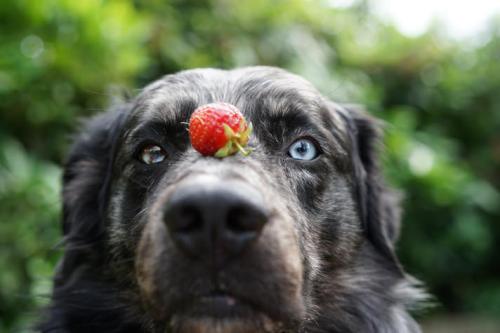
Dog with Strawberry photo


You get out what you put in

In 2007, I was unlucky enough to rupture an Achilles tendon; the rupture also took the rather unusual form of detaching from the bone in the heel of my foot.  In most cases, these ruptures occur higher up the leg, with the tendon snapping in half.  I clearly remember my surgeon at the time warning me of the risk of re-rupture, which was entirely linked to the quality and commitment to rehabilitation.  Many people don’t commit to the time and consistency that rehab actually takes and they pay the price of exercising too strenuously too early, or not following the instructions for self-care.

Every rehab program can have setbacks and mine was no different.  It took a year but I fully recovered.  I went to physio for all the obligatory ultrasounds, etc.  But more importantly, I did my exercises at home.  All the toe raises, stretches, massaging and walking.   I kept a journal of everything.

This personal experience has helped me greatly in my dog massage and rehab practice; it’s given me great insight into the frustrations and joys of rehab.  And the main lesson I learned was that the substantive part of my rehab program was my responsibility.

The same is true of a dog’s rehab program – well, sort of.  The dog doesn’t know what it has to do, it’s the owner’s responsibility.

And that’s one reason why I practice on an in-home basis.  I see many dogs in need of strengthening, stretching and/or toning exercises.  I always aim to make these exercises simple, and using items that are easily found around the home or sourced for a reasonable price.  (I also have a hire pool of equipment, to also ease the burden of rehab care.)

Adjustments are often needed to match the dog’s abilities.  And that comes with practice and feedback from the owner.  And we work together through any setbacks.

I tell my clients:  “To a large extent, you get out what you put in.”

Rail walking at CBBR

Cavaletti rail practice at Christchurch Bull Breed Rescue (Charlene with Caesar)

Many clients have goals – it could be that the family is going on vacation and wants the dog in better shape (or fully recovered) when the dog goes to kennel or to another family member.  It could be that the dog is in the care of a re-homing agency and the dog needs to be better before adoption.  Or, the goal may simply to have the dog better before summer so that the family can enjoy the beach or the park again, together.

Like personal training, goals are great.

To achieve them, we get out what we put in.  I enjoy being part of the owner’s team to achieve those goals.

Kathleen Crisley, specialist in dog massage, rehabilitation and nutrition/food therapy, The Balanced Dog, Christchurch, New Zealand

Dogs understand what’s written all over your face

Dogs can understand

Dogs can understand emotional expressions of humans. Credit: © ZoomTeam / Fotolia

Dogs are capable of understanding the emotions behind an expression on a human face. For example, if a dog turns its head to the left, it could be picking up that someone is angry, fearful or happy. If there is a look of surprise on a person’s face, dogs tend to turn their head to the right. The heart rates of dogs also go up when they see someone who is having a bad day, say Marcello Siniscalchi, Serenella d’Ingeo and Angelo Quaranta of the University of Bari Aldo Moro in Italy.

The study in Springer’s journal Learning & Behavior is the latest to reveal just how connected dogs are with people. The research also provides evidence that dogs use different parts of their brains to process human emotions.

By living in close contact with humans, dogs have developed specific skills that enable them to interact and communicate efficiently with people. Recent studies have shown that the canine brain can pick up on emotional cues contained in a person’s voice, body odour and posture, and read their faces.

In this study, the authors watched what happened when they presented photographs of the same two adults’ faces (a man and a woman) to 26 feeding dogs. The images were placed strategically to the sides of the animals’ line of sight and the photos showed a human face expressing one of the six basic human emotions: anger, fear, happiness, sadness, surprise, disgust or being neutral.

The dogs showed greater response and cardiac activity when shown photographs that expressed arousing emotional states such as anger, fear and happiness. They also took longer to resume feeding after seeing these images. The dogs’ increased heart rate indicated that in these cases they experienced higher levels of stress.

In addition, dogs tended to turn their heads to the left when they saw human faces expressing anger, fear or happiness. The reverse happened when the faces looked surprised, possibly because dogs view it as a non-threatening, relaxed expression. These findings therefore support the existence of an asymmetrical emotional modulation of dogs’ brains to process basic human emotions.

“Clearly arousing, negative emotions seem to be processed by the right hemisphere of a dog’s brain, and more positive emotions by the left side,” says Siniscalchi.

The results support that of other studies done on dogs and other mammals. These show that the right side of the brain plays a more important part in regulating the sympathetic outflow to the heart. This is a fundamental organ for the control of the ‘fight or flight’ behavioural response necessary for survival.

Source:  Springer.com

Sidewalk sanctuaries

You are out walking with your dog and really want to pop into a shop where dogs aren’t welcome.  What do you do?

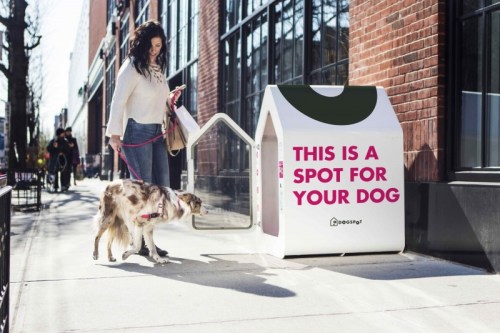
Well, the people at startup DogSpot have trialed a sidewalk sanctuary for dogs in Brooklyn, New York and are raising funding to roll out the concept in other cities.

DogSpot

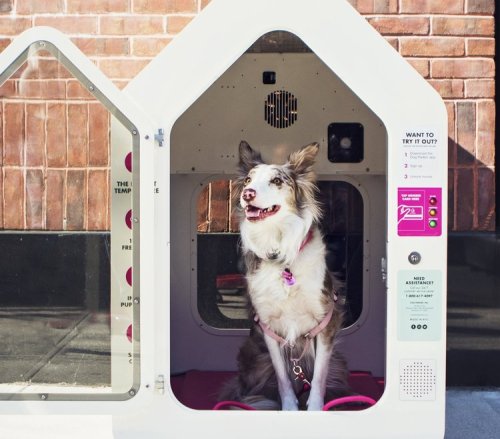
According to the company, these technology-enabled pods are a safer alternative to tying your dog out to a lamp post or leaving them in a hot car.   They’ve consulted on the design of the units with vets.   The units feature heating, air conditioning, UV lights for sanitizing and a Puppy Cam app to keep an eye on your dog.

Members use an app to reserve a DogSpot in their chosen location and then unlock the unit using a member card or the app.

dogspot

A phased rollout is promised as the company works with city planners and dog advocates; they’re asking dog people to tell them where they should go next and will prioritize cities based on feedback.

Want to know more?  Visit DogSpot.

Kathleen Crisley, specialist in dog massage, rehabilitation and nutrition/food therapy, The Balanced Dog, Christchurch, New Zealand


Which are smarter, cats or dogs?

This debate among pet owners can still get quite heated.

In this short video, a scientist explains why she concludes that dogs have the greater cognitive capabilities:

Kathleen Crisley, specialist in dog massage, rehabilitation and nutrition/food therapy, The Balanced Dog, Christchurch, New Zealand


Veterans with PTSD receive physiological and behavioral benefits thanks to service dogs

A new study shows how veterans with PTSD may benefit physiologically from using service dogs.

This study, led by the Purdue University College of Veterinary Medicine, is the first published research to use a physiological marker to define the biobehavioral effects of service dogs on veterans with PTSD.

The findings were published in the journal Psychoneuroendocrinology, and they may be significant as scientific evidence of potential mental health benefits experienced by veterans with PTSD who have service dogs.

rodriguez-ohaire

Kerri Rodriguez, human-animal interaction graduate student (left), and Maggie O’Haire, assistant professor of human-animal interaction in the College of Veterinary Medicine, look at cortisol samples. Cortisol was one of the measurements used in a new study that shows how veterans with PTSD may benefit physiologically from using service dogs. (Purdue University photo/ Kevin Doerr)

The study was co-funded by the Human Animal Bond Research Institute (HABRI) and Bayer Animal Health.  The research was led by Maggie O’Haire, assistant professor of human-animal interaction in the College of Veterinary Medicine, and Kerri Rodriguez, human-animal interaction graduate student, with the help of K9s For Warriors, an accredited nonprofit organization that provides veterans with service dogs. The study also was in collaboration with the Institute for Interdisciplinary Salivary Bioscience Research at the University of California, Irvine.

“Our long-term research goal is to quantify how service dogs may affect the health and well-being of military members and veterans with PTSD,” O’Haire said. “This study compared a group of veterans with PTSD who had a service dog to a group on the waitlist to receive one. Our previous research suggests that the presence of a service dog reduced clinical PTSD symptoms and improved quality of life. In this study, we wanted to determine if those beneficial effects also included changes in the physiology of stress.”

“We chose to focus our assessments on cortisol as it is a biomarker centrally involved in the stress response system,” said Rodriguez, lead author on the paper. In this way, the study seeks to improve the understanding of the potential mechanisms for how and why a service dog may help this population.

Cortisol can be measured non-invasively in saliva, which enabled the veterans to collect samples themselves at home immediately after waking up in the morning and about 30 minutes later. This allowed researchers to look at how much cortisol was being produced during the morning. The magnitude of the “cortisol awakening response” has been extensively studied and is used as a metric of the effects of chronic and acute stress. Non-PTSD, healthy adults experience an increase in cortisol after waking up.

“We found that military veterans with a service dog in the home produced more cortisol in the mornings than those on the waitlist,” Rodriguez said. “This pattern is closer to the cortisol profile expected in healthy adults without PTSD. Having a service dog was also associated with less anger, less anxiety, and better sleep.”

O’Haire says, though, while this finding is important, it should be taken in context.

“These findings present exciting initial data regarding the physiological response to living with a service dog. However, the study did not establish a direct correlation, on an individual level, between cortisol levels and levels of PTSD symptoms, and further study is needed. It is important to keep in mind that service dogs do not appear to be a cure for PTSD,” O’Haire said.

The next step, already underway, involves a large-scale National Institutes of Health clinical trial in which the researchers are studying veterans with and without service dogs over an extended period of time.

“Our research team will be able to look at morning cortisol levels both before and after getting a service dog to see how these physiological effects manifest over time,” O’Haire said. “The longitudinal nature of this clinical trial should bring about a better understanding of the interrelationships between physiological and behavioral processes, PTSD symptoms, and service dogs.”

She also emphasizes that the participation of veterans in the studies should not be taken for granted. “We are most grateful to the military veterans and their families who have participated in the research thus far,” O’Haire said. “We are honored to be collaborating with these individuals to advance the science behind our interactions with animals and how they affect human lives.”

Source:  Purdue University media release

Older Adults and Animal Programming

The Human-Animal Bond Research Initiative and the National Council on Aging have published a new guide to assist senior centers in implementing animal programmes.

There’s a large and growing body of evidence on the value of animals (especially dogs and other companion animals) in combating obesity, loneliness, mental health issues and inspiring memory recall in dementia patients.  In the western world, we also have a growing population of senior citizens and so there’s a strong rationale for rolling out animal programs in senior centers.

The guide cites real-life policy examples and literature in an easy-to-read guide.

Key recommendations on getting started include:

• Establish clear and measurable goals for your senior center
• Develop policies, protocols, and training programs for staff, volunteers, and animals
• Gain acceptance of your program and ensure participant awareness of policies and programming, including the benefits
• Assess risk and develop appropriate procedures to mitigate risk
• Measure successes and failures of your programs through record keeping, questionnaires, and other research

Back in the late 1990s, my Labrador Ebony and I were a therapy team at a local rest home as part of Canine Friends.  I saw first hand the faces of our human friends who looked forward to our visits, with conversations about pets they had in their lives.  The power of a dog sitting at their feet was strong!

This slideshow requires JavaScript.

Kathleen Crisley, specialist in dog massage, rehabilitation and nutrition/food therapy, The Balanced Dog, Christchurch, New Zealand

“I am your dog!”

A re-blogged post without pictures, but with very meaningful words. I couldn’t pass by the opportunity to re-blog it.

colinandray's avatarA New Direction Perhaps?

I came across the text below a few days ago, and thought it very appropriate to share here. So often I hear about a dog who has obviously lost some of its appeal as a family member, or I see a dog being dragged along on its walk by its owner. To many people, it would seem that when the “cute puppy” grows up, it becomes little more than a liability and an inconvenience. The writing below is attributed to author J.D. Ellis

** *** **** *** **

“I am your dog, and I have a little something I’d like to whisper in your ear.

I know that you humans lead busy lives. Some have to work, some have children to raise. It always seems like you are running here and there, often much too fast, often never noticing the truly grand things in life.

Look down at me now…

View original post 507 more words